
Fall arrives on the calendar long before it arrives in the yard, and the gap between those two dates is exactly when American front porches start filling up with pumpkins, mums, and cornstalks. Pinterest boards swell every August with photos of stone stoops stacked in orange and cream, because a yard is the one part of the house that neighbors, delivery drivers, and trick-or-treaters all see. The good news is that most of what looks expensive in those photos costs very little and takes an afternoon. Below are 44 looks worth copying this season, from hay bale corners to plywood pumpkins, each one built to survive real weather.
1. Pumpkin Cascade for the Steps
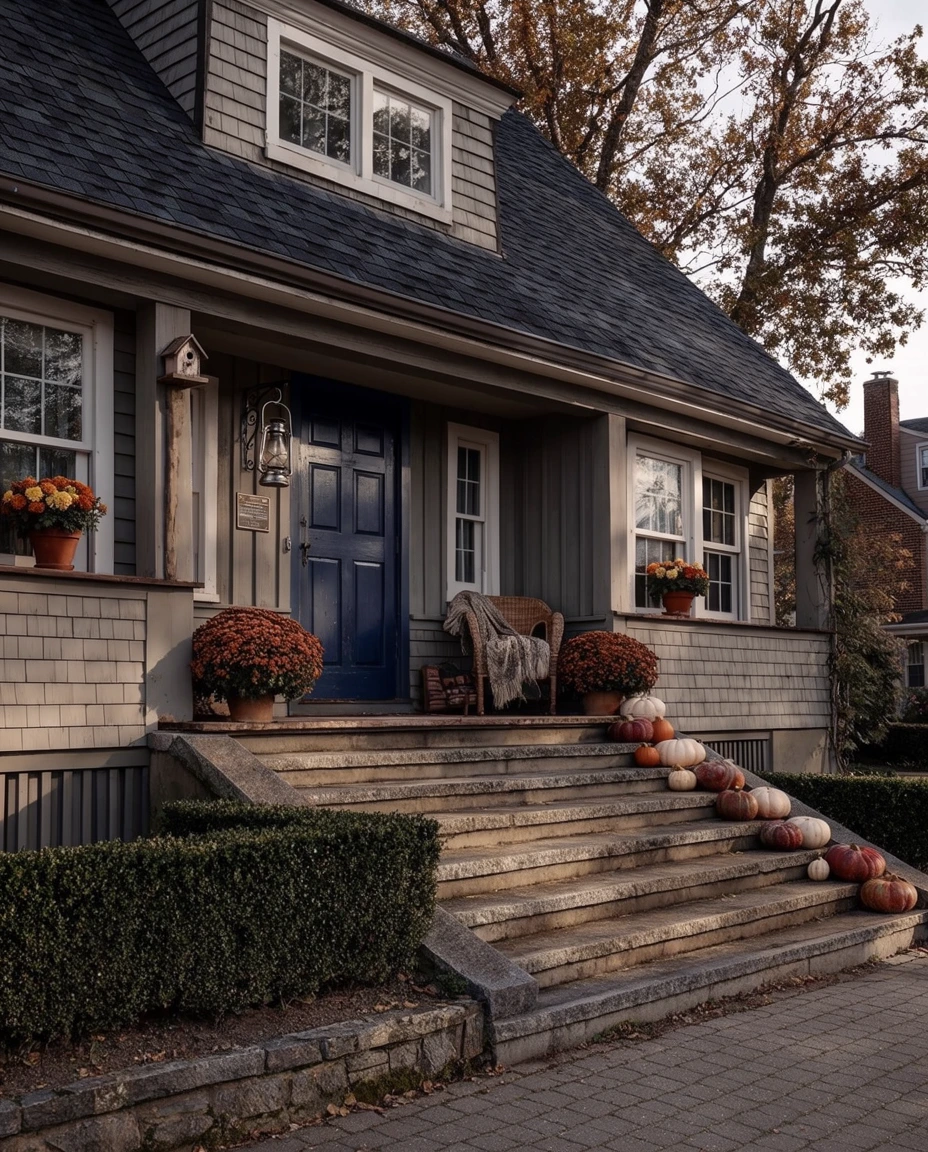
Front steps do the heavy lifting in autumn, and the easiest way to dress them is a run of pumpkins staggered down one side of the treads. Vary the sizes and hold yourself to three colors so the arrangement reads as intentional rather than leftover from the patch. Among all the fall decorating ideas that circulate every September, this one asks the least of you and gives back the most at the curb. It suits any outdoor entry, from a narrow brick stoop to a wide wraparound porch, and stays simple enough to finish before lunch on a Saturday.

Turn each pumpkin so the stem tilts slightly toward the street, since that is the angle people actually see from the sidewalk and the driveway. Keep the center of every tread clear so nobody has to sidestep on the way up, and set your heaviest gourds at the bottom where they anchor the run visually. A thin bed of pine straw underneath keeps moisture off the boards and buys you several extra weeks before the first pumpkin softens on the shaded side.
2. Golden Hay Bale Corner

One corner of the yard, two stacked bales, and a few pumpkins is the whole formula, which is why hay bales show up in nearly every autumn photo that goes viral. Turn the bales so the cut ends face out and the straw catches the low sun like a lamp. Most decorating ideas with hay bales work best when the stack is uneven, with one bale set crosswise on top instead of squared up. Add a galvanized bucket of mums and the corner instantly reads farmhouse without a single thing bought new.

This works best where the ground stays dry and the display sits off to the side of the walk rather than in it, so the corner of a driveway apron or the base of a mailbox post is ideal. Bales pull moisture up from wet grass and start to slump by November, so a pair of scrap boards underneath makes a real difference in the Midwest and anywhere else that gets steady October rain. Sunny southern yards can skip the boards entirely.
3. Wheelbarrow Brimming with Autumn Blooms

An old wheelbarrow parked at an angle in the front yard, loaded with mums, gourds, and a spray of dried wheat, does more than any store-bought planter. The tilted body creates natural layers, so the flowers spill toward the viewer instead of sitting flat. A vintage metal barrow with faded paint has the best character, though a newer one takes a coat of muted green paint beautifully. This is a diy project in the loosest sense, since the only real skill involved is knowing when to stop adding things.

A neighbor of mine dragged her father’s rusted barrow out of a barn in Ohio, filled it with grocery-store mums on a whim, and got three separate knocks on the door that week from people asking where she bought it. That is the whole appeal in a sentence. Line the basin with landscape fabric before you add soil, angle the front lip slightly downhill so rain drains rather than pools, and the arrangement holds its shape straight through Thanksgiving weekend.
4. Cut and Paint Plywood Pumpkins
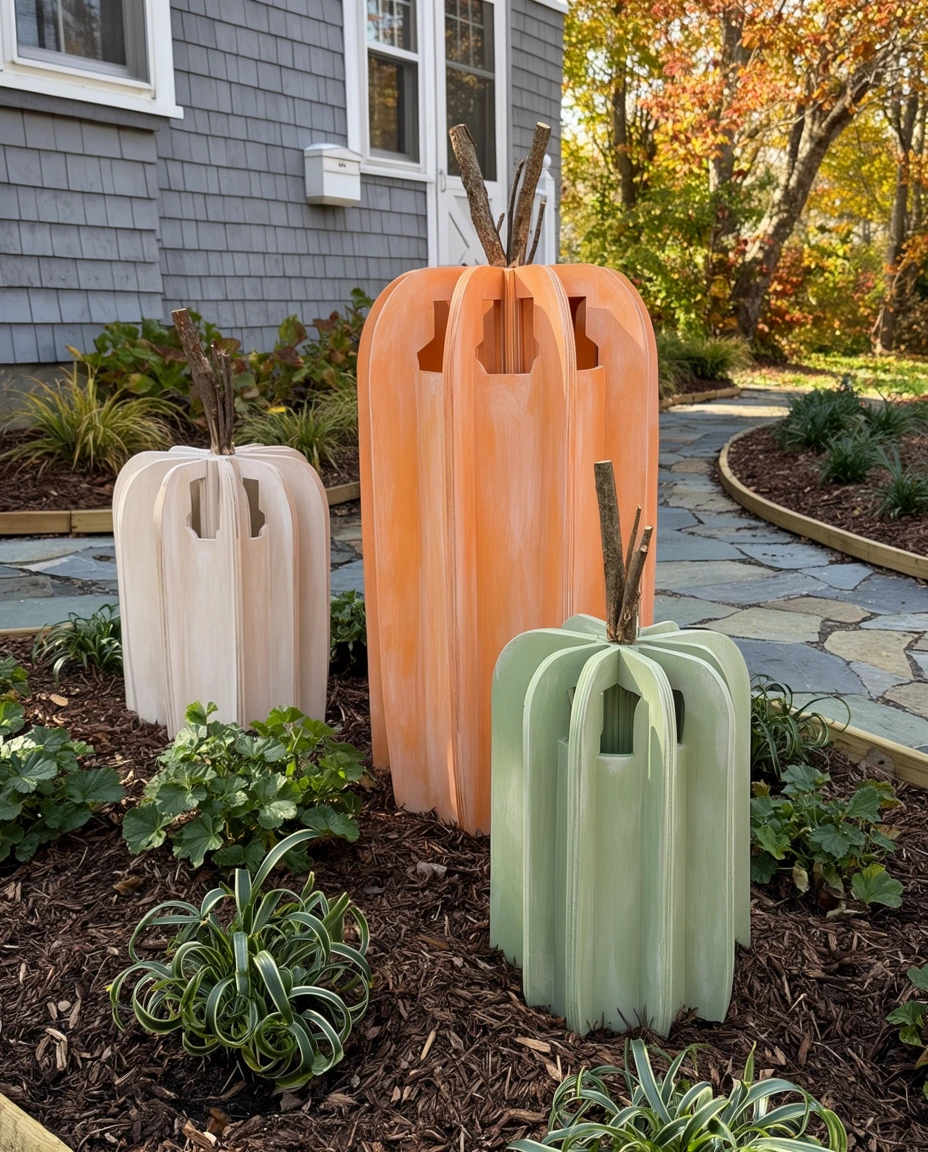
A sheet of half-inch plywood and a jigsaw give you a family of oversized pumpkins that stand in the grass all season and stack flat in the garage afterward. Draw three sizes freehand, cut them out, sand the edges, and paint in chalky orange, bone white, and a soft sage. This is the kind of easy diy that rewards imperfection, because slightly lopsided shapes look handmade rather than manufactured. Real branches pushed into drilled holes make far better stems than anything shaped from wood scraps or dowel rod.

One sheet of plywood runs about twenty dollars at most lumberyards and yields six to eight pumpkins, which puts each one somewhere near three dollars before paint. Compare that to a single resin pumpkin of the same size at a craft store and the math makes the case on its own. Sample pots of exterior paint cover the whole set, and a can of clear matte sealer adds maybe eight dollars while adding several seasons of life.
5. The Little Red Wagon

A child’s wagon parked beside the front steps and filled with small pumpkins is one of those ideas that carries real feeling, especially once the kids have outgrown it. The red paint against orange and gold does most of the work, so keep the contents low and loose rather than piled high. Pull the handle upright and lean it against the porch rail for a shape that photographs beautifully. It stays easy to move when you mow, which is more than can be said for a full bale display.

Across the Northeast and Upper Midwest, where trick-or-treating happens in coats and porch lights come on by five, a wagon reads as an invitation rather than a barricade. Southern yards get the same effect but hold it longer, since the mums tucked around the pumpkins keep blooming well past Halloween in zones eight and nine. Park it on grass or gravel rather than concrete, where the metal wheels leave marks after a heavy rain.
6. Lanterns in the Maple Tree

Hanging lanterns from the lower limbs of a front-yard tree turns a plain lawn into something worth walking past after dinner. Use three or five at staggered heights, all in the same finish, with battery candles inside so nothing scorches the bark. These decorating ideas autumn lovers save every year almost always involve light at eye level, because that is where dusk gets its atmosphere. Any outdoor tree with reachable branches works, though a maple in full color makes the copper and amber glow twice as warm.

Landscape designers tend to hang lighting from branches that clear the ground by seven feet or more, high enough that nobody walking beneath ever registers them as an obstacle. They also favor odd numbers and a single metal finish, since matching hardware is what separates a considered display from a yard sale. Jute cord holds up better than wire in wind because it flexes instead of cutting into the bark, and it disappears against the trunk.
7. A Bench Dressed for Autumn

A weathered bench along the front walk becomes a display shelf the moment you set a lantern at one end and a pumpkin trio at the other. Leave the middle open so it still functions as a place to sit, which is the detail most people skip. A wooden bench with a slatted seat suits this best, since gaps let rain through instead of holding puddles under your gourds. Keep the styling simple and the bench itself stays the star rather than the pile of decor on top of it.
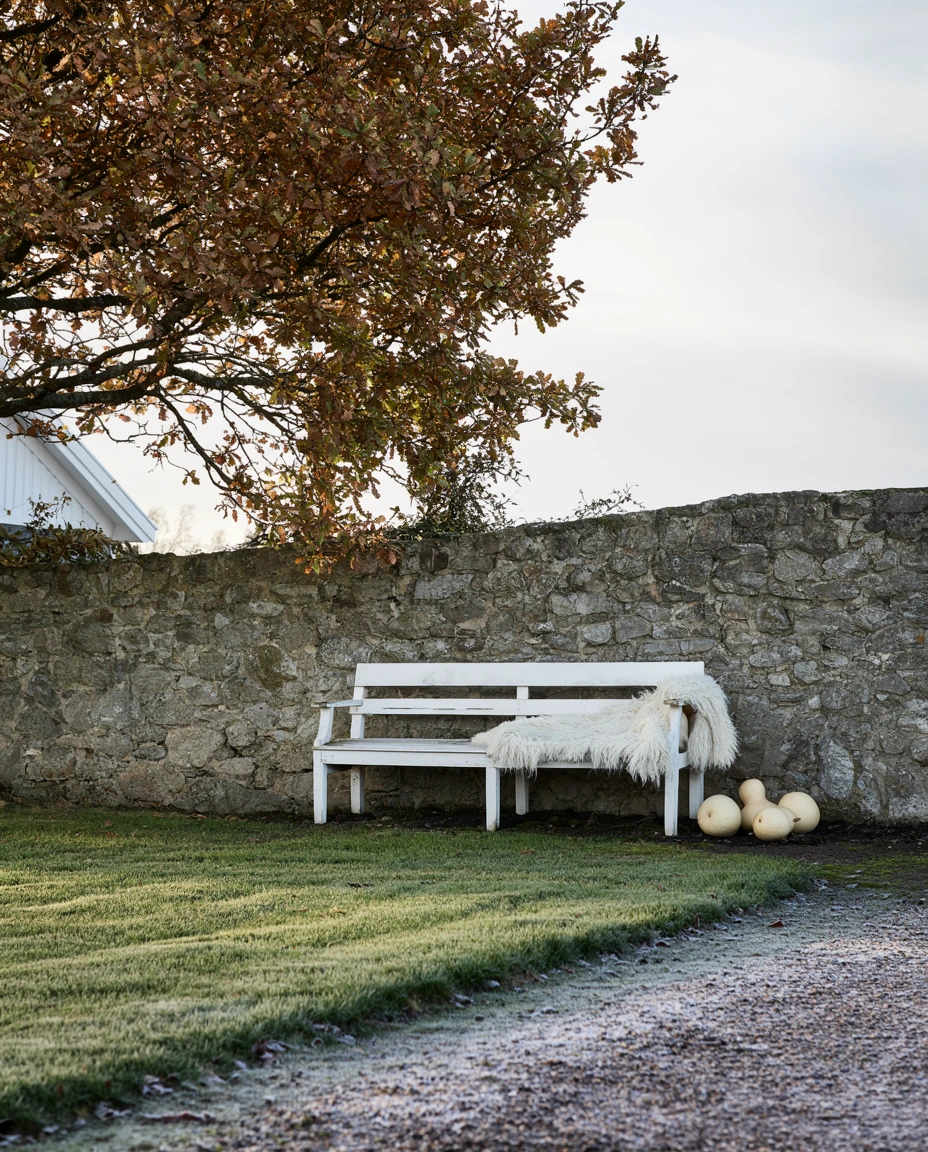
Homeowners who try this almost always add a folded quilt or a plaid throw across one arm, and then almost always bring it inside after the first heavy dew and forget to bring it back out. A weather-rated outdoor cushion in rust or oatmeal solves that loop permanently and looks the same in October as it did in September. The bench also gives delivery drivers somewhere to set a package, which is a quiet win nobody plans for.
8. Dollar Tree Pumpkin Topiaries

Three foam pumpkins from Dollar Tree, stacked largest to smallest on a length of dowel and set in a terra cotta pot, produce a topiary that costs under ten dollars and lasts for years. Spray them all one color, matte cream or dusty sage, and the plastic sheen disappears completely. Search for decorating ideas diy cheap enough for a single evening and some version of this stack appears on every board. The diy part is genuinely twenty minutes, most of which is waiting for paint to dry.

Pricing this out honestly, the pumpkins run about four dollars total, the dowel and a bag of floral foam another three, and a can of spray paint six or seven, which still lands the pair of topiaries under twenty dollars. The nursery version of the same silhouette sits at forty dollars each. Pot them in real potting soil rather than foam if wind is an issue, since the extra weight keeps them upright through a gusty week.
9. Pallet Sign with Hand Lettering

Broken-down pallets give you free planks with an already-softened surface, and four of them screwed to two cross braces make a leaning panel for the porch corner. Sand lightly, whitewash, and letter a short autumn greeting in a soft charcoal. A diy wood project like this costs almost nothing beyond screws and a sample pot of paint. Lean it against the house rather than hanging it and the piece reads farmhouse without committing you to holes in the siding.
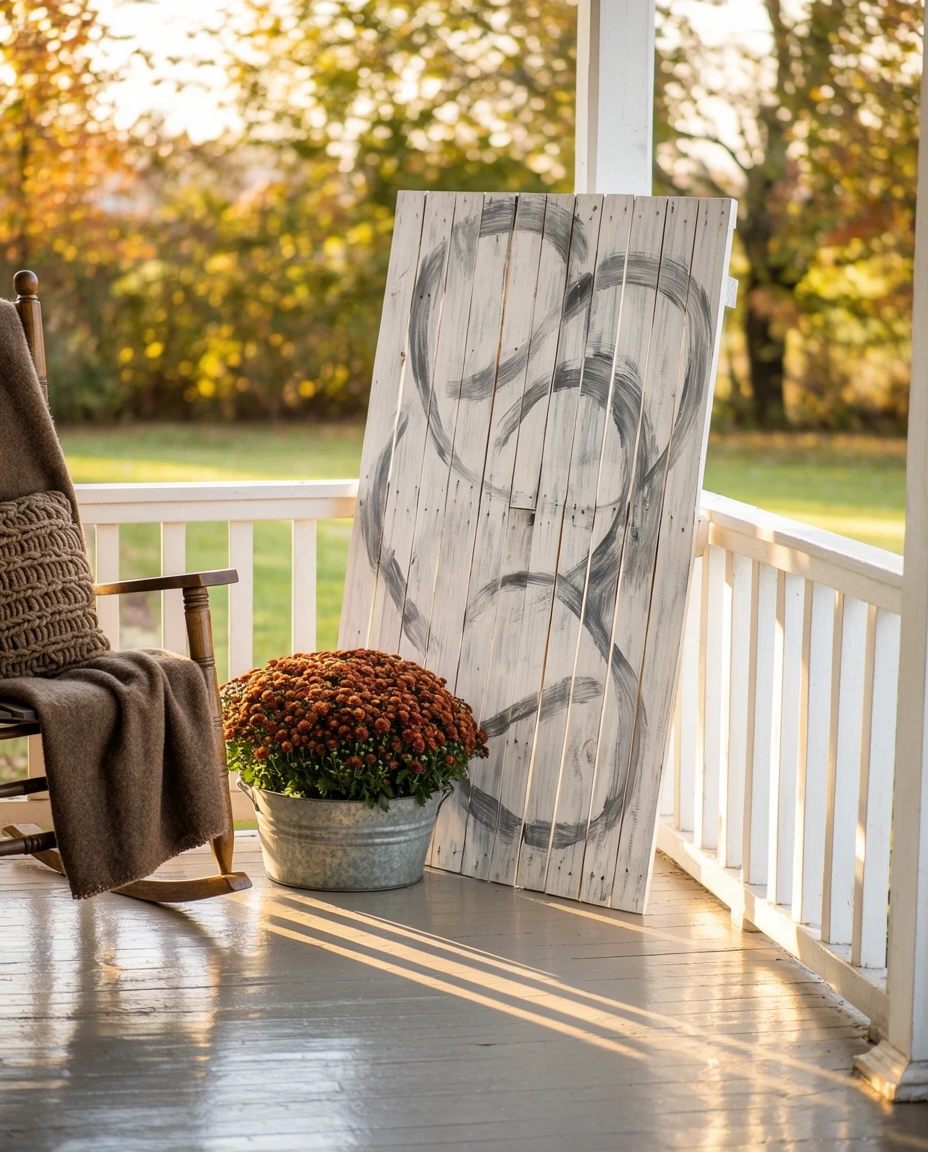
The usual misstep is lettering straight onto raw wood, where the grain drinks the paint and the edges bleed into something fuzzy. Two coats of primer first, then chalk your guidelines with a yardstick, and the strokes stay crisp. The second thing people get wrong is leaning the panel at too steep an angle, which catches wind like a sail; a shallower lean with the base tucked against the porch skirt holds through a storm.
10. Vintage Tractor and Corn Stalks

A small tractor parked at the end of the drive with cornstalks bundled behind it is the yard version of a magazine cover, and it needs almost nothing else to work. The green and yellow paint against dried stalks and orange pumpkins is a color story that sells itself. A vintage machine still in running order beats a decorative replica every time, since the proportions are honest. Some of the best ideas for the driveway edge start with something you already own and simply move it into the light.

Through the corn belt and across rural Pennsylvania, a tractor at the road is practically a seasonal tradition, and neighbors notice the day it appears. Suburban yards get the same look from a compact garden tractor tucked beside the mailbox rather than a full-size machine that overwhelms a quarter-acre lot. Set it on gravel or a driveway apron instead of the lawn, since a week of parking in soft turf leaves ruts that take until spring to fill in.
11. Old Truck Bed Display

Few decorating ideas pull as hard on nostalgia as a classic red pickup with the tailgate down and the bed filled with pumpkins and hay. The truck becomes the frame, the produce becomes the color, and the whole thing needs no additional styling. Plenty of outdoor displays built with old truck bodies sit permanently in a side yard, planted around the tires with mums and ornamental grasses. Park it at a slight angle to the road so the bed opens toward anyone driving past.

My uncle kept a fifties Chevy behind the barn for thirty years swearing he would restore it, and his daughter finally hauled it to the front pasture one October and filled the bed with squash. He still grumbles about it, and he also parks it there himself every year now. Straw laid across the bed floor first keeps the pumpkins from rolling and gives the whole arrangement a soft base that reads well in photographs.
12. Cornstalks Bound with Burlap Ribbon

Bundling dried cornstalks around porch posts is one of the oldest tricks in the book and still one of the best, adding height that nothing at ground level can match. Wrap wide burlap ribbon twice around each bundle and knot it loosely so the tails hang. Among decorating ideas autumn brings back every year, this one costs under fifteen dollars a post at any farm stand. Keep the styling simple, since two matching bundles flanking the door look far better than six scattered everywhere, and the setup is easy enough for one person.
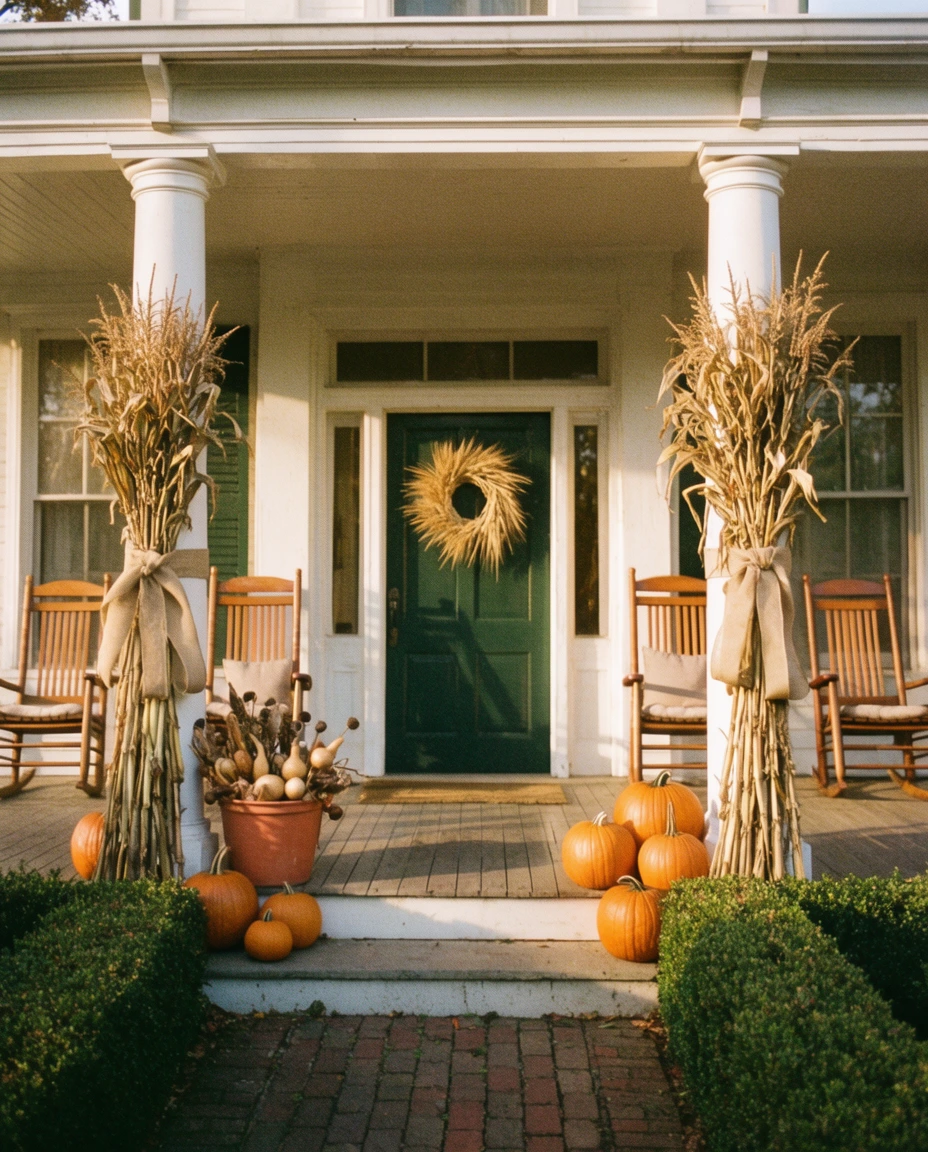
Cut the stalk bases square before you tie so each bundle stands flat against the post instead of splaying outward at the bottom. Run a hidden zip tie under the burlap for the real structural hold and let the ribbon be purely decorative, which keeps the knot from loosening in the wind. Trim any stalk that reaches past the porch ceiling line, because bundles that crowd the eaves make the entry feel narrower than it is.
13. Give Thanks in Reclaimed Wood
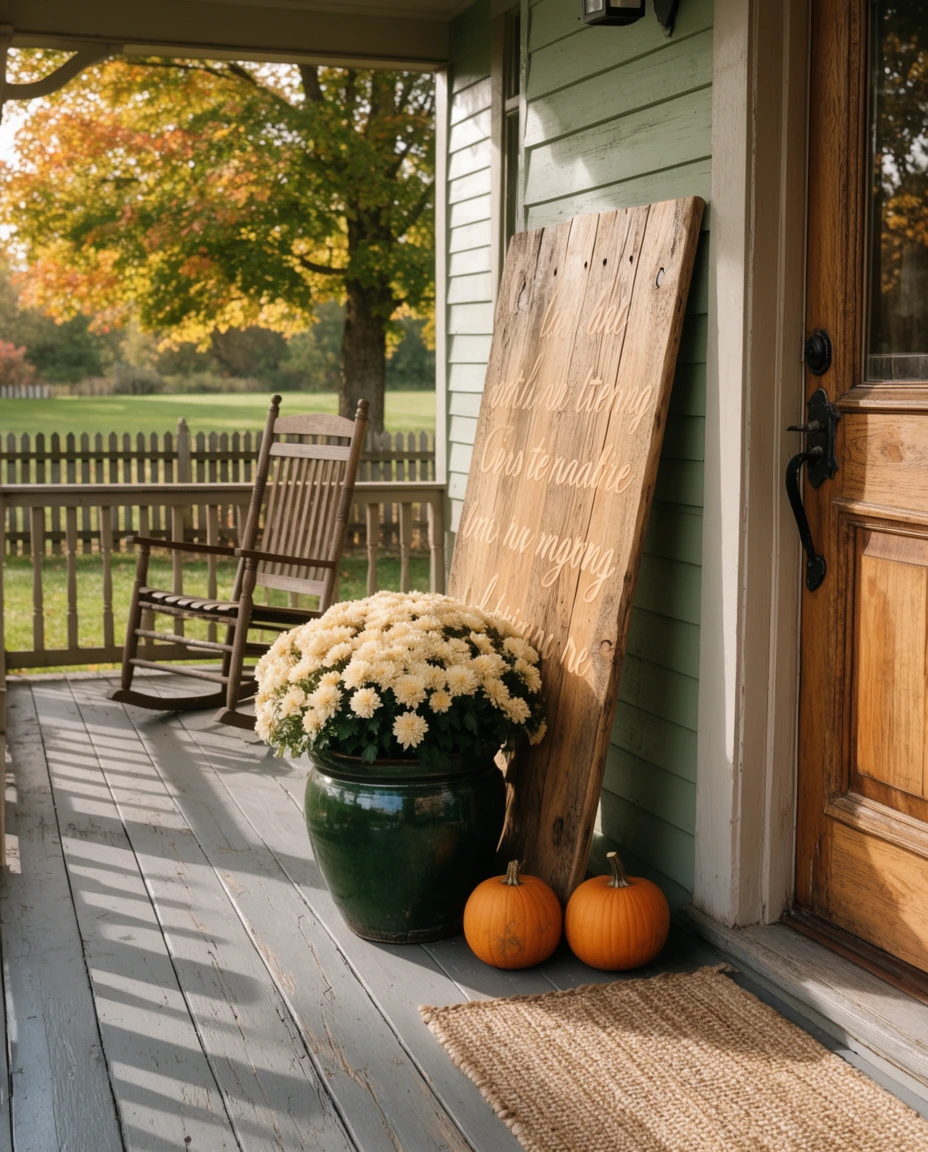
Autumn brings out gratitude in a way no other season does, and a simple reclaimed panel by the door says it without shouting. A Christian household might add a small cross or a verse from Psalms lettered along the lower edge, though the sentiment works for anyone. A wooden board with visible grain and hand-painted script has warmth that a printed sign never gets close to. Some of the most-saved ideas on Pinterest each fall are exactly this understated, propped beside a pot of mums and left alone.

What actually happens in most homes is that the board goes up in late September and stays through the first week of December, doing double duty for Thanksgiving before the wreath swap. Families who realize that early tend to choose wording and colors that bridge both, favoring warm neutrals over hard orange. The panel also travels indoors easily, and plenty of people end up moving it to the mantel once the weather turns for good.
14. Mum Rows Without the Fuss
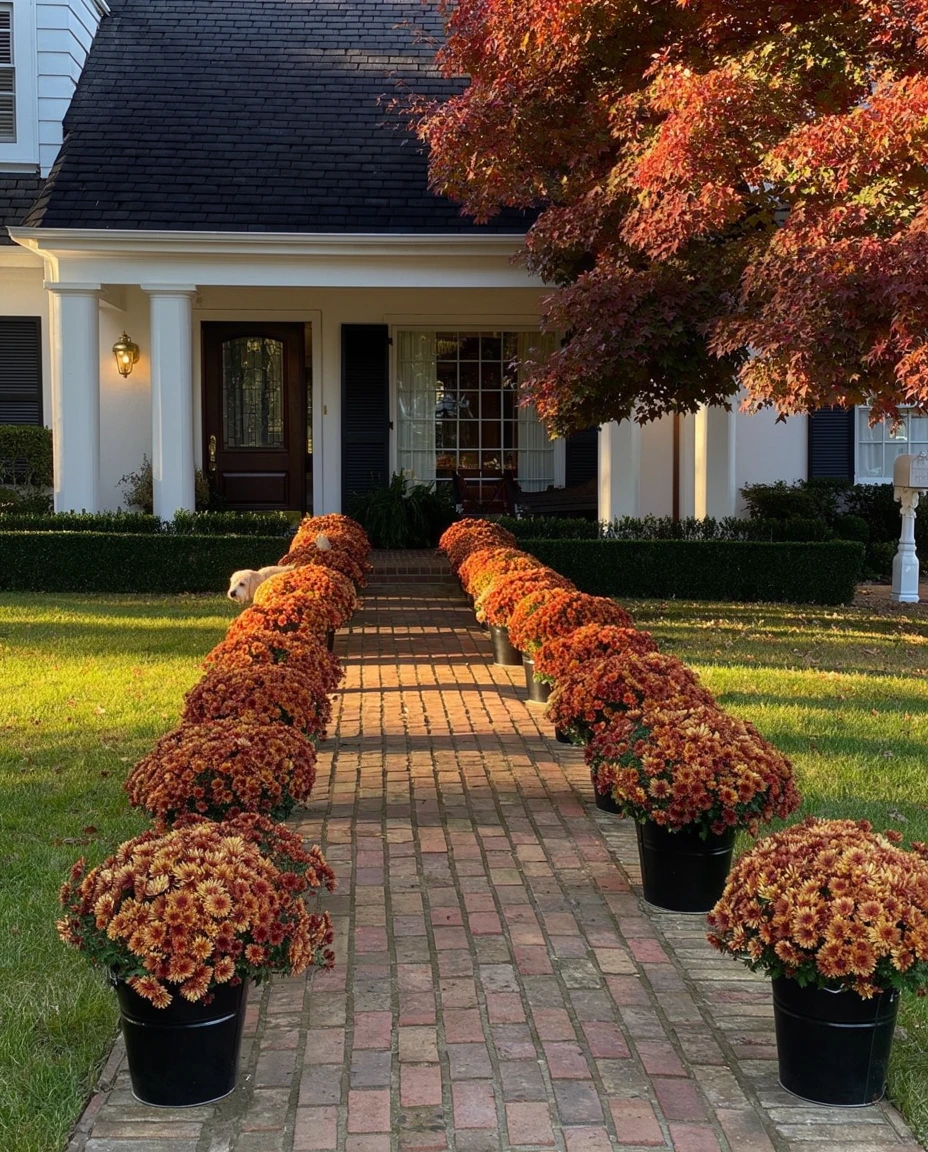
A straight row of matching mums along the front walk is the fastest upgrade in the entire fall playbook, and it takes about fifteen minutes. Buy them in one color and one size, leave them in their nursery pots, and drop each pot into a matching basket or bucket. The best outdoor results come from odd numbers spaced evenly rather than crowded together. Of all the decorating ideas here, this is the one that stays easy to refresh, since a tired plant swaps out in seconds without disturbing anything else.

This shines most along a walkway with a hard edge, where a brick or stone border gives the row a line to follow and the repetition does the rest. Wide-open lawns swallow the effect, so plant beds and driveway edges are better homes for it than open turf. Mums drink far more than people expect in a warm October, and a walkway placement makes daily watering a two-minute job on the way to the car.
15. Firewood Stack and Copper Kettle
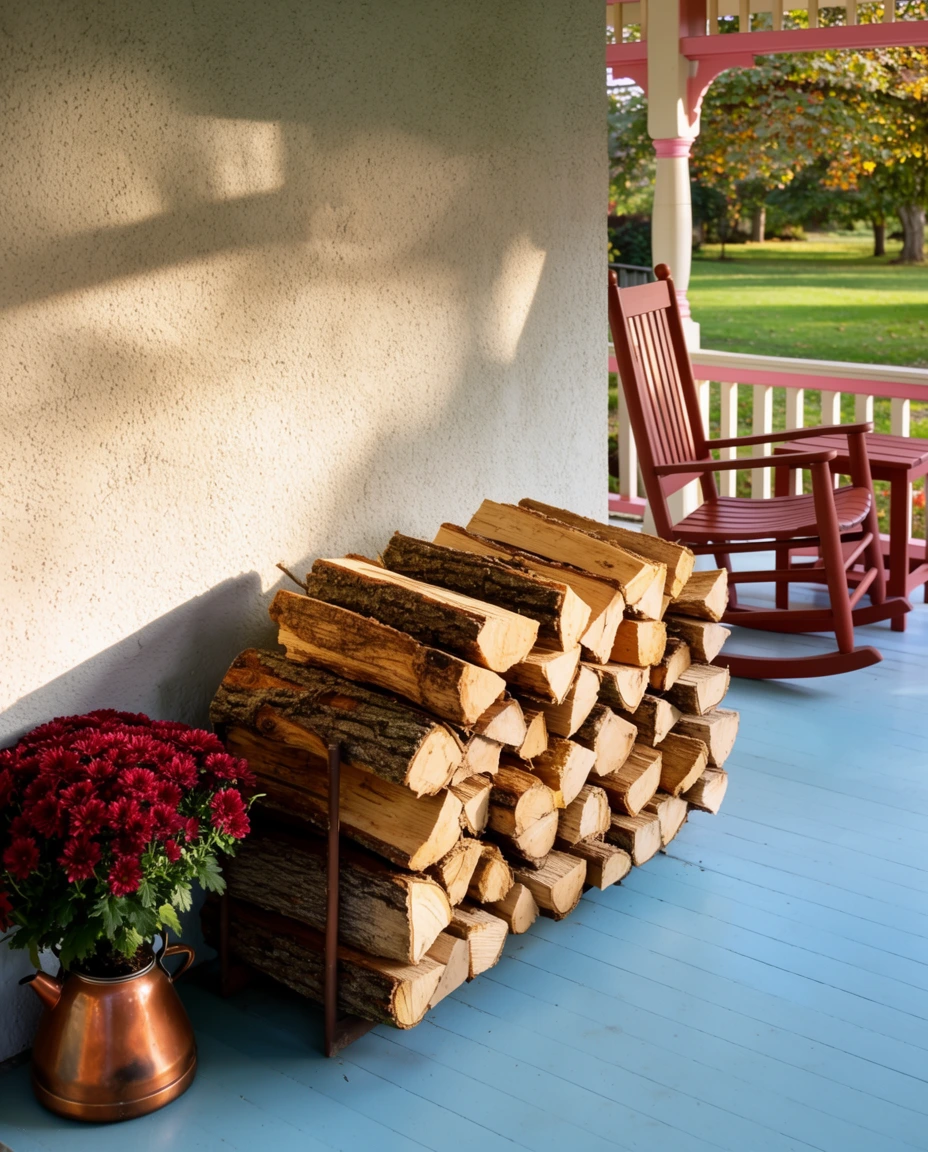
A neat stack of split logs against the porch wall is decor in its own right, and one copper kettle of mums beside it finishes the picture. The cut ends of the wood create a pale, textured wall that catches afternoon light beautifully. A vintage kettle or an old milk can adds the metallic warmth the stack lacks on its own. Stack it neat and keep the whole arrangement simple, since the appeal here comes entirely from repetition and honest material rather than added ornament.

Anyone who heats with wood will tell you to keep the stack a few inches off the siding and up on a rack or a pair of rails, both for airflow and to keep insects out of the wall. Split faces should point outward so the wood dries rather than holding rain in the bark. Season the top row with the bark up as a natural shed, and the stack stays photogenic and burnable straight into January.
16. Scarecrow for the Garden Gate
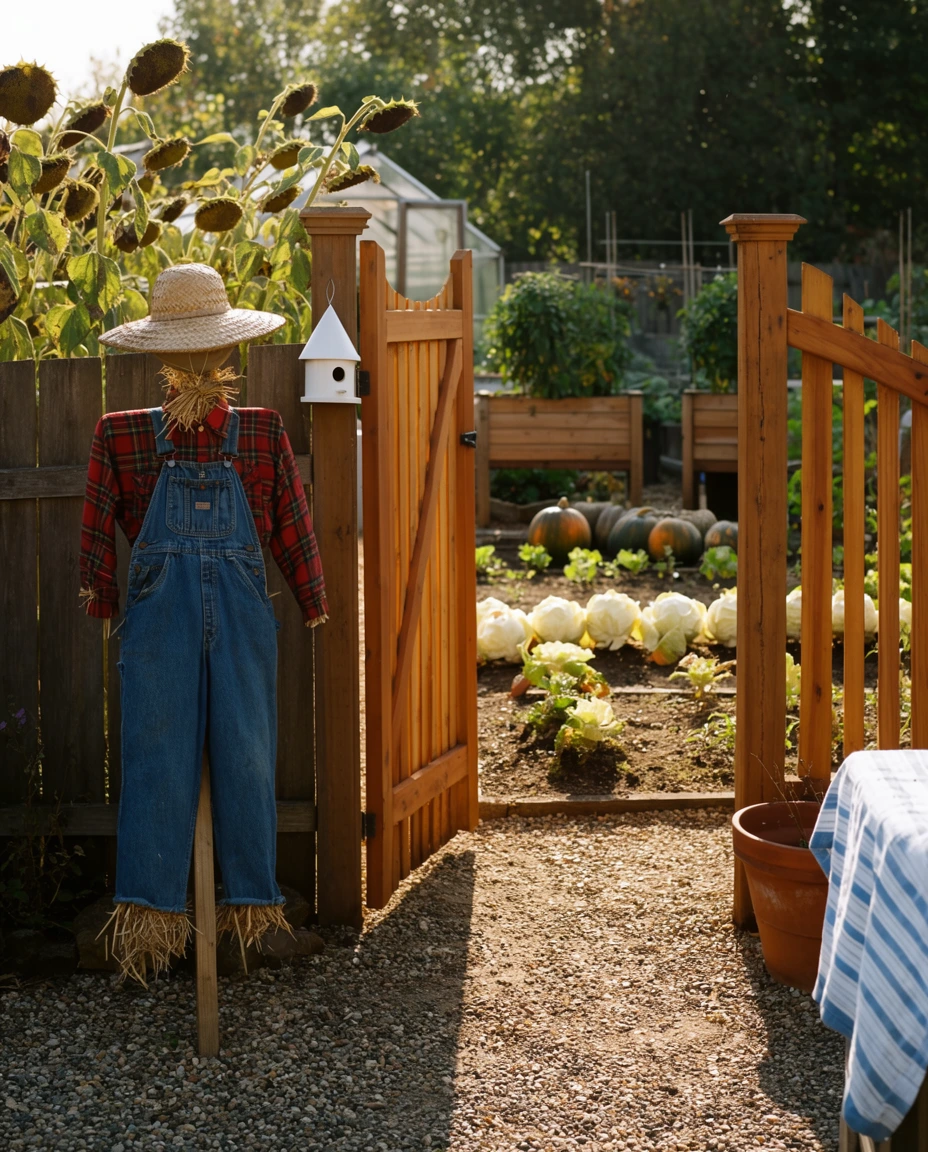
A scarecrow leaning against the garden gate is charming rather than spooky, especially built from flannel, denim, and a straw hat instead of anything ghoulish. Stuff the body with hay bales loosened by hand, which gives a softer shape than polyester filling ever manages. Leftover hay bales from the porch display feed this project entirely, so the second half of the yard costs nothing. The diy build takes an hour with two garden stakes lashed into a cross frame and a few zip ties.

The frequent error is making the frame too short, which leaves a figure that reads as a slumped pile rather than a standing one; five and a half feet from ground to shoulder looks right from the street. The other trap is fresh straw stuffed too tightly, which splits seams within a week. Pack loosely, sink the stake at least eighteen inches into the soil, and a good gust moves the sleeves without toppling the whole thing.
17. Pumpkin Luminaries at Dusk
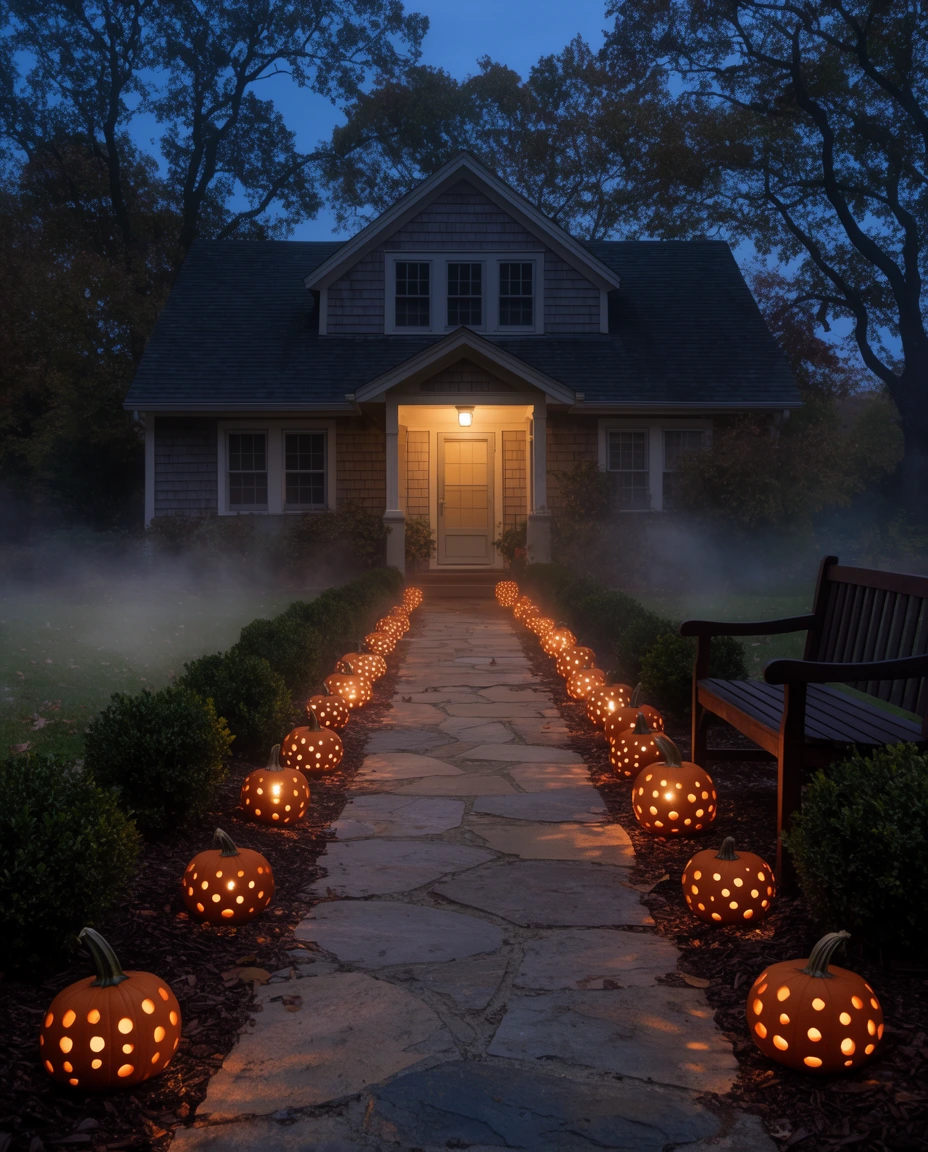
Small pumpkins hollowed out and fitted with battery tea lights turn a plain front path into a runway of soft amber light. Drill a pattern of round holes instead of carving faces and the glow reads elegant rather than cartoonish. Line them along both edges of the walk, spaced about three feet apart, for the best outdoor effect once the sun drops. This easy diy is among the loveliest ideas for the walkway, and it takes one evening with a cordless drill and a spade bit.

Coat the cut interior with petroleum jelly to slow the drying and keep the rims from curling inward after a few warm days. Set each pumpkin slightly back from the pavement edge so nobody clips one in the dark, and press it into the mulch a half inch so wind cannot roll it. Warm-white lights beat cool-white by a wide margin here, since the flesh of the pumpkin tints anything blue toward gray.
18. Halloween Silhouettes Without the Clutter
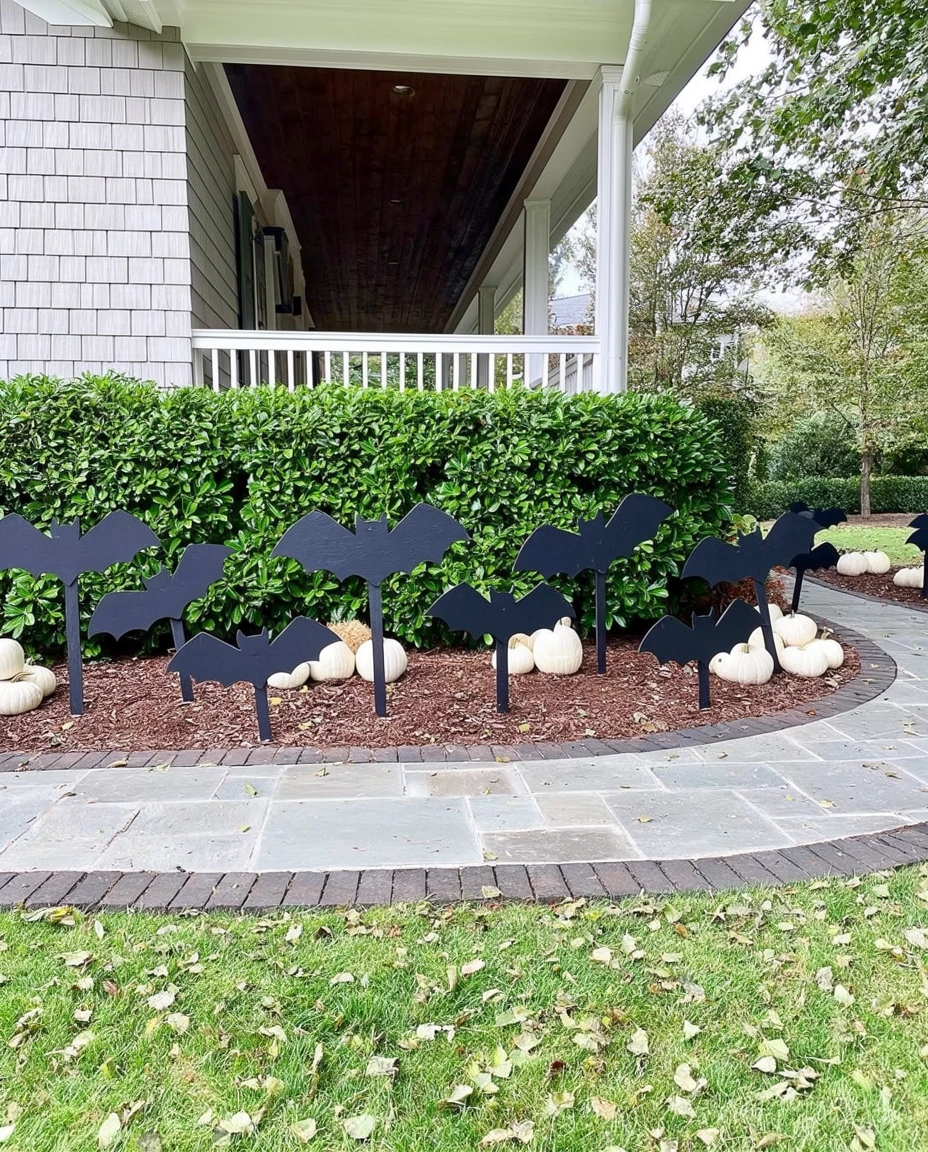
A restrained Halloween yard can be more striking than a crowded one, and matte black silhouettes cut from plywood prove it. Three cats along a fence line or a row of bats staked in the mulch give you the whole holiday in one gesture. Keep the palette to black and the natural greens already in the yard, and the display stays simple enough to live alongside your pumpkins rather than fighting them. Come November first, the shapes pull out of the ground in under five minutes.

Silhouettes land hardest against a plain backdrop, so a fence panel, a garage wall, or an unbroken run of hedge gives them the contrast they need. Busy foundation plantings swallow the shapes entirely. Yards with a single uplight aimed at the wall get the most drama for the least effort, since the shadow doubles the display after dark and the whole thing reads clearly from the street rather than only from the front walk.
19. Oversized Farmhouse Door Wreath

Scale is what separates a great wreath from a forgettable one, and going one size larger than feels sensible is almost always right. A thirty-inch grapevine base loaded with wheat, eucalyptus, and dried hydrangea reads unmistakably farmhouse against a painted door. Of all the decorating ideas in this list, the wreath is the one guests see up close, so material quality matters more here than anywhere else. Building your own stays easy with a hot glue gun and forty minutes at the kitchen table.
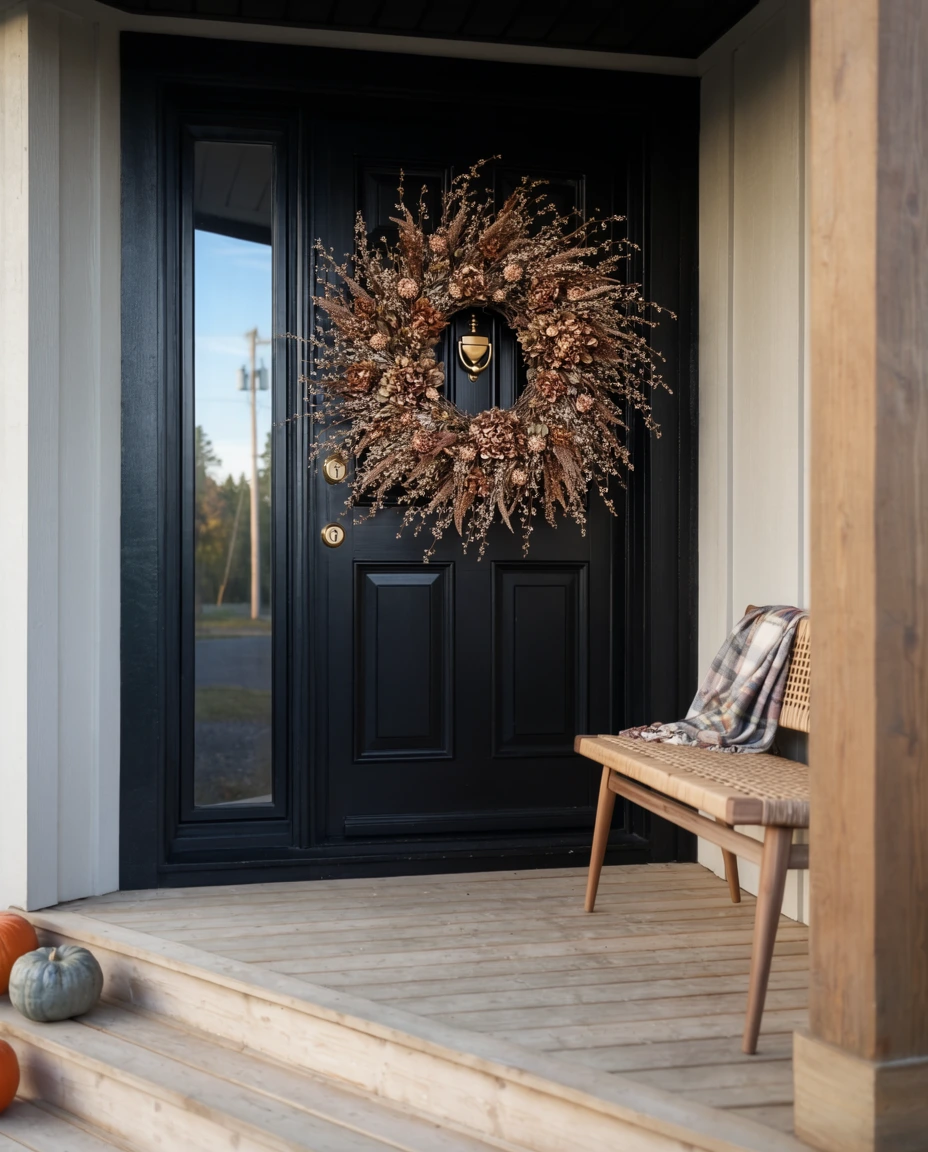
A finished wreath of this size runs eighty to a hundred and twenty dollars at a boutique, while the grapevine base costs about twelve and a generous armload of dried stems adds twenty-five. Buying stems in bulk bundles rather than single stems cuts that further. Spend what you save on one genuinely good ribbon, since a wide cotton or velvet tie in a muted rust is the detail that makes the whole wreath look bought rather than glued.
20. Gourds and Ferns in Planters

Summer planters do not need to be emptied, only edited. Pull the spent annuals, leave whatever ferns and trailing vines still look good, and nestle small gourds and mini pumpkins into the gaps at the soil line. The best decorating ideas autumn offers tend to be additive like this, building on what already grew all season. Any outdoor container works, from a pair of urns to a plain resin pot, and these are among the quickest ideas to pull off before company arrives.
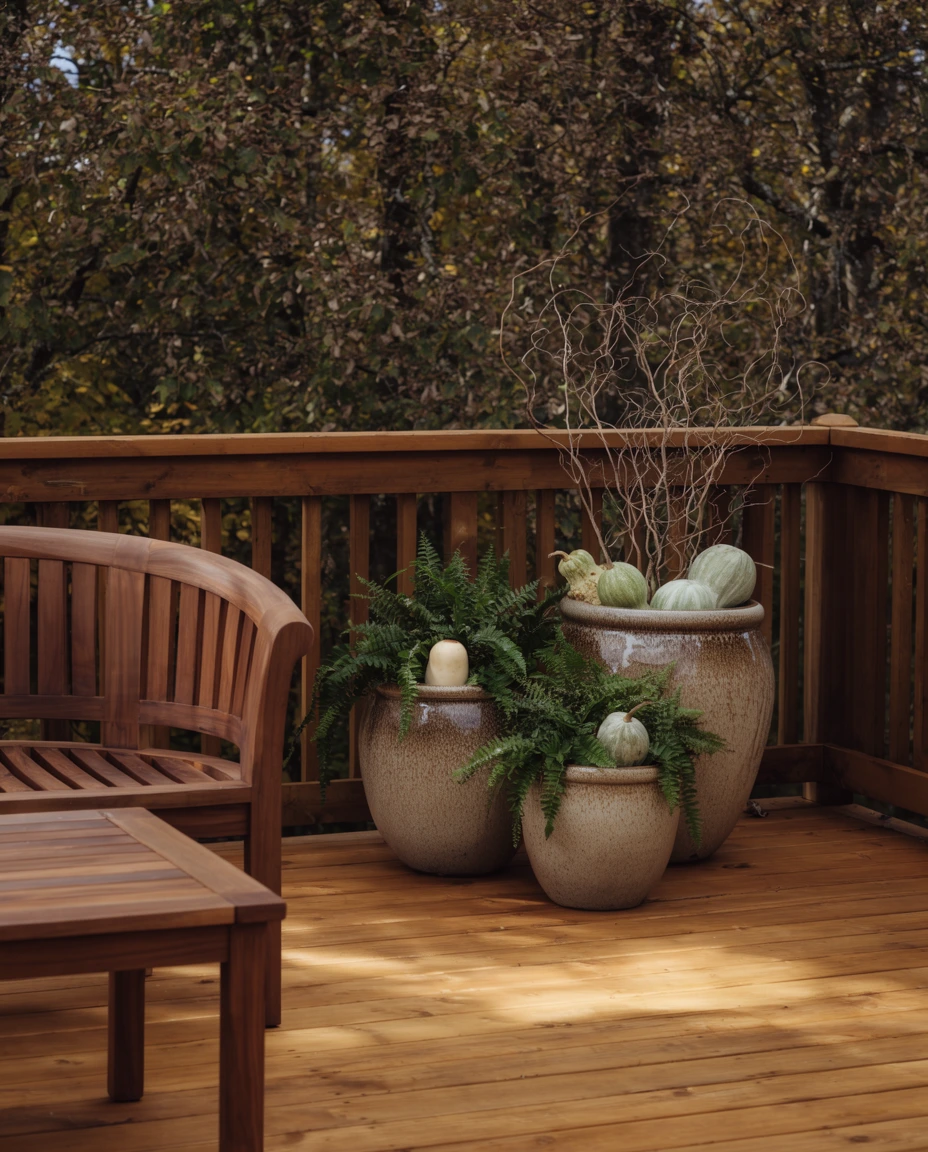
Container designers describe this as thriller, filler, spiller, and autumn simply swaps the thriller for something seasonal: a bundle of wheat, a cluster of curly willow, or a single tall gourd propped upright. The ferns keep doing the spilling. Nesting the gourds on top of the soil rather than burying them keeps their skins dry, and anything that softens gets lifted out and replaced without disturbing the roots underneath.
21. Simple Wooden Crate Stack

Two or three wooden crates stacked at slightly different angles beside the door create instant shelving for lanterns, gourds, and a small potted fern. Turn one on its side so the open face becomes a niche and the composition gains depth. Crates built from broken-down pallets cost nothing but an afternoon, though craft-store versions stain up nicely too. The diy effort is minimal, and the stack collapses flat for storage once the season ends and the porch goes back to normal.
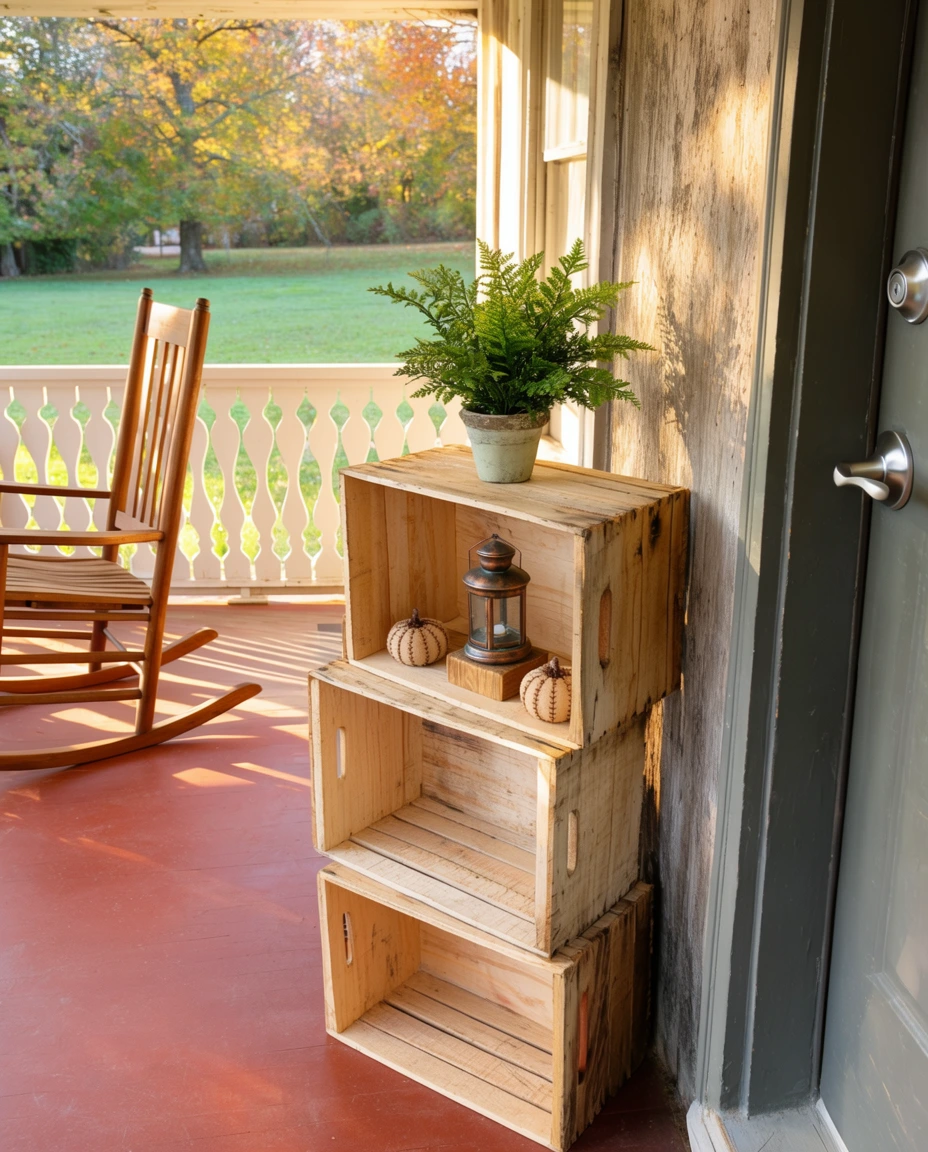
Covered porches across the South and the Pacific Northwest handle this beautifully because the roof overhang keeps rain off the raw wood, while open stoops in New England fare better with a coat of exterior sealer first. Either way, set the stack against the house rather than beside the steps so the doorway stays fully clear. A dab of construction adhesive between crates prevents the top one from sliding when someone brushes past.
22. Fire Pit Ready for Sweater Weather

The back yard deserves a fall moment too, and a fire pit ringed with Adirondack chairs, wool blankets, and a few lanterns delivers it. Stack split wood nearby in a low ring so the fuel becomes part of the composition instead of an eyesore behind the shed. Warm outdoor seating is what keeps a yard in use once evenings drop into the forties. Unlike most decorating ideas that end at Thanksgiving, this one carries straight through the winter with almost no adjustment.

The first October we set up a pit at the back of the yard, we used it exactly twice, because hauling chairs down from the deck each time was more effort than the evening warranted. Leaving four chairs permanently in place changed everything, and now it gets used most weekends through November. Keep a basket of throws by the back door and the distance between wanting a fire and having one shrinks to almost nothing.
Every yard has its own light, its own trees, and its own quirks, so the best version of any of these looks is the one you adapt. If you have a fall display that gets compliments every year, share it in the comments below. I read all of them and love seeing what people actually build.