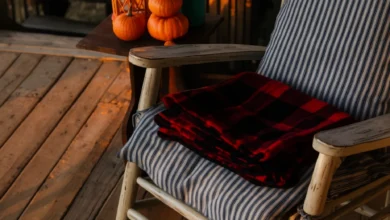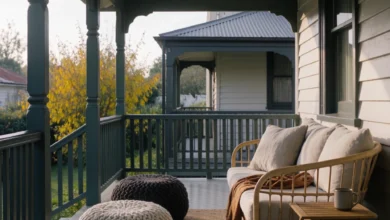
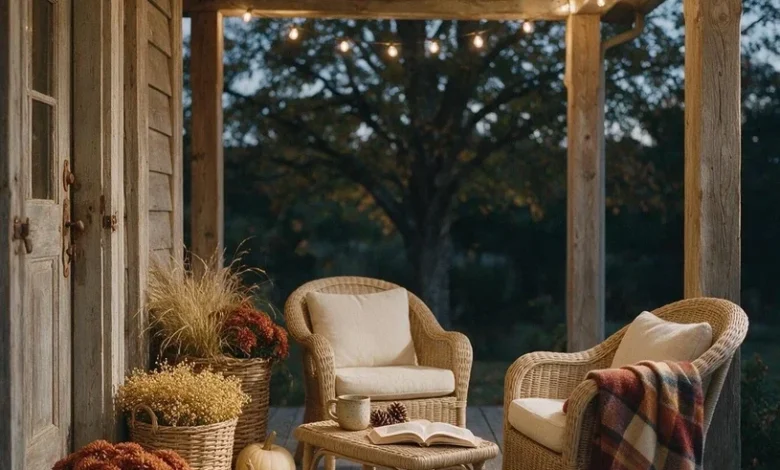
Autumn arrives on the front step before it arrives anywhere else in the house. A single well-built planter can change how a whole entry reads, which is exactly why Americans spend October evenings scrolling porch photos and saving the ones that look achievable by Saturday. The best fall containers are less about botany than about layering — height, texture, color, and a few seasonal props that survive a cold snap. What follows are twenty-two looks worth copying, with the details that make each one work.
1. Rust and Gold Layered Planters

A layered pot reads richer than a single bloom, which is why front porches dressed in rust, ochre and antique gold keep filling save folders. Start with one tall grass at the back, add a mounding flower in burnt orange, then let something trail over the rim. The palette does the heavy lifting, so even three plants look deliberate. It is the sort of outdoor decor that feels current for 2026 without shouting for attention from the sidewalk.

Hold the color story to three tones and repeat one of them in the container itself — a glazed pot in warm amber, or a bronze planter that echoes the grass plumes. Care is simpler than it looks: group the pots so one pass with the hose reaches all of them, and set the tallest at the back where hard afternoon light won’t scorch softer leaves. Give each pot a quarter turn every week and the growth stays even instead of leaning.
2. A Pumpkin Trio for Steps

Three pumpkins in three sizes, walking down the steps in a loose diagonal, still beats a dozen scattered without a plan. Pair them with one planted container so the arrangement has something living in it, and keep the gourd colors in the same family — all cream, all bronze, or all deep green. A planter with pumpkins tucked at its base gives the front door a center of gravity that photographs beautifully from the walk.

Most people buy their gourds in one trip and then rearrange them four or five times over the following week, which is worth knowing before you commit to glue or paint. Leave everything loose for the first few days and let your own coming and going tell you where the traffic path really is. Stems get bumped, so set the largest pumpkin on the widest tread and keep the smallest off the very edge where a delivery bag can sweep it.
3. Tall Grasses in Black Urns

Nothing gives an entry instant architecture like a pair of matte black urns with something tall feathering out of the top. Fountain grass, purple millet and pampas plumes all read as sculpture rather than gardening, and the dark container keeps the look modern instead of harvest-fair. On a large porch, a matched pair flanking the door frames it the way pilasters would, and the height finally balances a two-story facade.

Designers who style entries for a living tend to follow one proportion: the planting should rise to roughly half the height of the door, and the urn should be about a third as wide as the space it occupies. Undersize either and the pair vanishes against the house. They also recommend anchoring lightweight urns with a few inches of gravel at the bottom, since a wind gust across an open lawn will take a top-heavy grass over before you notice.
4. Cabbage and Kale Bowls

Ornamental cabbage is the quiet hero of October containers — rosettes of blue-green and violet that look like enormous roses and hold their shape through frost. A shallow bowl planted without flowers at all, just cabbage and curly kale packed shoulder to shoulder, feels fresh next to every mum on the block. It is an easy arrangement to build because the plants already supply the color and the geometry.

These bowls earn their keep on a landing or a low step wall where you look down into them, since the pattern of the leaves is the whole point and it disappears when the container sits at eye level. They also do well in an unheated breezeway or on a north-facing stoop, where cool air actually deepens the purple. A wide, low vessel matters more than a deep one — the roots stay shallow and the silhouette stays generous.
5. The Farmhouse Bucket Arrangement

An old galvanized bucket, a chipped enamel pail, a wooden crate turned on its side — the vessel is what makes front porches farmhouse in feeling, long before anything is planted in it. Fill one with rust-toned blooms and a few sprigs of wheat and the whole entry softens. This is outdoor styling built on what is already in the garage, which makes it the cheap route to a look that photographs like a magazine spread.

Figure fifteen to twenty-five dollars a bucket at a flea market, less if you check the back of a hardware store for dented feed pails, and a single six-inch plant to fill it. Compare that to sixty for a matched ceramic pair and the math explains why the look spread so fast. Drill three drainage holes in the base before planting; a sealed metal bottom turns into a standing puddle after the first real autumn rain.
6. Faux Blooms That Last Outside
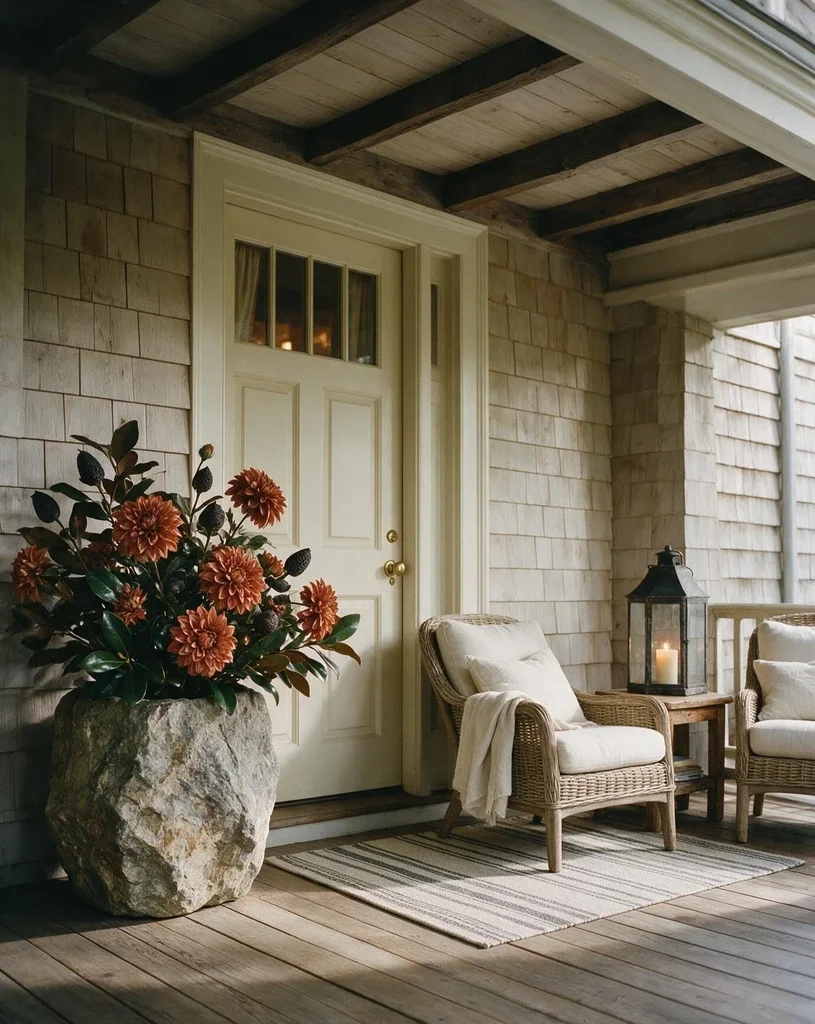
Good faux stems have come a long way, and a container built entirely from artificial material now holds up on a shaded porch all season without a single watering. The trick is mixing finishes — a velvety flower head against a matte seed pod against a glossy leaf — so nothing reads uniformly plastic. Left outside under a roofline, a good arrangement keeps its color from Labor Day straight through November.
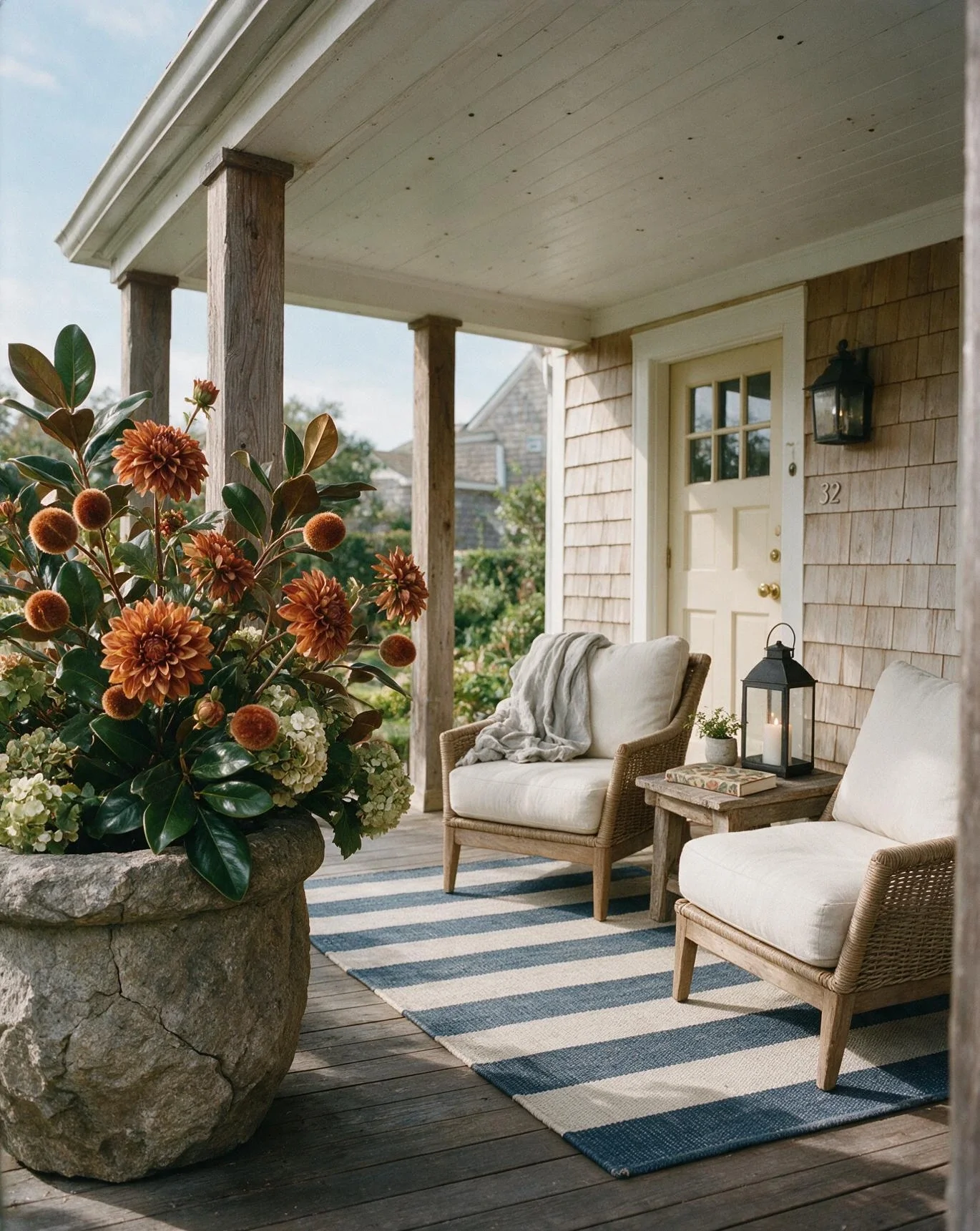
In much of the country this is less a style choice than a practical one: a Phoenix porch bakes at 108 in September and a Minneapolis one freezes by Halloween, and neither is kind to a fresh mum. Homes in those climates lean hard on fake stems for exactly that reason. Choose UV-rated material if the spot catches direct sun, and bring the arrangement in for a rinse under the tap once a month to keep dust from dulling it.
7. Sunny Corners with Bronze Mums
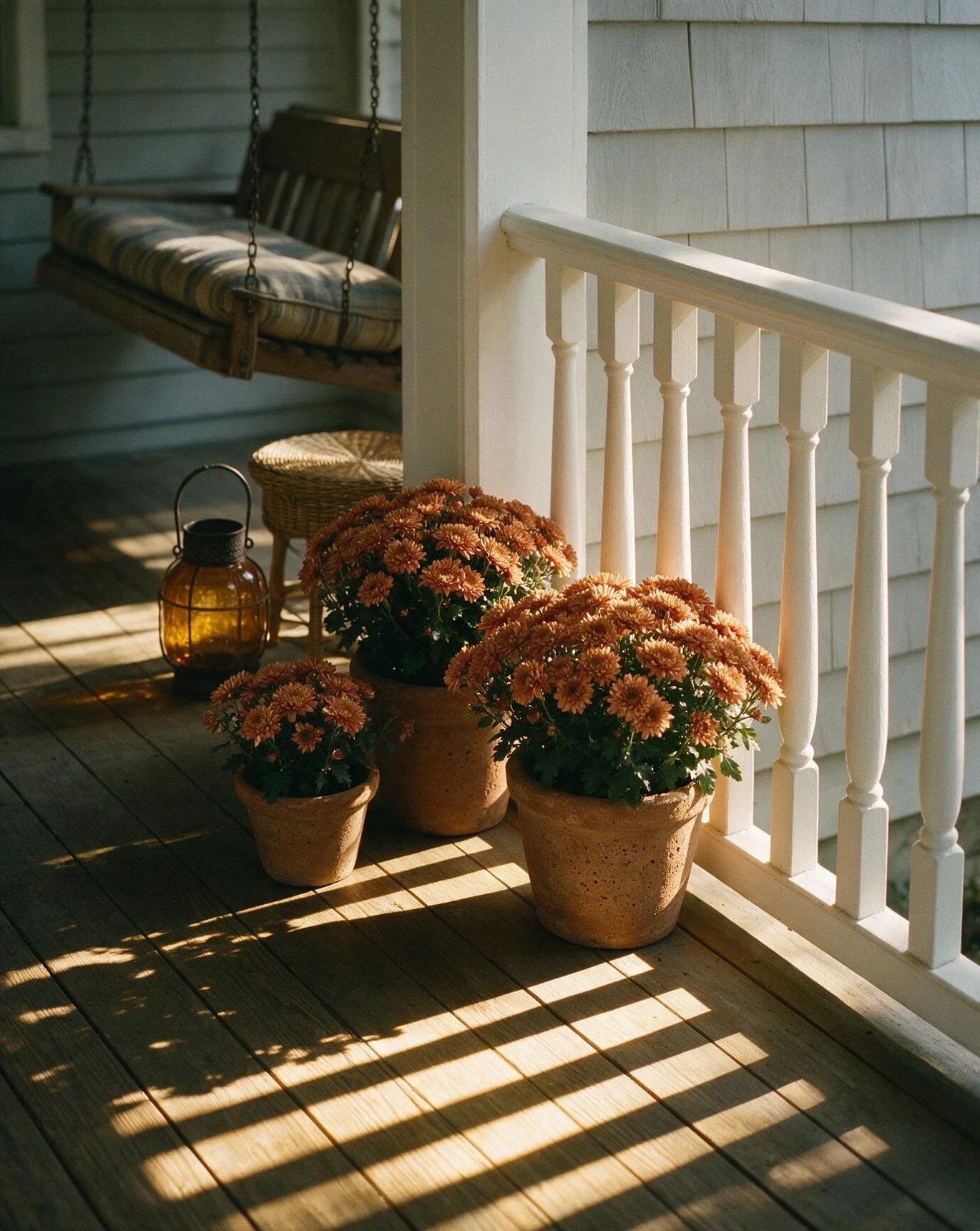
Bronze mums are the color that reads warmest at a distance, glowing rather than shouting when the light goes low around five o’clock. A trio of pots with mums in graduated sizes, tucked into the corner where the railing meets the house, turns a dead spot into the best part of the porch. Bronze also handles full sun without bleaching out the way pale pinks and lavenders tend to by mid-October.

My neighbor keeps three of these clustered by her porch swing every year, and last fall she started dropping a single amber lantern in among them once the evenings got dark. The whole corner went from pretty to genuinely inviting, and she has never once moved the pots since. Buy mums still showing tight green buds rather than open flowers — those give you five or six weeks of bloom instead of one good weekend.
8. Wicker Baskets with Trailing Ivy

Woven baskets bring a warmth that ceramic cannot, and filled with English ivy spilling down over the weave they make one of the most low-maintenance containers you can build. Ivy asks for almost nothing, holds green well past the first frost, and softens hard porch edges beautifully. As a base for outdoor decor it is also endlessly flexible — swap in a gourd or a lantern and the basket reads new again. Truly easy to keep alive.

Line the basket with a plastic nursery pot rather than planting directly into it — the weave rots from the inside within a season otherwise, and the whole thing collapses just as it gets cold. Set the basket on a small riser or a flat stone so air moves underneath and the base stays dry. Trim the longest ivy runners when they reach the floorboards, since anything trailing onto the deck invites a tripped shoelace.
9. Shady Porch Planters Without Flowers

A deep shade porch is not a design problem, it is a different palette. Build the container without flowers and lean entirely on foliage — heuchera in caramel and burgundy, ferns, dark coleus, a low sedum trailing over the edge. Add a few artificial berry sprigs for a hit of red and the whole thing looks intentional rather than compromised. Texture carries the arrangement where color cannot.

The mistake worth avoiding here is overwatering. Shaded soil dries at a fraction of the speed, and most failed autumn containers on covered porches drown rather than thirst. Push a finger two inches down and skip the watering can entirely if it comes up damp. It also helps to keep the leaf sizes varied — three plants with similar foliage in low light read as one green mass from the sidewalk, no matter how good the individual plants are.
10. White Pumpkins and Pale Grasses
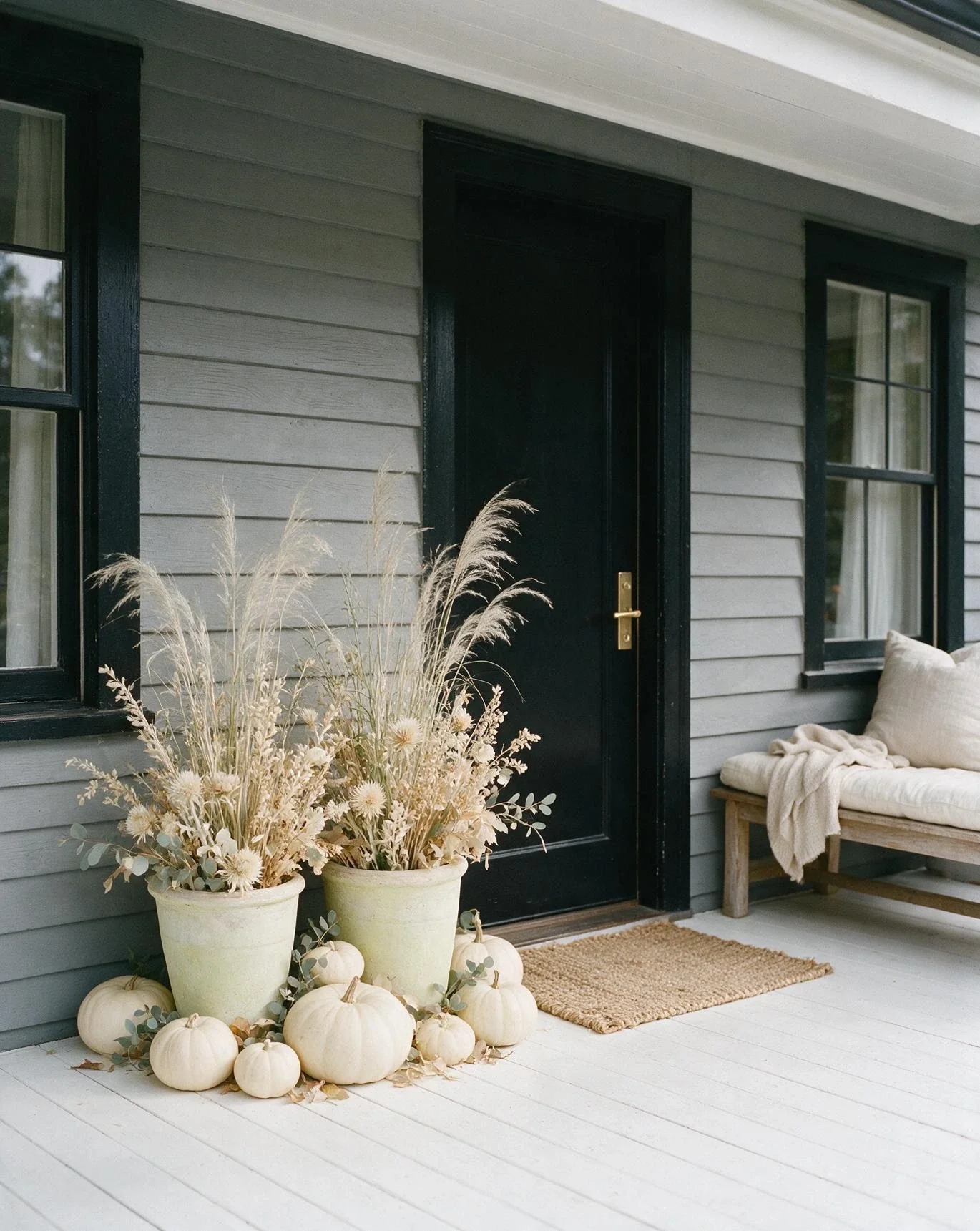
For anyone who finds orange too loud, cream pumpkins against bleached grasses give autumn a cooler, quieter register. The look pairs especially well with gray siding and black window frames, and a few fake flowers in bone and oatmeal tones extend it without adding a single new color. Good fake gourds are worth it here too, since real white pumpkins bruise into brown patches early in the season.

This palette shines brightest on a porch with a painted floor and a light-colored door, where the pale tones read as a deliberate scheme rather than as something washed out. It struggles against red brick, which pulls warmth into everything nearby. If your facade is brick, shift the grasses toward wheat and honey and let the pumpkins stay cream — the arrangement keeps its calm without fighting the wall behind it.
11. Galvanized Tubs for Small Porches

On small front porches, one generous tub beats four little pots every time — it clears the walking path and still gives you presence. A wide galvanized washtub planted with mums, kale and a trailing vine looks abundant while taking up less visual noise than a cluster. This is the most forgiving front porches diy project going, since the container itself supplies all the character and costs next to nothing. Genuinely cheap to pull together.

Twelve to thirty dollars gets you a serviceable tub at a farm supply store, and filling the bottom third with crushed cans or upturned nursery pots cuts the soil bill in half — a big tub otherwise swallows three bags. Total spend usually lands under fifty dollars for something that would run well over a hundred as a glazed ceramic. The metal also survives being dragged across concrete every spring without a chip.
12. Layered Height in Three Pots
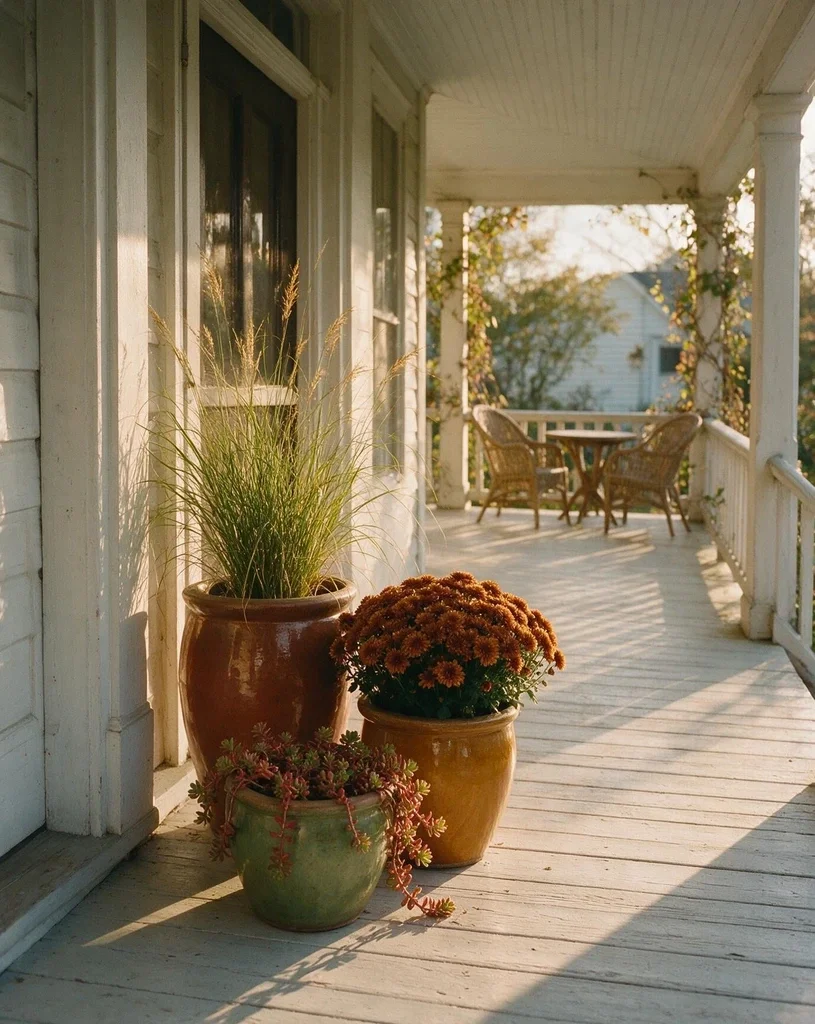
The oldest container rule still works best: something tall in the back, something round in the middle, something spilling over the front. Run that formula across three separate pots of stepped heights instead of one, and a bare entry suddenly has depth. It is the fastest way to make a large blank stretch of porch feel composed, and the clearest starting point for beginners who have never planted a container.
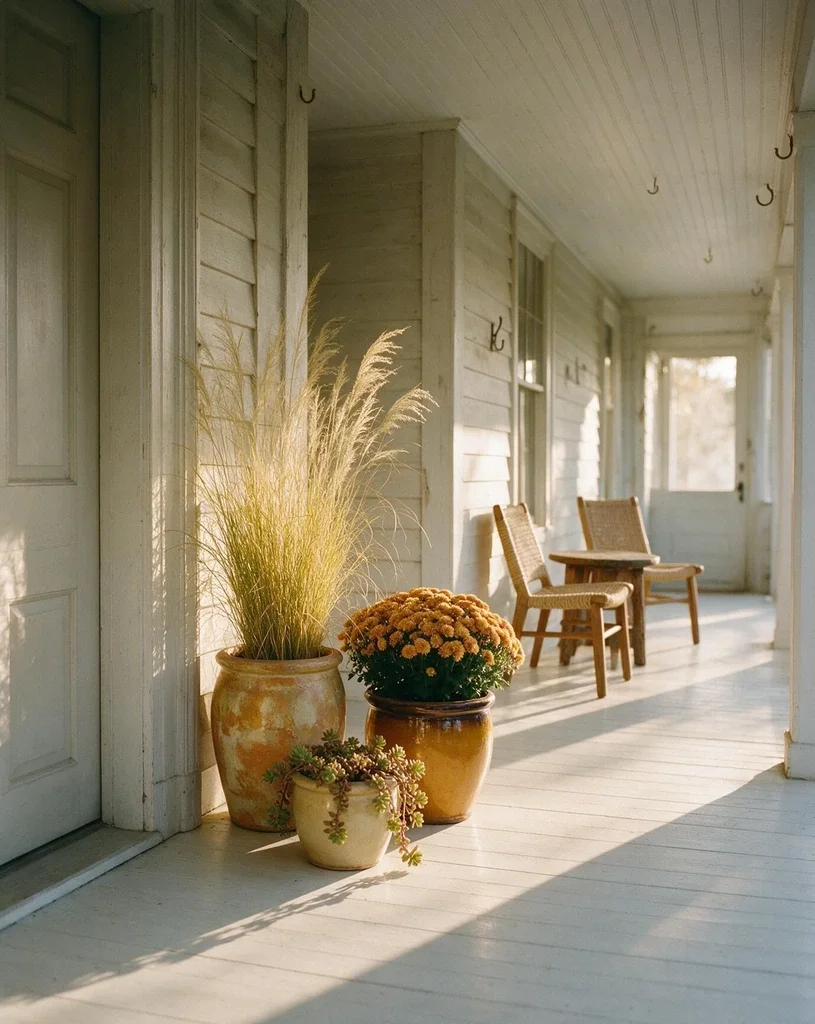
Stylists who shoot entries for shelter magazines usually arrange the three in a shallow triangle rather than a straight line, with the tallest set slightly back toward the wall so the group has a front and a back. They also keep the tallest pot at roughly one and a half times the height of the shortest — closer than that and the tiers stop registering. Uneven numbers photograph better than pairs, which is why the trio persists.
13. Velvet Textures and Deep Burgundy
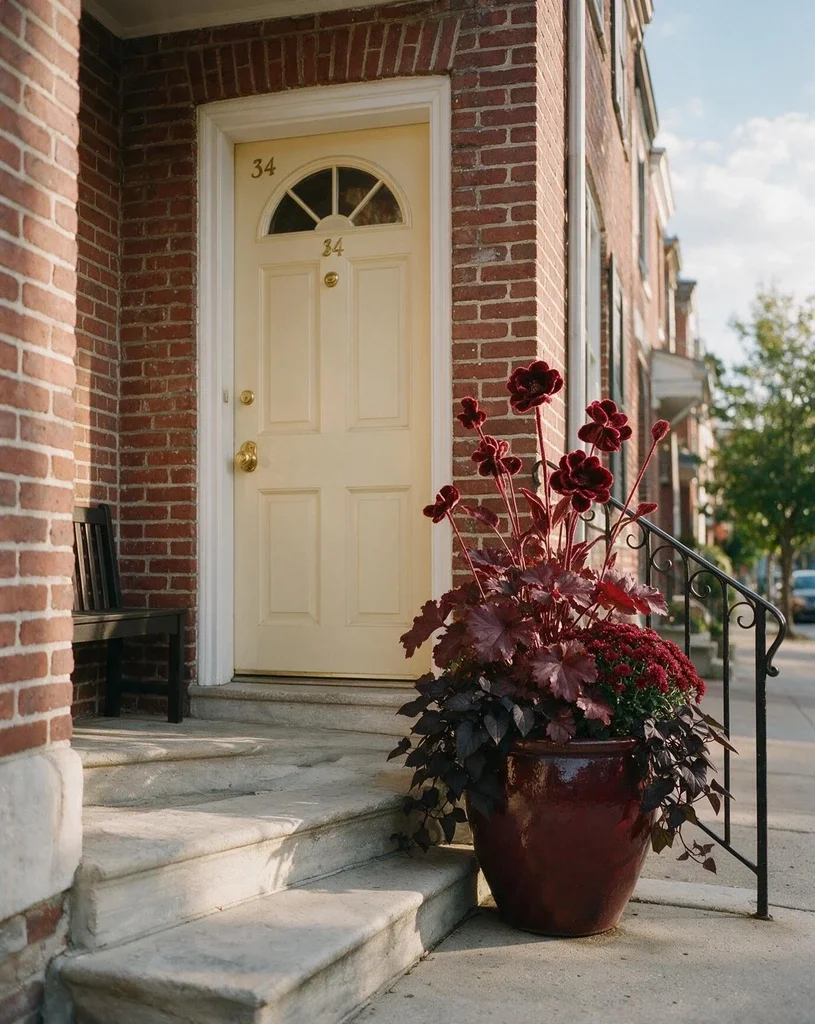
Deep wine tones are having a real moment in outdoor decor, and they look expensive for reasons that have nothing to do with price. Burgundy heuchera, oxblood mums and near-black sweet potato vine build a container with genuine depth, especially against a pale front door. A few faux velvet-textured stems threaded through the middle catch the low afternoon light and give the whole thing a softness real foliage rarely manages.

The palette suits older housing stock beautifully — the brick rowhouses of Philadelphia and Baltimore, the painted Victorians of the Midwest, anywhere the trim is already doing something interesting. On newer builds with lots of gray, add one warm element, a terracotta pot or a jute mat, so the dark tones do not read as heavy. Northern porches get an extra advantage here, since cold nights intensify the burgundy in the leaves rather than fading it.
14. Corn Husk Wrapped Planters

Dried corn husks tied around a plain nursery pot turn eight dollars of plastic into something that belongs on the cover of a harvest issue. The pale ribbed texture is unmistakably autumn, and it makes front porches farmhouse in character with almost no effort. Wrap, bind with twine, tuck the ends under — an easy hour on the kitchen table. It is outdoor styling that costs less than a bunch of grocery-store flowers.

I tried this on a whim two Octobers ago with husks from a farm stand and a length of baler twine, expecting it to last a week. The wrap survived two rainstorms and was still holding its shape at Thanksgiving, when I finally swapped the mums out for evergreen boughs. Soak the husks for twenty minutes before wrapping and they bend without splitting, then dry tight against the pot like they were made for it.
15. Modern Concrete Cubes with Sedum

Square concrete planters holding tight mounds of sedum and dwarf grasses give a modern entry the autumn cue it needs without a single gourd in sight. The rusty seed heads of autumn sedum do all the seasonal work, and the gray cube keeps the mood architectural. For front porches modern in style, this pairing is hard to beat, and sedum’s succulent leaves make it one of the more low-maintenance options available.

Set the cubes flush with an architectural line — the edge of a step, the plane of a column, the seam of the walkway — because the geometry is the point and a pot at an angle undercuts it. Sedum needs sharp drainage more than anything else, so cut the potting soil with a third part coarse sand or fine gravel. Concrete holds cold, which slows the roots but also keeps the leaves crisp deep into November.
16. Amber Lanterns and Autumn Pots

Once the clocks change, a planter that only works in daylight is doing half a job. Set a glass lantern in among the pots and the group keeps working after dark, glowing against the siding. Left outside on a covered landing, battery candles handle rain and wind without fuss. Fill the surrounding containers with fake flowers in amber and copper and the light picks them up beautifully, giving front porches real presence at six in the evening.
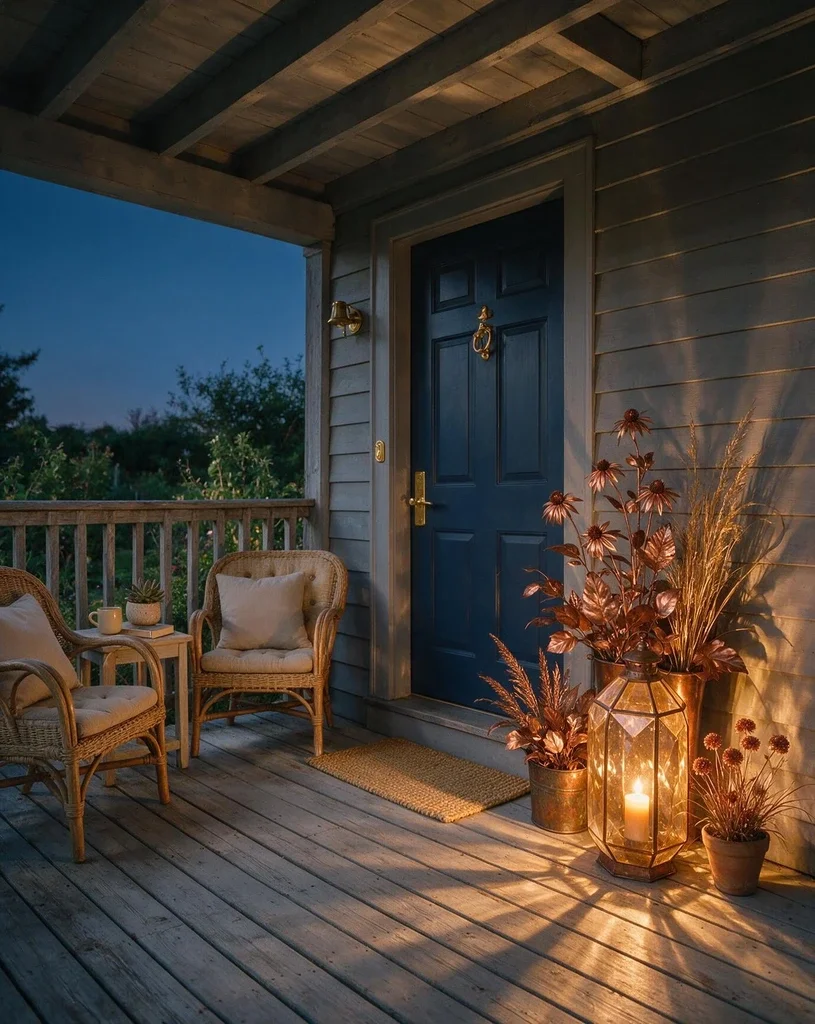
What people actually do, once the lantern is out there, is stop turning the porch light on at all — the softer glow is nicer to come home to and it flatters the plants far more than a bare bulb overhead. Timers get set for four-thirty and then never touched again all season. Keep the lantern back against the wall rather than near the steps, where it stays out of the way and lights the pots from the side.
17. Window Boxes for Cool Mornings

Window boxes are the easiest way to carry a house from summer to fall, because the frame is already there and only the filling changes. Pull the spent petunias, drop in kale, pansies and a few trailing vines, and the front of the house resets in twenty minutes. Doing it early — mid-September, while the light is still generous — gives the roots time to settle. On small front porches, boxes add color without taking a single square foot of floor.

Boxes are a fixture of older neighborhoods across New England and the upper Midwest, where narrow lots left no room for beds and the front window became the garden instead. That history is worth borrowing from: those plantings were always dense, always a little overflowing. Pack yours tighter than feels reasonable, roughly a third closer than the nursery tag suggests, since nothing has time to fill in before the cold arrives.
18. A Single Statement Urn

One really good container, properly scaled, outperforms a crowd of small ones every single time. A large footed urn beside the front door, planted high and full, gives an entry the same weight a good piece of furniture gives a room. Fill it with grasses, mums and artificial berry stems for height, and the arrangement holds up from the street as readily as from the top step.

Landscape designers tend to place the single urn on the hinge side of the door rather than dead center between two windows, so it frames the approach instead of blocking the view out. They also plant to about one and a half times the urn’s height, which sounds excessive on paper and looks exactly right in person. If the urn is resin rather than stone, weight the base with paving sand before the soil goes in.
19. Twiggy Branches over Low Bowls

Bare branches rising out of a shallow bowl of moss and gourds is a look with real restraint — sculptural, almost Japanese, and entirely buildable without flowers. Curly willow, birch and red dogwood all hold their shape for months and read beautifully in shade, where blooms would sulk anyway. Since there is nothing to keep alive, it is an ideal first arrangement for beginners testing what they actually like.

The usual misstep is cutting the branches too short, which leaves them hovering awkwardly over the rim; aim for at least twice the bowl’s width so the silhouette has somewhere to go. The second is skipping the anchor — branches need florist foam or wet sand under the moss or the first gust rearranges them. Set the bowl on a console or a wide step wall rather than the floor, where the twigs would sit below the sightline.
20. Terracotta Warmth in Full Sun

Terracotta and autumn light were made for each other — the clay warms as the sun drops and the whole grouping turns golden around five. Unglazed pots also breathe, which helps in full sun where roots cook in plastic. A cluster of three or four in mismatched sizes, planted with mums and a low sedum, gives an outdoor entry that easy Mediterranean looseness rather than a stiff matched pair.

South and west-facing steps are where terracotta really earns its place, especially in the Southwest and across California, where the clay’s porosity keeps roots from overheating through a hot September. Where winters freeze hard, keep the pots on a sheltered porch under a roofline rather than out on open stairs — trapped moisture in the clay is what cracks them, not the cold itself. A pot foot underneath solves most of that.
21. Berry Sprigs in Copper Pails
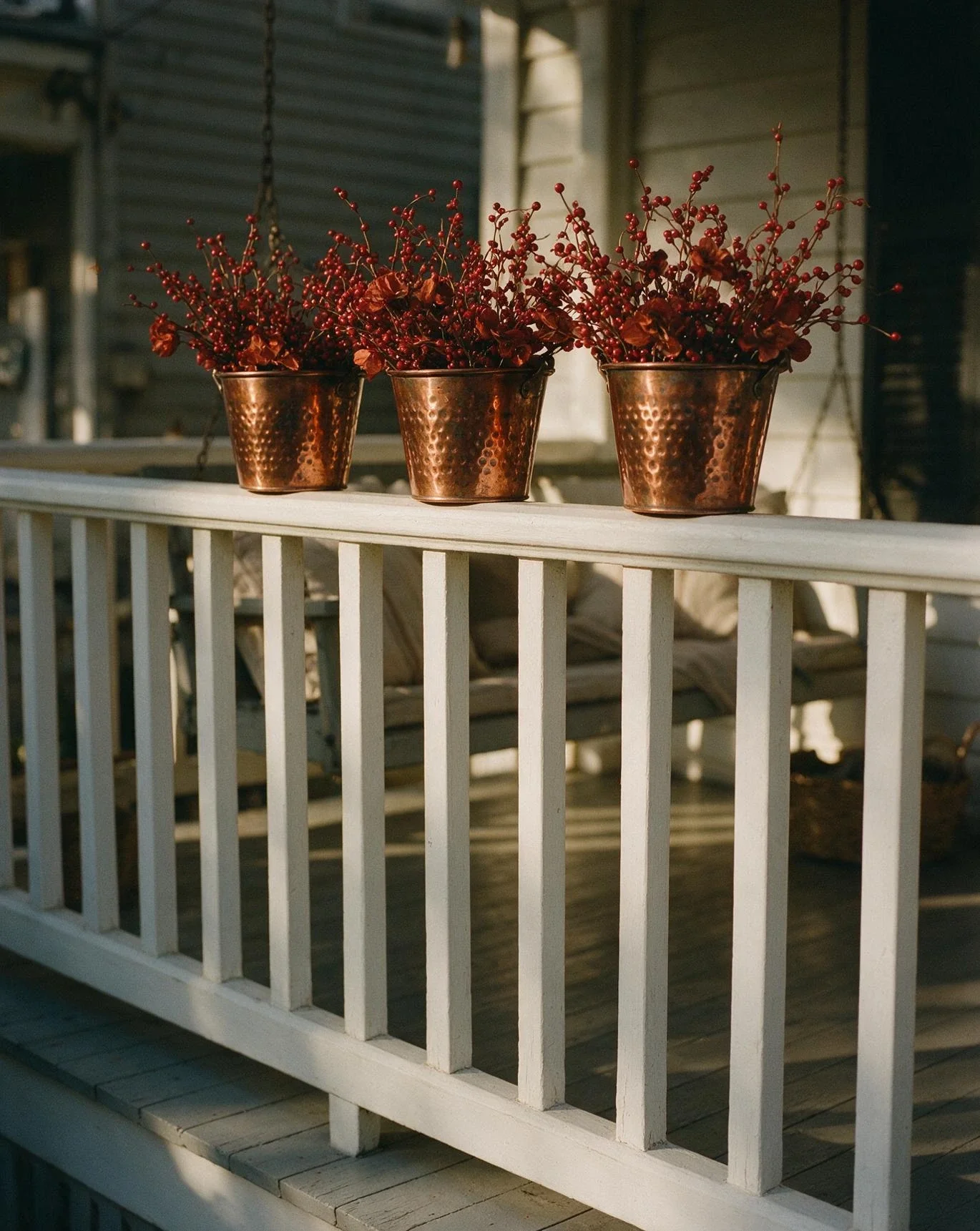
Copper against red berries is one of those combinations that looks styled by a professional and takes about ten minutes. Small hammered pails filled with dense clusters of fake flowers and winterberry stems line up along a railing or a step edge with real charm. Working with fake flowers here is the smarter call, since real berries drop within days and stain the boards. Reliably cheap once the pails are yours.
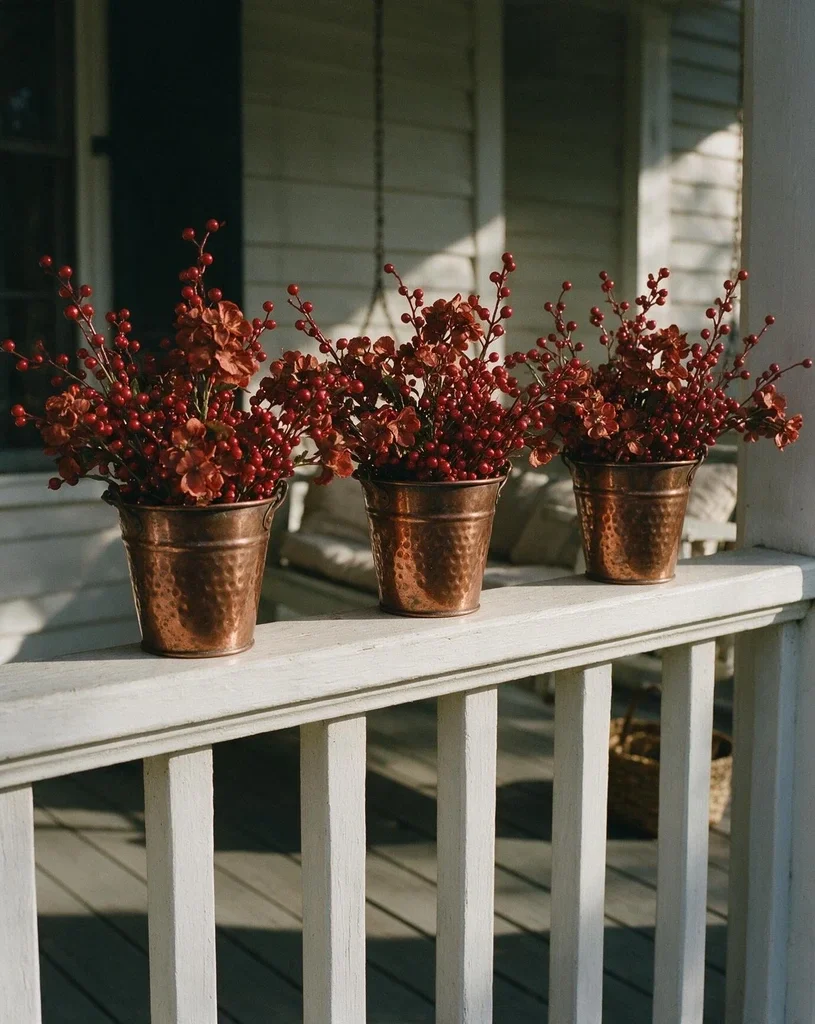
Thrift shops and estate sales turn up copper pails for four or five dollars apiece, and a bundle of berry stems runs about six at a craft store during their autumn sale. Three complete pails for under thirty dollars, reusable every year, beats a single florist arrangement at the same price. Skip the polish — the darker patina reads richer against red and saves you the annual chore of shining them back up.
22. Evening Glow with Woven Baskets

The last look is the one that pulls everything together: woven baskets, warm string lights along the eave, and pots grouped where people actually pause before knocking. Layering baskets with pumpkins and grasses gives front porches a lived-in generosity that a single tidy planter never achieves. It is the direction the best entries are heading in 2026 — softer, warmer, built for standing around in on a cool evening.

A friend of mine strung one line of café bulbs above her baskets last October, mostly as an afterthought, and ended up eating dinner out there three nights that week in a sweater. She left the lights up through February. Warm-white bulbs at 2200K make the difference — anything cooler flattens the baskets and turns the whole grouping blue, no matter how well the plants are doing.
There is no single right way to build a fall planter, and half the fun is seeing what other people came up with using the same three plants. Which of these would you actually try on your own steps this year? Tell us in the comments — the best ideas always come from readers.