Shelves are usually the first thing that shifts when the season turns. They’re small, highly visible, and easy to restyle on a Sunday afternoon, which is exactly why fall shelf styling floods Pinterest boards the moment August rolls in. Americans keep searching for it because one well-layered ledge can warm an entire room without a repaint, a new sofa, or a single contractor. Below are 22 fall shelf looks for 2026, each shown twice, with notes on how the styling actually holds up in a house people live in.
1. Warm Neutrals for Open Shelves
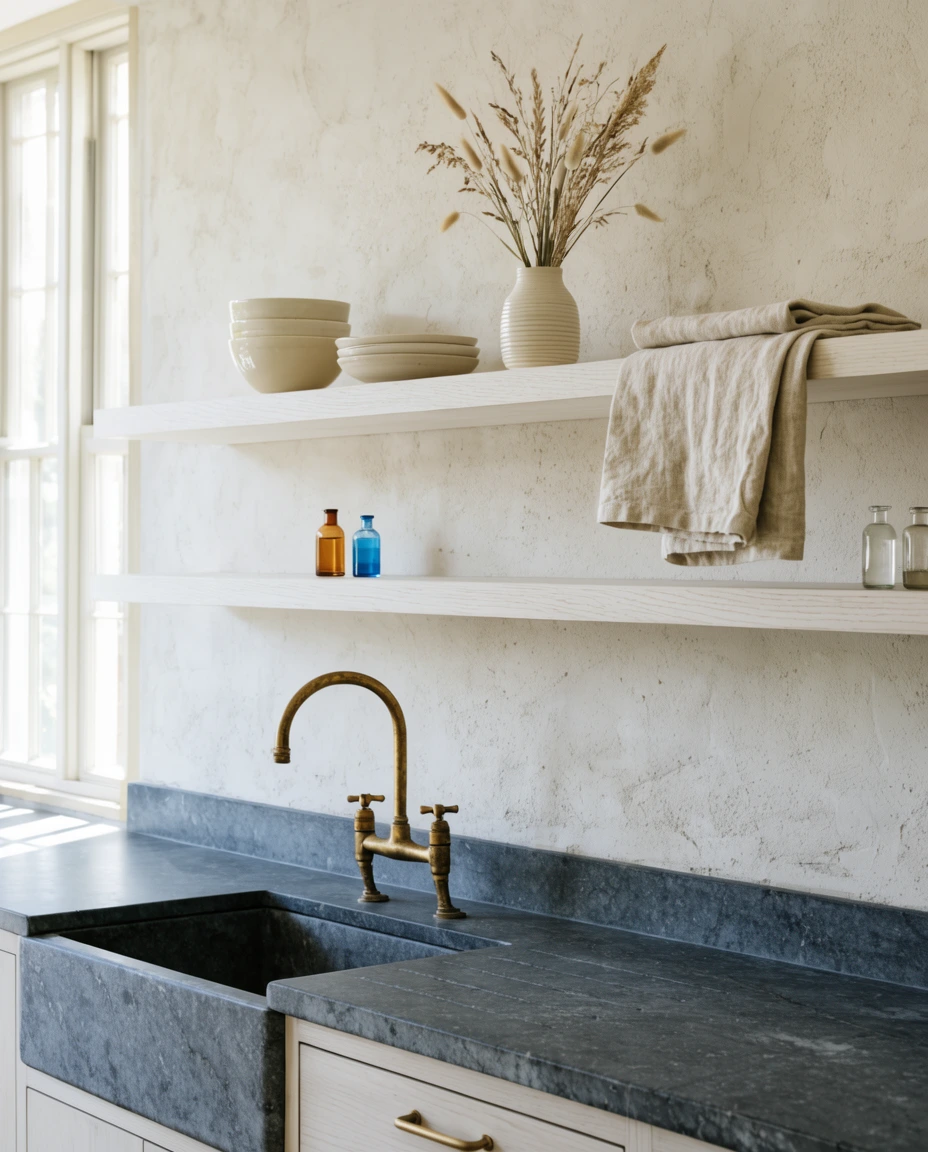
Autumn doesn’t have to arrive in orange. A neutral palette of oatmeal, bone, clay, and soft taupe reads as fall the second you add texture, and it suits open kitchen shelving and living room built-ins in equal measure. Keep the shapes simple — a stack of pale bowls, one ribbed vase, a linen runner folded over the edge. That’s the quiet aesthetic that makes fall shelf decorations look collected over years instead of unpacked from a bin last weekend.

What keeps a pale shelf from falling flat is variation in height, not variation in color. Set one tall vessel, one mid-height stack, and one low bowl in a loose triangle, then leave about a third of the ledge bare so the eye has somewhere to land. Texture handles the rest — nubby ceramic beside smooth glass, raw wood beside pressed linen. Bulb temperature matters more than people expect here, since cool white light drains the honey right out of every beige you own.
2. A Cozy Autumn Vignette
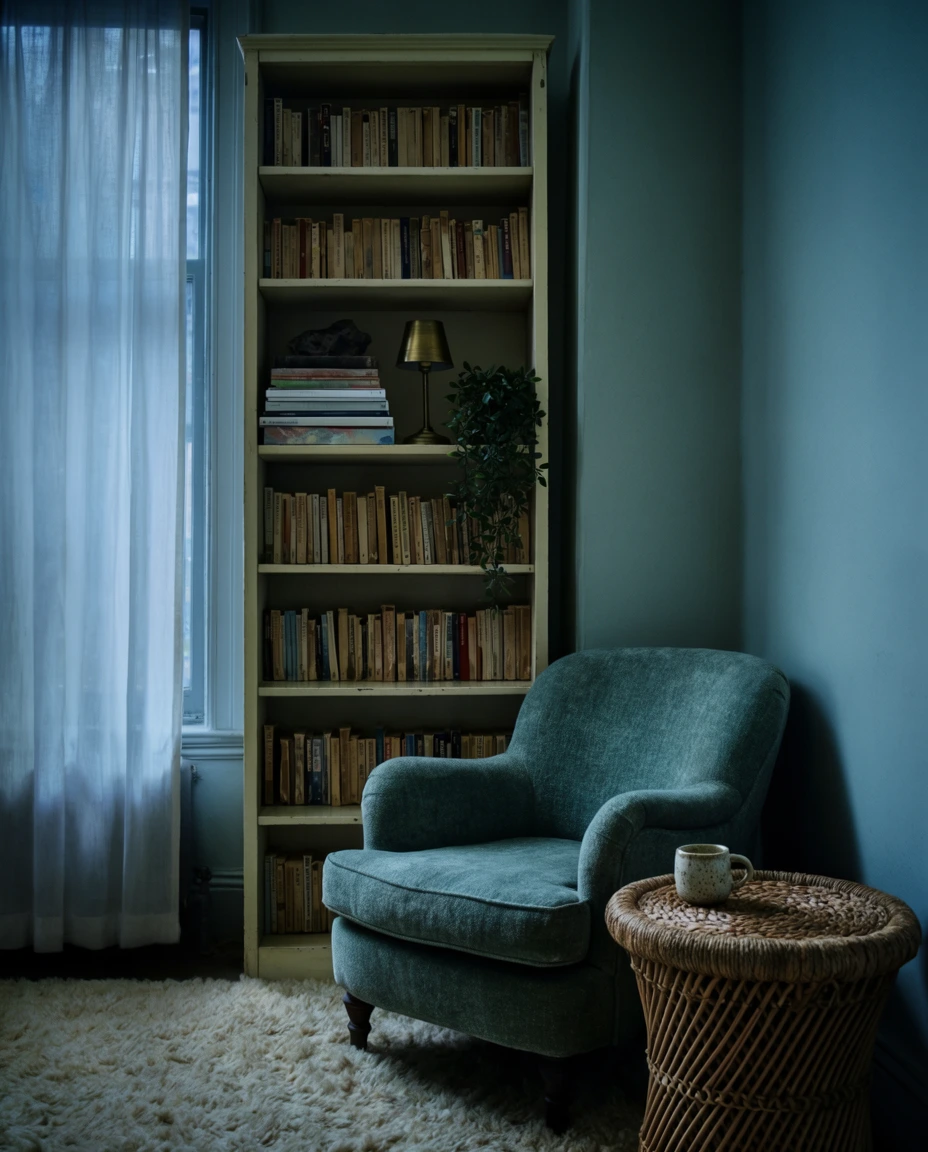
One shelf, styled with care, can set the temperature of an entire living room. A cozy vignette tends to work in threes: something living, something old, something soft. A trailing pothos, a short stack of well-read hardcovers, a wool-wrapped candle in amber glass. Most ideas living room cozy corners borrow from come down to layering rather than volume — three good pieces at three different heights beat a dozen small ones fighting for the same square foot of pine.

A reader in Providence told me she rebuilt the same shelf four times one October before realizing the problem was the wall behind it, not the objects on it. She hung a small oil sketch as a backdrop, and everything in front of it finally had somewhere to belong. That’s the fix most vignettes need — a visual anchor at the back, then softer pieces stepping forward toward the edge, each one slightly overlapping the last.
3. Farmhouse Crocks and Dried Wheat

Stoneware crocks earn their keep every fall. Their heavy shoulders and salt-glazed bellies give a farmhouse shelf real weight, and a loose bundle of dried wheat leaning out of one is the whole look in a single gesture. Pair them with a rustic cutting board and a small ironstone pitcher. Among ideas living room farmhouse spaces come back to year after year, this one holds up because none of it depends on holiday-specific pieces you’ll box away by November.

Across the Midwest, wheat sheaves have hung on kitchen walls since long before anyone photographed them, and the harvest association runs deep enough that the look never reads as costume in Iowa or Nebraska. On the coasts it lands differently — a little more decorative, a little more chosen. Either way, dried wheat holds its color through December and costs almost nothing at a farm stand, which explains its long run on autumn shelves.
4. Moody Shelves Without the Gloom
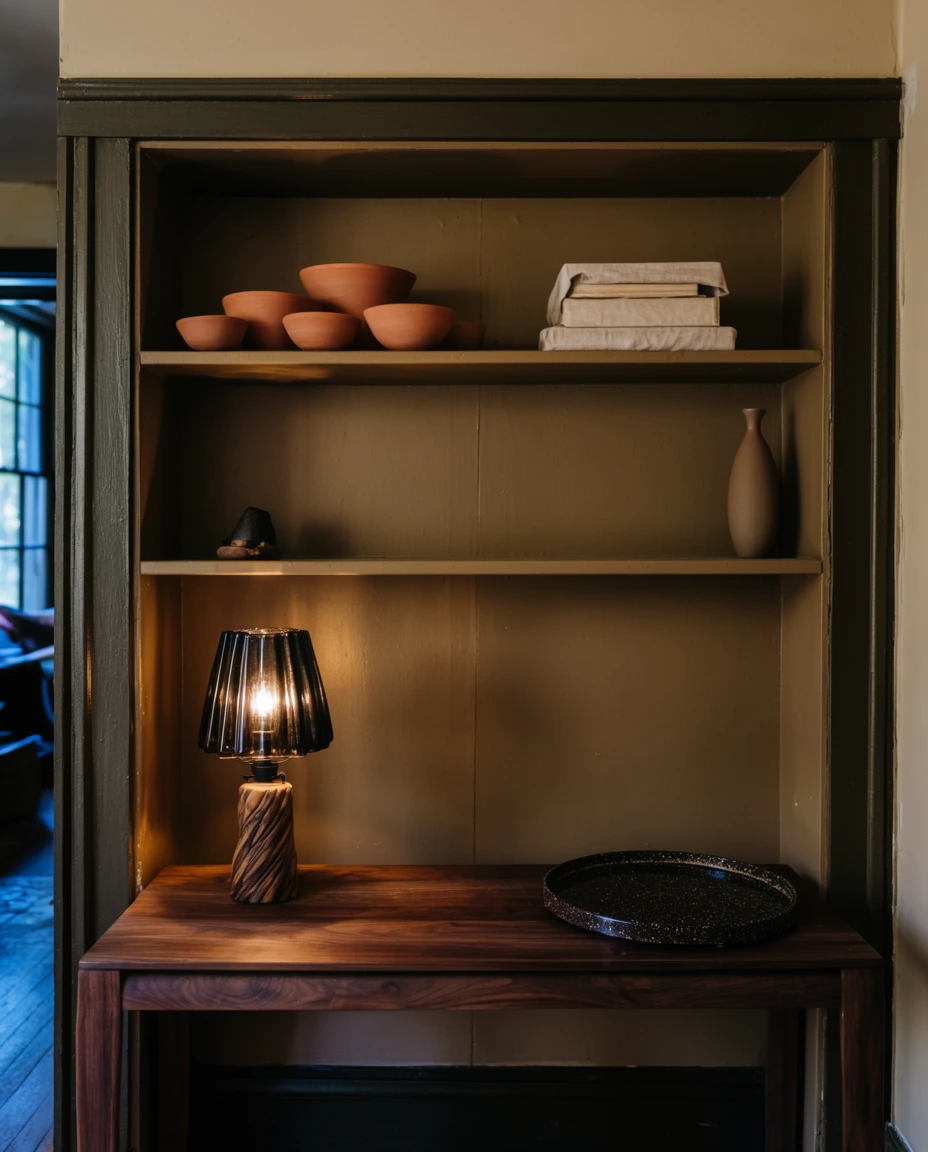
Dark shelves have a reputation for swallowing a room, but the good ones never do. The moody version of fall styling paints the shelf interior charcoal or deep bronze-green, then loads it with objects that catch light — mercury glass, unglazed terracotta, cream linen, a brass candlestick. Of all the fall shelf decorating ideas circulating right now, this is the one that flatters older homes best, and it opens up dozens of quieter ideas once the backdrop stops competing.
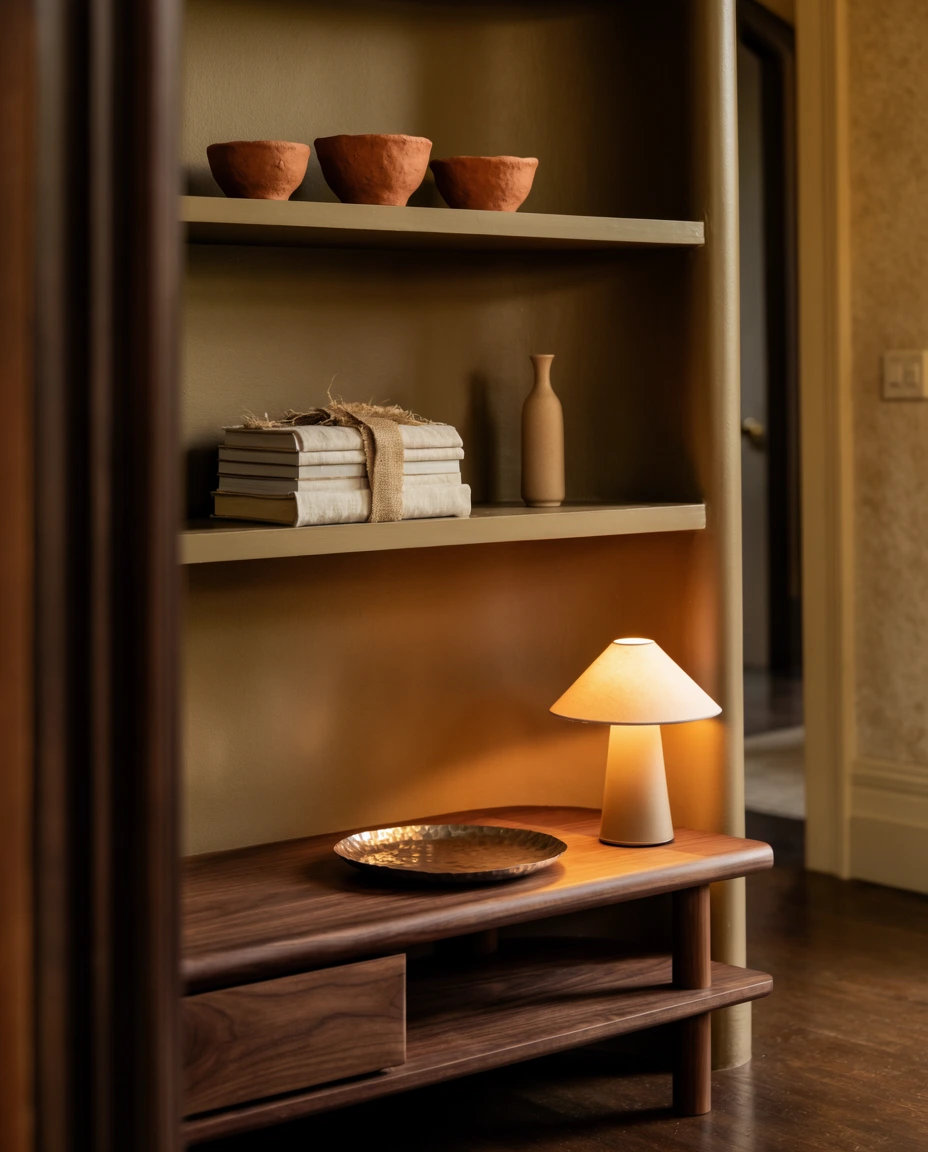
Designers who work in dark paint tend to give the same instruction: contrast the value, not the color. A near-black shelf wants pale objects with matte finishes, because glossy pieces will bounce hot spots back at you and flatten the depth you just paid for. They’ll also tell you to paint the back panel and the underside of each shelf, not only the frame — half-painted shelving reads as unfinished from every angle in the room.
5. Kitchen Shelf Styling in Amber

Amber glass does something to a kitchen in October that no pumpkin can match. Apothecary jars, honey-toned tumblers, a squat bottle of olive oil catching afternoon sun — the color reads as warm without leaning holiday. The strongest ideas kitchen shelves benefit from group amber by tone rather than scattering it, so the glass builds one glowing band across the ledge. Save the pin for real inspo and copy the grouping, not the exact objects.

This works best on a shelf that gets direct afternoon light — a west-facing window wall, or the run of open shelving beside a sink that catches the low sun after four o’clock. In a dim galley kitchen the same glass turns muddy brown and loses the point entirely. If your only open shelving sits on an interior wall, a small puck light tucked under the upper shelf will do what the window can’t.
6. Layered Books and Little Pumpkins
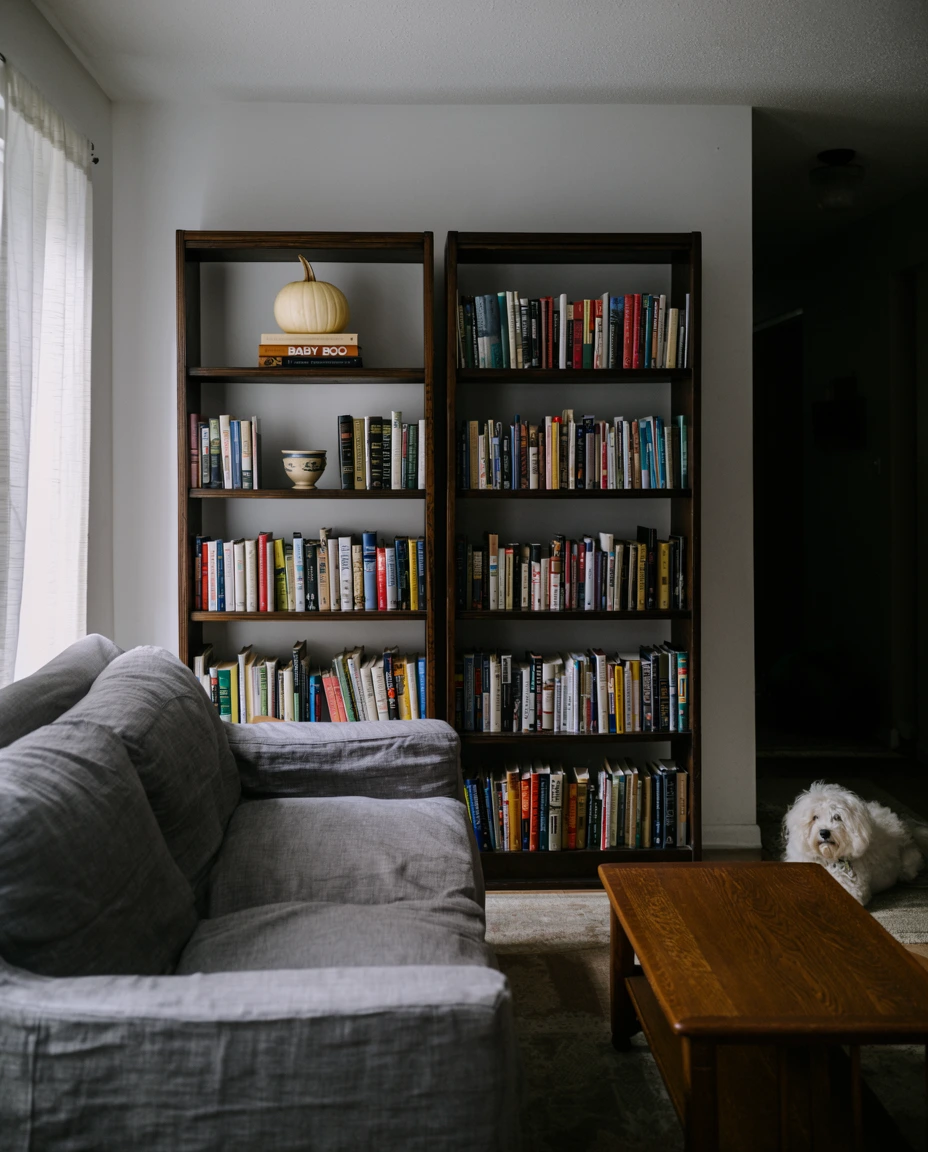
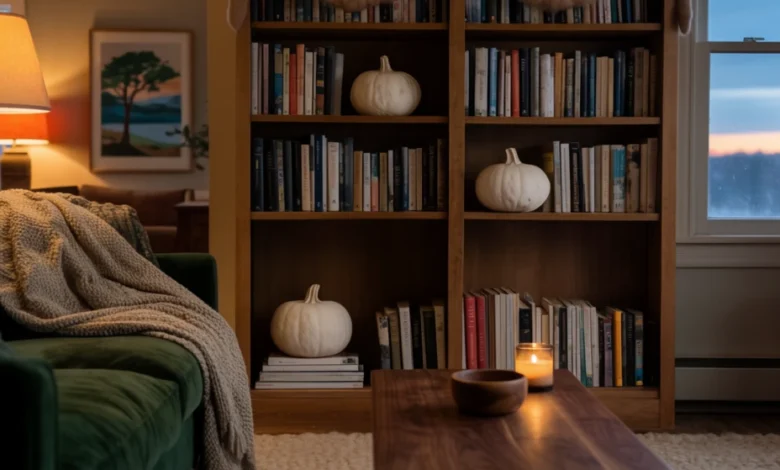
Books are the most underused fall styling tool in the house. Stack three horizontally, jackets off, spines facing out, and set a single pale gourd on top — that’s the whole move. The best ideas living room shelves rely on stay this simple because books provide the height and the color story for free. Among all the ideas people save each September, this is the one you can execute tonight with what’s already on your coffee table.

Cost-wise it’s almost embarrassing. Real mini pumpkins run about a dollar apiece at most grocery stores through October, and the cream-colored Baby Boo variety photographs better than anything sold as decor for fifteen times the price. Buy nine, use six, keep three in a bowl on the counter. When they soften in November, compost them and you’ve spent less on the season than one candle would have cost you.
7. The Simple Three-Object Rule

Three objects per shelf. That’s it — one tall, one wide, one small enough to almost disappear. The rule sounds reductive until you try it and watch a cluttered built-in resolve into something calm. Simple arrangements photograph better and dust faster, which is why so many fall shelf decorating ideas quietly follow it without saying so. It suits a modern room especially well, where negative space is doing as much work as the objects themselves.
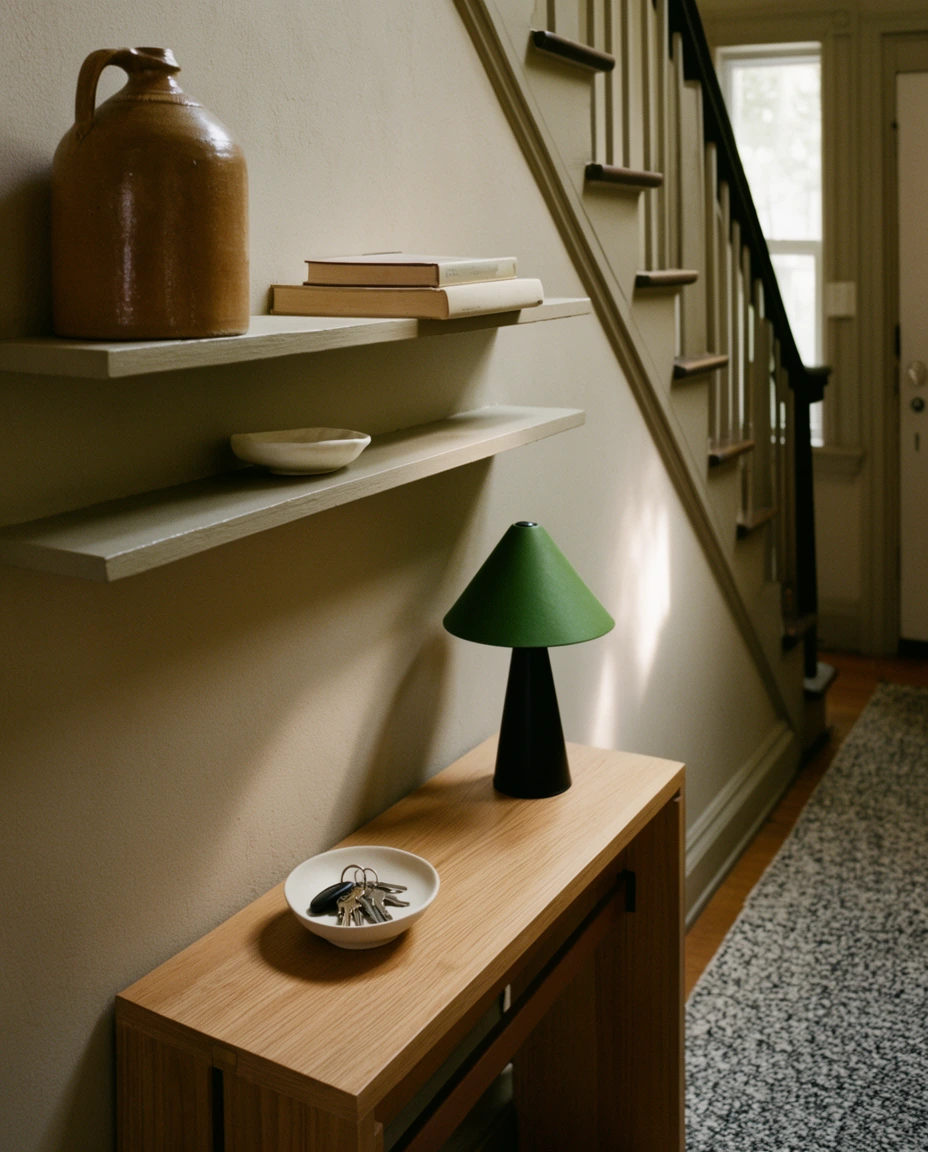
Watch what actually happens in a house and the rule proves itself. People set down mail, mugs, and reading glasses on any open ledge within arm’s reach, so a shelf packed edge to edge is a shelf that stays messy by Wednesday. Leaving a bare stretch at one end gives the household a landing spot that doesn’t wreck the arrangement. Style the top shelves tightly, keep the lowest one loose, and the whole unit stays presentable.
8. Bedroom Shelves with Linen Texture

A bedroom shelf should feel softer than one in a kitchen, and linen is how you get there. Drape a washed flax runner over the edge, fold a small throw into a loose square, add a stoneware lamp with a paper shade. Keep everything in a neutral range — flax, chalk, mushroom, warm gray. Most ideas bedroom shelves succeed with in autumn skip decor entirely and lean on fabric, which absorbs light instead of reflecting it back at you.

The usual misstep is treating a bedroom shelf like a display case and filling it with breakables at eye level beside the bed. It reads busy from the pillow, which is the only angle that matters in that room. Push fragile pieces to the outer edges, keep the center calm, and give one shelf over entirely to things you touch — a book, a water glass, a small dish for earrings.
9. Rustic Wood and Woven Baskets
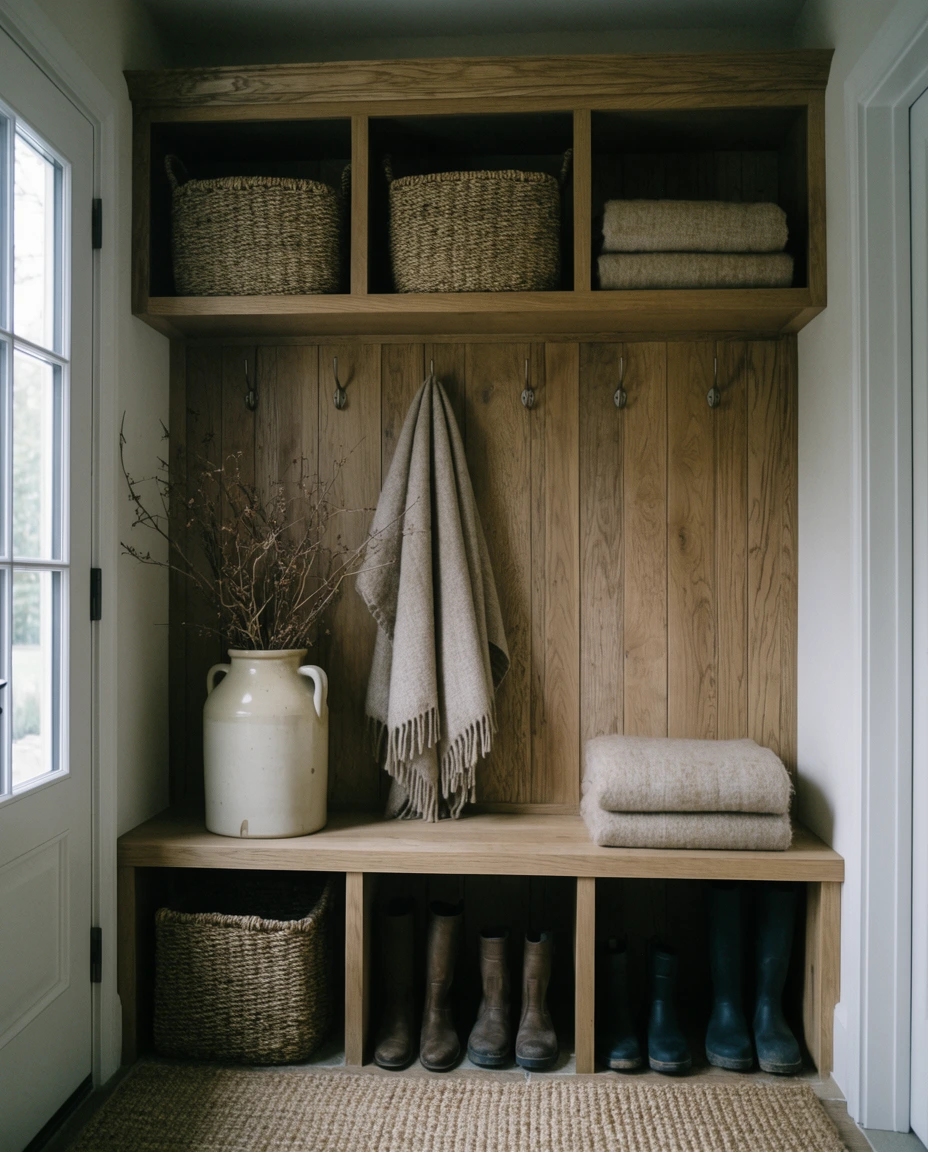
Baskets solve two problems at once, which is rare in decorating. A row of woven seagrass or split-oak baskets along a lower shelf hides the mess and adds exactly the rustic texture autumn calls for. Above them, thick wood shelving with visible grain does the heavy lifting. Farmhouse rooms have relied on this pairing forever, and it remains one of the most repeatable ideas living room farmhouse styling leans on when the built-ins run floor to ceiling.
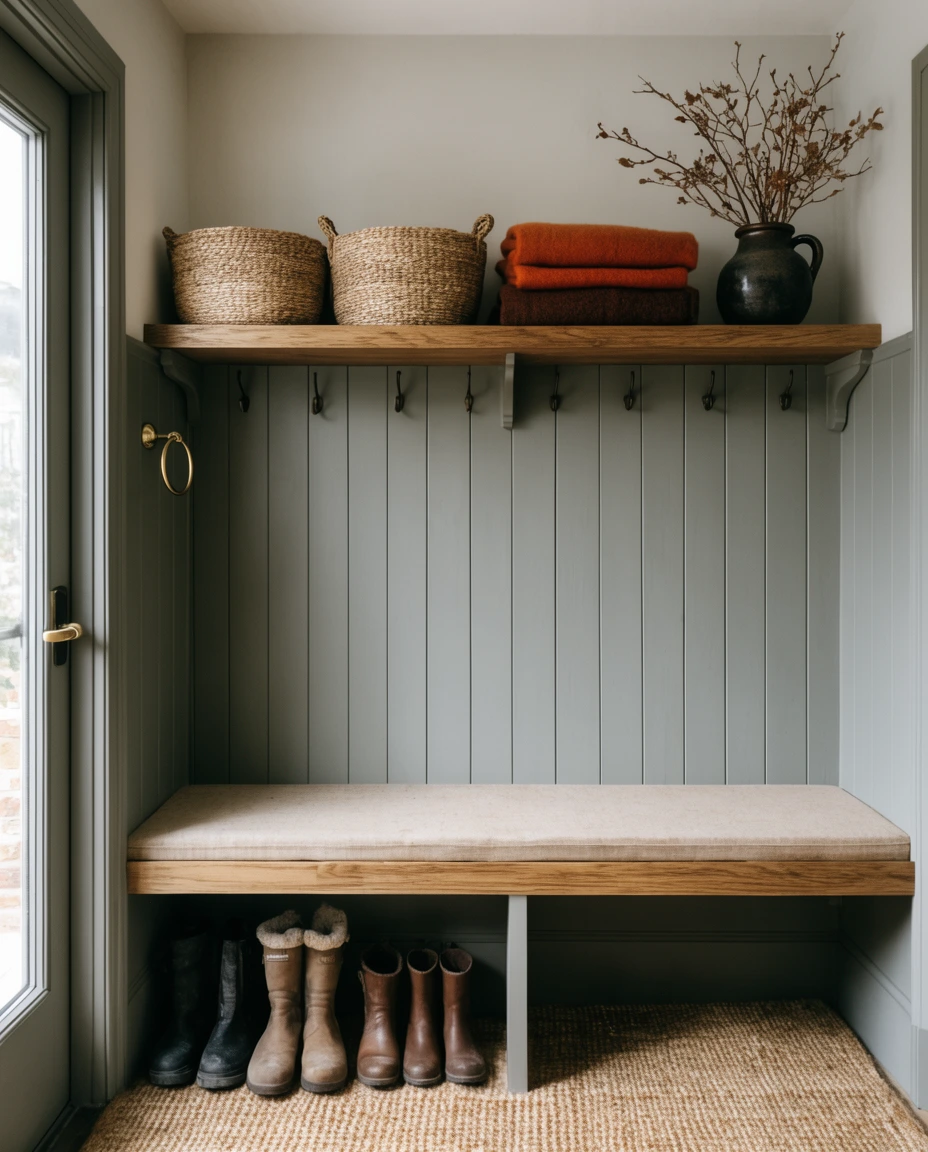
Measure the shelf opening before you buy anything woven, because baskets are almost always listed by their widest point and most flare outward toward the rim. An inch of clearance on each side keeps them from wedging in and scuffing the paint every time they come out. Fill them with the things that otherwise pile up — throws, board games, charging cables — and the shelf stays styled even on the weeks nobody tidies.
10. Modern Minimal Fall Shelves
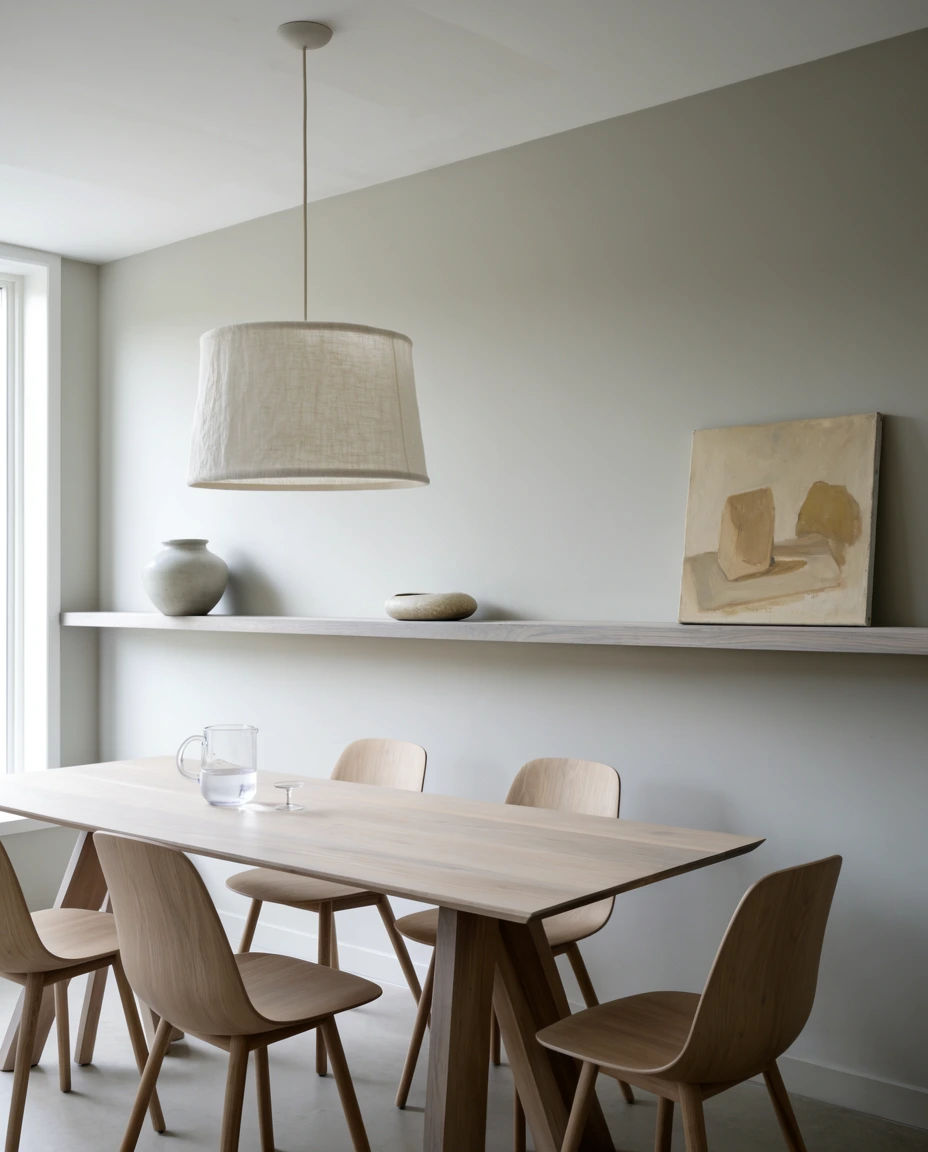
Minimalism and autumn aren’t opposites. A modern fall shelf trades gourds and garlands for one sculptural branch in a tall matte vessel, a single unglazed bowl, and a slab of pale travertine. The season shows up through material and shadow rather than motif. That restrained aesthetic photographs beautifully on white oak floating shelves, and it gives you a base that carries into winter — which is why these particular ideas keep resurfacing every year.
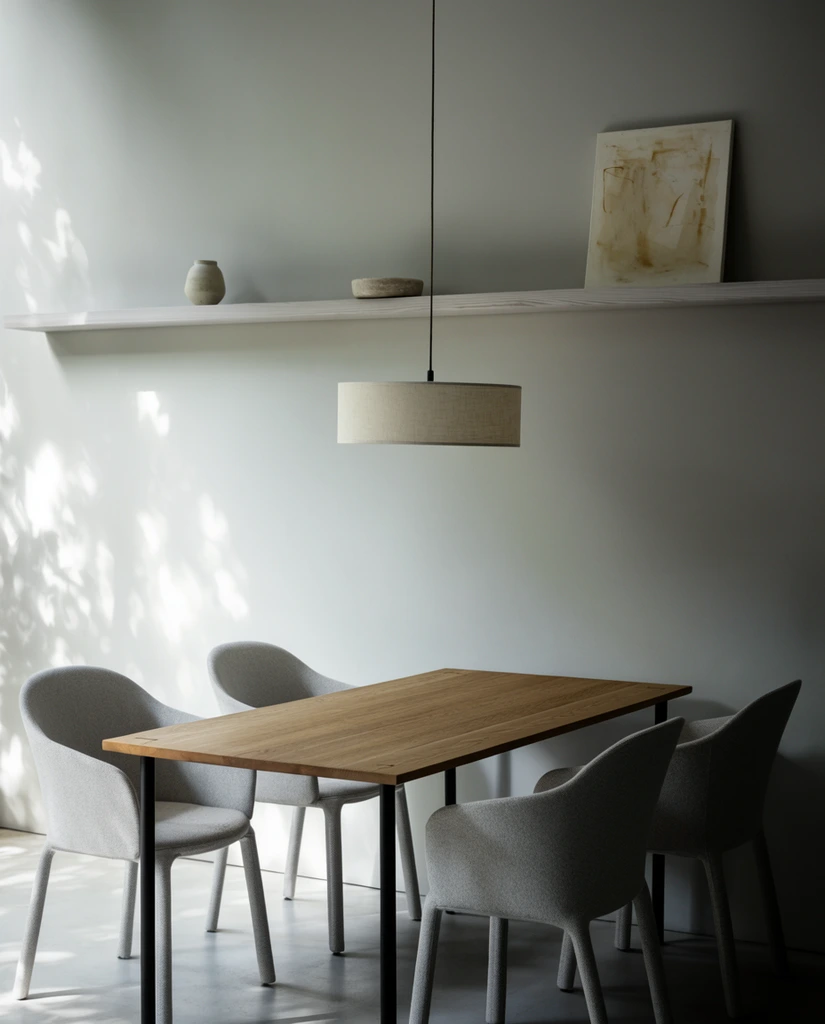
Stylists who work on minimal interiors talk about giving each object a “shadow budget” — the darker the room’s palette, the fewer pieces it can hold before shadows start merging into a single mass. Their working method is to place one object, step back to the doorway, then place the next. It sounds fussy, but it’s the difference between a shelf that looks edited and one that just looks sparse.
11. Halloween Charm Without the Kitsch

You can do halloween without a single plastic skeleton. The grown-up version leans moody: black taper candles in mismatched brass holders, a dark inky-blue vase, one antique book with a cracked spine, dried black-purple hydrangea. Add a small pewter raven if you want the wink. These are the fall shelf decorations that stay up from the first of October through Thanksgiving because nothing on the shelf announces a specific date.

This suits an entry console or a dining room hutch far better than a kid-facing family room, where the trick-or-treat energy wants something brighter and more literal. It also lands well in older homes with dark trim and picture rails, where the shadows already exist and the styling just agrees with them. In a bright white new-build, the same objects can read severe unless you warm the light considerably.
12. Thrifted Brass in Autumn Light

Nothing catches October sun like old brass. Candlesticks, small trays, a dented bud vase, a pair of bookends — all of it warms a living room shelf the moment the light angles low through the window. Unlacquered pieces with real patina beat polished new ones every time. The ideas living room autumn styling depends on most are about reflection, and brass gives a cozy glow that no matte object can replicate after four in the afternoon.

My neighbor buys brass the way other people buy produce — a piece or two every Saturday at the same estate sale circuit, never more than eight dollars each. Her mantel now holds eleven candlesticks of different heights and it looks like something out of a magazine. The lesson is that brass wants a crowd. One lonely candlestick reads like an afterthought; six of them clustered together read like a collection.
13. Bathroom Shelves for Crisp Mornings

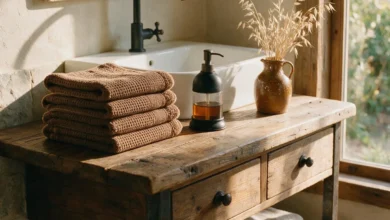
The bathroom gets forgotten in October, which is a shame — it’s the room you see first every morning. Roll waffle-weave towels in a low basket, decant soap into an amber pump bottle, add a small eucalyptus bundle and one squat candle. Keep it simple and stay in a neutral range so the shelf still works in March. A single warm-toned element is usually enough to shift the whole room seasonal.

In older housing stock across the Northeast and the upper Midwest, bathrooms tend to be small, tiled, and short on storage, so open shelving above the toilet or beside the sink is often the only surface available. That constraint actually helps — with three feet of ledge you’re forced to choose, and the result reads intentional. In newer Sun Belt builds with wide vanities, the same look needs more spacing to avoid feeling sparse.
14. Front Porch Shelf Moments

A weathered ladder shelf or a simple wall-mounted plank turns a porch into a room. Line it with potted mums, a galvanized bucket of dried corn, a lantern, a folded plaid blanket for evenings. The ideas front porch styling reaches for in autumn all trade on rustic materials that shrug off weather — zinc, cedar, terracotta, cast iron. Add one lantern with a real candle and the whole entry turns cozy the second the sun drops.

Budget goes further outdoors than in. Mums run four to eight dollars at most garden centers through September, cornstalks cost a few dollars a bundle at farm stands, and a decent lantern from a hardware store lands under twenty-five. Spend the money on the lantern, since it’s the one piece you’ll reuse for years, and let the plants be the part you replace each season without a second thought.
15. DIY Clay Pumpkins and Garlands

Air-dry clay pumpkins are the diy project that actually looks good afterward. Roll a ball, press eight grooves with the back of a butter knife, push in a real cinnamon stick for the stem, let it cure two days. Pair them with a felt-ball garland draped along the shelf edge. Clay and craft supplies from hobby lobby run under fifteen dollars, and these end up among the fall shelf decorating ideas people repeat annually because the results store flat and last.
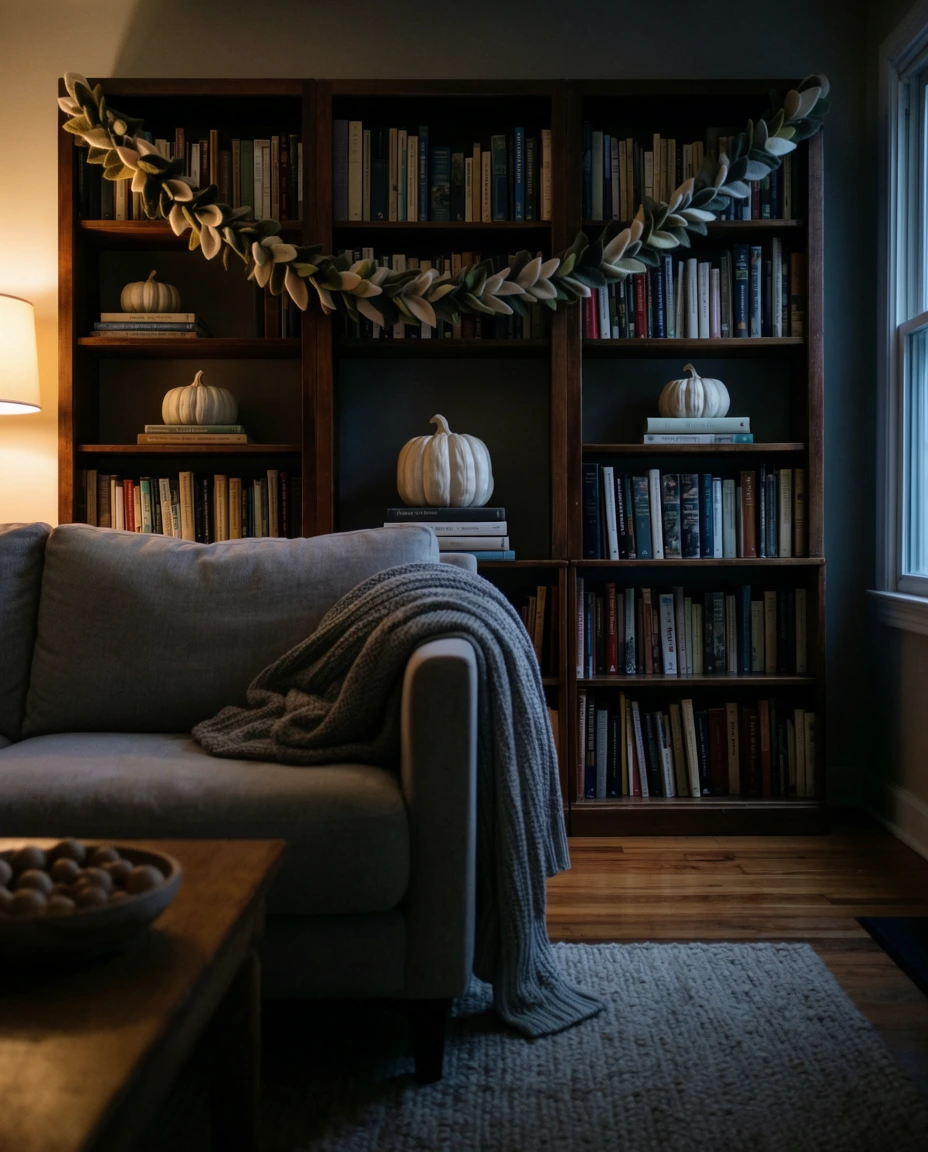
What people actually do with these is make far too many the first year, then use six and give the rest away. Make five in three graduated sizes and stop. Left unpainted, the raw clay dries to a chalky bone white that reads expensive next to stoneware, and a light sanding on the ridges before they fully cure gives an edge that catches light exactly the way glazed ceramic won’t.
16. Dried Hydrangeas in Stoneware

Hydrangeas dry to the exact colors of late fall — parchment, dusty rose, faded sage — with no work beyond cutting them at the right moment. Three heads in a heavy stoneware pitcher fill a shelf instantly. The neutral tones make them endlessly workable, and the papery texture reads as autumn far more convincingly than anything dyed orange. As a soft, low-effort aesthetic, it’s near the top of the ideas worth stealing this year.

Cutting too early is where most people lose them. Green blooms cut in July will wilt and brown no matter how carefully you hang them; wait until the petals feel papery on the bush, usually late August into September, and they’ll hold color for two years. The other frequent error is a vase with a wide mouth, which lets the stems splay and the heads collapse inward — narrow necks keep them upright.
17. Floating Ledges with Sculptural Gourds

Skip the round orange ones and go for shape. Swan gourds with their curved necks, warty green Hubbards, long pale Tromboncinos — set on a bare floating ledge, they read as sculpture rather than seasonal decor. The modern approach keeps it simple: two gourds, maybe three, nothing else on the ledge. It’s the kind of inspo that translates well to a narrow hallway wall or the run of shelving above a low console.

Floating shelves have a real weight limit, and it’s lower than the packaging suggests once you’re loading anything toward the front edge rather than against the wall. Gourds are ideal here because they’re light and hollow-feeling, but hit the studs when you install and keep the heaviest object closest to the bracket. Wipe each gourd with a dry cloth every week or so and most will last through the New Year.
18. Copper Accents for Cool Rooms
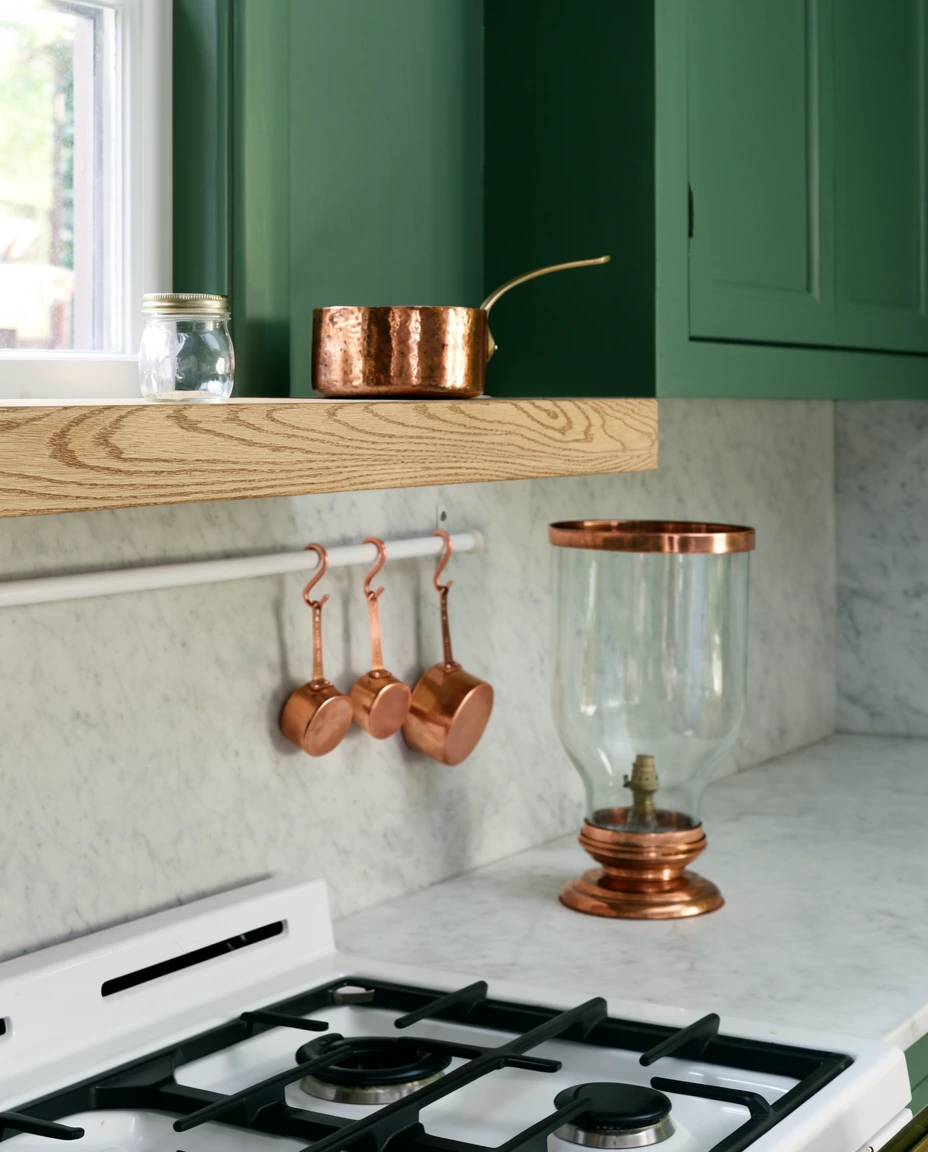
North-facing rooms get a blue cast all winter, and copper is the cheapest correction there is. A hammered copper pot, a small measuring set hung on hooks beneath the shelf, a copper-rimmed hurricane — each one throws warmth back into the light. In a kitchen the effect is immediate and useful, and paired with dark cabinetry it turns pleasantly moody after dark. The whole shelf reads cozy without a single seasonal object on it.

Copper cookware has a long life in New England kitchens in particular, where the pieces often came down through a family and stayed in use rather than going up as decor. That’s worth copying — hang the pots where you’ll actually grab them and let the patina build unevenly. Homeowners who polish copper to a mirror finish every month usually end up preferring the darker, blotchier look by the second winter anyway.
19. Vintage Frames and Pressed Leaves

Pressed leaves in old frames make a shelf feel like it has a history. Collect maple, oak, and ginkgo on a walk, press them a week under books, then float each one in a thrifted gilt or dark-wood frame and lean them against the back panel. The rustic irregularity is the point. It’s a diy that costs nothing but a Saturday, and it’s one of the calmest ideas bedroom walls and shelves can take on in autumn.

A woman I know in Asheville frames one leaf every October and writes the year on the back of the mat in pencil. She’s got nine now, leaning in a row along her hallway shelf, and the color shift from the first to the most recent is its own kind of record. Small rituals like that give a seasonal shelf something no store-bought arrangement carries — a reason for each piece to be there.
20. A TV Wall with Shelf Warmth

A black rectangle dominates any wall it’s on, and shelving flanking it is the honest fix. Run ledges up both sides, then style them asymmetrically so the eye travels instead of stopping. The ideas living room tv walls need most are about balance — a tall dried branch on one side, books and a small lamp on the other. Warm bulbs on the shelves keep the whole living room feeling cozy during evening screen time.
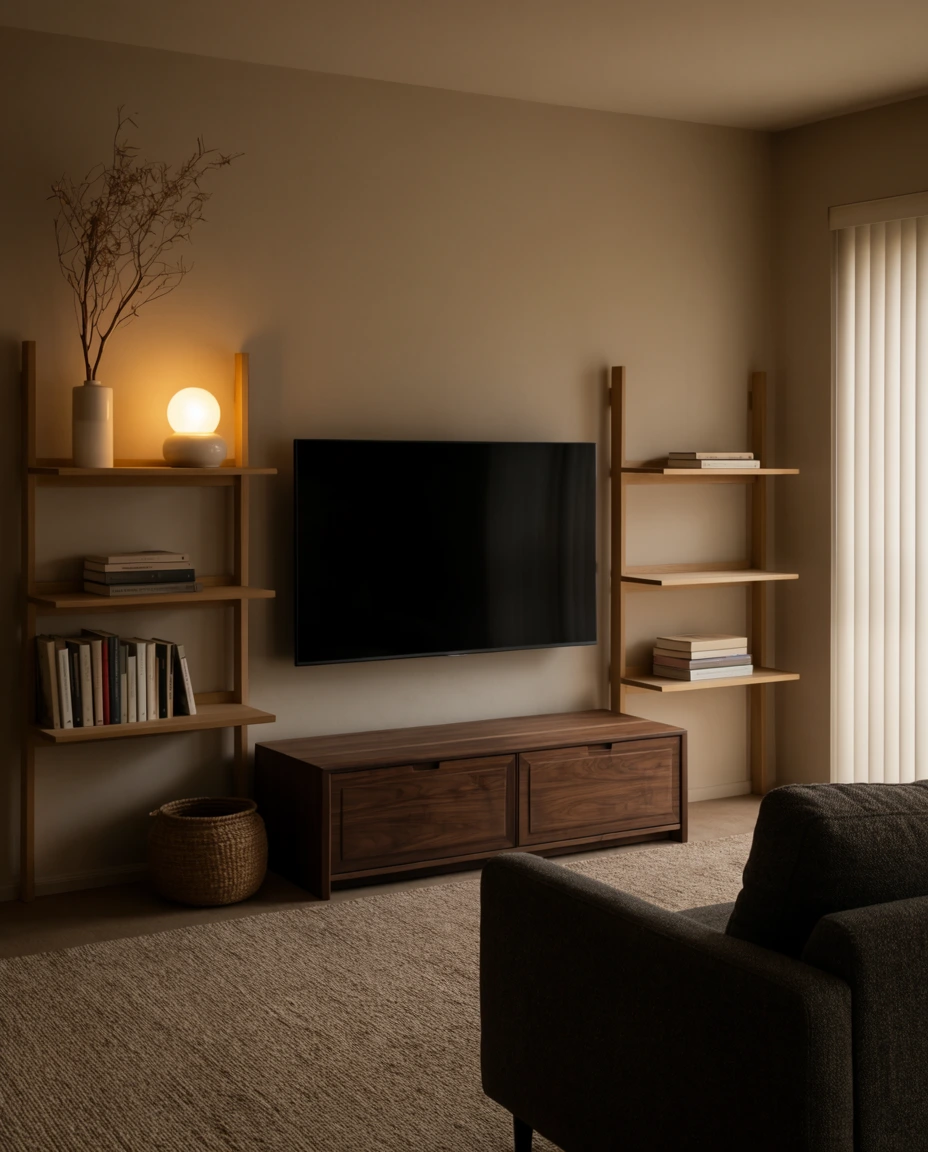
Households actually watch television in these rooms, which changes what belongs on the shelves. Anything reflective directly beside the screen will throw glare during a night game or a dark movie, and people quietly relocate those pieces within a week. Matte ceramics, books, and fabric hold up better. A small lamp on the shelf beside the screen also cuts the eye strain that comes from staring at a bright rectangle in a dark room.
21. Candlelight Over Deep Green Ledges

Deep forest green is the sleeper paint color of the season, and it does something remarkable behind candlelight. Painted ledges in a soft eggshell green hold ivory tapers, small glass votives, and a few pieces of unglazed pottery beautifully. The result is moody but never heavy. It sits right alongside the warmer ideas living room cozy corners tend to favor, and the color-plus-flame combination is the single most photographed aesthetic on autumn boards right now.

Green shelving performs best in rooms with wood tones already present — oak floors, a walnut console, exposed beams — because the color needs something warm to argue with. Against cool gray flooring it can tip toward institutional. Dining rooms and studies take it especially well, since both are rooms used mostly in the evening, when the paint darkens and the candlelight has the whole surface to work against.
22. Plaid Ribbon and Cedar Sprigs
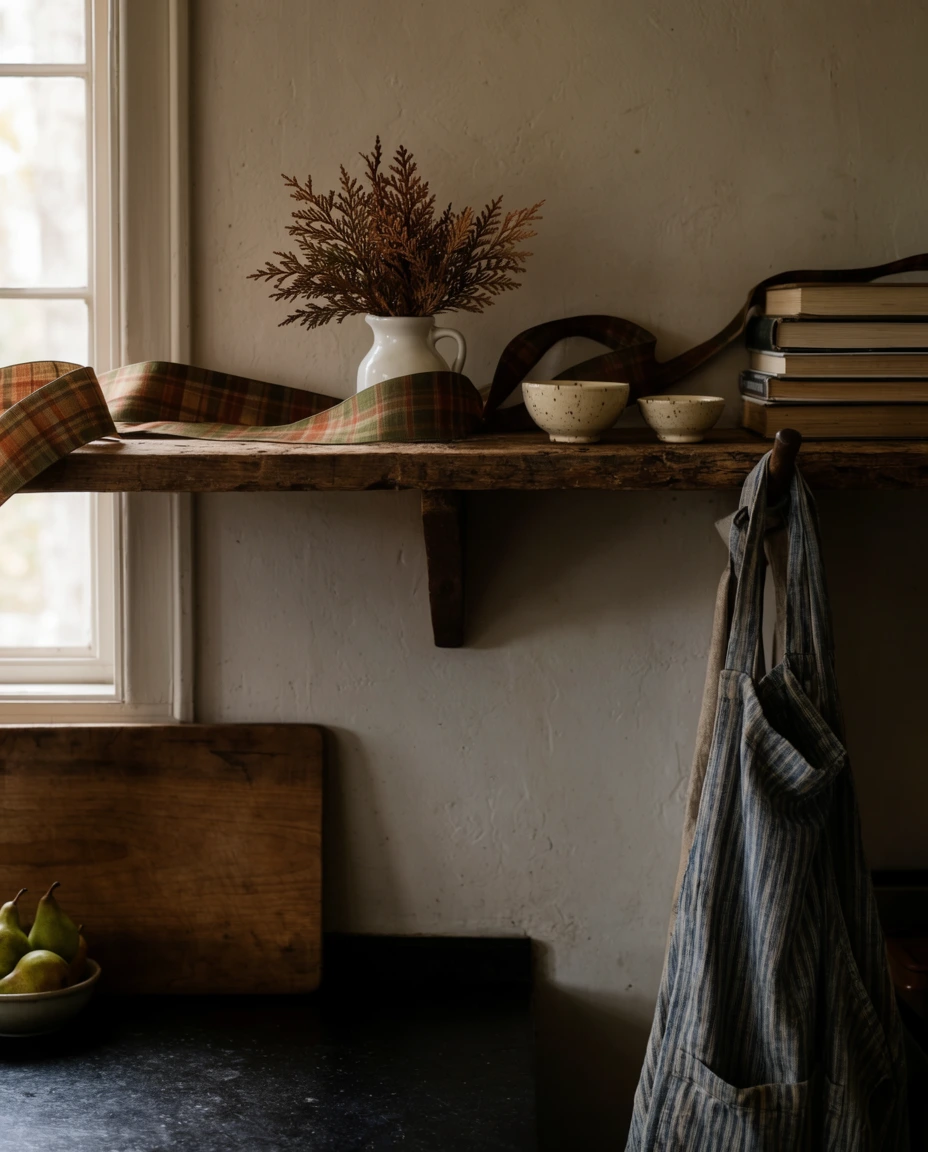
Late fall wants a little tartan. A length of muted plaid ribbon in rust and olive, trailed along a shelf edge and tucked behind a stack of books, brings a farmhouse softness that dried florals can’t. Add short cedar sprigs in a small jug for scent and a bit of green. Ribbon and greenery from hobby lobby cost almost nothing, and they’re the fall shelf decorations that carry you cleanly from Thanksgiving into December.
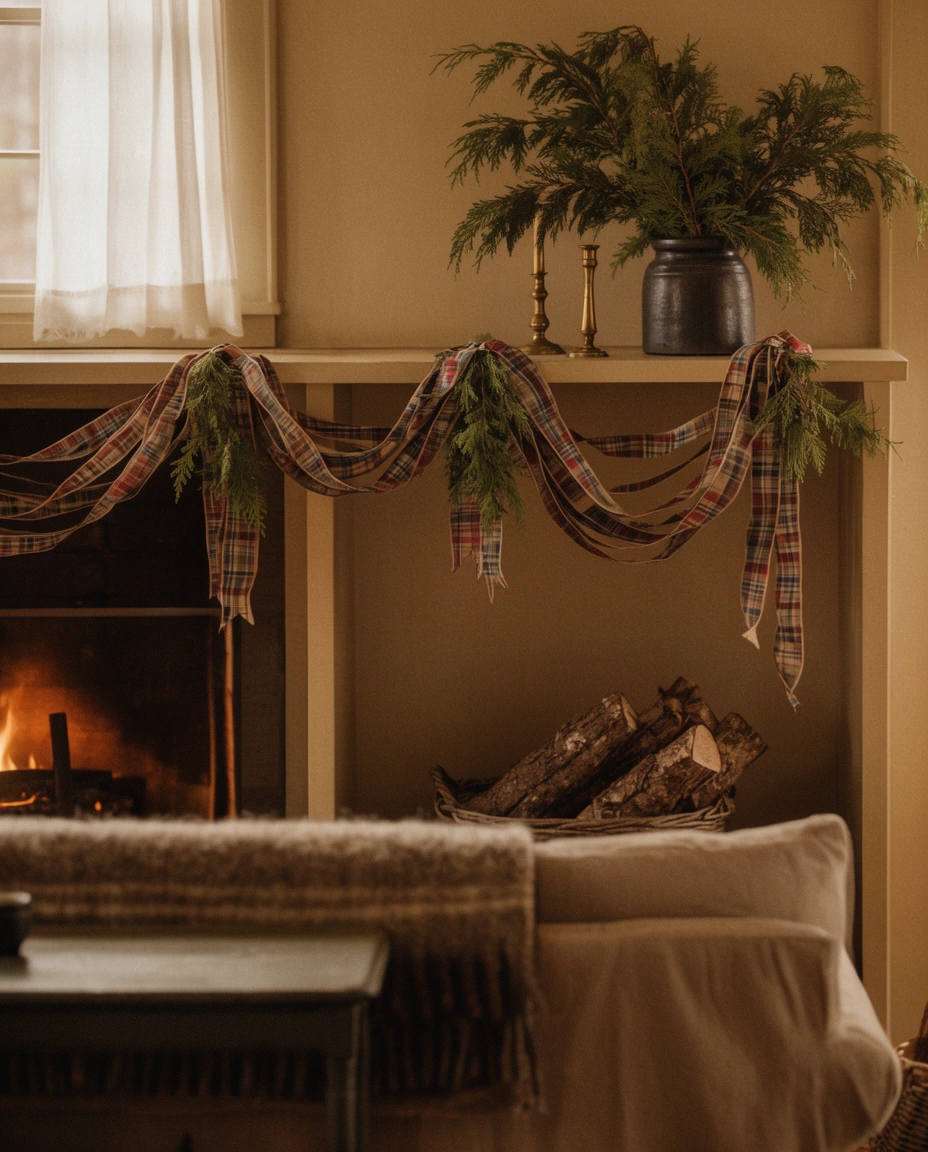
Wired ribbon is worth the extra dollar or two a yard because it holds a fold instead of going limp by the second week. A three-yard spool covers a standard six-foot shelf run with enough left for a napkin tie or two. Buy it in the last week of October when seasonal ribbon typically drops, and skip anything glittered — the finish sheds onto every book and bowl it touches.
Twenty-two looks is plenty to work from, but the best fall shelves always end up half copied and half personal. Tell me in the comments which one you’re recreating, and if you’ve got a styling trick that saves your shelves from the November slump, share it — I read every one.