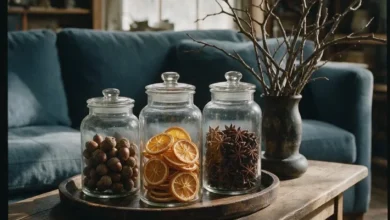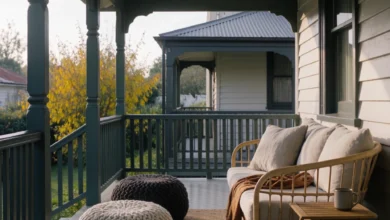

Fall styling has quietly shifted away from orange-and-black everything toward something softer — oatmeal, clay, bone, and warm brown that carry a room from September straight through Thanksgiving. American homes are getting smaller in their color choices and bigger in their texture choices, which is exactly why neutral autumn rooms fill Pinterest boards every August. The palette works with the furniture you already own, and it never fights the light. Below are 22 ideas covering porches, mantels, kitchens, bedrooms, and living rooms, each one shown twice so you can see how the look shifts from room to room.
1. Soft Beige and Bone Layers

The easiest way into neutral fall decorations is not a new color but a second shade of the one you already have. Bone linen over a beige sofa, a nubby oatmeal throw, a rug in warm sand — three tones within a whisper of each other read as depth rather than flatness. It works especially well in living rooms that get strong afternoon light, where every shift in texture picks up a shadow and the whole room turns cozy without a single pumpkin in sight.
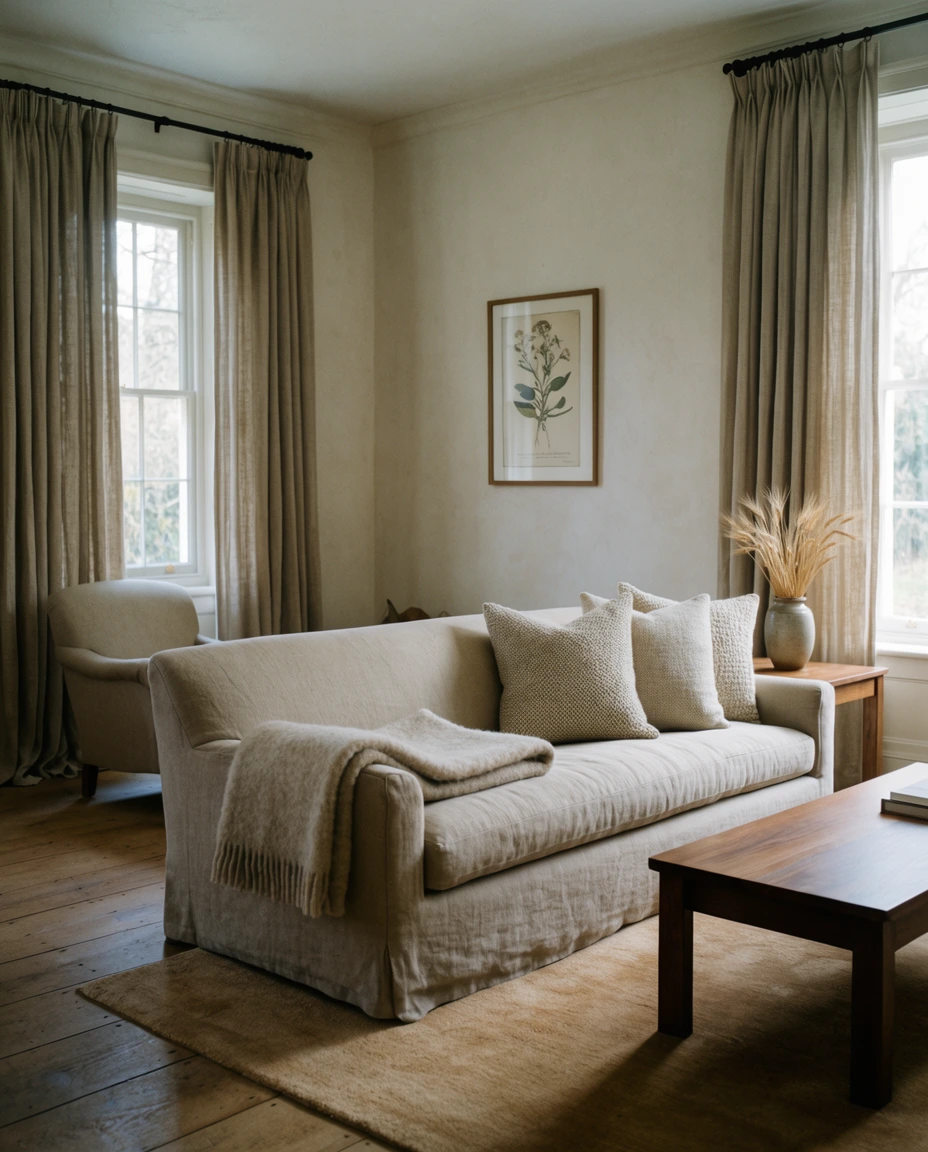
Start with the largest piece and work down: sofa, then rug, then throws and pillows. Anything smaller than a cushion barely registers from the doorway, which is why a bowl of tiny gourds never quite does the job a big wool blanket does. Keep the tones inside a narrow range — two steps lighter or darker, never five — and let the weave carry the contrast instead. Boucle against smooth cotton against a jute rug gives you all the variation the eye actually needs.
2. The Quiet Neutral Mantel
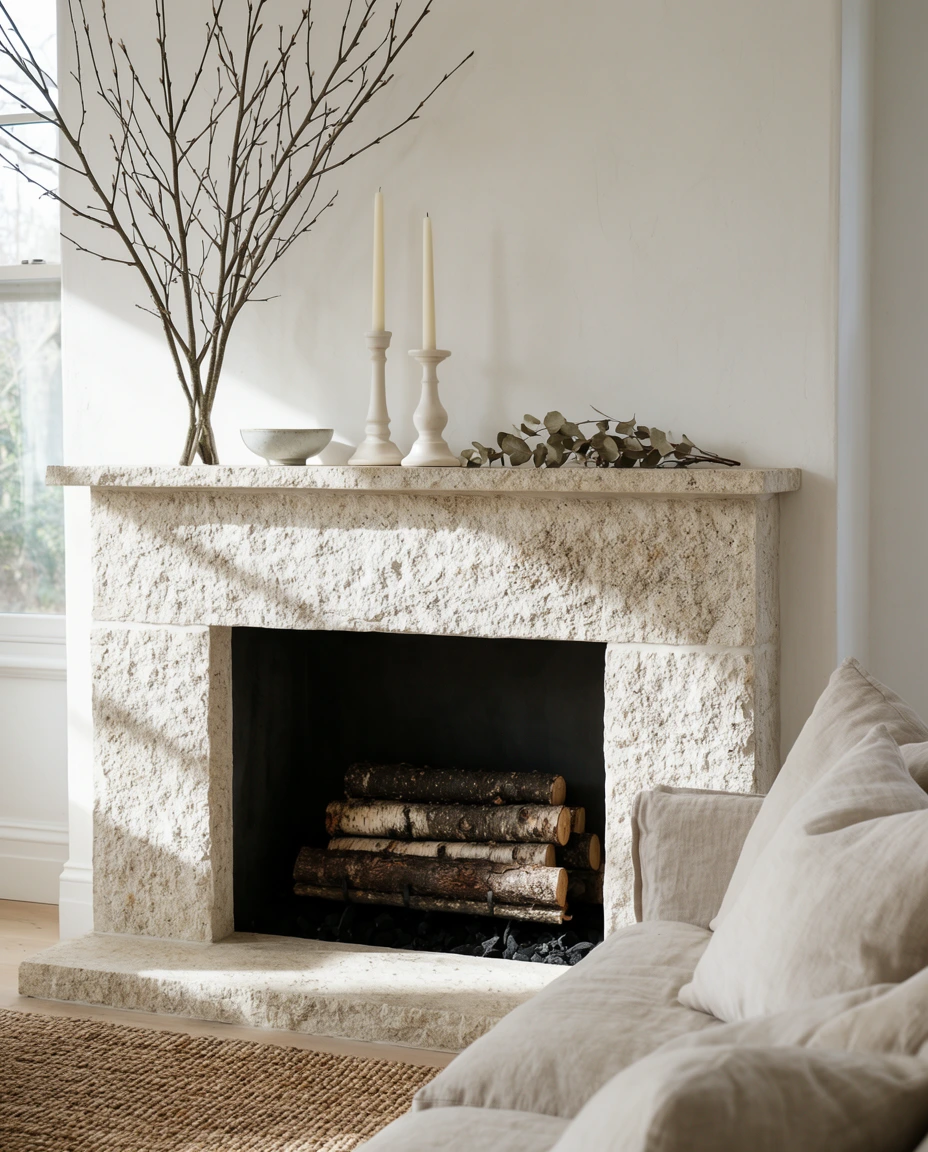
Most ideas for mantle styling go wrong by crowding — nine objects fighting for eight inches of ledge. The 2026 version is deliberately spare: one tall branch arrangement, a pair of ceramic candlesticks in bone, a single trail of dried eucalyptus that stops well short of the ends. Keeping it simple lets the mantel read as architecture again, and the negative space around each piece does more for the room than another cluster of miniature pumpkins ever could.
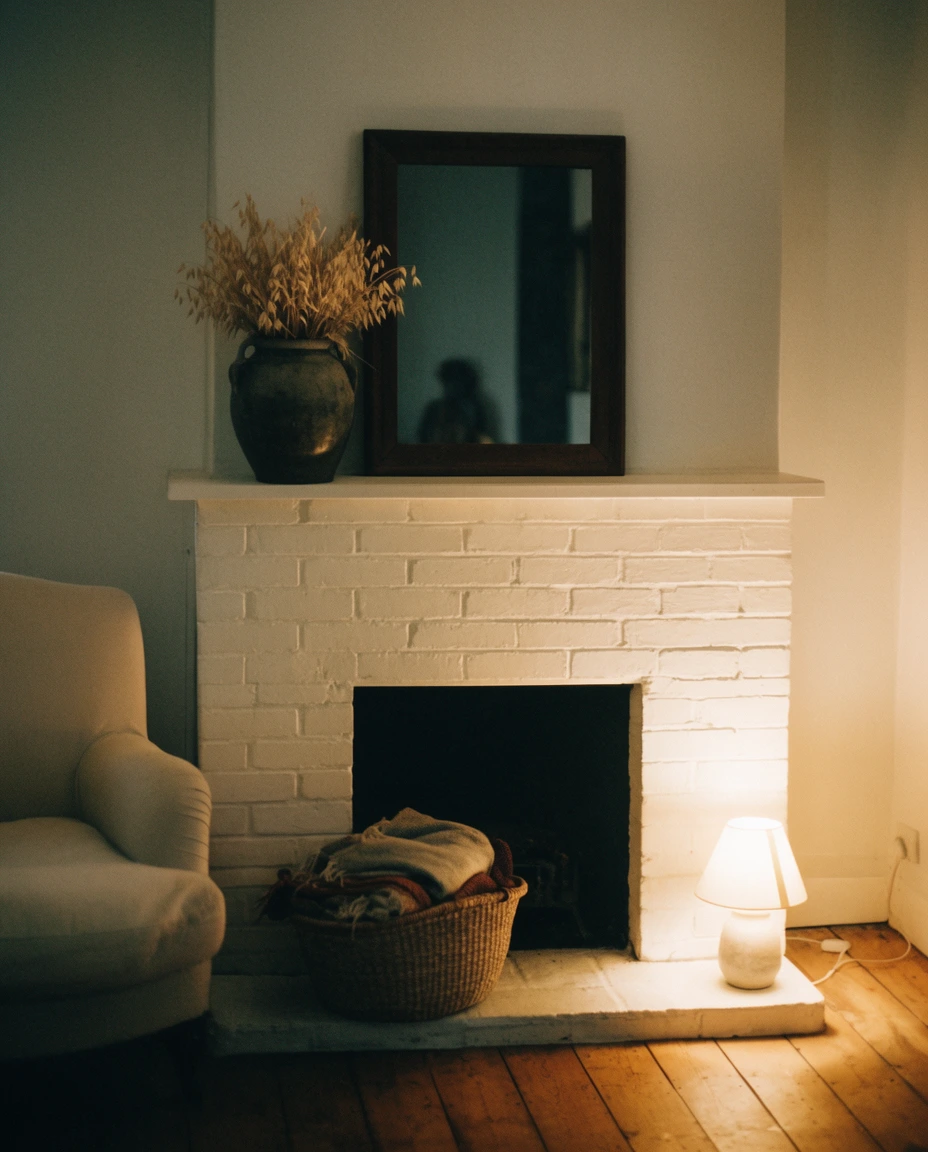
This restraint pays off most in rooms where the surround is already doing something — brick, limestone, a deep plaster finish, anything with its own texture. A busy mantel competes; a quiet one frames. In a plain drywall surround the opposite applies, and you can afford a fuller arrangement with more height variation. Either way, walk to the far side of the room before you decide you’re finished, because mantels are almost always styled from three feet away and seen from fifteen.
3. Dried Grasses in Stoneware Vases

Pampas had its moment; the new inspiration is smaller and stiffer — wheat, bunny tail, palm spear, oat stems bundled tight and dropped into heavy stoneware. The vessel matters as much as the stems, so look for matte glazes in clay, ash, and sand rather than glossy white. It’s one of those ideas for the whole house that scales down beautifully: a bud vase on a nightstand, a tall crock by the hearth. The result stays minimalist while still feeling unmistakably seasonal.

Dried stems are the rare seasonal buy that gets cheaper every year you own them. A bundle runs eight to fifteen dollars at most craft stores, and if you store it flat in a closet through winter it comes back out looking the same next September. Stoneware is the real investment — expect twenty-five to sixty for a good weighty piece — but a single well-made vase outlives a decade of stems. Buy the vessel once and change what goes in it.
4. Oatmeal Tones for the Porch

A front porch in cream and oatmeal reads as intentional in a way orange never quite manages. Swap bright mums for white ones, line the steps with pale ghost pumpkins and a few sage-green varieties, and let a jute doormat and a natural-fiber runner do the rest. Outdoor neutrals also hold their color better through a long month of sun. Among ideas for the home exterior, this is the one that keeps working right into the holidays with almost nothing swapped out.
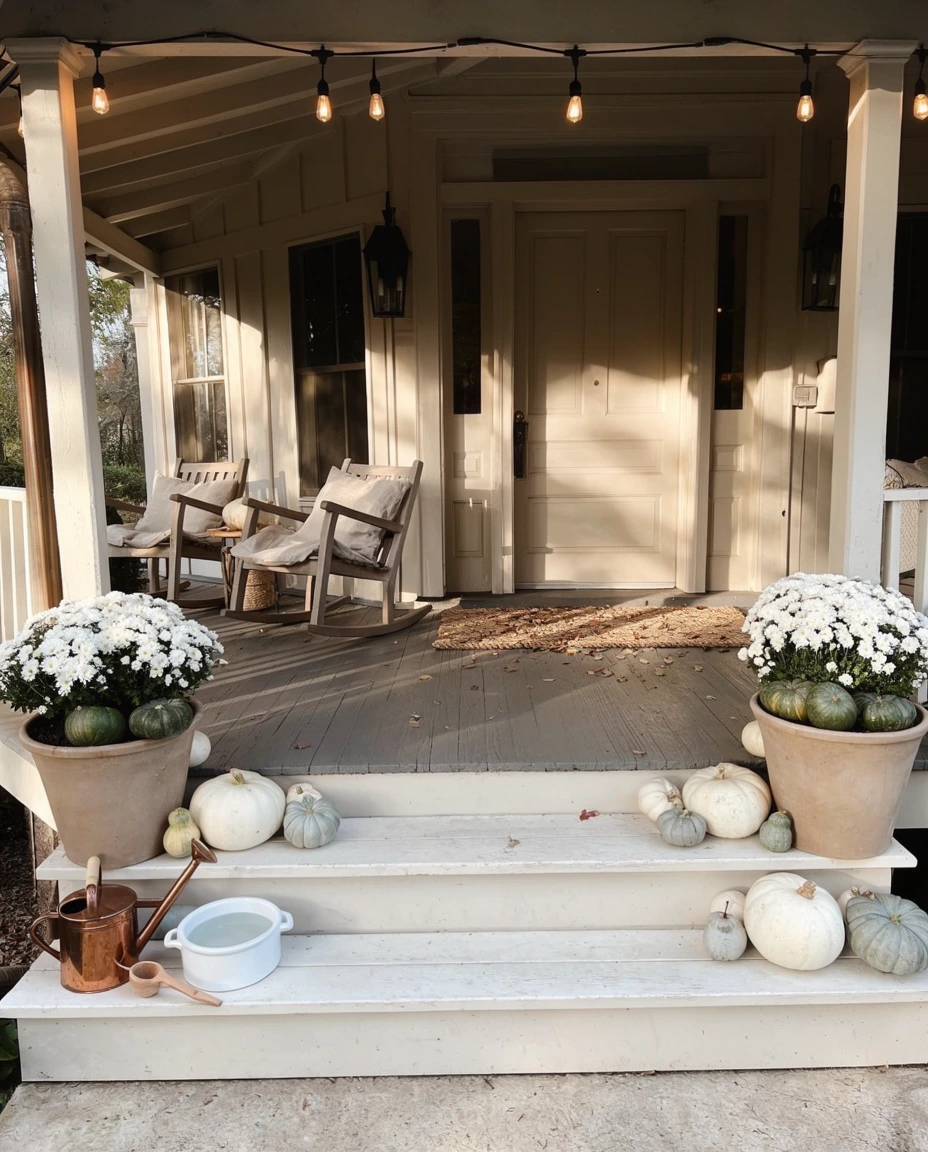
In the South, where porches stay in use until Thanksgiving, this palette survives heat that would wilt a full harvest display by the first week of October. New England porches get the opposite benefit — pale pumpkins stand out against dark shingles and bare maples in a way orange-on-orange never does. Northwest readers dealing with early rain should keep the fiber pieces under the roofline and choose real gourds over anything foam, which spots badly once it gets wet.
5. Linen Slipcovers Without the Fuss

Washed-linen slipcovers are how a living room minimalist gets seasonal warmth without buying anything new. A flax or greige cover over an existing sofa softens the silhouette, hides a summer’s worth of use, and gives the room the slightly rumpled quality that reads as lived-in rather than staged. It’s a modern move with very old bones, since slipcovering is centuries old, and among ideas living room updates it changes the most for the least.

The usual error is buying a cover that fits perfectly, then washing it hot. Linen shrinks four to six percent on the first cycle, so size up or wash cold and skip the dryer entirely. The second slip is pulling everything drum-tight; a slipcover is meant to fall in soft folds at the arms and the skirt. Tuck the excess deep into the seat crease with a wooden spoon handle, let it settle for a day, and it stops looking rented.
6. Pale Pumpkins and Oak Grain

White and pale-gray pumpkins against raw oak is the quietest seasonal pairing there is, and one of those ideas that costs almost nothing. Group Casperitas, Silver Moon, and a knobby blue Jarrahdale on an oak console or a butcher-block island and the wood grain does the color work — brown and cream, warm against cool. For a diy touch, rub a little clear furniture wax into the pumpkin skins so they hold their color a good three weeks longer.
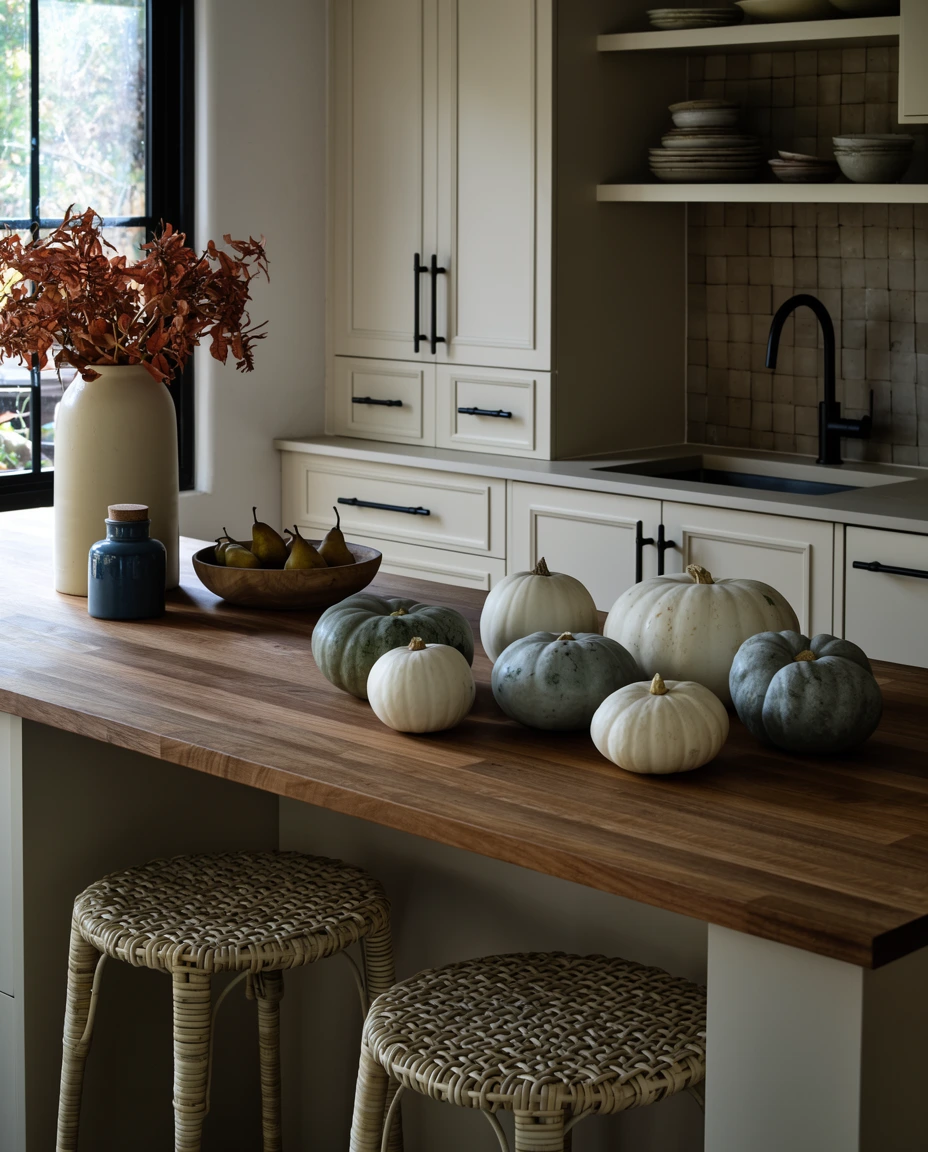
A stylist I know has a running rule about odd numbers that she breaks constantly. Her own kitchen island held four pumpkins last October, all different heights, and it looked better than any three-piece arrangement in the magazine she’d shot that week. The trick was that no two sat the same distance from the edge. Vary depth, not just height, and the grouping stops looking like a row of objects lined up waiting to be counted.
7. Layering Wool and Washed Cotton
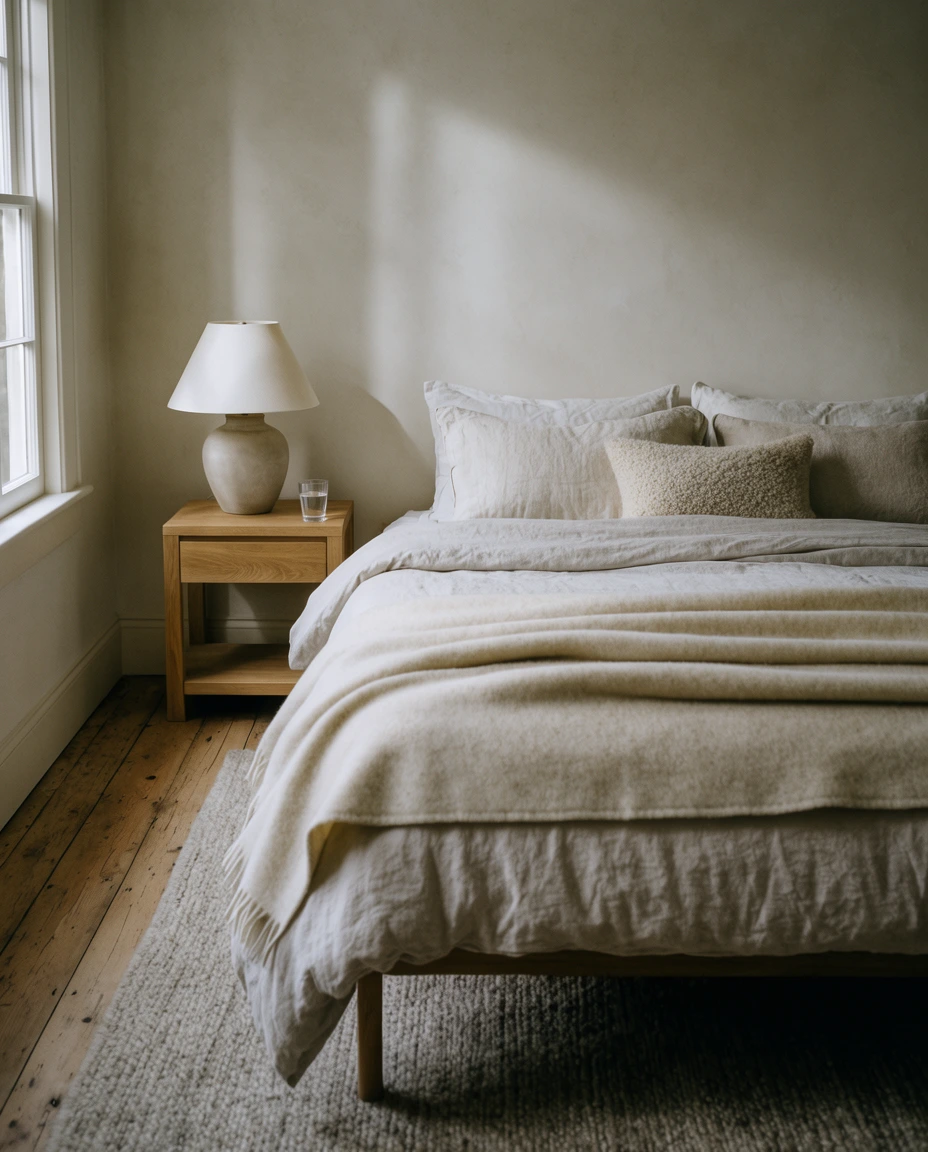
Texture is the whole engine of a neutral fall room, and nothing does it faster than pairing wool with washed cotton. A chunky undyed throw over a soft percale coverlet, a boucle pillow against a smooth linen one — that contrast is what keeps living room cozy schemes from going flat. The same pairing runs straight into the bedroom, where a heavy wool blanket folded across a made bed does more than any headboard restyle. Keep it simple and let the fibers argue.

Designers tend to describe this as building a palette in materials rather than colors, and the reasoning holds up under a camera: matte wool absorbs light, sateen cotton bounces it, and the eye reads that difference as richness even when both pieces are the identical shade of ivory. The working ratio most of them land on is roughly two rough textures to one smooth. Skew too far toward smooth and the room turns cold; too far the other way and it looks shaggy.
8. Modern Fireplace with Stacked Logs
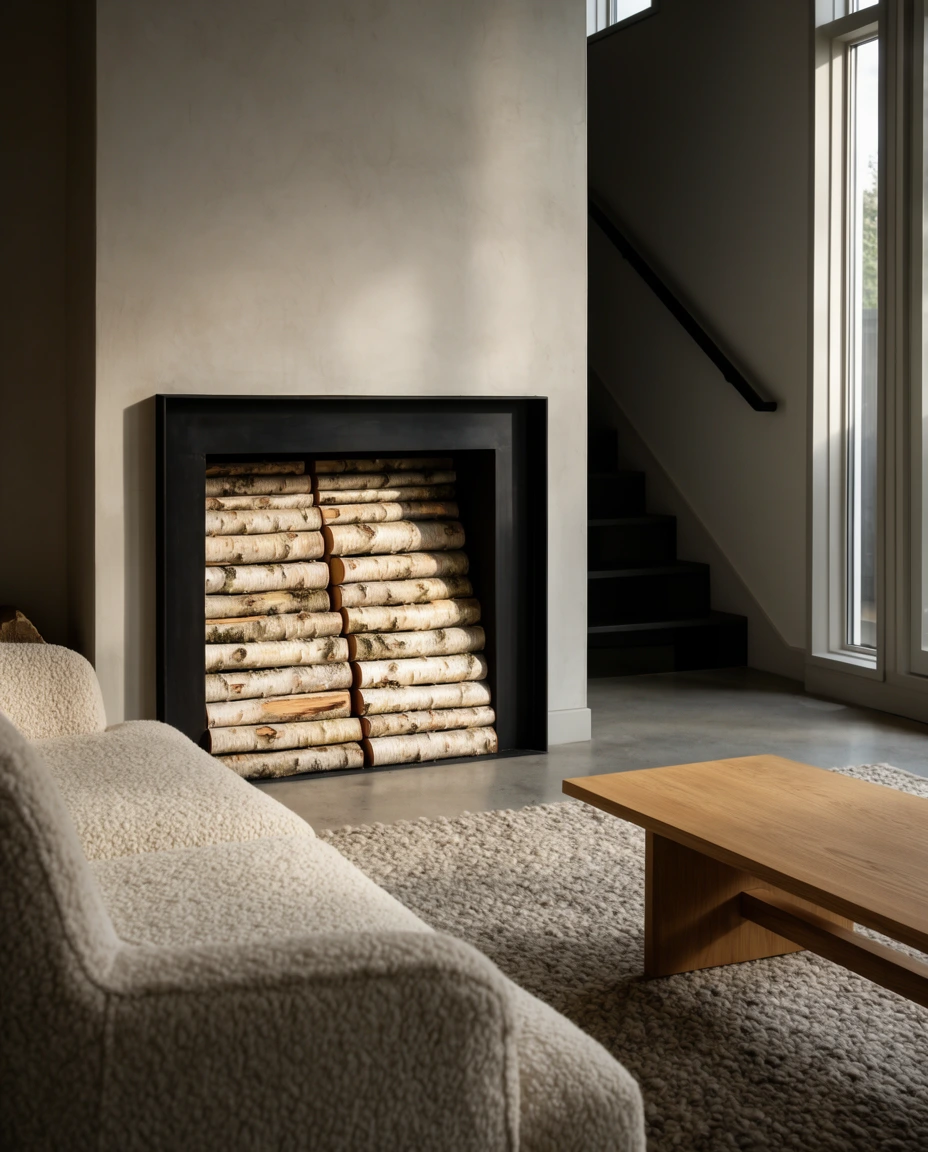
A fireplace that doesn’t run — or doesn’t run yet — becomes the best neutral feature in the house once you stack it. Birch or ash logs cut to depth, laid in tight horizontal rows inside the firebox, turn a dark opening into pale texture. The modern read comes from restraint: no andirons, no fussy arrangement, nothing leaning against the surround. It’s one of the quiet 2026 looks that works in plaster, black steel, or plain painted brick.

Most people who try this end up leaving it in place year-round, which is the honest argument for doing it well the first time. Buy kiln-dried logs rather than cutting your own, since untreated wood brought indoors carries insects and a stack sitting in a warm room for eight months will find the baseboards eventually. Cut ends should face out and sit flush with the opening — anything protruding gets kicked, anything recessed disappears into shadow.
9. Styling an Entry Table for Fall

The entry table is the first neutral statement anyone sees, and it only needs three things: height, a low horizontal, and something that catches light. A tall dried arrangement, a stack of linen-bound books, a small ceramic bowl for keys. Pinterest fills every August with ideas for the home farmhouse fans save by the hundred, but the best inspiration here is architectural — treat the console like a gallery shelf and leave two-thirds of it empty.

Measure before you shop, because entry consoles are the most commonly oversized piece in an American house. The table should span roughly two-thirds the width of the mirror or art above it, and the tallest object on top should reach about a third of the way up that mirror. Anything taller starts blocking the reflection, which is the one job the mirror has. In a narrow hallway, a piece under twelve inches deep keeps the walkway clear.
10. Simple Natural Fiber Wreaths

A wreath of bare grapevine, wheat, or bleached olive branch has become the default for anyone who wants the season on the door without the color. The simple versions look the most expensive: one material, one texture, no ribbon. A diy build takes about twenty minutes with floral wire and a base ring, and it’s among the ideas for the entry that guests actually register, because a door is the one surface everyone walks straight into.

A finished designer wreath in dried wheat runs ninety dollars and up; the same thing built at home costs about eighteen. Grapevine bases are three to five dollars, a bundle of wheat is nine, and a spool of paddle wire lasts three seasons. The one place worth spending is the hanger — a flat over-the-door hook in matte brass or black holds thirty pounds and won’t chip the paint, unlike the bent wire versions that come free with the wreath.
11. Cream and Clay Kitchen Counters
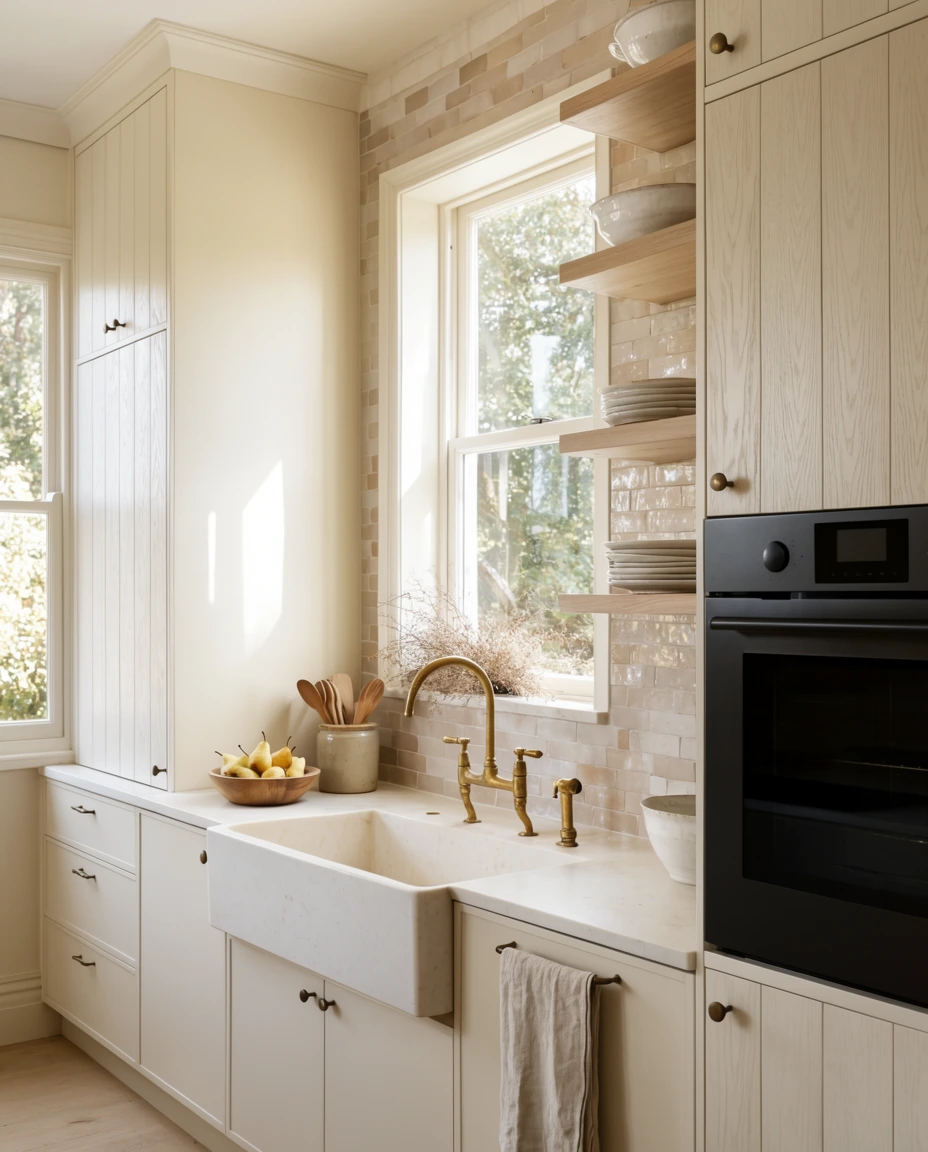
The kitchen is where neutral fall styling has to earn its keep, because the counter is a working surface first. Keep it to a wooden bowl of pears, a stoneware crock of utensils, and one low arrangement of dried stems near the window. The modern approach leans on materials already in the room — cream cabinetry, clay-toned tile, unfinished oak — rather than adding decoration. A minimalist counter also happens to be a clear counter, which matters in October baking season.

This is at its strongest in kitchens with an island, where the working perimeter stays clear and the seasonal grouping lives on the side nobody preps on. Galley kitchens do better vertically — a shallow shelf or the sill above the sink — since horizontal inches are already spoken for. Open-shelf kitchens can carry the palette all the way up in stacked ironstone, though shelves nearest the range collect grease film, so keep soft textiles well away from the cooktop.
12. Black and Ivory Table Settings

Black and ivory is the sharpest version of a neutral table, and it photographs beautifully — matte black stoneware on an ivory linen runner, bone-handled flatware, smoked glass tumblers, one low line of dried grasses down the center. The contrast keeps neutral fall decorations from reading washed out, which is the usual complaint. For hosting inspiration that carries from a Sunday dinner in September through Thanksgiving, this setting asks for the fewest changes.

Midwestern Thanksgiving tables tend to seat ten or more, and this palette is unusually forgiving at that scale, since mismatched chairs and a borrowed leaf vanish under a single long runner. Coastal hosts in California and Florida often skip the runner and set black plates straight onto bleached wood, which reads lighter in strong daylight. In older homes with dark dining rooms, a pair of ivory tapers at each end does more than the overhead fixture ever will.
13. Vignettes for the Coffee Table

A coffee table holds four things well and eight things badly. The neutral autumn version: a low stack of two books in muted cloth covers, a shallow stoneware dish, a squat candle in bone wax, and one dried arrangement kept under six inches. In open-plan living rooms the table sits inside a traffic path, so nothing should block a sightline or be fragile enough to worry about. The effect stays cozy and entirely usable.

A friend in Denver spent a full afternoon arranging her table before a party last fall, then watched three people set drinks on the books within ten minutes. She rearranged the next morning around a real tray, and the whole thing finally worked. Leave one clear surface — a tray, a wooden board, even a bare quadrant — and the arrangement survives actual company instead of being quietly dismantled by it.
14. Wool Throws Over Linen Sofas
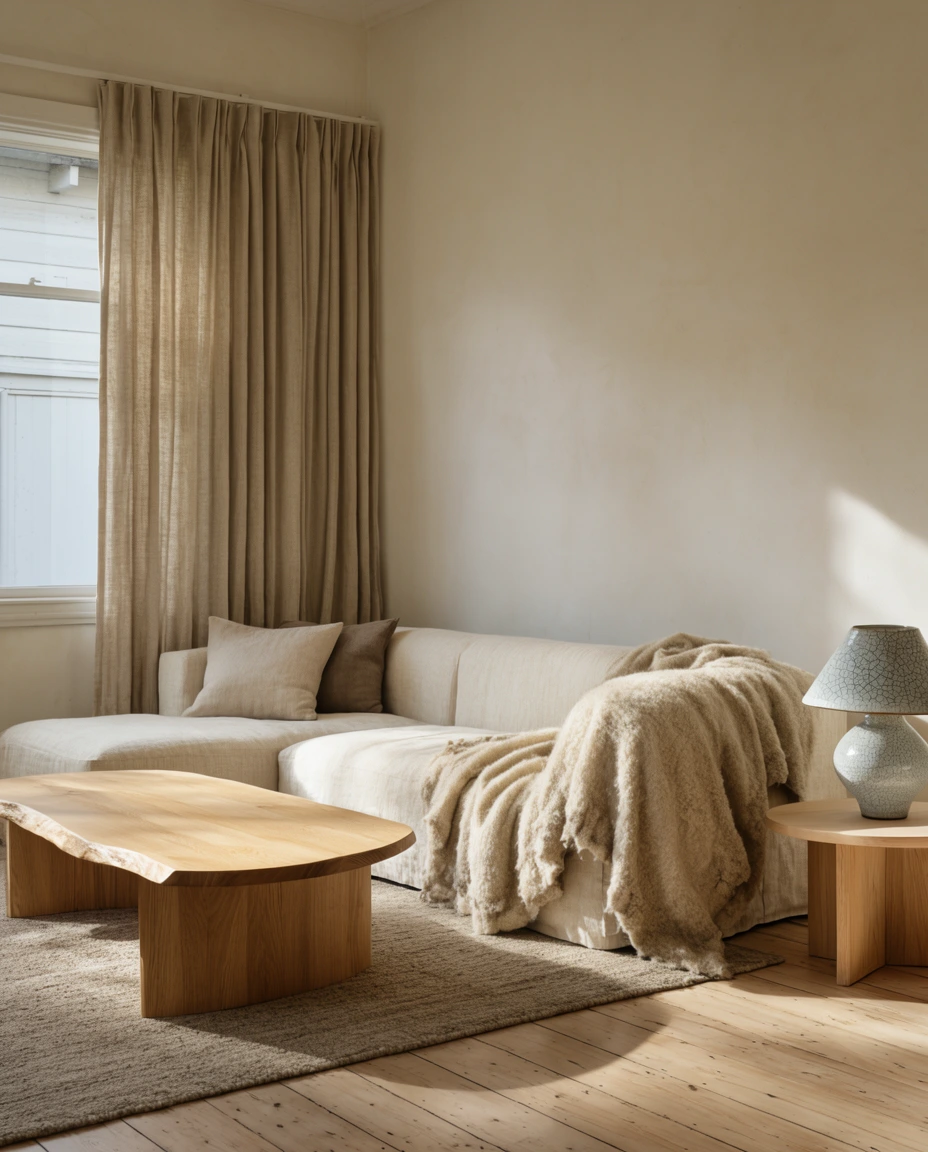
Nothing announces the turn of the season like heavy wool landing on a summer-weight sofa. A cream linen sectional with an undyed alpaca throw across one arm is the shorthand for living room cozy in every neutral scheme, and it takes about four seconds. The palette holds if you stay in brown and oat tones with a single darker note. Of all the ideas living room refreshes that cost nothing, this is the fastest visible change in the house.
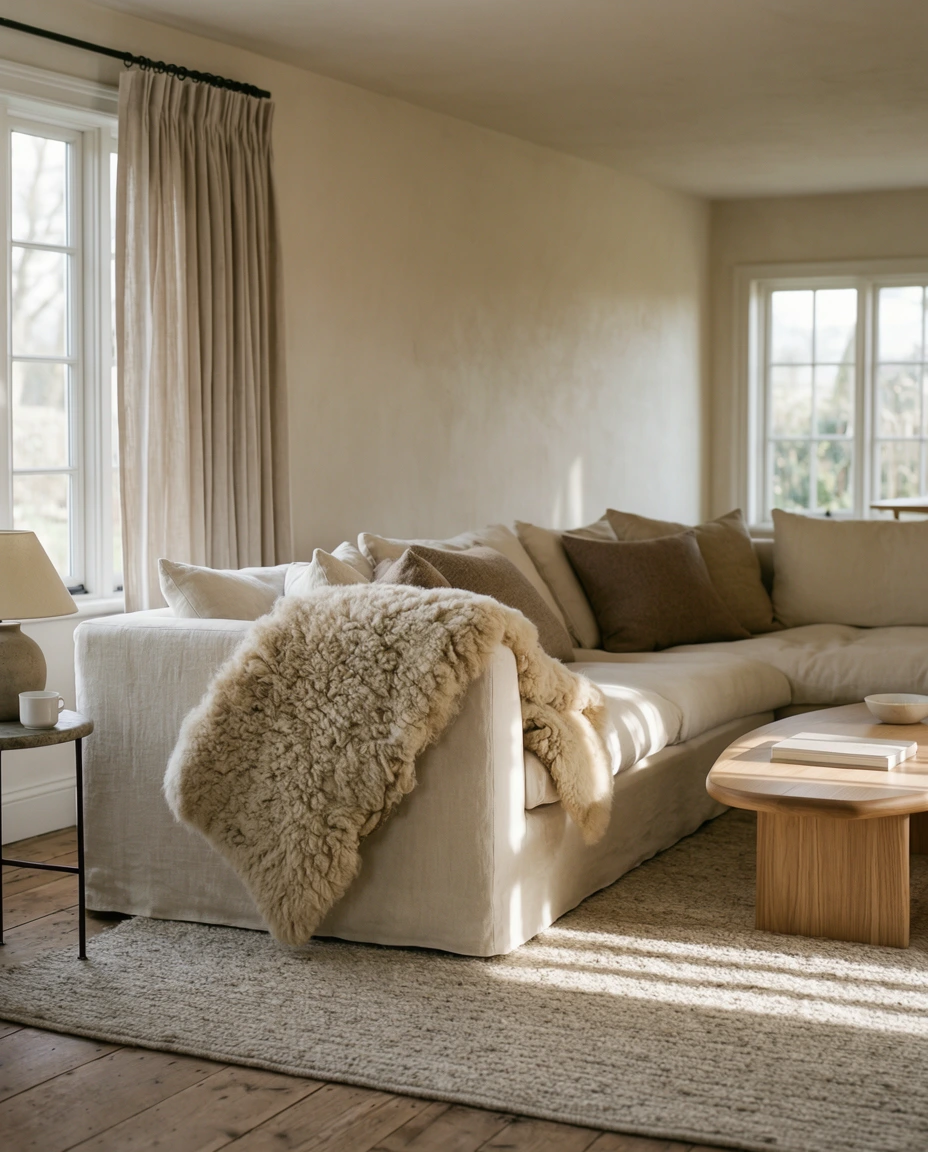
Stylists talk about the throw as the piece that breaks the line — a sofa read straight across is a rectangle, and one soft diagonal is what makes the room look occupied. The technique is to fold it in thirds lengthwise, drape it over one arm at an angle, then pull a corner slightly loose so it doesn’t look measured. Centering a throw across the back cushions flattens the sofa and gives it a showroom stiffness.
15. Outdoor Seating for Cool Evenings

The outdoor season doesn’t end in September, it just gets earlier and quieter. A pair of teak chairs with cream cushions, a low fire bowl, and a stack of oatmeal wool blankets in a lidded basket is the entire formula. On a front porch it turns the entry into a room; on a back patio it buys you another hour outside. Most ideas front porch boards lean decorative, but seating is what gets used once the light drops at six.
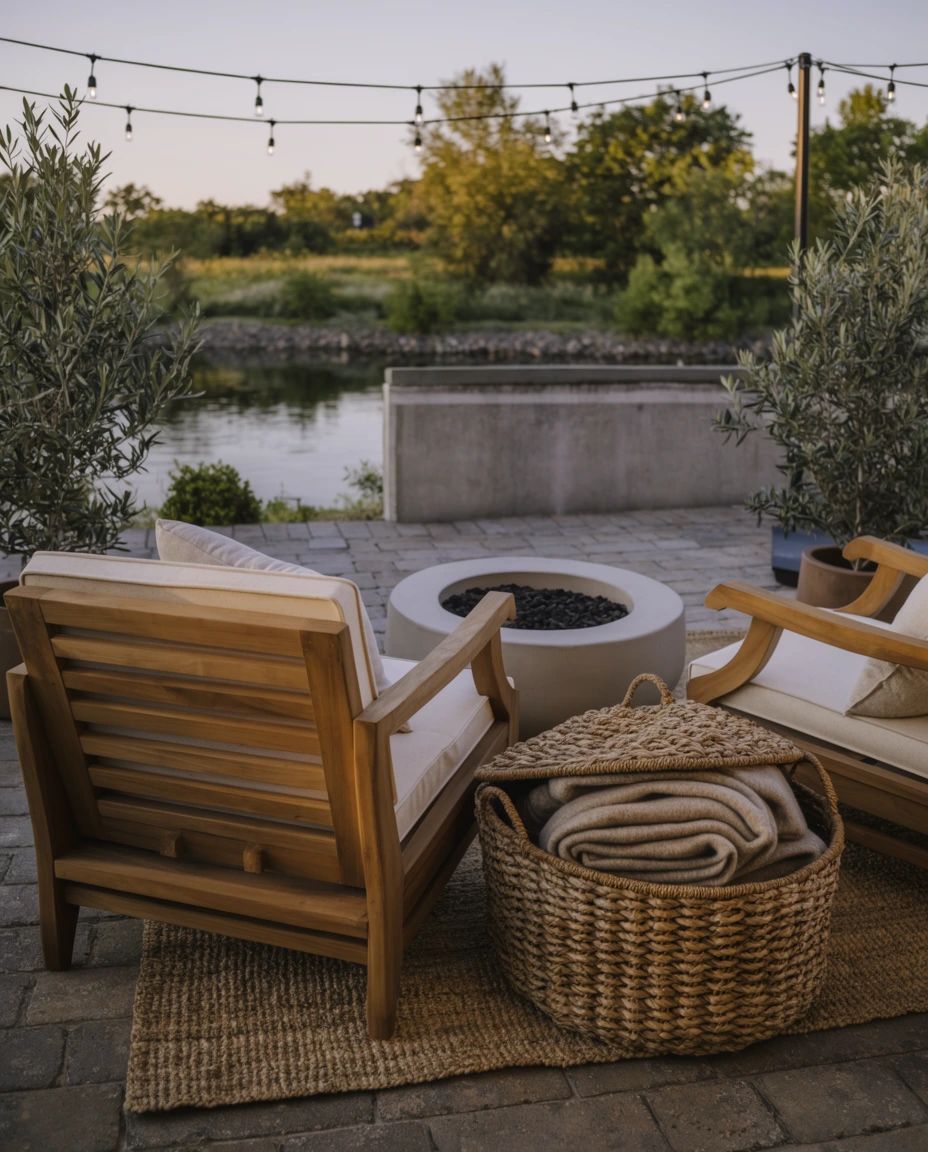
The blanket basket is the detail that decides whether any of this gets used, because nobody goes back inside for a throw once they’ve sat down. Homeowners who keep a lidded basket by the door use their porches noticeably more through October, and the lid earns its place — an open basket collects leaves and pollen within a week. Cream outdoor cushions hold up better than they sound, provided the fabric is solution-dyed acrylic rather than cotton canvas.
16. Mixing Brown Leather and Wool

Cognac leather is the warmest brown a neutral room can hold, and it stops the whole scheme from drifting toward beige. Pair a caramel chair with an undyed wool rug and cream upholstery — brown and bone, hard against soft. The look feels modern because the leather is unfussy: no tufting, no nailhead, just a clean frame and a good hide. In living rooms carrying a lot of pale fabric, one leather piece anchors everything through fall.
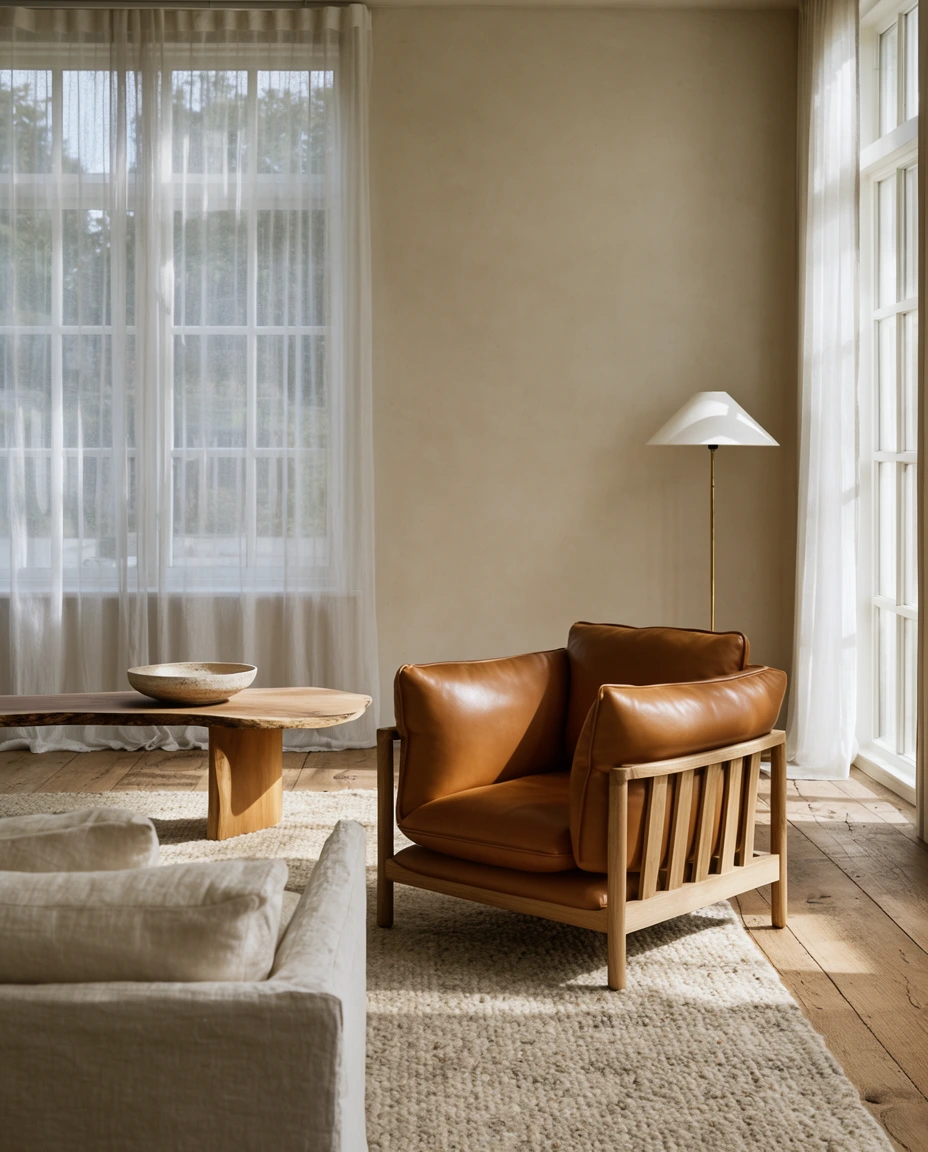
The frequent misstep is matching leather to the wood floor, which cancels both out and leaves a chair that seems to sink into the room. Go two shades warmer or cooler than the flooring and the piece separates cleanly. The other trap is placing leather in direct afternoon sun, where an aniline finish lightens unevenly across a single season. Set it perpendicular to the window instead, and condition the hide once a year before the heat comes on.
17. Candle Clusters in Clear Glass
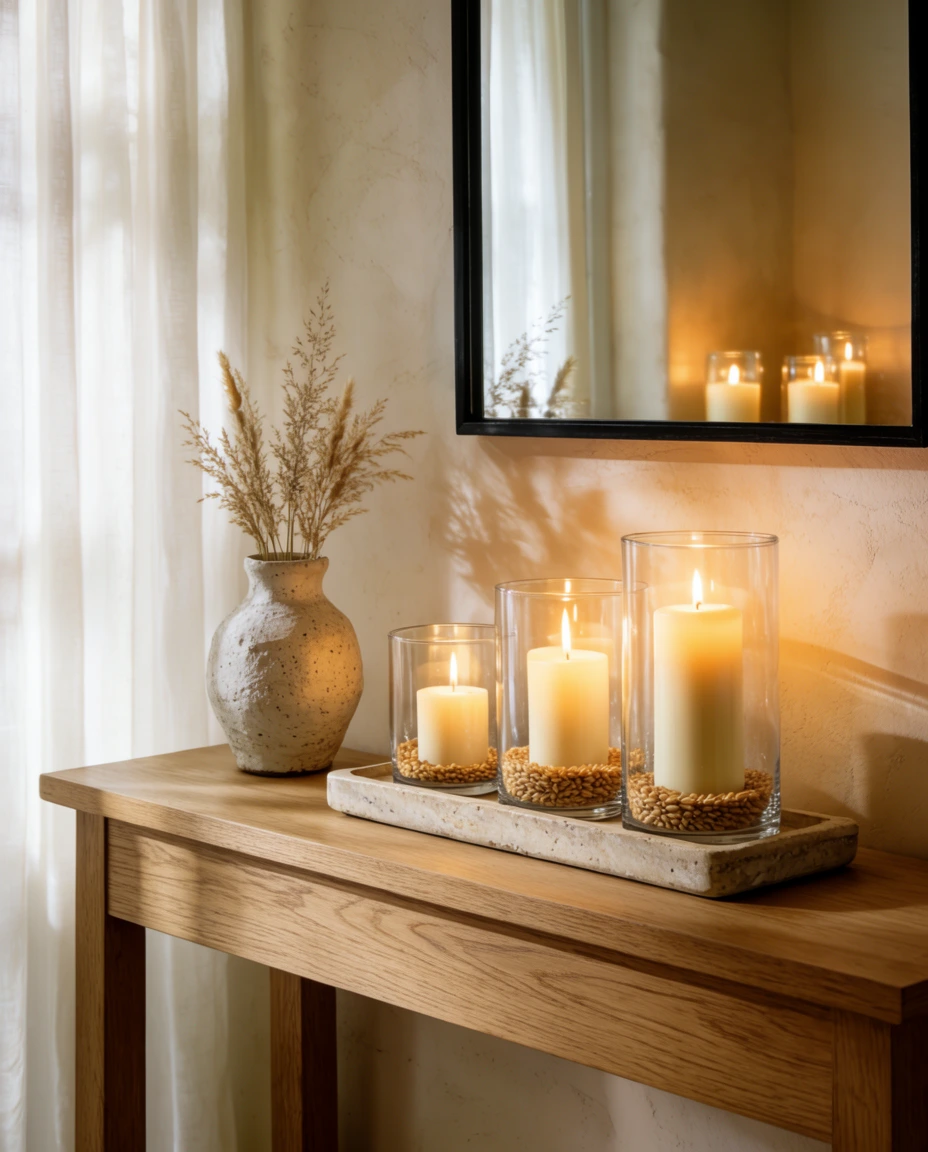
Grouped candles in plain glass hurricanes are the fastest route to cozy light without a single seasonal motif. Three heights of unscented ivory pillars, clear cylinders, a low tray in wood or stone — that’s the whole thing. The minimalist version stays colorless on purpose, so the flame does the work. A five-minute diy upgrade is a shallow layer of dried wheat berries or fine sand in the base of each cylinder, which steadies the candle and catches the light.

Unscented is the deliberate choice in any room where food is served, since a fig-and-cedar candle three feet from a roast turns dinner into a wrestling match. Save the scented ones for the entry and the bedroom. Odd heights matter more than odd numbers here, and a two-inch difference between candles is enough for the eye to register a cluster instead of a row. Trim wicks to a quarter inch or the glass blackens within two evenings.
18. Farmhouse Shelves Gone Neutral
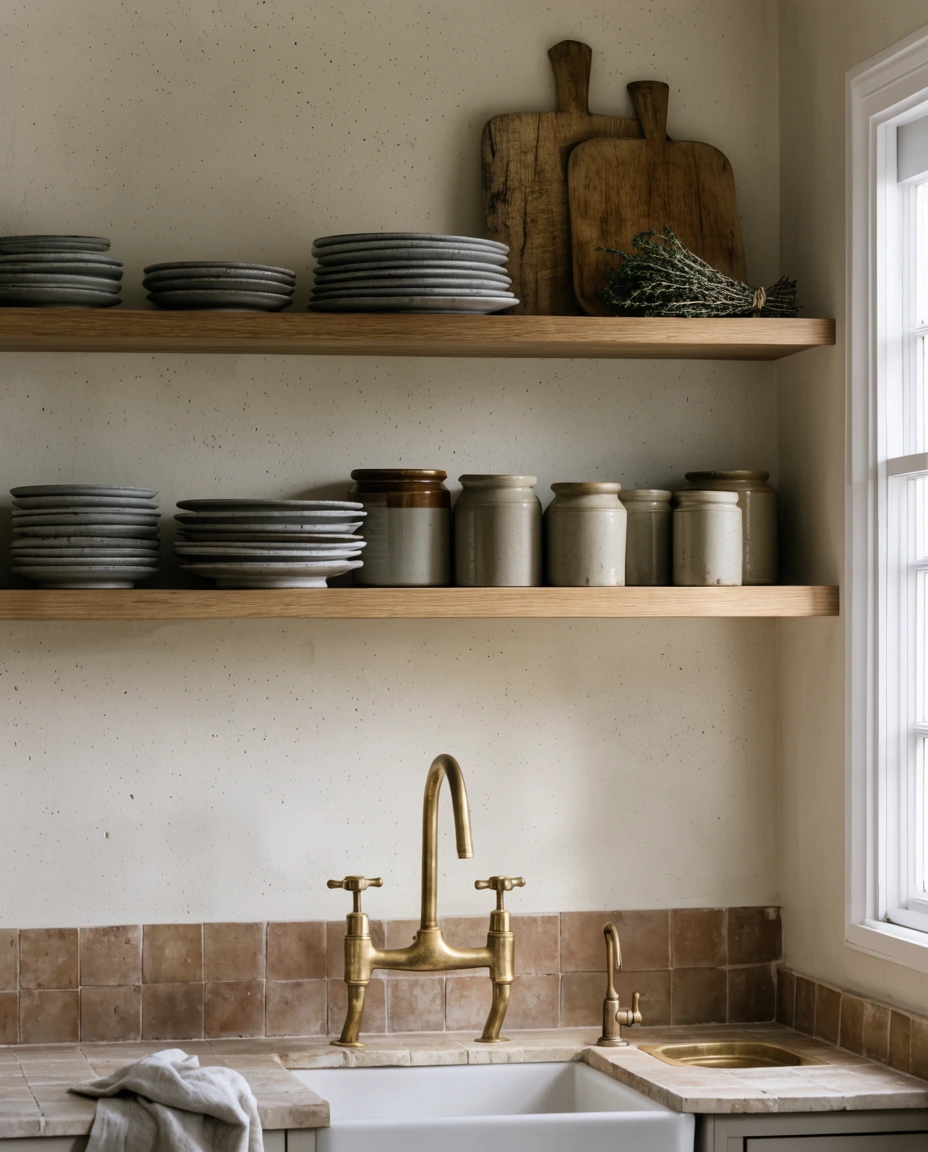
Open shelving is where the farmhouse look either sings or clutters. The neutral autumn version strips it back to material: stacked ironstone, a row of stoneware crocks, two wooden boards leaned at the back, one small bundle of dried thyme. Among ideas for the home farmhouse style keeps generating, this is the most durable, because it isn’t seasonal decoration at all — it’s the everyday dishes, arranged well. Keep the styling simple and the inspiration still holds in February.

Shelves work hardest in kitchens with a window on the same wall, where side light rakes across the crockery and gives every rim its own shadow. In a windowless pantry the same arrangement flattens, and a small warm-toned puck light under each shelf brings it back. Dining rooms take this well on a single floating shelf above a sideboard, though anything above shoulder height should hold only what you can lift down with one hand.
19. A Cozy Bedroom in Taupe

A bedroom is the easiest room to take neutral for fall, because the bed is already the largest soft surface in the house. Move from crisp white to warm taupe: a washed linen duvet in mushroom, cotton sheets in oatmeal, a heavier wool blanket folded across the lower third. The 2026 version runs warmer and browner than the gray-taupe of a few years back. It’s cozy in the literal sense, since the room genuinely sleeps better once the layers go on.

Northern readers running radiators all winter tend to over-layer and then kick everything off at two in the morning; a lighter duvet plus a removable wool blanket handles that better than one heavy comforter. In Texas and the Southwest, where October nights swing thirty degrees, the same setup earns its keep for the opposite reason. Coastal humidity is its own case, and linen breathes far better than a poly-fill quilt while drying in a single afternoon.
20. Bare Branches and Tall Urns

One tall arrangement does more for a room than a dozen small ones. Bare magnolia, birch, or curly willow in a heavy urn — stoneware, cast concrete, or matte black metal — gives height, shadow, and a sculptural line no small vignette can match. It’s the most minimalist of seasonal ideas, and it travels well: the same urn flanks an outdoor door in October and stands beside the sofa come November.

Branches are free if you have a yard and a pair of loppers, which is the great advantage of this look over anything a florist sells. Cut in the morning, strip the lower foot of twigs, and stand the stems in an inch of water for a day before arranging. A good urn runs sixty to a hundred and forty dollars and lasts indefinitely, while the lightweight versions under thirty tip in wind unless you weight the base with gravel.
21. Minimalist Living Room Warmth
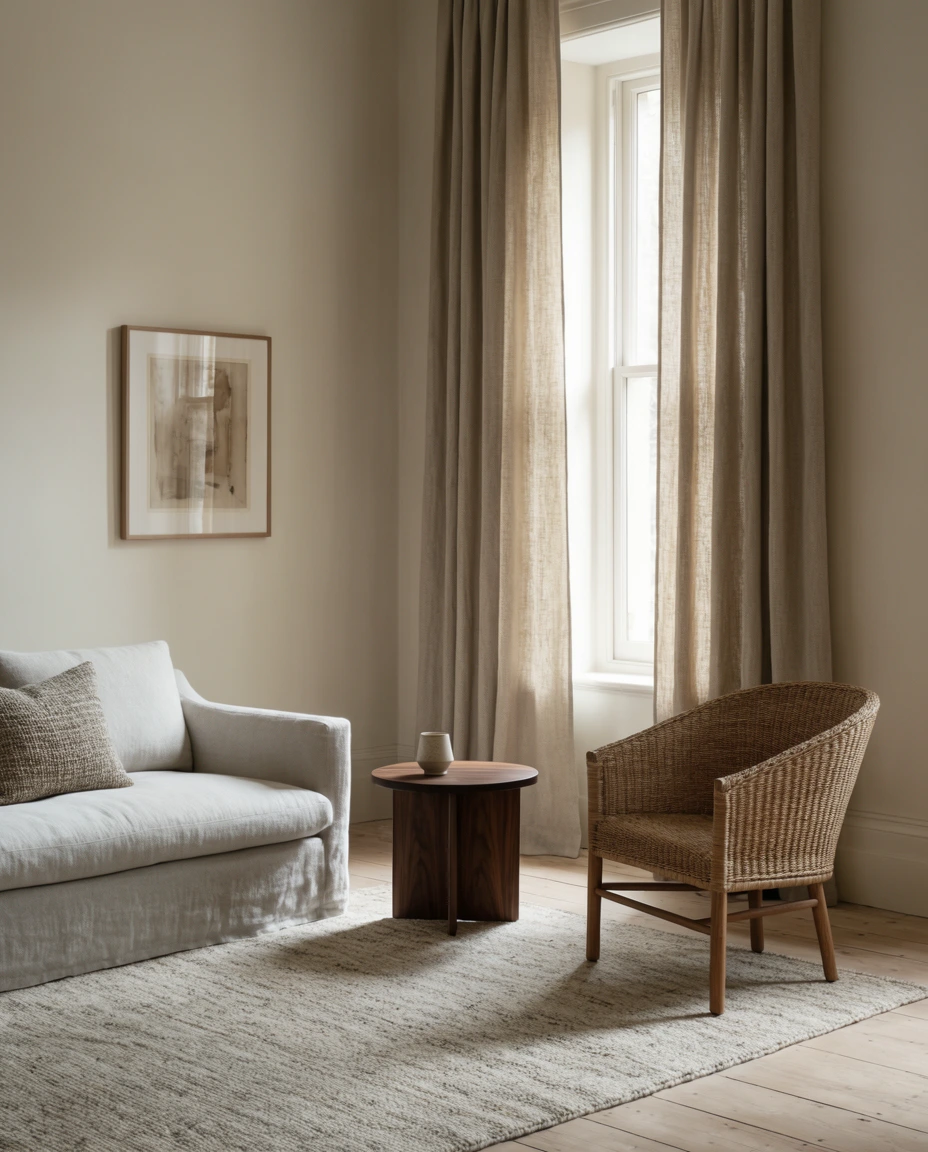
A living room minimalist palette can turn cold fast in October, and the fix is never more objects — it’s warmer light and heavier weave. Swap cool bulbs for something warmer, add a floor lamp with a linen shade, put a wool rug over bare floor. Some of the best ideas living room makeovers rely on are subtractive: fewer pieces, better ones. In spare living rooms a single deep-toned element like a clay throw or a walnut stool carries the whole season.

Lighting designers point to color temperature as the single largest variable in how warm a neutral room feels, and the shift from a cool bulb to a warm one in the same fixture is dramatic enough that most people assume the walls were repainted. The second lever is height. Three sources at different levels — floor, table, ceiling — read as evening, while one overhead reads as a waiting room no matter how good the furniture underneath it is.
22. Neutral Garlands for Every Doorway

A garland of dried eucalyptus, bleached ruscus, or plain grapevine over a doorway is the connective tissue of a neutral house — it links the entry, the mantel, and the kitchen without repeating a single ornament. Draped along a porch rail it softens hard architecture; run above an interior door it pulls the eye up. As neutral fall decorations go, it’s the most flexible of the ideas for the home that carry straight from September into December.
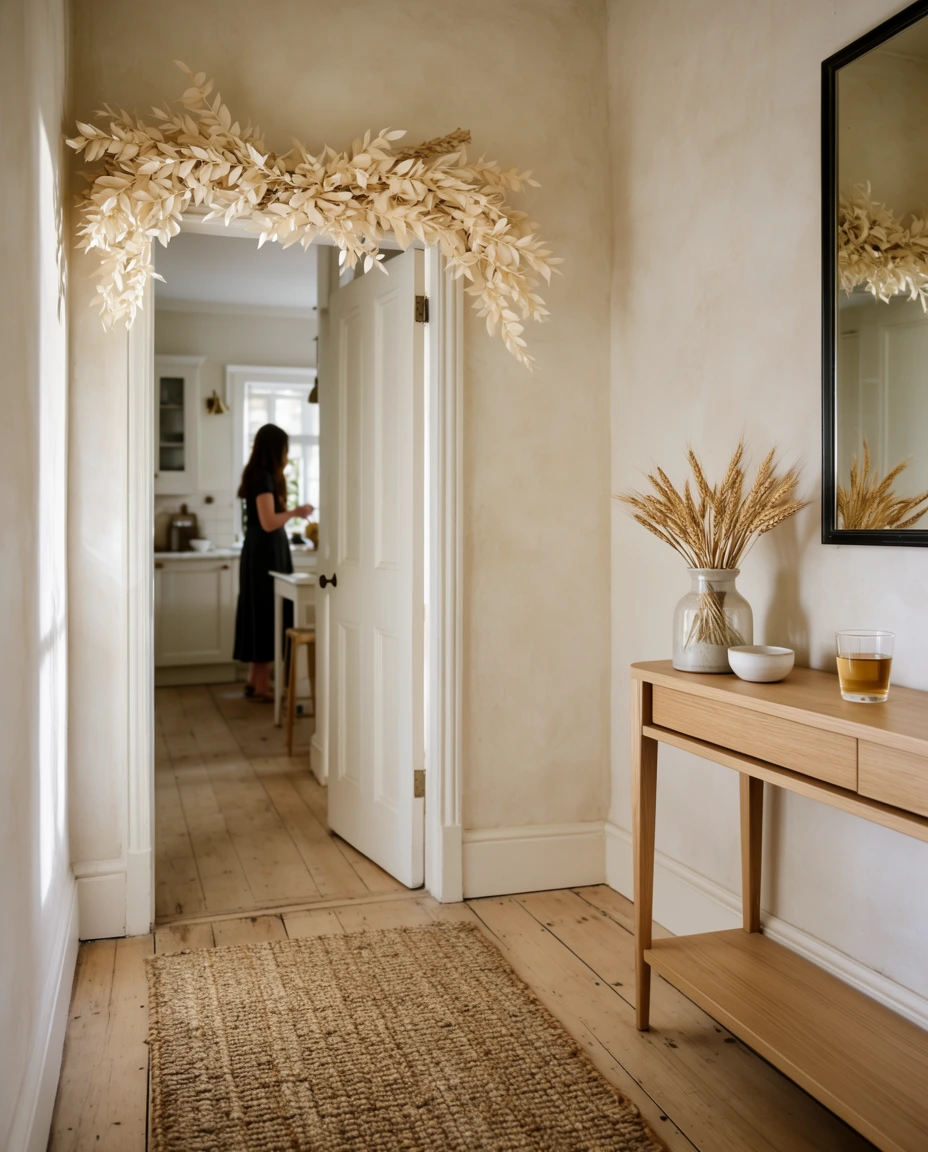
One reader in Charleston hung a nine-foot eucalyptus garland across her porch rail the first week of September and simply added white lights in November — same garland, two entirely different seasons, and her neighbors assumed she’d redecorated. Command hooks placed every eighteen inches hold the weight on painted surfaces without pulling, and on brick a few masonry clips do the job and stay put for years.
Neutral doesn’t mean quiet for the sake of it. Done well, it’s the version of fall that still looks good on the fifteenth of November, when the orange displays have started to sag. If you have a palette, a swap, or a porch trick that’s worked in your own house, leave it in the comments — the best ideas here usually come from readers first.