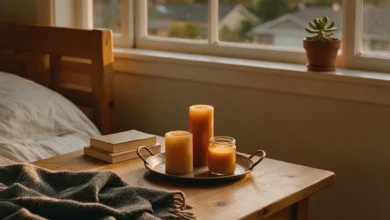
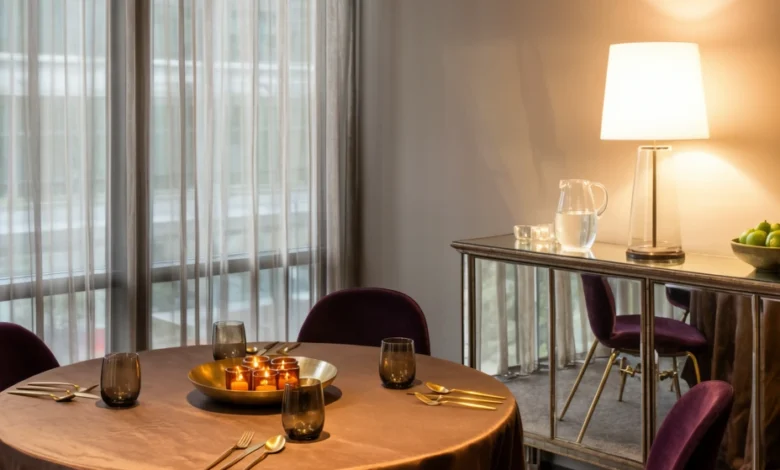
Autumn lands harder in the dining room than anywhere else in the house. It’s the room where the table actually gets set, where candles come out at five o’clock, and where a whole family’s worth of chairs suddenly has to make sense together. American searches for fall table settings climb every September, driven by Thanksgiving seating charts, centerpieces that have to survive a passing gravy boat, and a hunt for warmth that doesn’t involve plastic pumpkins. The 22 looks below run from pale and pared-back to deep, dark, and candlelit, and every one of them can be pulled together over a single weekend.
1. Warm Ochre and Walnut Layers

Ochre is the color that makes walnut look expensive. Paint one wall a soft mustard-gold, or keep it to textiles — a runner, a stack of napkins, a bowl of quince — set against dark-grained wood, and the room warms up by several degrees. The strongest fall ideas tend to start right here, borrowing from vintage paint palettes and softening the plain lines of a farmhouse table. It suits a formal dining room and a busy eat-in kitchen equally well.

Layering is what keeps the scheme from going flat. Begin with the wood tone already in the room, then pick two ochres — one dusty, one closer to honey — so the eye has somewhere to travel between them. Matte finishes hold evening light far better than anything glossy, and a linen runner under a stoneware bowl reads richer than either piece alone. Keep the brightest tone the smallest: one mustard cushion outperforms four, every single time.
2. A Neutral Table for October
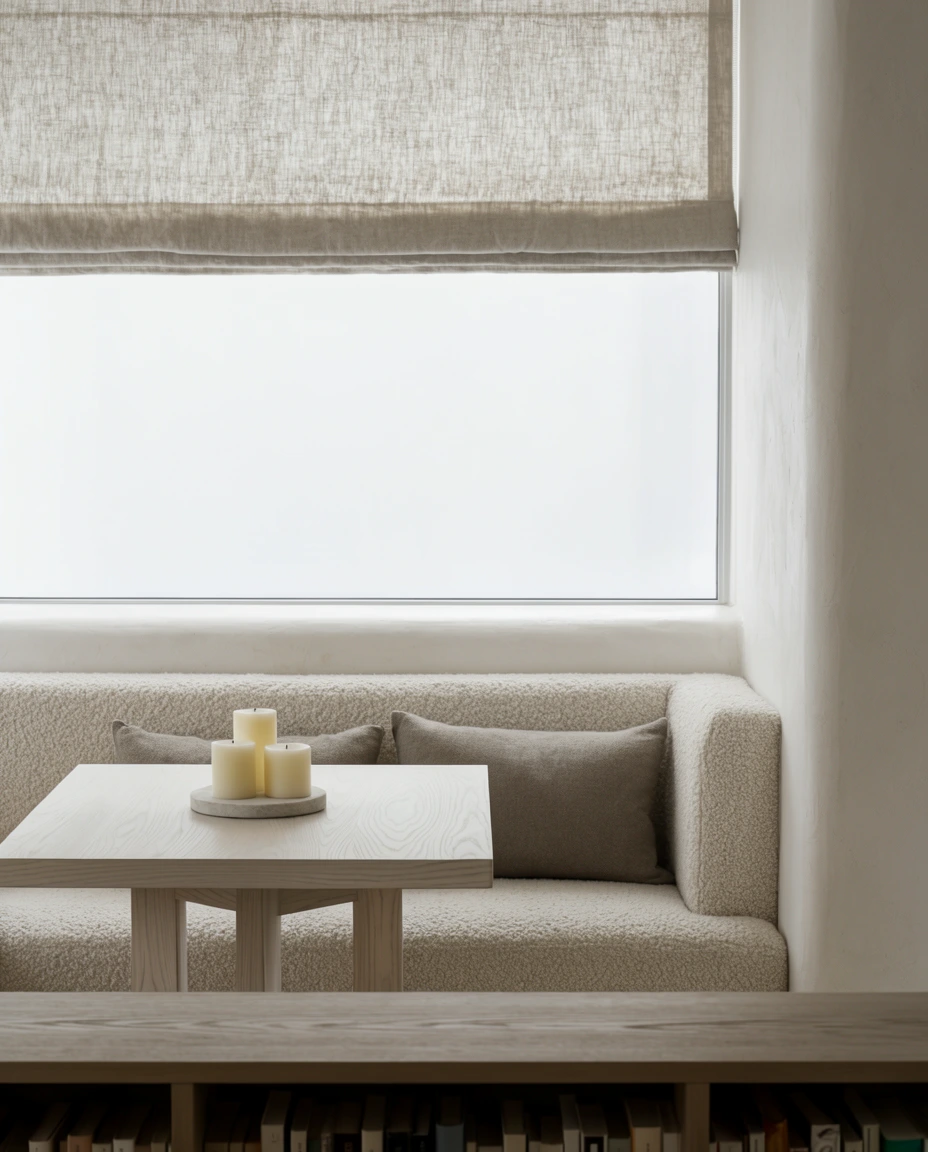
October doesn’t have to arrive in orange. A quiet table — oatmeal linen, unglazed ceramics, pale dried wheat — carries the season through texture instead of color, which is exactly why the neutral version keeps filling up mood boards. Keep the palette simple: three shades of cream and one soft taupe. The setup reads minimal from across the room but full of detail up close, and it holds from the first cool week straight through November.
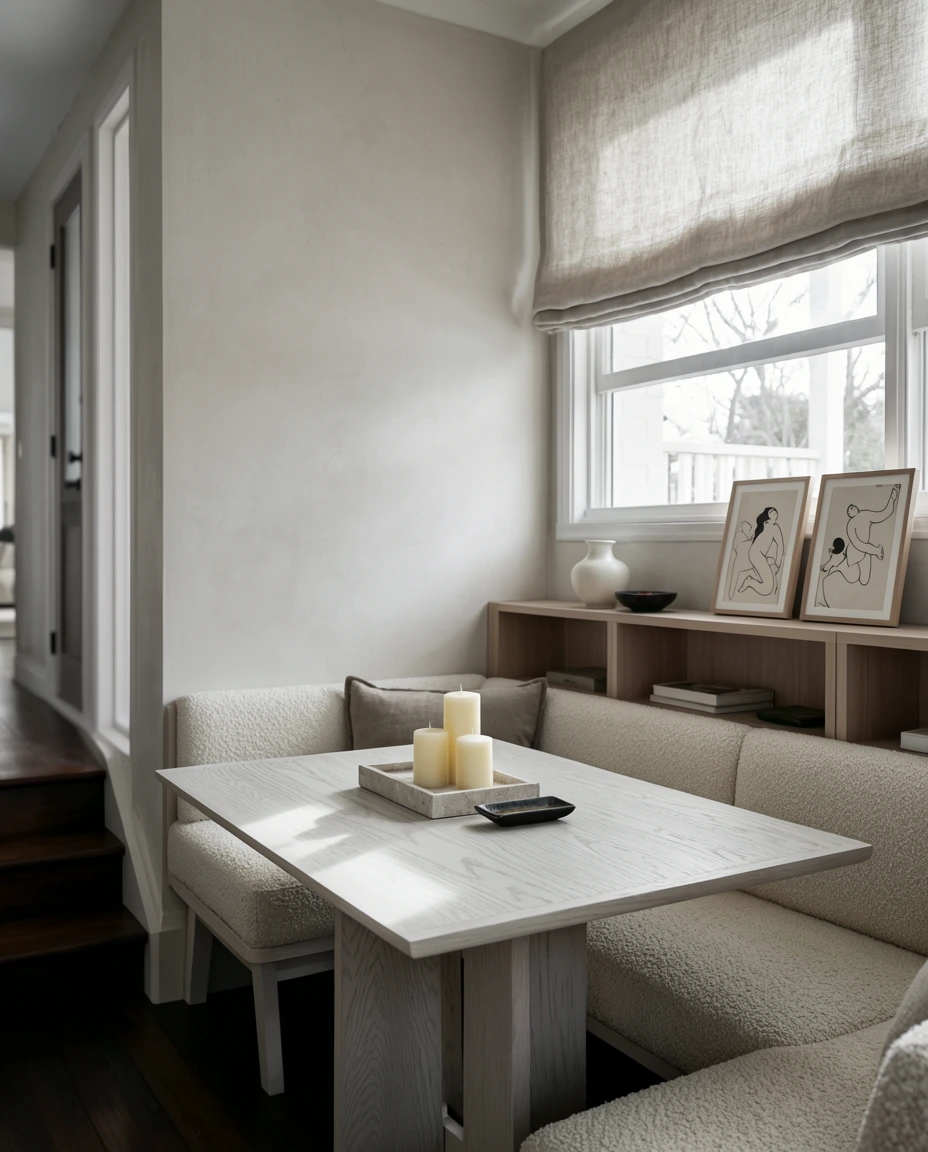
The scheme earns its keep in rooms that already have architecture doing the talking — beamed ceilings, wainscoting, a big window with bare trees behind it. In a smaller apartment dining nook, where the table sits close to the sofa, the low-contrast palette keeps the two zones from arguing. Rooms with competing wood tones benefit most of all, since cream flattens the difference between a red-oak floor and a honey-pine tabletop.
3. Vintage Brass Candlelight
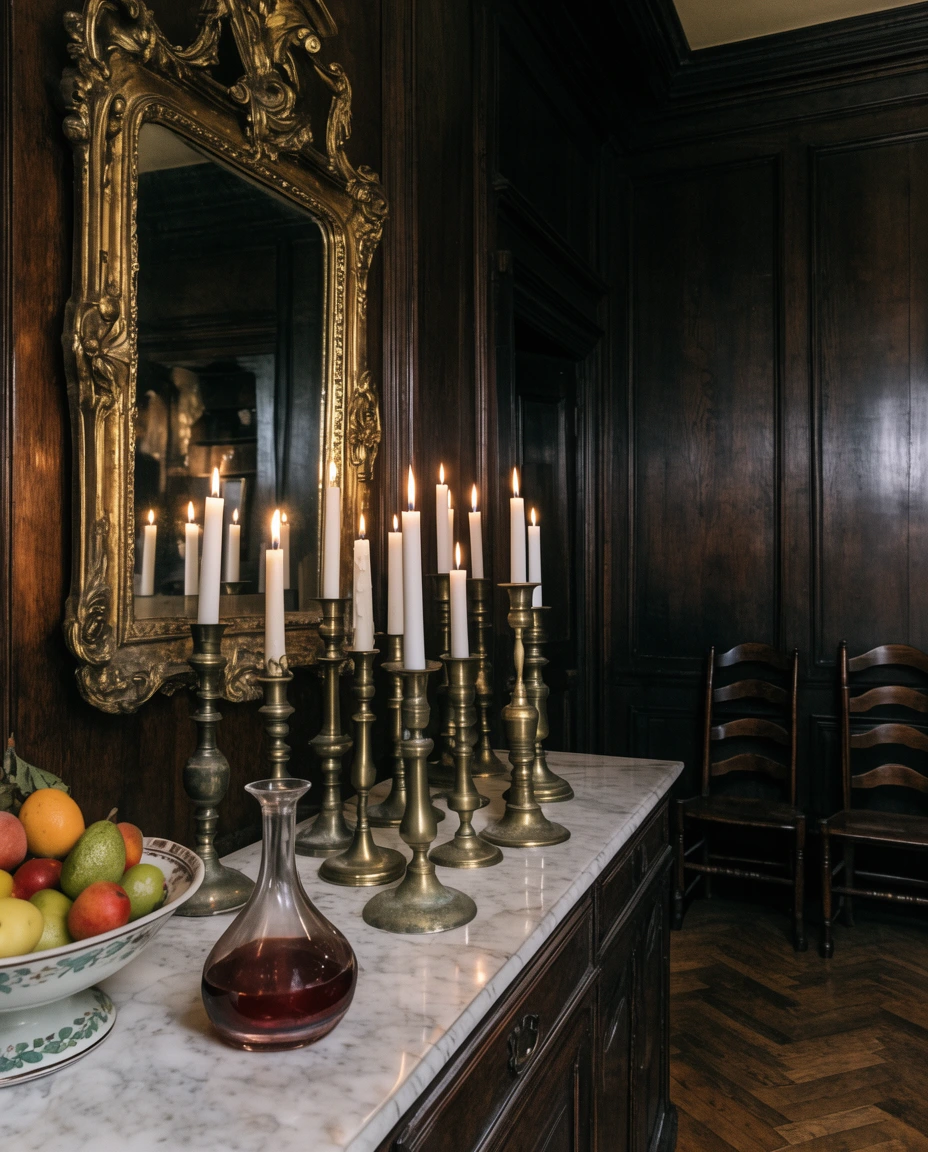
Brass candlesticks are the one thrift-store category still worth digging through. Mismatched heights, tarnished bases, a little old wax in the seams — a collected group of eight or ten reads far more vintage than a matched pair ever will. Set them down the center of the table and the room turns quietly glam once the sun drops. It’s an elegant move that costs almost nothing and looks right on oak, marble, or laminate alike.

A friend in Providence bought eleven brass sticks across two autumns, never paying more than six dollars for any of them, and now sets them out the first Sunday of October like clockwork. The thing she learned along the way: leave the tarnish alone. Polished brass throws hard little highlights, while an aged surface glows. Vary the taper heights by an inch or two so the flames sit at different levels down the length.
4. Moody Blue Dining Walls

Deep blue is the sleeper color of fall dining rooms. Slate, ink, denim gray — taken floor to ceiling with the trim included, it makes maple furniture glow and turns candlelight almost gold. The color takes boho pieces seriously, too: a rattan pendant or a woven hanging looks grounded against it rather than dorm-room casual. Of all the paint ideas people save in September, saturated blue is the one that still looks right in February.

Designers push blue darker than most homeowners want to go, and they’re usually right about it. A mid-tone reads cold under evening light, while a genuinely deep shade reads warm, because the eye stops registering it as blue and starts reading it as shadow. Eggshell on the walls, matte on the ceiling, satin on the trim — that combination keeps a dark room from turning into a box. Test a large swatch beside the window first.
5. Sheepskin Over Farmhouse Benches

Benches are practical and slightly unforgiving. Throw a sheepskin or two across the seat and a farmhouse table stops feeling like a picnic setup — people suddenly linger through a second pot of coffee. The wool adds height, softness, and a neutral tone that agrees with everything already in the room. It’s a simple fix, seasonal by nature, and it takes about four seconds to put in place before anyone rings the doorbell.

In colder states the bench-and-sheepskin pairing has become close to standard from October through March, partly because dining rooms in older Midwestern and New England houses run cold near the glass. Families in warmer climates get the same visual softness from flat-woven cotton throws, which don’t trap heat the way wool does. Both versions go in the wash, which matters more than it sounds like it should once a meal is underway.
6. Dried Grasses in Stoneware
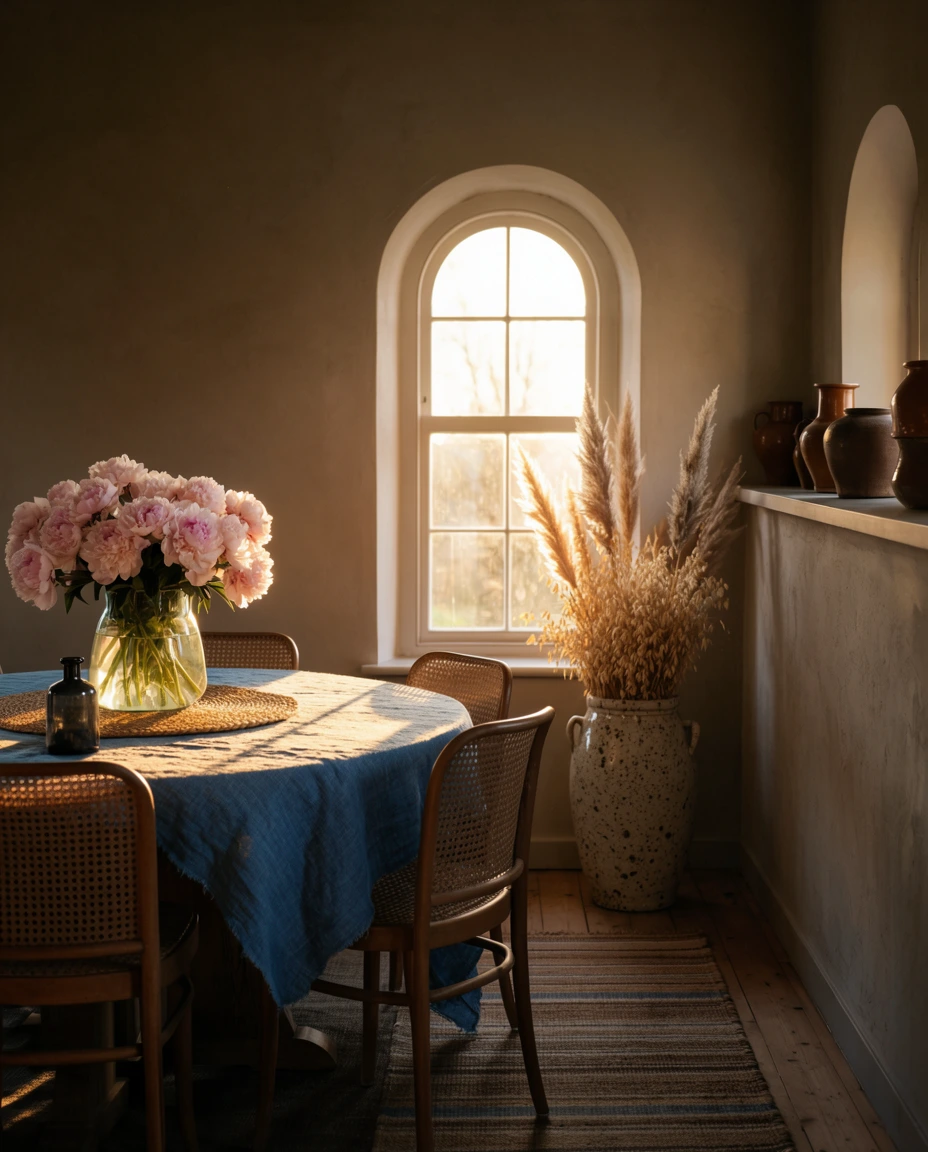
Pampas gets all the attention, but bunny tails, wheat, and dried oats make better company at a dining table because they don’t shed into the food. Gather a loose armful into a heavy stoneware pitcher and set it on the sideboard. The arrangement leans boho without going anywhere near beachy, stays minimal in outline, and sits beautifully beside vintage pottery in earth glazes. It lasts the whole season for less than a supermarket bouquet.
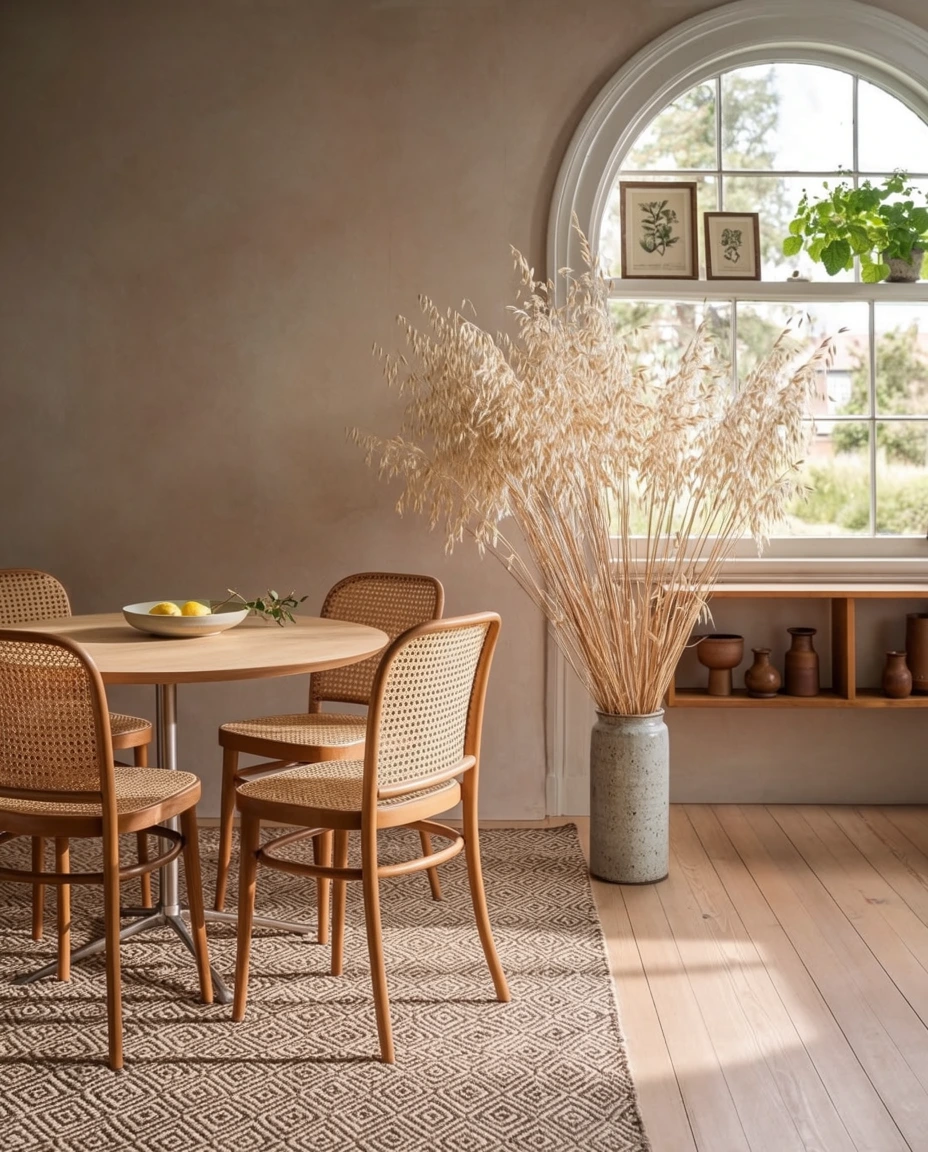
A bundle of dried wheat runs about eight dollars at most craft stores, and one bundle fills a ten-inch pitcher with stems to spare. Field-cut grasses are free if you have permission and a pair of shears. The pitcher is the real investment — a good stoneware piece in a mushroom or ash glaze costs thirty to sixty dollars and pays for itself across the year, holding tulips in April just as happily.
7. The Glam Autumn Tablescape

Some rooms want a little shine in November. Smoked glass chargers, gold-rimmed goblets, a eucalyptus garland threaded with amber votives — the effect is properly glam without tipping into holiday-party territory. Keep it to two metals, no more than that. Built this way, a Thanksgiving table looks considered rather than costumed, and the whole arrangement stays elegant enough that nobody ends up feeling overdressed at their own dinner.
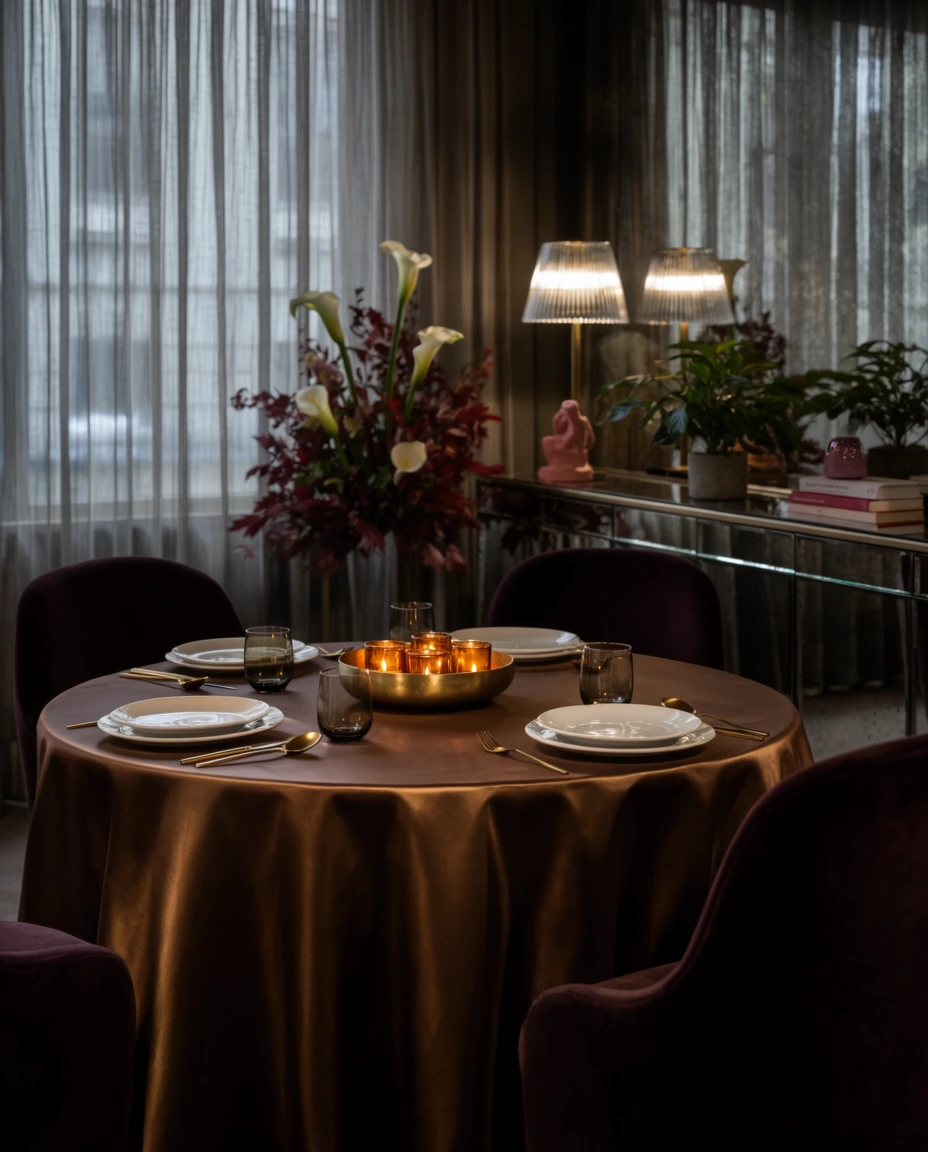
Most people set the fancy version once, photograph it, then quietly clear half of it before the food comes out — and that instinct is correct. The chargers go, the garland stays. Households that run the arrangement in a narrow band down the center rather than clustering it in the middle end up relocating far less mid-meal, since serving bowls need the table’s midpoint much more than the decor does.
8. Mixing Linen and Raw Wood
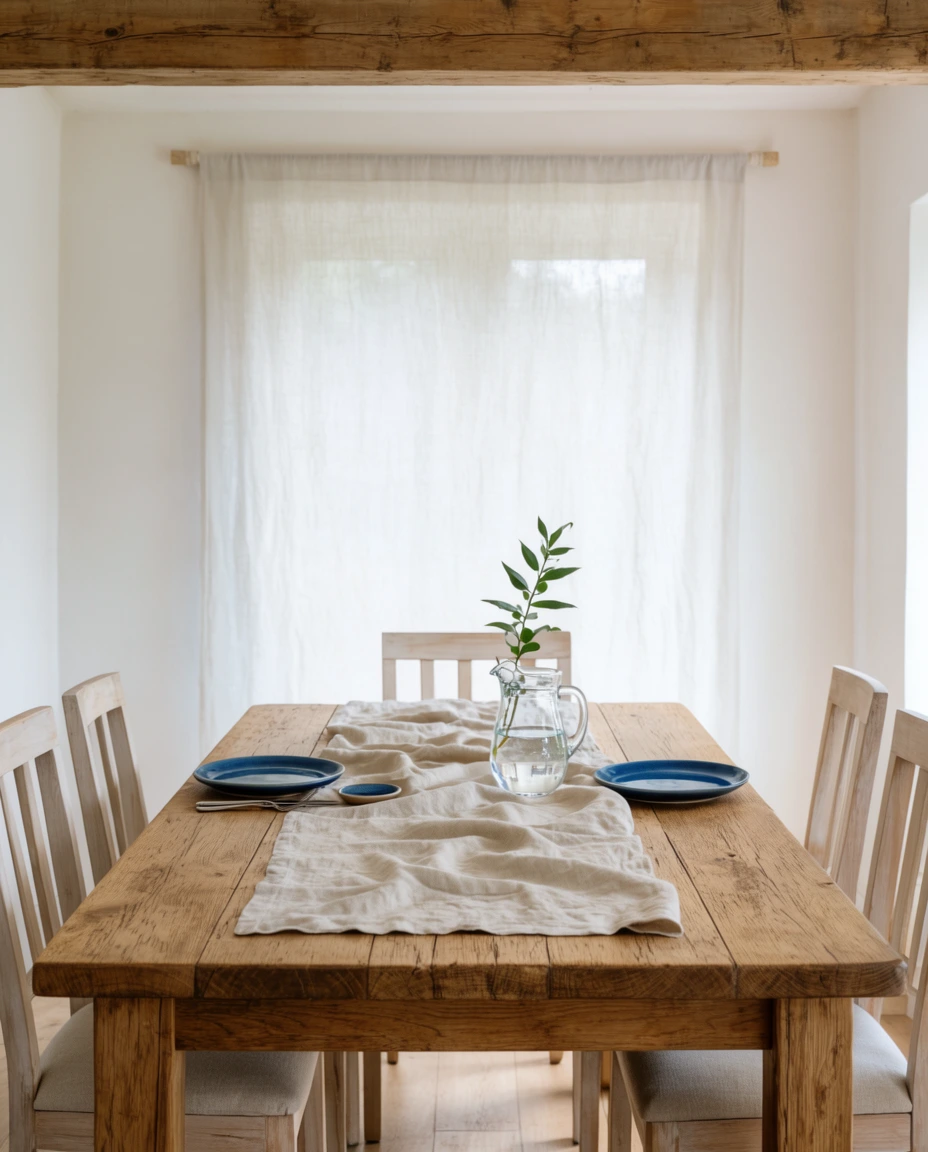
The most reliable fall table has exactly two ingredients: rumpled linen and unfinished wood. Skip the tablecloth entirely, let the grain show, and lay a wide runner straight down the middle in flax or clay. The contrast between soft and rough is the whole point — simple, tactile, and quietly farmhouse without a single rooster in sight. A neutral palette leaves the food and the candles to carry all of the color.
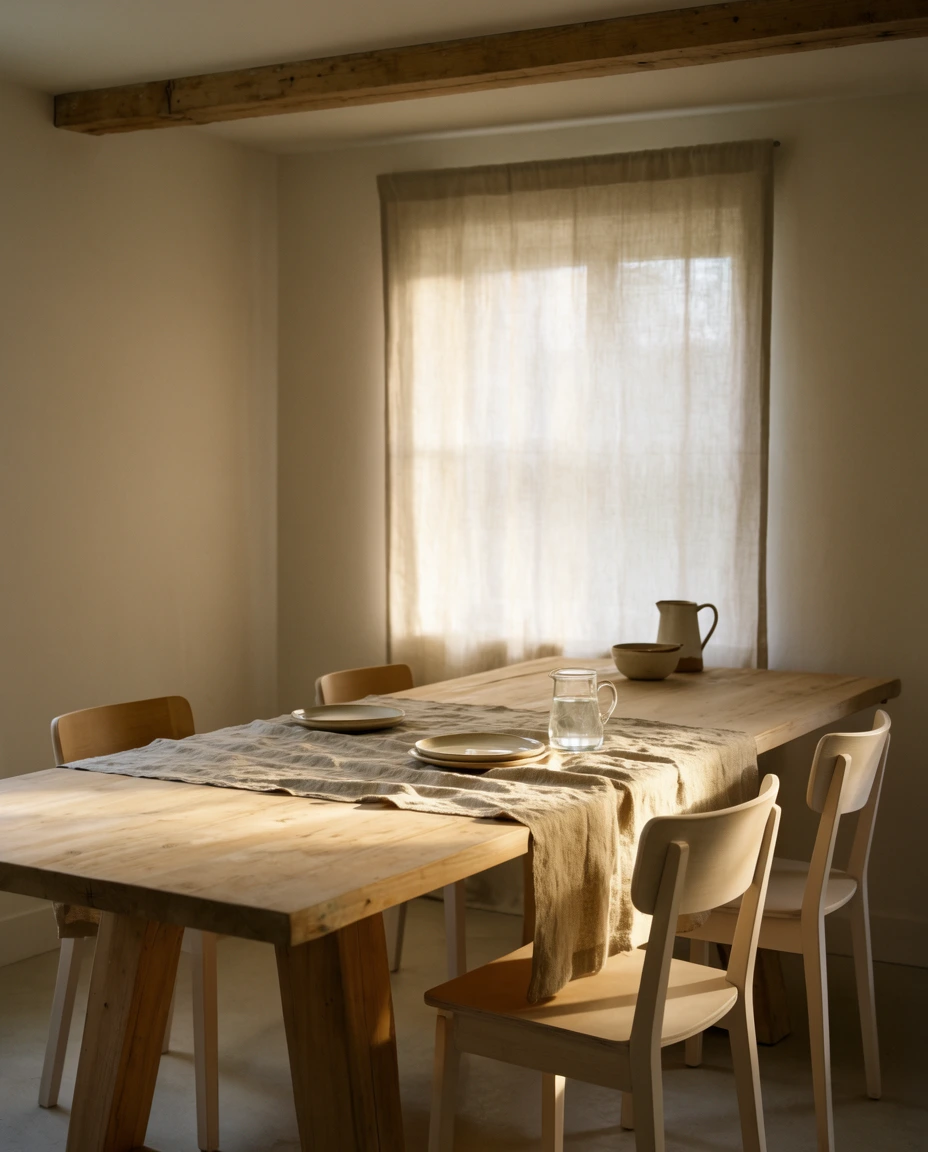
The usual misstep is ironing the linen flat, which strips out the texture that made it worth buying. Wash it, shake it out, lay it down slightly damp and let it dry in place. Runner width is the other thing worth watching — anything narrower than fourteen inches looks stranded on a standard table. Sizing it to roughly a third of the tabletop keeps the proportions honest and still leaves room for plates.
9. Boho Rattan with Amber Glass
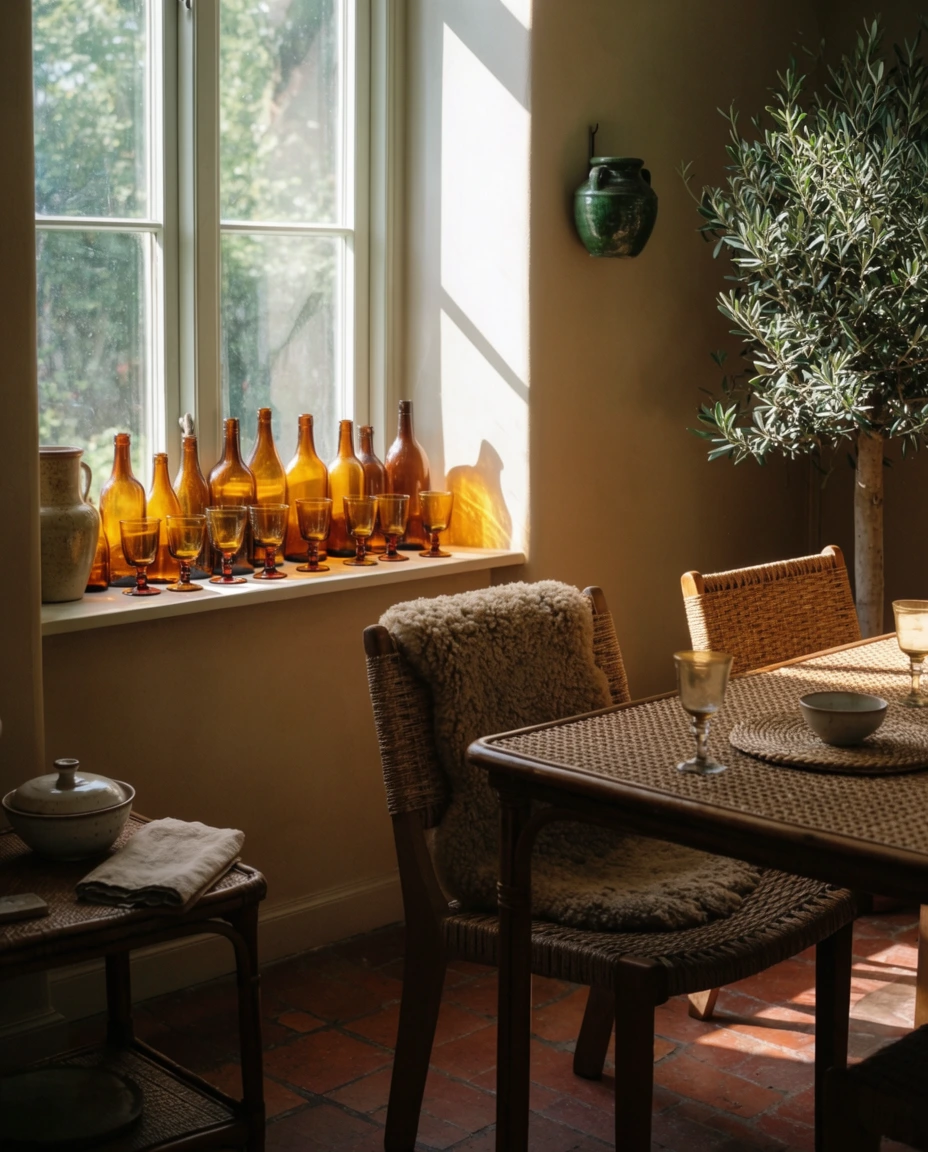
Rattan and amber glass were made for October light. A woven pendant above the table filters low afternoon sun into something honey-colored, and amber tumblers pick that same tone back up at each place setting. The pairing is boho in spirit but calm enough for a formal room, especially with vintage glassware collected a piece at a time. Among warm-to-cool-weather ideas, this one makes the seasonal switch with almost no effort at all.
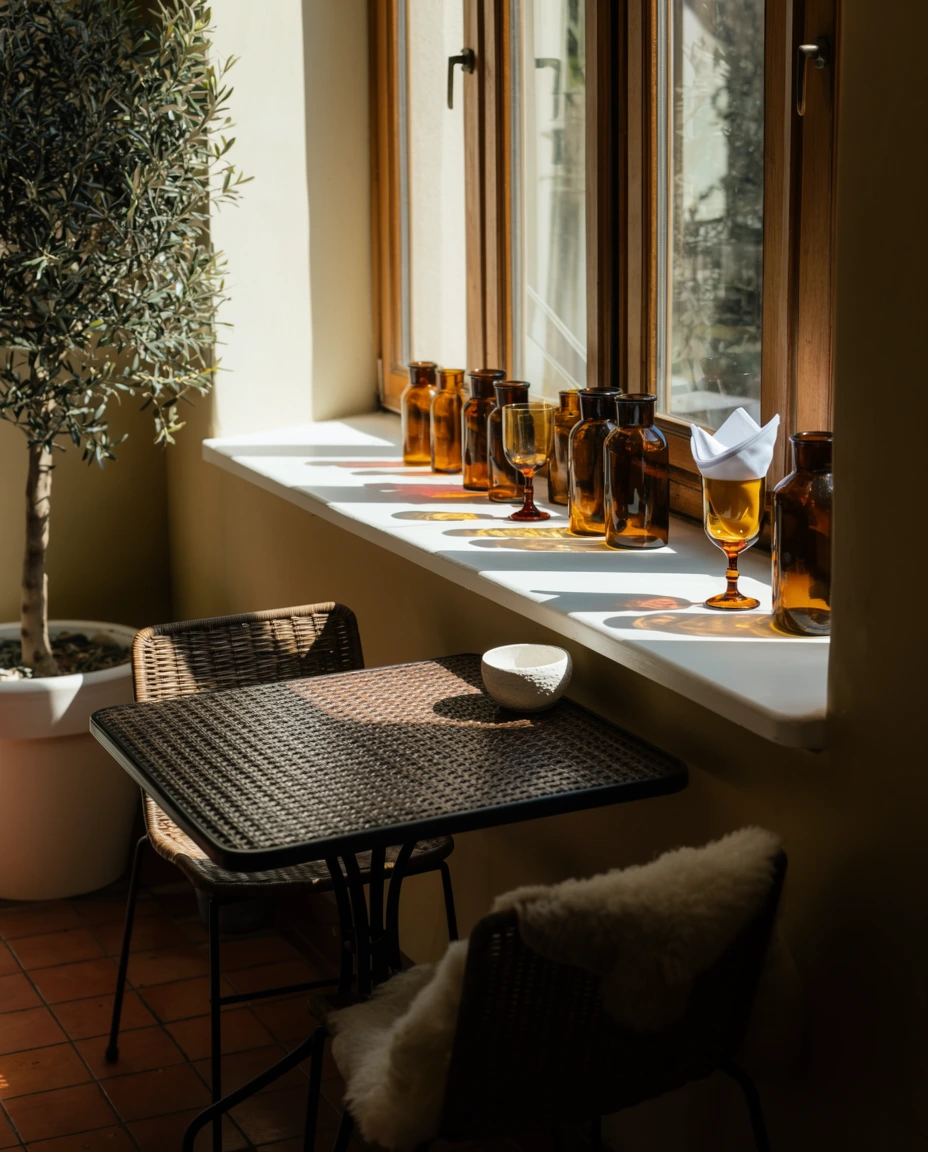
Amber does something specific in a room: it filters light rather than bouncing it, so a cluster of glass on a windowsill throws soft color across the table by late afternoon. Group the pieces in odd numbers, vary the heights, and keep the grouping clear of the path plates travel. Thrifted amber tends to be thicker and deeper in tone than new pressed glass, which reads faintly yellow beside it.
10. A Thanksgiving Table Without Fuss
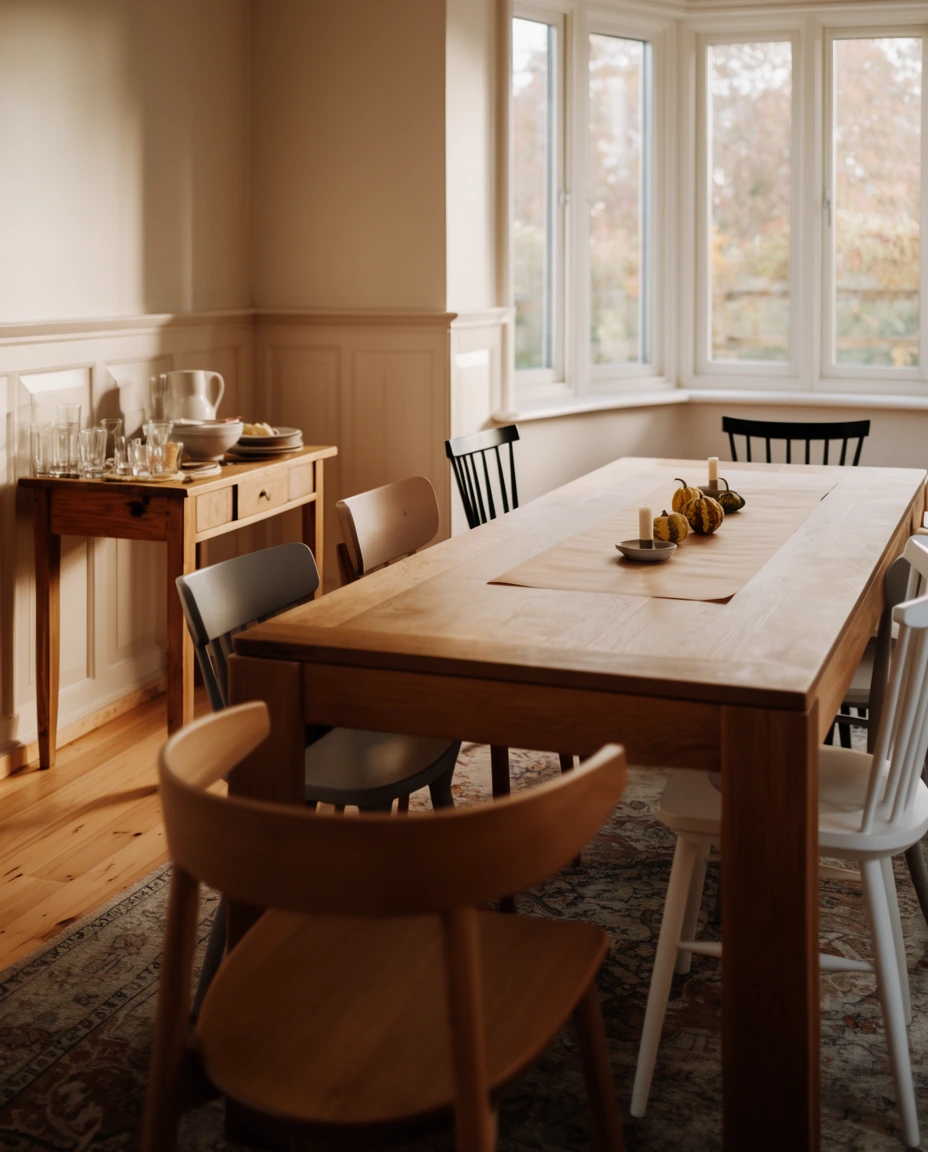
The best Thanksgiving table is usually the one that took twenty minutes. Butcher paper down the length, a row of small pumpkins, cloth napkins folded once, candles at intervals — that’s the entire plan. Keeping it simple means nothing has to be moved when the platters land, which is the real test of any centerpiece. A minimal approach also frees up the afternoon for the food, which is what everyone came for.

Thanksgiving in most American houses means more people than chairs, a folding extension at one end, and at least one dish arriving forty minutes late. Decor that survives all of that sits low and slides easily — small gourds, votives in glass, nothing tall enough to block a face. Hosts in smaller homes often move the drinks to a separate console entirely, which clears eight inches of tabletop and calms the whole room down.
11. Copper Accents for Small Rooms
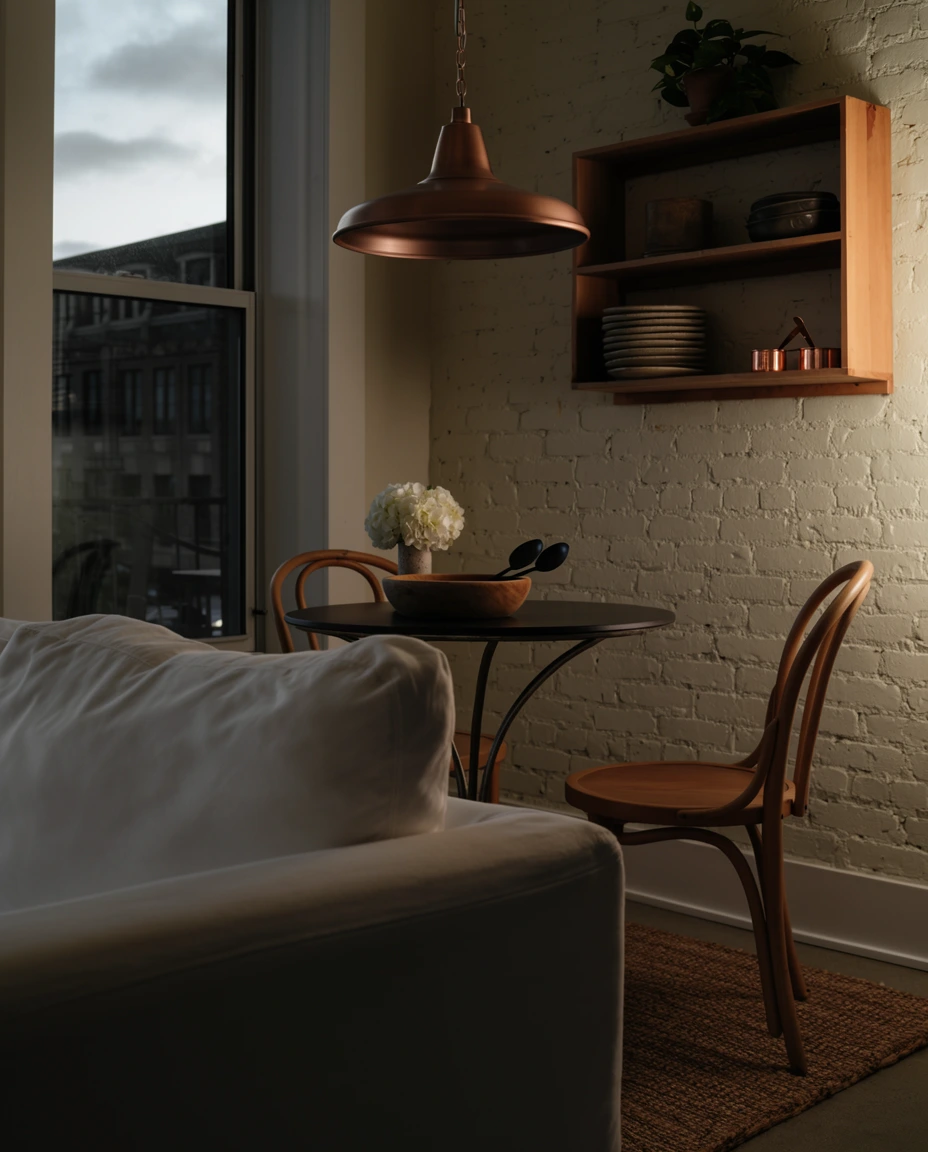
Copper reads warmer than brass and behaves better in tight quarters. A row of small copper pots on a shelf, a hammered tray, a pair of candle holders — the metal carries lamplight around a compact room and makes the walls feel further apart than they are. There’s a soft glam to it that never turns brassy, and set beside vintage ironstone plates the effect is elegant in the way old European kitchens are.

Vintage copper is one of the last genuinely affordable metals at estate sales — expect eight to twenty-five dollars for a small pot, less if the tin lining has gone dull. New reproductions cost triple and arrive without any patina at all. Cooking pieces need that lining intact, but decorative ones don’t, which is precisely where the bargains sit. A rub with lemon and salt brings the shine back in minutes.
12. Pumpkins Beyond Orange

Heirloom varieties do all the seasonal work without the traffic-cone color. Jarrahdale sits in a chalky blue-gray, Cinderella pumpkins come in flat coral, and pale Casper white slots into any neutral scheme without a fight. Cluster three sizes on a farmhouse sideboard, or run five small ones down the center of the table. They keep for weeks in a cool room and sit far more comfortably beside real furniture.
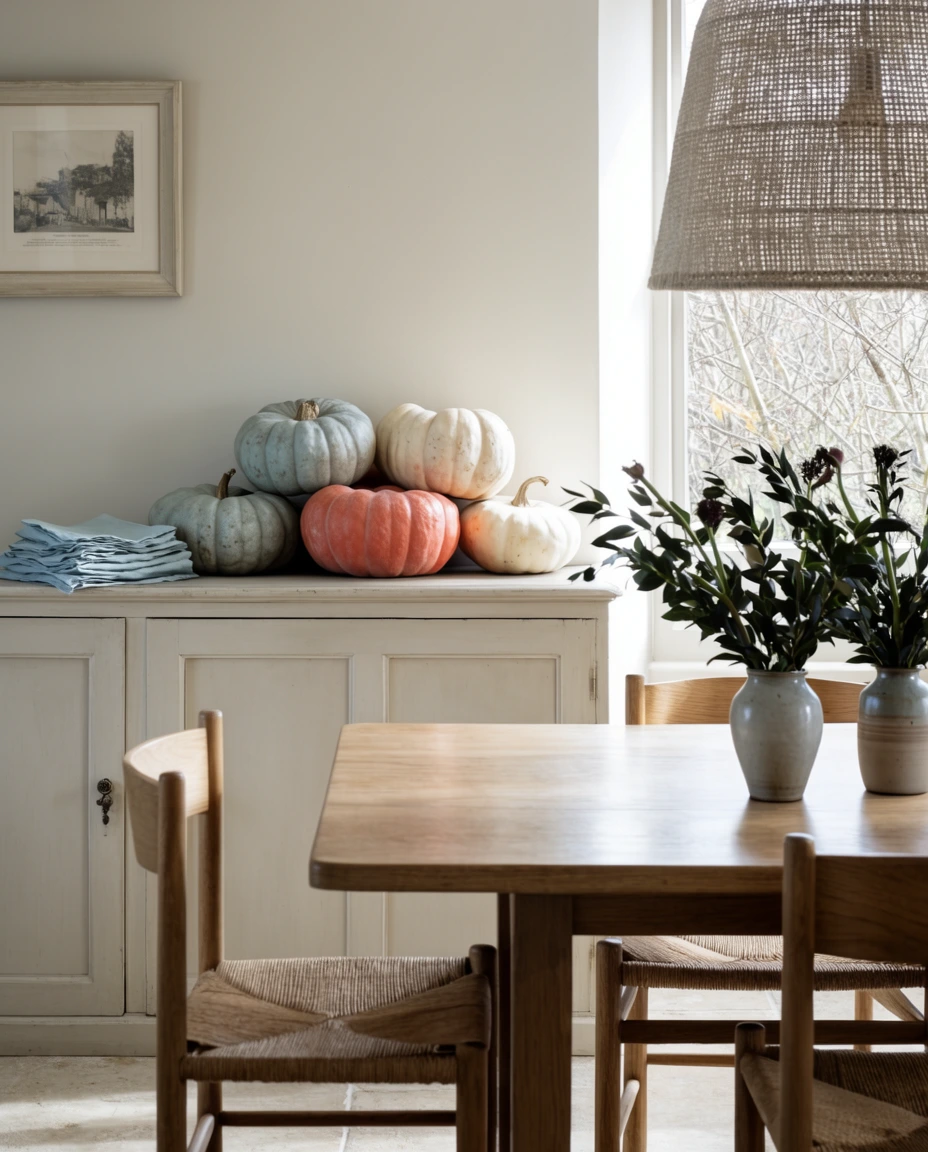
This look does its best work in rooms with plenty of natural wood or stone, where the dusty greens and blues of heirloom squash read like part of the palette rather than a holiday overlay. It also rescues a dining room painted a strong color, since muted pumpkins won’t fight the walls the way bright orange invariably does. Farm stands from late September onward carry the odd varieties cheaply.
13. Ivory Ceramics on Dark Wood

Cream against near-black is the quietest kind of drama. A set of ivory plates, a matte pitcher, two footed bowls — arranged on a walnut or ebonized table, they seem to float above it. The contrast keeps the setting minimal while staying elegant enough for a dinner party, and hand-thrown or vintage pieces bring in the small irregularities that make a table look collected rather than bought in one trip.

Stylists working with dark tables build in threes and leave real space between the groupings, because dark wood swallows anything crowded. Reflectance explains why cream outperforms pure white here — white goes chalky under warm bulbs, while ivory holds its softness. Pieces with slight glaze variation catch candlelight along the rim, and that single detail is what separates a considered table from a matched set straight out of the box.
14. Simple Greenery in Bud Vases
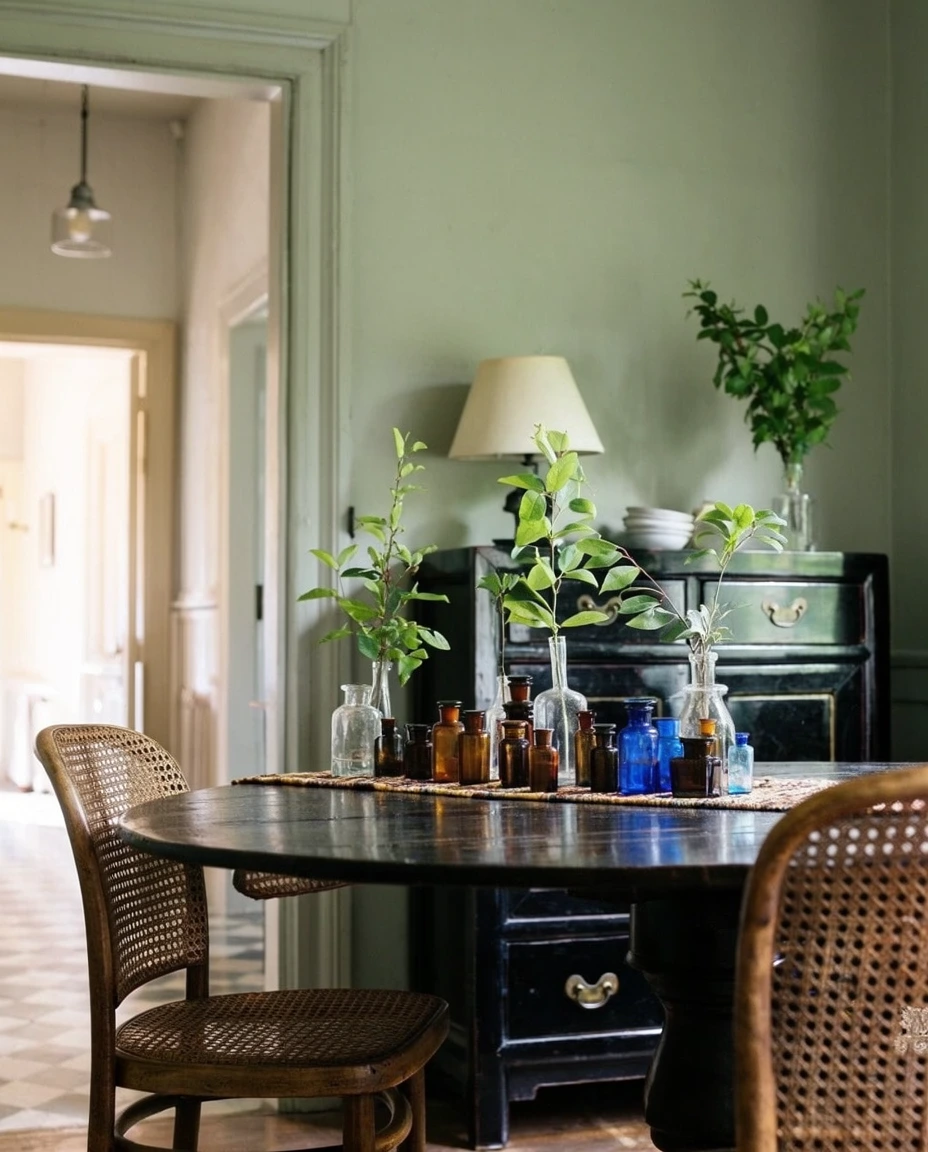
Six small vases beat one big arrangement almost every time. Clip whatever is still green outside — rosemary, olive, a few oak leaves just turning at the edges — and give each stem its own bottle down the center of the table. The line stays low enough for conversation and simple enough to redo weekly. It’s one of those ideas that costs nothing, and the neutral glass keeps all the focus on the leaves.
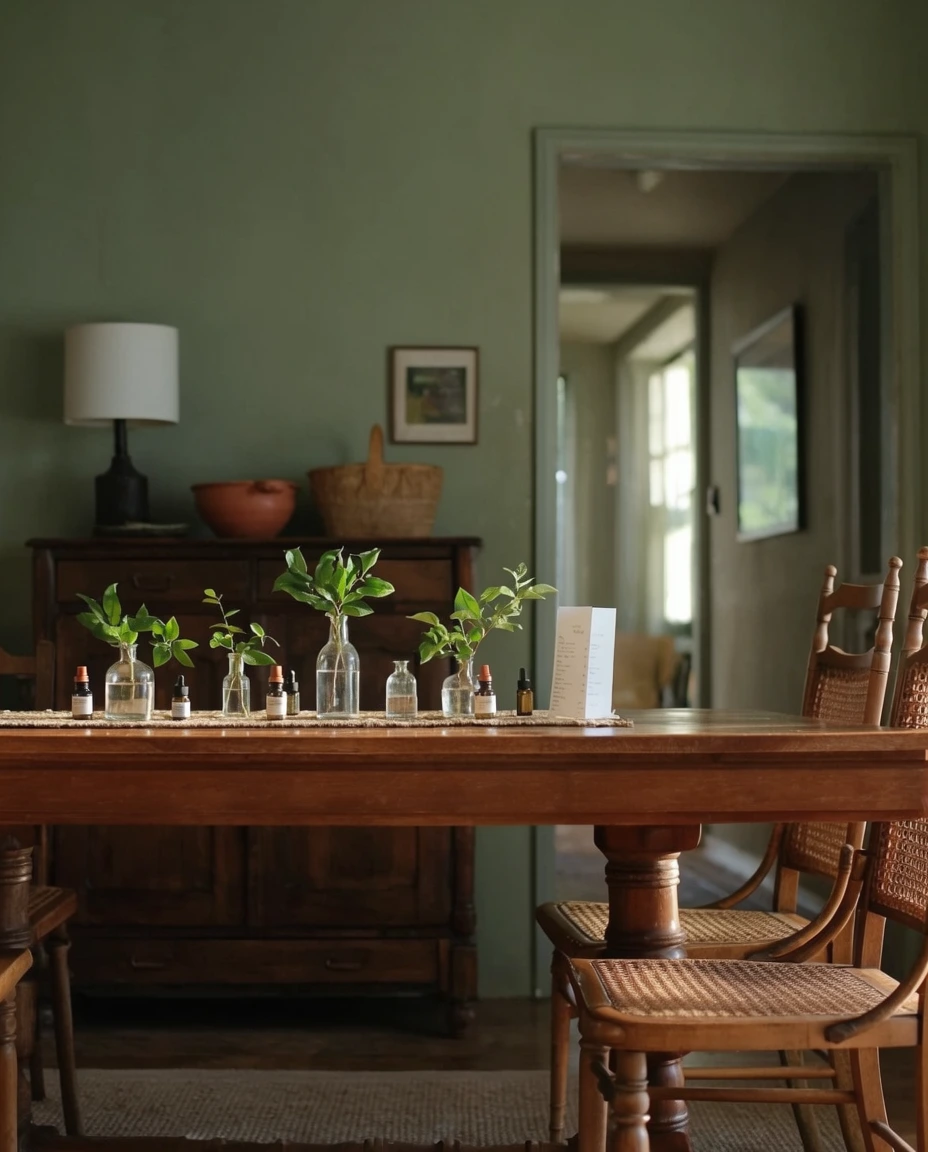
Households that actually maintain a centerpiece all season are almost always the bud-vase ones, because swapping a single wilted stem takes ten seconds and doesn’t mean rebuilding anything. Large arrangements get abandoned by the second week. Mismatched bottles work better than a matched set anyway — old apothecary glass, a small olive oil bottle, whatever came out of the recycling bin, lined up loosely instead of measured.
15. An Elegant Sideboard Vignette

The sideboard is the room’s second stage and it usually goes to waste. A tall lamp at one end, a stack of books, a bowl of pears, a leaning mirror or framed print behind — the arrangement builds height in layers and looks elegant from the doorway. A little glam arrives through a metal tray or a mercury-glass votive, and one good vintage piece anchors the entire grouping.
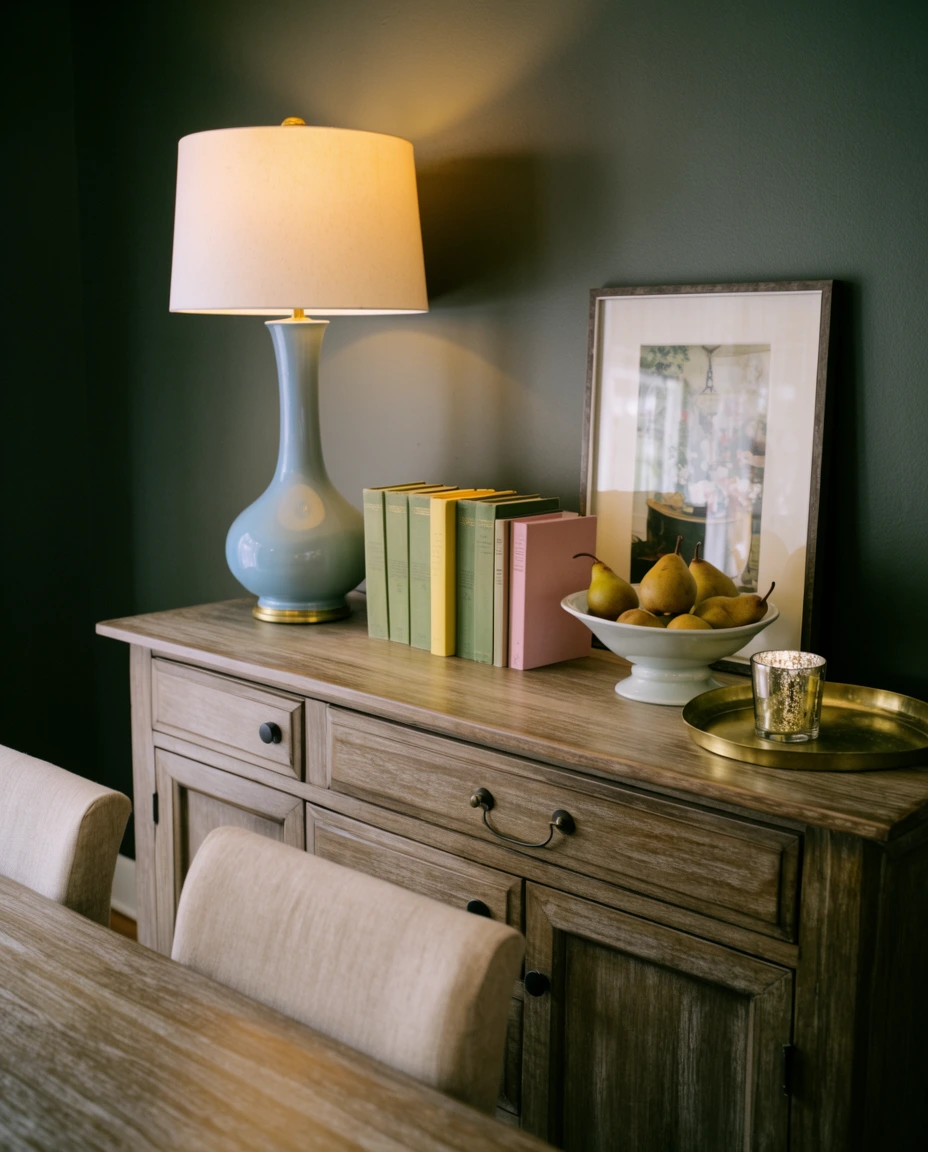
A homeowner in Charleston keeps a lamp on her sideboard year-round and swears it changed how the room gets used — the overhead light goes off at six, the lamp comes on, and dinner stretches an hour longer. The usual obstacle is an outlet within reach of the lamp cord. A flat cord run along the baseboard under a paintable cover solves it for well under fifteen dollars.
16. Layering Rugs and Rush Chairs
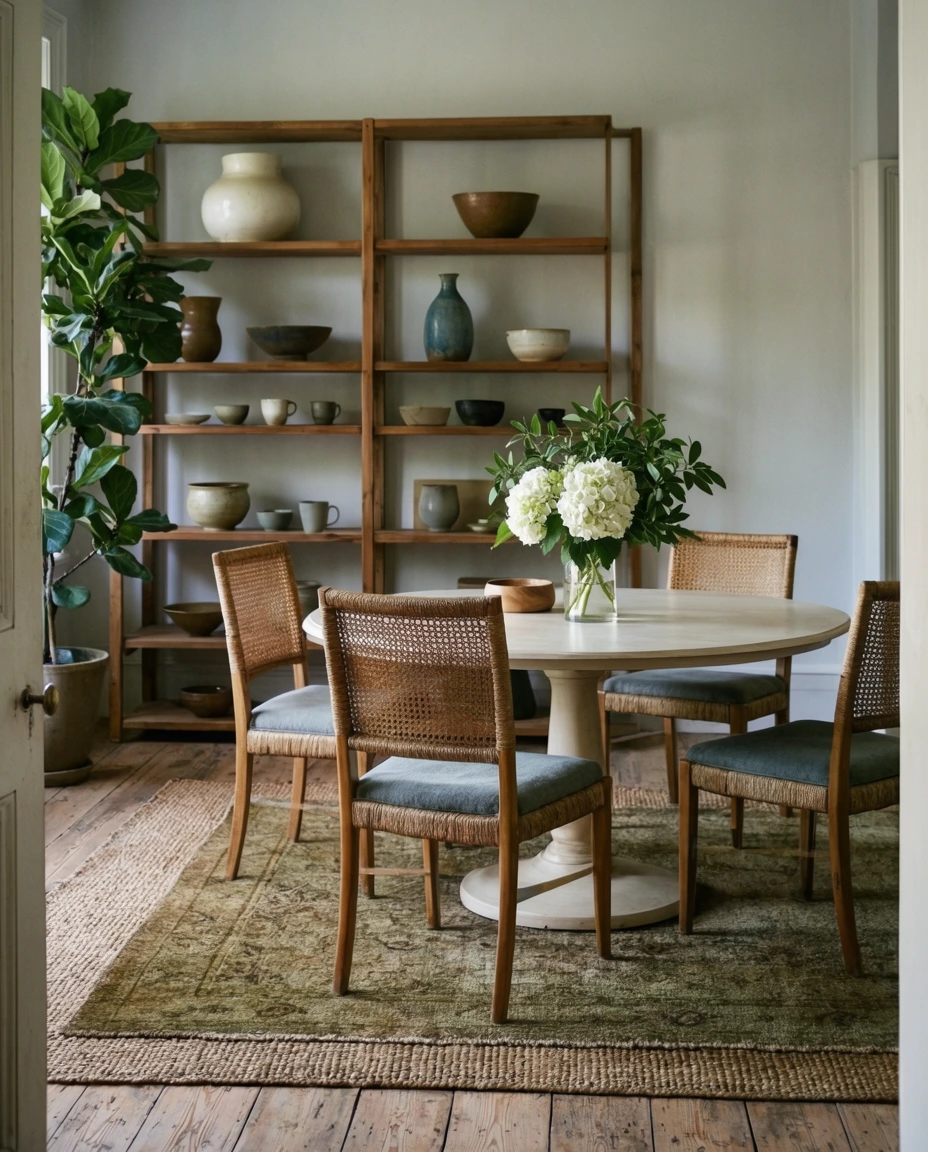
A flatweave under the dining table takes the echo out of a hard-floored room, and layering a smaller wool rug on top gives the arrangement real weight for winter. Rush and cane seats sit perfectly on it — light in structure, warm in color, and boho enough to loosen up a stiff farmhouse setup. The combination turns up constantly in build inspiration for Bloxburg houses, which says something about how readable it is.
The rug is nearly always too small. Chairs have to stay on it when pulled out, which means adding at least twenty-four inches beyond the table on every side — an eight-by-ten for a standard six-seater. Undersized rugs catch chair legs and rumple with every meal until somebody gives up on them. A low-pile base layer matters just as much, since anything plush makes chairs stick and shows every crumb.
17. A Minimal Centerpiece Without Flowers

Flowers are lovely and they die on Wednesday. A minimal centerpiece built from lasting materials — a shallow wooden bowl of walnuts, three pillar candles at staggered heights, one bare branch laid flat along the length — holds its shape from October into December. The palette stays neutral, the upkeep is basically nothing, and the whole thing is simple enough that a kid can put it back after homework takes over.
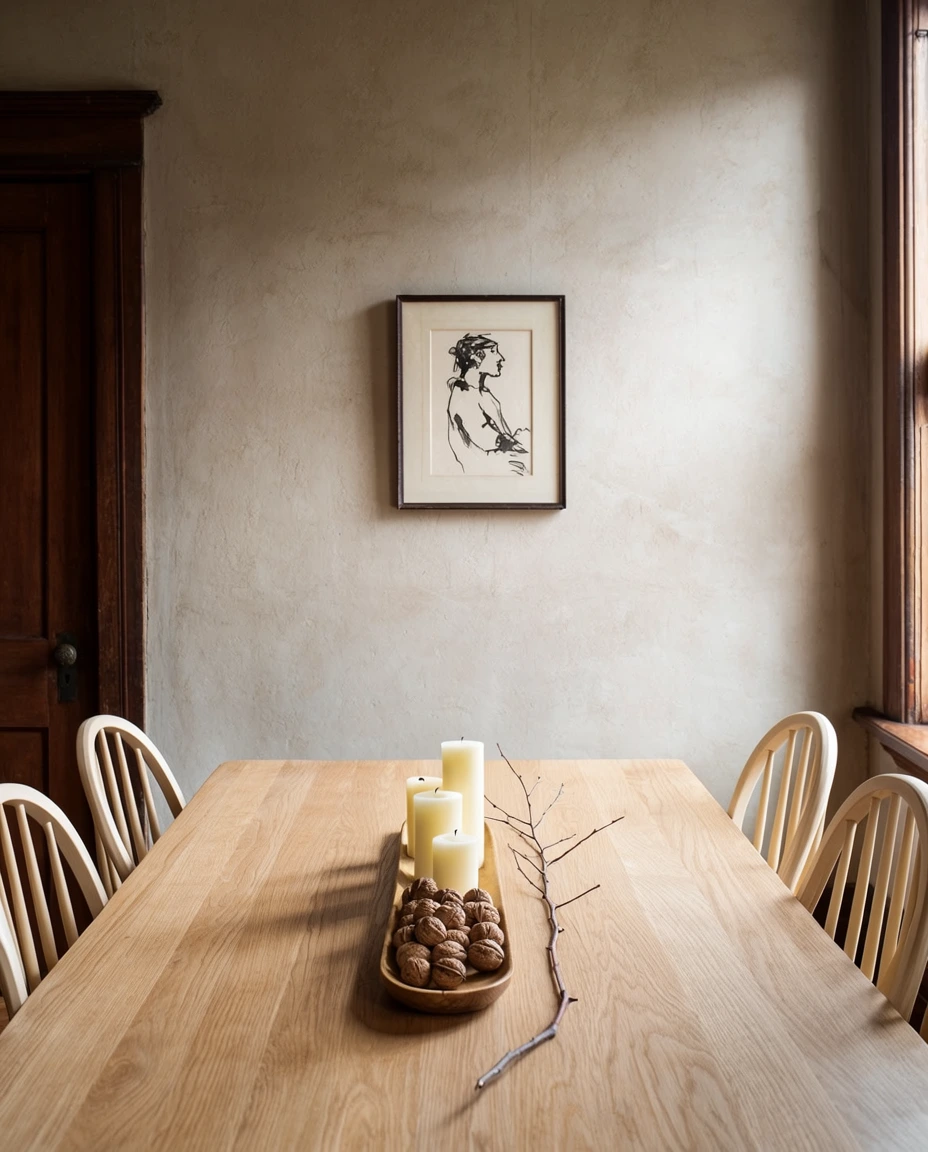
The rule that makes these work is a single long axis. Anything that sprawls sideways gets shoved aside at dinner, while anything running the table’s length in a narrow band survives the meal intact. Keep the tallest element under twelve inches so sightlines stay open, and repeat one material three times — three candles, three bowls, three stones — so the eye reads a pattern instead of leftovers.
18. Candlelight Down the Center

Nothing changes a dining room faster than a real run of candles. Twelve tapers of varying height down the middle, lit at dusk, and the ceiling recedes while the table becomes the brightest thing in the house. It’s the most elegant of all the low-cost fall ideas, and it translates to a game build just as neatly — the long candlelit table is a fixture of every polished Bloxburg dining room.
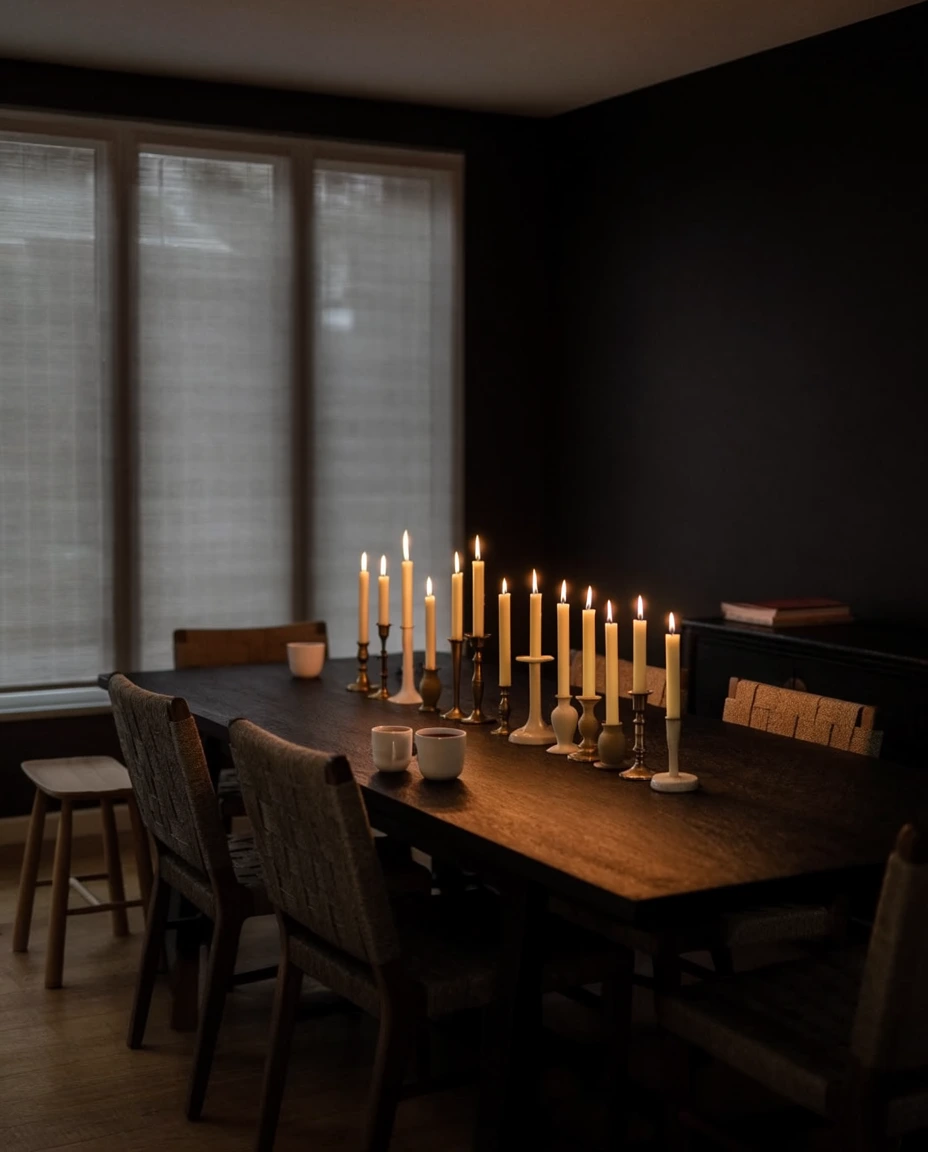
The effect lands hardest in rooms with dark walls or low ambient light, where the flames have something to work against. Bright white rooms with lots of glass need twice as many candles before the glow registers at all. Unscented tapers matter at a dining table, since fragrance and food share space badly, and dripless versions spare the linen. Beeswax burns longer and throws a warmer color than paraffin.
19. Rust Velvet Dining Chairs
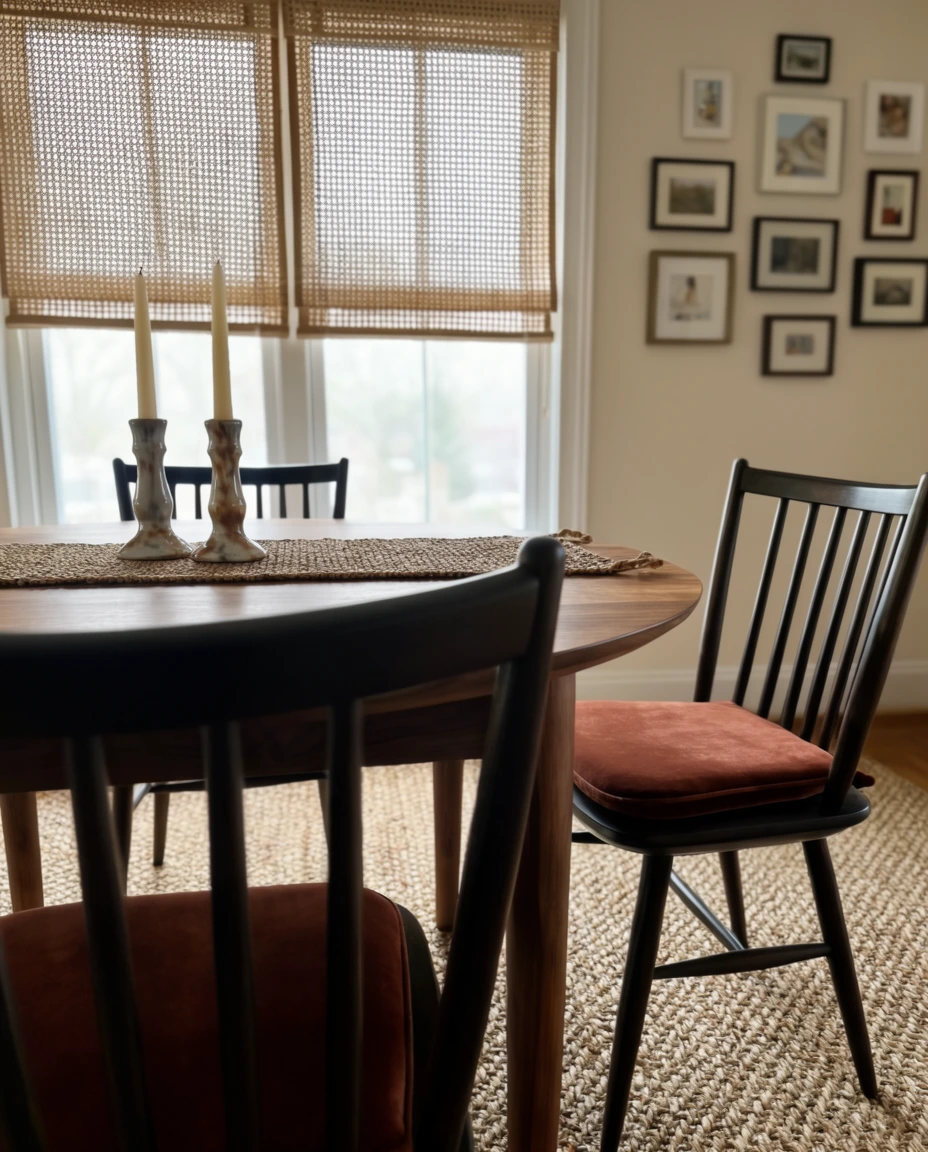
Rust is the color that makes a dining room feel like fall with no decorating involved. Upholster the chairs, or slipcover them, in a soft cotton velvet somewhere between terracotta and brick, and the room shifts permanently warmer. Velvet brings a low glam that reads rich under lamplight, sits easily beside vintage wood, and holds its own against boho texture like jute, cane, or a chunky wool runner.
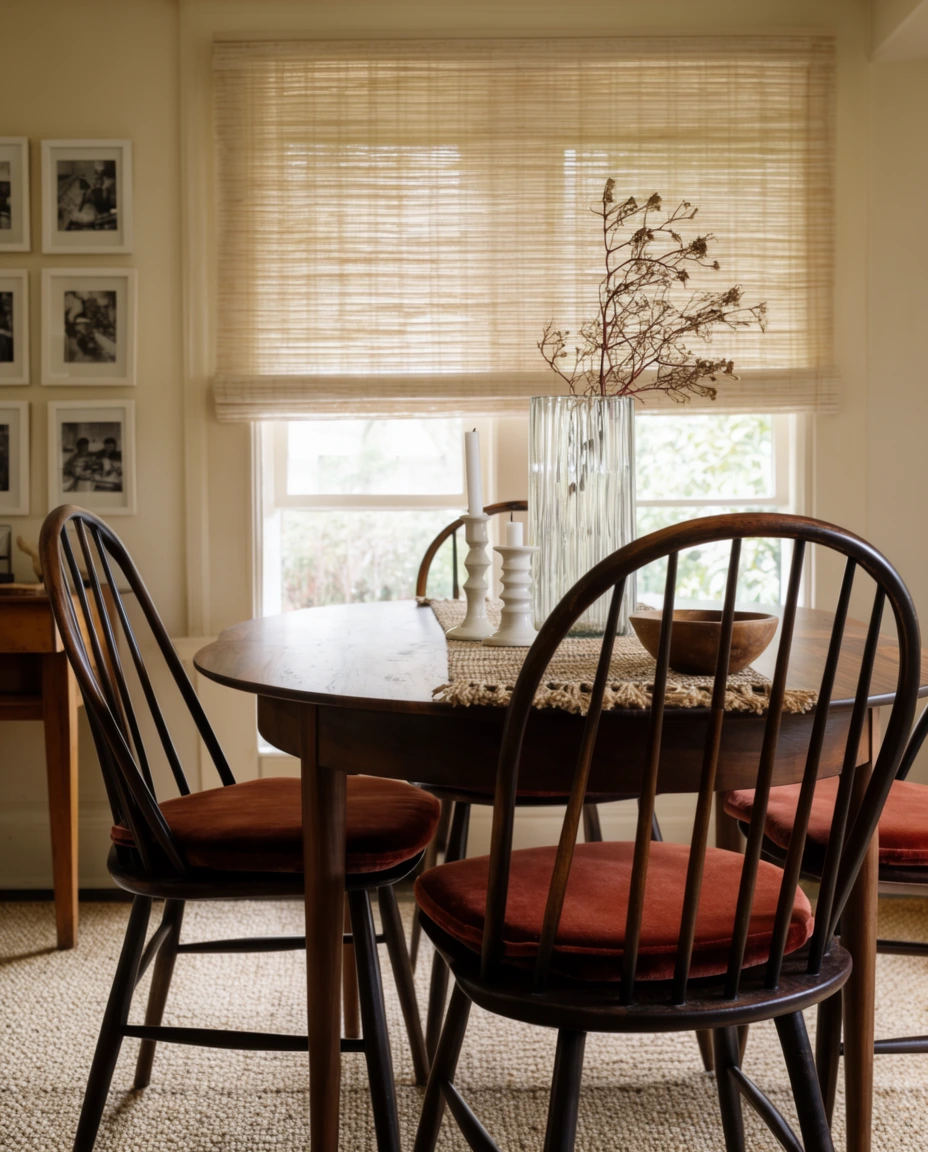
Recovering six seat pads runs roughly forty to eighty dollars in fabric if the seats lift out, which on most dining chairs they do — four screws underneath and a staple gun. Ready-made stretch slipcovers cost twenty-five to forty per chair and look considerably better than they used to. Performance velvet costs more per yard but survives red wine, which pays for itself the first time someone reaches across.
20. Windowsill Gourds and Trailing Ivy

A dining room window is prime real estate in October. A line of small gourds along the sill with a pot of ivy trailing down at one end gives the room a seasonal edge without touching the table at all. The look is unfussy, faintly farmhouse, and stays neutral enough to leave up through November. It’s simple to keep alive, too, since ivy asks for a splash of water and nothing more.

Deep sills are common in older housing stock across the Northeast and the upper Midwest, where thick walls leave eight or nine inches to play with. Newer construction usually offers three or four, which still holds a row of mini pumpkins and one narrow pot. In the South, where ivy grows aggressively outdoors, cuttings root in a jar of water on that same sill in about two weeks.
21. Black Windows with Autumn Light

Painting window frames a deep charcoal-black turns every pane into a picture frame, and in autumn the picture is worth framing. Bare branches, gray sky, the occasional slant of gold at four o’clock — against black millwork, the view sharpens considerably. The move stays minimal inside the room while reading distinctly elegant, and it works especially well beside a deep blue wall or a warm putty one.

Painters generally recommend satin or semi-gloss on the sash so the black doesn’t flatten into a void, and a soft off-black instead of true black, since pure black exposes every imperfection in old wood. The interior side alone is usually enough — exteriors drag HOA rules and heat absorption into the decision. Two coats over a bonding primer, and the frames handle winter condensation without lifting.
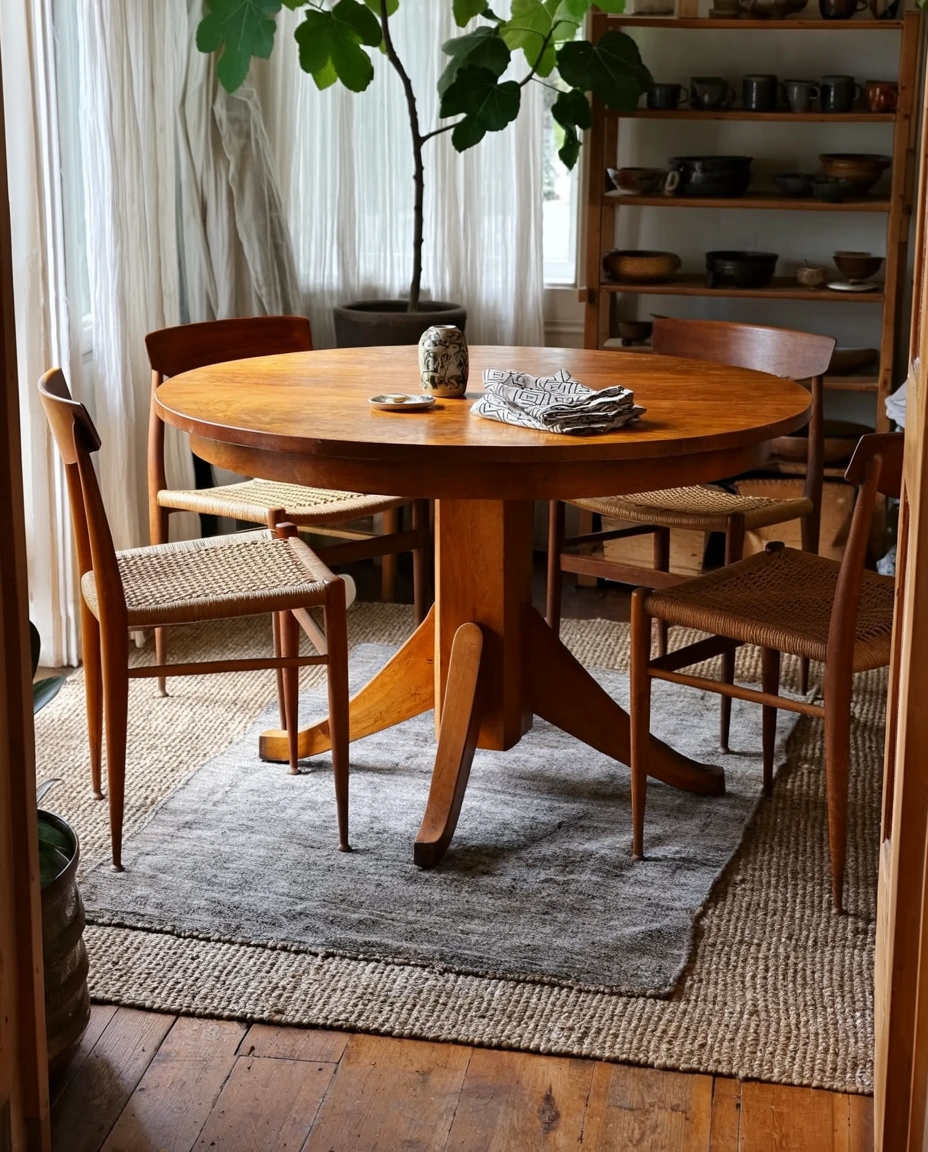
22. A Breakfast Nook for Two
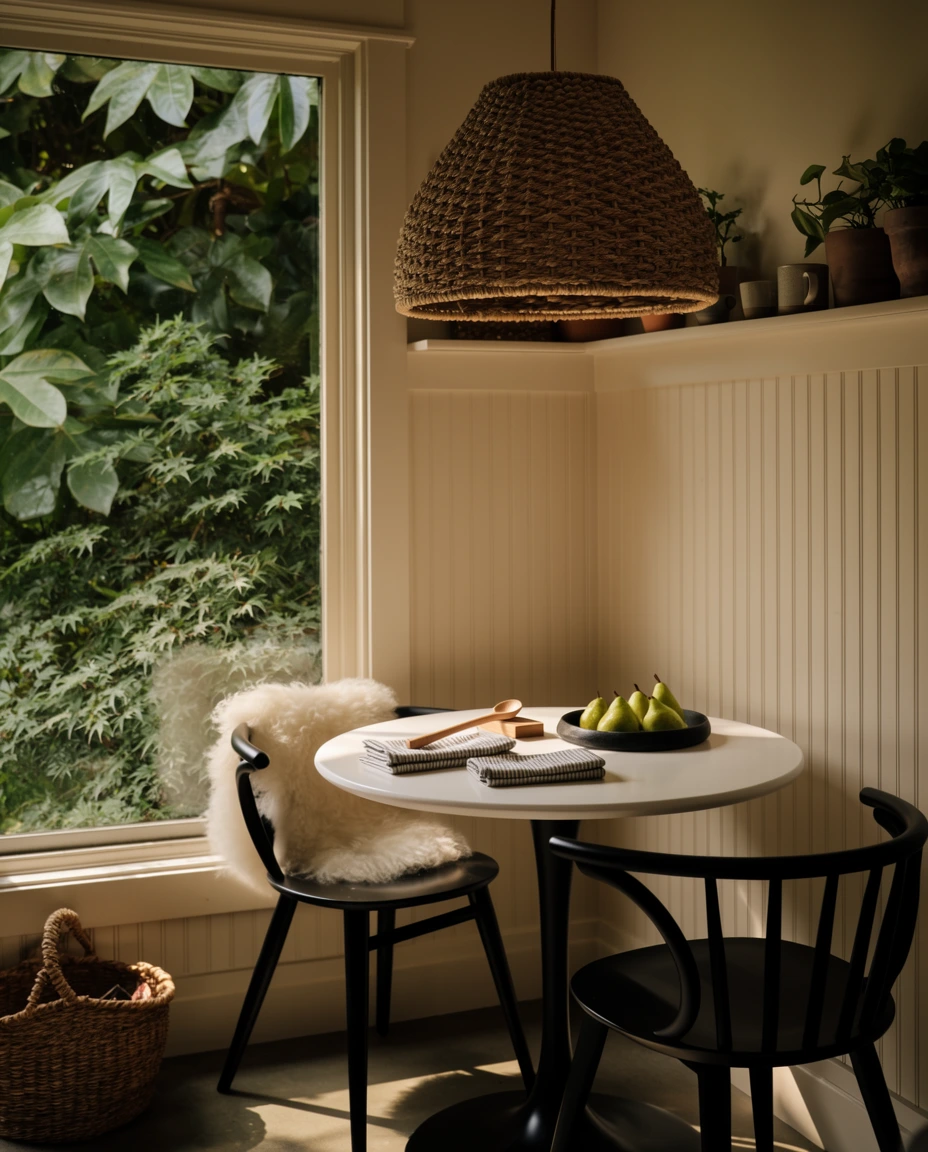
Not every fall table seats ten. A small nook — two chairs, a round pedestal table, a pendant overhead — is where most weekday meals actually happen, and it deserves the same attention as the formal room. Warm it with a sheepskin, a stack of striped napkins, and a low bowl of pears. The best small-space ideas stay simple, and a bit of boho texture keeps a two-seater from feeling like an afterthought.
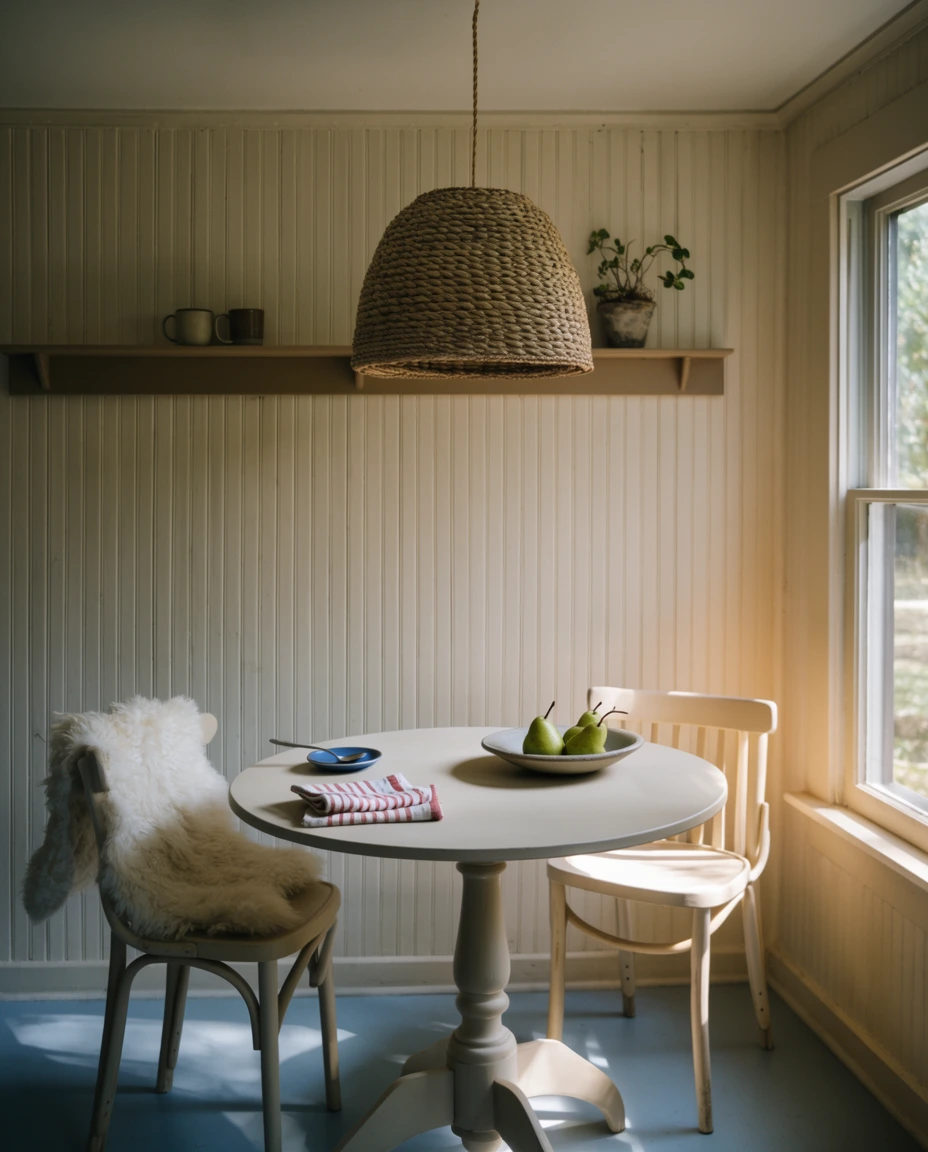
People eat where the light is, which is why nooks beside a window get used three times as often as the dining room twelve feet away. Households that keep a candle and a small vase permanently on the nook table end up setting it far more often, since there’s nothing to fetch first. Round tops win here as well — no corners to catch a hip, and easier conversation across a small surface.
Every one of these looks bends to the room it lands in, so treat them as starting points rather than instructions. If you’ve got a fall dining room setup that keeps earning compliments — a color, a centerpiece, a thrifted find nobody believes the price of — leave it in the comments below. I read all of them, and the best ideas here usually come from readers.