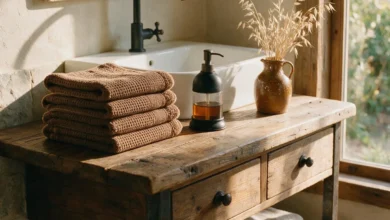
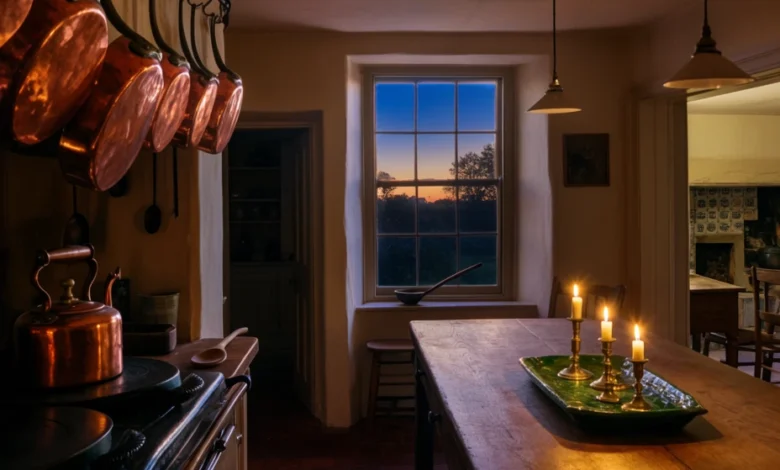
Fall shows up on Pinterest long before the leaves do. By late August the boards are already filling with brown paint chips, wool throws, and lamplight at four in the afternoon, and the 2026 version of the look has quietly shifted — less orange, more chocolate and clay, fewer props and far more texture you actually want to touch. Americans keep returning to it because autumn gives permission to slow the house down, to layer it, to make evenings feel like something you planned. What follows is a run of 22 rooms and corners worth copying, each one shown twice so you can see how the mood changes with the light.
1. Autumn Layers for the Living Room

The living room does the heaviest lifting in autumn, so it earns the first round of changes. Trade flat cotton throws for wool, pull the seating an arm’s length closer together, and let the interior palette drift toward chestnut, oat, and clay. Nothing structural has to move. The vibes come from weight and surface — a rug with real pile underfoot, curtains that break slightly at the floor instead of hovering above it, cushions dense enough to hold their shape.
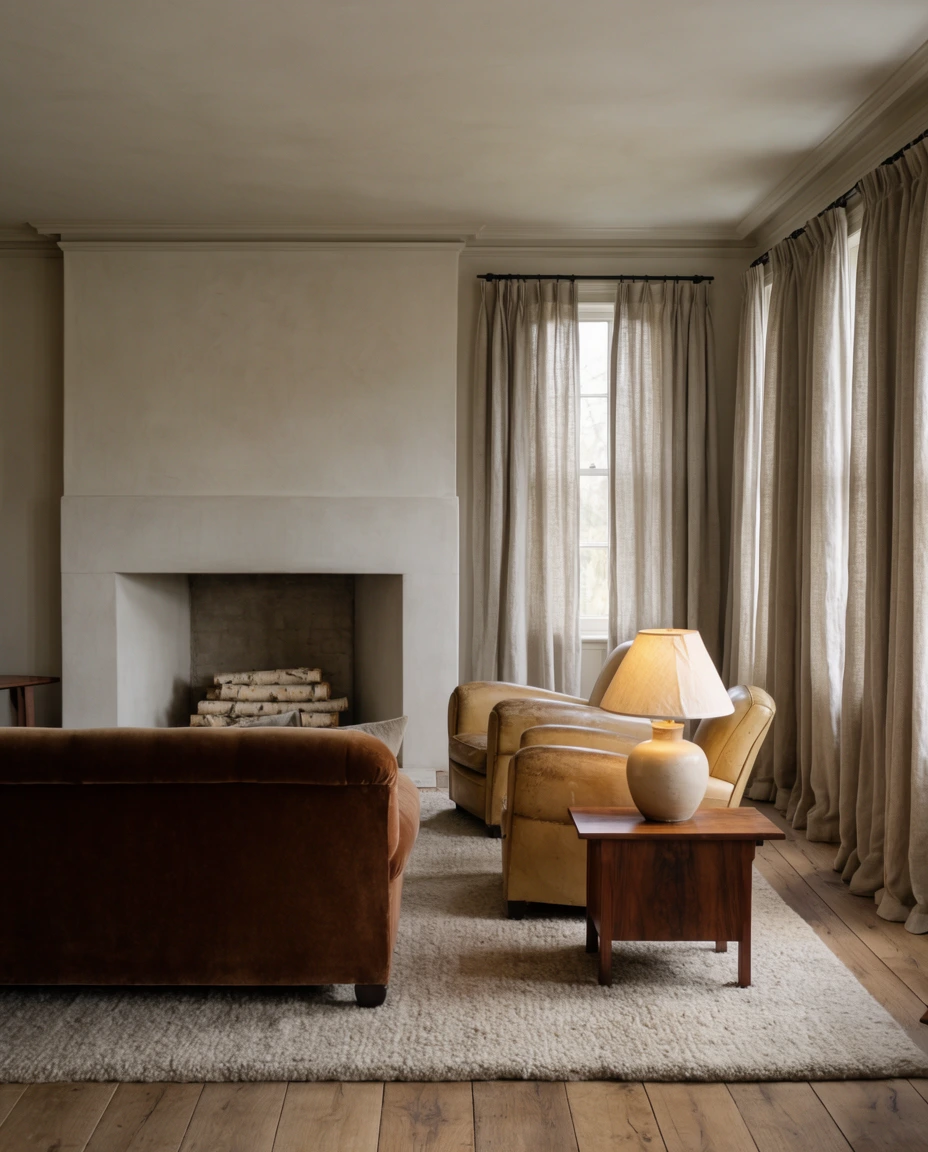
Layering works best when the materials disagree a little. Put nubby boucle against smooth leather, linen against a heavy knit, and the eye reads depth instead of one flat brown mass. Keep the palest tone at eye level and the deepest tone low, near the floor, so the room feels anchored rather than top-heavy. Three textures is usually the sweet spot — a fourth starts to look like a showroom display instead of a room somebody actually sits in every evening.
2. Chocolate Brown Walls

Chocolate is the color of the season, and it works best on all four walls rather than one lonely accent. Paint or a matte wallpaper in cocoa turns a plain box into something enveloping, while the dark field makes brass, cream, and pale oak read brighter by contrast. It is the same tone people keep saving as wallpaper ipad brown backgrounds — warm, low-glare, and easy on the eyes once the sun drops behind the roofline.

North-facing rooms and windowless dens take to this far better than bright southern exposures, where deep brown can go muddy by noon. Dining rooms, small studies, and long hallways gain the most, since the color swallows the corners and seams that make a tight space feel tighter. Choose a matte or eggshell sheen so the surface stays soft. Anything glossier bounces light straight back at you and undoes the enveloping effect you painted for in the first place.
3. Candlelight and Copper

Metal keeps a brown room from going flat. Copper and unlacquered brass catch even the smallest flame, so a cluster of tapers on a tray becomes the entire evening’s decor without much effort. At night, a copper kettle left on the range or a hammered bowl on the console throws warm light back into the room — exactly the sort of glow that ends up screenshotted for a lockscreen the moment the season turns.
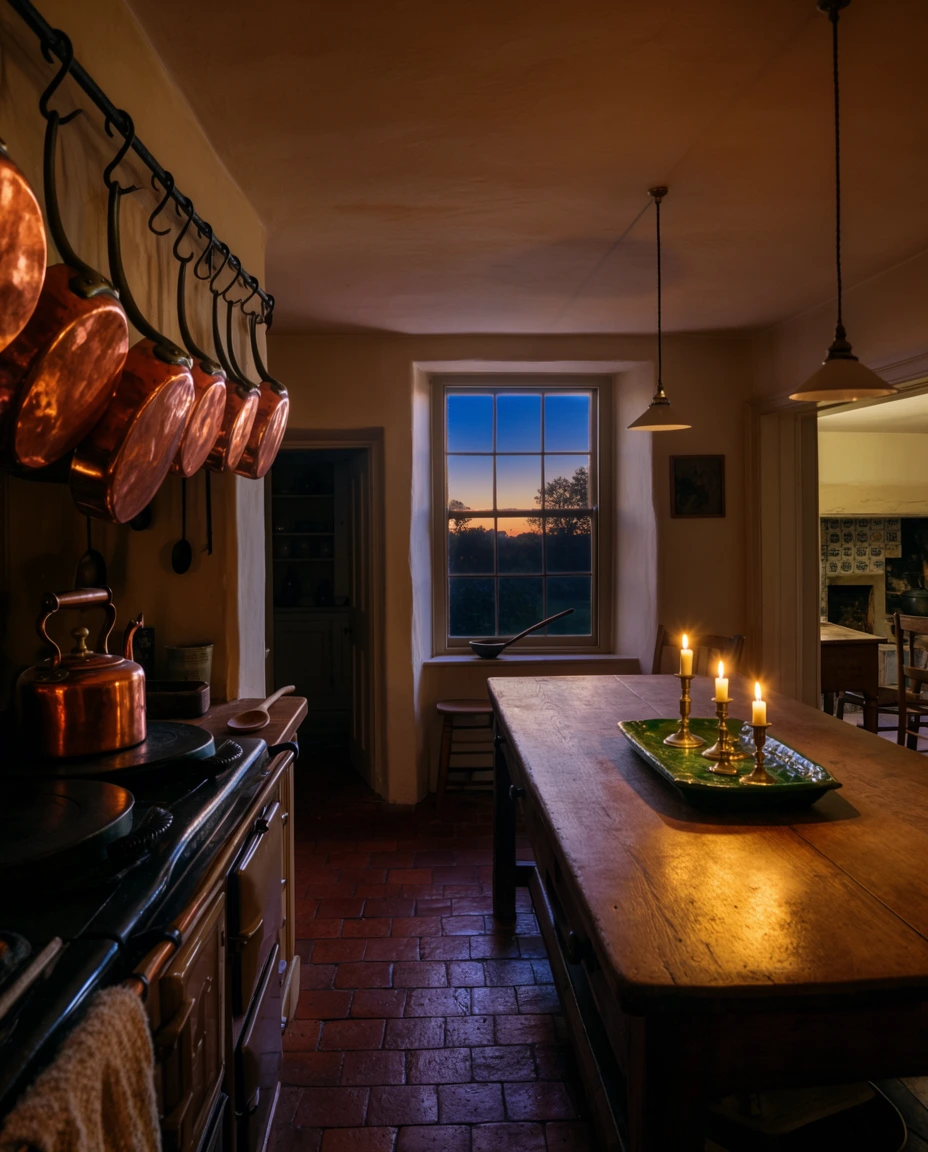
A reader in Providence once told me she keeps eleven brass candlesticks on her dining sideboard year-round and lights every one of them on the first cold Sunday in October, which her kids now treat as the official start of fall. That is the whole trick, really. Repetition reads as intention. One candlestick looks forgotten, three look tidy, and a dozen of varying heights looks like a decision somebody made on purpose and has stuck with for years.
4. A Rustic Kitchen in October
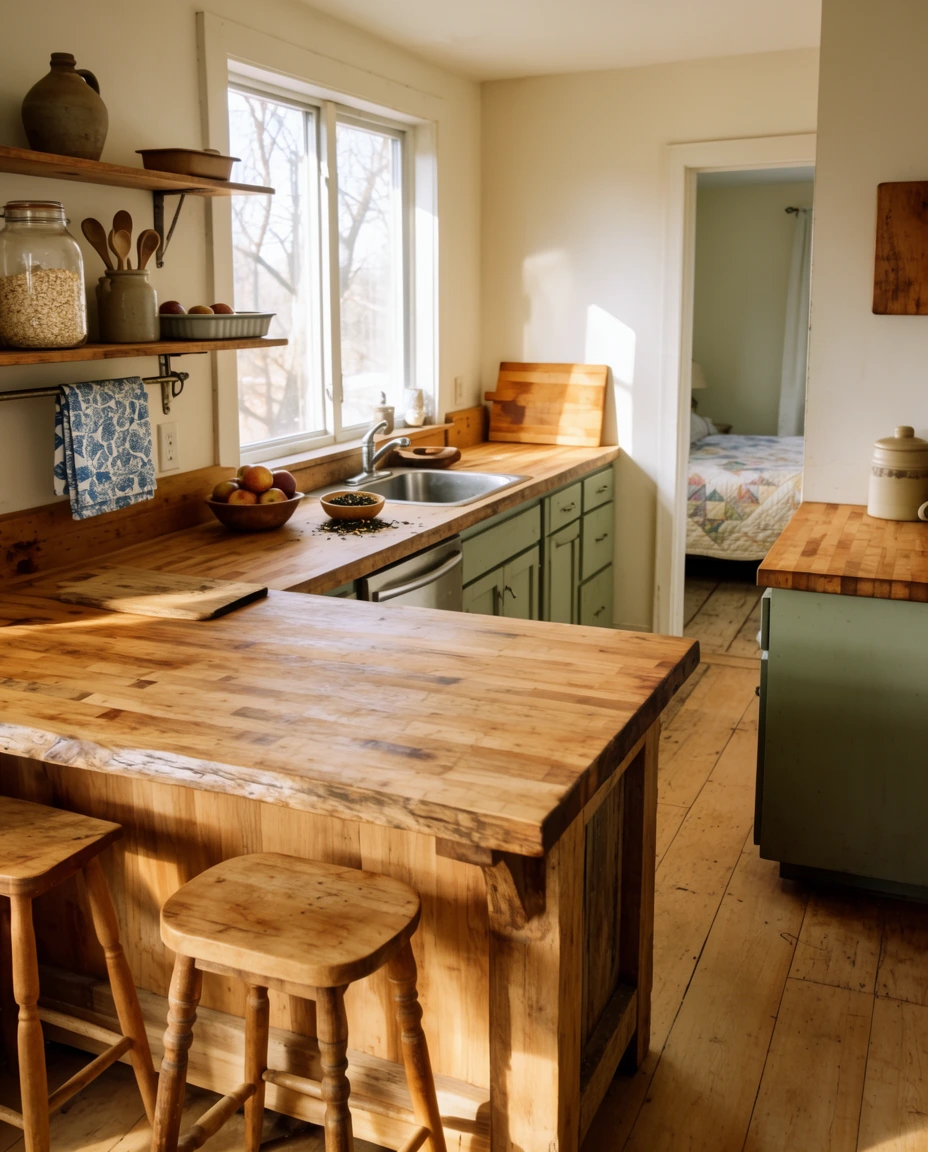
Autumn cooking asks for a kitchen you can actually make a mess in, which is why the rustic direction keeps winning. Solid wood counters, a deep apron sink, open shelves holding stoneware in oatmeal and clay — none of it is precious, and all of it improves with use. Most of the room inspo circulating right now leans this way, warm and slightly imperfect, with produce out on the counter instead of hidden behind cabinet doors.
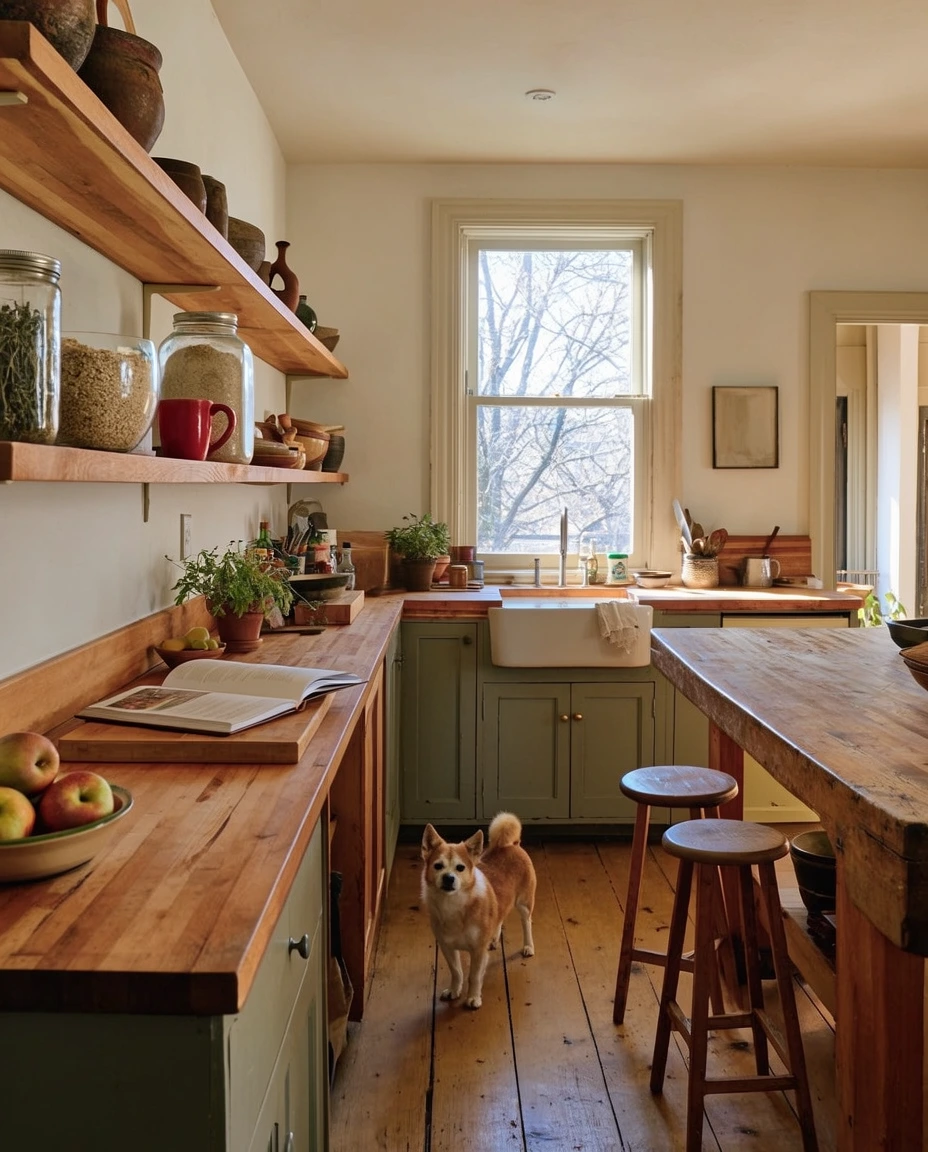
New England farmhouses have been doing this for two centuries, but the look travels well beyond them. In the Midwest it shows up as painted cabinetry with butcher block; in Texas it reads warmer, with terracotta tile and heavier timber overhead. The common thread is honest material and a bit of visible storage, which suits how Americans cook in October anyway — big pots, long braises, and enough counter room to leave a bowl of apples sitting out.
5. Moody Bedroom Corners
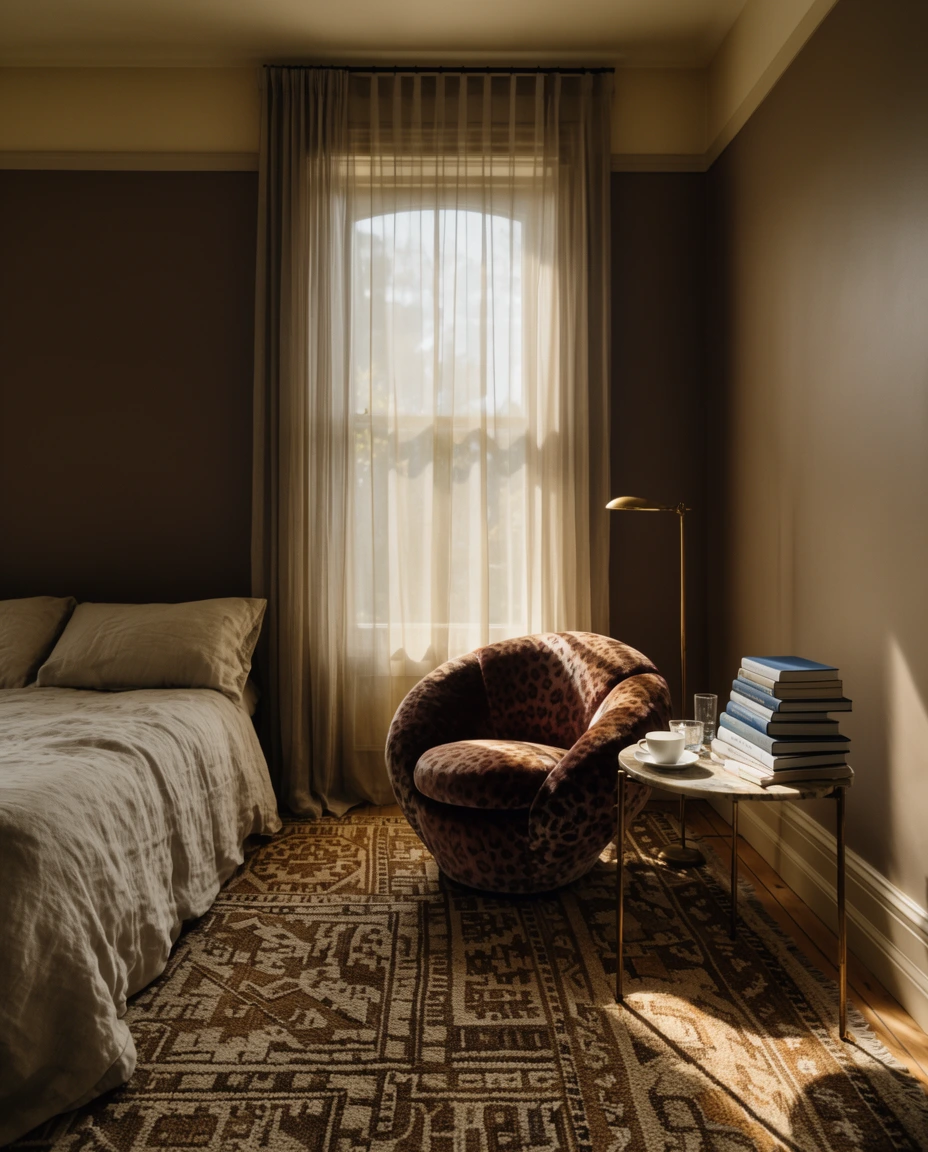
Every bedroom has one underused corner, and fall is the season to claim it. A small armchair, a floor lamp with a warm bulb, and a stack of books turn dead square footage into the best seat in the house. The bedroom decor that carries this look stays tonal — mushroom, bitter chocolate, milky cream — the same restrained palette people search for as wallpaper iphone simple brown when they want a screen that does not shout.

What actually happens in these corners is telling. Homeowners set them up for reading and then use them mostly for the ten quiet minutes before bed, phone down, lamp on low. That is why the seat matters more than the styling — a chair with a real back and arms gets used nightly, while a sculptural accent chair collects folded laundry by November. Buy for the body first and let the color story follow behind it.
6. Wool, Wood, and Warm Lamplight

Three ingredients carry most of the season. Wool for softness, wood for structure, lamplight for everything else. An interior built on that trio never looks dated because none of it depends on a trend cycle, and the room decor around it can stay minimal. It is the same warm brown-and-cream logic people apply to their home screens, stacking widgets in muted tones so the phone matches the couch they are sitting on.

Lighting designers will tell you the ceiling fixture is the least useful light in an autumn room, and they are right. Switch it off entirely after dark and rely on three sources at different heights — a table lamp, a floor lamp, and something at counter or mantel level. Bulbs around 2700 kelvin give skin and wood their best color. The room stops feeling like a lit box and starts reading as a series of soft pools.
7. The Porch in Sweater Weather
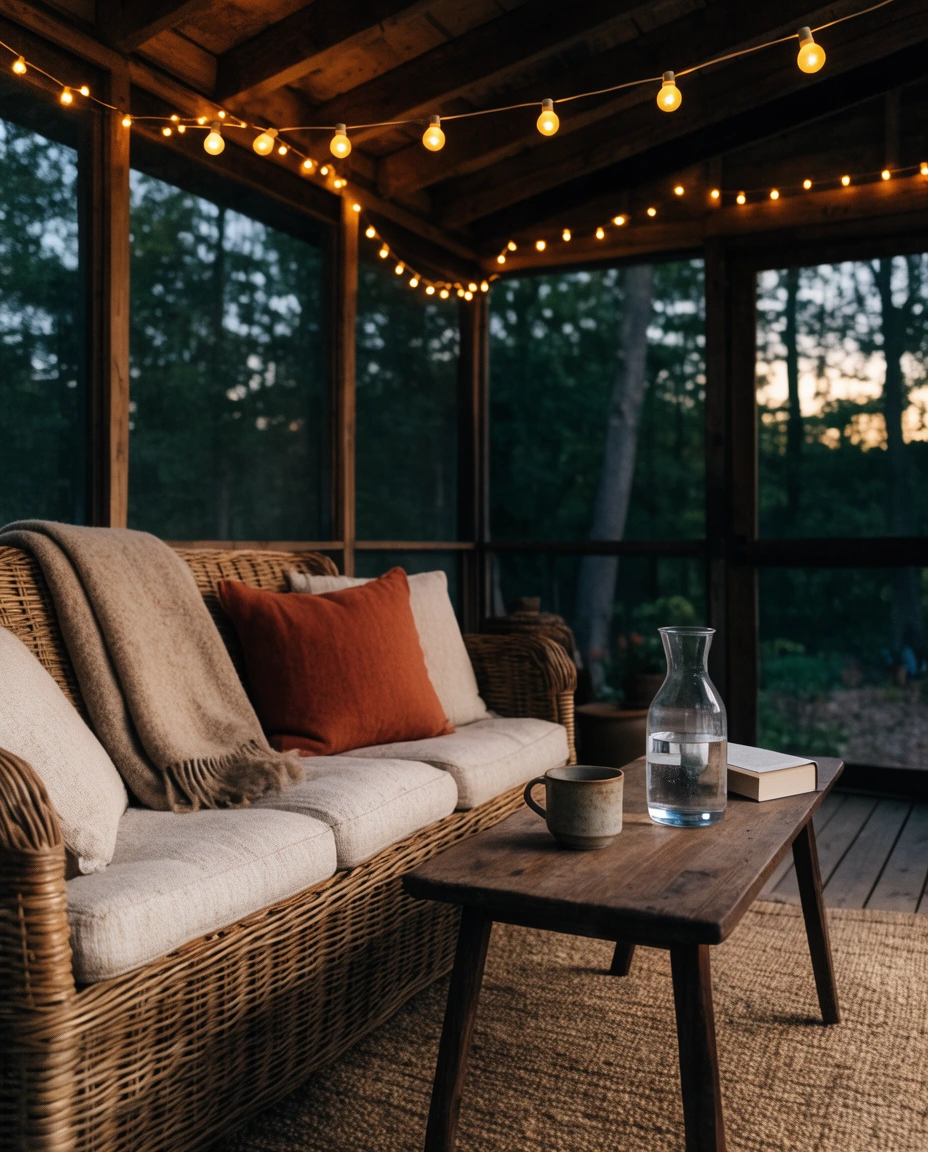
The porch gets a second life in October, once the humidity breaks and sitting outside stops being a chore. A little attention to the exterior — a wool blanket over the rail, a lantern by the door, a pair of chairs angled toward each other — makes it the place where the season’s outfits actually get worn. Keep it rustic rather than styled, with materials that shrug off rain and early frost.

Deep covered porches in the Southeast and the shallow front steps of a Chicago two-flat both benefit, though the setup differs. With genuine depth, you can furnish it like an outdoor room and leave everything out through Thanksgiving. With three feet of shelter, one bench and a lantern is the honest limit. Screened porches sit somewhere between, and they hold the season longest — often into the first week of real cold, with a heater running.
8. Espresso Cabinets without the Gloom

Deep brown cabinetry is back, and it is nothing like the heavy kitchens of a decade ago. The difference is contrast — pale stone counters, cream walls, warm metal pulls — which lets the dark wood read rich rather than dense. On a screen the finish can look nearly black, so order samples before committing. The rest of the decor should stay quiet and let the grain do the talking.

The usual misstep is pairing dark cabinets with dark counters and a dark backsplash, which collapses the whole wall into one shadow. Break it up: keep the counter light, or run the upper cabinets in a paler tone and hold the espresso finish to the base run and island. The second frequent error is skipping under-cabinet lighting, since dark fronts absorb what little light reaches the work surface below them.
9. A Reading Nook for Rainy Days

Rain hitting the window is half the appeal of fall, and a nook lets you enjoy it properly. A window seat, a landing, the odd space beside a chimney breast — any small room fragment will do, provided it has a light source and a surface for a mug. Most of the room inspo in this category gets the vibes right by keeping it enclosed, with a low ceiling or a bookcase wall pressing in on one side.

I spent a week last November in a rented cottage in Vermont where the best chair sat under a dormer barely tall enough to stand in, and nobody used the actual living room once. Low ceilings do something to a space that square footage cannot buy. If your house has an awkward tucked-away spot you have never known what to do with, that is almost certainly where the nook belongs.
10. Plaid Blankets and Ochre Pillows

Pattern is how a neutral living room gets its seasonal edge. A wool plaid in rust and charcoal over the sofa arm, two ochre pillows set slightly off-center, and the whole scheme wakes up. The same checks running through everyone’s fall fits translate straight to upholstery, which is why the pairing feels familiar before you have even arranged it. Keep the rest of the decor plain so the pattern stays the event.

This is also the cheapest change on the list. A genuine lambswool throw runs somewhere between sixty and a hundred and forty dollars and lasts a decade, while good pillow covers sit around thirty each and store flat in a closet the rest of the year. Buying covers instead of whole pillows is the move — one set of inserts carries you through every season, and the swap takes about four minutes.
11. Autumn Planters for the Front Steps

The entry sets expectations before anyone touches the doorknob. Two generous planters flanking the steps, filled with ornamental grasses, copper mums, and trailing ivy, give the exterior a seasonal shift that costs less than a lighting upgrade. Aged terracotta or dark glazed stoneware keeps it rustic instead of theatrical, and the arrangement reads well from the sidewalk, the driveway, and the porch itself.

Timing depends on where you live. Gardeners in the upper Midwest plant these out in early September and expect frost by mid-October, so they lean on kale, cabbage, and grasses that hold through cold. In the Carolinas the same containers stay lush into December with mums and pansies. Pacific Northwest porches deal with rain more than freeze, which makes drainage the deciding factor and heavy glazed pots the safer purchase.
12. A Coffee Bar for Slow Mornings

Autumn mornings deserve better than a machine shoved beside the toaster. Give coffee its own stretch of counter — grinder, kettle, a shelf of mugs, a small lamp — and the ritual gets the coffee shop treatment at home. The warm wood and cream vibes here match what people save as wallpaper iphone backgrounds all season: steam, brown ceramic, low light, nothing else competing for attention.
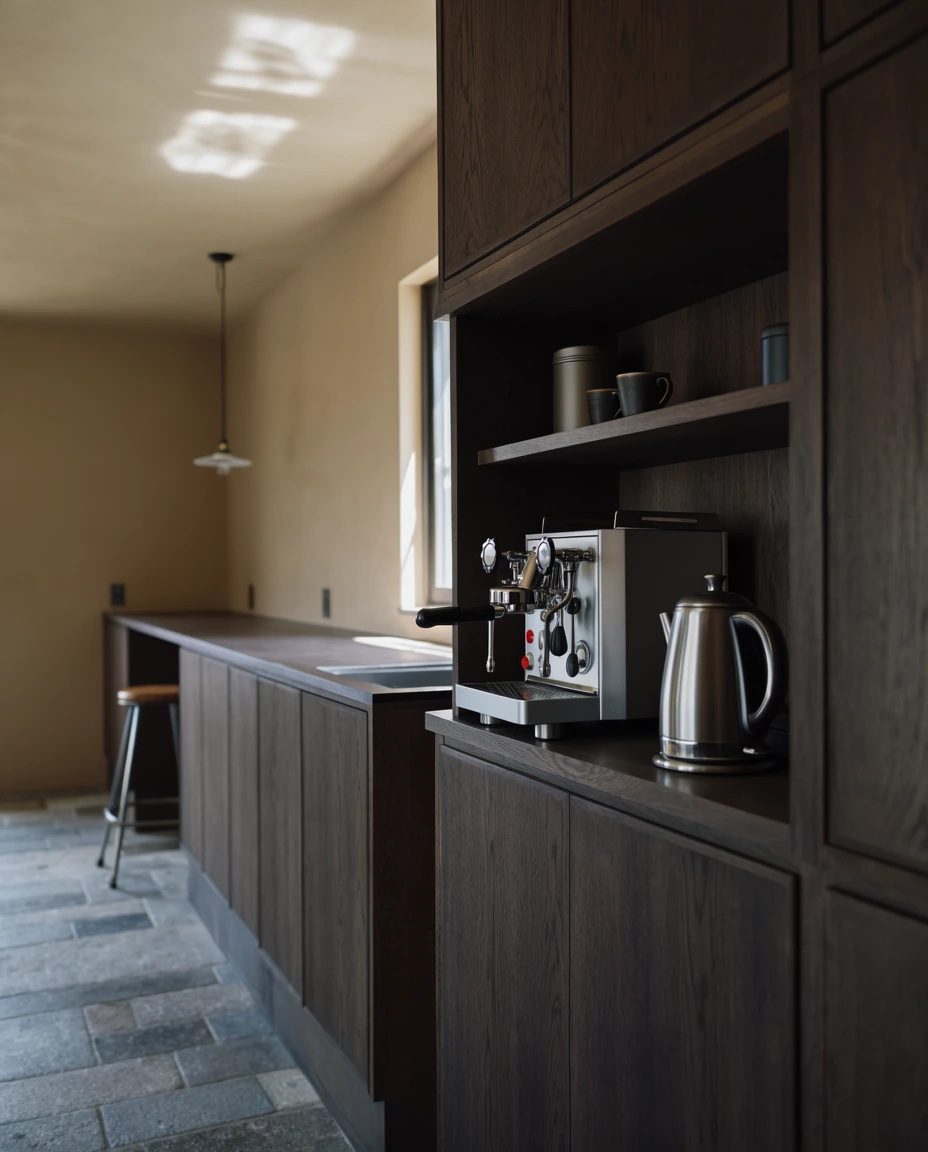
In practice, these stations stay tidy only when the storage is honest about volume. Households that drink three or four cups a day need bean storage, filters, and a spot for the wet spoon, and the ones that skip planning for those end up with a beautiful corner buried under clutter by the second week. A small tray under the kettle catches drips and gives the whole arrangement a visual edge to sit inside.
13. Dark Wood and Cream Linen

Two materials, endless mileage. Walnut, oiled oak, or stained ash against washed cream linen is the backbone of nearly every warm interior trending this fall. The dark timber gives weight, the linen keeps everything breathable, and together they avoid the heaviness that ruins so many autumn rooms. It is the analog version of what people search as wallpaper iphone simple color — two tones, well balanced, nothing extra.
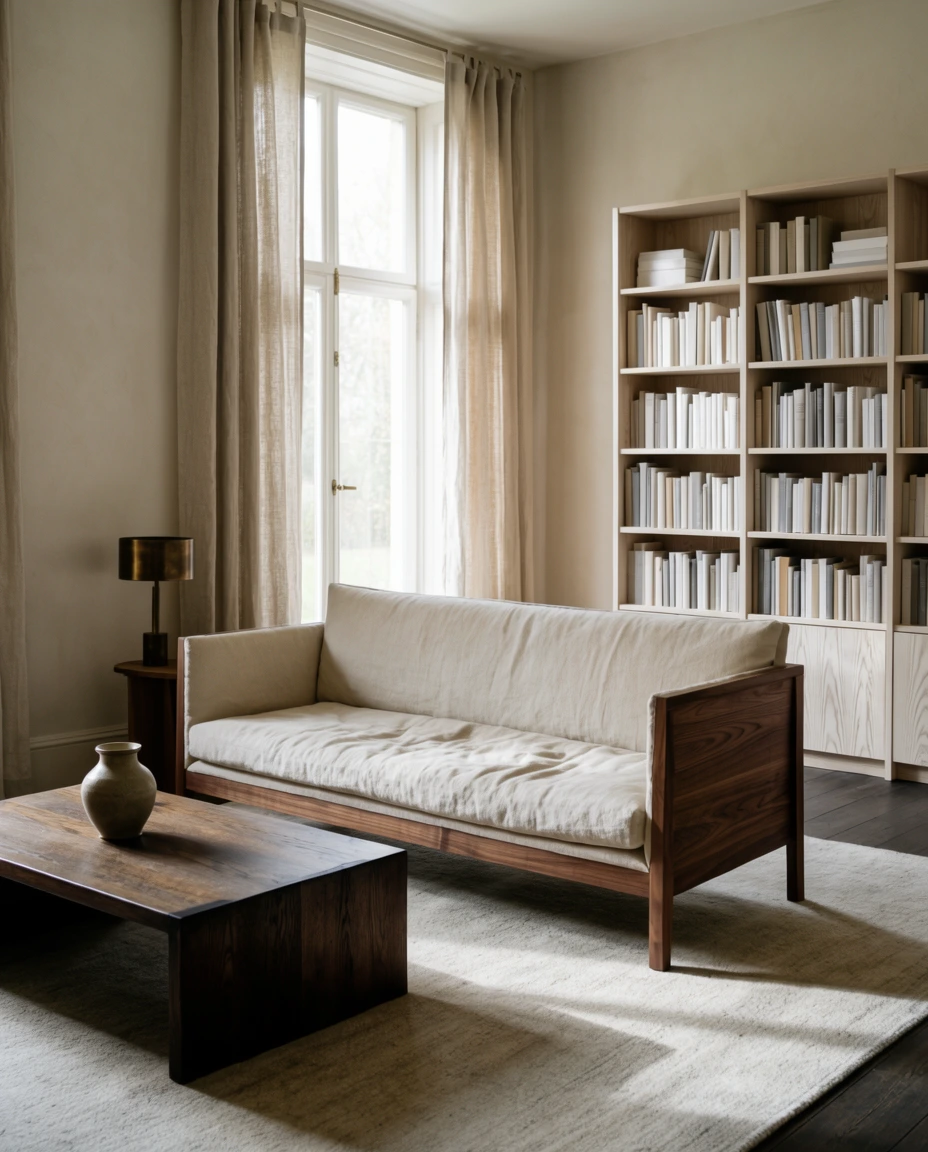
The proportion matters more than the specific shades. Aim for roughly two parts linen to one part wood across a room, counting curtains and upholstery as the soft side and furniture frames, floors, and shelving as the hard side. Flip that ratio and the space turns cave-like fast. Bring in one small element in unpolished brass or aged bronze to break the two-material rhythm before it starts to feel like a rule.
14. Layered Rugs over Wide Plank Floors
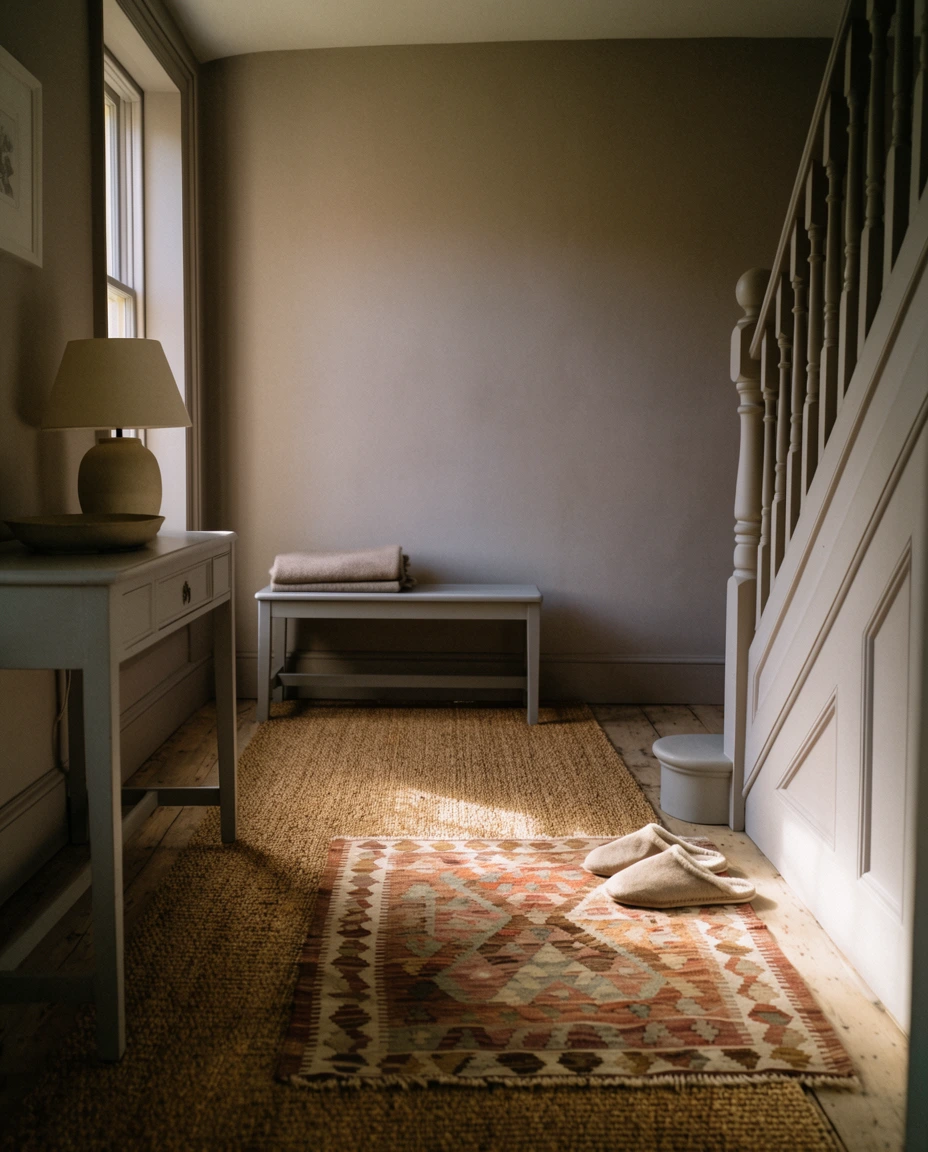
Bare floors turn cold in October, and layering solves it without wall-to-wall carpet. A jute or sisal base with a smaller wool or vintage Persian rug set on top gives a living room depth underfoot and a border of texture around the edges. Most of the room inspo using this trick lands on a large neutral base with a patterned top layer, angled slightly rather than squared to the walls.

The layering fails when both rugs are close in size, which reads as an accident rather than a choice. Leave at least eight to twelve inches of the base showing on every side. The other frequent problem is slipping, since wool over jute wanders under foot traffic — a thin felt pad between the two layers holds everything in place and adds enough cushion to notice when you cross the room barefoot.
15. The Guest Room in Caramel

Holiday season is coming, and the spare bedroom is about to earn its keep. Caramel is the friendliest of the autumn browns — sunnier than chocolate, softer than rust — and it flatters everything from white bedding to walnut nightstands. The bedroom decor here should stay simple and generous: a real reading lamp, two pillows per person, an empty drawer. The vibes land somewhere between a small hotel and a well-loved family house.

You can do this room properly on a modest budget. A gallon of quality paint runs about seventy dollars, a caramel wool blanket around ninety, and a decent bedside lamp under sixty — call it two hundred and thirty for a full seasonal change. Spend what is left on the mattress topper instead of art. Guests remember how they slept far longer than they remember what hung above the dresser.
16. Firelight and Stone
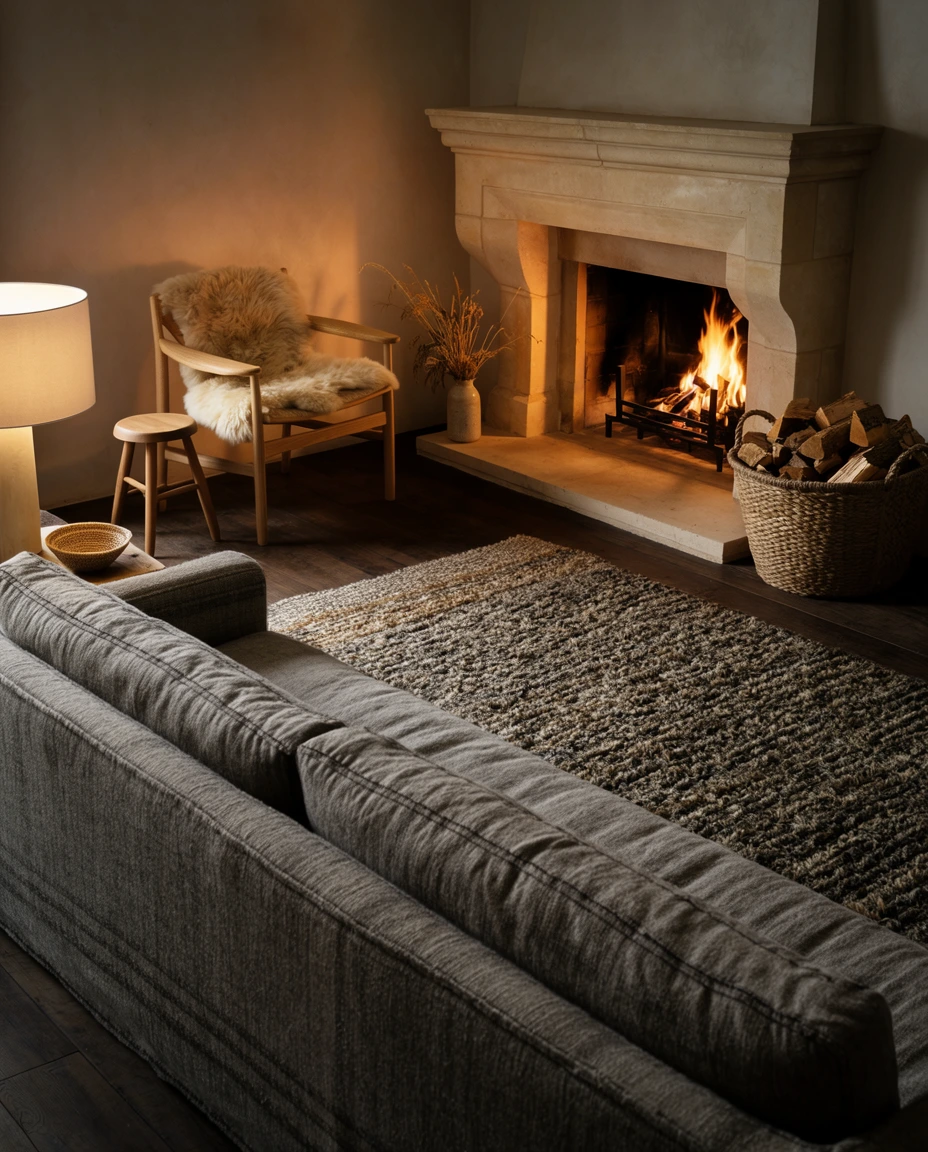
A working fireplace changes the center of gravity in a house. Around it, rustic materials make the most sense — fieldstone, limestone, a thick timber mantel worn smooth by hands rather than sandpaper. The living room naturally reorganizes itself toward the hearth once the weather turns, and at night the fire does what no fixture can, throwing moving light across stone and casting the room in amber.
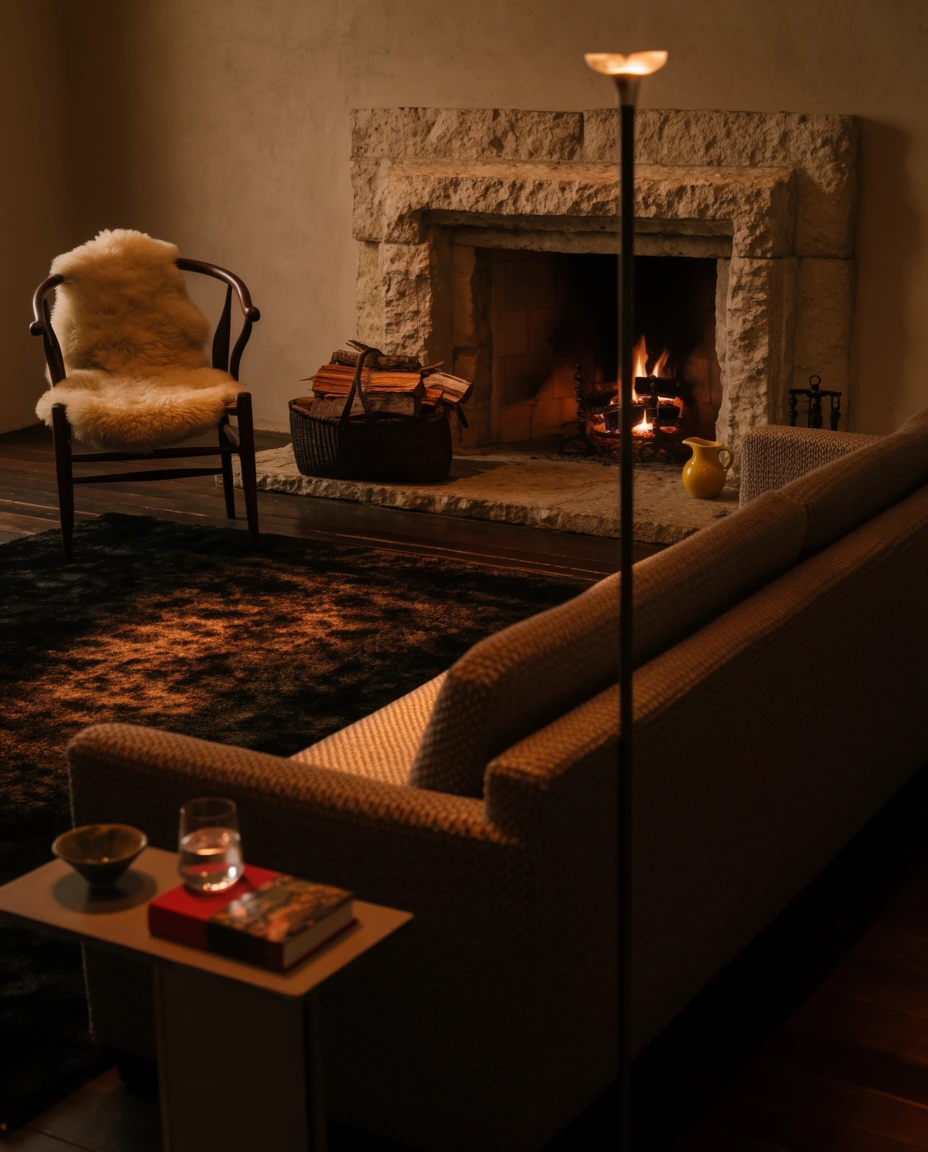
Designers who work on hearth rooms tend to argue for keeping the mantel nearly bare through fall — one mirror or a single leaning piece of art, and little else. The reasoning is practical as much as aesthetic. Firelight moves, and a crowded shelf turns that movement into visual noise instead of atmosphere. Leave the surface open and the shadows themselves become the arrangement, changing shape all evening without you touching a thing.
17. Vintage Frames for a Hallway Wall
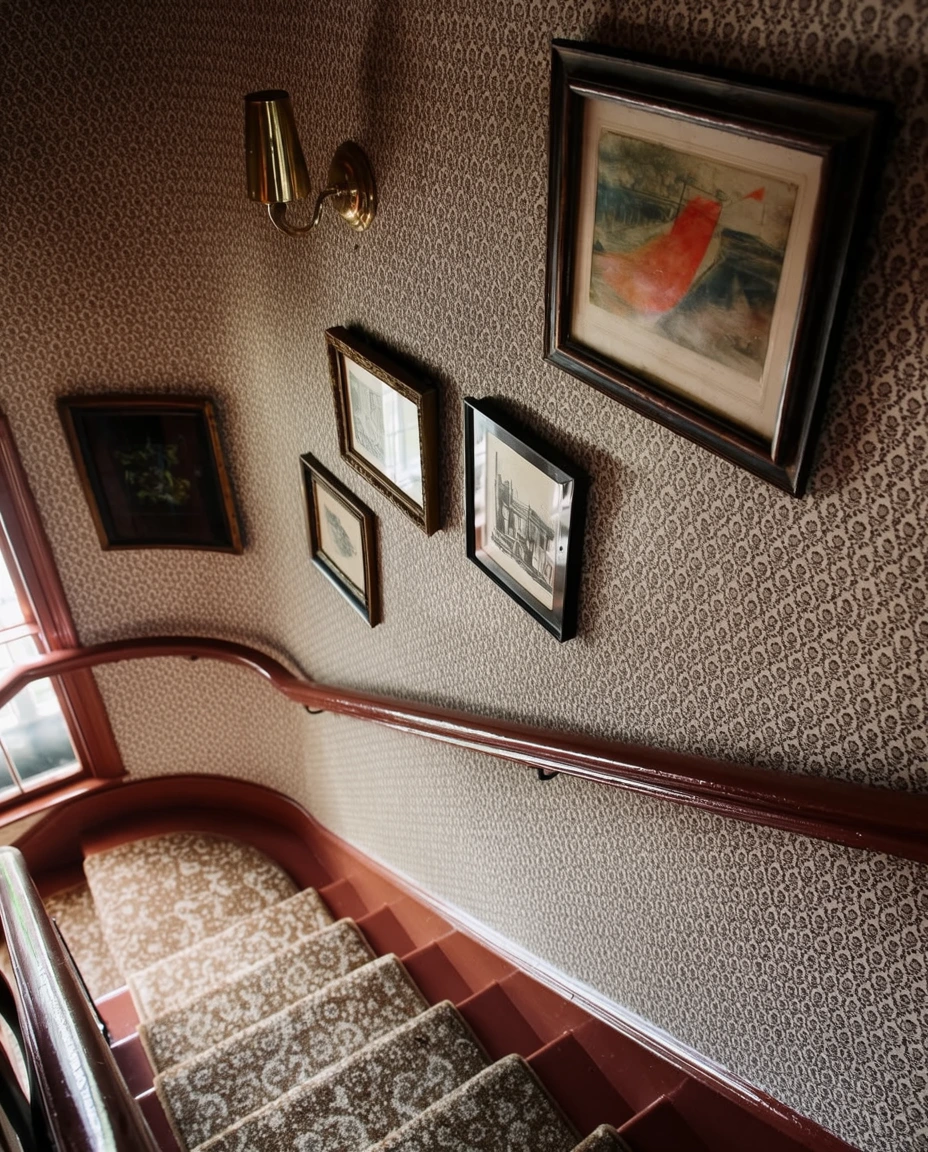
Hallways are where a house gets personal. A dense cluster of vintage frames — gilt, walnut, black lacquer, all different — reads far warmer than a matched set, especially against deep paint or a small-scale wallpaper. The sentimental black-and-white photo walls of the 2000s have come back with better frames and tighter spacing, and the effect anchors the surrounding room decor without any new furniture.
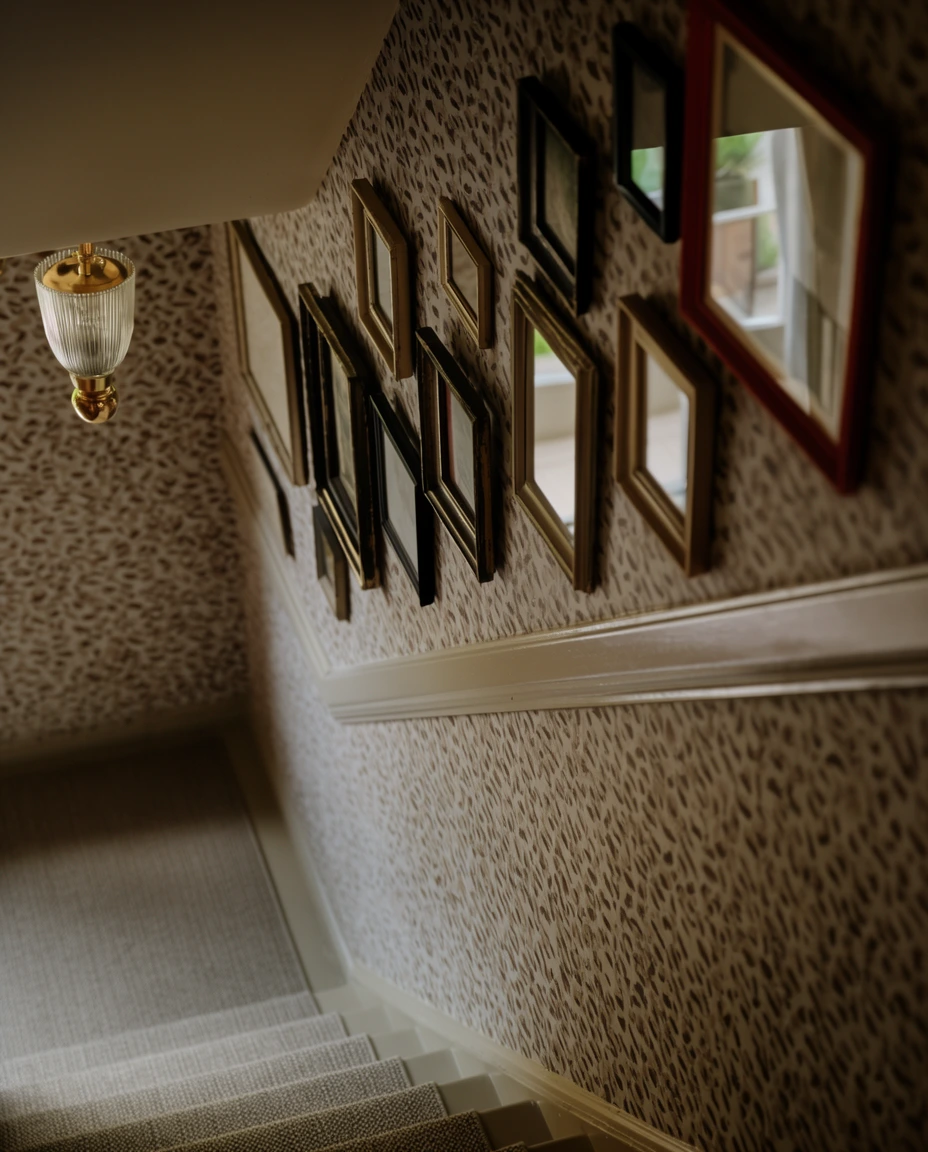
My favorite version of this belongs to a couple outside Nashville who buy one frame every time they travel and hang it the week they get home, regardless of whether the wall is ready. Nine years in, the arrangement climbs the stairwell and looks completely unplanned, which is the point. Collections assembled slowly always beat the ones bought in an afternoon, and nobody can fake the mismatch that time produces on its own.
18. Pumpkin Tones without the Kitsch

Orange gets a bad reputation in decor circles, and unfairly so. Pushed toward burnt sienna, apricot, or the dusty flesh tone of a Cinderella pumpkin, it behaves like a neutral and warms a room instantly. The trick is restraint — one upholstered chair, a run of ceramics, a single throw. Handled that way, the interior reads sophisticated in October and still works perfectly well in March.

Test any orange against your own light before buying. Hold the fabric or paint chip beside a window at three in the afternoon and again under lamplight, because these shades swing hard between the two and often lose their gray undertone after dark. The ones that stay muted in both conditions are the keepers. Anything that goes bright and candy-like at night belongs in a different room, or a different season entirely.
19. A Dining Room Set for Fall

Long dinners come back in autumn, and the table should be ready before the first invitation goes out. A rustic wood surface left bare, linen napkins in mustard or olive, stoneware in earth tones, and candles down the center — that is the whole formula. The vibes improve when nothing matches perfectly, so mixed chairs and slightly different plates work in your favor rather than against it.
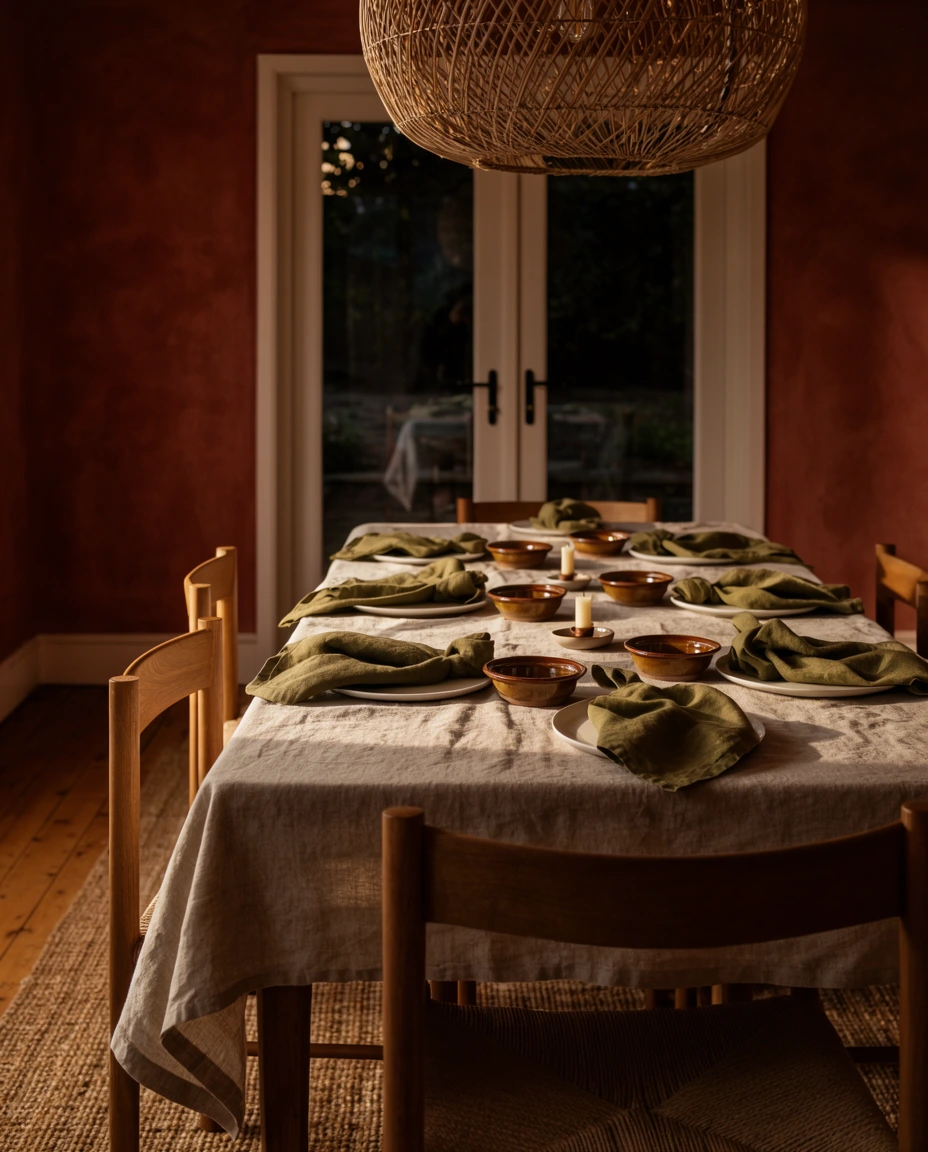
American dining rooms sat mostly unused for a decade, and they are filling up again — first with laptops, then, come October, with actual dinners. Households that kept the formal room are rediscovering it as the one place a long meal can stretch past nine without anyone clearing the table. In open-plan houses the equivalent is a table set apart from the kitchen sightline, which does much the same psychological work.
20. Bronze Hardware and Amber Glass

Small metal details do disproportionate work in a dark autumn scheme. Aged bronze knobs, oil-rubbed pulls, and amber or smoked glass shades give the eye something to catch on, and they warm up as they patina. Good decor at this scale is mostly hardware you touch daily, which is why upgrading it changes how a room feels far more than the price tag suggests it should.

Ask any kitchen designer about mixing metals and you will hear the same guidance — commit to a dominant finish and let the second one appear no more than two or three times in a single sightline. Bronze reads as the warm anchor; amber glass and unlacquered brass work as the accents. Consistency at the door and drawer level is what keeps a mixed scheme from looking like a series of separate decisions.
21. Nighttime Lighting in the Bathroom
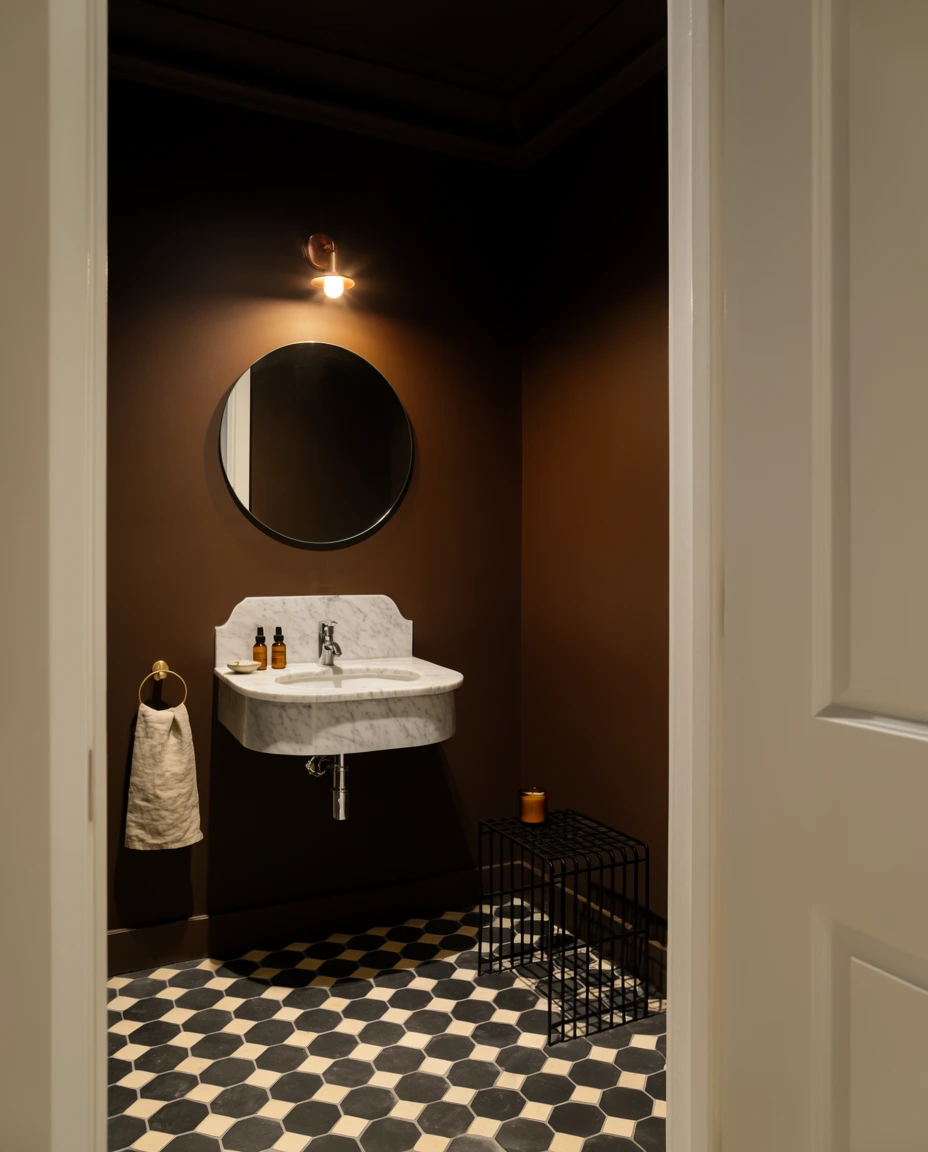
The bathroom is the last room you see each evening, and overhead glare ruins it. Wall sconces at mirror height, a dimmer on the main circuit, and a warm bulb make a night routine feel restorative instead of clinical. The soft amber cast reads beautifully on a screen too, which is why steamy tile and low light keep showing up in wallpaper iphone collections every autumn.

Small windowless powder rooms benefit most, since they rely entirely on artificial light and have nothing else to compete with. Primary bathrooms with good daylight need a two-circuit approach — bright for mornings, dim for evenings — and a guest bath sits comfortably at one warm setting all day long. Older homes with a single ceiling fixture usually have wall space beside the mirror where sconces can go with minimal rewiring.
22. The Sunroom in Late Autumn

A sunroom is the best seat in the house for exactly six weeks a year, and this is the stretch. Low afternoon light comes through at an angle that flatters everything, blurring the line between interior comfort and exterior view. Rattan, wool cushions, and a few large plants are all it needs. Plenty of the room inspo saved this time of year comes from exactly these glassed-in spaces at four o’clock.
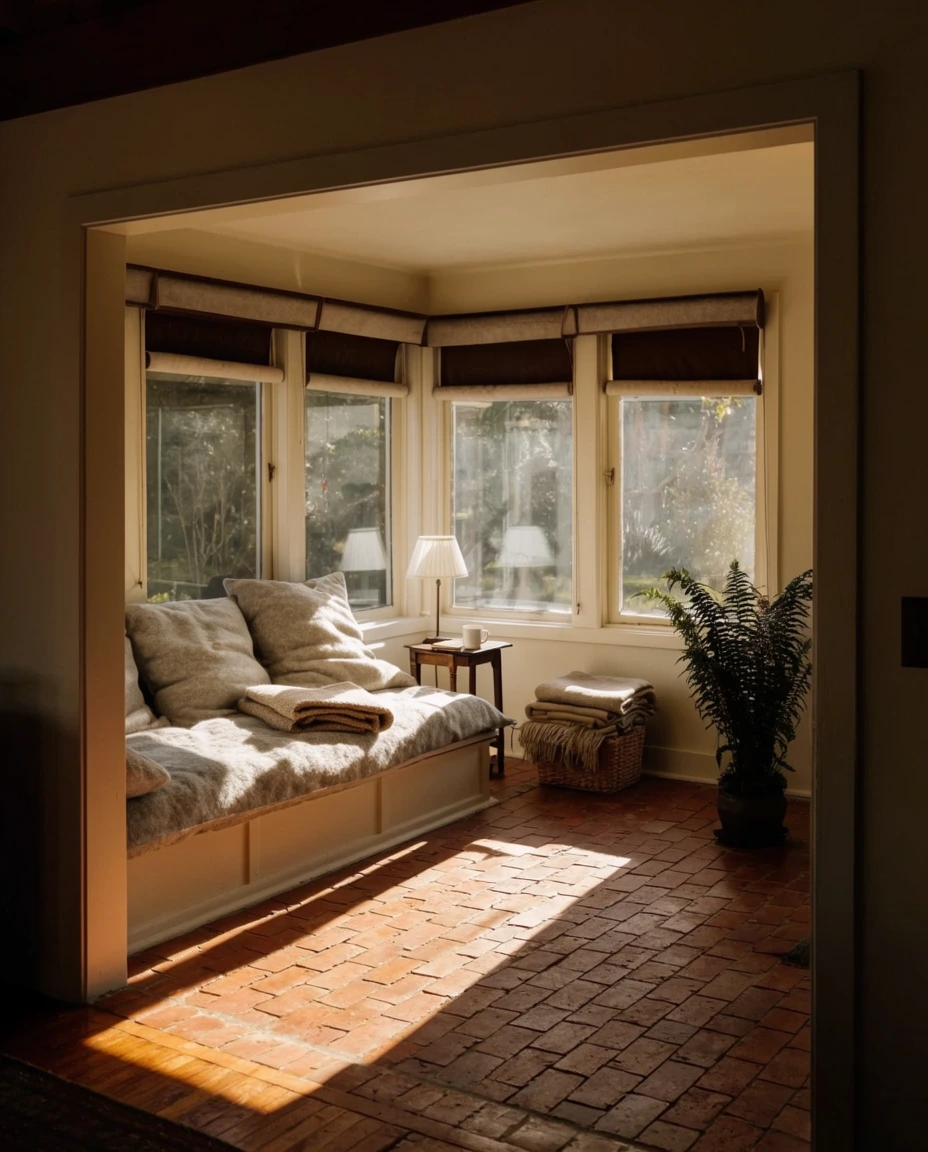
Families tend to use these rooms in bursts, then abandon them once the temperature drops below the mid-fifties, which is a shame given how little it takes to extend the season. A wall-mounted heater, a heavy rug, and a basket of blankets by the door usually buys another month. Households that add insulated shades report using the space right through the holidays, mostly for morning coffee and phone calls.
Every one of these looks scales down — you can borrow one idea, or work through the whole list between now and the first frost. I would love to know which direction you are taking this year, so leave a comment below and tell me what is going on your walls, your porch, or your sofa. If you have a fall corner you are proud of, describe it; other readers here are always hunting for the next thing to try.