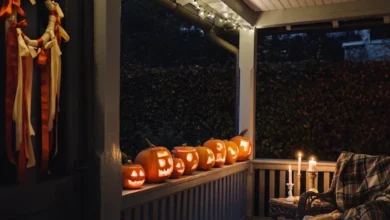

Fall decorating used to mean a cart full of craft-store foam and a receipt you’d rather not look at. That math stopped working for most households, and the season’s best-looking rooms right now are the ones built from thrifted glass, yard clippings, a quart of paint, and things already sitting in the linen closet. Americans search this every September on Pinterest because the pictures promise the same warmth without the spending, and the good news is that they can deliver. Below are twenty ideas — porch to bedroom, five-minute swaps to Saturday projects — that cost very little and read like they cost a great deal.
1. Thrifted Pumpkins in Woven Baskets
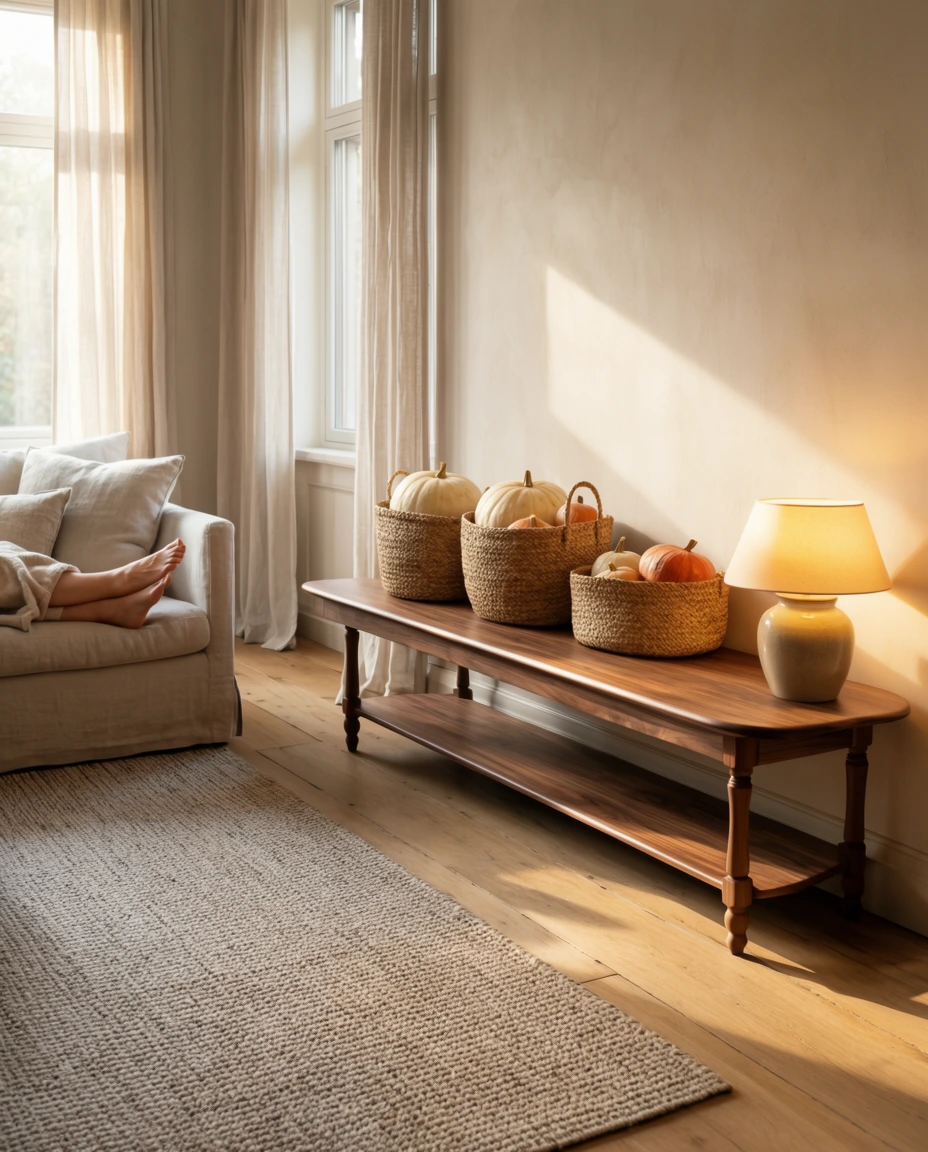
Pumpkins are the easiest fall anchor there is, and the thrifted version costs almost nothing. Gather three or four in different sizes, tuck them into woven baskets you already own, and set the group on a console or a hearth ledge. This is a simple weekend diy that reads expensive because the textures do the talking — raw seagrass against matte ceramic. A cluster like this warms up a living room without crowding it, and nothing has to be glued, painted, or carved.
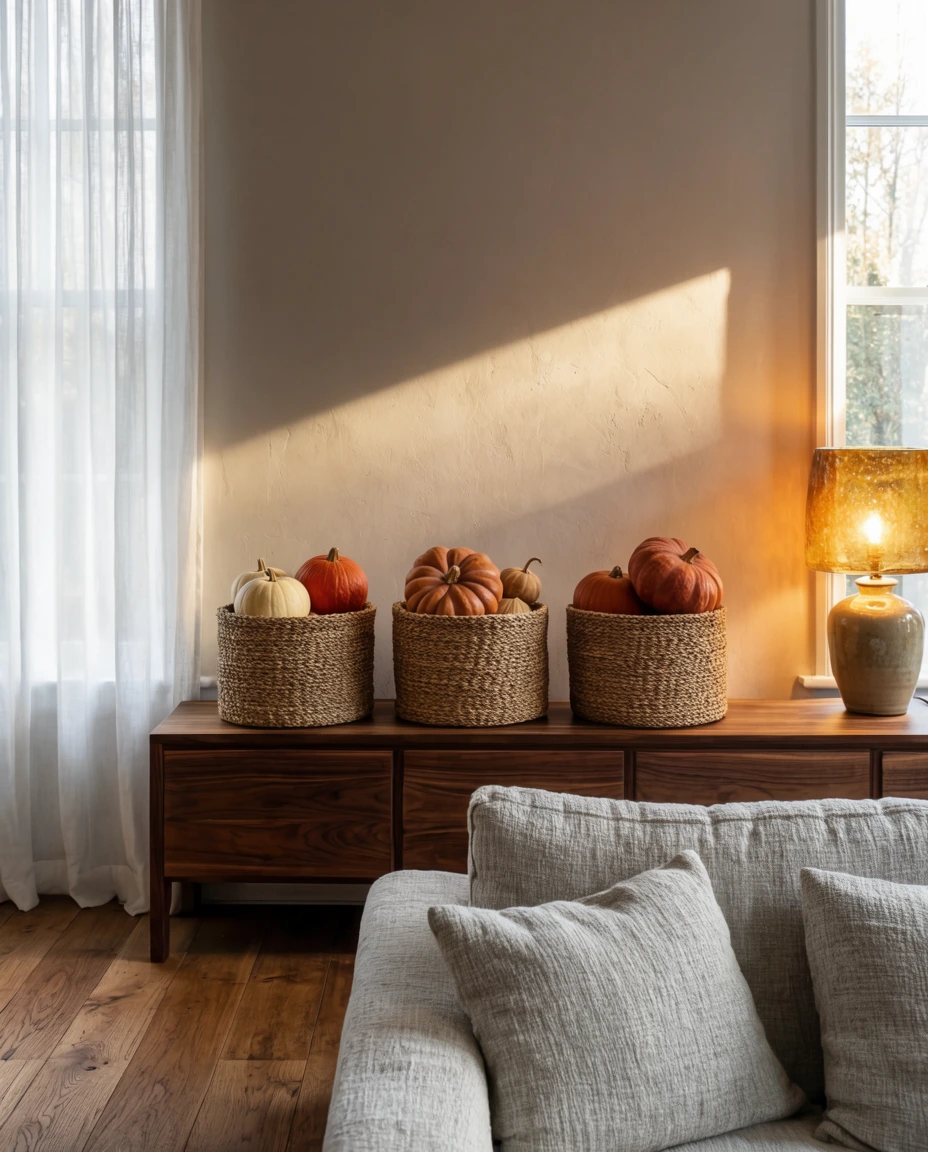
Heirloom pumpkins run three to eight dollars at most roadside stands through October, and a good faux one from a discount bin lands around five. Buy two real and two faux, and the whole arrangement stays under twenty-five dollars while looking like it came from a florist’s front window. The faux ones carry over to next year, which quietly cuts the cost again. Baskets from a resale shop rarely pass four dollars apiece, and mismatched weaves look better together than any matched set.
2. Dried Hydrangea Wreath

Hydrangeas that turned papery on the bush in September are the best free material of the season. Clip the heads, hang them upside down for a week, then wire them onto a plain grapevine base in overlapping rows. On a front door or against the shaded wall of a front porch, those softened blue-green heads look cozy rather than crisp and mass-produced. One wreath takes about an hour, and the only real expense is the grapevine base underneath.
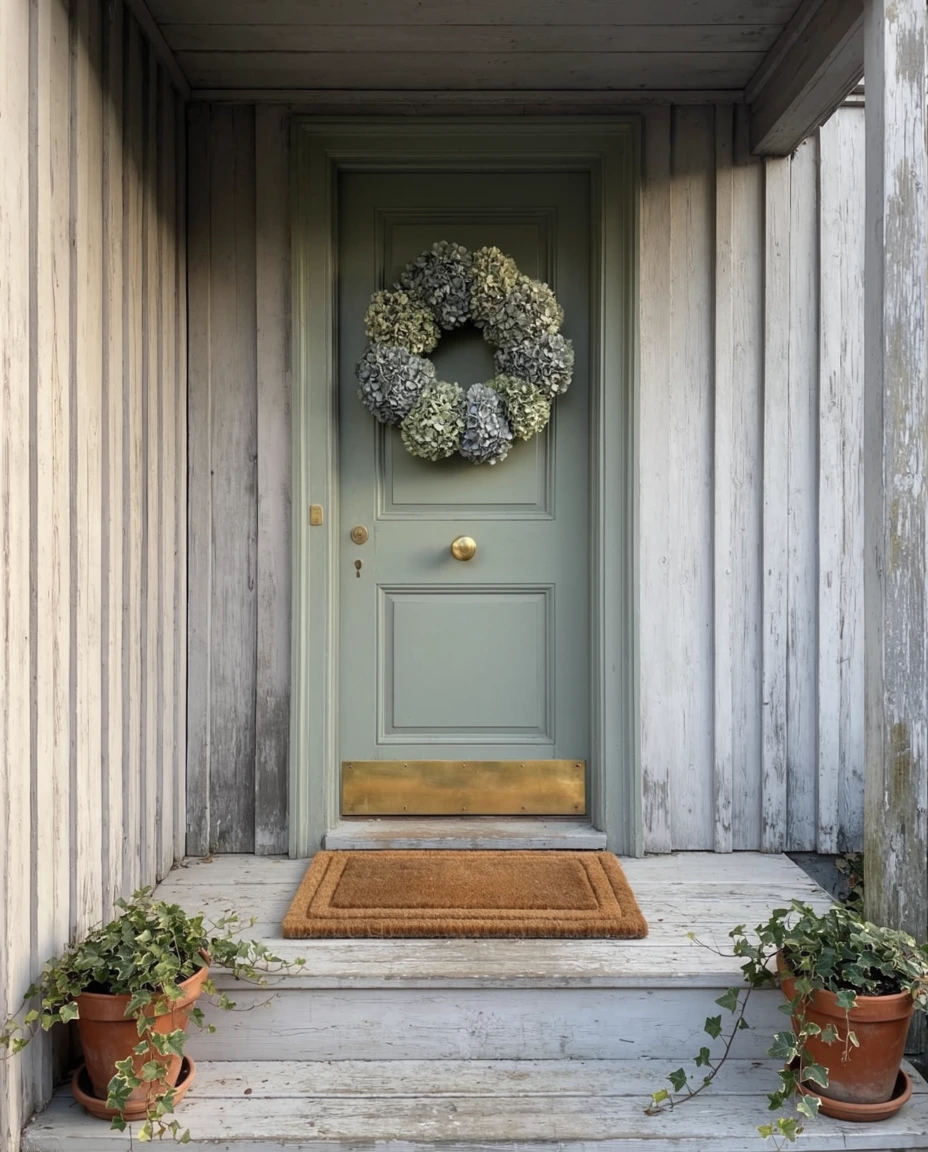
Dried hydrangea keeps its color best out of direct sun, so a north- or east-facing entry holds the blue-green tone well past Thanksgiving instead of bleaching it to beige. A light mist of matte hairspray stiffens the petals enough to handle wind without adding shine. Wire the heads on facing the same direction, overlapping like roof shingles, and the base disappears entirely. Stored flat in a paper bag, the same wreath comes back out for three or four seasons running.
3. Warm Layered Sofa Corner
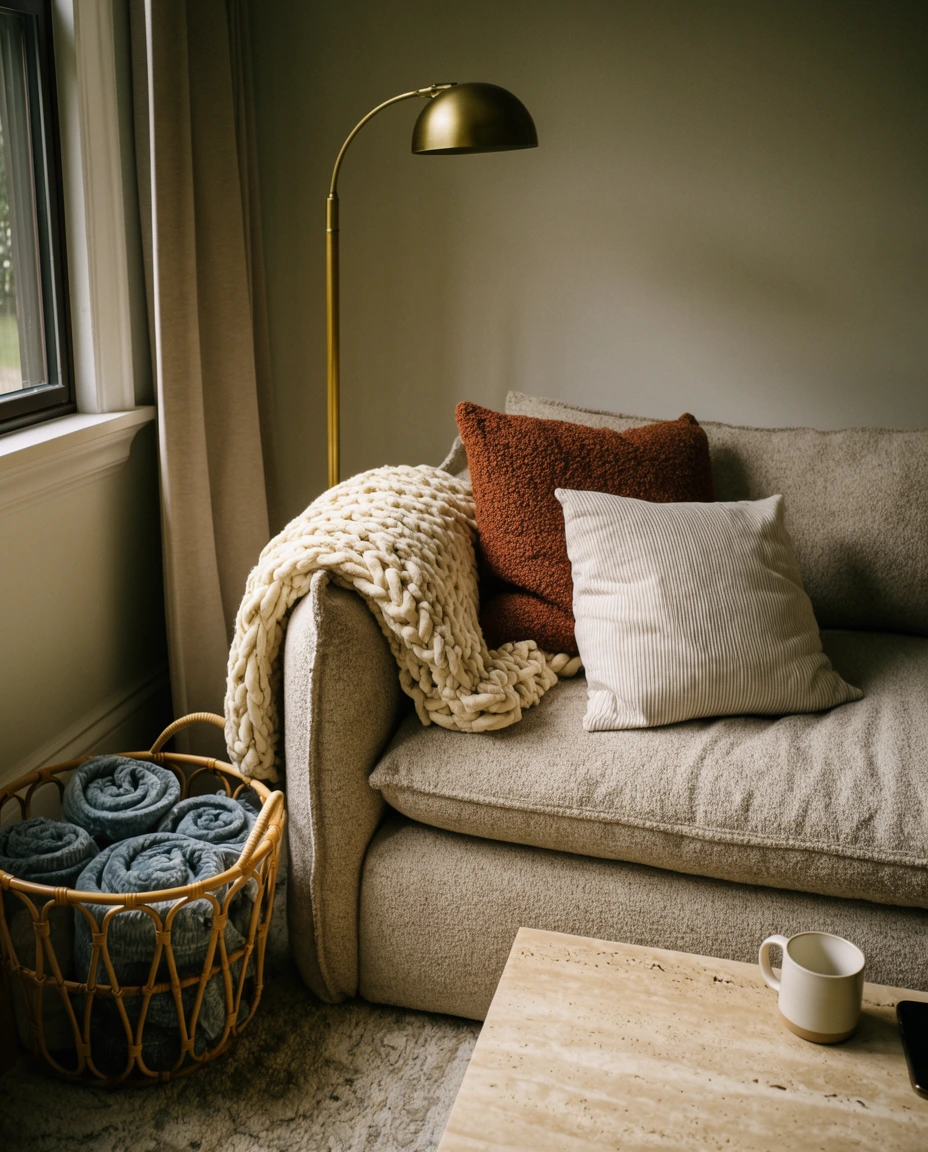
One corner of a sofa, done well, can carry an entire room through October. Stack a chunky knit throw over the arm, add two pillows in contrasting weaves, and let a basket beside it hold the overflow. In a small apartment this beats hauling out bins of seasonal decor, and it gives the living room a settled, lived-in feeling in twenty minutes flat. The trick is keeping the palette simple — two warm neutrals and one deeper accent, nothing more.

Layering plays differently depending on where you live. In New England and the upper Midwest, where nights drop into the forties by early October, wool and heavy cable knits feel earned. Farther south, in Texas or Georgia, a linen-cotton blend in rust or ochre gives the same visual warmth without turning the sofa into a sauna. Same idea, different fiber weight — and the lighter version usually costs less, since summer-weight throws hit clearance right as fall begins.
4. Amber Glass and Candlelight

Amber glass does something to lamplight that no candle color can match — it turns an ordinary bulb into something much closer to firelight. Collect a few bottles and votive holders in honey and burnt-orange tones, group them on a small tray, and drop in tea lights. On a bedroom dresser this makes an instantly cozy corner, and it barely qualifies as a diy at all. Odd numbers and varied heights keep the cluster from looking like a store display.

A friend of mine started her collection with a single amber apothecary bottle from an estate sale outside Columbus, marked down to a dollar because the stopper was missing. She added one piece a year, and the group now covers half a dresser and migrates to the dining table every Thanksgiving. Nobody has ever asked what it cost. That slow accumulation is exactly why the grouping looks personal rather than bought in one trip, and it never repeats itself twice.
5. Porch Steps with Potted Mums

Mums on the steps are the most recognizable fall move in America, and they still work because nothing else buys that much color for the money. Run three or five pots down one side of the stairs, staggering heights, and let the largest sit at the base. A front porch reads finished the moment they land. The outdoor palette stays simple when you choose two shades — rust and cream, or gold and deep burgundy — rather than the whole rainbow.

Steps that catch morning sun and afternoon shade keep mums blooming longest, which usually means an east-facing entry. A covered porch does even better, since one hard rain shatters open blooms fast. On narrow stairs, shift the pots to the outer edge of each tread so the path up stays clear, and pick plants still in tight bud at the garden center — those hold their color into November instead of dropping everything by Halloween.
6. Painted Terracotta Pot Trio

Plain terracotta pots cost a couple of dollars each and take paint beautifully. Three of them, in graduated sizes and matte shades of clay, olive, and cream, become a set that looks like it came out of a small-batch pottery studio. Set them on a kitchen windowsill with herbs still going, or line them along a shelf in an apartment that has no yard at all. It’s the rare diy that takes one afternoon and lasts for years.
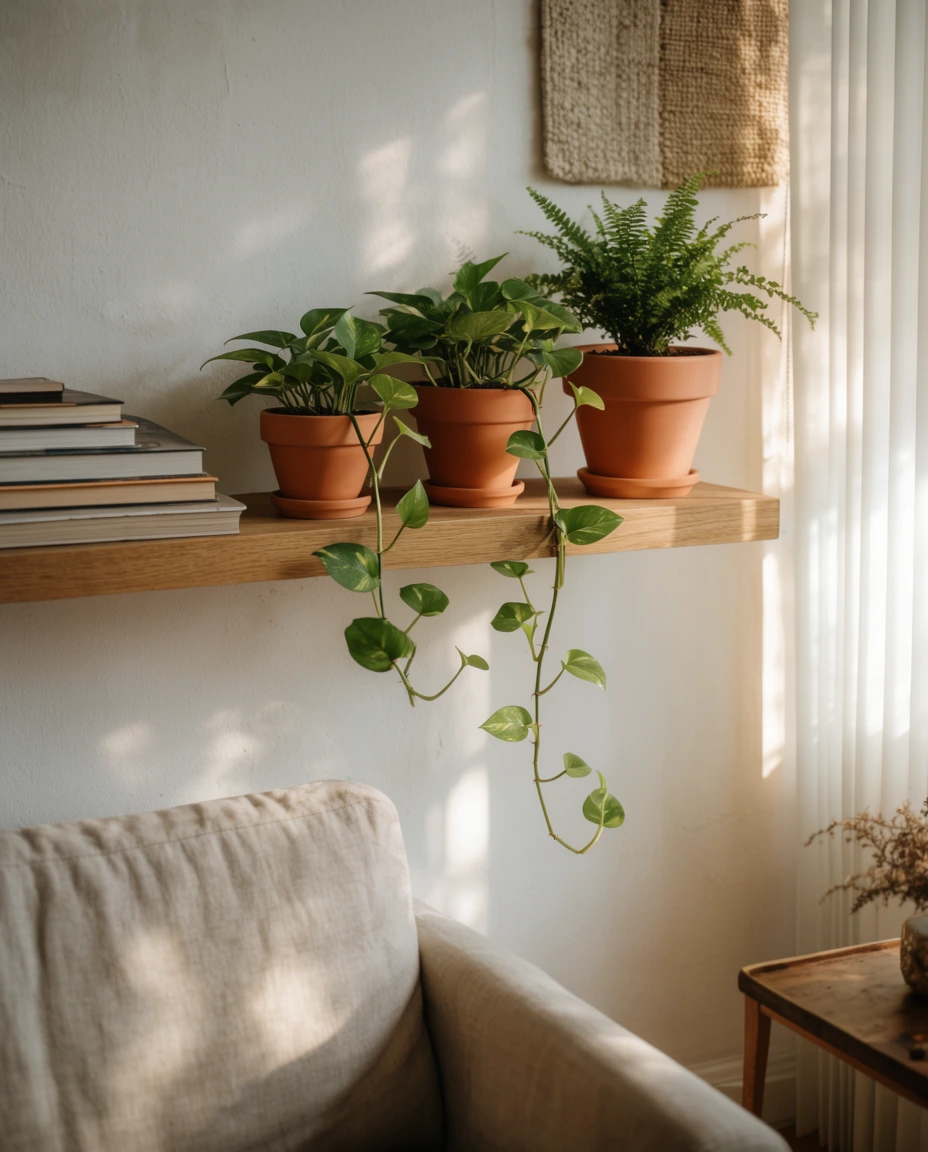
Anyone who works with terracotta regularly will tell you to seal the inside, not the outside — unsealed clay wicks moisture through the wall and lifts paint from behind within a season. Flat interior latex on the exterior, chalky and dry-looking, ages far more convincingly than anything with sheen. Sand the rim lightly once it cures so a hint of raw clay shows at the edge, and the finish stops reading like a craft project.
7. Plaid Throws Over Dining Chairs
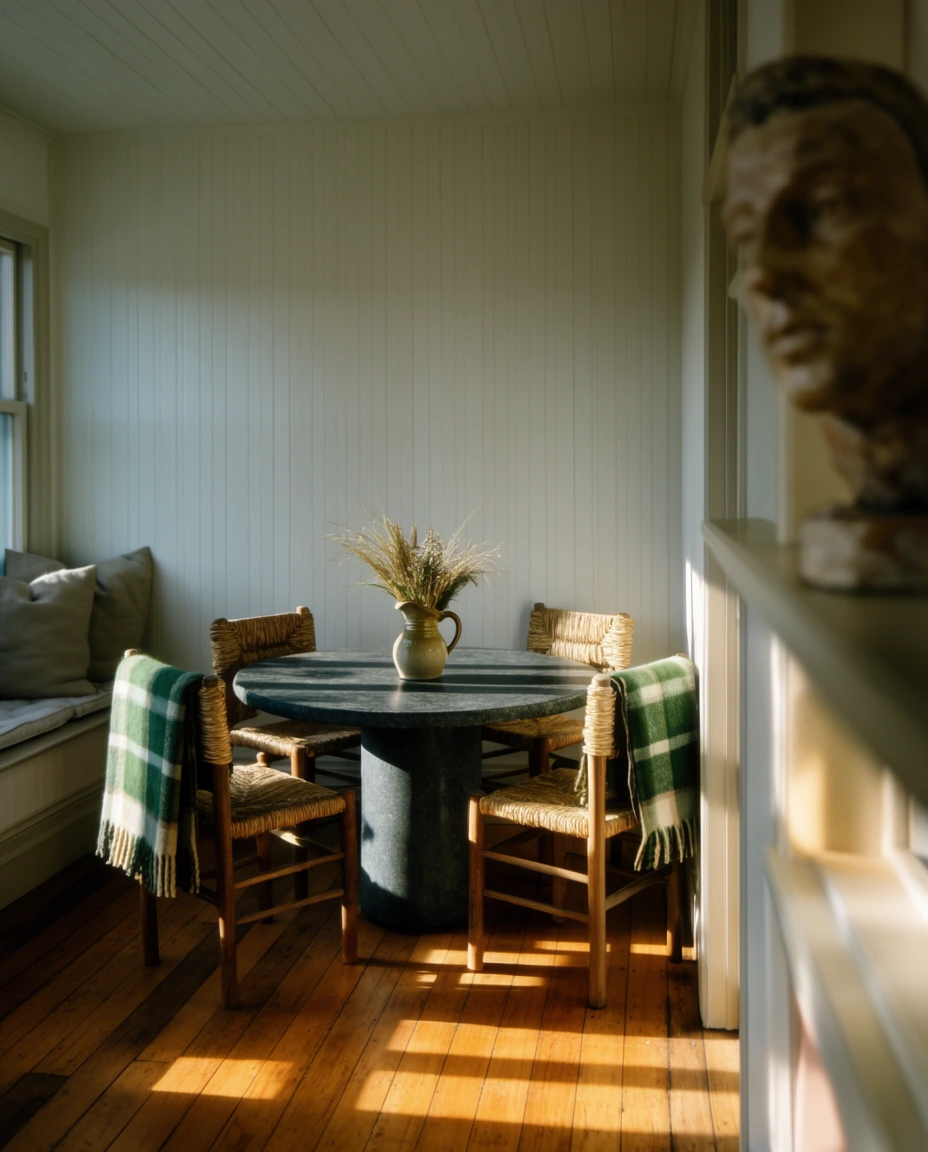
Plaid across the backs of dining chairs is a small gesture that changes the temperature of an entire room. Drape one blanket over the chair at the head of the table and another at the foot, leaving the rest bare so the whole thing looks casual instead of staged. The pattern picks up warm tones already working in the living room beyond. Stay simple with a single plaid family and the effect lands cozy rather than busy.

People actually use these. The blanket that lives on a dining chair gets pulled onto a lap during a long dinner, carried to the couch for a game, then draped back without ceremony — which is precisely why it never looks precious. Thrift stores and end-of-season racks are full of wool and flannel throws at eight or ten dollars, and a cold wash with a cup of vinegar softens even the scratchiest ones enough to keep in rotation.
8. Copper Tones in the Kitchen

Copper warms a room the way a fire does, and the fall version of it doesn’t require a new cookware set. A single copper pot on the stove, a small tray beside the sink, and a hanging measuring set are enough to shift a kitchen into autumn. Rental apartment cabinets stay untouched, which matters when the deposit is on the line. If the finish looks too bright, a quick diy with vinegar and salt pulls it toward a softer tone.

The usual misstep is going all in — copper canisters, copper pulls, copper pendant shade — until the room reads as a theme rather than a home. Three pieces spread across different heights and distances do far more than a dozen clustered on one counter. Watch the undertone, too: bright rose-copper fights cool gray stone, while browner tones sit easily with almost anything. Put the largest piece where the light hits and let the rest stay quiet.
9. Autumn Branches for Tall Vases

Half-turned branches in a tall floor vase are the cheapest sculpture available in October. Cut three or four from the yard — maple, oak, dogwood, whatever still holds its leaves — trim them to different lengths, and let them lean the way they grew. The outdoor material does all the work, so the arrangement stays simple. A slimmer version in a ceramic jug suits a bedroom corner where a full branch spray would crowd the walkway.

A florist arrangement at this scale runs sixty to ninety dollars in most cities. The yard version costs whatever the vase cost, and thrift shops carry heavy stoneware and ceramic floor vases in the fifteen-to-thirty range because nobody wants to ship anything that heavy. A few inches of sand or pebbles in the bottom keeps it steady against a passing dog or a toddler. The branches hold all season dry, then go straight to the compost.
10. Wheat Bundle for the Door

A bundle of dried wheat tied with jute is the quietest fall diy there is, and one of the prettiest. Gather a generous handful, square off the stems with pruners, and wrap the middle twice with twine before hanging it stem-down on the front door. It suits a modern entry as easily as a farmhouse front porch, and the gold color plays well against paint in nearly any shade, from black to butter yellow.

Wheat sheds once it dries out further, so a bundle hung under an overhang keeps its heads intact well past Thanksgiving. Cut every stem to the same length before tying — uneven ends make the bundle fan sideways and hang crooked on the hook. Craft-store wheat runs about four dollars a bunch, and two bunches build a full, generous shape. Swapping the twine for a wide velvet ribbon carries the same bundle into December.
11. Rust Bedding Without the Splurge

Swapping bedding is the fastest seasonal change in the house. A rust or terracotta duvet cover over the same white sheets makes a bedroom feel like a different room by dinnertime, at a fraction of what new furniture costs. In a rented apartment where the walls stay landlord-beige, this is where the color has to come from. One cozy waffle blanket folded across the foot of the bed finishes the layering completely.
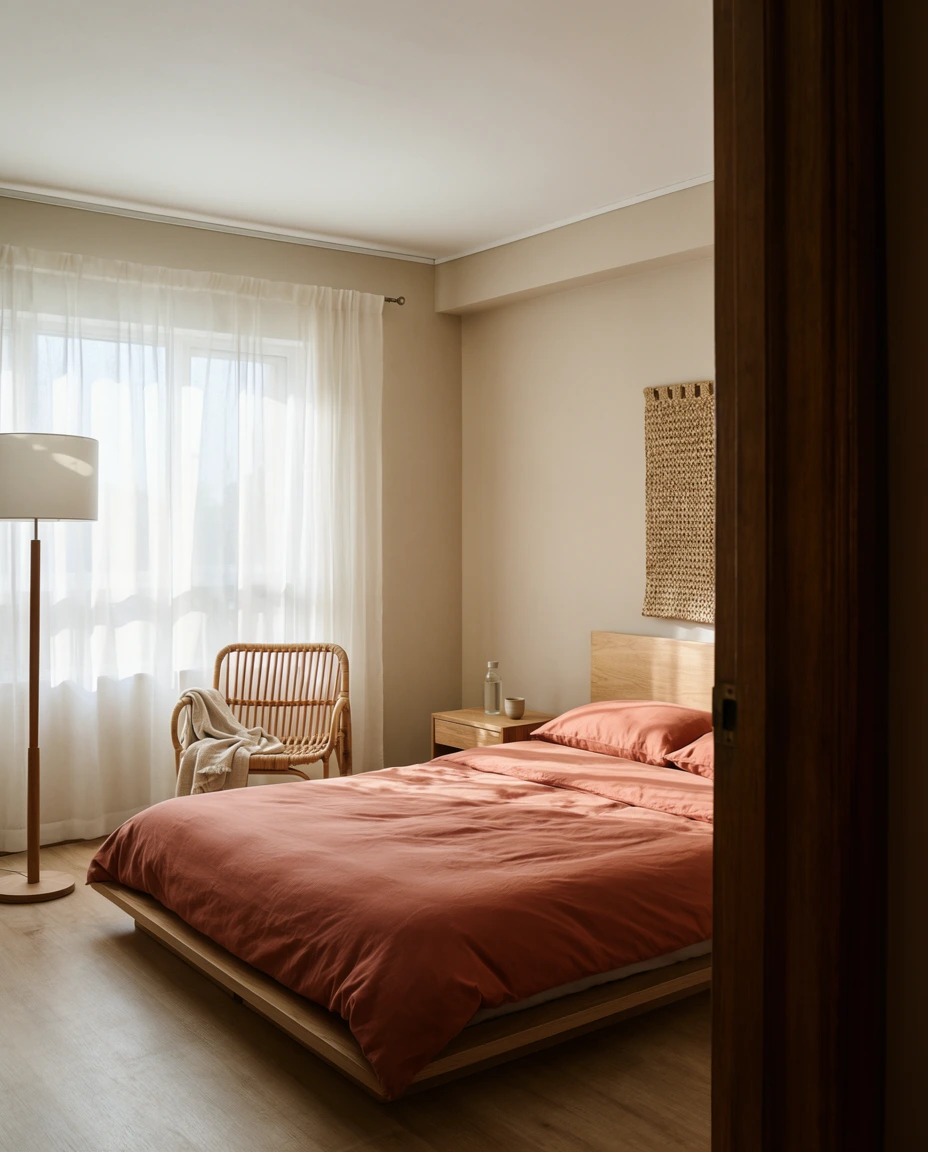
Bedding weight is worth matching to your climate rather than to the catalog photo. Homes in the Pacific Northwest and the Northeast handle heavy cotton flannel from October straight through March, while in Arizona or Florida a percale in the same rust tone gives the visual warmth without the night sweats. Big-box cover sets in seasonal colors typically land between thirty and fifty dollars, and last year’s shade drops lower once the new palette arrives.
12. Apple Crate Entry Bench

Two wooden apple crates turned on their sides, a plank laid across the top, and the entry suddenly has a bench. It’s a beginner diy with no cuts required at all if the lumberyard trims the board for you. Set just inside the front door, it holds boots below and a folded throw above, which is exactly what October asks of an entry. The look stays simple because the wood tone carries everything.
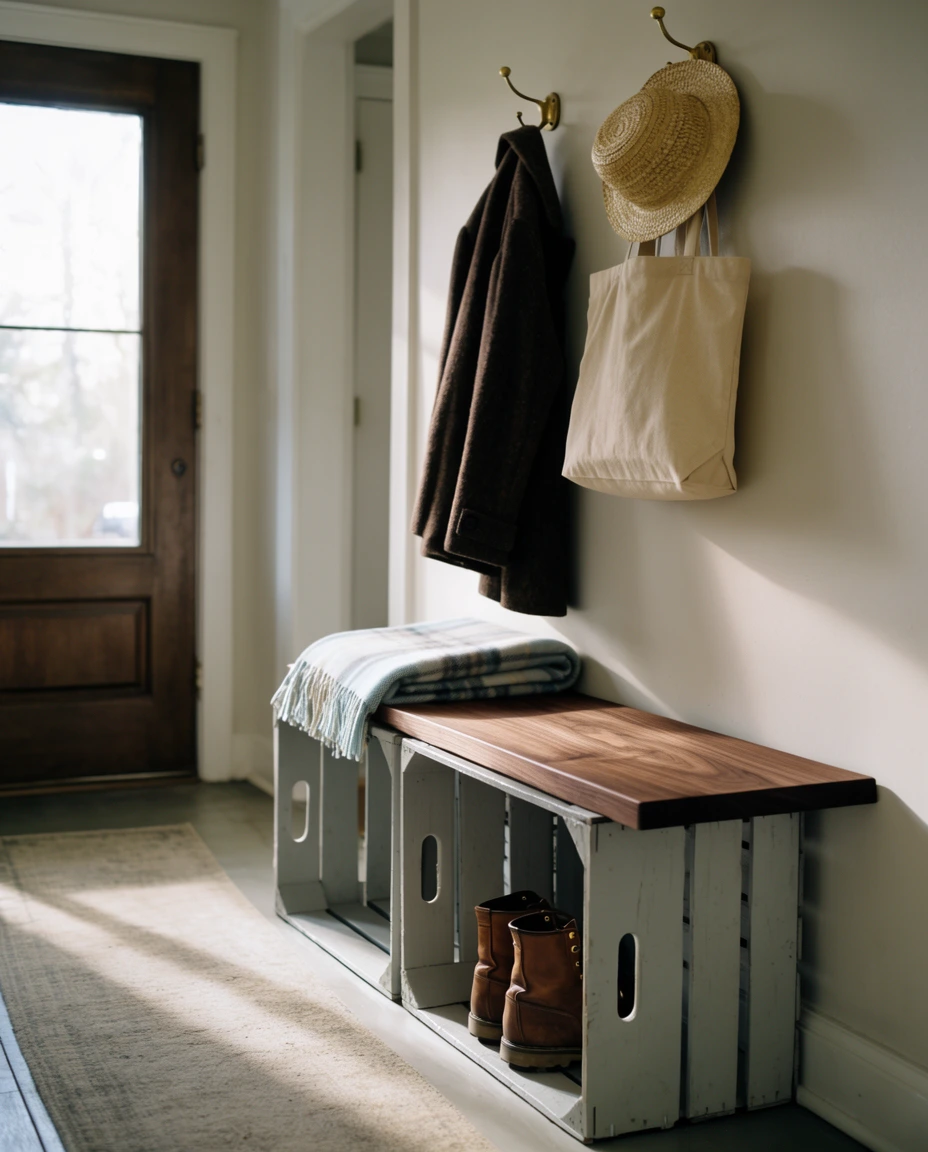
My neighbor built hers from four crates she bought at a u-pick orchard outside Ann Arbor for two dollars each, then stained the plank with leftover walnut from a bookshelf project. Three years on, her kids still drop their backpacks onto it every afternoon and it hasn’t wobbled once. She keeps meaning to build a matching one for the back door and hasn’t gotten around to it, which is its own kind of endorsement.
13. Cozy Reading Nook in Wool

A chair, a lamp, and something wool is the entire recipe. Pull an armchair you already own toward a window, lay a sheepskin or wool throw across the seat, and set a small table within arm’s reach for a mug. In a one-room apartment this carves out a second zone without building a wall. Just off the main living room, it becomes the seat everyone fights over — the most cozy square yard in the house.
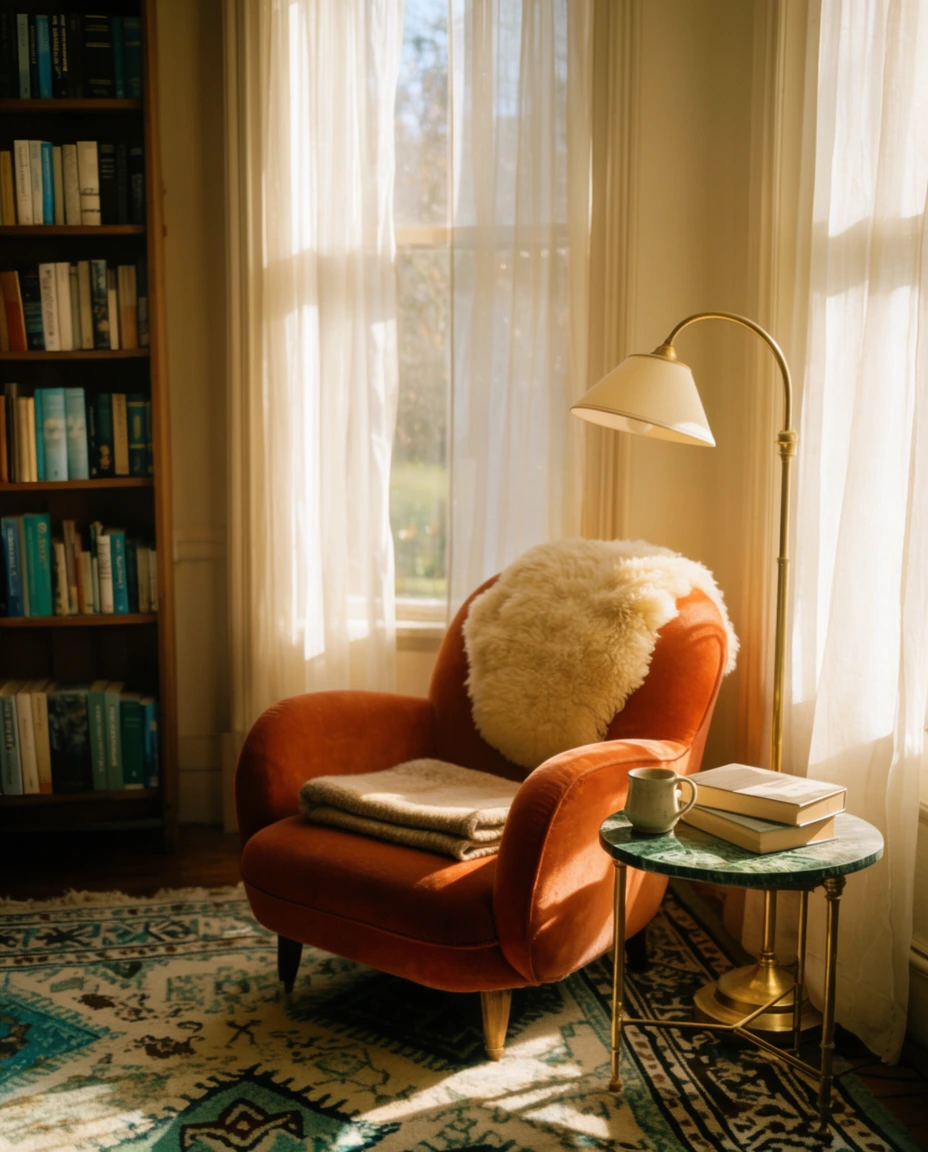
Corners with two adjacent surfaces work best — a window on one side, a bookshelf or wall on the other — because that sense of enclosure is what makes a nook read as a nook. A chair floating in open floor space looks unfinished no matter how good the textiles are. A floor lamp angled over the shoulder rather than glaring from overhead keeps the light usable after dark, which is when the corner actually earns its keep.
14. Pinecone Bowls and Bare Branches
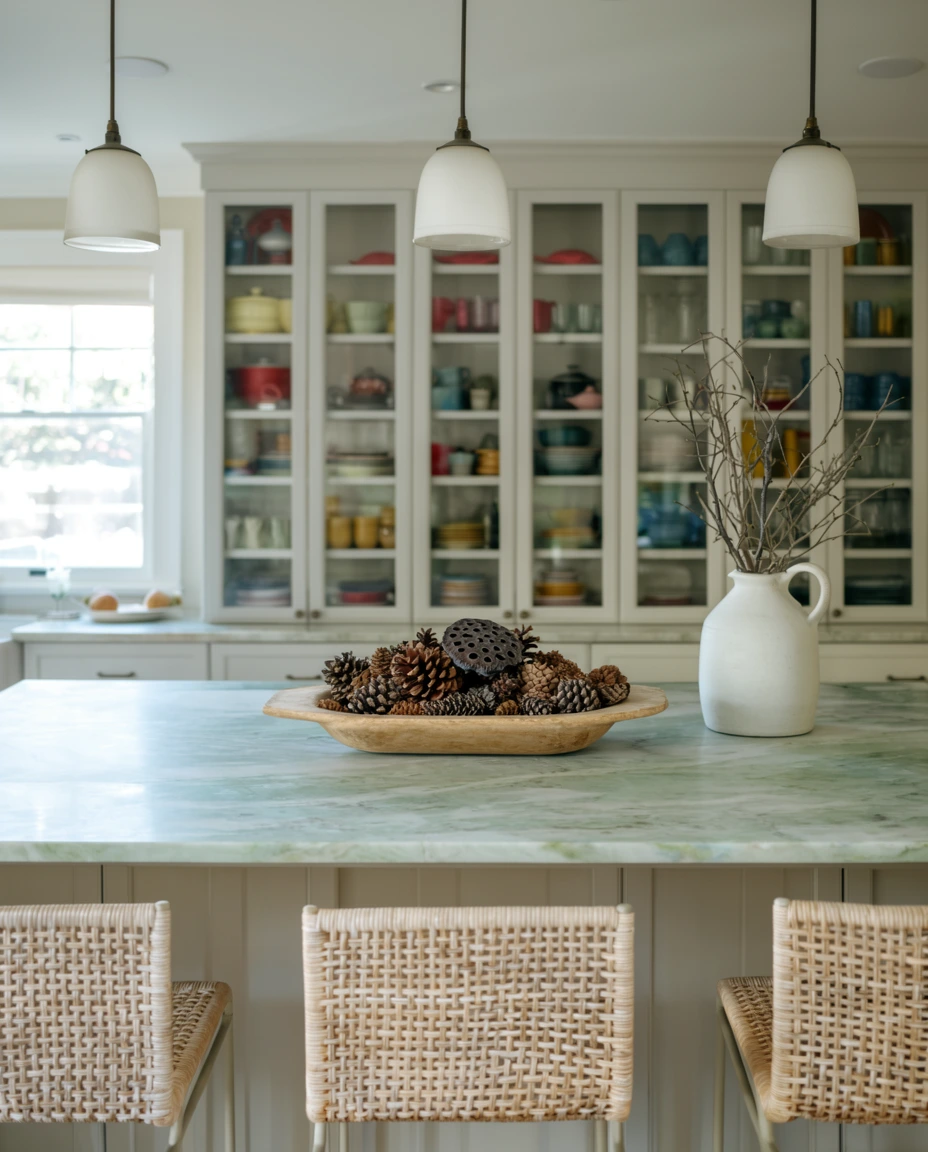
Pinecones in a wide shallow bowl, a few bare branches leaning in a jug beside it, and a table is dressed. The materials are free, the arrangement takes five minutes, and it holds from September into December without a single adjustment. On a kitchen island the bowl doubles as something to slide aside when you need the counter, which matters daily. The simple pairing keeps this diy from tipping into craft-fair territory.

Stylists tend to bake foraged pinecones at two hundred degrees for half an hour before bringing them inside — it drives out moisture, opens the scales fully, and evicts anything living in them. They also mix sizes instead of filling a bowl with identical cones, because uniformity is exactly what makes natural material look manufactured. One unexpected element, a dried lotus pod or a knot of grapevine, keeps the eye moving across the arrangement.
15. Balcony Lanterns for Cool Nights

A balcony gets its best month in October, and lanterns are what make it usable after dark. Set two or three on the floor near the railing corner, mixing metal and glass, and use flameless pillars if the building rules require them. For an apartment with no yard, this is the whole outdoor season compressed into a very small footprint. A wool blanket over the chair back makes it properly cozy.

Renters who set up a balcony in early October end up out there most evenings until the first hard freeze, which is a better return than almost any indoor purchase of the same price. The pattern is always identical — a chair, a light source, and something warm to sit under. Thrift and discount stores stock lanterns at six to twelve dollars each in September, and an odd number of mismatched ones looks intentional in a way a matched pair never manages.
16. Kitchen Shelf Styled with Gourds

An open kitchen shelf is the easiest surface in the house to re-season. Nudge the everyday stacks slightly to one side and set two or three small gourds among the bowls — striped, warty, pale green, whatever the bin at the market offered. It stays simple because nothing gets removed, only shifted. The kitchen then picks up the same warm tones already working in the living room, which makes an open floor plan feel connected.

The failure mode here is symmetry — one gourd centered on each shelf, evenly spaced, which instantly looks arranged by someone standing back with their arms crossed. Cluster them low and slightly off-center instead, leaning against a stack of plates. Keep them off the shelf directly above the range, since heat and cooking grease cut their life to about two weeks. Cured gourds with dry, hard stems hold for two months; soft-stemmed ones won’t.
17. Deep Rust Velvet Pillows
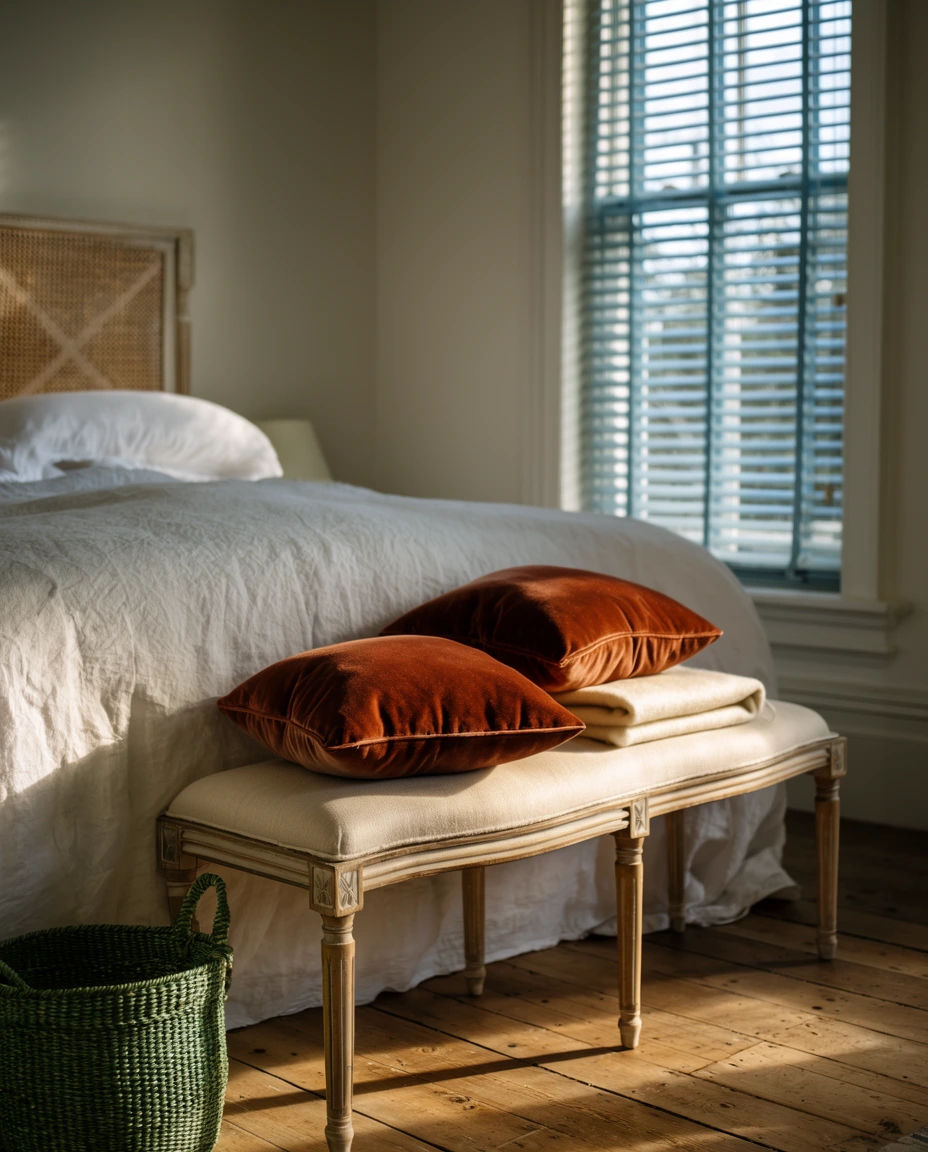
Velvet is the one fabric that reads seasonal on sight. Two or three pillow covers in deep rust, slipped over inserts you already own, are enough to shift an entire seating arrangement. The pile catches light differently from every angle, which is why a cozy room with velvet in it photographs so well. A pair on a bedroom bench works as nicely as a sofa, and in a small apartment the covers store flat in a drawer.
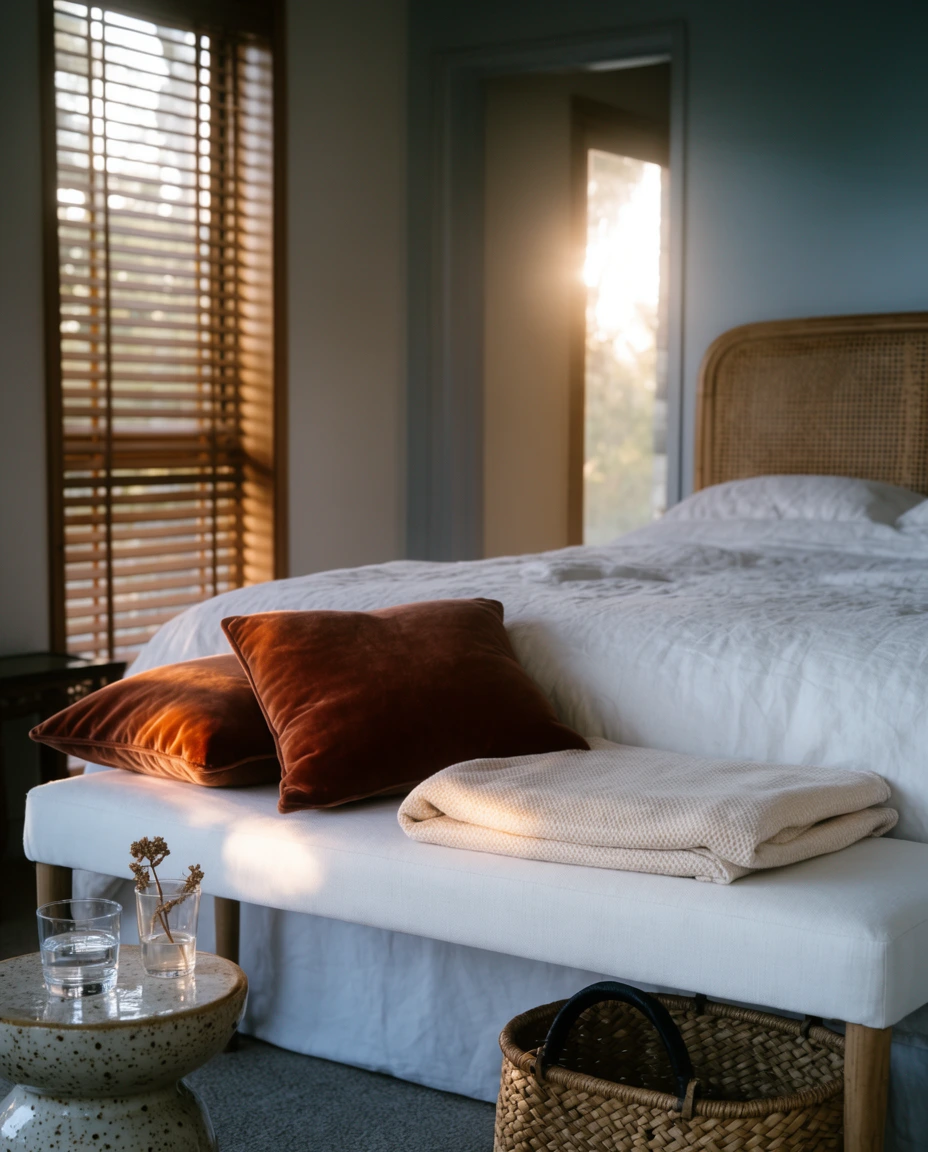
Covers, not whole pillows — that’s where the savings live. A finished velvet throw pillow runs thirty to sixty dollars at most home stores, while the cover alone lands between twelve and eighteen, and the insert inside your current pillow is perfectly good. Four covers cost less than two finished pillows and give you a full seasonal set. Come late November they fold down to the size of a paperback and the linen ones go back on.
18. Dried Orange Garland

Orange slices dried in a low oven turn translucent and glow like stained glass the moment light passes through them. String them on twine with a few cinnamon sticks between, and the kitchen smells like the season for days afterward. It’s the classic diy for good reason — a few dollars of fruit, one afternoon of oven time, and a garland long enough to cross a window. Keeping it simple and unpainted is what makes it work.

Quarter-inch slices dry evenly; thicker ones stay leathery in the center and eventually mold. Two hours at two hundred degrees with the oven door cracked, flipped once halfway, gets them there without scorching the rinds. Hang the finished strand where daylight comes through it — across a window frame, or in front of a glass cabinet door — because the backlighting is the entire point. Packed in a paper bag with a silica packet, it returns next October intact.
19. Front Door in Deep Olive

Paint is still the highest return per dollar in any house, and a front door takes exactly one quart. Deep olive sits somewhere between green and brown, which means it reads warm against fall foliage and holds up straight through winter without looking stranded. It flatters brick, white siding, and gray stone equally well. A front porch with black hardware and a natural fiber mat finishes the outdoor picture without another purchase.
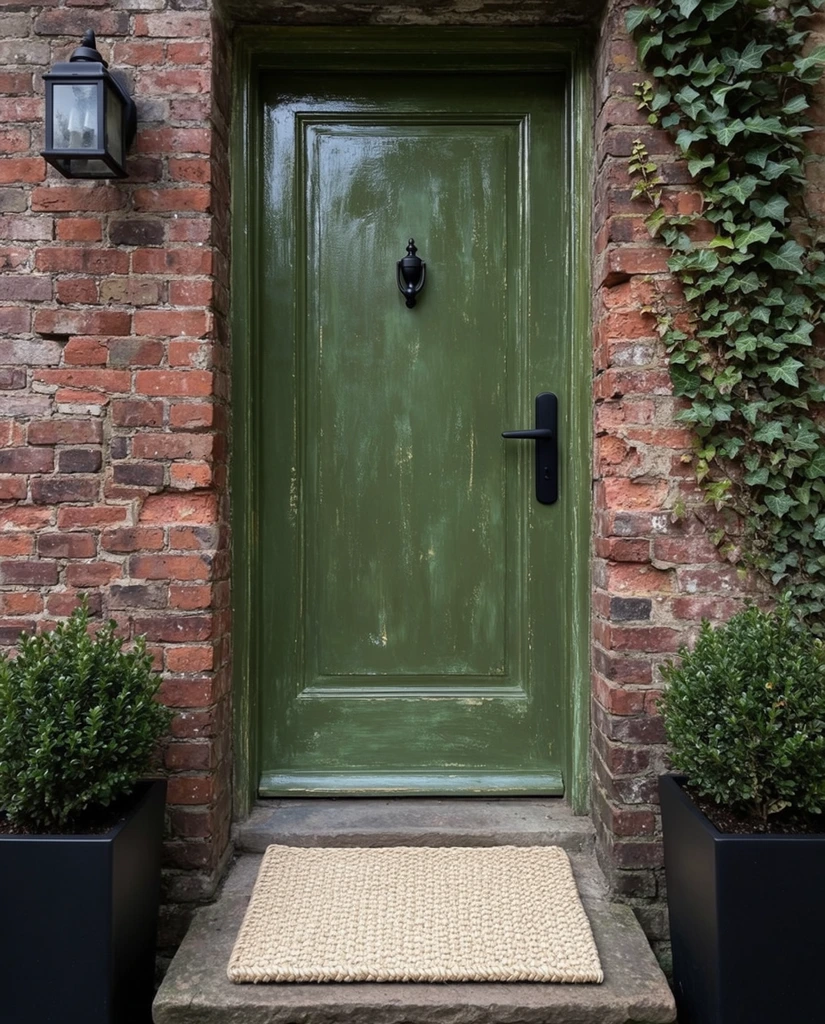
Olive shows best on doors that get some shade, since full afternoon sun flattens the green and pushes it toward khaki. North-facing entries hold the depth all day long. Two coats of exterior enamel over a light scuff-sand runs about forty-five dollars including a decent brush, and it goes on in one Saturday if the weather stays dry and above fifty degrees. Pull the hardware off rather than taping around it — the edges come out much cleaner.
20. Firewood Basket for the Hearth

Split wood stacked in a large basket beside the hearth is decor and function at the same time, and it costs whatever a face cord costs where you live. Choose a basket with real structure — seagrass, rattan, or a metal hoop frame — and stack the pieces cut-ends out so the grain shows. A living room gains texture immediately. The look is simple, and few things make a room feel more cozy than wood waiting to be used.

A couple I know in Vermont keeps two baskets, one at the hearth and a smaller one by the back door, and the smaller one exists purely because the big one kept getting emptied on cold weekends. They restock every Sunday morning, coffee in hand, and treat it as the official start of the season. That habit is half the appeal — a basket that stays perfectly full and untouched all winter never quite looks right.
Fall is the one season that rewards restraint and secondhand finds more than spending, and every idea above proves it twice over. Pick two or three that suit the rooms you actually live in and let the rest wait for next year. Tell us in the comments which one you’re starting with, and share your own low-cost tricks — the best ones always come from readers.