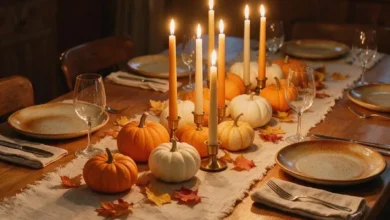

Thanksgiving has quietly become the season Americans plan for hardest — not with more stuff, but with more intention. Pinterest boards fill up in early October with copper light, dried wheat, linen runners, and porches layered in wool, and the pins that get saved most are the ones a person could actually pull off over a weekend. What follows are 22 looks for 2026, running from the front door to the classroom wall, each one built from pieces you can find locally or already own. Some take an afternoon, some take ten minutes, and every one of them keeps earning its place long after the plates are cleared.
1. Copper Pots and Dried Wheat

Copper catches low November light in a way no other metal manages, which is why a rail of hanging pots reads as decor long before it reads as storage. Line them up along the wall beside the range, then set a stoneware crock of dried wheat, oats, and bittersweet on the counter below. Suddenly the kitchen feels like a working farmhouse pantry instead of a room you pass through on the way to somewhere else. Vintage pieces carry it best — a French saucepan with a hand-forged handle, an old jelly mold, a ladle darkened at the edges.

Copper tarnishes fast in a room full of steam, and most people give up on it by the second week of the month. A halved lemon dipped in coarse salt brings the shine back in under a minute per pot, and doing it the morning of the meal means the metal glows exactly when the candles come out. Keep the wheat somewhere dry and it will hold its color straight through the following spring, which makes the whole arrangement cheaper per month than a single grocery-store bouquet.
2. The Front Door in Amber

Amber is doing quiet work on porches this season — honey-toned glass lanterns, bronze-glazed mums, ribbon the color of maple syrup. A front door painted deep bronze-green sets the whole thing off, and the palette photographs beautifully against brick, clapboard, and pale stucco alike. For 2026 the wreath is looser than it used to be, built from oak leaves and dried hydrangea rather than tight florals packed shoulder to shoulder. Everything here is outdoor rated, so a week of rain does not undo an afternoon of arranging.

This palette really sings on north-facing entries, where cool afternoon light flattens most reds but makes amber glow. Homes with dark shutters or black window frames get the most out of it, since the warm tones read as a deliberate counterpoint rather than a happy accident. On a shaded entry, a pair of battery lanterns set on the top step does more for curb appeal than any garland, and neighbors tend to notice the light long before they register what the wreath is made of.
3. Harvest Table Without the Fuss

The most-saved table settings of the past few years share one quality — restraint. A linen runner in oatmeal, three pillar candles at staggered heights, a scattering of pears and walnuts down the center, and that is genuinely the entire plan. Simple works because the food is the color story on Thanksgiving, and a crowded surface leaves nowhere to set the gravy boat. Anyone hosting more than eight people learns this quickly, usually the year the centerpiece had to be relocated to the floor halfway through dinner.

The classic misstep is building a centerpiece taller than the people sitting behind it, which quietly kills conversation across the table for three hours. Keep everything below eye level when seated, then check it by actually sitting down rather than standing over the arrangement. The second trap is scented candles, which fight the food from the first course onward. Unscented beeswax gives the same honeyed light without competing with the turkey, and it burns long enough to carry the room through dessert.
4. Velvet Pumpkins for the Mantel

Velvet pumpkins earned their spot on the mantel by being the rare fall object that still looks right in December. Grouped in odd numbers across a wide shelf in dusty rose, moss, and cream, they soften a living room the way a good throw pillow does. The DIY version costs almost nothing — a fabric circle, a handful of fiberfill, twine cinched at the center, and a real dried stem saved from a grocery pumpkin. Few projects for the home return this much for one quiet evening of work.
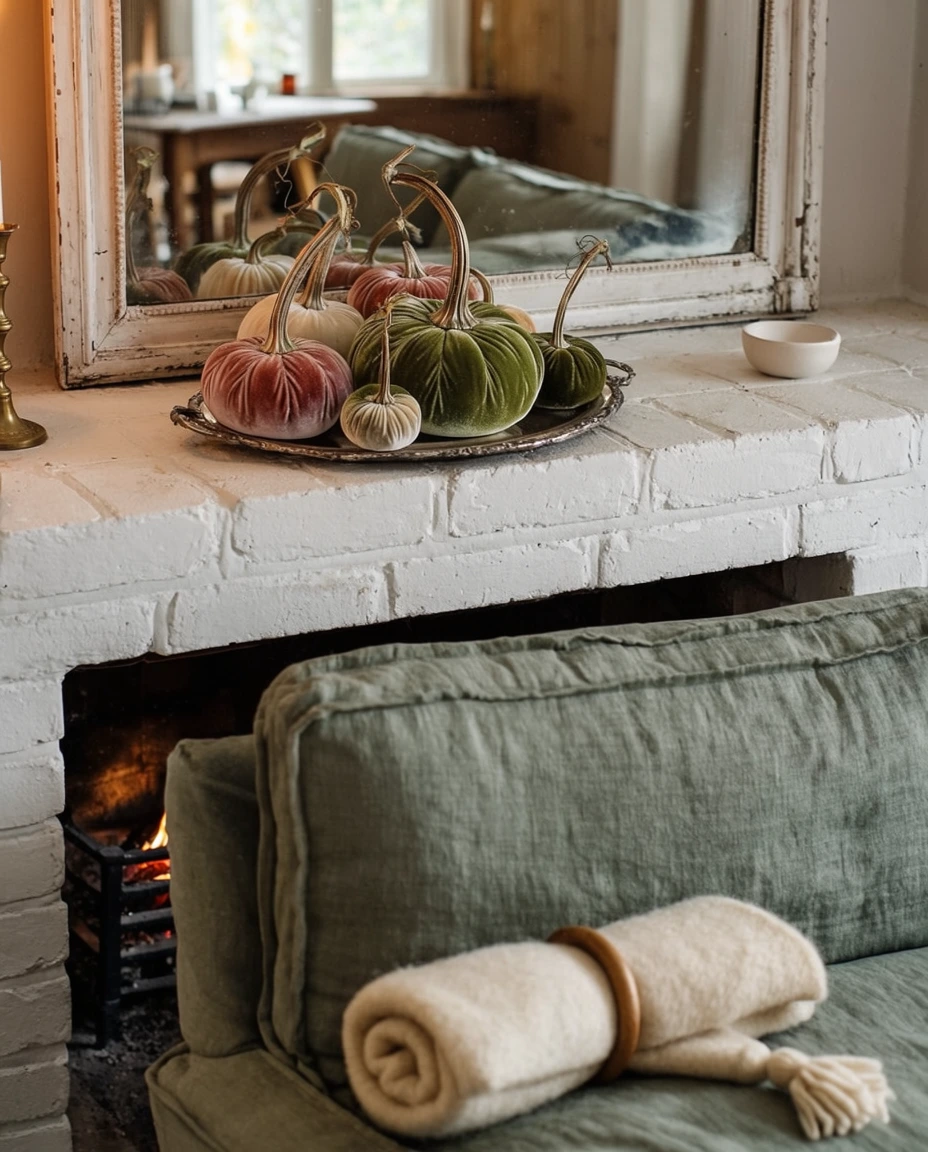
A single handmade velvet pumpkin runs twenty to thirty dollars at a boutique, while a remnant of upholstery velvet from the cutting table makes six or seven of them for under fifteen. Buy that remnant in a color you already live with rather than a seasonal orange, and the group stays on the mantel all winter without looking stranded. Stems are the giveaway on cheap versions, so save the real ones and let them dry on a windowsill for a week first.
5. Coffee Table Vignette in Rust

A coffee table does not need a centerpiece so much as a small landscape — two stacked books, a low bowl of hazelnuts, a rust-colored taper in a brass holder. Ideas for living room styling tend to fall apart when they cover the whole surface, because the table still has to hold a mug, a magazine, and somebody’s feet. The easy rule is to claim one third and leave the rest open. Rust, ochre, and pale bone read as autumn without a single pumpkin in sight.

Watch what actually happens in a family room on a Thursday night and the design decides itself. Remotes migrate, someone sets down a plate, and a toddler relocates the smallest object within the hour. That is why the pieces here are heavy for their size and cluster on a tray — the whole arrangement lifts off in one motion when the table is needed and goes back the same way. Nobody rebuilds a vignette from scratch twice a day.
6. Dollar Bin Gourds with Gold Leaf

Foam gourds from the dollar tree bins look exactly like foam gourds until gold leaf gets involved. A coat of matte cream paint, then torn squares of imitation leaf pressed onto the ridges with a soft brush, and the whole bag reads as glazed ceramic from three feet away. The diy dollar tree approach works because the base shapes are decent and the shiny finish is the only thing letting them down. These make excellent crafts for a weekend afternoon with kids old enough to handle glue.

Ten gourds, two bottles of craft paint, and a booklet of imitation leaf comes in around eighteen dollars, less than a single glazed ceramic pumpkin at most home stores. The leaf goes much further than the package suggests, so buy one booklet, finish three, and judge from there before spending more. A light matte sealer keeps the gold from flaking into the bowl by December, and the finished set stores flat in a shoebox until next year.
7. Kitchen Shelves Dressed for Fall

Open shelving gives you a built-in stage, and the seasonal edit takes about fifteen minutes start to finish. Move the everyday glasses down a shelf, bring the amber and smoked-glass pieces up to eye level, and tuck a small trailing vine along the top edge. It is the least fussy indoor change in the house and the one guests comment on first. What makes it unique is that nothing gets bought — the decor comes from what is already in the cabinets, rearranged by color instead of by function.

Stylists working on shoots tend to build shelves in triangles, placing the three strongest pieces so they form a loose diagonal across the whole wall rather than lining them up row by row. It keeps the eye moving and stops each shelf from reading as a separate little display. They also leave one shelf noticeably emptier than the others, which comes across as confidence rather than a gap. Both tricks work just as well with jam jars as with studio pottery.
8. Paper Leaves in Warm Ombre
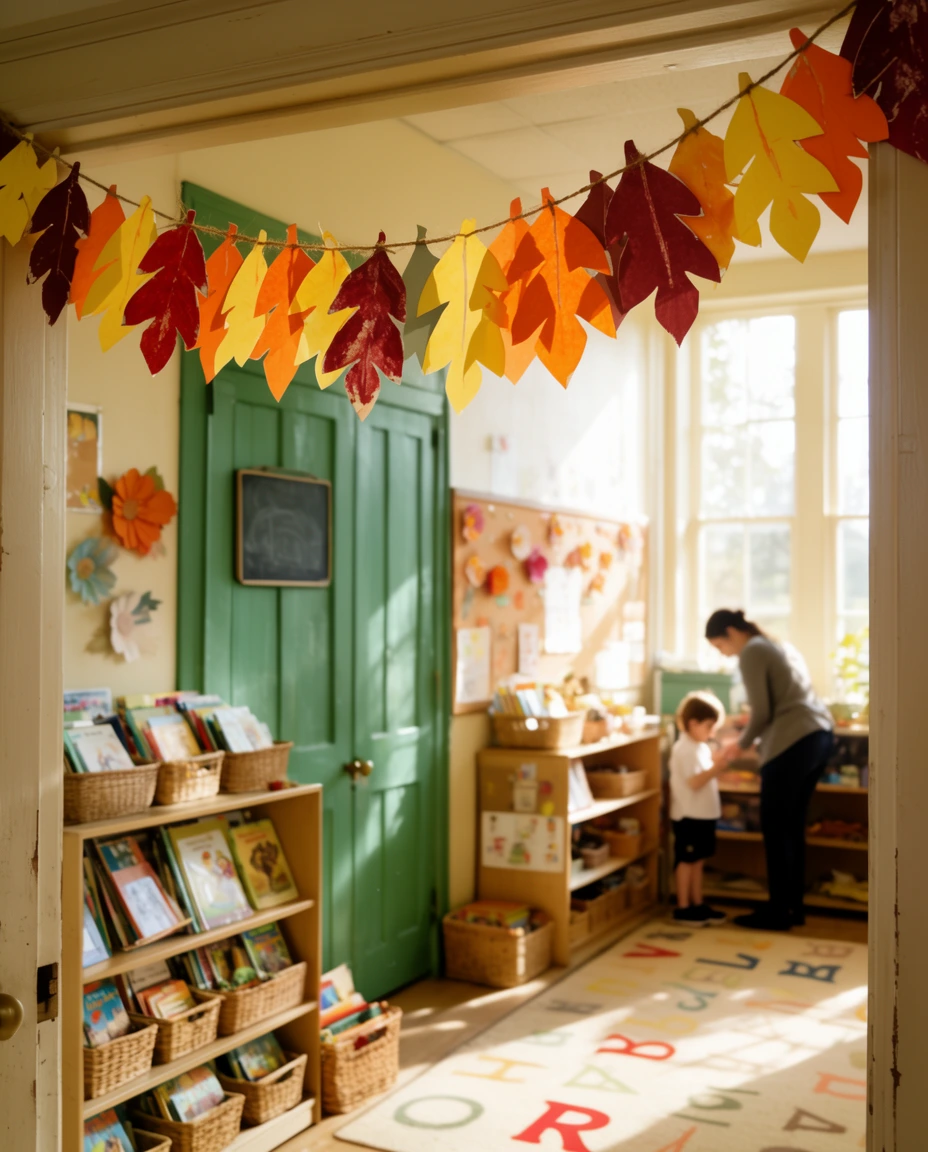
A garland of hand-cut paper leaves, graded from butter yellow through pumpkin to deep oxblood, costs a few dollars and fills an entire doorway. In a classroom it doubles as a lesson, since sorting by hue teaches more about color than any worksheet ever has. Projects for classroom walls need to survive twenty pairs of hands, so cardstock beats construction paper every time. As crafts for groups go, this one scales beautifully, because every leaf comes out a little different and that is exactly the point.

In New England the maples handle this on their own by late October, and the garland is really a way of bringing the sidewalk indoors before the color drops. Farther south, where oaks stay stubbornly green into November, a paper version may be the only red in the room, which is precisely why the range of shades matters so much. Teachers in Phoenix and Miami have been cutting these for years for the same reason people in Vermont cut snowflakes in April.
9. Front Porch Layers in Wool
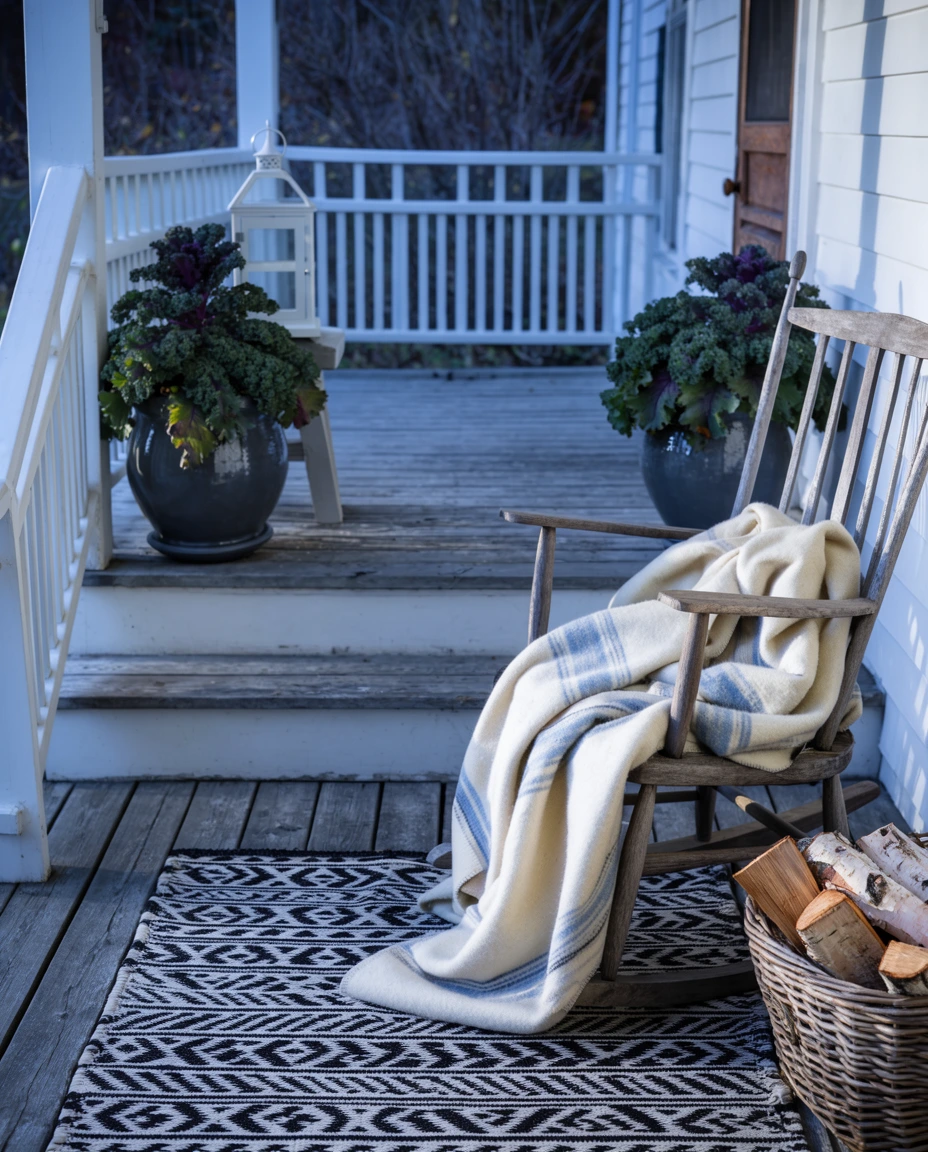
A front porch in November wants texture far more than it wants pumpkins. Layer a flatweave rug under a wool blanket thrown across the rocker, add a basket of split birch, and set two glazed planters of ornamental kale at the top step. The outdoor look that took over feeds in 2025 leaned hard on plaid, and the softer follow-up trades it for undyed wool, jute, and a single quiet stripe. It also holds up through frost, which plaid cotton never quite managed to do.

Deep covered porches carry this best, since the fabric stays dry and the layers can live outside all season without a second thought. On an exposed stoop, keep the wool in a lidded basket beside the door and bring it out when people come over — five seconds of effort for the same effect. Row houses in Baltimore and Philadelphia do a compressed version on three steps, and it reads every bit as warm as forty feet of Southern veranda.
10. Vintage Brass and Beeswax Light
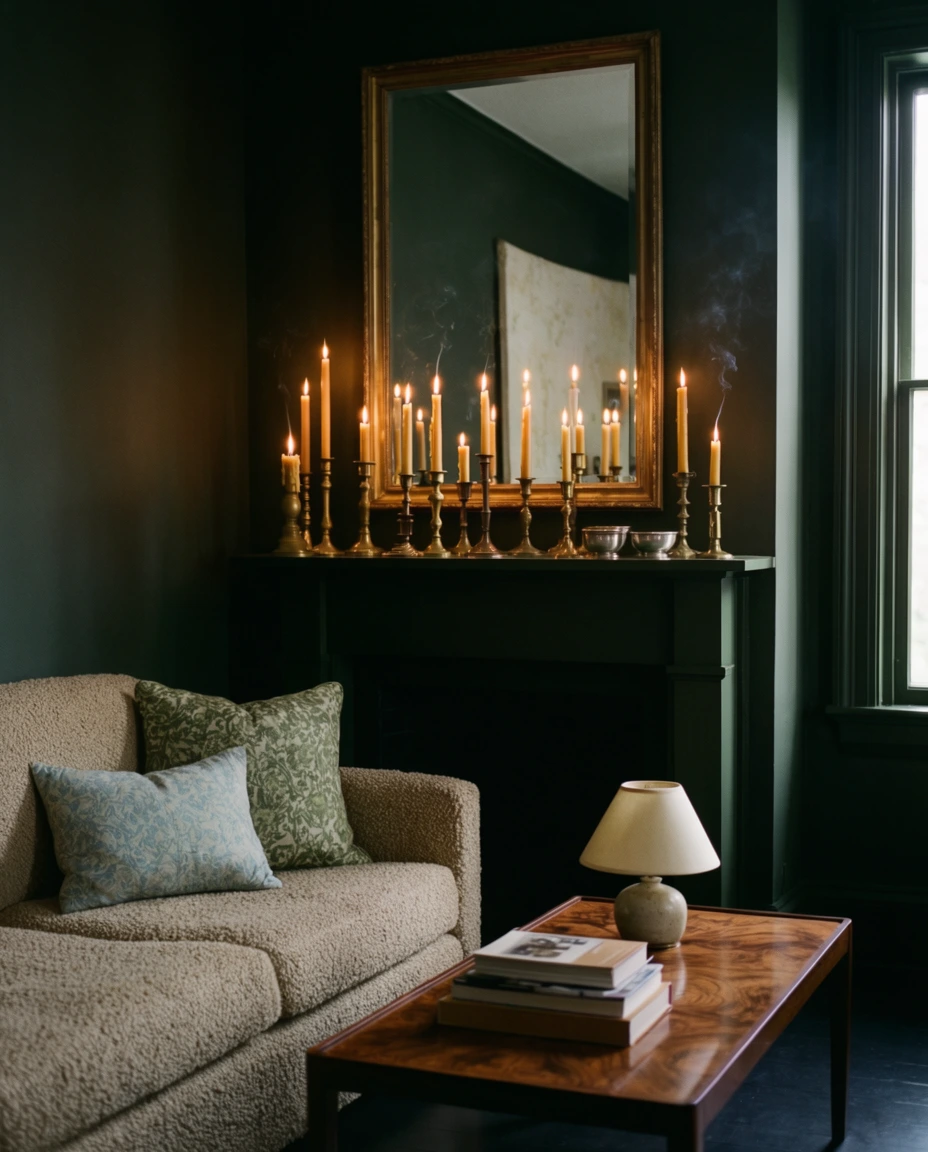
Brass candlesticks bought one at a time — a thrifted pair, a flea market single, something inherited — make a far better collection than a matched set ever will. Grouped on the mantel or sideboard of a living room, the mismatched heights do what a chandelier does, only lower and warmer. Vintage brass has a softer, buttery tone than new, and it takes beeswax tapers beautifully. Anyone hosting in the late afternoon figures out fast that six small flames beat one overhead fixture.

A friend in Ohio started with three candlesticks from her grandmother’s hutch and now has nineteen, nearly all of them under eight dollars at estate sales. She lights every one on the last Thursday in November and swears the room goes quiet for a beat when she does. The collection grew because she never hunted for a particular shape, only for the right weight in her hand — solid brass rather than plated, which she checks on the spot with a small magnet.
11. Place Cards for Every Guest

Place cards solve a problem nobody wants to name — the awkward hover while twelve people decide where to sit. A tag of thick cream cardstock, a name in ink, and a sprig of rosemary tied on with baker’s twine takes ninety seconds each. Settings for table arrangements this size benefit from anything that adds a personal beat, and the DIY route lets you write something small on the back. Cards outlast the meal, which is more than most parties decorations manage.

Write the names before the cooking starts, because ink and a warm kitchen do not mix and steady handwriting is the first thing to go. Placing the cards is also the moment to split up the couples and seat the loudest person mid-table rather than at the end, where one voice tends to run the whole room. Slip a folded corner under each plate rim so a passing serving dish cannot sweep a card onto the floor.
12. Round Table Seating for Ten

A round table changes the entire tone of a meal, because everyone can see everyone and nobody gets stranded at the far end. Decorating one calls for a different logic than a rectangle — a single low arrangement in the dead center, with the table left clear from there out to the edges. Keep it simple with a shallow footed bowl of quince and grapes plus a loose ring of small votives. The circle wants a circle, and anything linear fights the shape.

Squeezing ten chairs around a sixty-inch top is where most hosts go wrong, and elbows pay the price all evening. Twenty-four inches of edge per person is the working number, which means ten guests really want a seventy-two-inch round or a lazy Susan doing the passing for them. If the table is smaller, seat eight and set a separate spot for the kids instead of compressing everyone, and slide a felt pad under the linen to quiet the whole thing down.
13. Desk Corner with Autumn Warmth
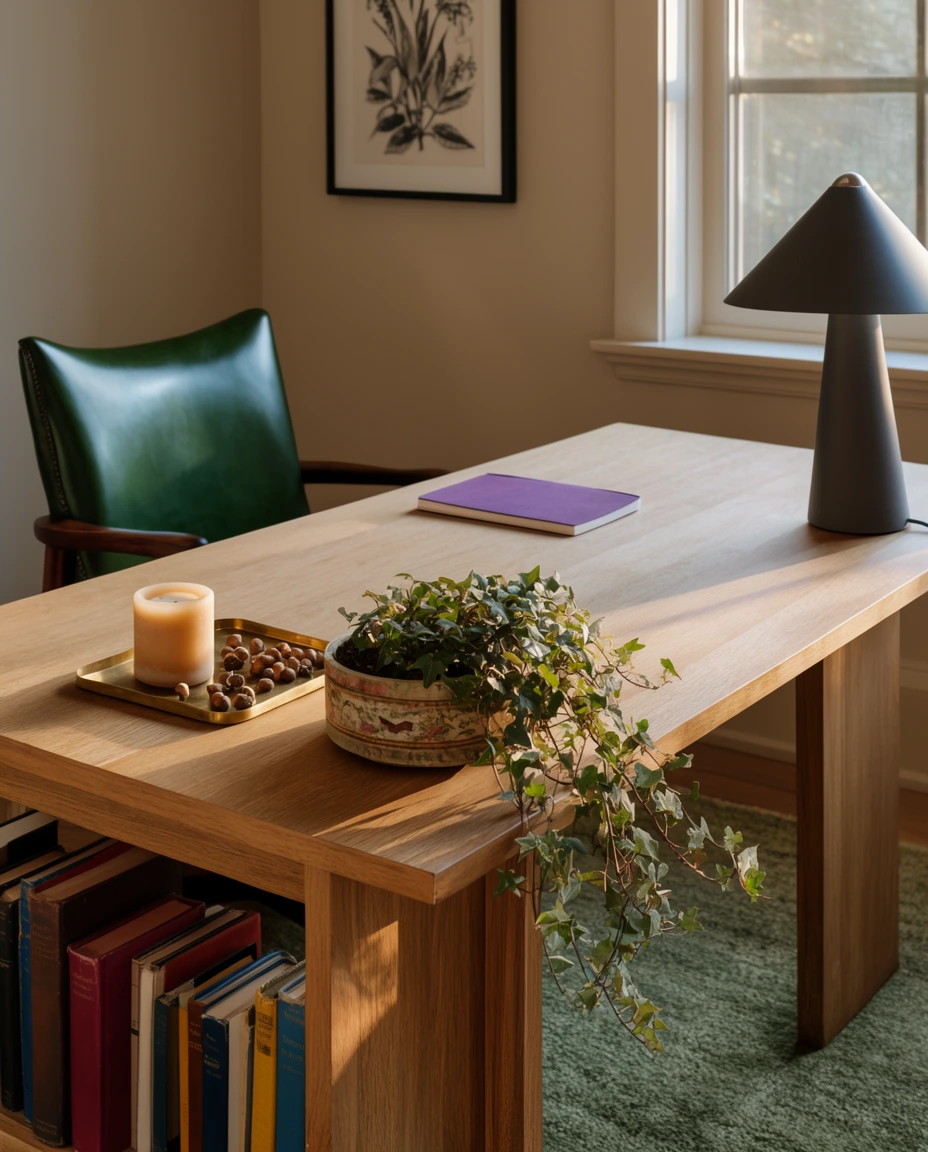
A home office does not need a full seasonal overhaul to feel different in November. One small brass tray in the corner of the desk, holding a squat candle, a few acorns, and a low pot of ivy, is enough to shift the whole mood of the room. Ideas for office spaces land best when they leave the keyboard, mouse, and notebook exactly where they already were. Decor for work areas has to survive a deadline, so nothing that sheds or tips belongs here and the work surface stays clear.
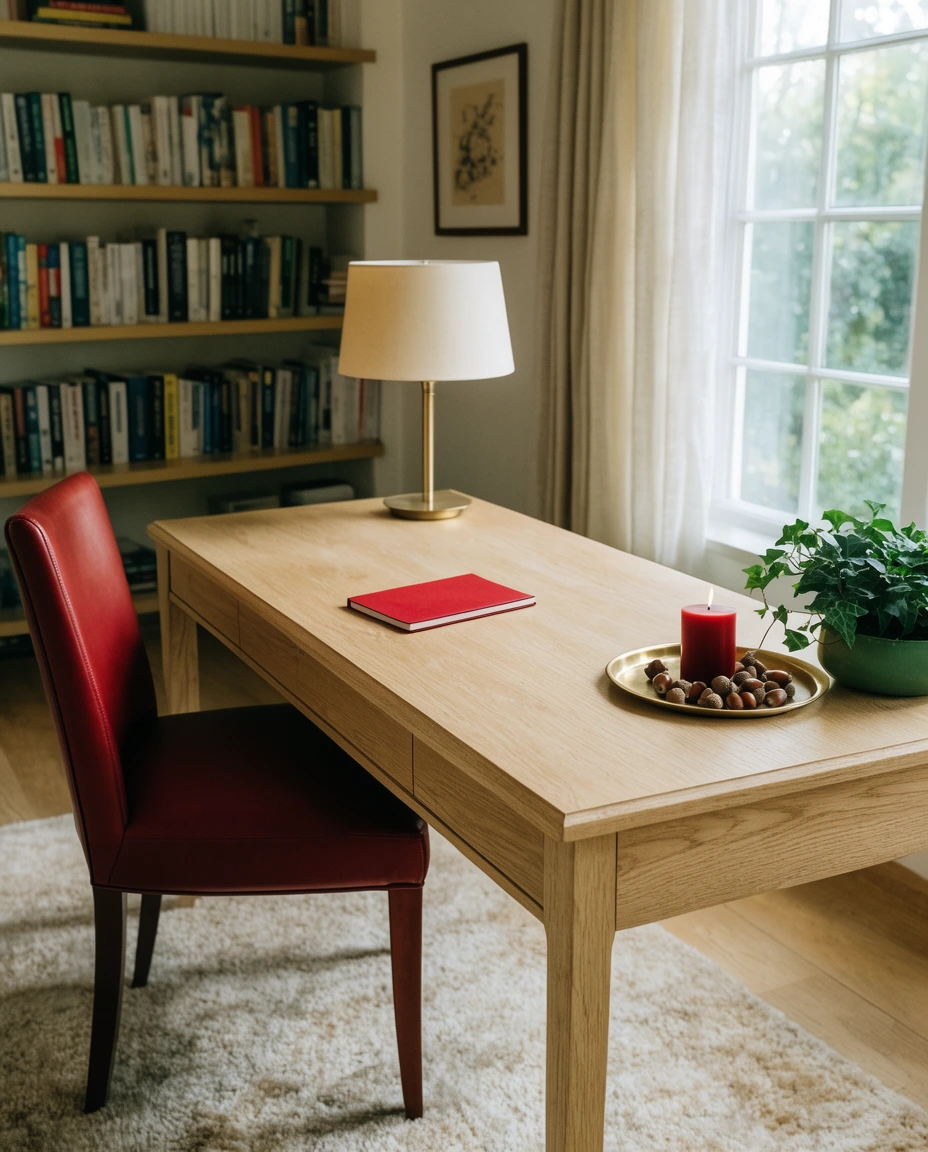
Most people style a desk on a Sunday and clear half of it by Wednesday, which tells you the arrangement was competing with the job. A tray fixes that, since it slides two inches left when the laptop needs room and comes right back afterward. Video calls are the other consideration — anything at the desk edge lands in frame around chin height, so the pieces worth showing belong on the shelf behind the chair where the camera actually sees them.
14. A Church Entry in Bronze
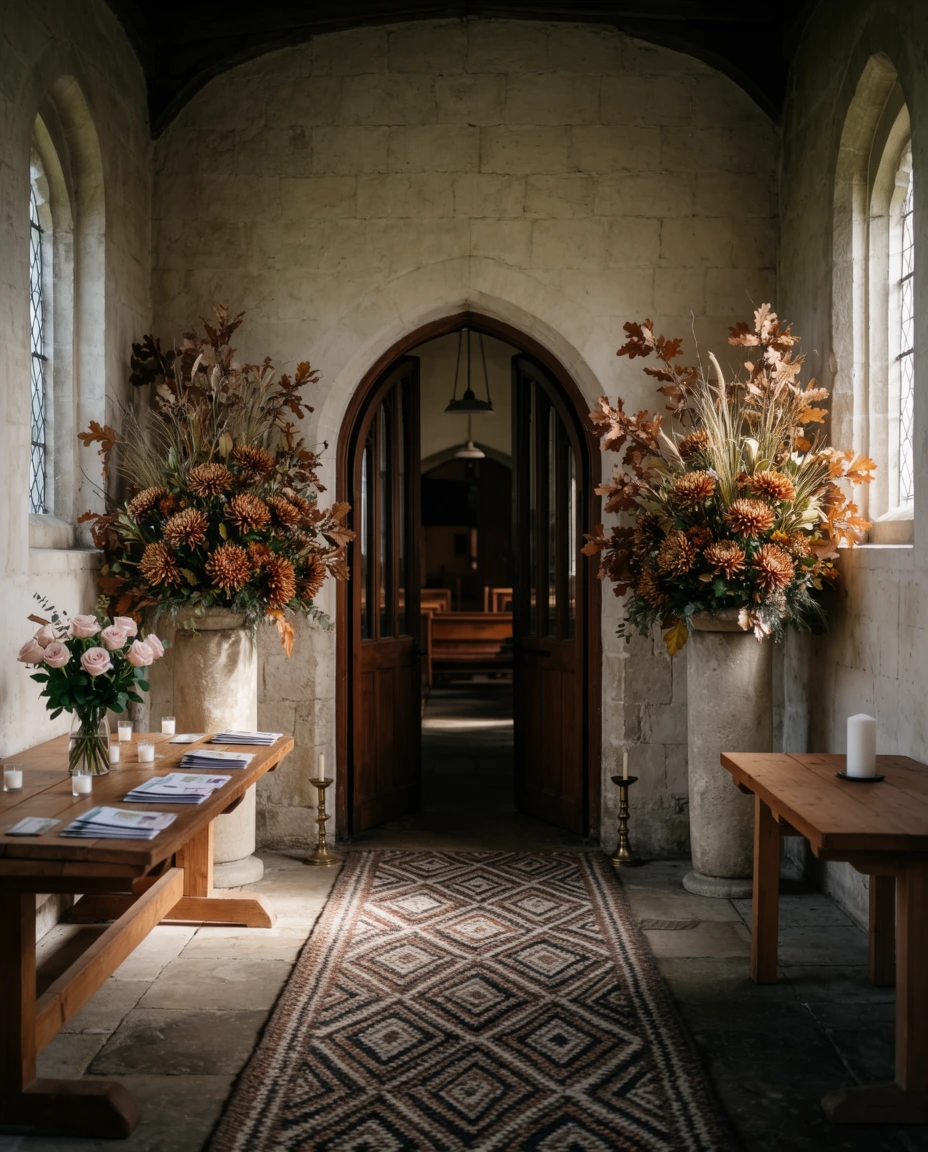
A church entry sees more foot traffic in one Sunday than most homes see in a month, so the arrangement has to be generous and immovable. Two large urns flanking the doors, filled with bronze mums, ornamental grasses, and branches of dried oak, handle the entire job on their own. Displays for church vestibules should read from the parking lot and again from three feet away, which means scale comes first and detail second. Sturdy decor beats delicate here every single week.

Congregations across the Midwest tend to build these arrangements as a group after the late service, and the urns often outlast the pastor who ordered them. In warmer states, real mums can hold four to six weeks in a shaded entry; north of the Ohio River a hard freeze takes them in a single night, so many parishes switch to preserved grasses and dried wheat after the first frost warning and get all the way to Advent on one display.
15. Classroom Gratitude Tree

A bare branch anchored in a bucket of plaster, hung with paper leaves that students write on, becomes the warmest thing in the room by the second week of the month. As crafts for a group go, it asks for almost nothing — one branch, a hole punch, a spool of twine. The classroom version grows all month, which is the whole appeal, and the tree looks fuller every single morning. It stays easy enough for kindergarten and still lands with sixth graders, who write longer answers than anyone expects.

A second-grade teacher in Ohio keeps every leaf from every year in a shoebox and reads a handful aloud on the last day before the break. One year a student wrote that he was thankful for the bus driver, and the driver was invited in to hear it read. The tree comes down in December, but the box never does, and by now it holds close to a thousand leaves from nine different classes.
16. Simple Centerpiece with Grocery Flowers
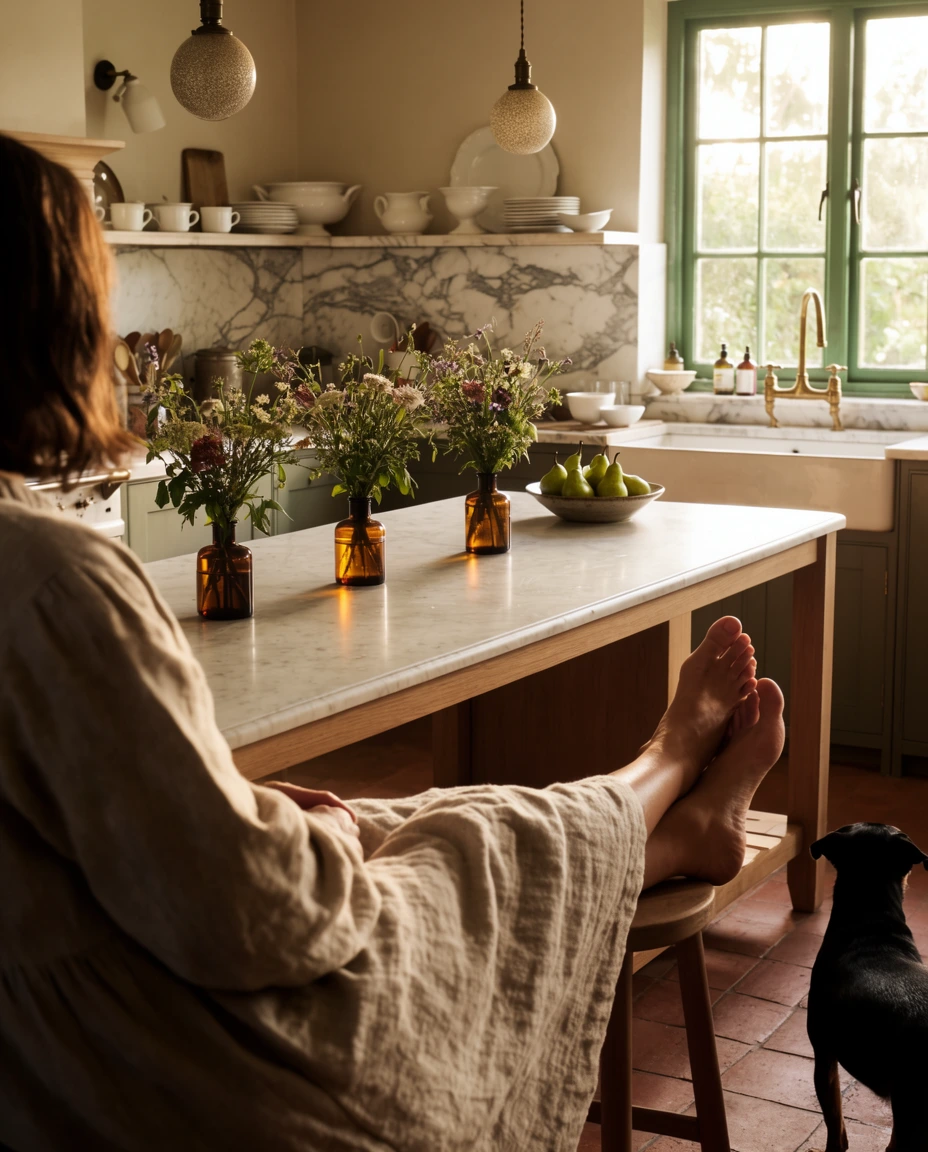
The best centerpiece of the season probably comes out of a supermarket bucket. Two bunches of alstroemeria, one of eucalyptus, a few stems of dried wheat, and one bouquet broken apart and rebuilt into three small vases beats a single tall arrangement every time. A simple trio spreads the color down the length of the runner instead of piling it in one spot. Settings for table lengths over six feet need that repetition, and anyone hosting at the last minute can put it together in ten minutes flat.

Eighteen dollars of grocery stems fills three vases, while a florist’s centerpiece of similar size starts closer to seventy. Strip every leaf below the waterline, cut the stems on a hard angle under running water, and the arrangement holds well past the weekend. Buy the flowers two days early and let them open in a cool room; anything that arrives fully open on Thursday morning will be dropping petals into the stuffing by the time dinner is served.
17. Outdoor Dining with String Lights
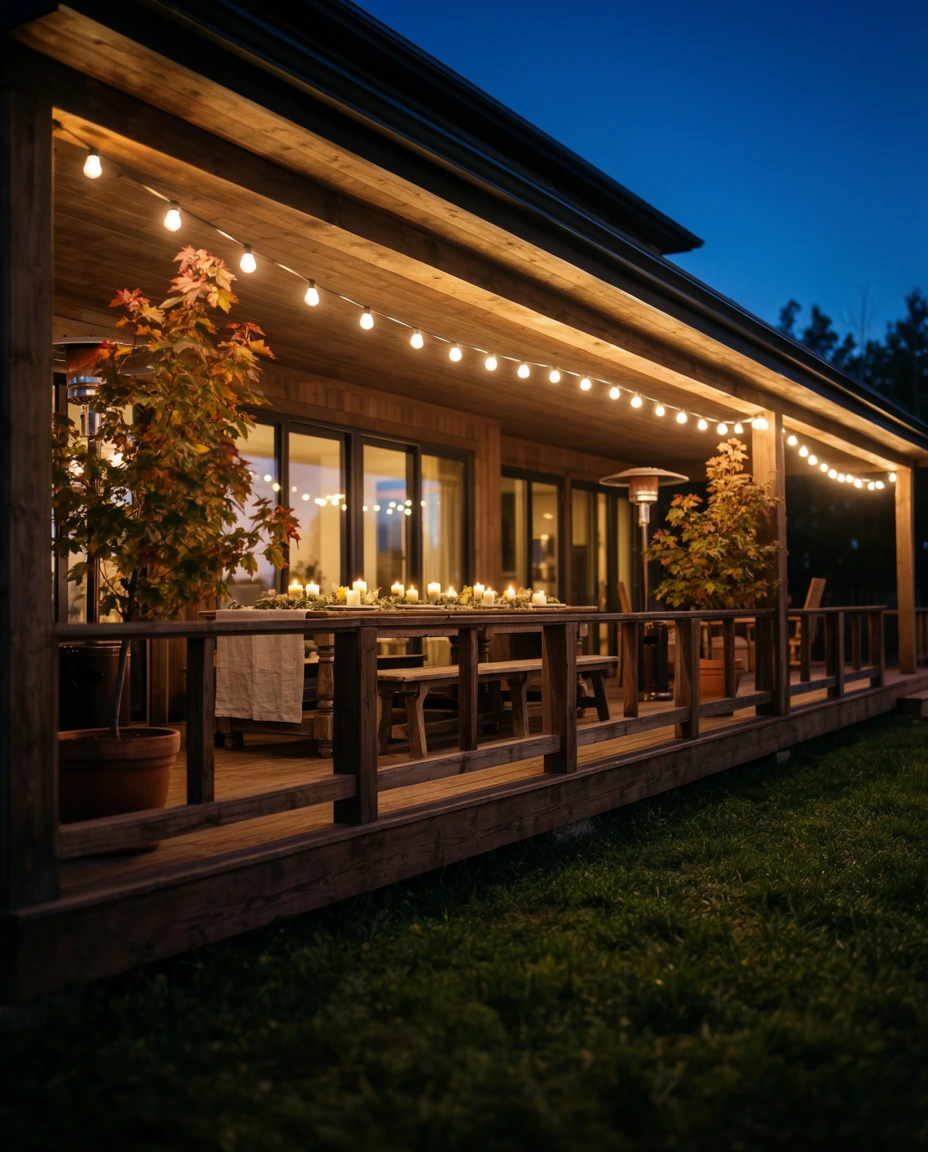
A long table set under strung bulbs is the one outdoor meal Americans will happily eat in fifty-degree weather. Run the strings straight across rather than swagged, high above the table, and add lanterns down the center for the light that actually reaches the plates. A wide front porch works just as well as a yard, and often better once the wind picks up. Fall parties gain an extra hour when there are heaters at the corners and a stack of blankets waiting on the bench.

Southern California, Texas, and the Carolinas can run this setup deep into December without much planning. Farther north, the trick is a covered pergola with a propane heater at each end, which buys roughly fifteen degrees and turns a marginal evening into a comfortable one. Warm white bulbs around twenty-two hundred kelvin flatter both skin and food; the cool blue-white sets look fine on a job site and genuinely terrible over a turkey.
18. Living Room Corner for Gathering

Every living room has one corner that collects people before dinner, usually the one nearest the drinks. Give it a small round side table, two chairs angled toward each other, a lamp on a dimmer, and a bowl of spiced nuts, and the pre-meal hour stops happening in the kitchen doorway. Ideas for living room corners like this pay off all winter, not just on one Thursday. It is the indoor answer to a porch swing — the sort of change for the home people notice without knowing why.
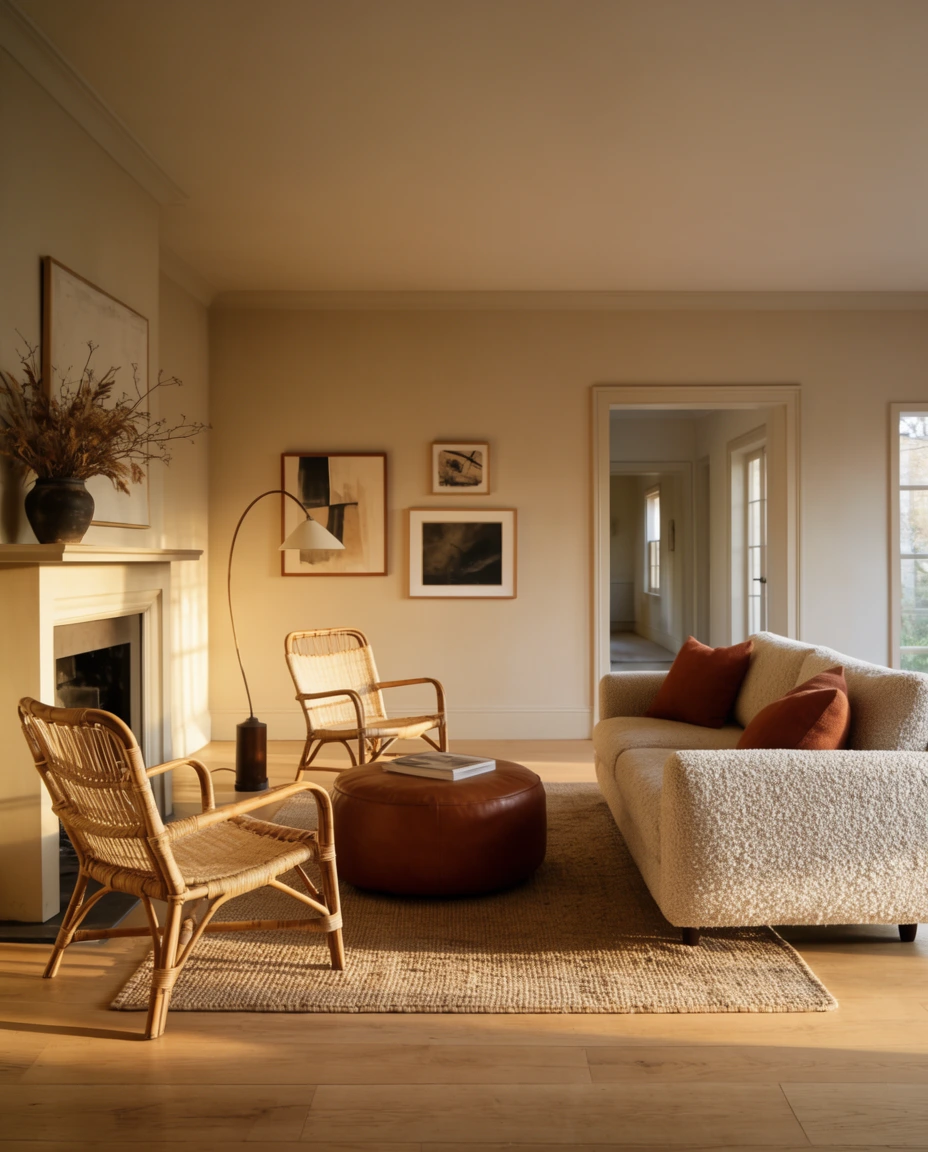
Designers talk about a conversation distance of roughly eight feet, measured between the front edges of two seats — any closer and it feels like an interview, any farther and people start raising their voices. Angling the chairs at about forty-five degrees instead of squaring them off does the rest, since nobody has to turn their whole body to talk. A lamp at seated eye level and a rug that catches at least the front legs finishes the corner.
19. Cornhusk and Linen Napkin Rings

Dried cornhusks soften in warm water in about ten minutes, then braid into rings that dry stiff overnight and last for years. Slide a heavy linen napkin through one and the place setting suddenly looks like it came from a Vermont inn. The DIY version costs almost nothing, and a single bag of husks from the grocery aisle makes twenty of them. Add a dollar tree roll of jute and a sprig of thyme for the finish. Few crafts for the holiday table look this expensive.

Braid the husks wet and tie them around a jar or a can of soup while they dry, which sets the diameter perfectly and keeps every ring the same size. Left flat on a towel, they warp by morning. Once dry, a light coat of matte sealer stops them splitting in dry winter air, and they stack in a tin with the linens until next November. Wash the napkins separately, since husks will stain damp fabric.
20. Sideboard Styled for Buffet Parties

A buffet lives or dies on traffic flow, and the sideboard is where the two halves of the evening meet. Plates at the near end, mains through the middle, sauces and bread at the far side, then drinks somewhere else entirely so nobody backs up. Parties this size need the decor pushed to the wall — a pair of tall tapers, a mirror, a low run of greenery along the back edge. Hosting goes smoothly when the beautiful part never blocks the useful part.

Guests reliably form a single line and then stall at whichever dish takes longest to serve, which is almost always the one with a small spoon. Doubling the serving utensils on the mashed potatoes and the stuffing moves that line twice as fast. Experienced hosts also empty the sideboard’s top drawer before the meal, since it inevitably becomes the landing spot for corks, keys, and everything else people hand over on their way past.
21. Thanksgiving into Christmas Without Whiplash

The last weekend of November is a hard pivot in most houses, and the smart move is building the fall look out of pieces that simply stay put. Brass, cream linen, dried wheat, and pale wood all carry straight into Christmas without a single swap. For 2026 the overlap is the whole idea — one base palette, two sets of accents. Choosing pieces for the home that work in both seasons cuts the number of boxes in the attic roughly in half.

The rule stylists work by is that only about twenty percent of a room should change between seasons, and it should be the small, cheap, replaceable twenty percent. Swap the ochre gourds for white ceramic trees, trade rust ribbon for forest green, and leave everything else exactly where it stands. The bones of the room stay put, which is why the December photos never look like a different house from the November ones.
22. Entryway Console in Deep Plum

Just inside the front door, a narrow console is the first surface anyone sees, and plum is the color that makes it stop feeling like a drop zone. A deep aubergine runner, a vintage mirror with a softly clouded surface, a lamp with a pleated shade, and one low bowl of purple figs and dried lavender. The palette reads unique enough to feel considered without tipping into costume — no orange, no cartoon leaves, nothing that has to come down on the first of December.

A reader in Charleston painted the back wall of her entry a near-black plum on a whim one October and reported that guests started taking their coats off more slowly, as though the room had asked them to stay a minute. She kept the console, the mirror, and the lamp exactly as they were and changed nothing else at all. Two years later the wall is still that color, and the figs get swapped for clementines in January.
Every one of these started as somebody’s small experiment before it became a look worth copying, which is exactly how the good ones spread. Tell us in the comments which idea you are trying this year, and share the trick that has saved your own Thanksgiving table more than once.