

Fall arrives on Pinterest weeks before it arrives outside. By late August, Americans are already saving photos of amber lamplight, wool throws over the arm of a sofa, and pumpkins on a painted porch step — partly to plan, partly because those images simply feel good to look at. The 21 ideas below move through the whole house, from a kitchen island lit by two tapers to a bedroom corner built for reading, with notes on what holds up through a real season and what quietly gets packed away by November. Every one of them is meant to be copied.
1. Layered Neutrals for Fall Mornings

Oatmeal, bone, clay, and a soft grey-brown do most of the work here. Start with a neutral base in the living room — a chunky wool throw over the sofa arm, a stack of linen pillows in slightly different weaves — then let texture carry the season instead of color. Morning light does the rest, warming pale surfaces into something honey-toned by nine o’clock. It’s the quietest way to bring cozy fall decorations into a space you already like.

The trick is contrast in texture rather than tone. Pair a nubby boucle with smooth cotton and one rough basket weave, and the eye reads depth even when everything sits within two shades of the same color. Keep at least one surface bare — a wooden coffee table, a plaster wall — so the softness has something to push against. Wash new throws before they go out; stiff linen never drapes the way it does in photographs until it has been through water once.
2. Moody Kitchen Shelves in Amber

Deep shelves painted a bruised green or near-black turn a kitchen into something closer to a wine bar after sundown. The moody version of fall styling works best where evenings already happen — amber glass, smoked tumblers, a row of brass measuring cups catching the undercabinet light. Most kitchen ideas for autumn lean toward gourds on the counter; this one goes the other direction and lets color and shadow carry the season instead.

Midwestern and Northeastern kitchens tend to have the smaller windows that make this work — less daylight to fight, more reason to build in warm artificial light. In sunnier parts of the country the same palette can feel heavy by noon, so it helps to keep the darkest paint on a single run of shelving rather than wrapping the whole room. A dimmer on the undercabinet strip is what makes the space read as evening rather than merely dark.
3. Rustic Living Room Glow
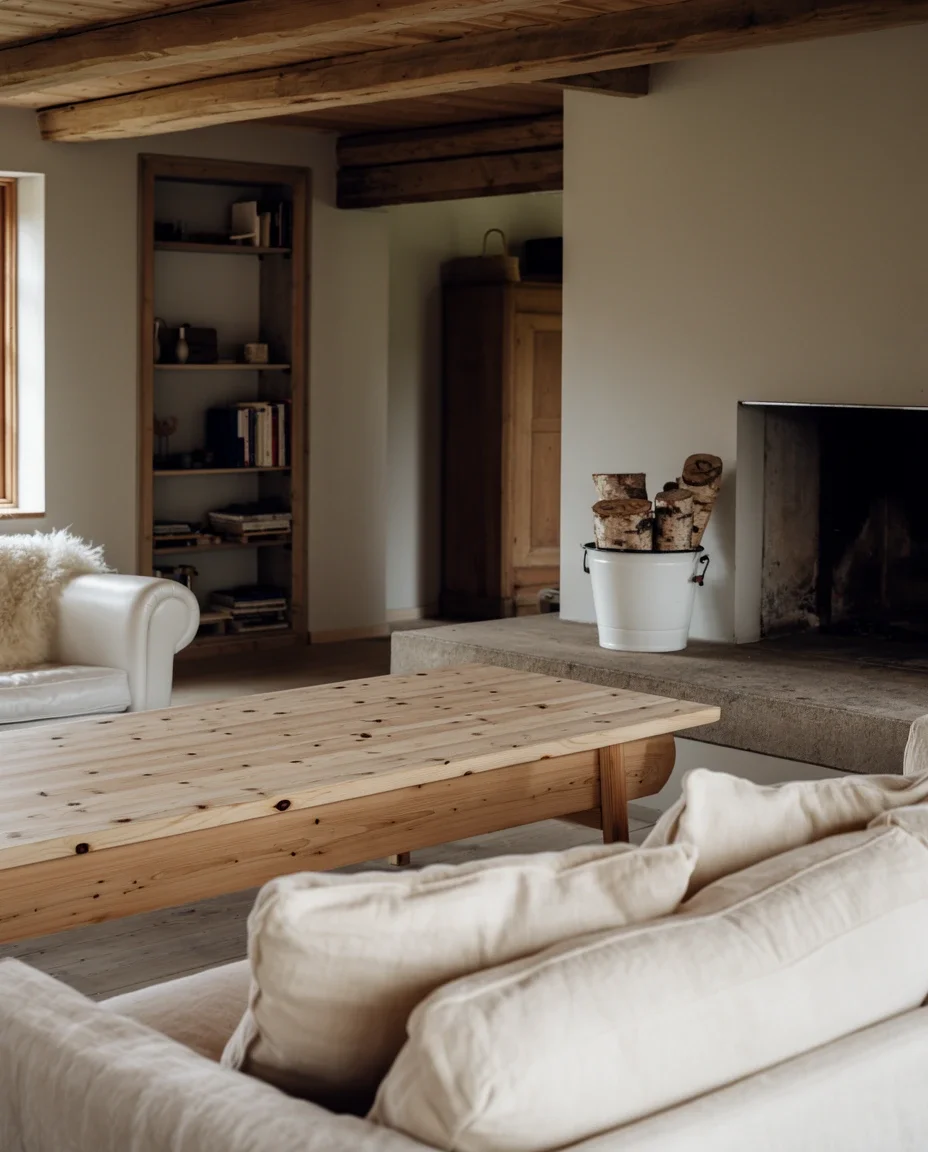
Exposed beams, a stone hearth, a sheepskin gone soft with use — the living room rustic look has stayed popular for a decade because it flatters low light. Pull the seating in toward the fireplace until conversation feels close, then bring wood tones in at three heights: a low bench, a mid-height side table, a taller shelf. Save the inspo images that show pine and oak together rather than everything matching; the mismatch is what keeps it from reading like a showroom.

A friend in western Vermont keeps an enamel bucket by her hearth for kindling, and it does more for her room than anything she bought on purpose — there’s something about a container that clearly gets used. That’s the thread worth copying: one honest, functional object in the middle of all the styling. Fill it with birch logs, roll a wool blanket into the basket beside it, and the corner starts to look lived in rather than arranged.
4. Harvest Table Without the Fuss

A kitchen table set for October needs no runner, charger, or place card. The simple version — linen napkins in a rust tone, three squat candles, a shallow bowl of hazelnuts still in their shells — reads more generous than anything fully coordinated, and it clears in about a minute when homework shows up. Of all the ideas for the home that survive a real week, the ones you can push aside with one hand tend to last longest.

This suits a table that lives in the middle of everything — an eat-in kitchen, a dining nook that doubles as a desk, a small place where one surface handles dinner and paperwork both. Anchor the arrangement slightly off-center so there’s clear space for plates, and keep the tallest element below eye level so people can talk across it. Low, wide, and a little asymmetrical is the shape to aim for, and it never has to be dismantled.
5. Vintage Copper on Open Shelving

Copper pans, a small kettle, a saucepan someone’s grandmother cooked with for thirty years — vintage metal warms a room the way nothing new quite manages. Hanging a single open shelf is the easiest kitchen diy of the season: one length of oak, two iron brackets, an afternoon. The aesthetic works because copper picks up whatever light is in the room and hands it back amber, which is exactly what a gray November kitchen is short on.

Kitchen designers usually argue for keeping open shelving to one run rather than clearing every upper cabinet, and the reasoning holds here — a single shelf of copper reads as a collection, three walls of it reads as storage you now have to dust. Group by height and let the tallest piece sit at one end instead of the center. Lemon and salt bring back the shine, though plenty of cooks prefer the softer tone that arrives on its own.
6. Pumpkin Styling for Small Apartments

Three pumpkins in the right places beat a dozen crowded onto a console. In a small apartment, the best ideas use height instead of quantity — one white pumpkin on a stack of books, one squat green on the floor beside a plant pot, one tiny gourd on a shelf in the hall. The minimal approach also settles the storage question in November, when the entire display fits into a single paper bag.

Grocery store pumpkins run two to six dollars apiece and last most of the season if they stay away from direct heat. The craft-store foam ones are worth waiting on until late October, when the heirloom shapes — flat, ribbed, pale — go half price, and those are the ones that look expensive. A saucer underneath any real pumpkin keeps moisture off a wood surface, which is the whole difference between a decoration and a repair.
7. The Cozy Bedroom Corner
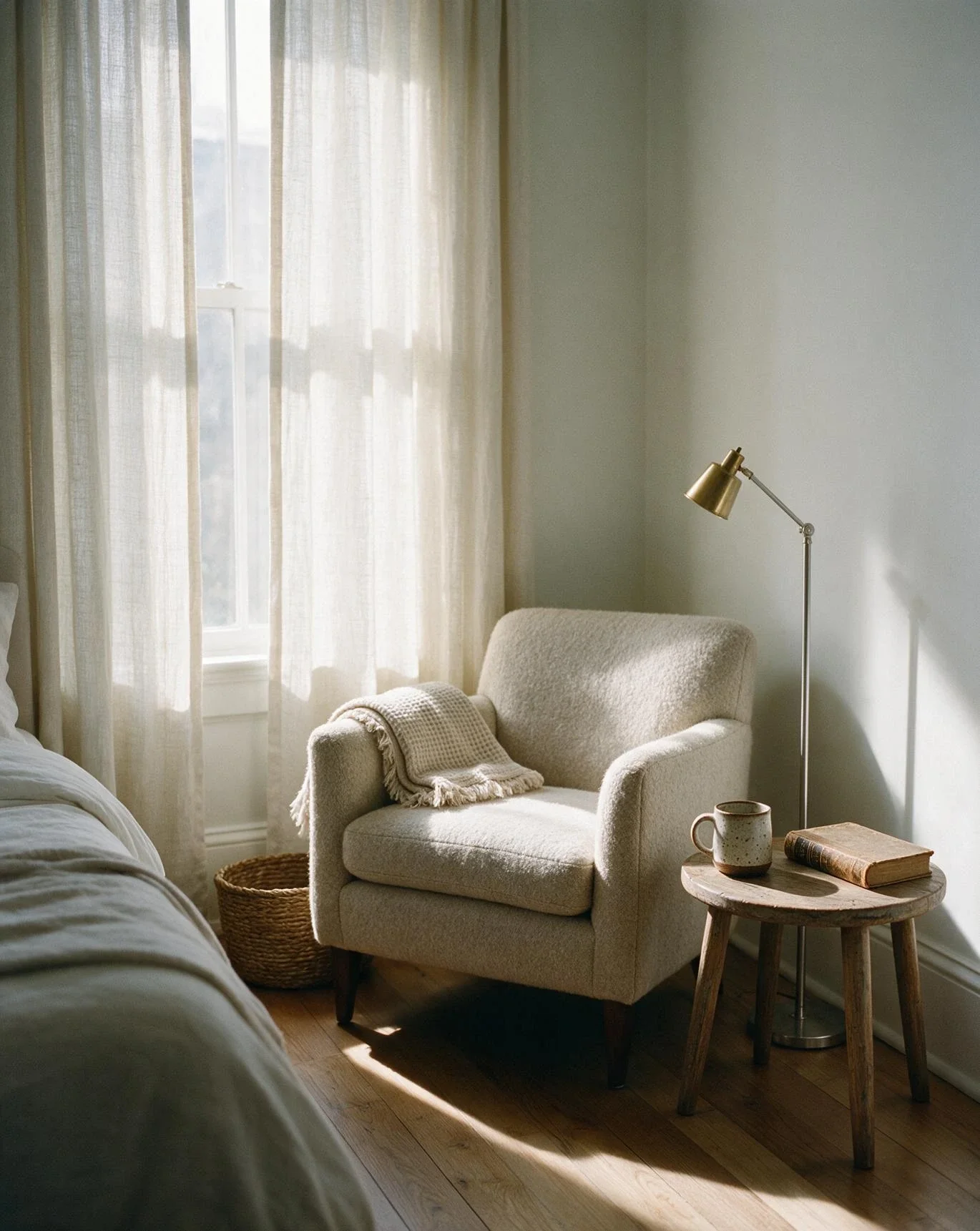
Every bedroom has a corner doing nothing — the space beside the window, the gap past the dresser. Fill it with a low armchair, a small table barely wide enough for a mug, and a floor lamp turned toward the wall so the light bounces instead of glaring. There’s endless inspiration out there for elaborate reading nooks with built-in shelving; the version that actually gets used is usually three pieces of furniture and a blanket within reach.

Watch what happens to these corners once the weather turns: the chair collects a book, then a second book, then the cardigan that never makes it back to the closet, and somehow it looks better for it. Leave room for that drift rather than styling the seat so precisely that sitting down feels like an interruption. One basket at the foot of the chair absorbs the overflow and keeps the whole thing looking intentional through February.
8. Woven Baskets and Wool Throws

Baskets solve two problems at once, which is why they turn up in nearly every set of living room ideas as soon as the nights get long. Put a deep seagrass one beside the sofa for throws and a shallower rattan tray on the ottoman for remotes and reading glasses, and the room looks calmer without a single thing being thrown away. Mix the weaves — tight and open, pale straw and dark rattan — so the grouping reads collected.

The usual misstep is buying baskets that match the sofa exactly, which flattens the arrangement into beige wallpaper; one shade darker or a visibly different fiber, and the texture starts to register. Size matters just as much, since a basket too small for a folded quilt stays empty and an oversized one swallows everything into a heap. Measure the throw folded in thirds before ordering and it will look full without looking stuffed.
9. Dried Florals in the Bathroom

A bathroom is the last room anyone thinks to style for fall and the easiest one to change. Dried hydrangea, wheat, and a few stems of eucalyptus in a squat ceramic vessel handle humidity far better than fresh flowers, and after the first year they cost nothing, since you can cut and hang them yourself — a diy that takes ten minutes and a rubber band. Set the arrangement on the counter’s dry side, near the mirror.

Dried stems lose color in direct sun, so a north-facing window or a spot a few feet back from the glass buys you a couple of seasons instead of a couple of months. Steam is fine; standing water is not, so leave the vessel dry. When the bunch starts looking dusty, a hairdryer on its cool setting from about a foot away clears it without shattering the seed heads, which is more forgiving than it sounds.
10. Modern Fall Without the Orange
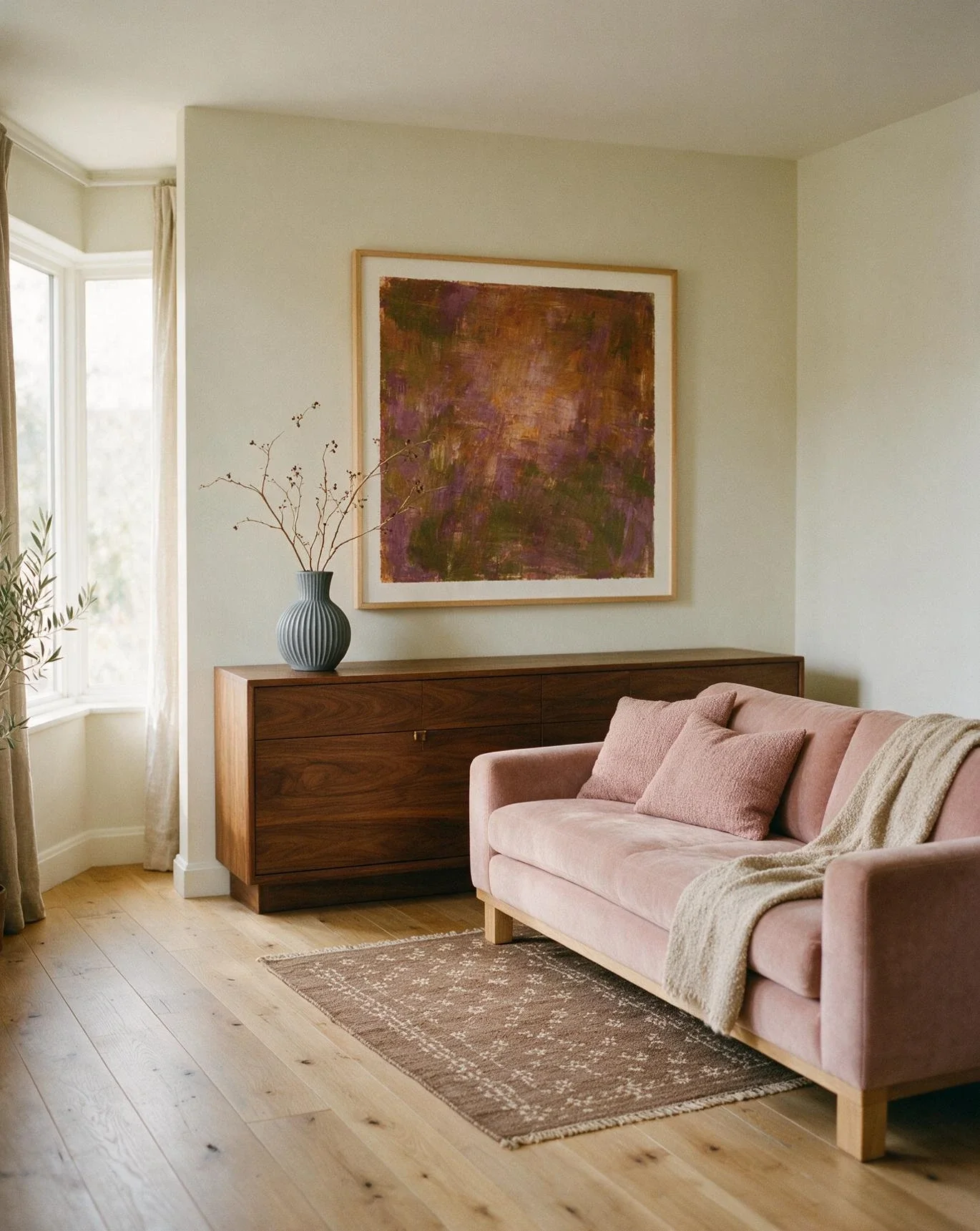
Autumn styling has drifted away from pumpkin orange, and the modern palette for 2026 leans on plum, olive, cocoa, and a dusty rose that reads warm without shouting. The look suits clean-lined furniture that would fight a country-harvest theme — a low walnut credenza, a single ribbed vase, a rust-toned print swapped in where the summer one hung. Nothing about it says holiday, which means it can stay up from September through the new year.

In California and the Southwest, where September still hits ninety degrees, this is the palette that works — deeper color and texture read as seasonal without the wool-blanket cues that feel absurd in warm weather. Swap linen for a heavier cotton, add a terracotta or oxblood accent, and let the shift happen entirely in the accessories. Plenty of homeowners in those climates change one wall of art and call the season handled, which is honestly enough.
11. Candlelight Over the Kitchen Island
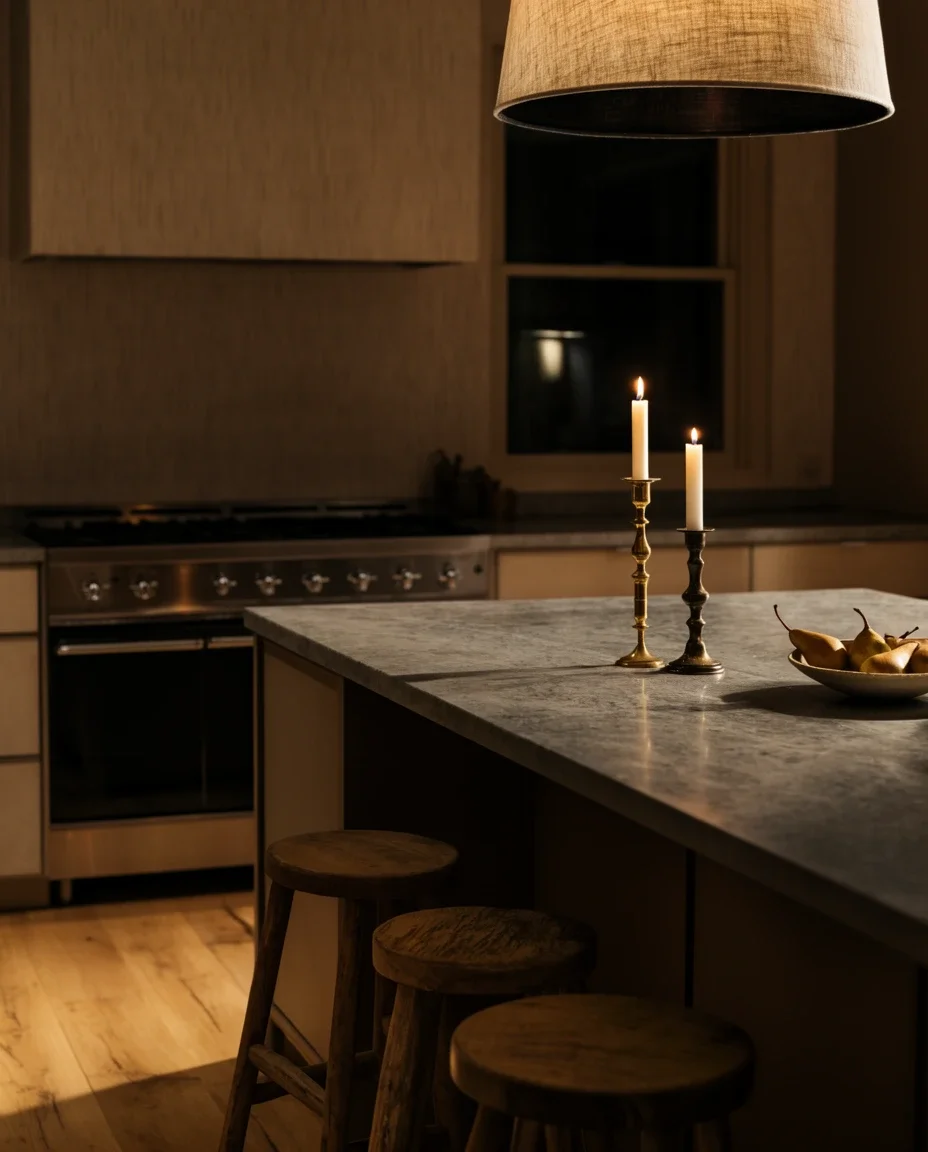
Two candlesticks and a bowl of pears turn a kitchen island into the warmest surface in the house after dinner. Among the ideas for the island that hold up daily, this one wins because it claims a third of the counter and leaves the rest for actual cooking. Use tapers in mismatched brass holders rather than a matching pair, and set them toward the seating end so nothing sits between the sink and the stove.
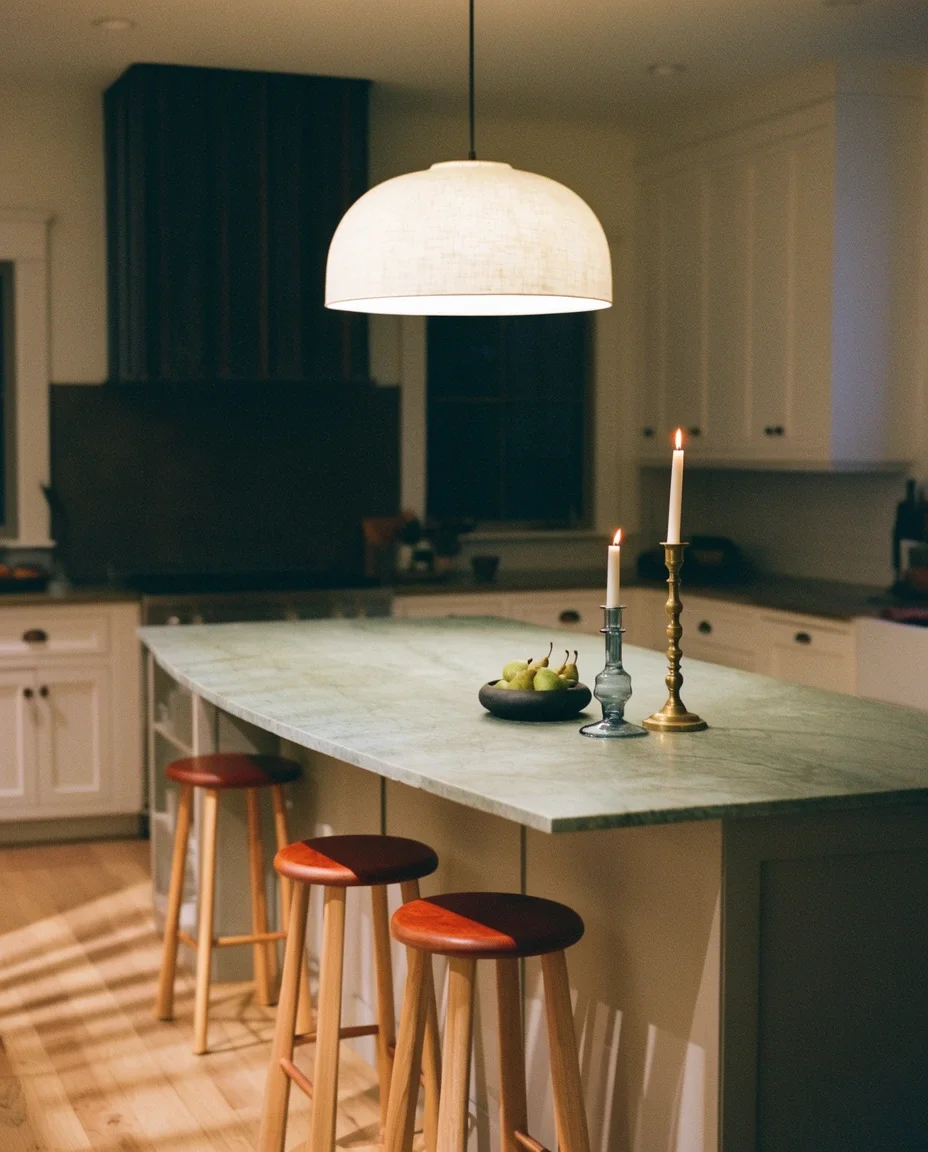
My neighbor lights hers while she’s still loading the dishwasher, which struck me as an odd habit until I tried it — the room goes from cleanup to evening in about four seconds. Beeswax tapers burn slower and drip less than paraffin, worth the extra couple of dollars if they get lit nightly. Keep them clear of the pendant’s line so the flames sit well below it, and the whole island reads soft from the doorway.
12. Simple Mantel Styling with Gourds
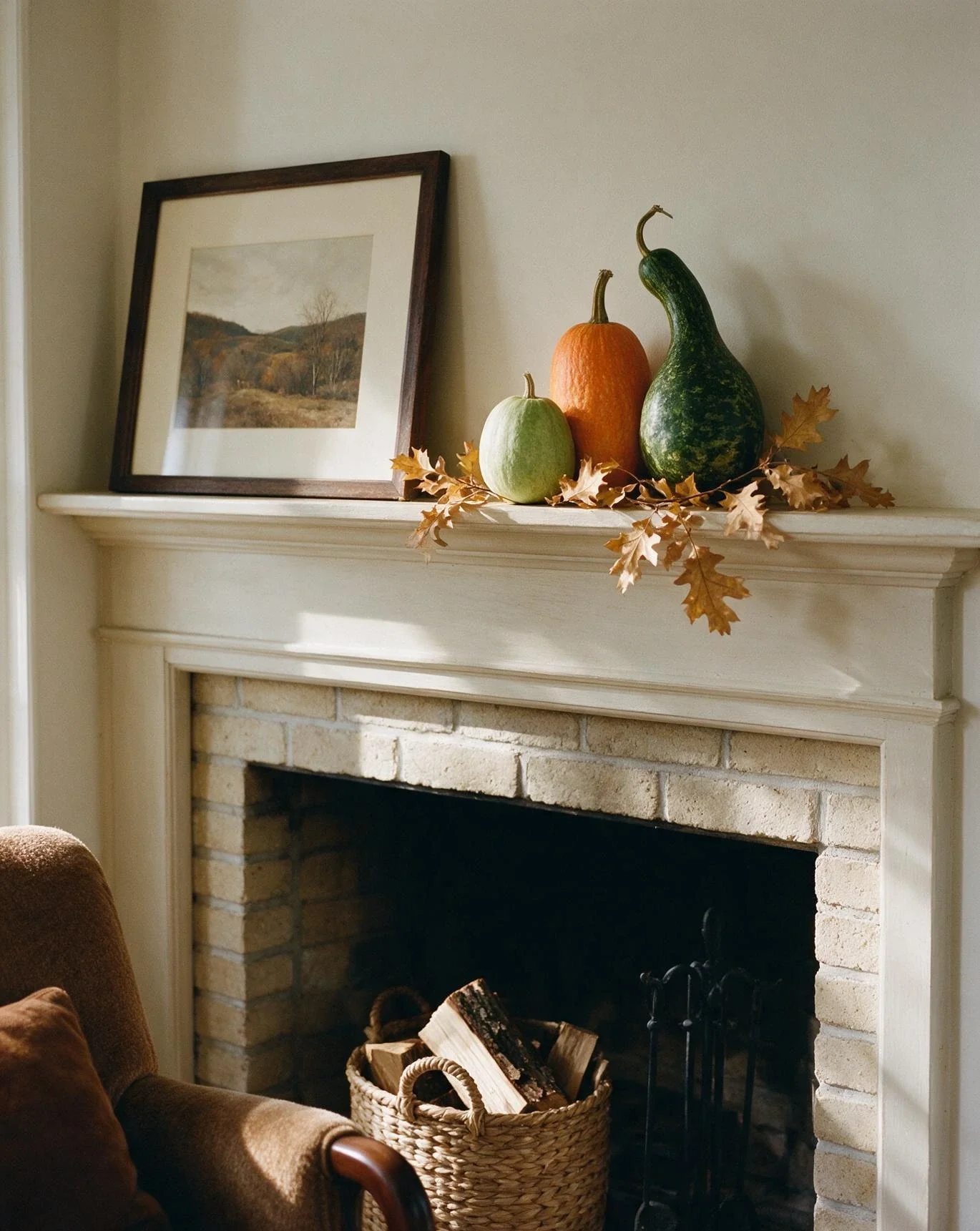
A mantel wants one strong line and a couple of interruptions, nothing more. The simple formula: a leaning mirror or framed print off to one side, three gourds of different heights clustered near the opposite end, one trailing stem of dried oak leaves to break the horizontal. That’s the entire aesthetic — asymmetry, a little repetition, and enough bare stone or painted wood left visible for the eye to rest somewhere.
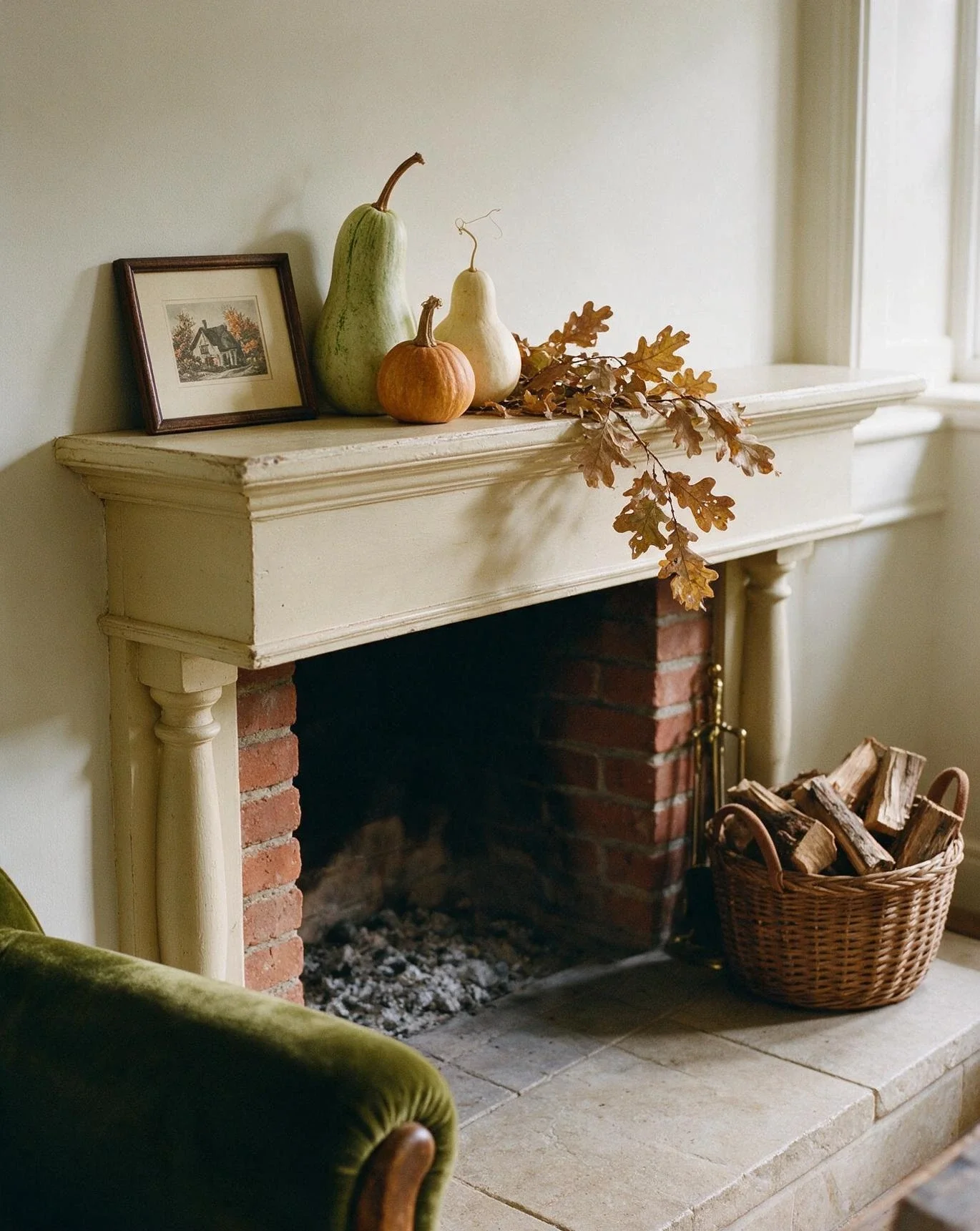
Narrow mantels under eight inches deep suit this better than a deep shelf, since crowding is the only real risk; anything you can’t see past starts to feel like clutter above a fire. Rentals with a decorative, non-working fireplace get the most out of it, because that shelf ends up carrying the whole seasonal story for the room. Keep dried material at the end farthest from the firebox and it can stay put through Thanksgiving.
13. A Front Porch in October
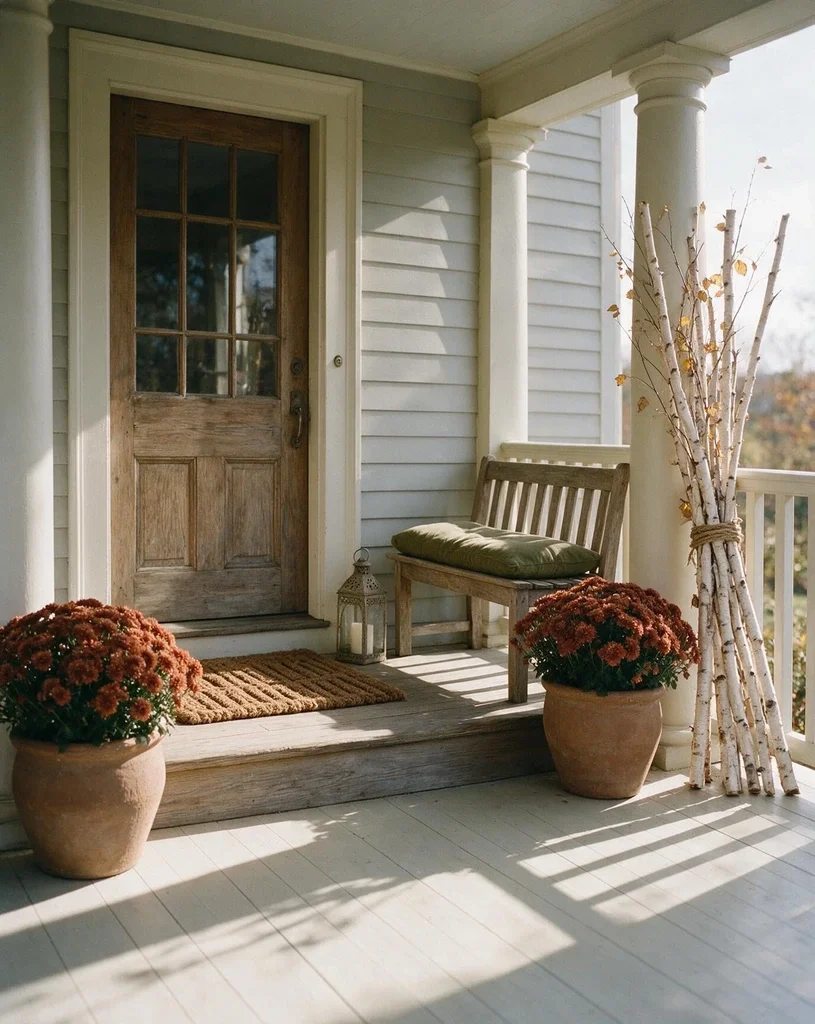
A porch is the one place where seasonal styling gets seen by everybody. Two mums in terracotta on either side of the steps, a doormat with some weight to it, a bench with an outdoor cushion in rust or olive, a lantern on the floor beside it — that’s plenty. The cozy fall decorations that survive weather are made of clay, iron, and wood, so keep anything paper or fabric under the roofline where rain can’t reach.
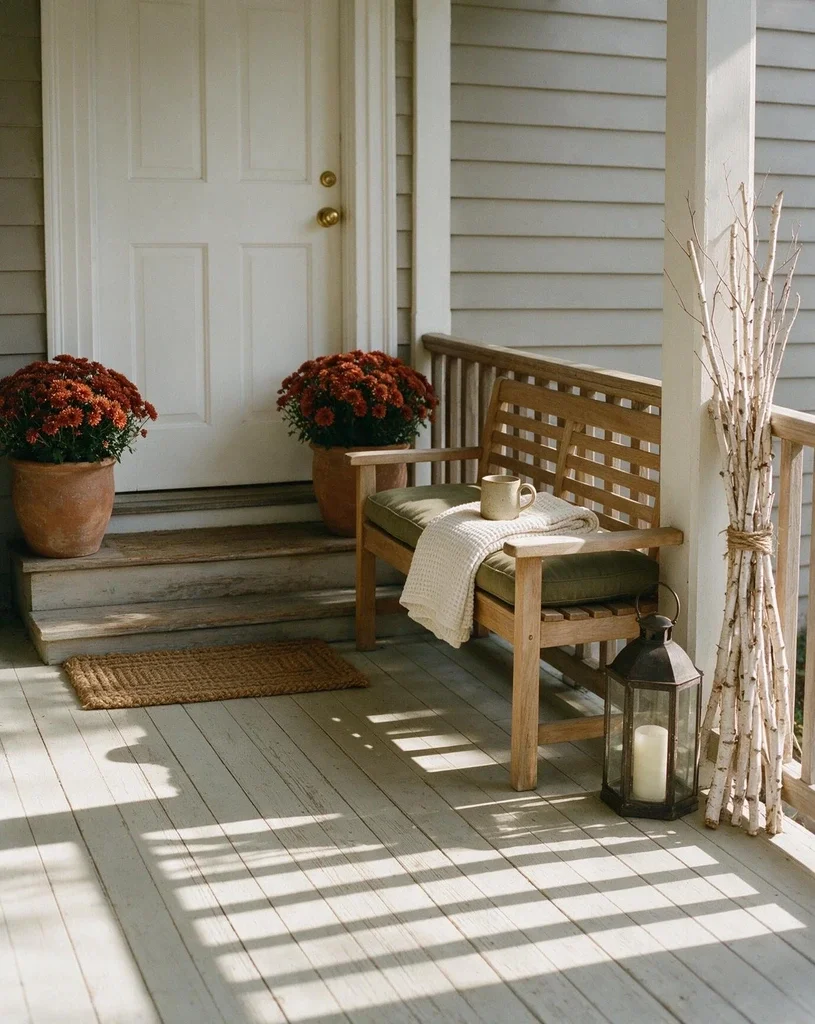
Landscape designers talk about odd numbers and staggered heights for a reason: three containers of different sizes on one side of a door look more natural than a mirrored pair, especially on a porch that isn’t symmetrical to begin with. Group the tallest nearest the wall so the arrangement keeps the walking path open. Cornstalks tied to a post are a Midwestern classic, and a bundle of birch branches does the same job in less space.
14. Layering Rugs and Grounding Color

Layering a small patterned rug over a large jute one is the fastest way to warm a floor without committing to color underfoot everywhere. Keep the base neutral — jute, sisal, a flat wool in oatmeal — and let the top layer carry the design. Even a minimal room can take a rose-and-olive kilim if everything else stays quiet, and it suits a modern space better than one busy rug because the plain border gives the pattern air.

Two rugs sound like double the expense, and they are, but a four-by-six patterned rug costs a fraction of an eight-by-ten, and jute in most sizes runs well under two hundred dollars. Rug pads earn their keep here — without one, the top layer walks across the room by December. Setting the smaller rug at an angle only works if the furniture supports it; otherwise square and centered looks far more deliberate.
15. Plaid Blankets for Chilly Nights
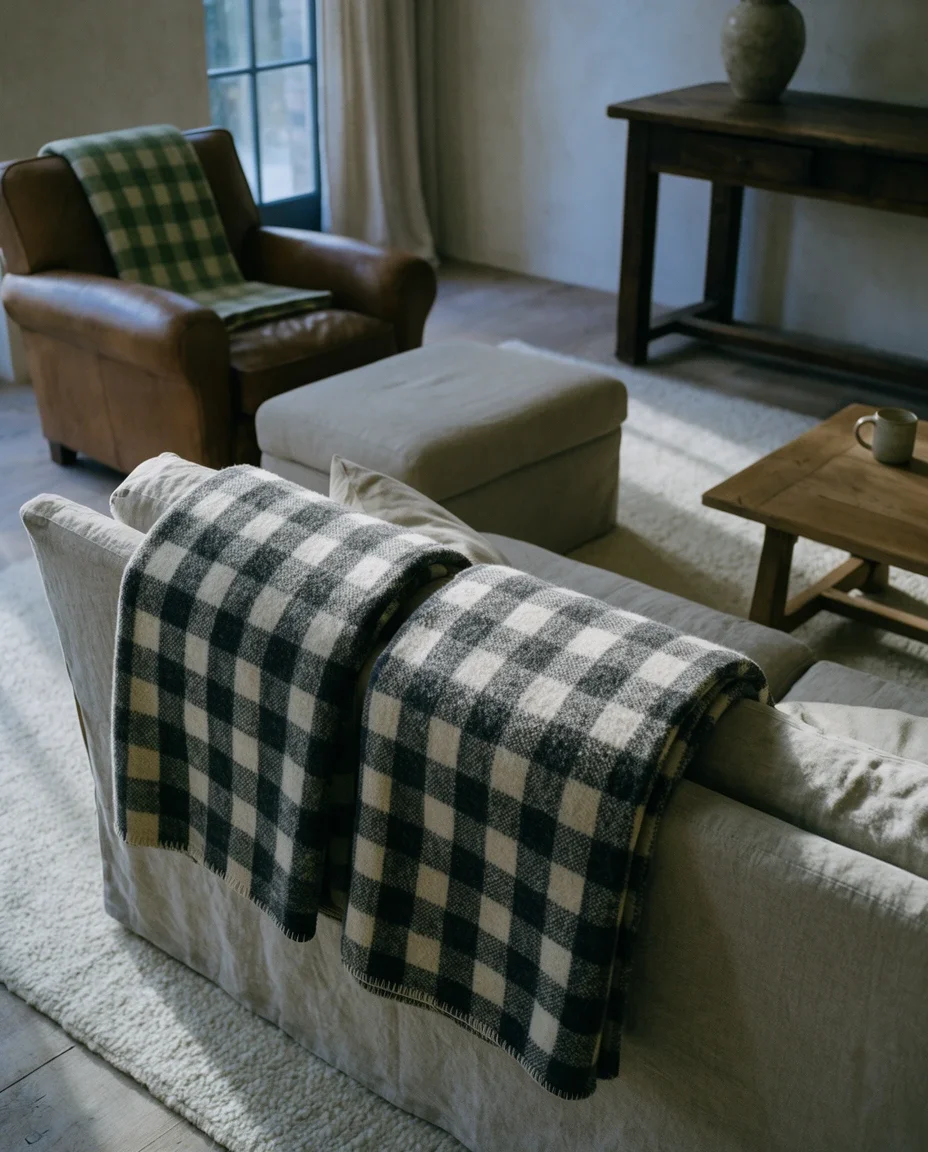
Plaid earns its reputation the moment the temperature drops, and it’s one of those living room ideas that costs almost nothing to test. A single blanket, folded in thirds over the back of a chair or draped along the arm of the sofa, is usually enough to tip the whole room toward autumn. Choose a muted check — charcoal and cream, soft green and rust — rather than a bright tartan, and it holds through January.
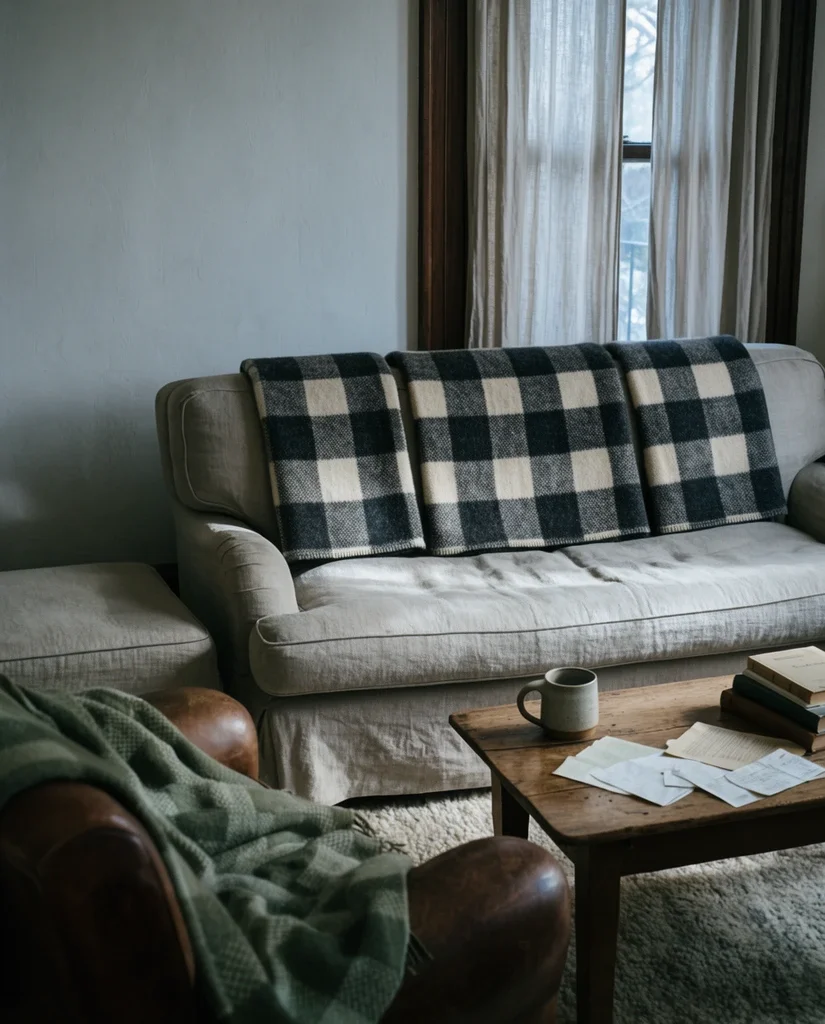
Blankets get used, which means they end up in a heap by Tuesday, and the households that stay tidy about it are the ones that gave the blankets a home — an ottoman that opens, a ladder rack by the door, a bench at the end of the sofa. Buy two in the same weave and different colorways so one can be in the wash without the room looking bare. Wool wears best; brushed cotton is the gentler compromise.
16. DIY Twig Wreath in Minutes

A wreath made from garden prunings costs nothing and looks better than most store-bought versions. Bend three or four long, flexible branches — dogwood, willow, grapevine — into a loose ring, tie the joins with jute twine, then tuck in a few dried seed heads and a sprig of bittersweet. This is the kind of diy that rewards imprecision, and among fall ideas it’s the one most likely to actually get made on a Saturday.

The one thing that goes wrong is working with branches that have already dried out — they snap instead of bending, and the ring never holds its shape. Cut them the same day if you can, or soak them in the tub for an hour first. Hang the finished wreath on a door that misses the full afternoon sun, since a south-facing entry drains the color by Halloween. A ribbon looped over the door top holds it without hardware.
17. Warm Wood and Soft Linen

Raw oak, waxed walnut, and washed linen together make a bedroom feel warmer than any color change could. The aesthetic depends on finish more than tone: matte wood beside slightly rumpled bedding, a woven shade instead of a hard blind, one ceramic lamp base with a visible glaze. Add a folded quilt across the foot of the bed for weight, and the space starts to read insulated — which is the feeling people are chasing by mid-October.

Linen softens with every wash, so a set that feels stiff out of the package is usually three or four cycles from perfect; skip fabric softener, which coats the fibers and slows that down. Stonewashed weights around 165 grams keep their drape without feeling heavy. When the wood tones in a room don’t quite agree, matching the sheen rather than the color pulls them together — two matte finishes read as a pair even when one runs red and one runs dark.
18. Spice-Toned Pillows in the Den

Swapping four pillow covers changes a living room faster than paint, and the spice range — paprika, saffron, clove, dried cranberry — does most of the heavy lifting for fall. The moody version pairs those tones with a dark sofa and a bronze lamp so the color glows instead of popping. Keep the shapes varied: two twenty-inch squares, one lumbar, one small velvet cushion, all in covers that store flat in a drawer come winter.

Southern rooms with tall windows and hours of daylight can take the deepest of these tones without closing in; in the Pacific Northwest, where the light stays flat and gray for months, the same colors need a warm lamp nearby to keep from going muddy. Velvet reads richest in low light, cotton in bright. Buying covers rather than whole pillows also keeps a closet shelf from filling with inserts that only earn their space twice a year.
19. Brass Lamps for Dim Corners

Brass at the edges of a room is what makes an evening feel deliberate. A vintage table lamp with a linen shade, a slim floor lamp beside a chair, a small picture light over a framed print — three low sources at different heights beat one overhead fixture every time. Most of the inspiration worth saving shows lamps at seated eye level or below, the height that flatters faces and throws the long shadows that give a space depth.

Lighting designers call this layering, and the practical version is straightforward: aim for at least three separate switchable sources in any room used after dark, all on warm bulbs somewhere between 2200 and 2700 kelvin. Mixing color temperatures is what makes a space feel institutional. Unlacquered brass darkens over a few years into something softer, and most people who buy it once end up preferring the older finish to the bright new one.
20. Terracotta Pots for the Entry
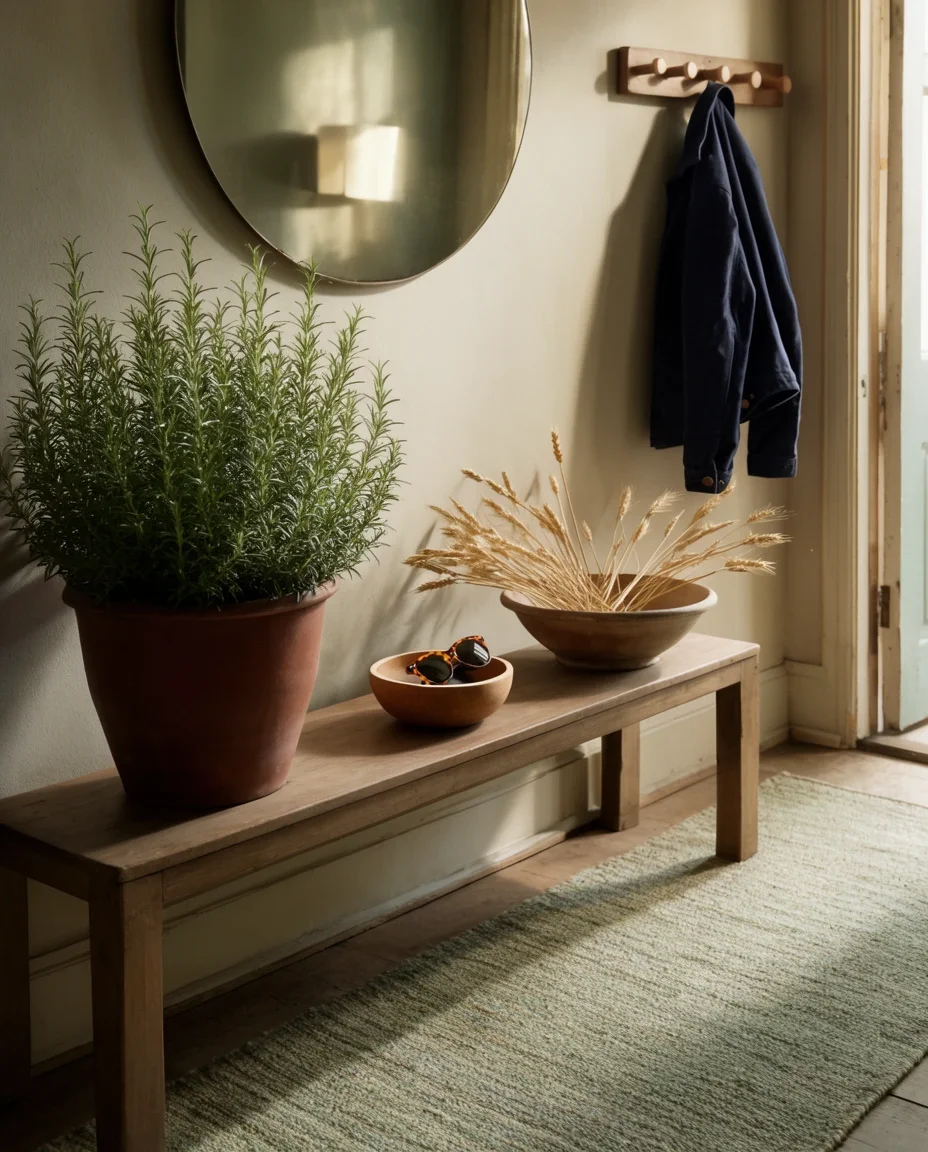
An entry sets the temperature for everything behind it. A pair of terracotta pots — one holding a small olive or rosemary, one filled with dried wheat — beside a console does more than a wreath ever will, and it’s among the ideas for the home that work equally well in a house or an apartment hallway. Clay reads warm against almost any floor and pairs easily with a woven runner and a wooden bowl for keys.

Plain terracotta remains one of the cheapest materials in the garden center, usually under fifteen dollars in a generous size, and it looks more expensive than glazed ceramic at three times the price. Buy the unsealed kind and let the mineral bloom come through on its own. One deep pot with a real plant plus one shallow bowl of gourds carries an entry for the whole season — a better use of thirty dollars than a shelf of small figures.
21. Firelight and Slow Evenings

The through-line in every fall look for 2026 is light you can sit beside. A working fireplace is the obvious version, but a cluster of pillar candles in a cast-iron tray, a lantern set on the hearth, or a row of tealights along a windowsill all do the same job. Of all the cozy fall decorations saved to a board, the ones that keep earning their place flicker — which is why the strongest inspo photos are shot after sunset.

This belongs in the room where the day ends — wherever people land after dinner, not the front parlor nobody sits in. Put the light source below eye level so it reflects off a table or the floor instead of glaring, and give it something to bounce against: a stone hearth, a brass tray, a glass of water. Candles grouped in threes and fives at staggered heights hold a room’s attention the way one on a mantel never does.
Some of these will suit your rooms and some won’t, and that’s the point of a long list. Tell me in the comments which one you’re trying first — or share the fall detail in your own home that everyone asks about.


