Christmas decorating has quietly changed shape over the last few seasons. The loud, everything-at-once look has given way to rooms that feel layered and lived in — real cedar on the mantel, beeswax burning at four in the afternoon, wool blankets that stay out through February. That shift is exactly why Pinterest fills up every October with Americans hunting for warmth rather than spectacle, saving mantels and quiet trees and small-apartment fixes they can actually pull off. What follows are 21 directions worth copying this year, each one broken down so you know what it costs, where it belongs, and how to keep it looking good past the first week of December.
1. Evergreen Garland Over the Mantel
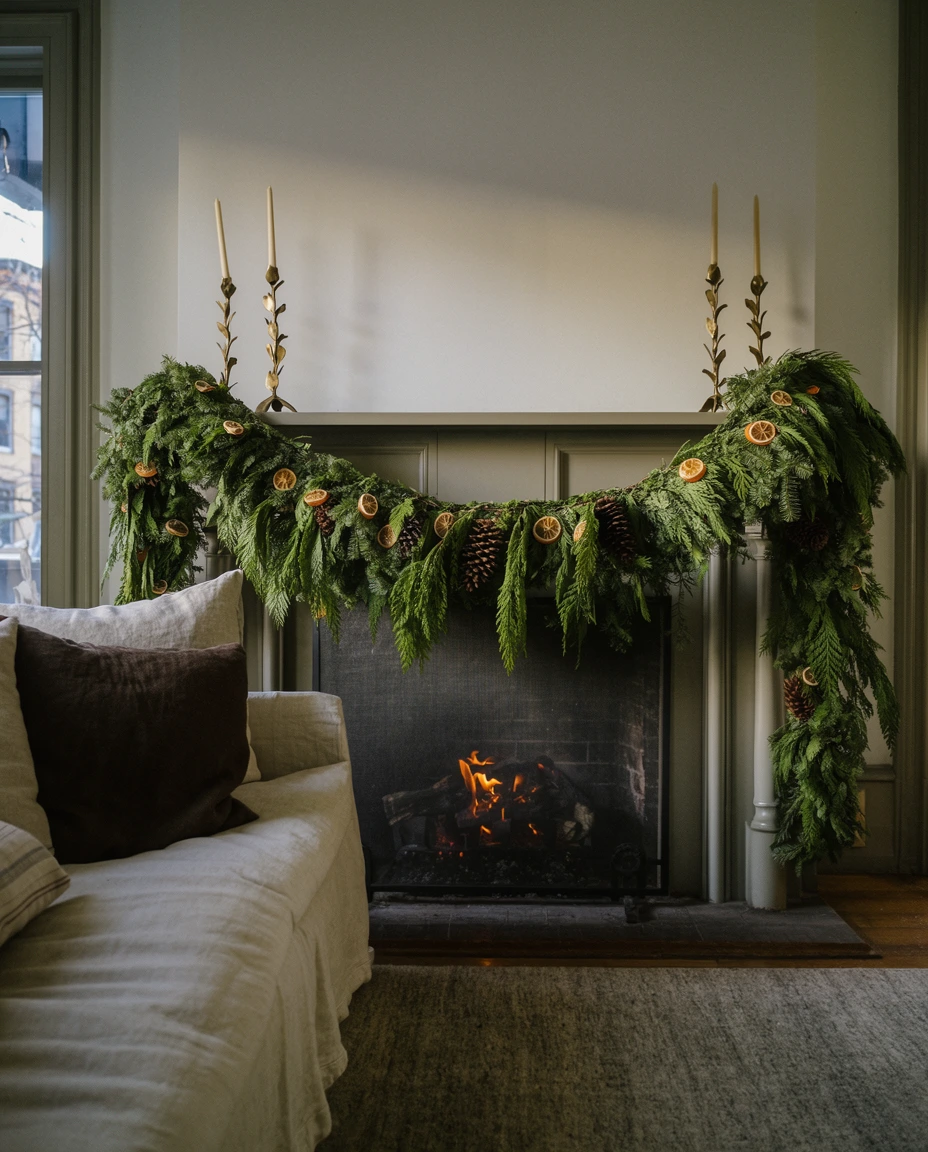
A fresh cedar and fir garland running the length of the mantel is the fastest way to make a living room feel like December. The shape is classic — greenery draped in a soft swag, the ends trailing toward the hearth — and it carries a traditional holiday mood without a single plastic piece in sight. Add pinecones, a few dried citrus slices, and thin brass clips to hold everything steady, and the whole arrangement reads rich rather than fussy.
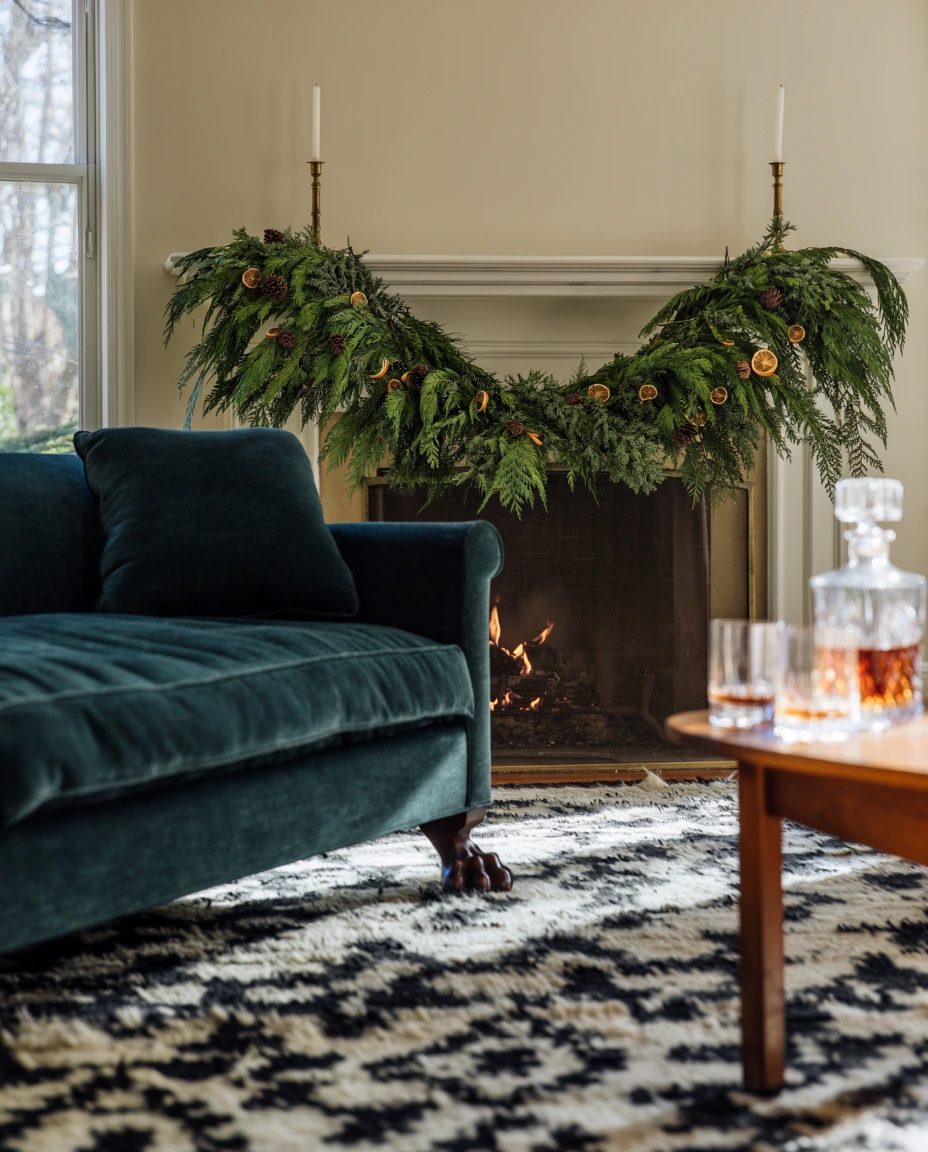
Real greenery drinks water, so a floral tube tucked behind the swag or a nightly misting keeps needles supple through the last week of the month. Weight matters just as much — anchor the garland with adhesive hooks rated well above what you think you need, since ribbon, ornaments, and dried fruit add up fast. Cedar holds its scent the longest, fir keeps its color best, and a mix of the two gives you both for the full stretch of the season.
2. Candlelit Windows After Dark
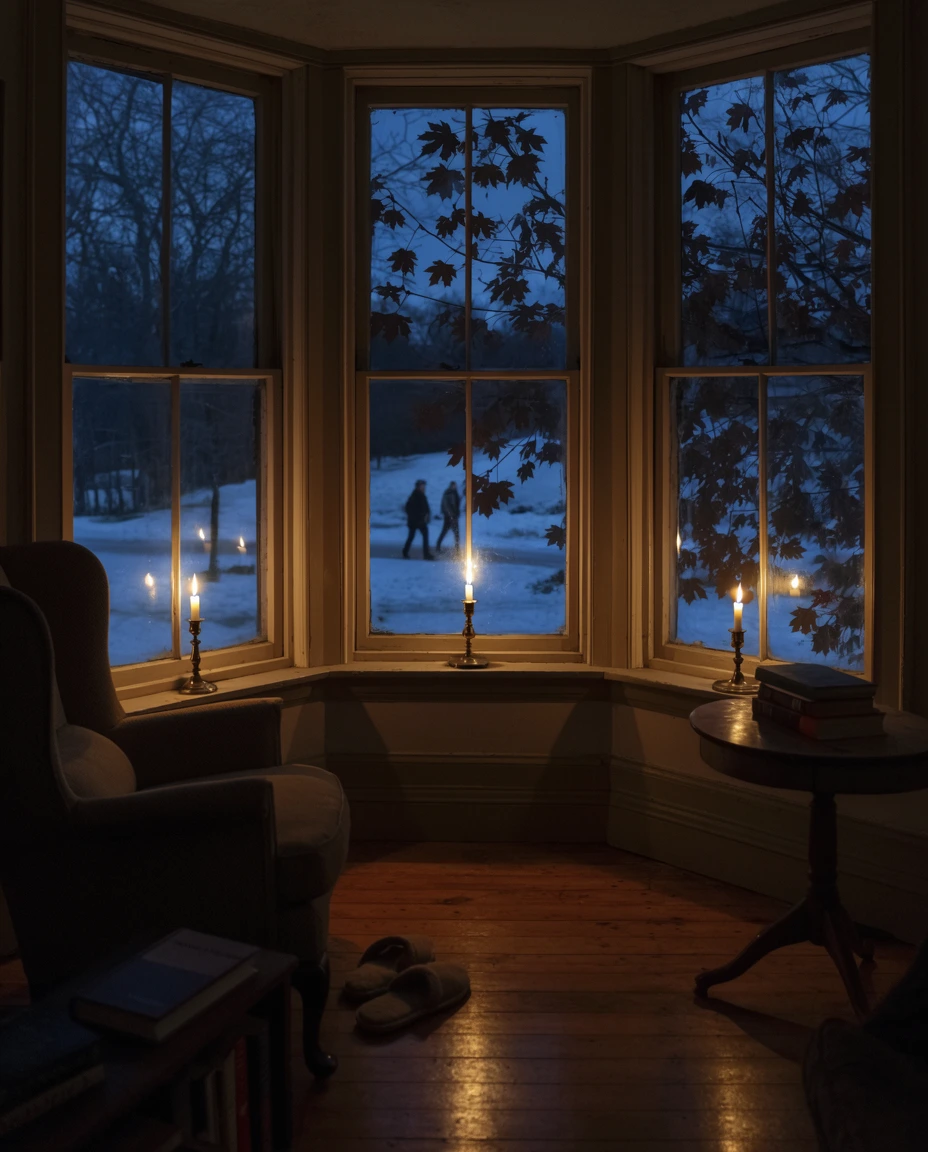
A single candle in every front-facing window is one of the oldest American holiday habits, and it still looks warm and quietly welcoming from the street. The idea is simple enough to finish in an afternoon: matching brass or wooden bases, one candle per sash, every one set at the same height. That repetition is what gives the aesthetic its pull — a row of small identical lights reading as one gesture instead of scattered decoration.

In New England towns the custom runs deep enough that whole streets glow by early December, and the look travels beautifully to a Chicago bungalow or a Craftsman in Portland. Warm-white LEDs with a flicker setting and a dusk timer save you the nightly rounds, and they sit safely near curtains. Choose bulbs around 2200K; anything cooler turns the glass faintly blue and loses the candle effect completely from the sidewalk.
3. Velvet Layers for the Sofa

Velvet does the heavy lifting in cold weather, which is why so many living room ideas for the holidays begin at the sofa. Swap lightweight covers for pillows in forest, port, and oatmeal velvet, then fold a heavy throw over one arm. The effect lands modern rather than nostalgic, especially on a low-slung sectional, and it lets your decorations stay minimal everywhere else because the textiles are already carrying the season on their own.

This pays off most in rooms that get real evening use — a family room with a television, a sunroom that turns chilly after four, the seating corner off the kitchen where everyone actually lands. Skip it on a sofa that catches full southern sun all afternoon, since velvet pile fades faster than cotton. Three pillows in graduated sizes beat five matching ones, and a single throw in a contrasting weave keeps the corner from looking like a showroom.
4. Paper Stars Strung with Twine
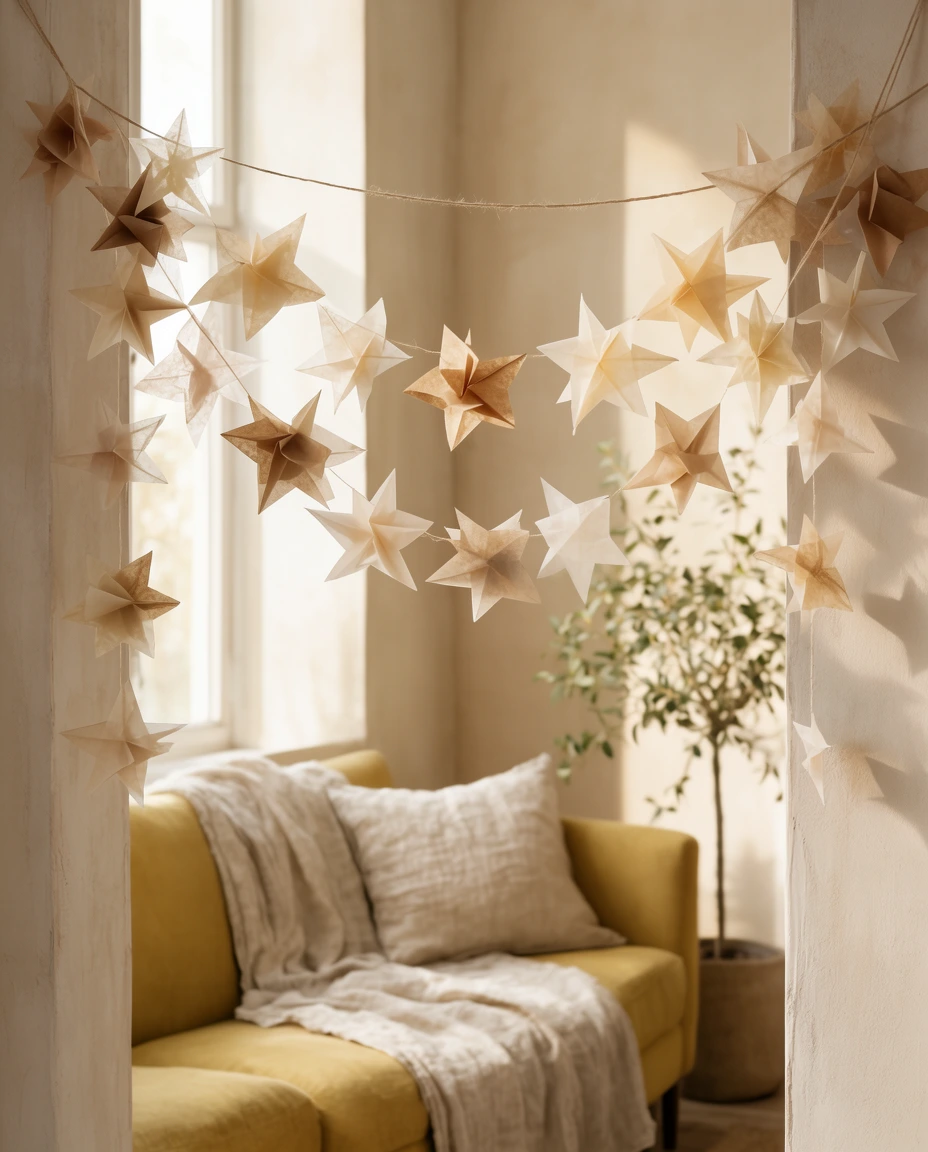
Folded paper stars cost almost nothing and photograph beautifully, which explains their steady grip on diy holiday feeds every winter. Cut kraft paper, vellum, or old sheet music into strips, fold and glue the points, then thread them onto natural twine at uneven intervals. Strung across a doorway or above a stairwell, these are the decorations diy makers return to yearly, and they store flat, so a single set carries your ideas forward for years.
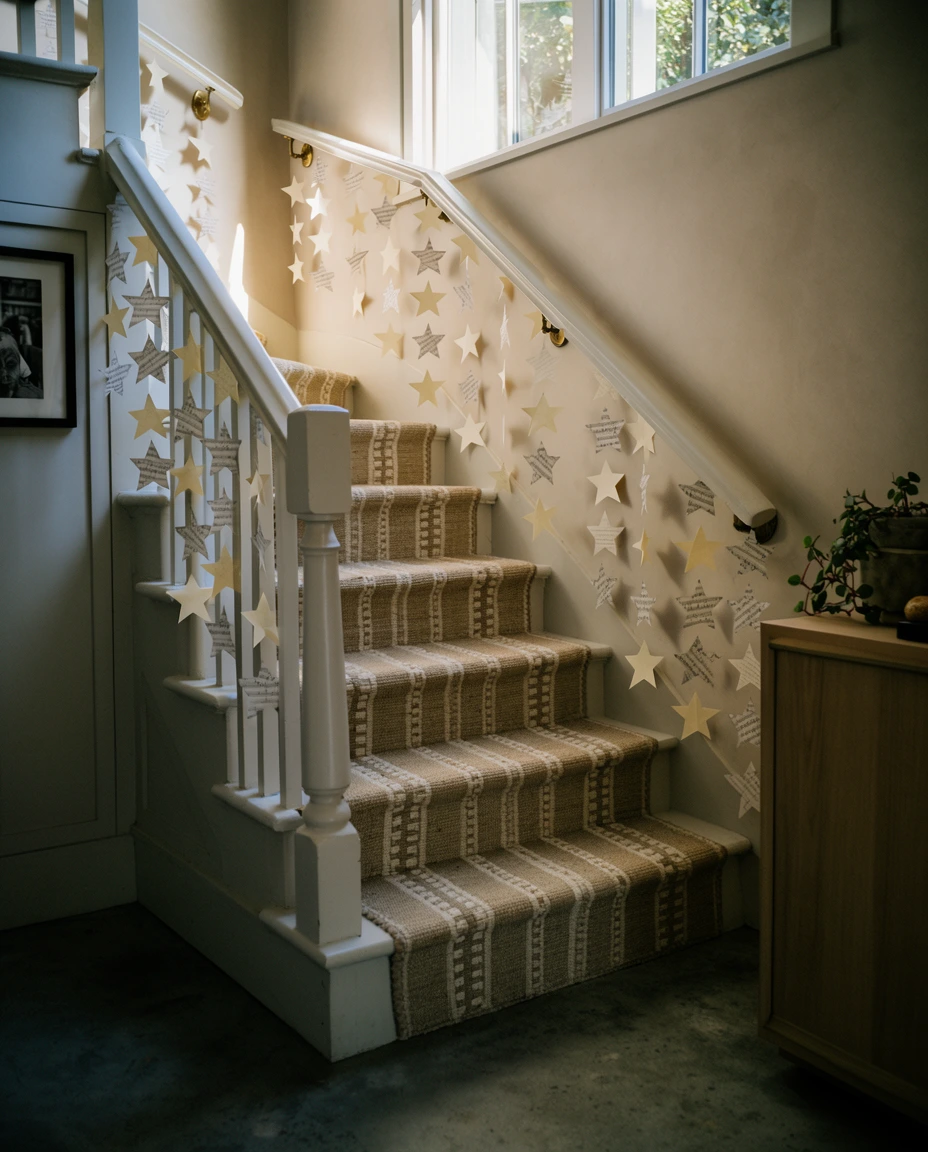
A friend in Ohio started folding these with her daughter the year money was tight, and the box now comes out before the tree does — a dozen stars an evening, radio on, glue drying along the kitchen table. Vellum catches lamplight in a way cardstock never does, so mix a few translucent ones through the run. Keep the twine taut with small cup hooks rather than tape, which gives up the moment a room warms.
5. The Cream and Gold Tree

A tree trimmed entirely in cream, bone, and soft gold has become the quiet favorite among anyone drawn to a neutral palette. Matte ceramic ornaments, brushed brass bells, paper snowflakes, and unlacquered gold ribbon build real depth without color, and the aesthetic holds up beside pale walls and white oak floors. It reads modern because the restraint is deliberate, not because anything is sparse — the branches stay full, just tuned to one narrow range.

Designers who work in monochrome will tell you the trick is finish rather than hue: pair matte against gloss against metallic, or the whole tree flattens into a beige blur under lamplight. Warm-white lights buried deep near the trunk create the interior glow that makes cream look expensive. And keep the topper modest — an oversized star drags every eye upward and undoes the balance you spent an evening building branch by branch.
6. Woodland Table Setting

A woodland table leans on things you could gather on a walk: moss, bare branches, pinecones, a few sprigs of eucalyptus laid straight down the center. The look is traditional in spirit but far less formal than a built centerpiece, and it stays simple enough to assemble an hour before guests arrive. Stoneware plates, linen napkins in mushroom or fern, and low taper candles finish it, so the decorations never block the view across the table.

Almost none of this needs buying. A yard of unbleached linen cut into napkins runs under twenty dollars and lasts a decade, and grocery-store eucalyptus at six dollars a bunch stretches across a six-foot table with stems to spare. Spend where it shows — decent beeswax tapers, maybe fifteen dollars a pair — and gather the rest on a walk. The whole setting can land near forty dollars and look like considerably more.
7. Stockings Without the Clutter

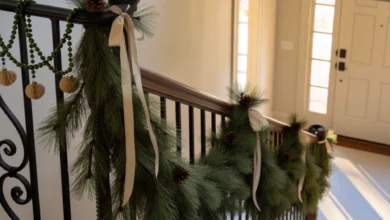
Five stockings on a narrow mantel crowd out everything else, so the tidier approach hangs them somewhere else entirely. Some of the smartest ideas for living room mantels move stockings onto a wall-mounted wooden rail, a stair banister, or the back of a bench, which frees the living room shelf for greenery and candles. The stockings themselves stay classic — heavy knit, ticking stripe, cream wool with a leather tab — just relocated.

Most families rearrange this twice before settling, usually after someone’s stocking slides off its hook on the first cold night. Households with more than four almost always migrate to a rail eventually, and the ones with small kids hang them low on purpose so short arms can reach. Matching lengths matter far more than matching patterns; uneven hems are what makes a row look chaotic from across the room.
8. Beeswax Candles and Brass

Beeswax burns a deeper amber than paraffin and smells faintly of honey, which is why it pairs so naturally with old metal. Set tapers in vintage brass holders of mismatched heights along a sideboard or a wide windowsill, and the light turns warm and golden the moment the sun drops. The combination suits a neutral room especially well, since the brass supplies the only real color and the flames handle everything else.

The usual misstep is lining up holders of identical height, which flattens the grouping into a fence. Vary them by an inch or two and cluster in odd numbers instead. Trim wicks to a quarter inch before every lighting so the wax burns clean rather than smoking against the wall behind it, and keep the group clear of any surface catching a draft from a heating vent, where soft tapers start to lean.
9. A Kitchen Dressed for December
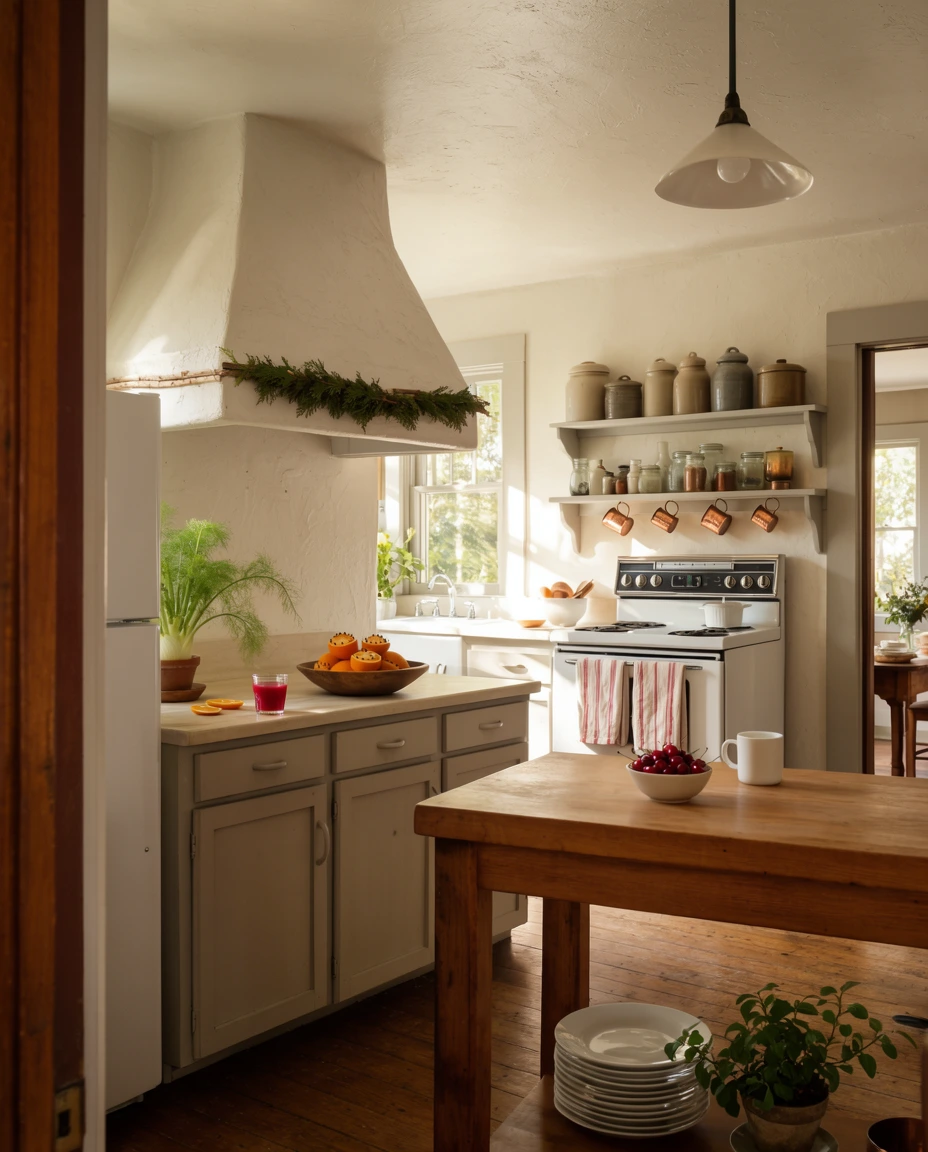
The kitchen takes the most traffic in December and usually gets the least attention. A short garland along the range hood, a wreath on the pantry door, and a wooden bowl of clove-studded oranges are honestly enough to carry it. Keep the mood traditional — red-and-white ticking towels, a pitcher of cedar by the sink, a beeswax candle near the coffee maker — and let the decorations sit where they will not fight with actual cooking.

Anything within two feet of a burner should be artificial or fully removable, since real greenery dries into tinder within days over heat. Open shelving takes decoration far better than upper cabinets, where a garland catches every door swing. And the island stays clear — that surface earns its keep in the last week of the month, and a centerpiece there vanishes under flour and sheet pans by the second day of baking.
10. Plaid Made Modern Again

Plaid reads dated only when it covers everything. Used sparingly it stays classic and looks distinctly modern: one buffalo-check throw across a leather chair, or two blackwatch pillows on a linen sofa and nothing else patterned in the room. Among current living room ideas, that restraint is what separates a space that feels collected from one that feels themed, and it lets the wool texture speak instead of the print.
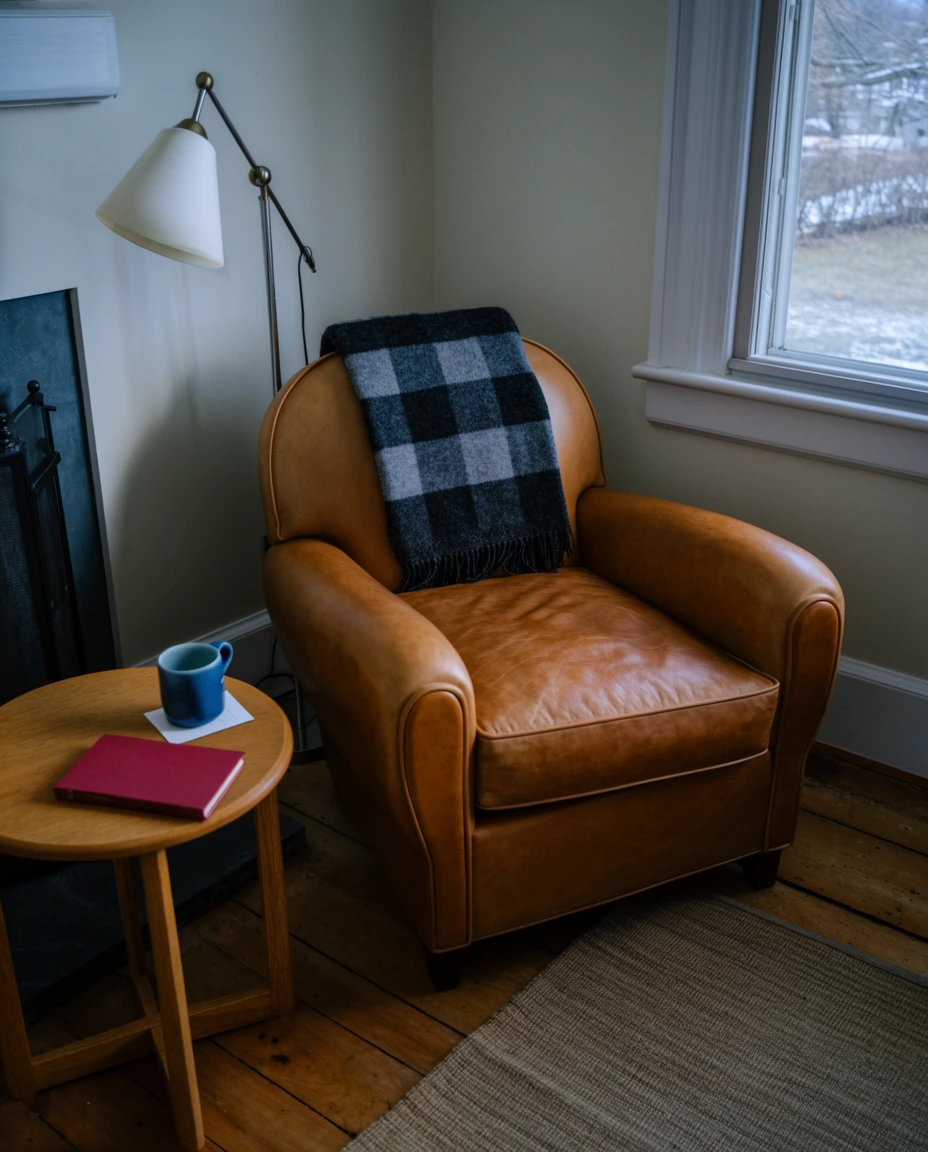
The buffalo check has a real pedigree here, tied to Woolrich mills in Pennsylvania and lumber camps across the upper Midwest, which is part of why it settles so easily into a Michigan lake house or a Colorado cabin. In a Brooklyn apartment the same throw works once the scale shrinks — a fine tartan rather than a bold six-inch check. Muted colorways in charcoal, moss, and rust travel further than bright red.
11. Dried Orange Garlands

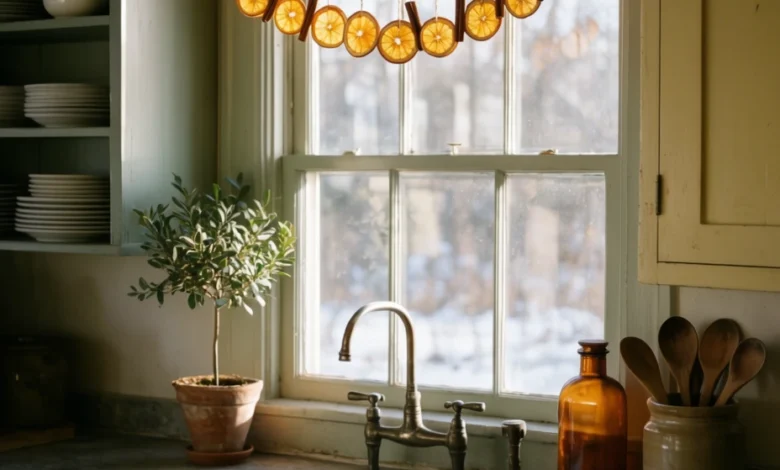
Sliced oranges dried low and slow turn into stained glass, and stringing them is about as simple as holiday craft gets. Cut quarter-inch rounds, blot them thoroughly, and bake at 200 degrees for three hours, turning once halfway. Thread them with cinnamon sticks and bay leaves onto jute for a diy garland that costs a few dollars and scents the entire kitchen while it bakes, which is half the appeal.

These belong somewhere light passes through them — a window over the sink, a glass pantry door, the side of a hutch that catches morning sun. Against a dark wall the color disappears and they simply read brown. They hold up for two seasons in a paper bag with a silica packet, though the scent fades after the first, and a few minutes in a warm oven brings some of it back before you hang them.
12. Wool Layers in the Bedroom
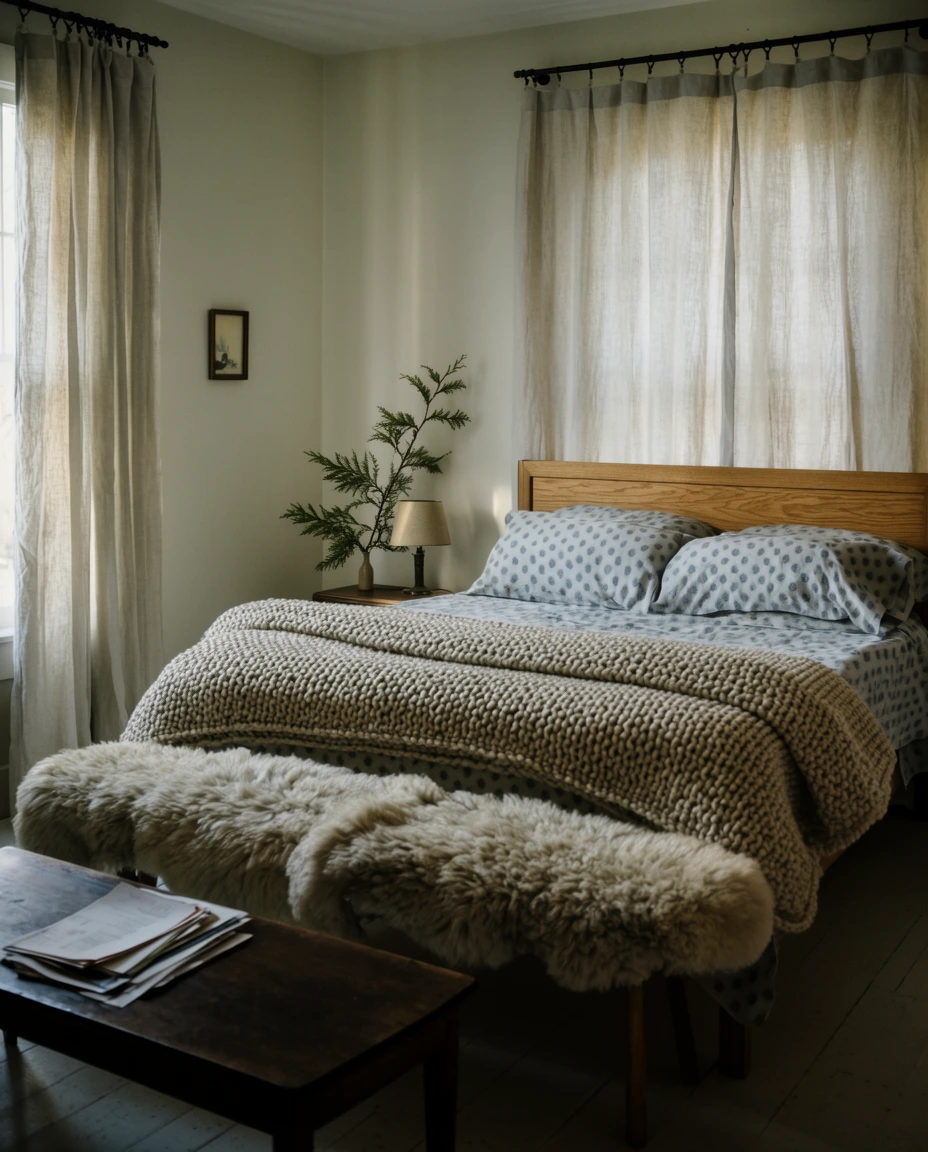
A guest bedroom in December asks for weight more than ornament. Fold a chunky wool blanket across the foot of the bed, lay a sheepskin over the bench, and swap cotton shams for brushed flannel in oatmeal or slate. The room turns warm and heavy in the best possible sense, and because the palette stays neutral, one sprig of cedar in a bud vase on the nightstand is all the holiday signal it needs.

My aunt keeps exactly that cedar branch on her guest nightstand every December, replaced once mid-month, and every visitor mentions it before they mention the tree downstairs. Wool sheds and pills its first winter, so shake blankets outdoors rather than washing them, and store them with cedar blocks instead of mothballs. A throw at the foot of a bed should be wide enough to actually cover two feet — narrower reads purely decorative.
13. Vintage Ornaments Under Glass

Not every ornament belongs on the tree. Fragile vintage glass — Shiny Brite indents, mercury balls, hand-painted German figures — often looks better gathered in a footed cloche or an apothecary jar on the console. The aesthetic is part display and part protection, and it turns inherited decorations into something you actually look at rather than something buried among branches at eye level for six weeks straight.
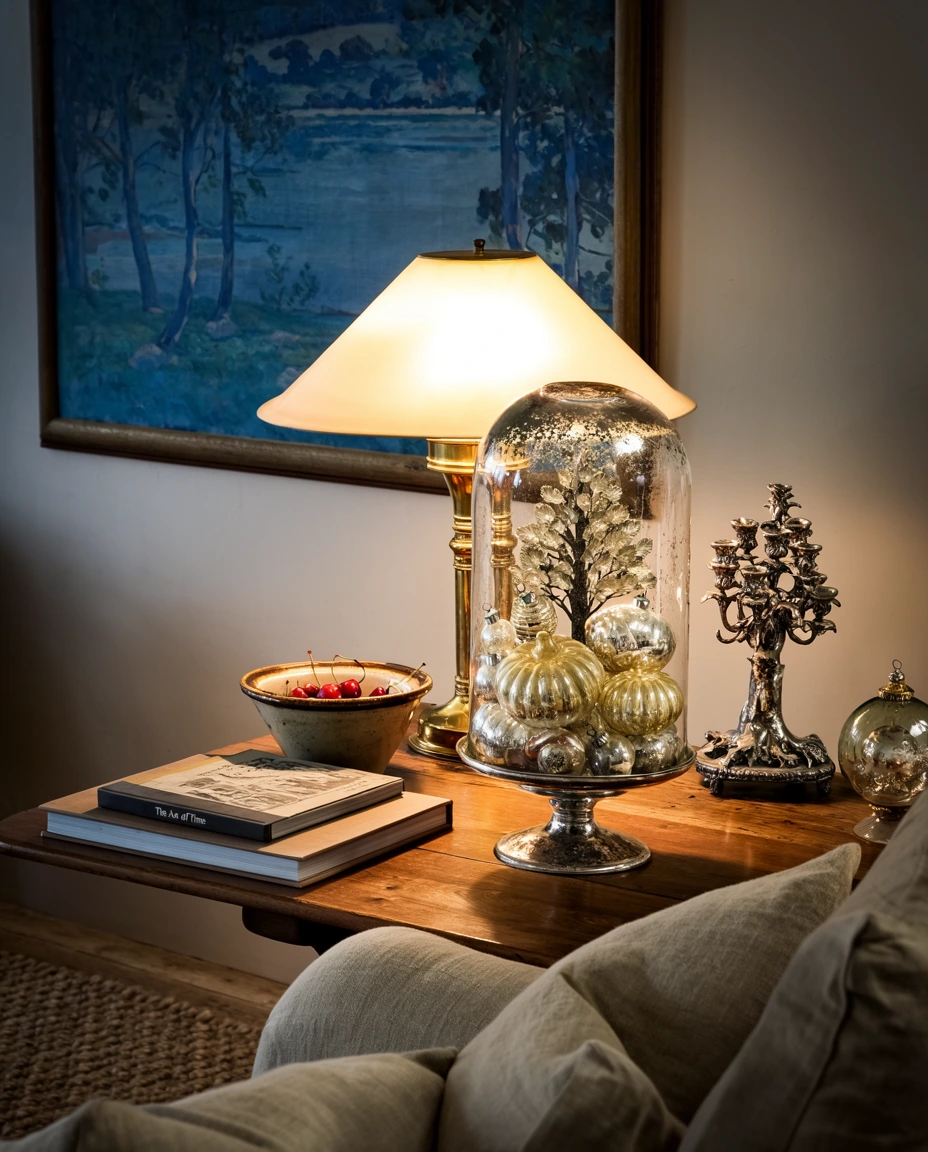
Collectors will point out that these pieces suffer from handling and humidity far more than from age, so a closed vessel in a room holding around 65 degrees does genuine preservation work. Group by color rather than era; a jar of nothing but silver and pale gold looks intentional, while a mixed jumble looks like storage. Set the cloche where a lamp sits behind it and the old silvering throws light after dark.
14. A Tree for Small Apartments

A full Fraser fir swallows a studio, but a slim seven-foot tree in a nine-inch stand takes barely more floor than a side chair. In a rented apartment, the smartest ideas put it in front of a window rather than a corner, so the glass doubles the lights and the walking path stays open. Keep the trimming simple — one ribbon, one metal, one texture — because a narrow tree shows every extra.

Pencil firs and slim artificial trees run roughly $120 to $250 and pay for themselves in three seasons against $80 a year for a cut tree, which matters in a city where hauling one up two flights is its own tax. A wall-mounted version works too — a wooden dowel tree or a branch hung from a curtain rod costs under thirty dollars in lumber and holds a surprising number of ornaments.
15. Firelight and Fresh Cedar
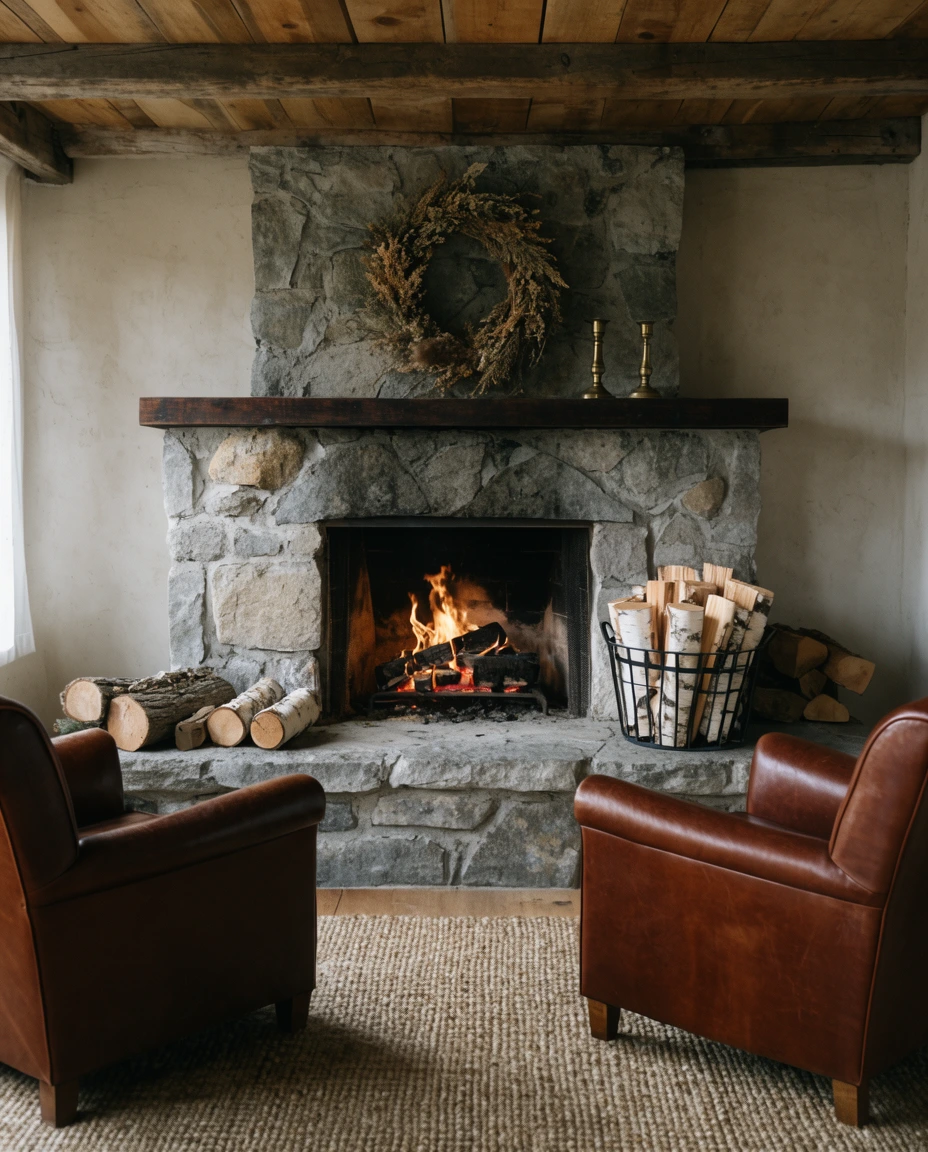
Nothing beats a lit fire with cedar on the hearth, and that pairing is the whole reason a living room rustic scheme works so well in December. Stack split birch or oak in an iron basket, lay loose cedar and juniper along the hearthstone well outside the heat, and keep the mantel traditional with candles and a wreath. The room turns warm and resinous before the first log has fully caught.

People overbuy greenery for the hearth and then pull half of it back within a week, once they notice how quickly it browns near a working firebox. The ones who get it right keep cedar at the outer edges of the stone and refresh it around the fifteenth, right when the tree needs water most anyway. Firewood stored indoors more than a few days brings insects with it, so most keep a two-day supply inside.
16. Greenery at the Entry
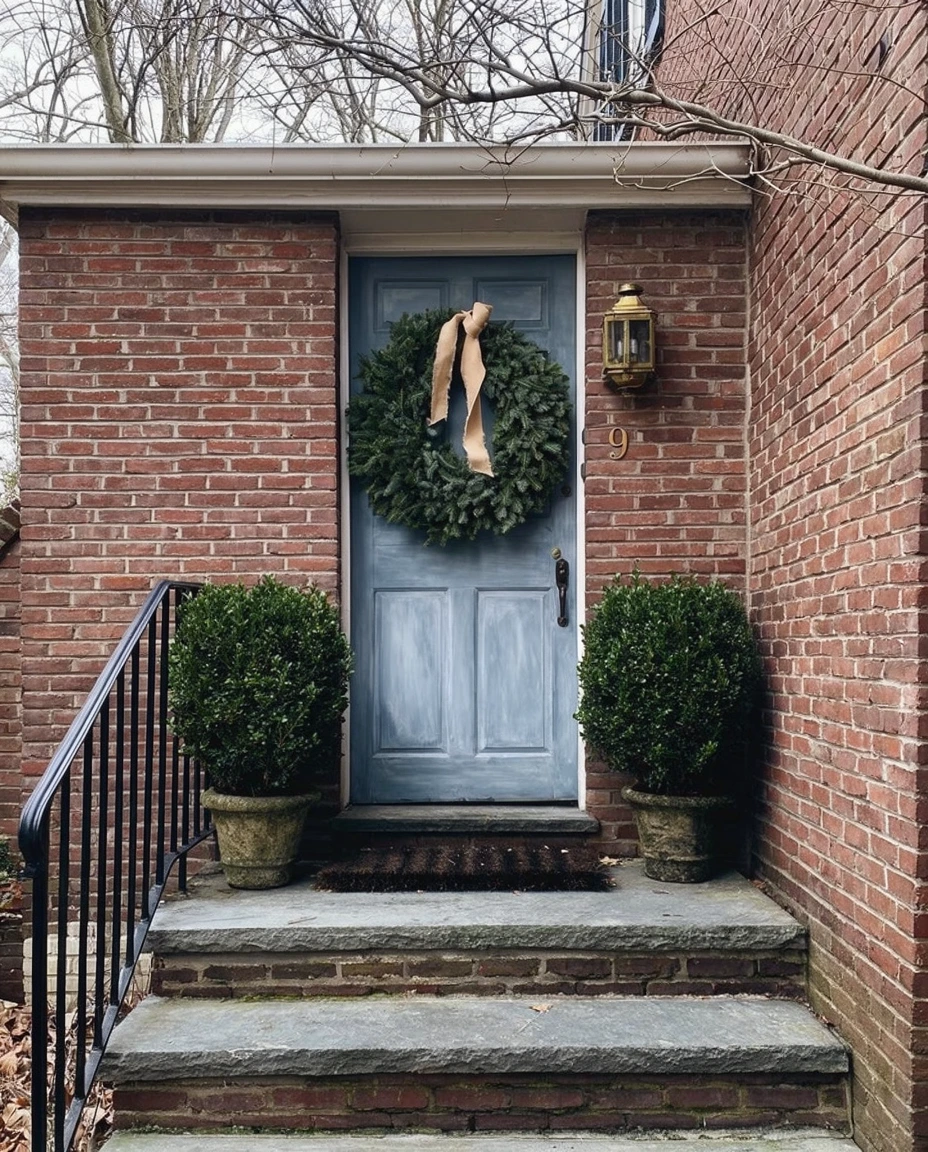
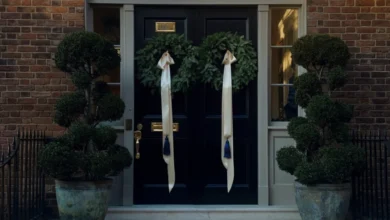
An entry sets expectations before anyone takes a coat off. A wreath on the door, a pair of potted boxwoods flanking the steps, and a swag over the mirror inside are the classic three, and they work on a brick colonial and a stucco ranch alike. Keeping the decorations in a neutral range — undyed ribbon, natural cones, unpainted wood — means the greenery stays legible against whatever color the front door happens to be.

The most common misjudgment here is scale: a twenty-inch wreath that looked generous in the store shrinks to nothing on a thirty-six-inch door. Measure the door and buy a wreath roughly two-thirds its width. Ribbon left outside through freezing rain goes limp in a week unless it is weatherproof, and potted boxwoods need watering right through winter, since a frozen root ball is what kills them rather than the cold air.
17. Handmade Clay Ornaments

Air-dry clay makes ornaments with real heft, and they cost pennies apiece. Roll a slab to a quarter inch, press in cedar sprigs or a rubber stamp, cut with a biscuit cutter, and punch the hanging hole before drying. Left unglazed and unpainted, these diy pieces carry a pale stoneware aesthetic that suits a cream tree perfectly, and they are the rare decorations diy project that looks finished rather than crafty.

Clay warps when it dries too fast, so let pieces sit between two sheets of parchment under a heavy book for the first day, then flip them for the second. Sand the edges with a fine block once they are fully dry and they take on a chalky, almost plaster surface. Thread with natural cotton rather than ribbon; the weight of clay pulls fabric loops into a permanent crease over a single season in storage.
18. Rustic Beams and Linen Runners

Exposed beams are a gift in December — they give greenery somewhere honest to go. Drape cedar along a beam above the dining table or the kitchen island and let a linen runner in flax or chalk carry the same line below. This is exactly where a living room rustic instinct pays off, and a vintage ironstone platter or two on the table keeps the arrangement from looking newly bought.

Beam-and-linen combinations turn up constantly in Texas Hill Country builds and reclaimed farmhouses across the Carolinas, where wide-plank floors and lime-washed walls already do half the work. In a newer suburban house with flat ceilings, a wooden curtain rod mounted above the table achieves the same horizontal line for far less money. Wash linen runners hot before their first use so they relax into that soft rumple instead of lying board-stiff.
19. Twinkling Lights Without the Glare
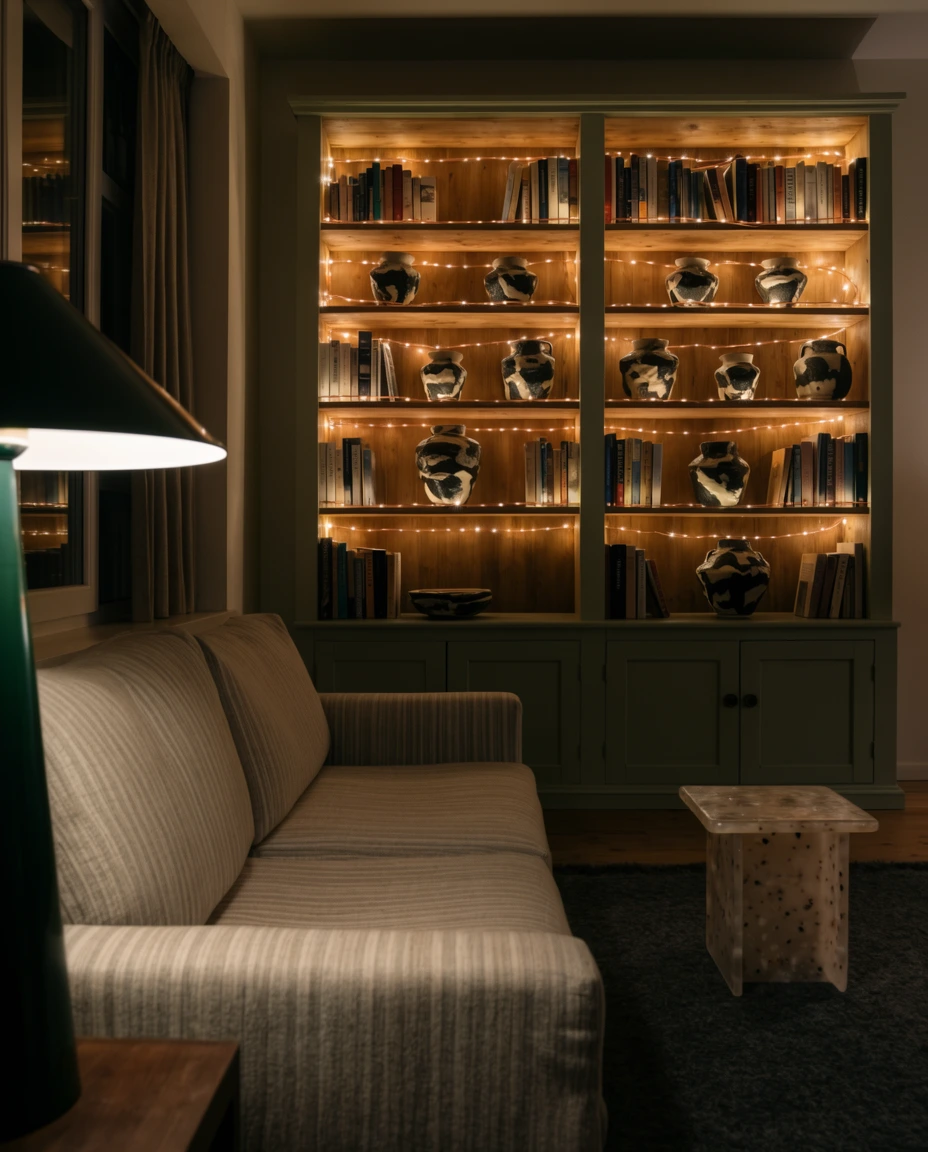
String lights go wrong when the bulbs stare straight back at you. In a small apartment, run warm-white strands behind a bookcase, under a shelf lip, or along the top of a curtain rod so the living room fills with glow instead of dots. The result looks modern and deliberate, closer to architectural lighting than holiday decoration, and it holds up every night of the year if you decide to leave it.
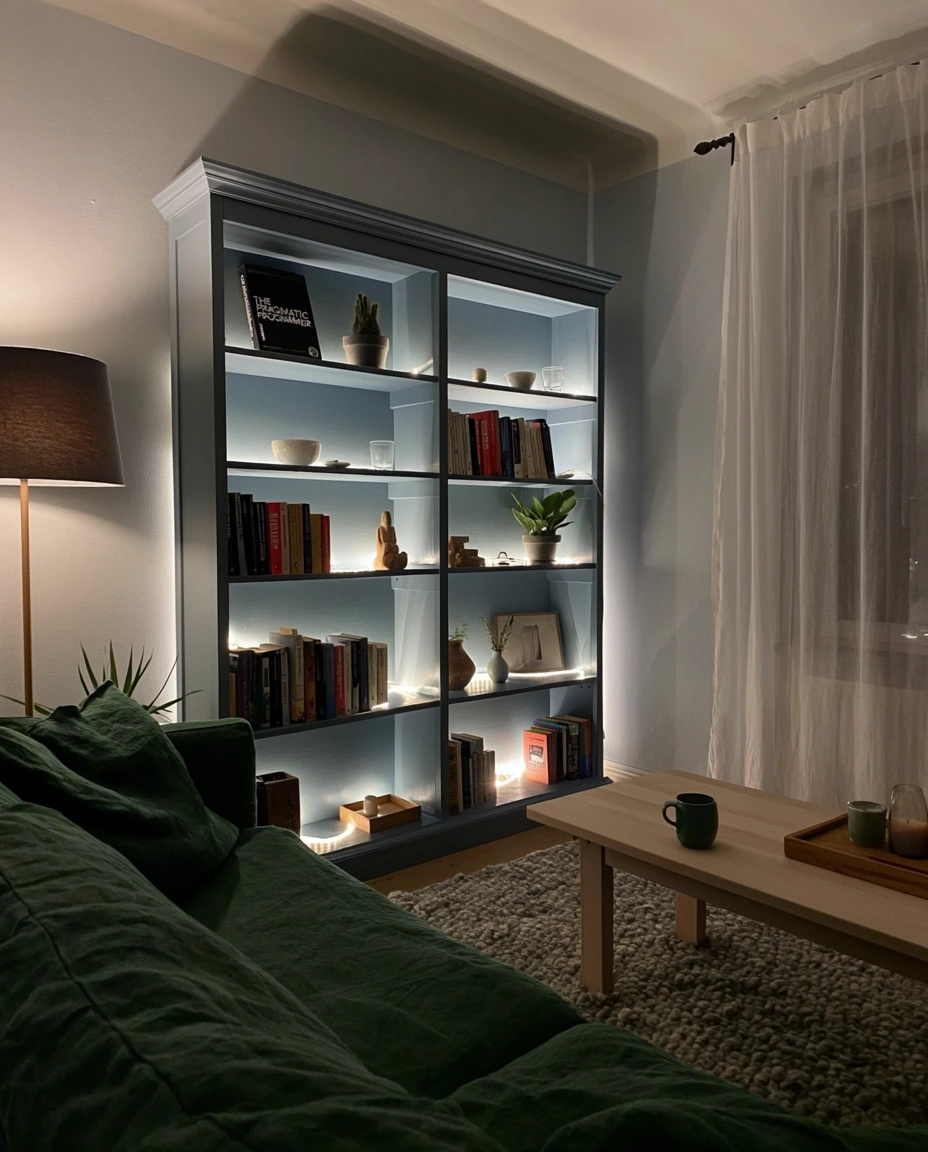
Rooms with pale walls carry this furthest, since the light bounces rather than dies. A dimmer plug costs about twelve dollars and does more for the mood than any upgrade to the strand itself. Copper wire micro-lights vanish into a bookcase completely, while larger café bulbs need real distance overhead to stay comfortable — strung at proper ceiling height above a dining table they read generous, tucked into a low shelf they read harsh.
20. Snowy White Bedding
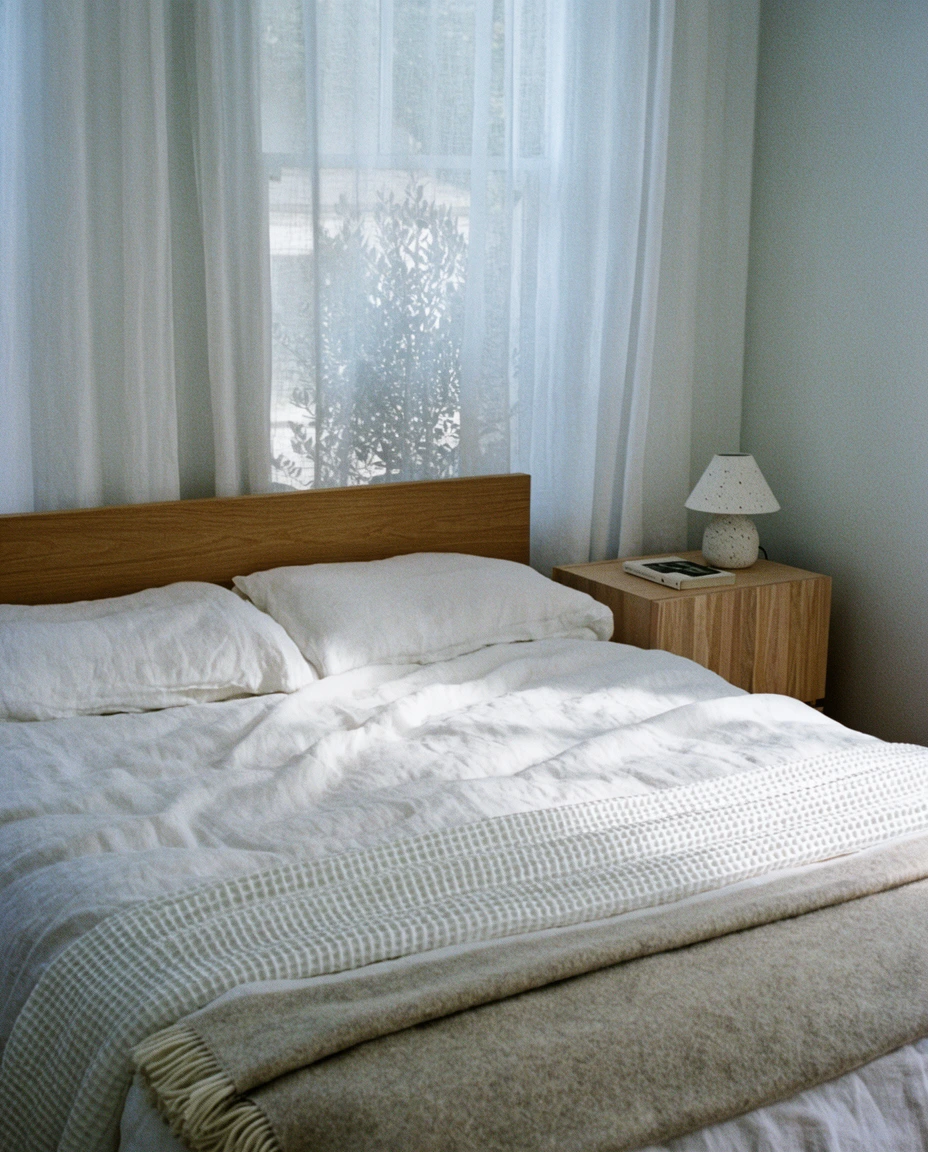
An all-white bed in winter sounds cold and does the opposite once the layers stack up. Start with crisp percale, add a heavyweight linen duvet, then fold a waffle blanket across the bottom third. The bedroom stays neutral enough to carry straight through February, and the arrangement is simple to maintain — everything washes together, and nothing has to be swapped out when the greenery comes down in January.
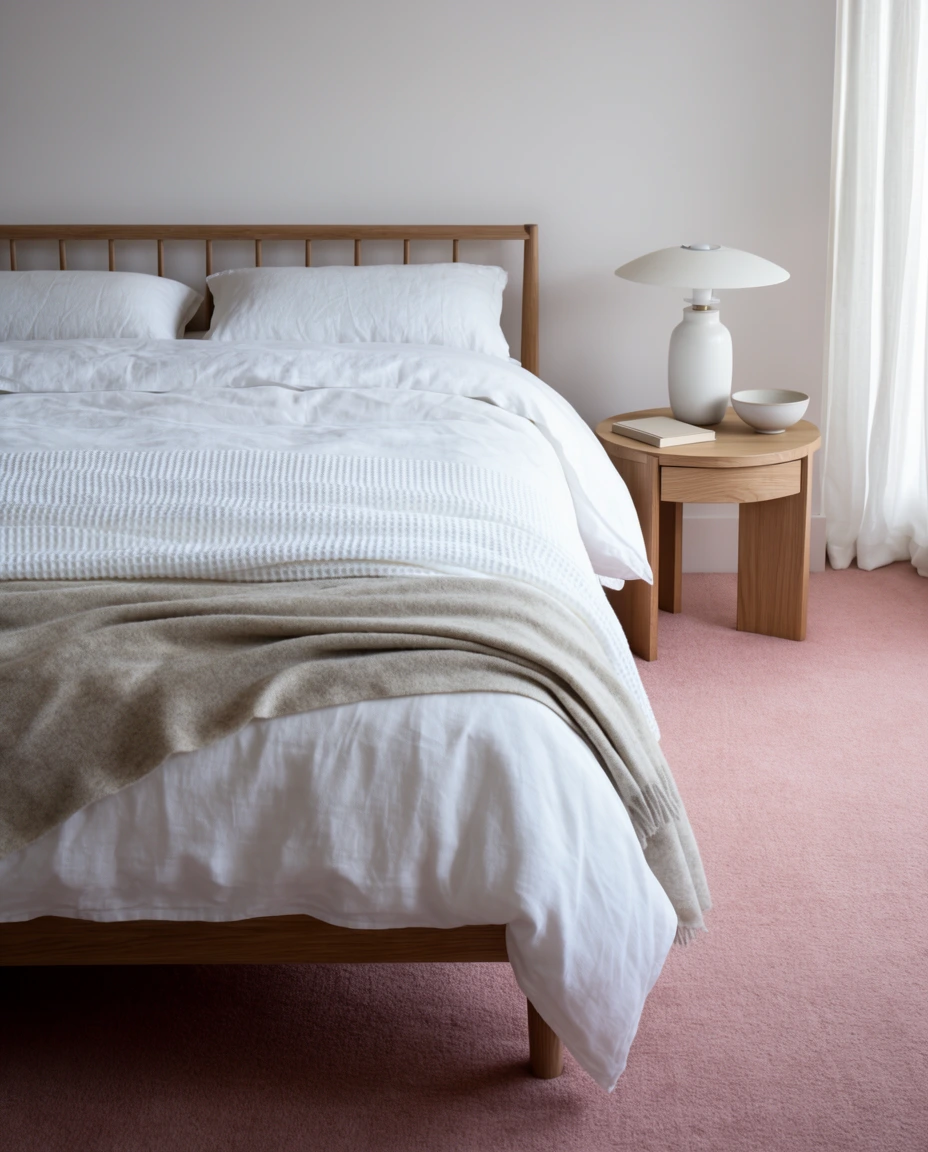
A photographer I follow keeps one wool blanket in oatmeal at the foot of an otherwise white bed and calls it the only decoration the room needs in December. Texture is what saves white from looking clinical, so mix at least three weaves before adding any color at all. Wash white linen with oxygen bleach rather than chlorine, which yellows the fibers over a few seasons and shows first along the folded edge.
21. A Cocoa Station for Cold Nights

A cocoa station sounds fussy until you set one up and watch it get used nightly. A tray on the kitchen counter or a bar cart in the hall holds a canister of cocoa, a jar of marshmallows, six sturdy mugs, and a small carafe. Among holiday ideas that genuinely earn their counter space, this one ranks high, and it makes the whole corner feel warm and hospitable rather than staged.

The whole setup runs about fifty dollars if you shop secondhand — thrift stores are full of heavy diner mugs at a dollar or two apiece, and a wooden tray from a discount home store lands under fifteen. Glass canisters cost more new than they should, so check your own cabinets first. Peppermint sticks and a jar of cinnamon add a few dollars and do more for the look than anything bought new.
Half the fun of December is watching everyone solve the same rooms differently — the mantel that finally worked, the tree squeezed beside a radiator, the cocoa tray that never gets put away. Tell us which of these you are trying this year, and what you would do instead. The comments are open, and the best tricks always come from readers.