
The staircase does something no other spot in an American home can pull off — it puts Christmas at eye level the second someone walks through the front door. That is exactly why Pinterest fills up every November with photos of wrapped railings, swagged greenery, and ribbon trailing down a newel post. The looks below run from twenty-minute fixes to full evening projects, and most cost less than a wreath from the garden center. Here are 21 ways to dress your stairs this season, along with the small tricks that keep them looking styled instead of stuck on.
1. Fresh Cedar and Velvet Ribbon
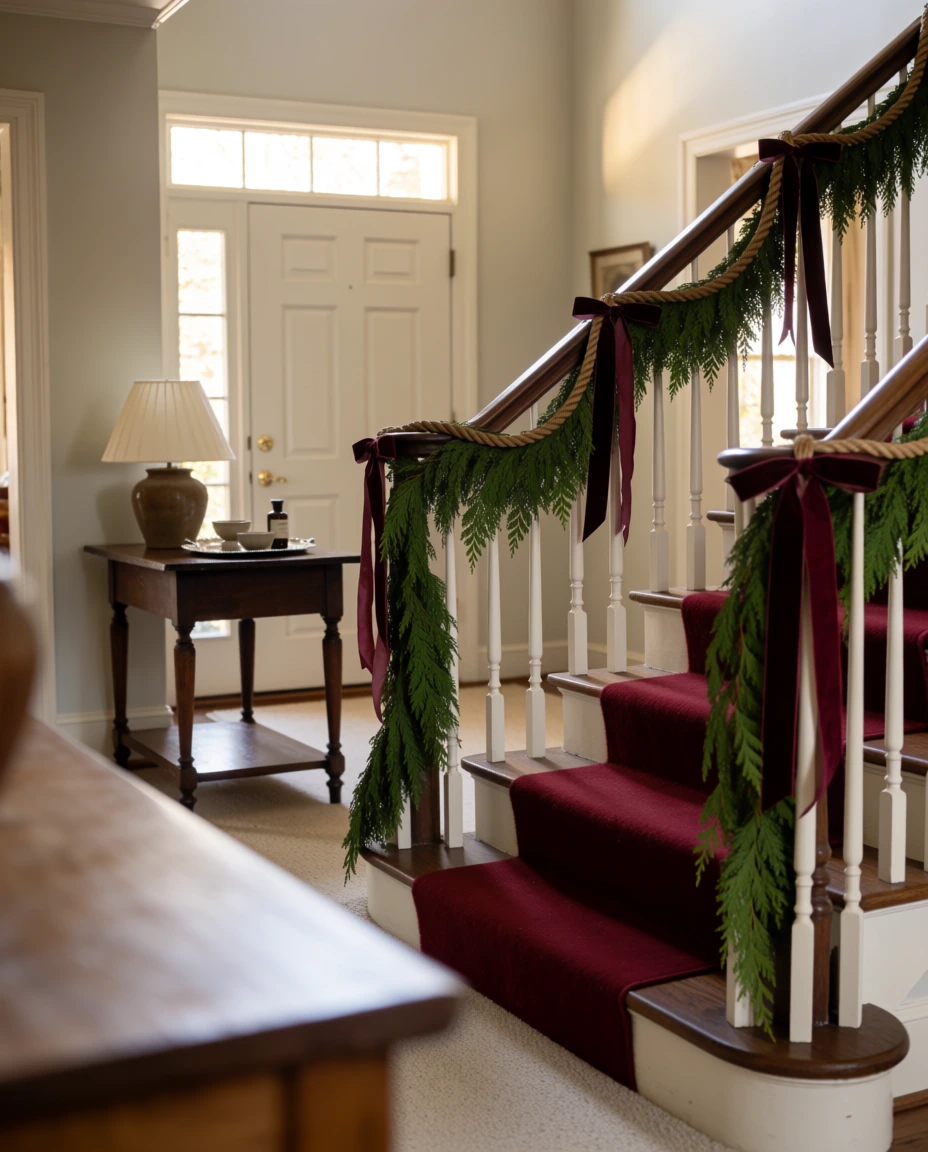
Real cedar still wins. A thick garland of it, roped along the banisters and caught every few feet with wide burgundy ribbon, gives you the scent and the sag that faux greenery never quite manages. This is the version of christmas staircase decorations that photographs beautifully in an entry with dark treads and white spindles, because the greenery reads as one long line rather than a series of separate bunches. Buy more length than you think you need — nine feet disappears faster than anyone expects.
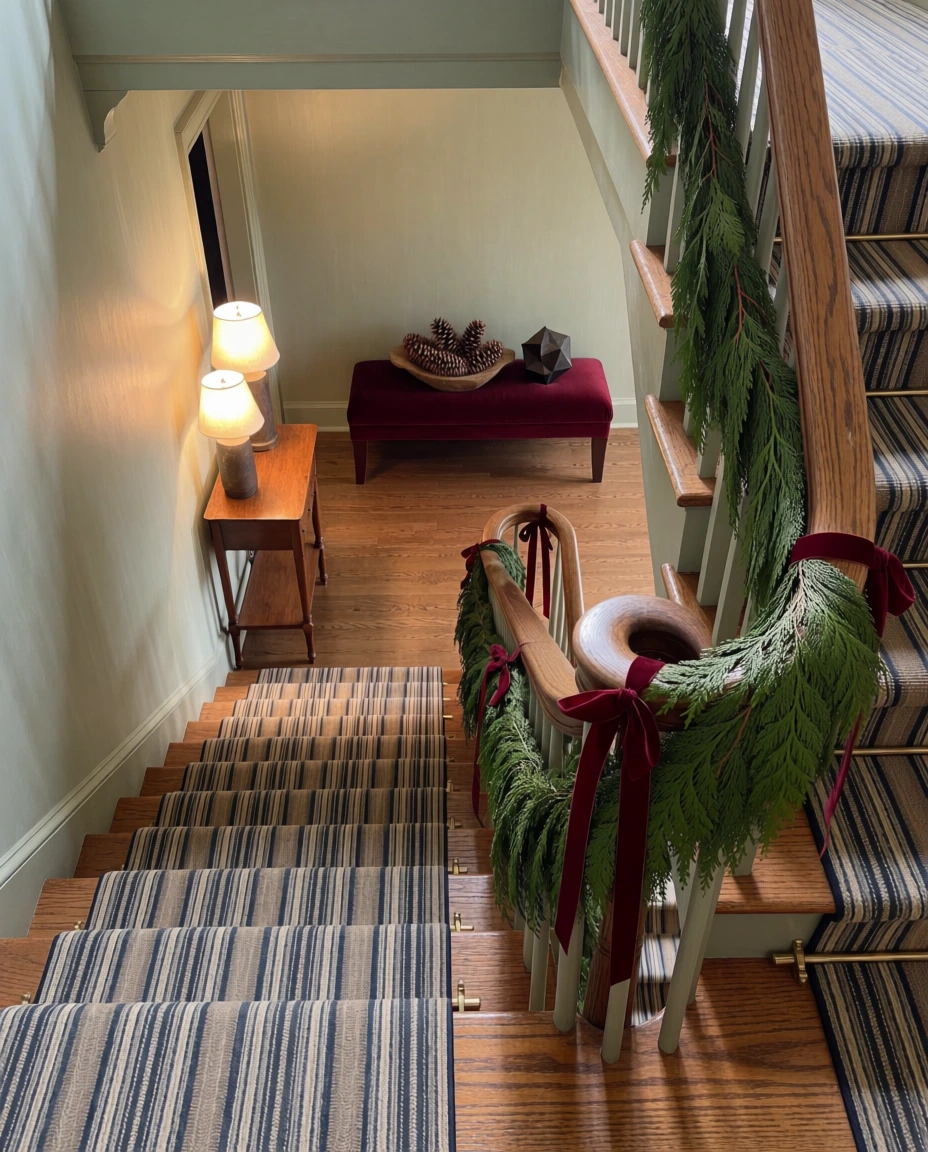
Cedar drinks up whatever moisture it can, so a quick soak in the tub the night before you hang it buys an extra week of soft needles. Attach it with green floral wire rather than tape, twisting the wire around the rail underneath where your hand never lands, and the swags hold their shape through a house full of guests. Snip the ribbon tails at a sharp angle so they hang cleanly instead of curling in on themselves after a few days.
2. The All-White Winter Staircase
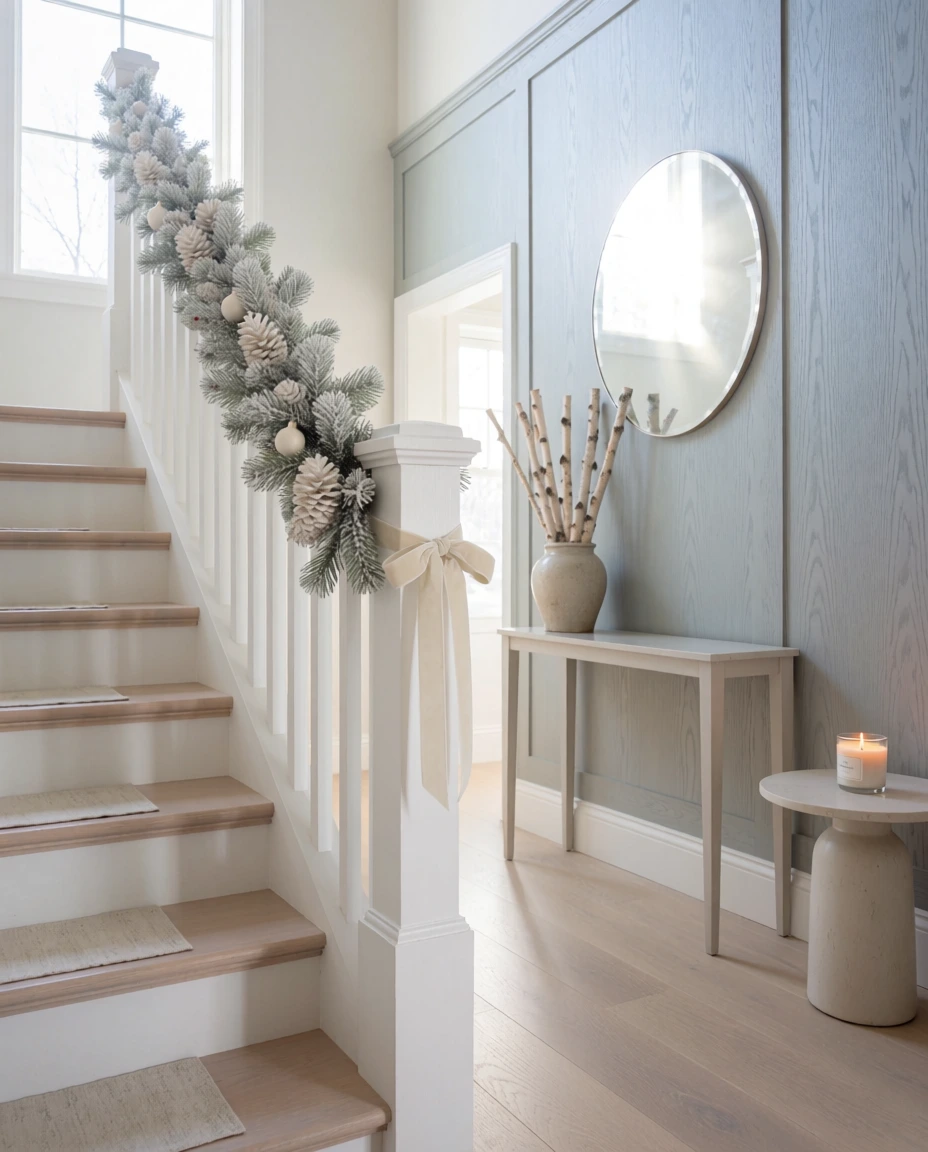
A white palette on the stairs feels less like a holiday and more like weather that drifted indoors. Flocked pine, bleached pinecones, matte ivory ornaments, and a run of cream velvet along the handrail keep the whole thing simple enough to leave up through January. The look leans minimalist without going cold, mostly because texture does the work color usually would — frosted branches against a smooth painted rail read rich in daylight. Warm bulbs keep it from turning blue after dark.
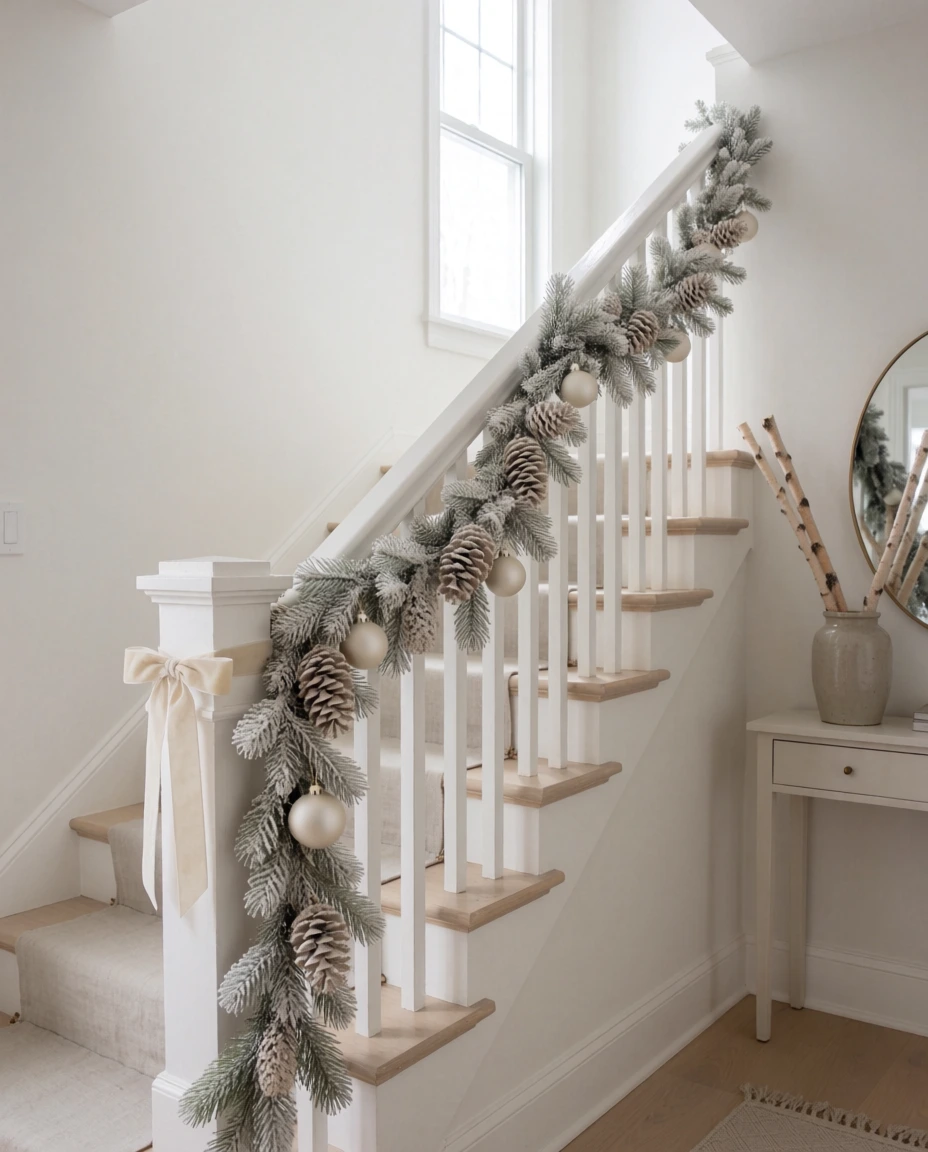
The effect lands hardest in an entry that already has good light — a transom over the door, a landing window, a pale runner bouncing it back up the treads. In darker halls the whites can flatten into gray by four o’clock, which is why homes across the Pacific Northwest often add brass accents or a few amber candles to hold the warmth. Against a dark stained rail, the contrast alone carries the whole arrangement without any extra color.
3. Gold Bells for the Railing
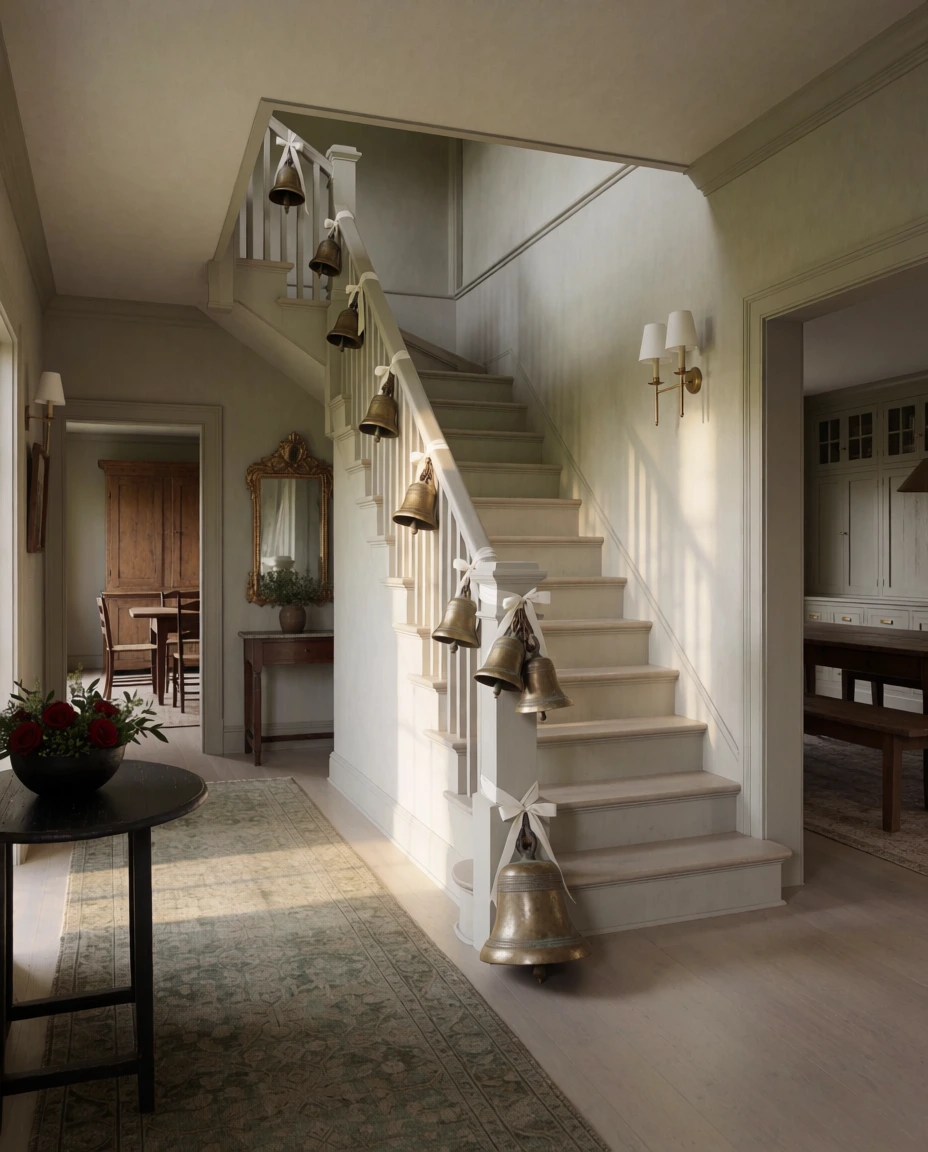
Brass and antique gold have quietly taken over holiday styling, and stairs are where the shine actually gets used. Cluster small bells on lengths of grosgrain and tie them to the railings at regular intervals, letting a few longer strands drop past the spindles. The metal catches every lamp in the hall, so a plain painted rail suddenly has depth. Mix bell sizes rather than buying one uniform set — the variation is what keeps it from looking like packaging.
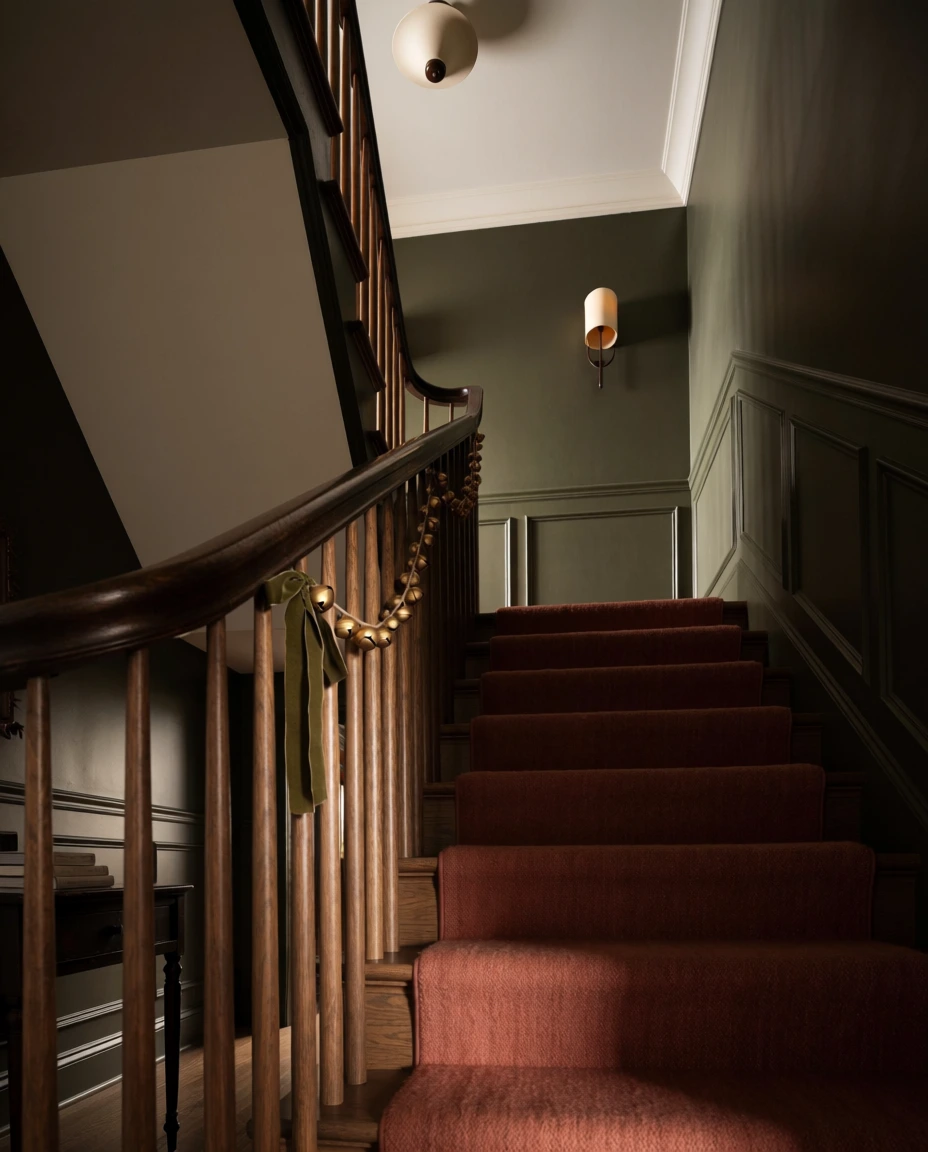
Designers who style entries for photo shoots tend to work in odd numbers, three or five bells per cluster, because the eye stops counting and starts reading rhythm instead. They also keep the metal family consistent — antique brass with antique brass, bright gold with bright gold — since two golds side by side make each other look wrong. One oversized bell at the newel post finishes the run and gives the arrangement a clear starting point.
4. A Gingerbread Stair Moment
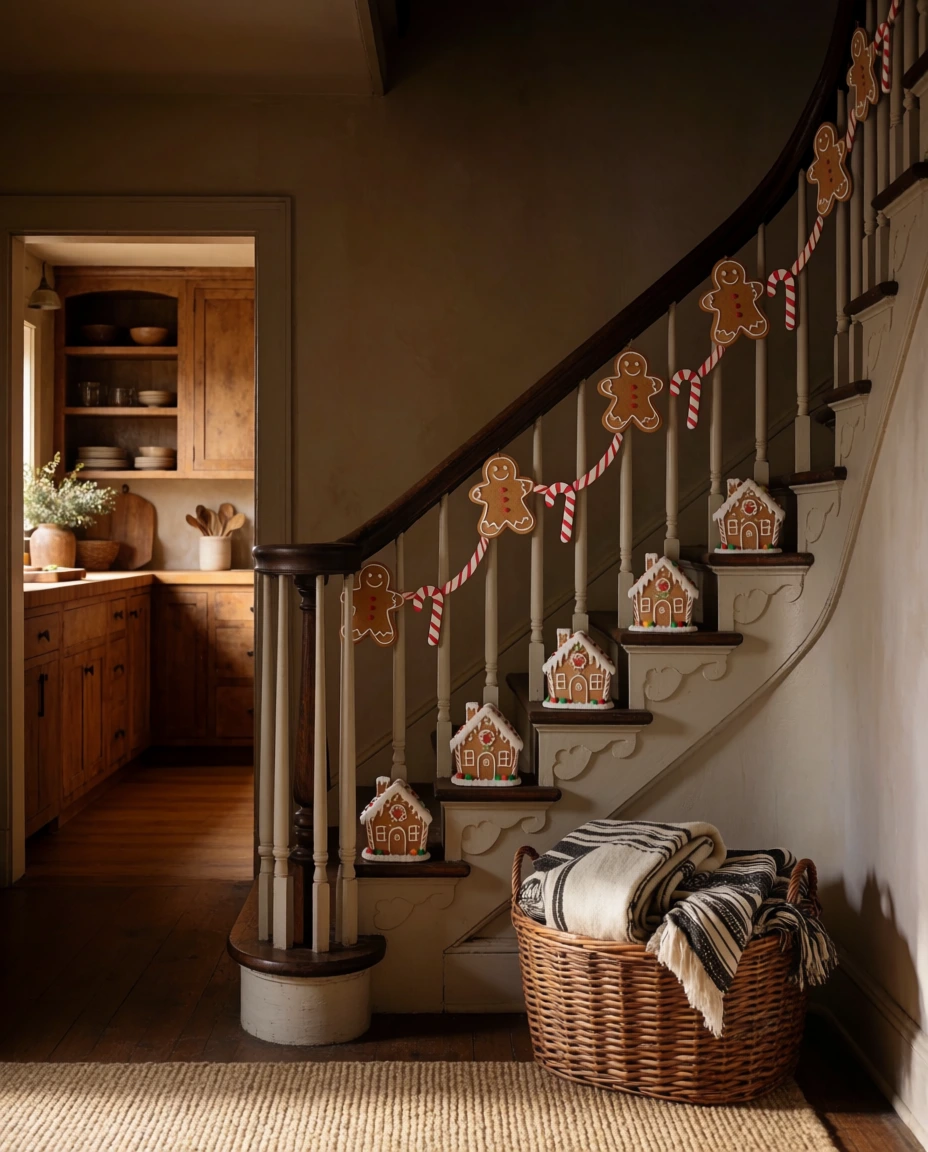
Nothing gets kids up the stairs faster than a gingerbread theme. Faux cookie ornaments, striped candy garland, and little iced houses lined along the lower treads make an easy afternoon project that reads sweet rather than sticky. Most of it can be DIY — salt dough shapes baked hard, glazed with white paint, then strung on twine and looped between the spindles. Keep the palette to caramel, cream, and one candy red so the sugar rush stays purely visual.
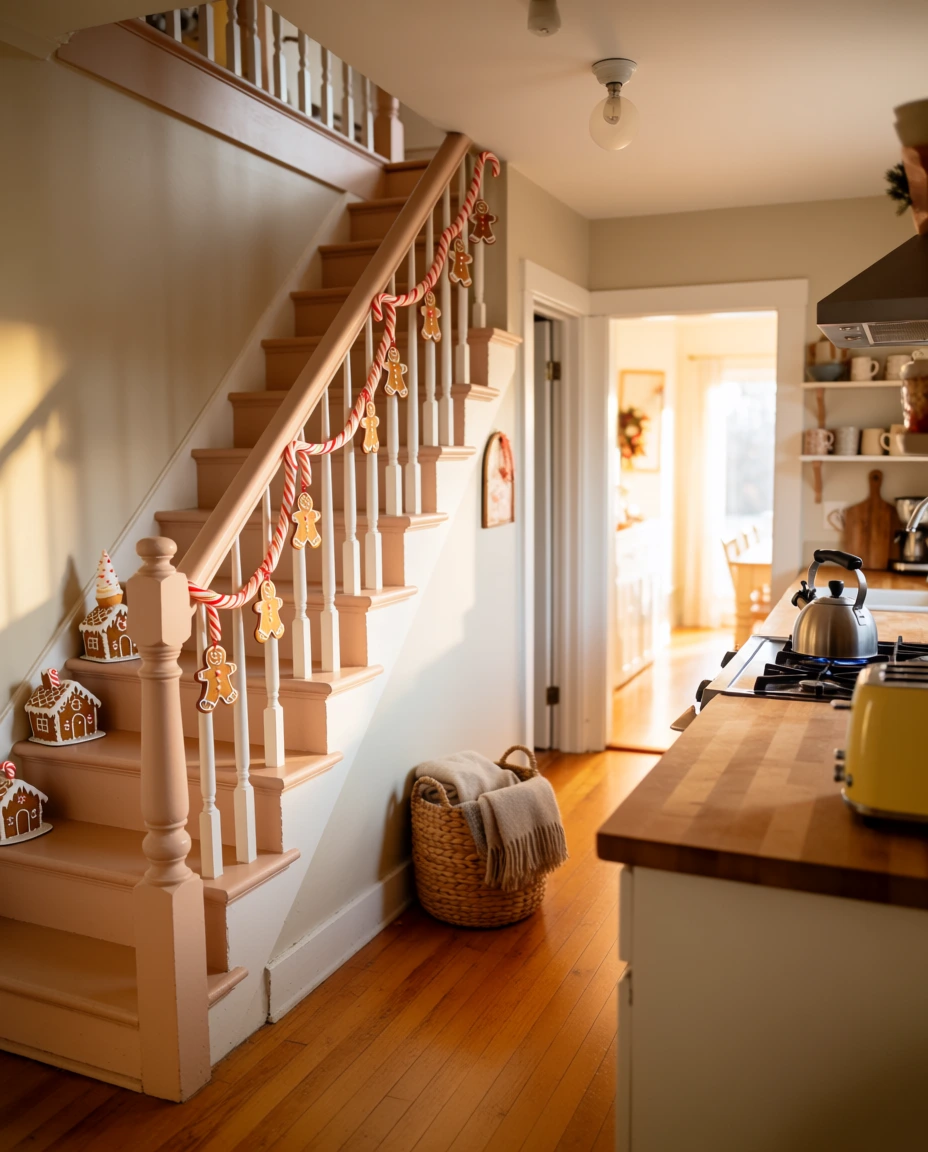
A friend in Ohio started hers with four salt-dough stars her daughter cut out with a juice glass; six years later those same stars come out of the box first, chipped edges and all, and everything else gets built around them. That is usually how a stair theme survives — one small handmade thing nobody is allowed to replace. Store the pieces flat between sheets of parchment and they will outlast most store-bought sets by a decade.
5. Layering Greenery with Dried Citrus
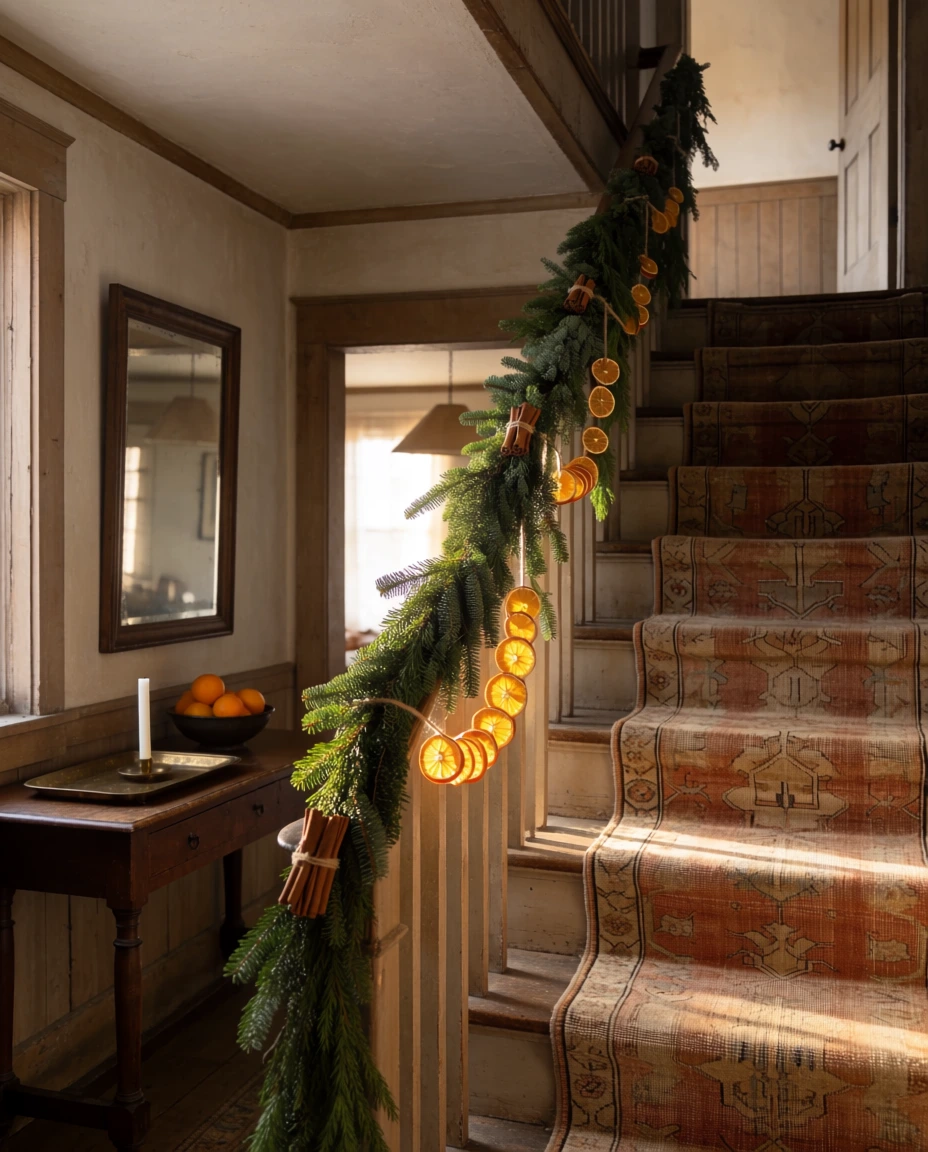
Dried orange slices against evergreen is the oldest trick in the book and still the prettiest. Thread them onto jute at uneven intervals and weave the strand through your stair garland so the citrus glows whenever light passes behind it. The neutral tones — rust, amber, deep green, raw twine — sit easily in older homes with wood trim, and the whole arrangement costs almost nothing beyond a bag of oranges and an afternoon with the oven turned low.
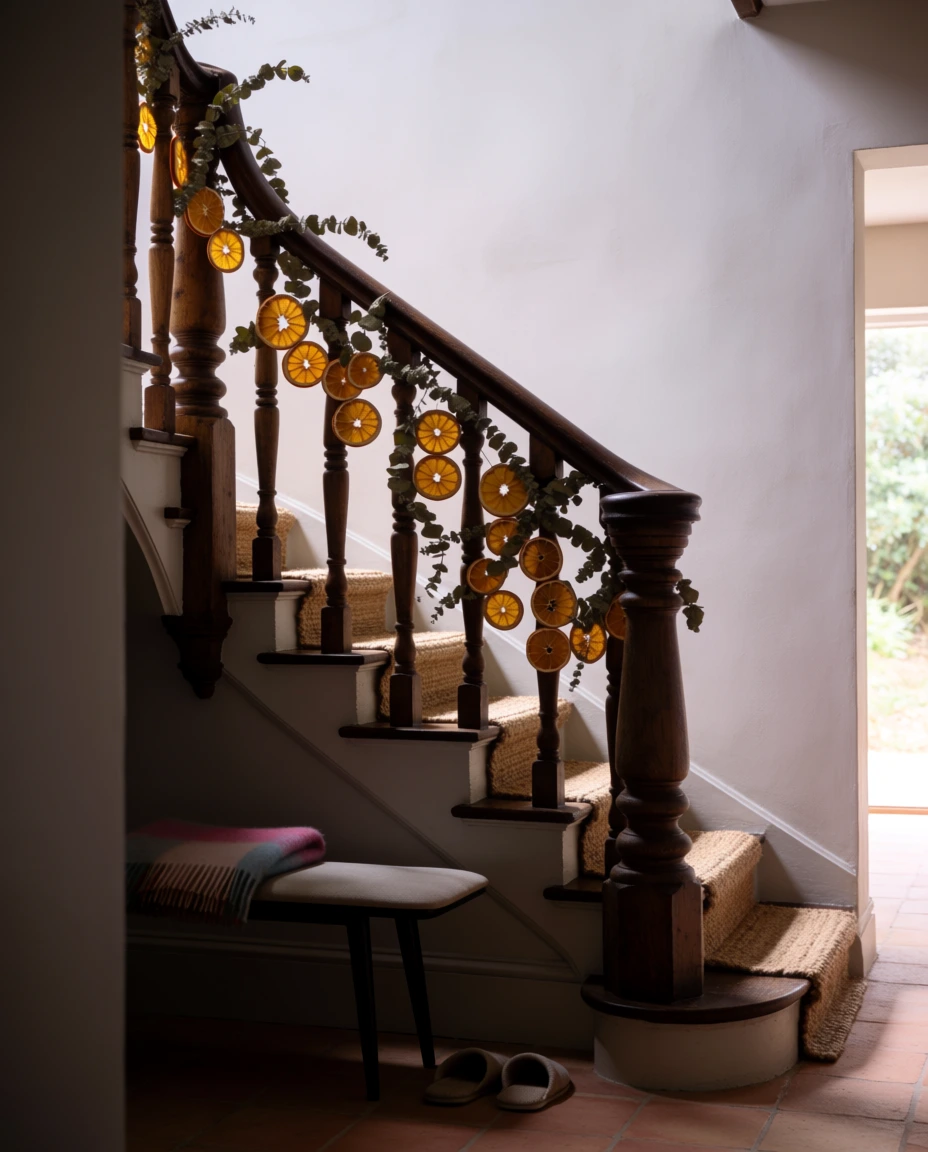
Plenty of American households now put the stairs together the weekend after Thanksgiving, while the oven is already warm and the family is still in the house, which happens to be the right time to dry a tray of citrus at 200 degrees. The slices keep for years in a paper bag in the pantry. Cinnamon sticks tied alongside them make the entry smell like the kitchen for the first two weeks of December.
6. Minimalist Railings Without the Fuss
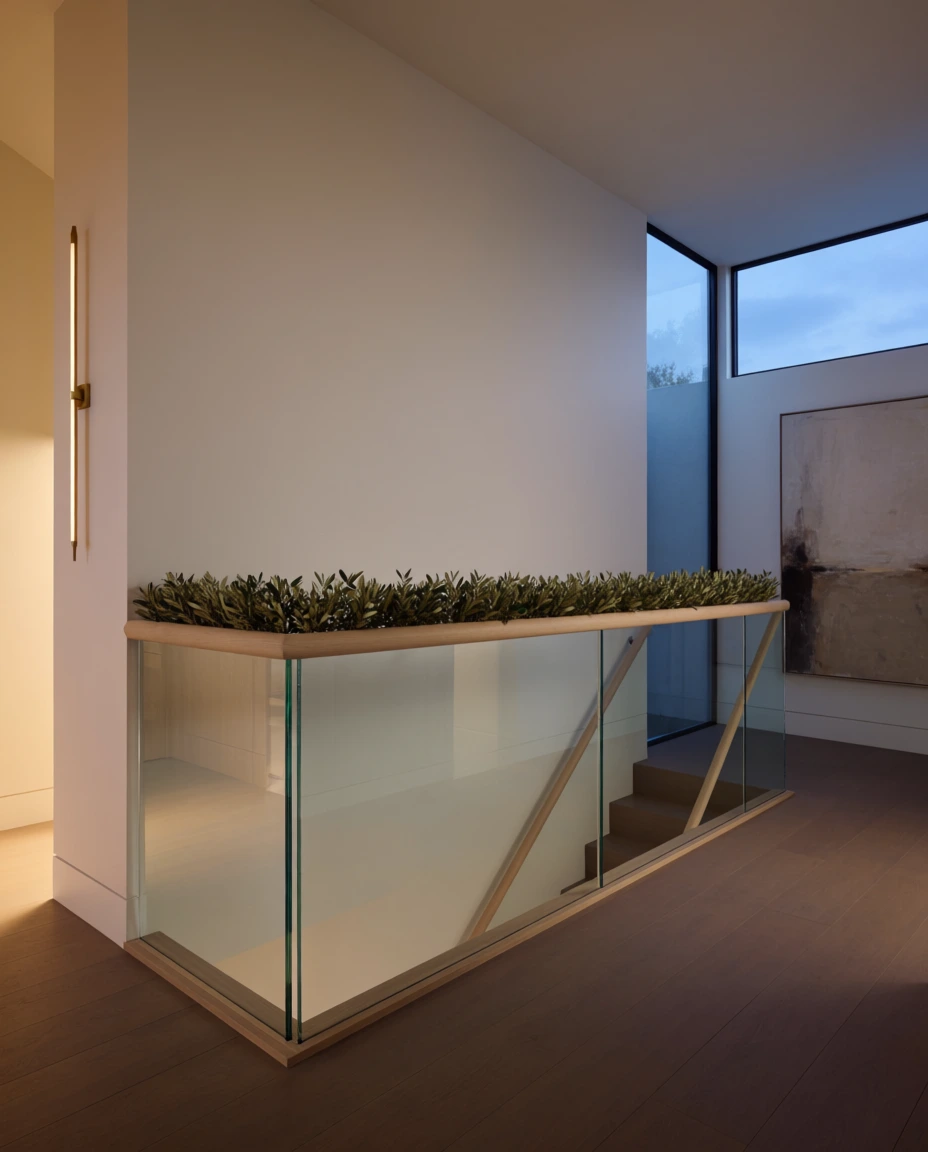
Keeping railings minimalist is less about doing little and more about choosing one gesture and committing to it. A single strand of eucalyptus running the length of the handrail, unfastened at the top and unadorned at the bottom, does more in a modern stairwell than three competing layers. Heading into 2026, this stripped-back approach keeps showing up in new builds with steel spindles and open risers, where anything bushy fights the architecture instead of following it.

Measure the rail before you order, then add roughly a third for the natural dip between anchor points; garland pulled tight loses the curve that makes it look intentional. Clear zip ties tucked under the handrail hold everything without marking the finish, and a pair of scissors handles removal in about five minutes flat. On a glass balustrade, run the greenery along the top rail only and leave the panels completely clear.
7. Pool Noodle Swags for Beginners
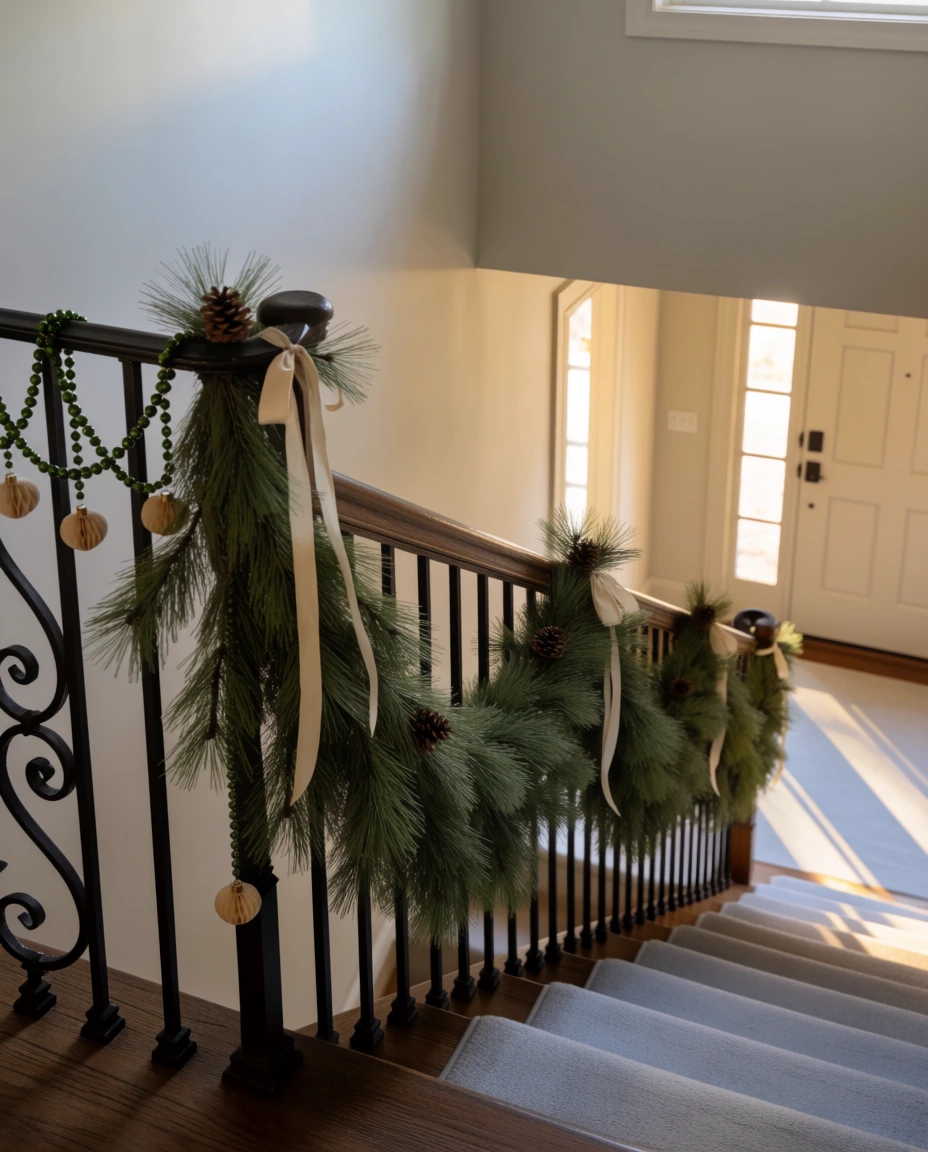
Here is the pool noodle trick that circles back every winter, and it genuinely works. Cut a noodle into curved sections, wire them to the underside of the banister, then wrap faux greenery over the top so each swag holds a plump, even arc instead of drooping into a straight line. Of all the DIY ideas floating around this season, this one gives the biggest visual return for the least skill — no glue gun, no ladder, no measuring.
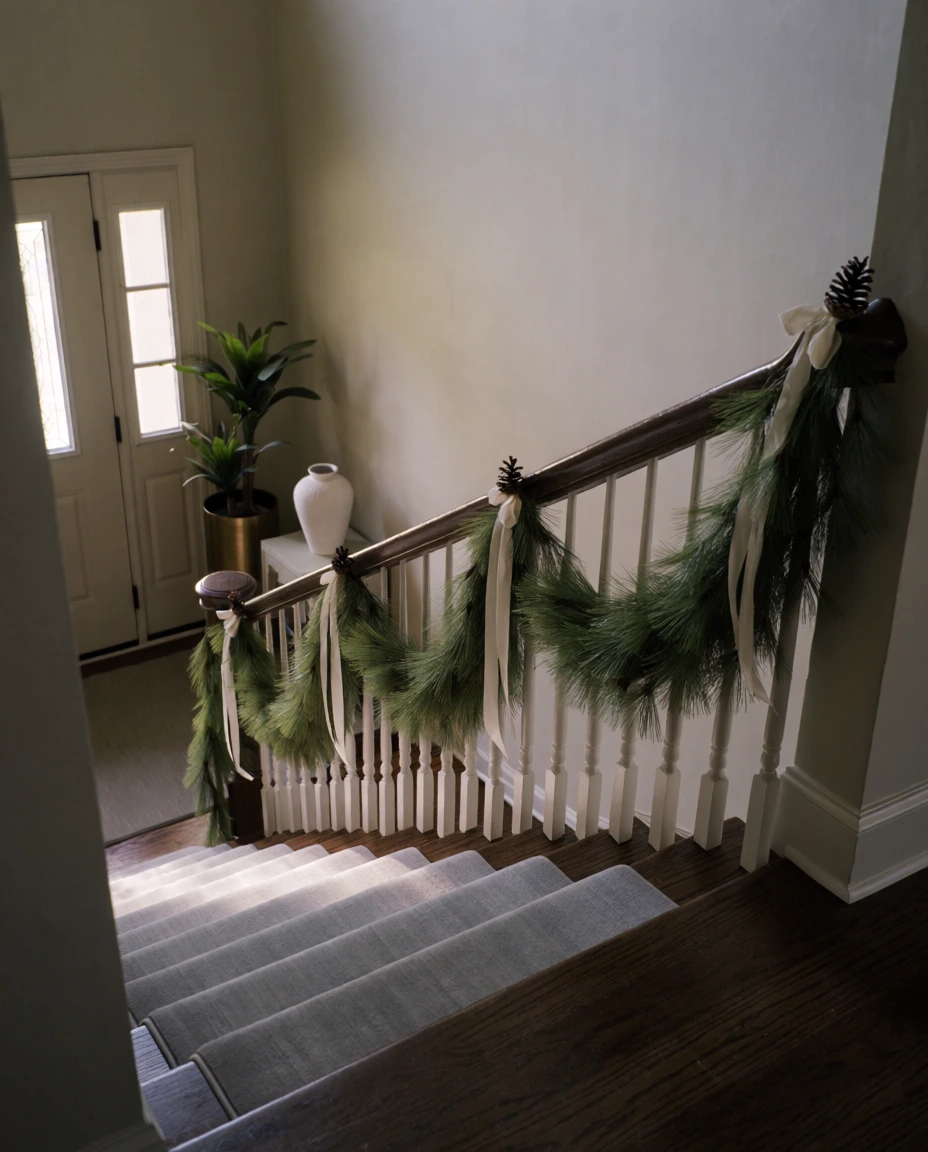
A pack of three noodles runs about four dollars at any big-box store on summer clearance, and a nine-foot faux garland from a craft store sale lands near twelve, which puts a full staircase somewhere under forty dollars. The same noodles come back out year after year. Spray the faux greenery lightly with matte sealer if it has that plastic sheen, and it passes for the expensive kind from six feet away.
8. Oversized Bows on Repeat
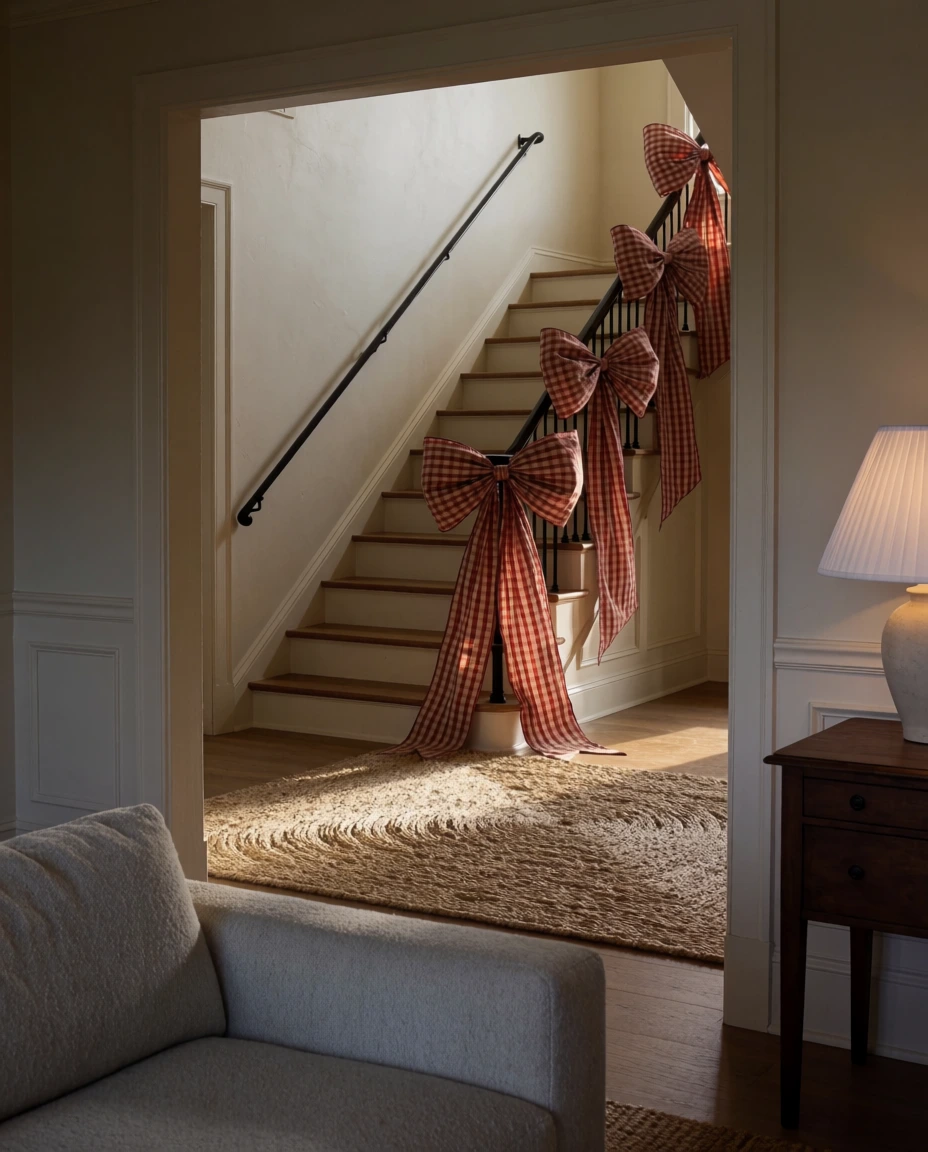
Big bows and nothing else is a genuinely chic option, and it suits anyone who wants no garland to vacuum up in January. Tie one generous bow to every third or fourth spindle in wide wired ribbon — velvet, satin-backed, or a soft check — and let the tails fall long enough to graze the tread below. The repetition is the whole design. Two colors maximum, and keep the loops loose so they read soft rather than starched.
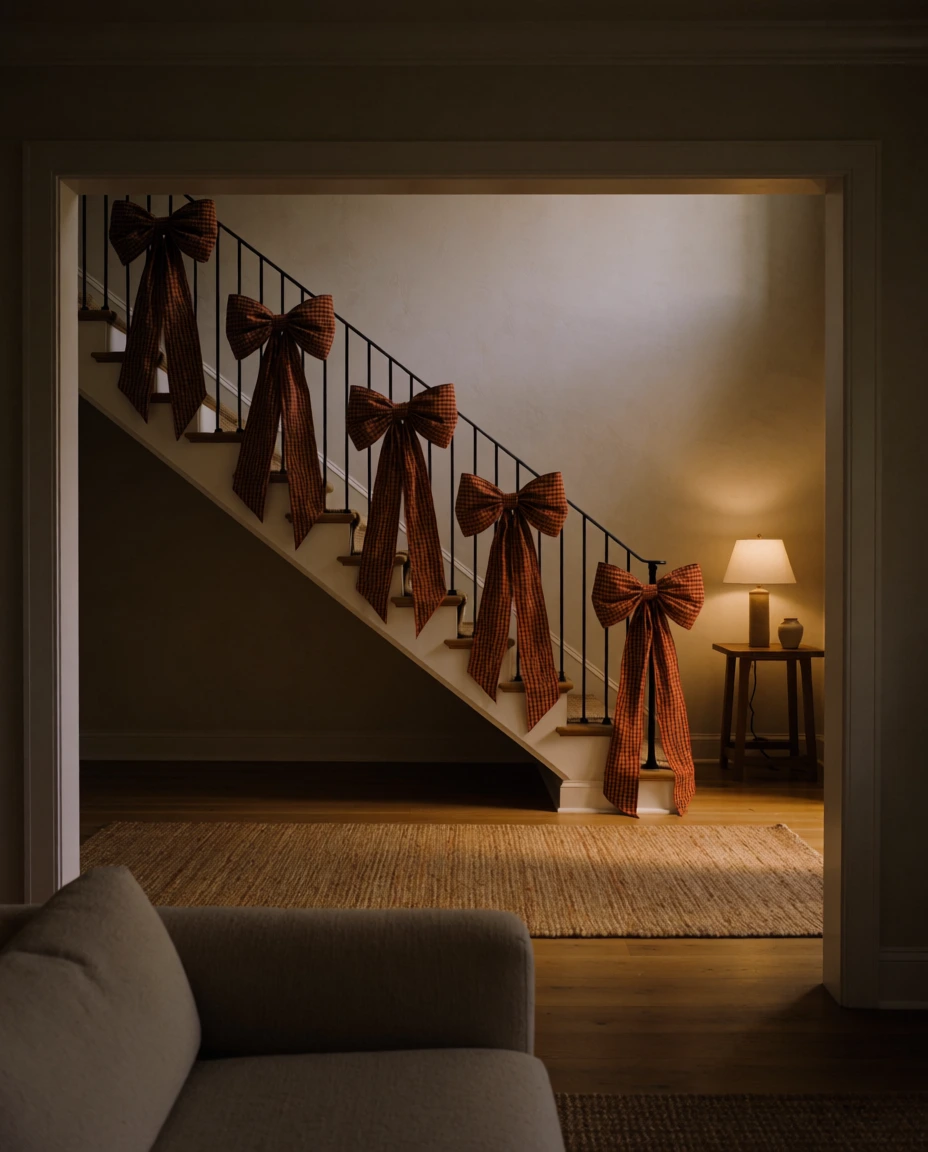
Most people who try this once never go back, mainly because the bows fold into a shoebox in about four minutes and come out looking identical next season. Wired ribbon holds its shape through storage; the cheaper unwired kind flattens and needs steaming. Households with pets or crawling toddlers tend to like it too, since there is nothing on the stairs to pull down and nothing shedding needles onto the runner.
9. Buffalo Check Farmhouse Stairs
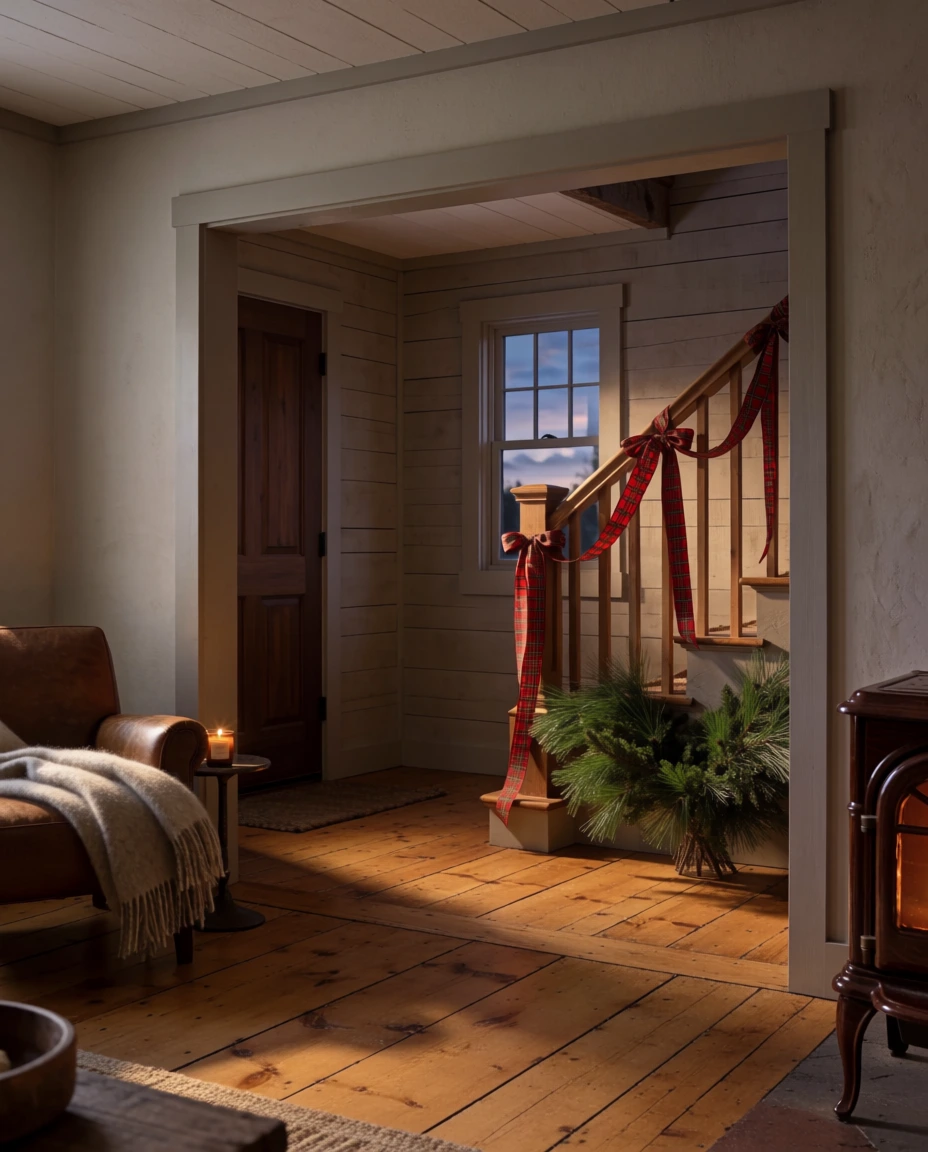
Black and red buffalo check earns its keep on a farmhouse staircase, especially against white spindles and a warm oak handrail. Wrap the plaid down the rail in a wide spiral, add pine at the newel post, and hang a small grapevine wreath at the turn. It stays simple because the pattern carries the whole thing — no ornaments, no lights, just fabric and greenery doing the talking. Wool or flannel beats printed polyester every single time here.
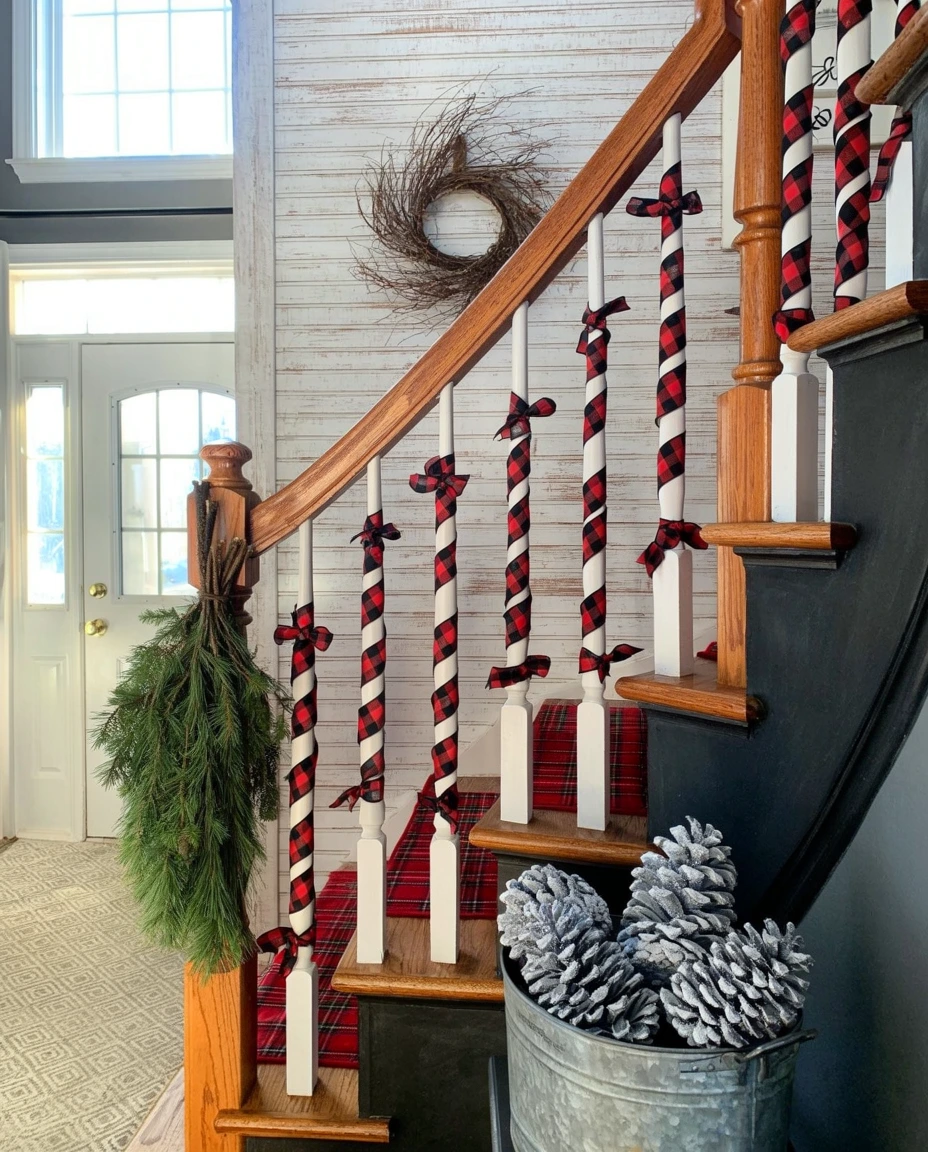
Across the Midwest and the South this pairing has become almost a standard, showing up in true farmhouses and suburban colonials alike because it matches the plaid throws and the wreath already on the front door. It also survives a busy house, since flannel does not shatter. Set a galvanized bucket of pinecones at the base of the stairs and the look carries into the rest of the entry.
10. Modern Tinsel in Soft Silver

Tinsel grew up. The new generation comes in matte pewter and brushed silver rather than the shiny plastic fringe from childhood, and a single strand twisted through a garland gives a modern stairwell a cool, wintry shimmer. Run it loosely so it catches light in patches instead of coating the greenery evenly. Against a charcoal wall or a black metal rail, the effect reads closer to frost on a window than to anything from a party store.

Stylists tend to treat metallic strands the way they treat jewelry — one piece, placed where the light already falls, rather than everywhere at once. In a stairwell that usually means the top third of the run, where a landing window or a hall fixture does the work for free. Keep the rest of the palette quiet, greens and grays only, and the silver becomes the one thing the eye needs to find.
11. Mixing Blush Pink and Ivory

Soft pink on a staircase surprises people, then wins them over fast. Pair blush ornaments with white flocked pine and a wide dusty rose ribbon laced through the spindles, and the whole stair takes on a warmth that red simply cannot manage. Add glass beads or a strand of faux pearls for a little shine. The palette works especially well in houses with pale oak floors and creamy walls, where red would sit far too heavy.

This one shines in a cottage entry, a Victorian with high ceilings, or any staircase visible from a living room done in neutrals, since the pink picks up whatever pale tones are already in the room. It also gives a girls’ bedroom landing something to look forward to. In a dark hall with heavy wood paneling the blush can go dusty, so lean toward champagne and cream instead of pushing the pink brighter.
12. Stair Garland Over Curved Banisters
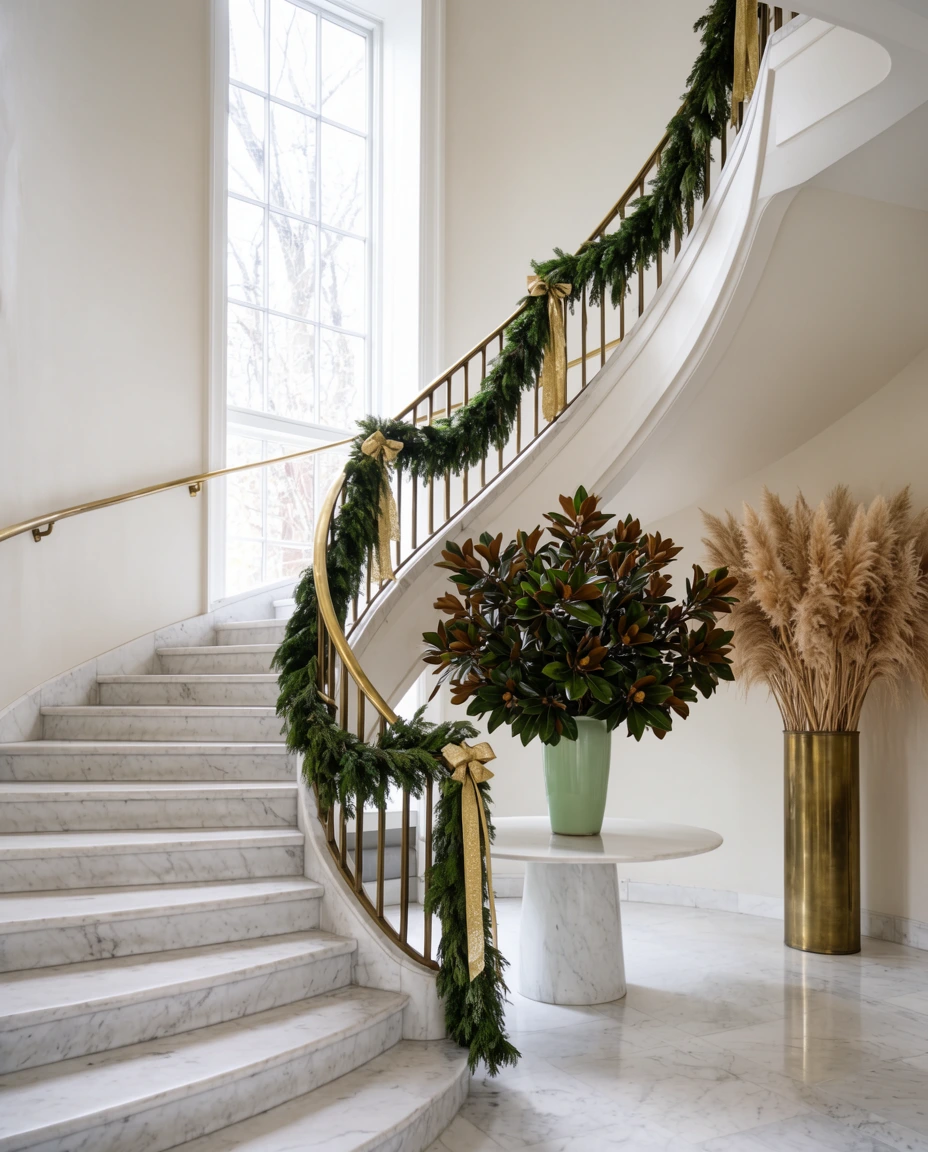
Curved banisters are the ones people panic about, and they turn out to be the most forgiving of all. A stair garland follows a sweeping rail naturally, since the curve already gives you the shape you would otherwise fake with swags. Keep it easy by working from the top down, letting gravity settle the greenery before you fix anything permanently, then tightening from the bottom up. On a spiral, run the strand along the outer edge only.
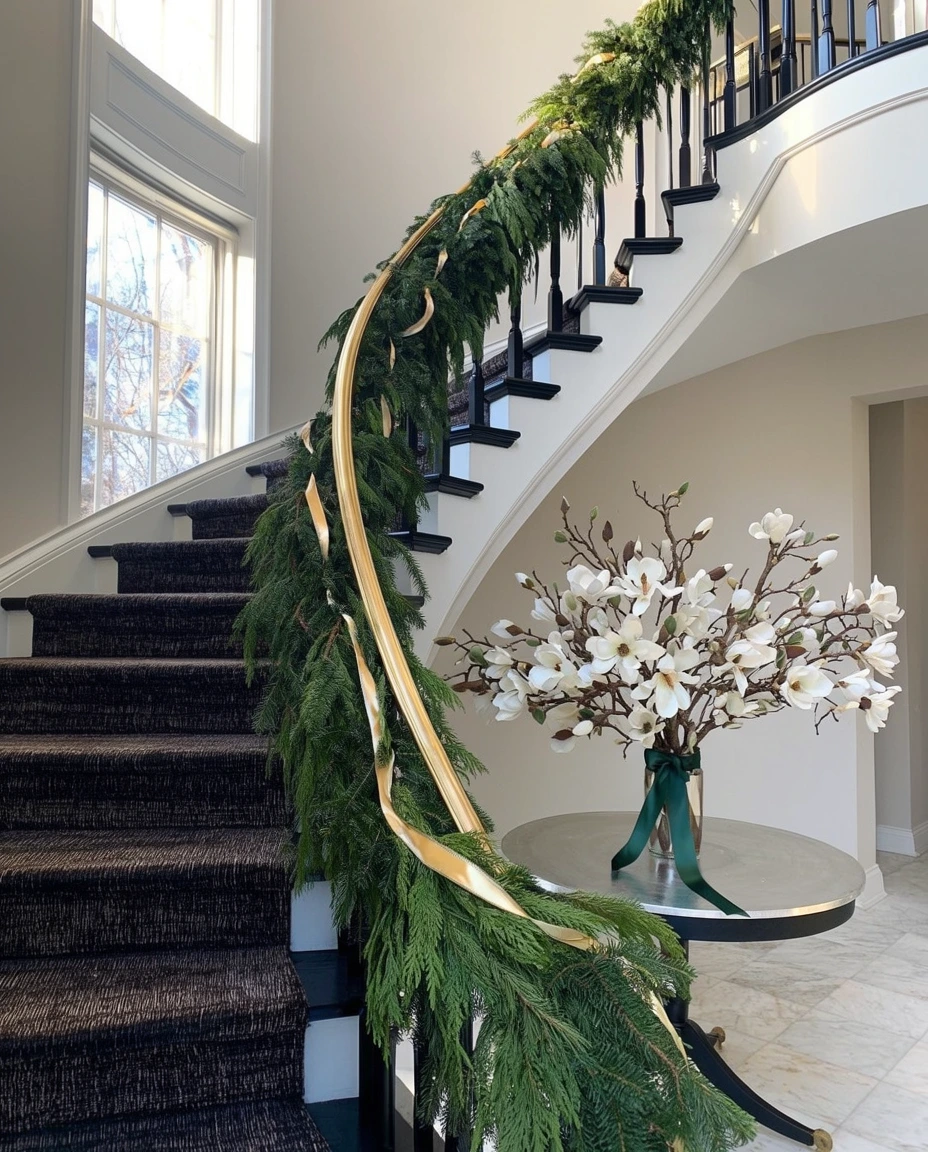
Space your anchor points evenly along the rail rather than measuring from the floor — on a curve the two are never the same distance apart, and eyeballing from below is exactly what makes a run look crooked. Step back to the front door every few feet to check the line. A second pair of hands holding the loose end saves twenty minutes and one bad word on any run longer than twelve feet.
13. Plush Stockings for Christmas Morning
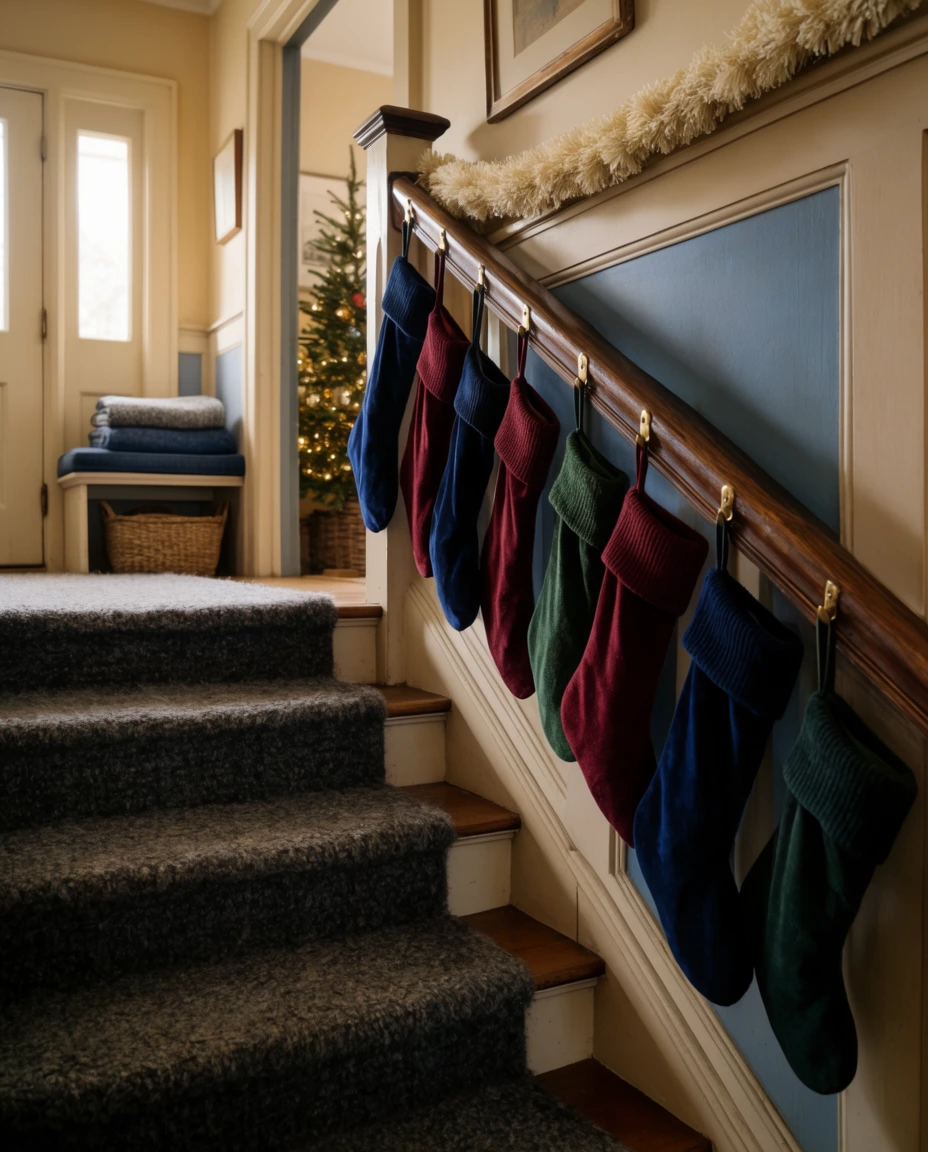
Not every house has a mantel, and the banister has quietly become the second home for stockings. Hung from ribbon loops or small brass hooks at even spacing, they turn into christmas staircase decorations that actually get used on the twenty-fifth. A DIY version cut from velvet or an old wool blanket takes one evening and costs less than a single store-bought stocking, and a mismatched set always looks better than a matching one.

One family in Vermont hangs theirs in birth order down the rail, which sounds sentimental until you watch four grown siblings argue about the order every December. The stockings moved off the fireplace years ago and never went back. Weight matters more than people expect — anything heavier than a few oranges pulls a ribbon loop loose overnight, so hooks earn their place the moment the stockings start getting filled.
14. Lanterns on the Treads

A row of lanterns climbing the side of the staircase gives an entry that low, glowing quality photographs love. Choose black iron or aged gold frames in three different heights, set them against the wall side of the treads, and fill them with pillar candles and a little greenery. The neutral palette stays quiet enough to leave out all winter, and the glass reflects whatever lights are already burning on the tree.

The thing that goes wrong here is scale — lanterns wide enough to eat into the walking surface get kicked within a day, so measure your tread depth and stay well inside it, keeping the center of every step open. Flameless candles with a warm flicker solve the other problem, since nobody wants an open flame on a staircase. Weight the bases with a handful of sand if the house has a dog.
15. Mini Wreaths and Ribbon Tails
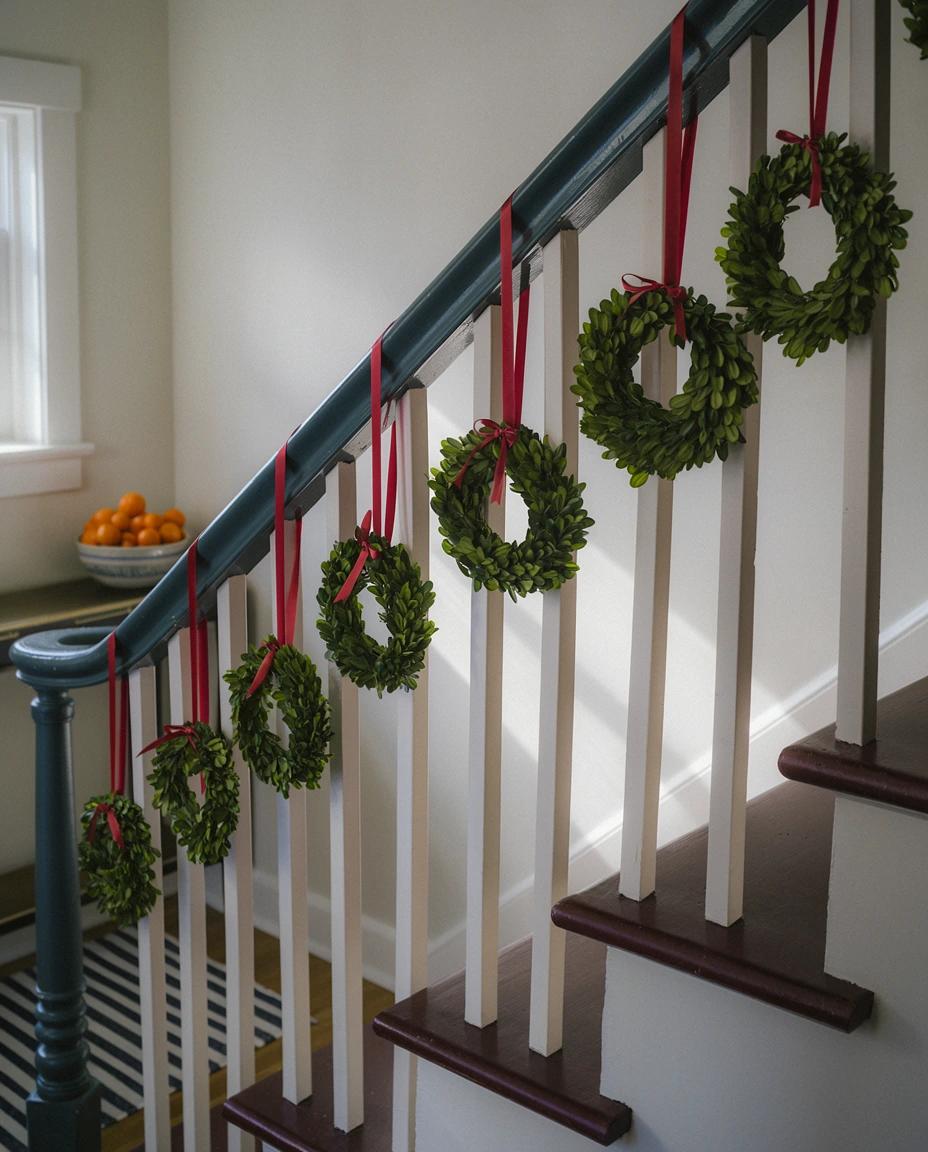
Small wreaths hung down the length of the balusters give you rhythm without bulk. Tie each one to the rail with a length of narrow ribbon, add tiny bows at the knots, and let the tails hang at slightly different lengths so the line has some movement in it. It is an easy alternative for anyone with a short staircase, since a full garland overwhelms six or seven steps while a row of little rings fits perfectly.
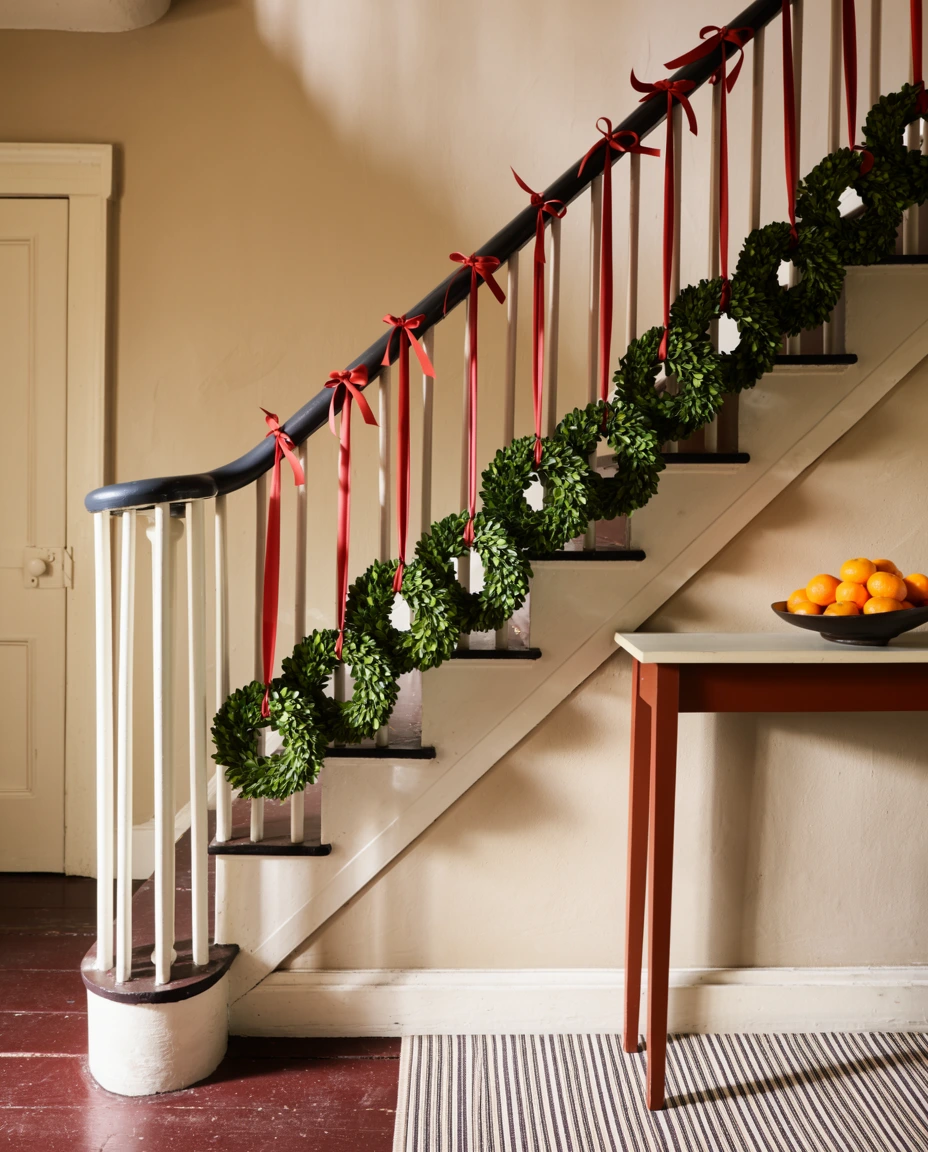
Craft store minis run two or three dollars apiece, and a bag of assorted sizes from a discount shop often lands cheaper than one premium garland — call it twenty dollars for an entire staircase. Boxwood and eucalyptus versions look the most convincing in person. If the wreaths arrive flat from shipping, fluff the branches outward from the center for a few minutes and they fill out completely.
16. Vintage Charm for the Landing

A landing is prime real estate, and vintage pieces are what make it feel like a home rather than a display. An old wooden sled propped in the corner, a pair of leather skates on the wall, brass bells on a leather strap over the rail — these are the ideas that give a staircase a story instead of a theme. Keep the grouping to three or four objects with real age and leave the space around them open.

Estate sales and church rummage sales across New England turn up sleds and skate pairs from November onward, usually for less than a new reproduction costs at a home store. Farm auctions through the Midwest are another reliable source, especially in early winter. The genuine articles carry a patina manufacturers keep trying to copy, and half the pleasure is remembering which weekend you found each piece.
17. Fairy Lights in the Greenery

Lights buried inside the greenery beat lights laid on top of it every time. Push warm white fairy strands deep into a garland so the bulbs disappear and only the glow comes through, which is the difference between a staircase that looks lit and one that looks wired. Copper wire strands are thin enough to vanish completely. Two strands per nine feet is the sweet spot — enough to read at dusk, not enough to compete with the tree.

The detail people skip is where the power goes. Plan the run so the plug ends near an outlet at the bottom of the stairs, tuck the cord behind the newel post, and use a small remote or a timer instead of crouching down every night. Battery packs handle the upper section where no outlet exists, but choose the kind with a timer built in or you will be swapping batteries by mid-December.
18. Nutcrackers Climbing the Stairs
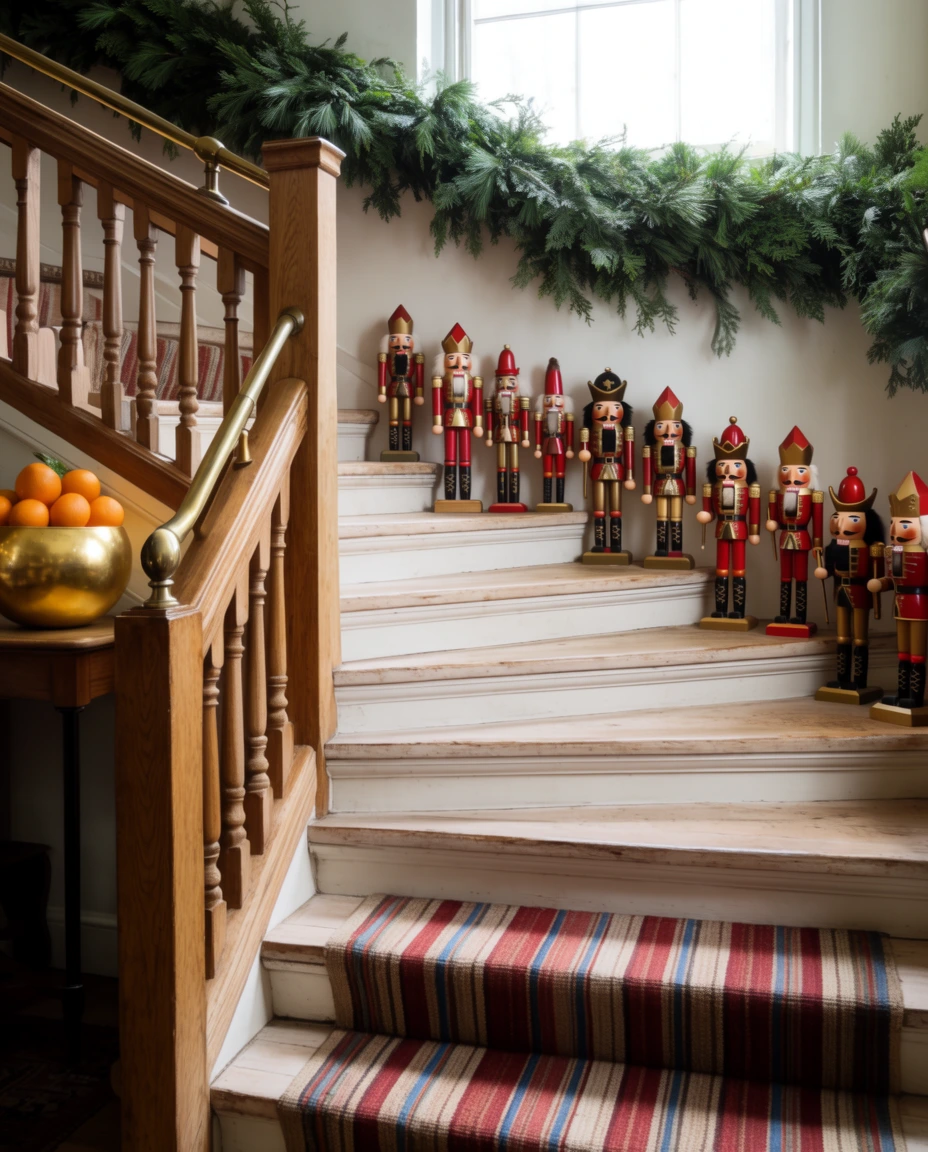
A line of nutcrackers marching up the outer edge of the treads is one of the most simple ideas here and one of the most charming. Vary the heights, keep them all facing the same direction, and stop the parade about two-thirds of the way up so the top of the staircase stays clear. Painted vintage soldiers in soft red and gold carry more character than a matched new set, though mixing old and new works fine.

Parents learn quickly that this arrangement will be rearranged — nutcrackers get carried off, renamed, and returned upside down, and most families give up and let it happen. Setting them along the wall side rather than the open edge keeps the tumbles harmless. Some households number the figures and add one each year, which turns a decoration into a small annual tradition with no planning required at all.
19. Pinecones in a Neutral Palette

Pinecones cost nothing and carry a whole staircase if you use enough of them. Wire clusters of three to the balusters at even spacing, mix the sizes, and leave everything in its natural browns for a neutral scheme that sits well against wood or white. The result stays minimalist while still feeling full, and it is easy enough to finish during one podcast episode. A few dusted lightly with white paint add depth without turning frosty.
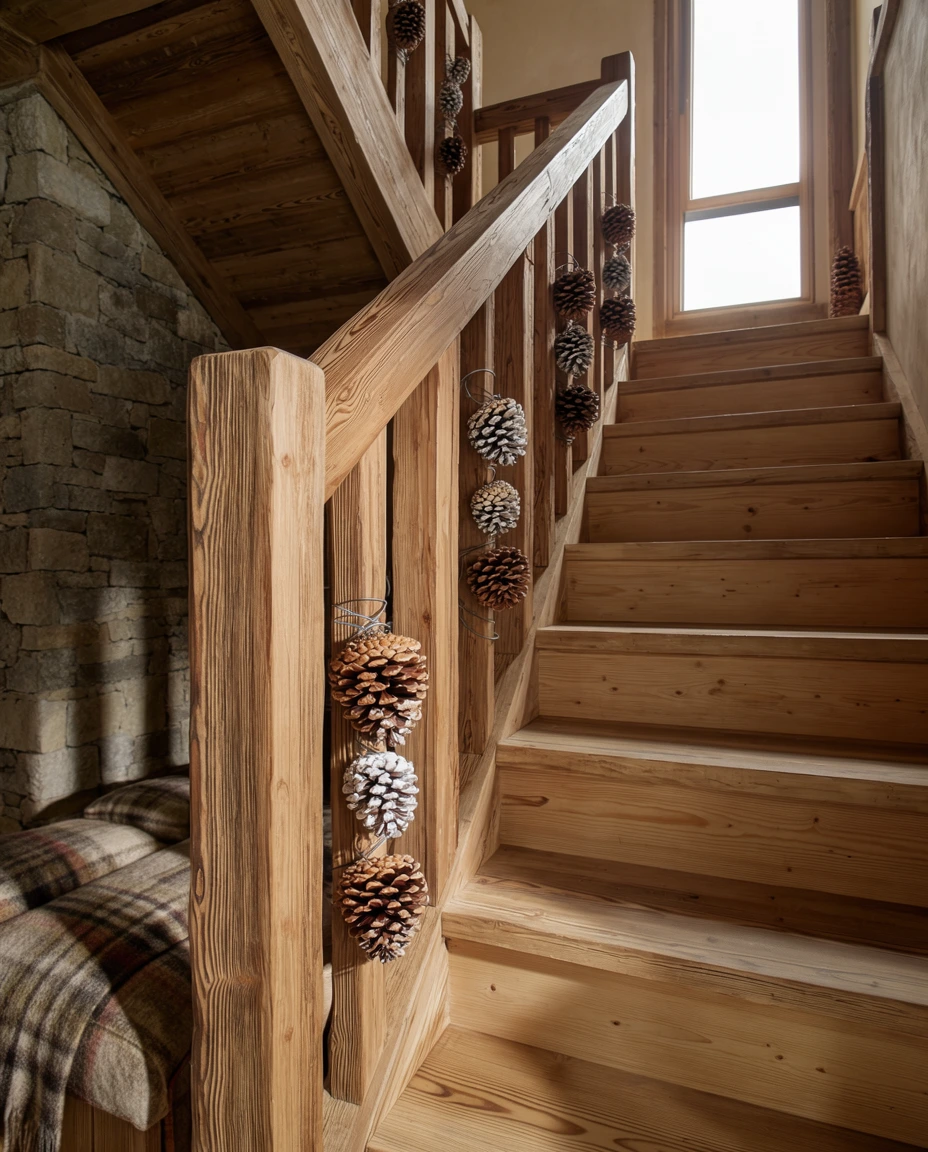
Mountain houses and lake cabins wear this best — Colorado, the Carolinas, anywhere the same cones are already scattered outside the door — though it looks equally right in a suburban split-level with oak trim. Bake foraged cones at 200 degrees for half an hour on foil to clear out anything living inside them. They store in a paper sack all year and come back out looking new.
20. Ornament Clusters Between Spindles
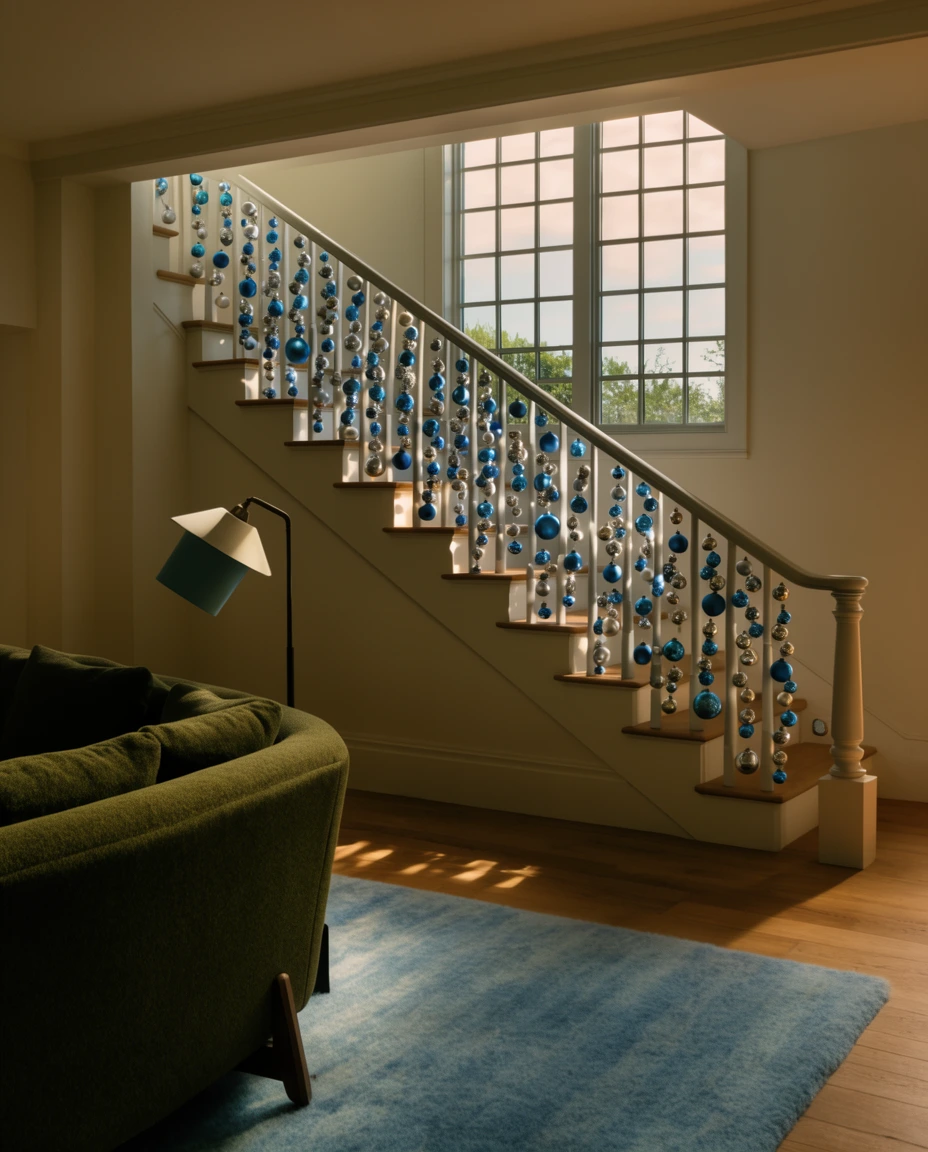
Ornaments do not have to live on a tree. Hanging clusters of them at staggered depths between the spindles gives a staircase a floating, jewel-box quality, and deep blue glass against a white rail is one of the sharpest color ideas of the season. A modern hall with a straight run of balusters suits it best, since the repetition of the spindles becomes part of the pattern. Use fishing line and the ornaments appear to hover.
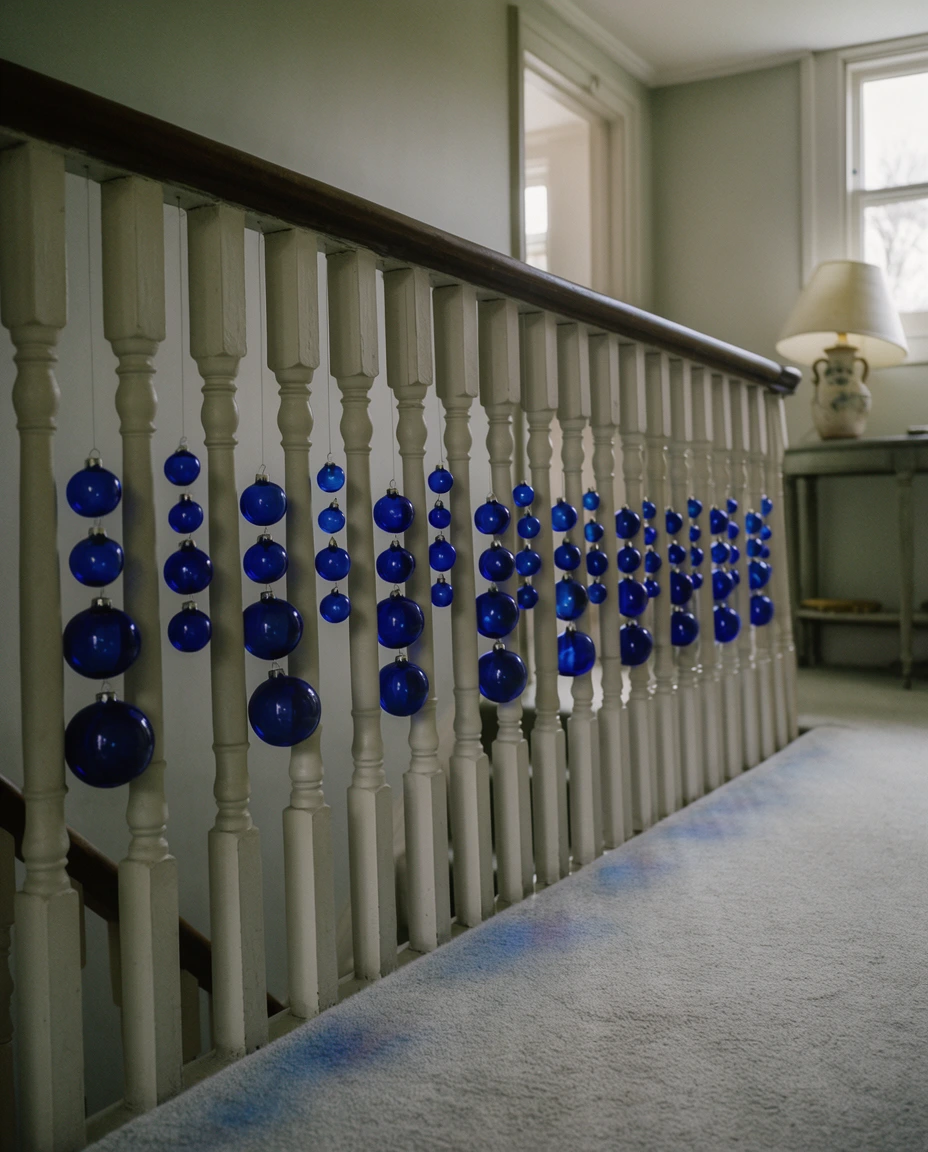
Prop stylists build these clusters in threes at three different lengths, largest ornament lowest, because the eye follows the descending line and reads it as deliberate. They also concentrate them near the top of the run where light from a landing window hits the glass directly. Shatterproof versions have gotten good enough that the difference only shows up in close-up photographs, which matters on a busy staircase.
21. A Simple Ribbon-Wrapped Rail
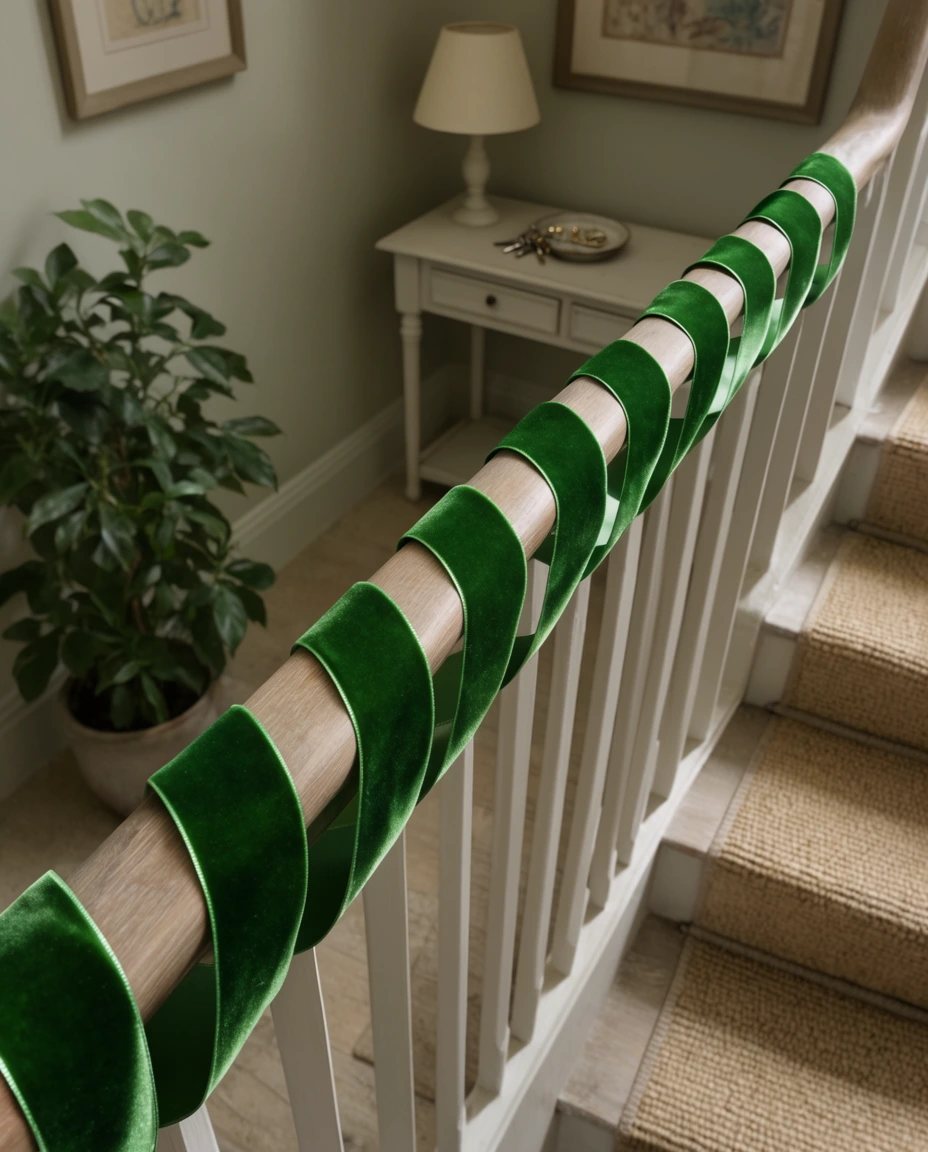
The last one is the quietest and possibly the best of the bunch. Wide velvet ribbon spiraled evenly down the handrail, pinned invisibly underneath, keeps railings easy to dress and even easier to strip down on New Year’s Day. It suits banisters of every shape — straight, curved, split — and works in a rental where nothing permanent can be attached. Choose a ribbon at least three inches wide so the spiral reads as a band, not a stripe.
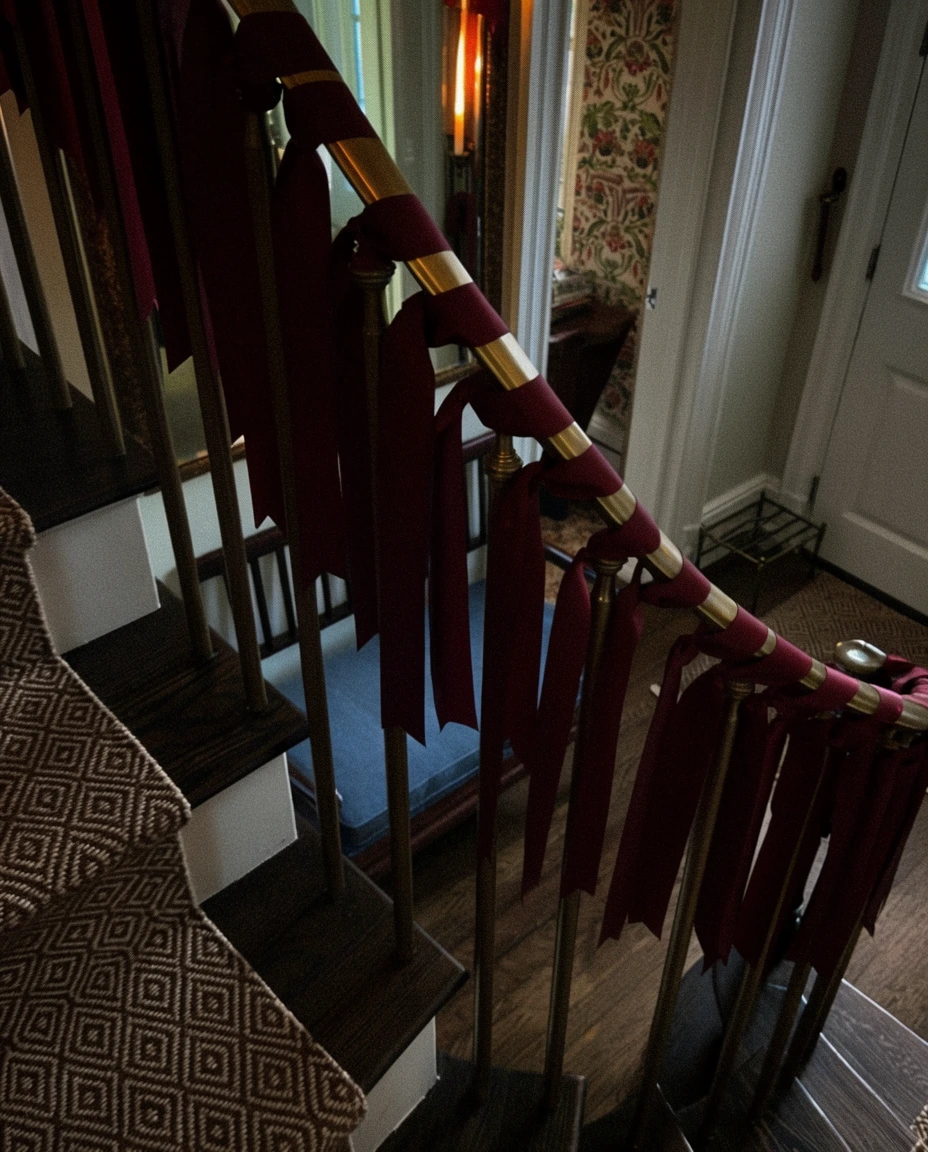
A reader in Charleston does hers in a different color every year and calls it the cheapest decorating decision in the house, twenty-two dollars and one glass of wine. Emerald one December, oxblood the next. Consistent spacing is the only real skill involved, so mark the rail lightly with painter’s tape at even intervals before you start wrapping, then pull the tape as you go.
Stairs give you one long, uninterrupted surface to play with, which is rare in a house and worth using well. If you have a trick that keeps garland from sliding, or a color combination nobody expects, leave it in the comments — those small details are always the ones worth stealing.