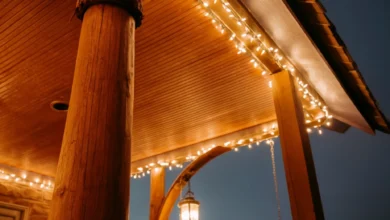
Christmas planning starts earlier every year, and by late summer American Pinterest boards are already filling with garlands, candlelit tablescapes, and porches wrapped in evergreen. Part of that is practical — supplies sell out and handmade projects need lead time — but most of it is plain anticipation for the coziest stretch of the calendar. The 24 ideas below cover every corner of the house, from the front steps to the kitchen counter to the smallest apartment bedroom. Some take an afternoon and a glue gun; others just take a fresh eye and what you already own.
1. A Grinch Corner for Kids
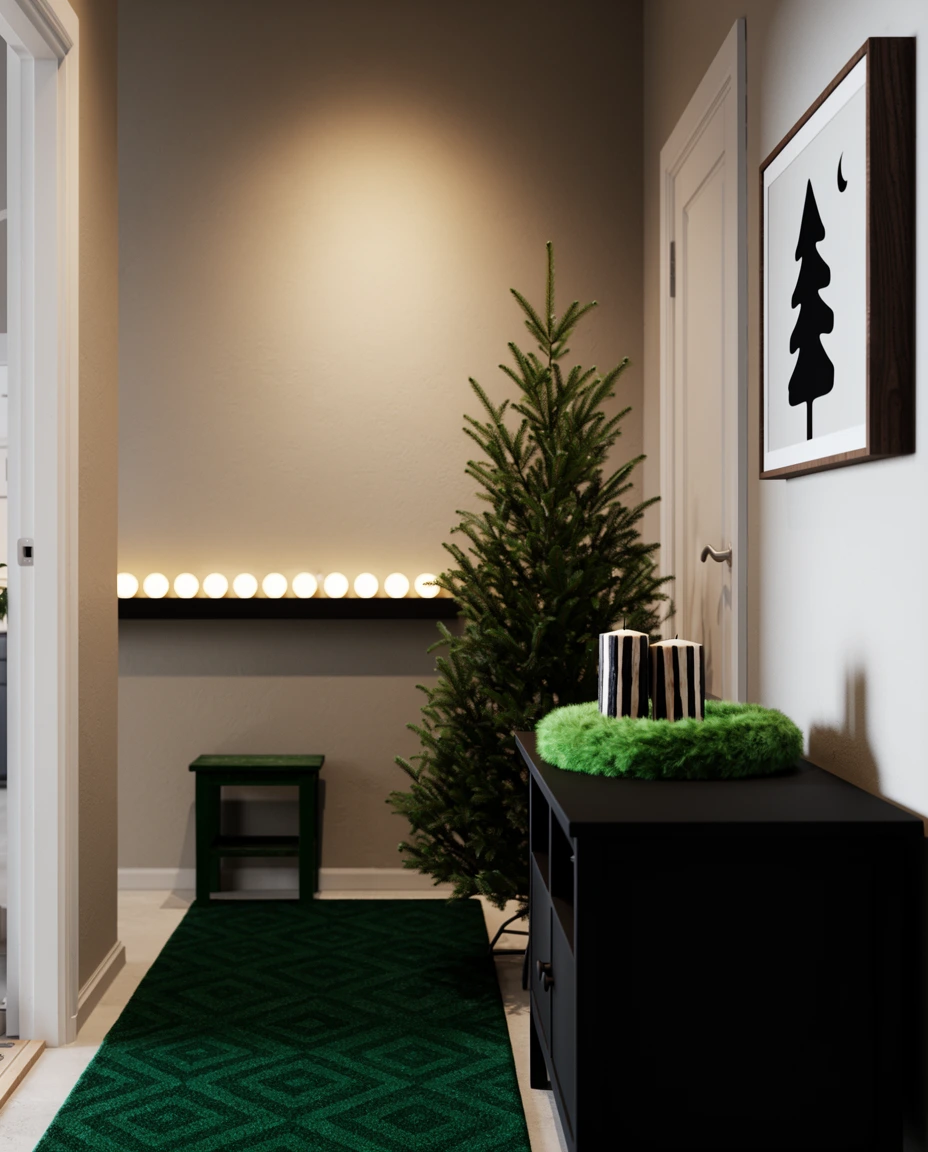
A Grinch theme gets a bad rap until you see it done with restraint — lime green, black, and a single crooked tree in a corner the kids can claim as their own. The best ideas here lean playful rather than loud: a fuzzy green wreath, striped stockings, one oversized heart cut from felt. Give it a defined patch of the room, maybe a bookcase wall or the end of a hallway, and the whole thing feels intentional instead of chaotic.
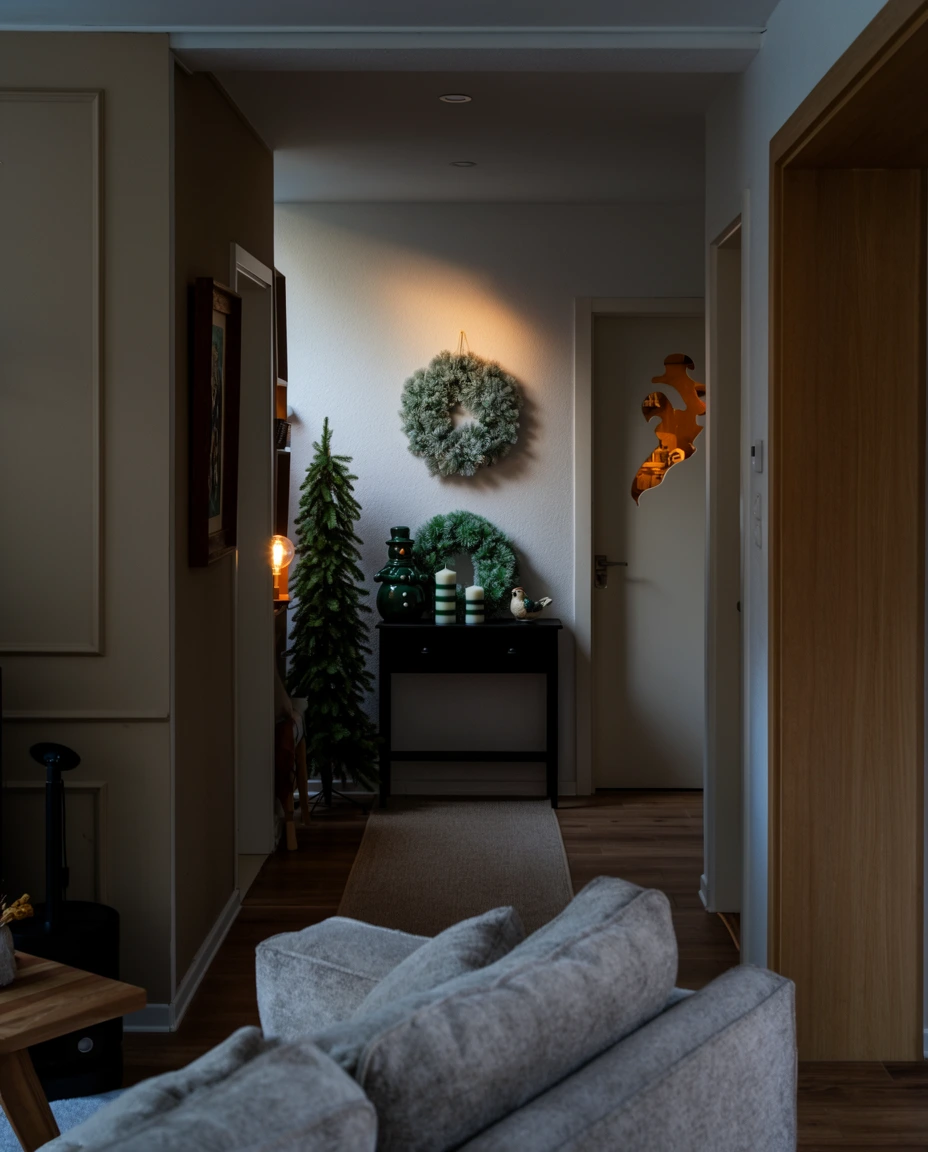
Green reads best against something warm — walnut shelves, a caramel leather chair, an oatmeal rug — because the color turns sickly next to cool gray. Anchor it with two or three textures you already own and add the character pieces last, so the corner still looks styled once the novelty items come down in January. A strand of white bulbs threaded behind the shelf keeps the vignette glowing after dark without competing with the tree in the next room.
2. Gingerbread Houses in the Kitchen
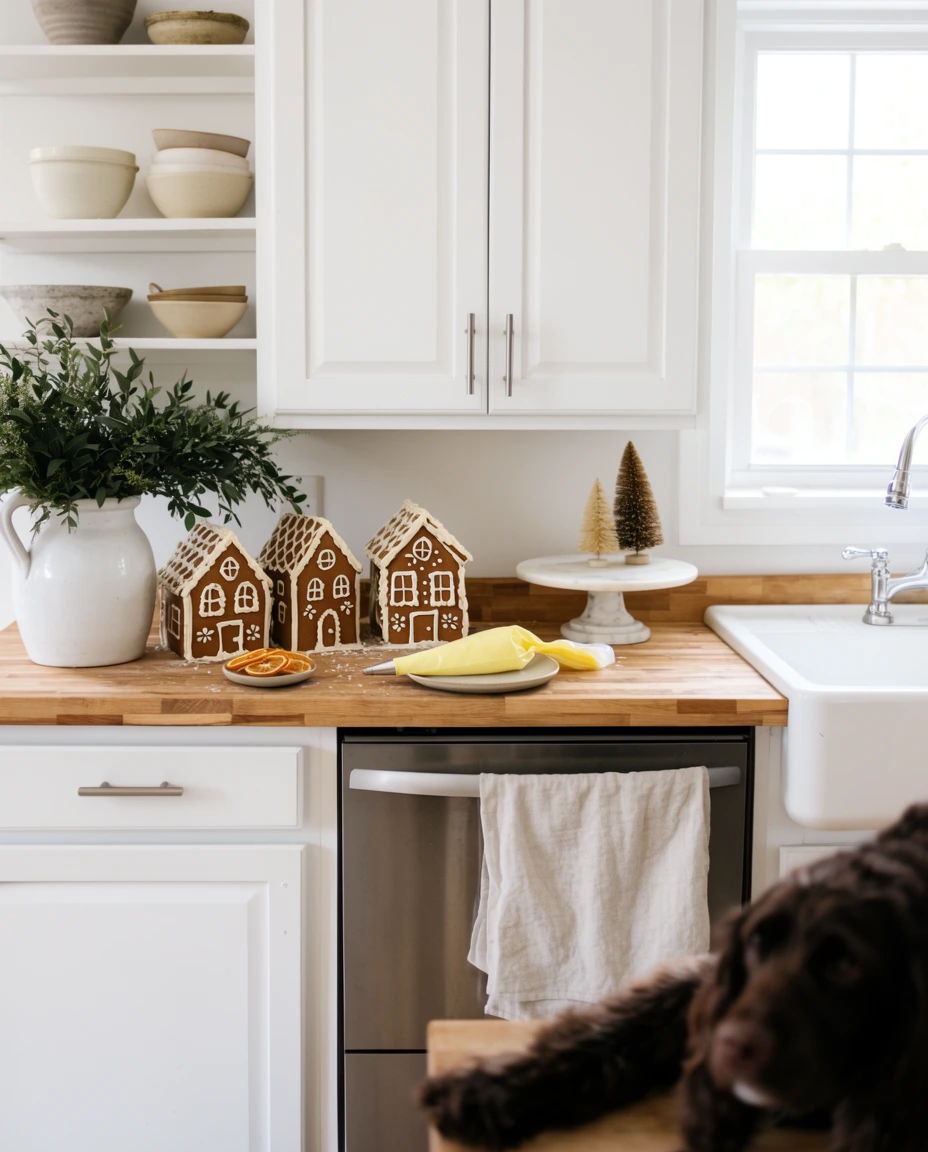
Gingerbread houses look best where they were made, so leave them on the kitchen counter instead of moving them to the dining table. A row of three or four, built at different heights, turns a stretch of butcher block into the warmest display in the house. Homemade ones with crooked icing beat any store-bought kit, and a few bottle-brush trees around the base fill in the gaps. Add a marble cake stand underneath and the arrangement reads deliberate.

My neighbor in Ohio has kept the same lopsided gingerbread cottage on her open shelf for six Decembers, sealed with a coat of clear varnish after her twins built it in second grade. It has surrendered a gumdrop or two, but nobody notices, and everyone asks about it. That longevity is the argument for one good centerpiece house rather than a new kit each year — the crooked roofline gains meaning, and the counter never looks like a craft table.
3. Handmade Felt Ornaments
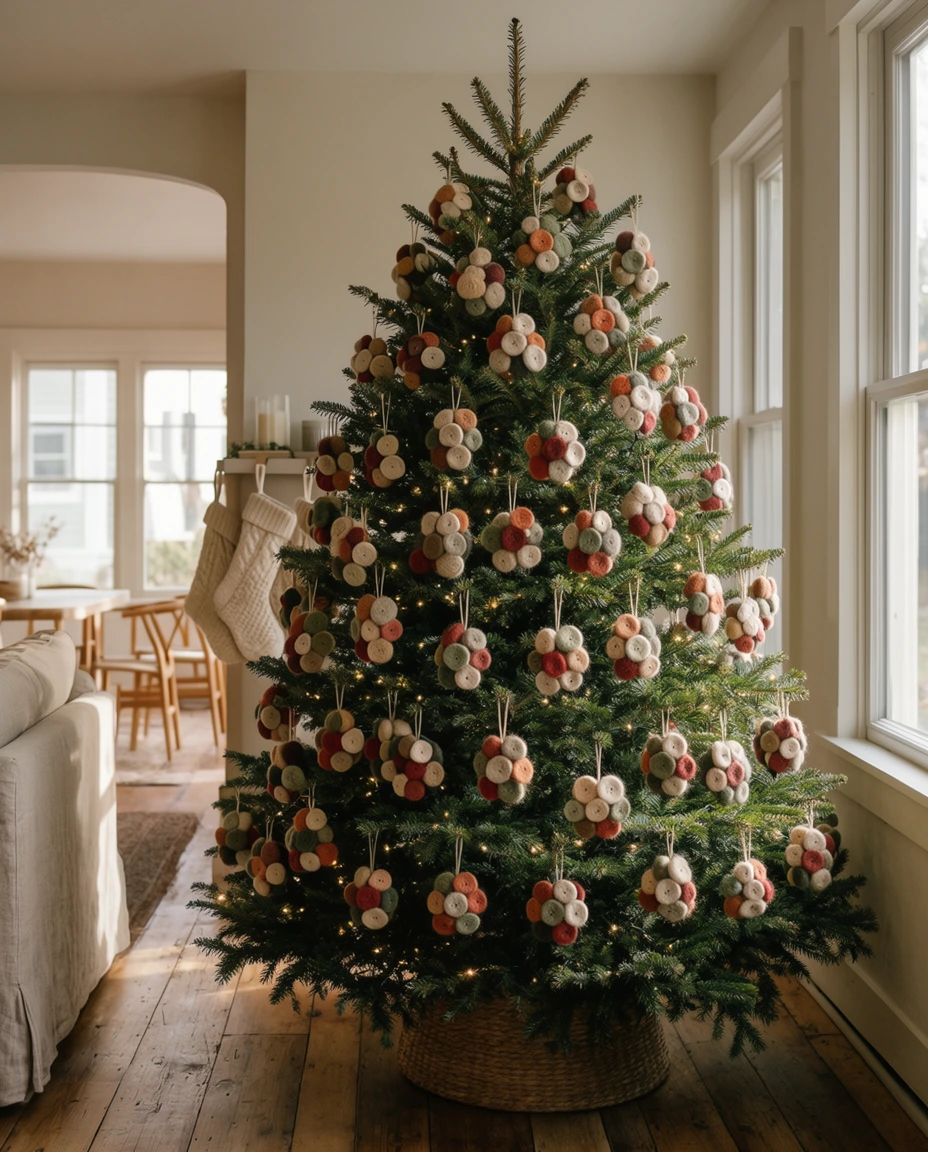
Wool felt holds its shape, doesn’t fray, and photographs beautifully — three reasons handmade ornaments made from it keep showing up on holiday boards. Simple shapes work hardest: stars, mittens, snowflakes, a plump little bird stitched with contrasting thread. A DIY afternoon with a template, embroidery floss, and a bag of stuffing yields a dozen, enough to fill the lower branches where glass ornaments are risky around toddlers and curious cats.

A yard of good wool-blend felt runs about twelve dollars and makes roughly thirty ornaments, which puts each one under fifty cents before thread. Compare that to the eight-to-fourteen-dollar range for a single artisan ornament at a boutique and the math makes itself. Buy the felt in a tight palette — cream, rust, sage, deep red — so the finished batch hangs together on the tree instead of looking like a scrap bin, and use the same floss throughout.
4. Crochet Snowflakes for the Tree
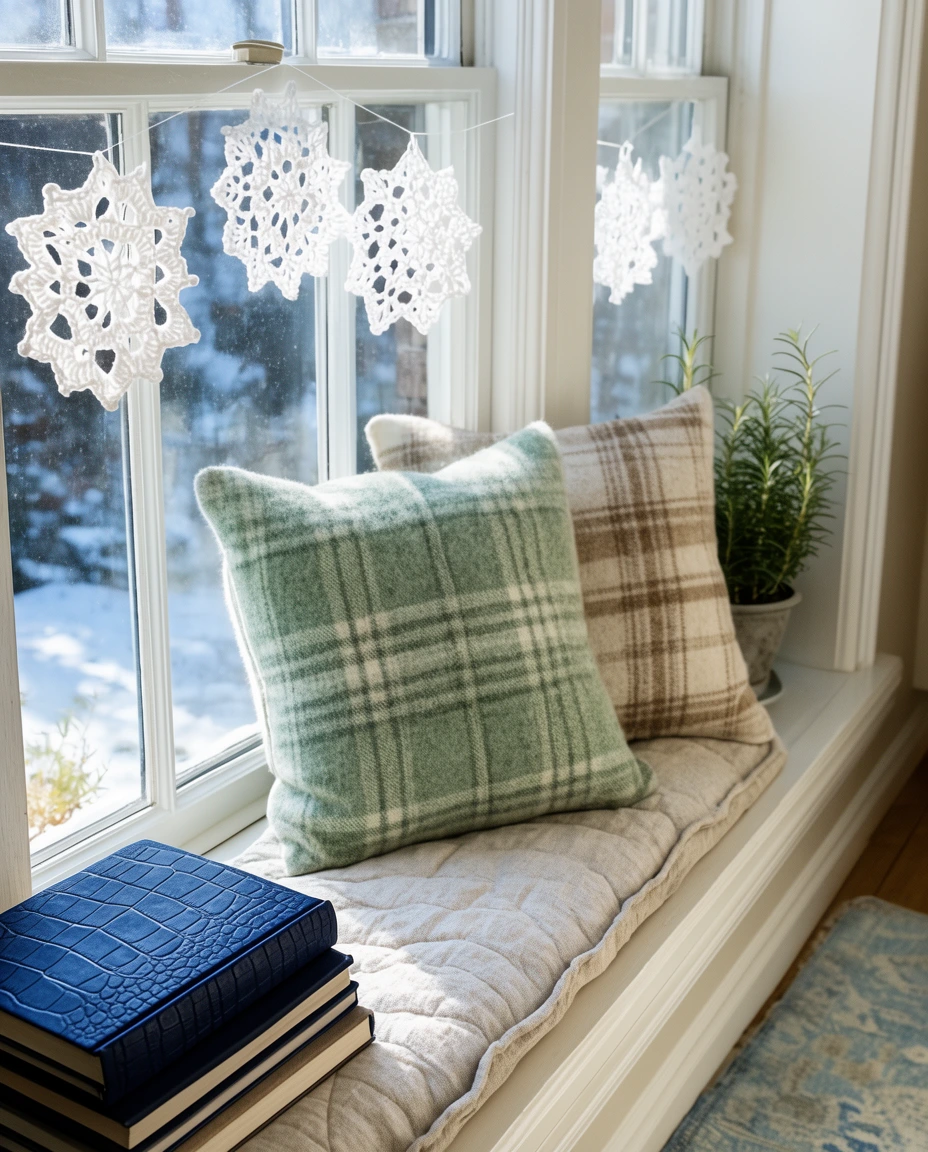
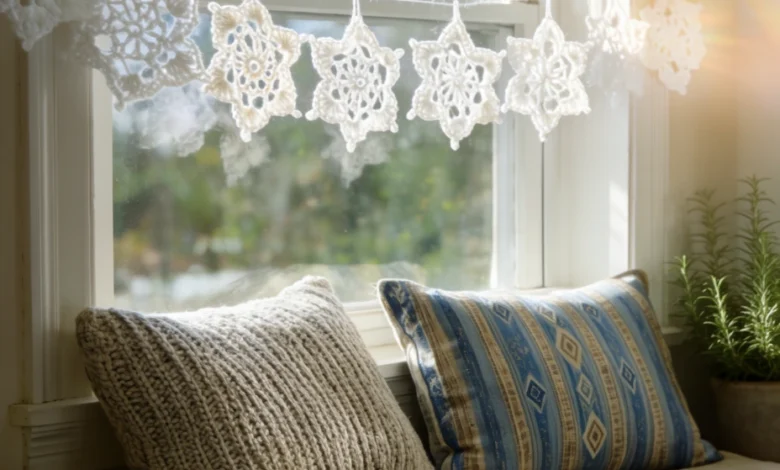
Crochet snowflakes have quietly come back, and they suit a tree that leans vintage rather than glossy. Stiffened with a light starch bath, each one holds flat and catches light the way glass never quite does. The pattern is simple enough for a beginner — a center ring, a round of chains, six points — and one evening yields a small pile. Among winter ideas for the home, few cost so little and read so personal.
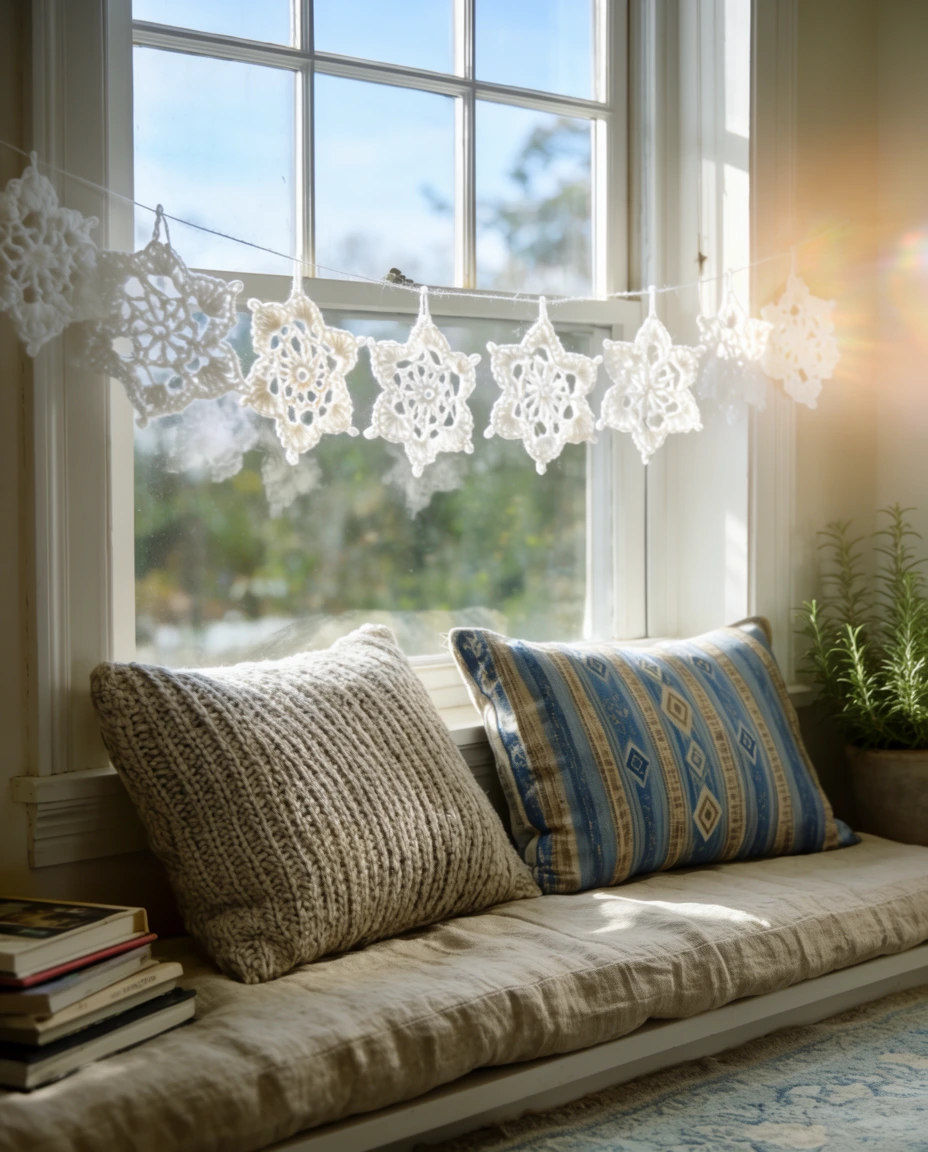
They shine on a narrow tree in a hallway or a slim fir squeezed beside a stairwell, where their open lacework keeps the silhouette from looking heavy. String a few on fishing line across a window frame too, so morning light passes through the stitches. Older trees with wide gaps between branches benefit most, since a white snowflake fills empty space without adding bulk, and a cream string of lights behind them softens the whole outline.
5. Ralph Lauren Plaid for Winter

The Ralph Lauren look at Christmas is really about layering pattern over dark wood — tartan wool, brass, a bit of tortoiseshell, and greenery cut thick. It reads traditional without tipping into stuffy, which is why it travels so well from a Connecticut farmhouse to a Denver ranch. In the living room, start with a plaid throw over the sofa arm, then repeat the same red twice more: ribbon on the mantel, a stack of leather-bound books.
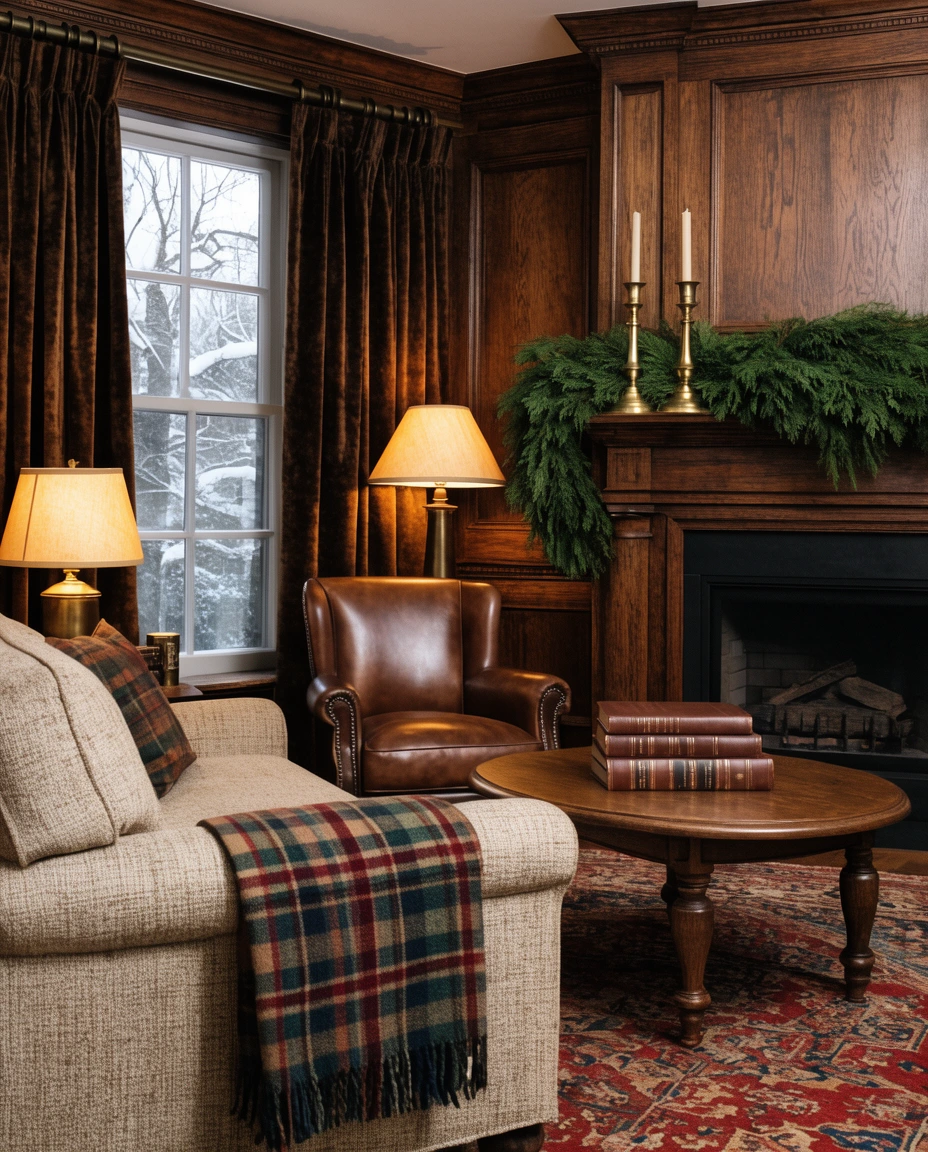
Designers who work in this vein tend to keep the plaid family narrow — one tartan, one buffalo check, nothing more — and let scale supply the variety instead. A large check on the throw and a fine one on the pillow keeps the eye moving without noise. The other trick is lighting: warm bulbs around twenty-seven hundred kelvin flatter wool and brass, while anything cooler flattens the reds and makes the scheme look photographed under fluorescents.
6. Paper Garlands Without the Fuss

Paper garlands are the fastest win of the season and the cheapest by a wide margin. Rings, folded stars, scalloped strips cut from old sheet music — all of it strings up in an hour. For renters hunting DIY ideas that leave no marks, paper is forgiving: it weighs almost nothing, so a single removable hook holds ten feet of it. In a small apartment, one garland across the window is often all the room needs.
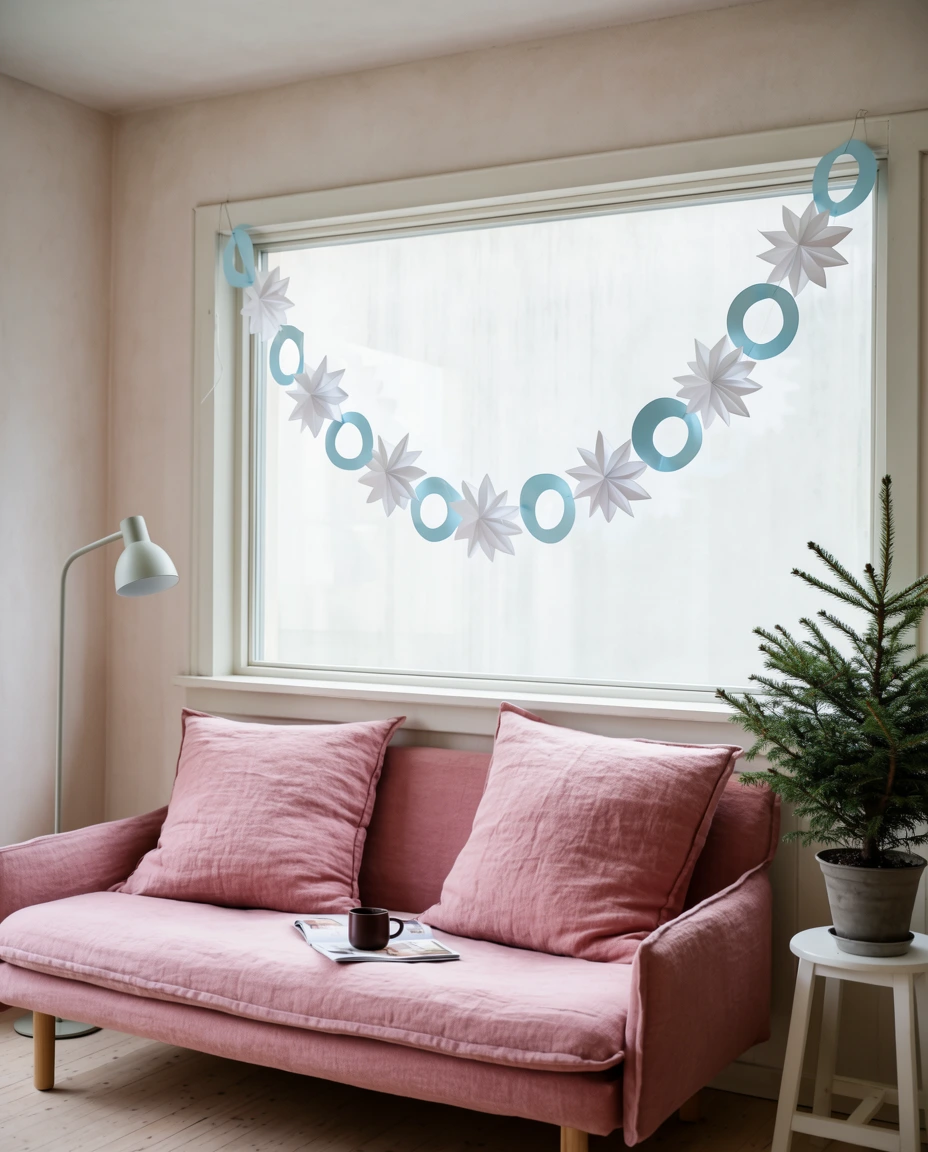
The usual misstep is hanging the swag too tight, which reads like a banner rather than a drape. Let it sag four to six inches at the center and pin the ends slightly higher than feels right. Thin copy paper also curls in a heated room, so reach for cardstock or heavy craft paper around sixty-five pound weight. If the garland crosses a doorway, keep its lowest point well above eye level so nobody ducks on the way through.
7. Clay Ornaments and Kitchen Twine
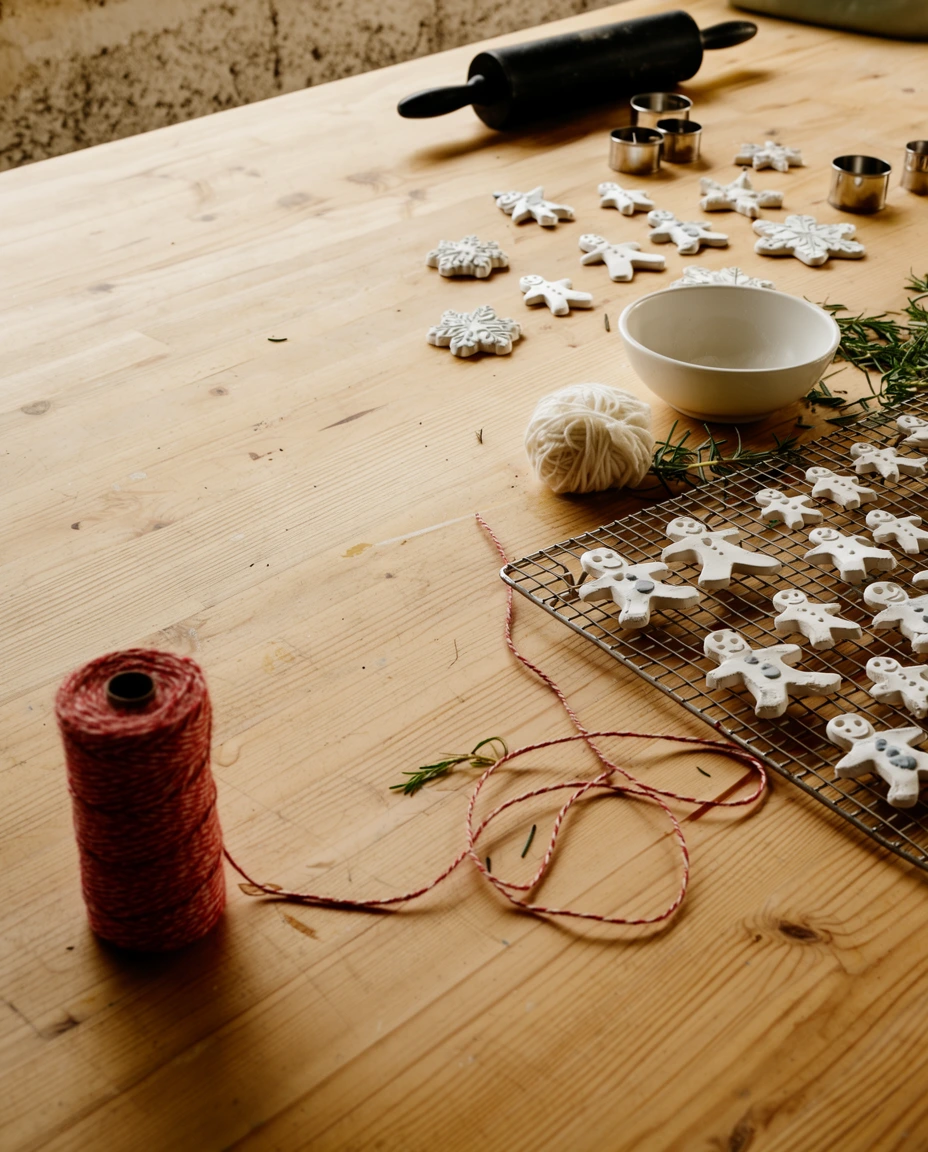
Air-dry clay rolled thin, cut with a biscuit cutter, and pressed with a sprig of rosemary makes an ornament that looks like it came from a Scandinavian shop. Strung on kitchen twine, the pale disks read modern and quiet — the sort of aesthetic that photographs well against a dark green tree. Homemade batches dry overnight on a wire rack, and a light sanding at the edges is the only finishing they need.
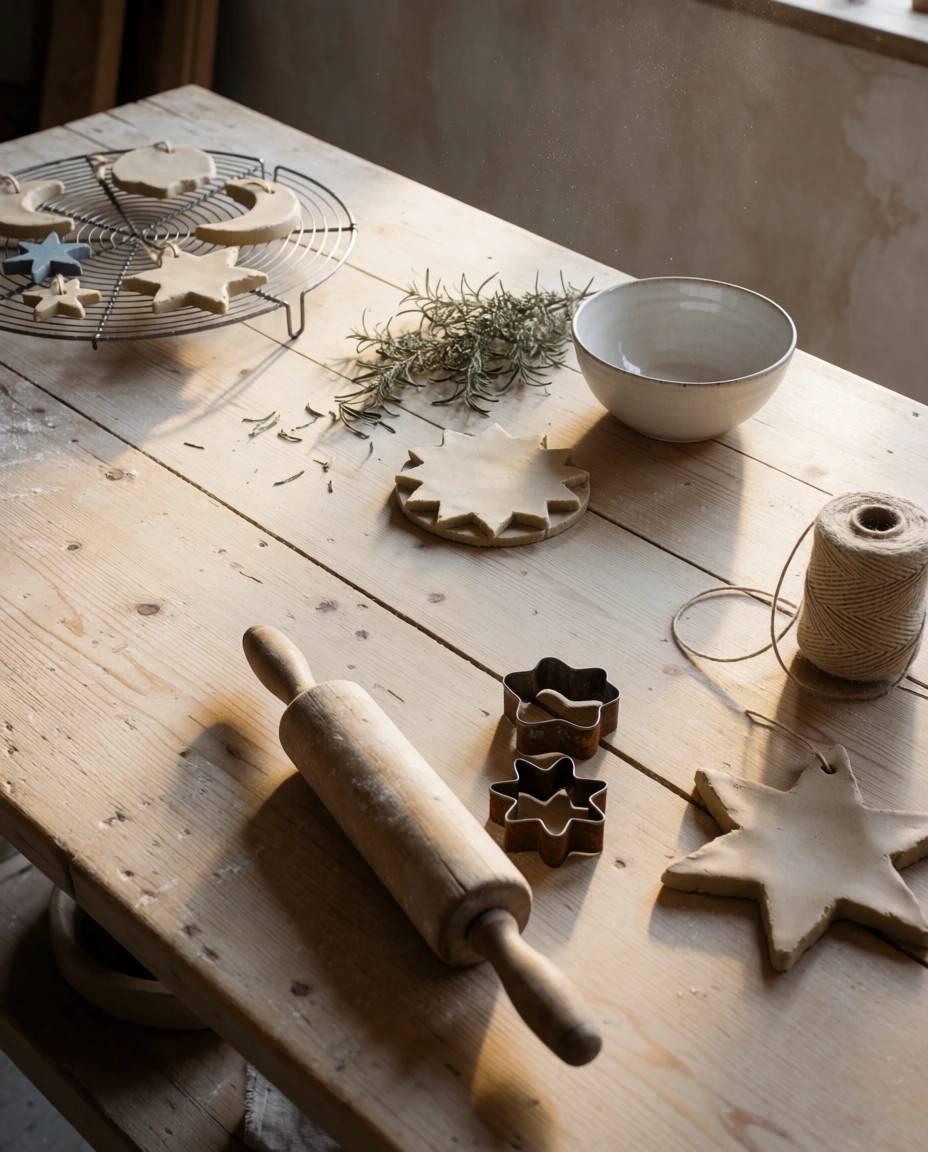
People rarely stop at one round of these. The first dozen go on the tree, the next dozen become gift tags, and by the following year the same cutters come out for a garland along the stair rail. That drift is worth planning for — punch the hanging hole a little larger than seems necessary so the disks work with ribbon, twine, or a wire hook later. Stored flat between parchment, they last a decade.
8. A White and Snowy Bedroom
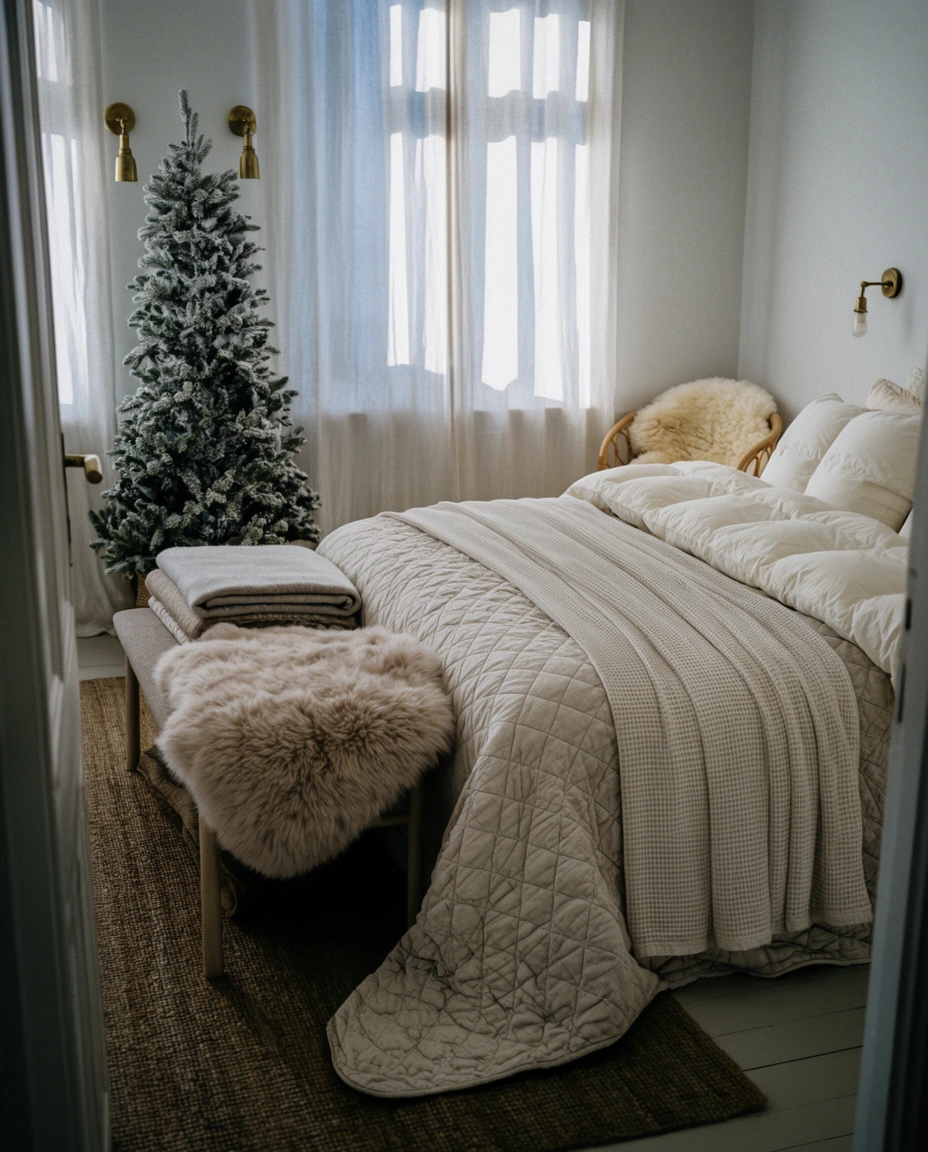
A white Christmas scheme belongs in the bedroom more than anywhere else, where the goal is calm rather than spectacle. Among bedroom ideas that hold up past New Year’s, this one wins: linen bedding in oatmeal and chalk, a garland of dried eucalyptus above the headboard, and a single strand of warm lights behind sheer curtains. Layer a cozy wool throw at the foot and the room reads seasonal without a red bow in sight.
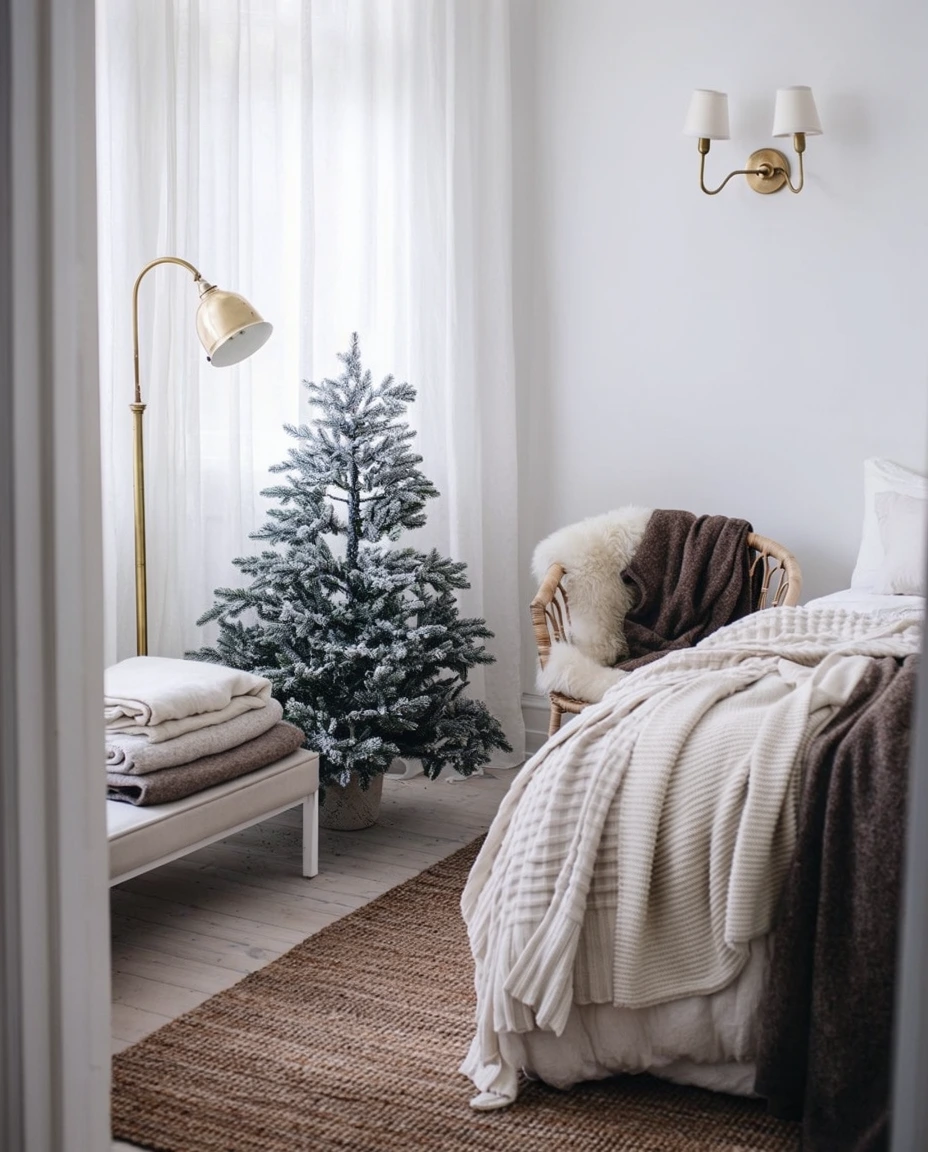
In northern states where January drags on for weeks, this palette earns its keep — the greenery comes down after the holidays and the linens, lights, and throws stay put through the gray stretch. Southern homes get a different benefit: cool whites feel right in a climate where a heavy tartan bedspread never quite makes sense. Either way, choosing textiles you’d want in February keeps the room from feeling stripped the day the tree goes out.
9. Blue Christmas in the Dining Room
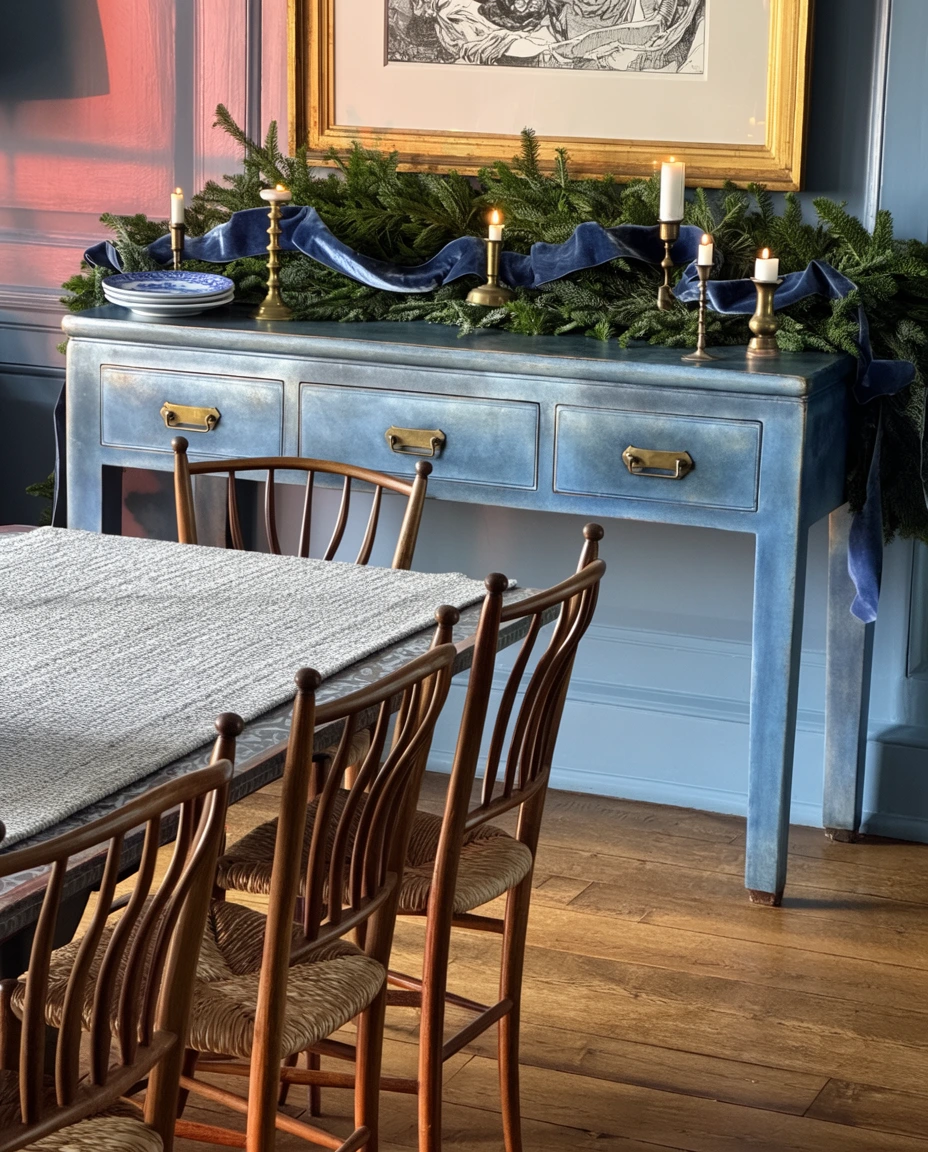
Blue at Christmas used to mean icy silver and plastic snowflakes; the current version is far richer — indigo velvet, delft ceramics, midnight ribbon against brass. It sits comfortably beside traditional greenery, since evergreen carries plenty of blue in it already. Dedicate one room to the scheme, ideally the dining room, where a navy runner and white candles do most of the work and the chandelier supplies the sparkle.
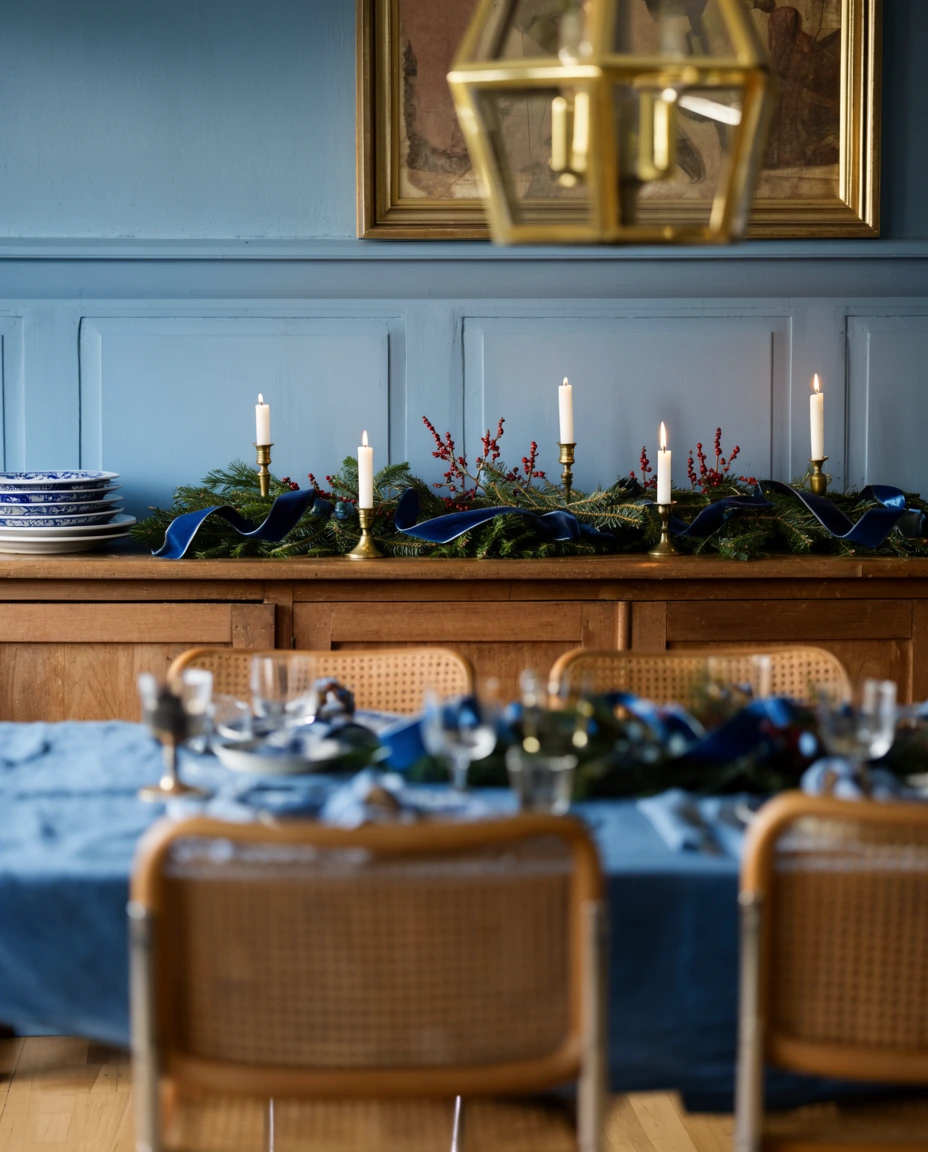
The scheme rewards rooms with cool north light and painted paneling, where warm reds tend to go muddy after three in the afternoon. It also suits homes on the coast — Cape Cod, the Carolinas, the Pacific Northwest — where blue already runs through the year-round palette and the holiday version simply deepens it. Brass candlesticks are the necessary counterweight; without a warm metal somewhere on the table, the arrangement drifts toward cold.
10. Front Porch Lanterns and Greenery
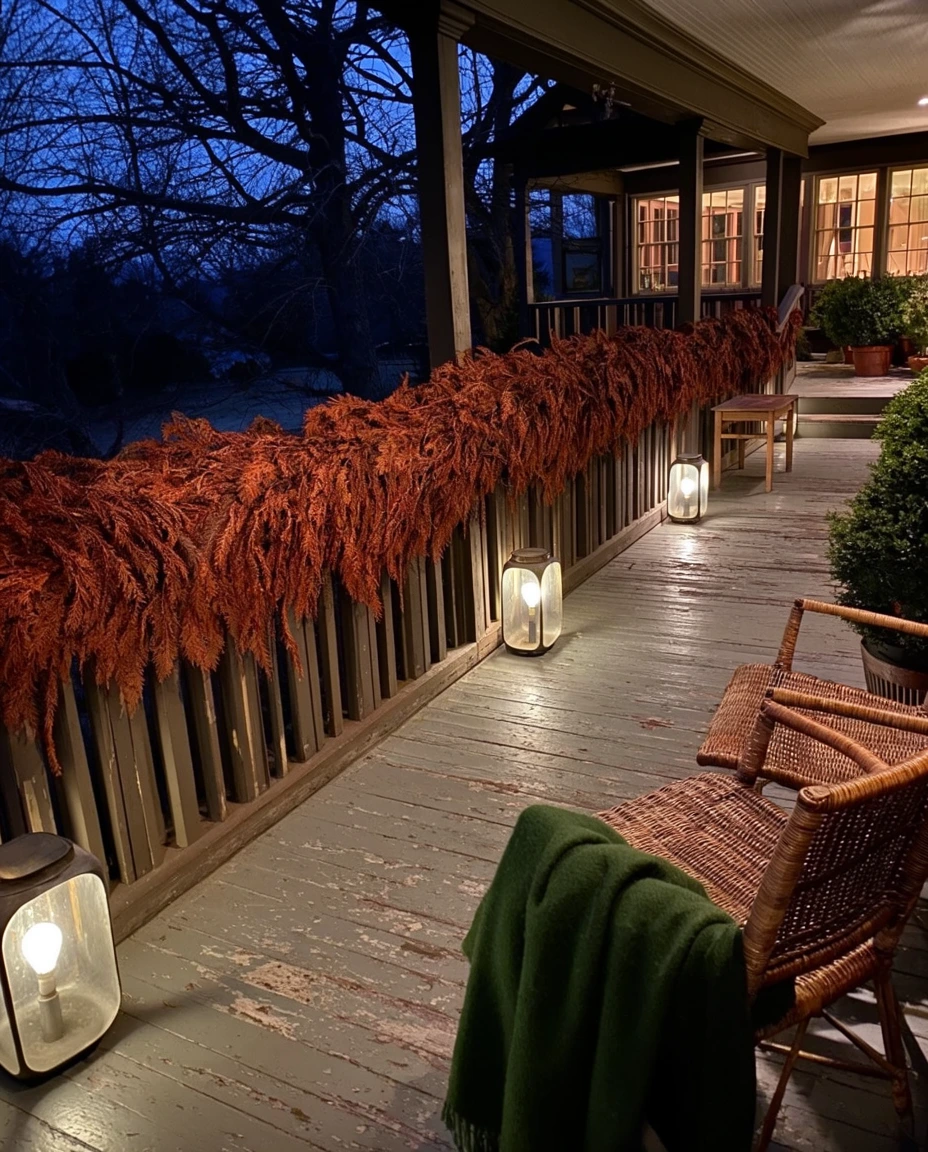
A front porch needs less than people think: two lanterns flanking the door, a cedar swag over the frame, and a pair of galvanized buckets holding cut branches. The ideas that photograph best are usually the most restrained, built on repetition instead of variety. Battery candles on a six-hour timer keep the lanterns glowing from dusk through dinner, and the effect from the sidewalk is cozy in a way no inflatable ever manages.

Porch decorating in the Midwest has to survive wind and wet snow, which is why zinc, cast iron, and real cedar outlast anything foam-based. In Texas and Florida the enemy is sun — bargain red ribbon fades to pink by New Year’s, so weather-rated velvet or wired cotton is worth the extra few dollars. Neighborhood habits matter too: on blocks where everyone lights up the same weekend, a restrained porch stands out more than another wall of color.
11. Simple Outdoor Lights for Renters
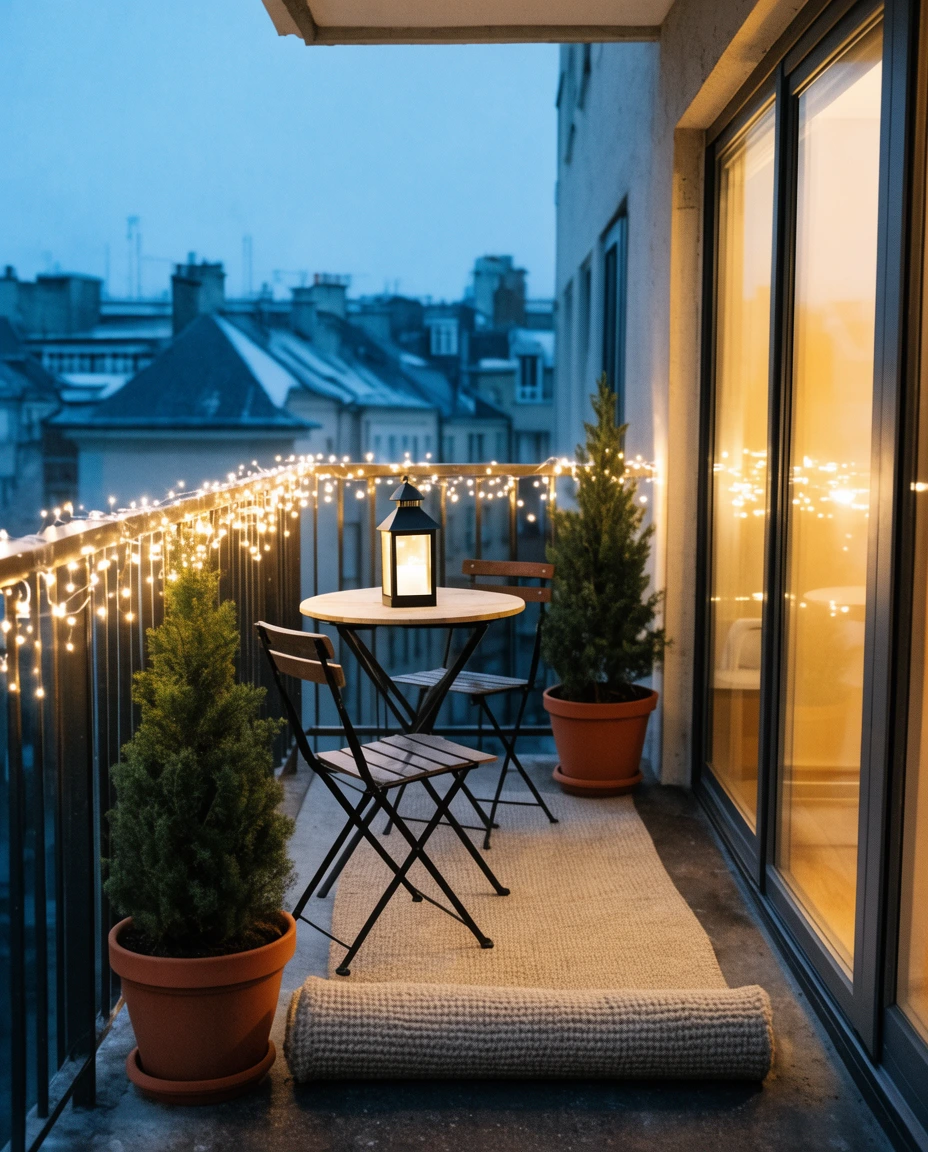
Renters get shortchanged on outdoor ideas every December, usually because the lease forbids nails, staples, and anything permanent. The workaround is simple: adhesive clips rated for exterior use, a light-duty tension rod inside a balcony rail, and warm white strands run in straight lines rather than swags. A small apartment balcony holds two strands, a pair of potted evergreens, and a lantern — enough to read as decorated from the parking lot below.
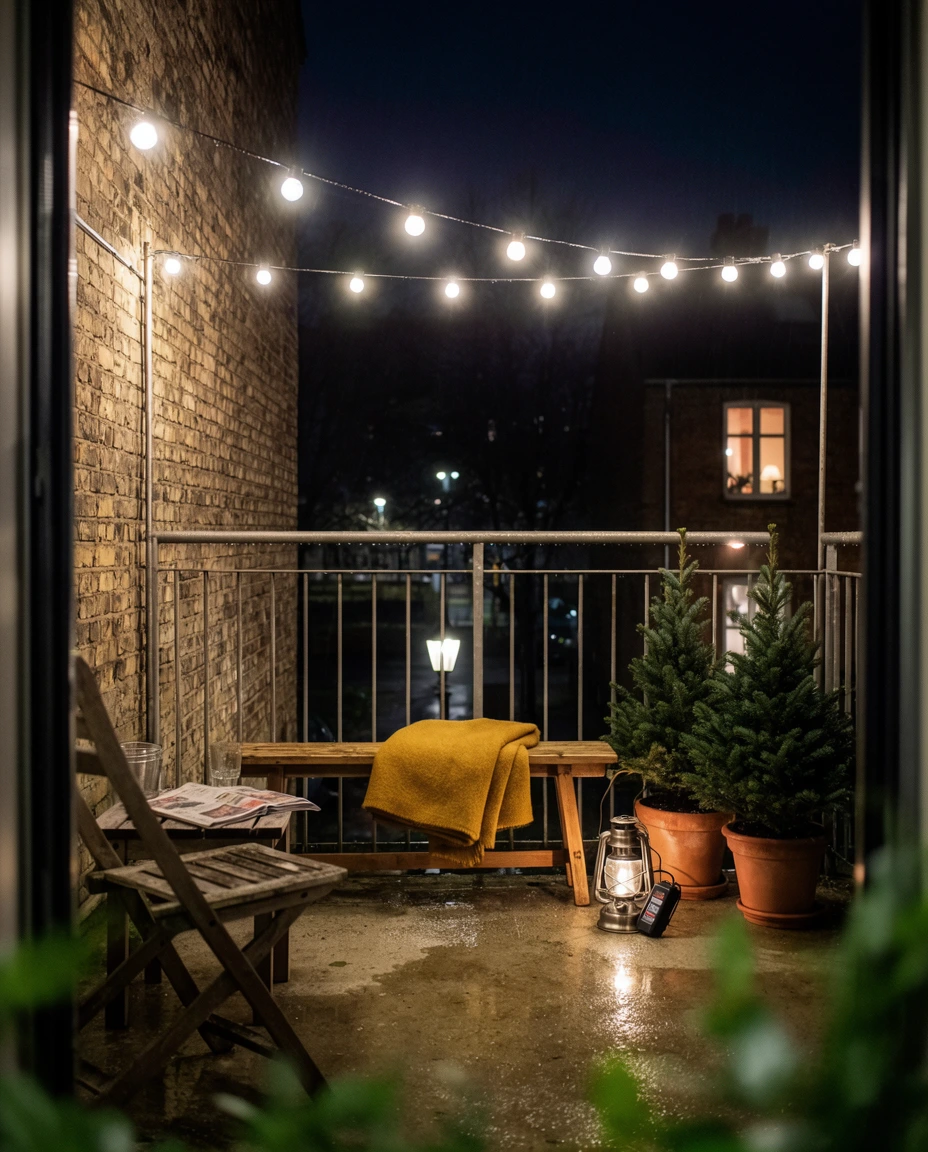
A hundred-foot strand of commercial-grade warm white runs around thirty-five dollars and lasts eight or nine seasons; the discount three-packs die in two and cost more over time. Outdoor-rated clips add maybe eight dollars, and a timer plug is another twelve. Under sixty dollars total covers a balcony that looks considered, and every piece comes down in twenty minutes at the end of the season without leaving a mark on the railing.
12. Cozy Reading Nook with Wool Throws
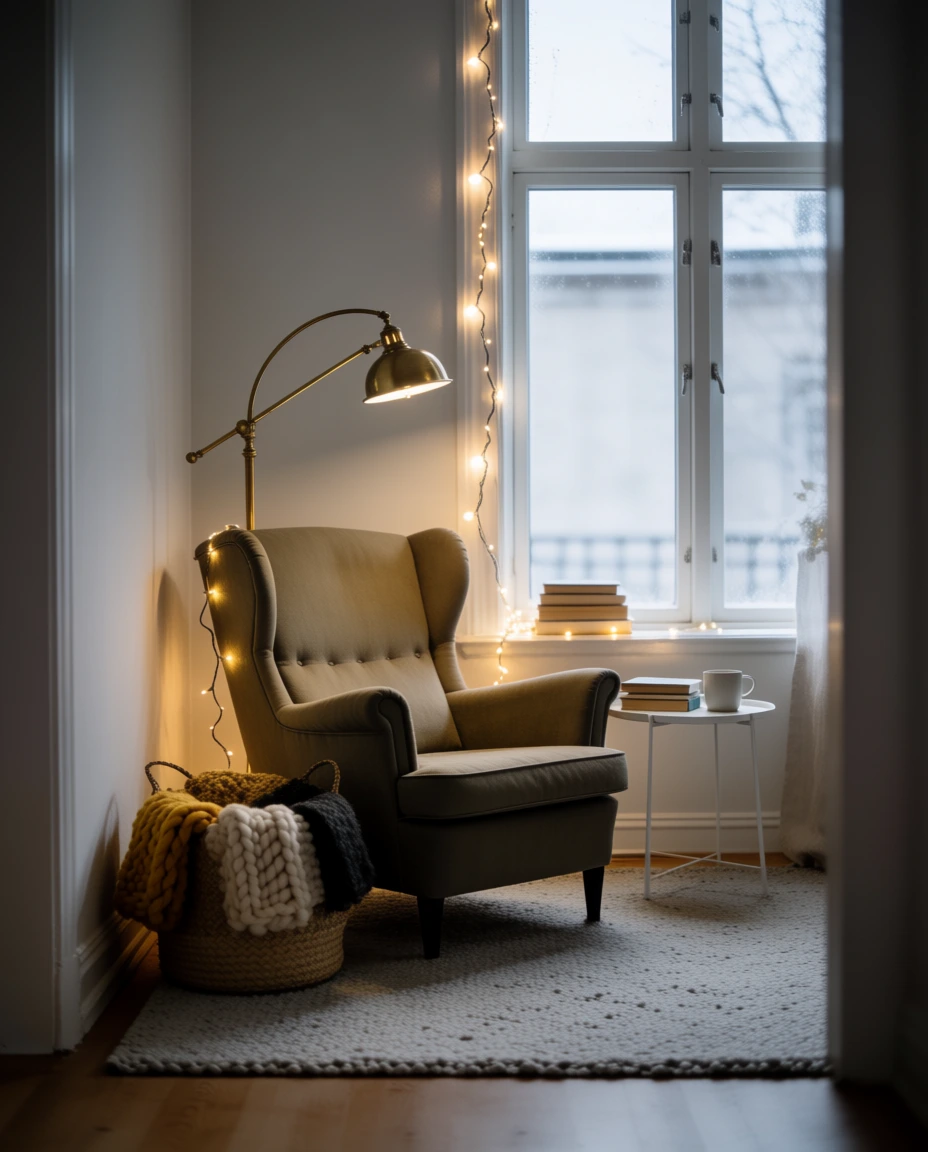
A cozy reading nook is the sleeper hit of holiday decorating — no tree required, just a chair angled toward a window and a basket of chunky wool throws within arm’s reach. It works at the quiet end of a living room or in the unused corner of a bedroom, wherever there’s a lamp and a bit of wall. Add a small side table, a stack of books, and one string of warm lights along the window trim.
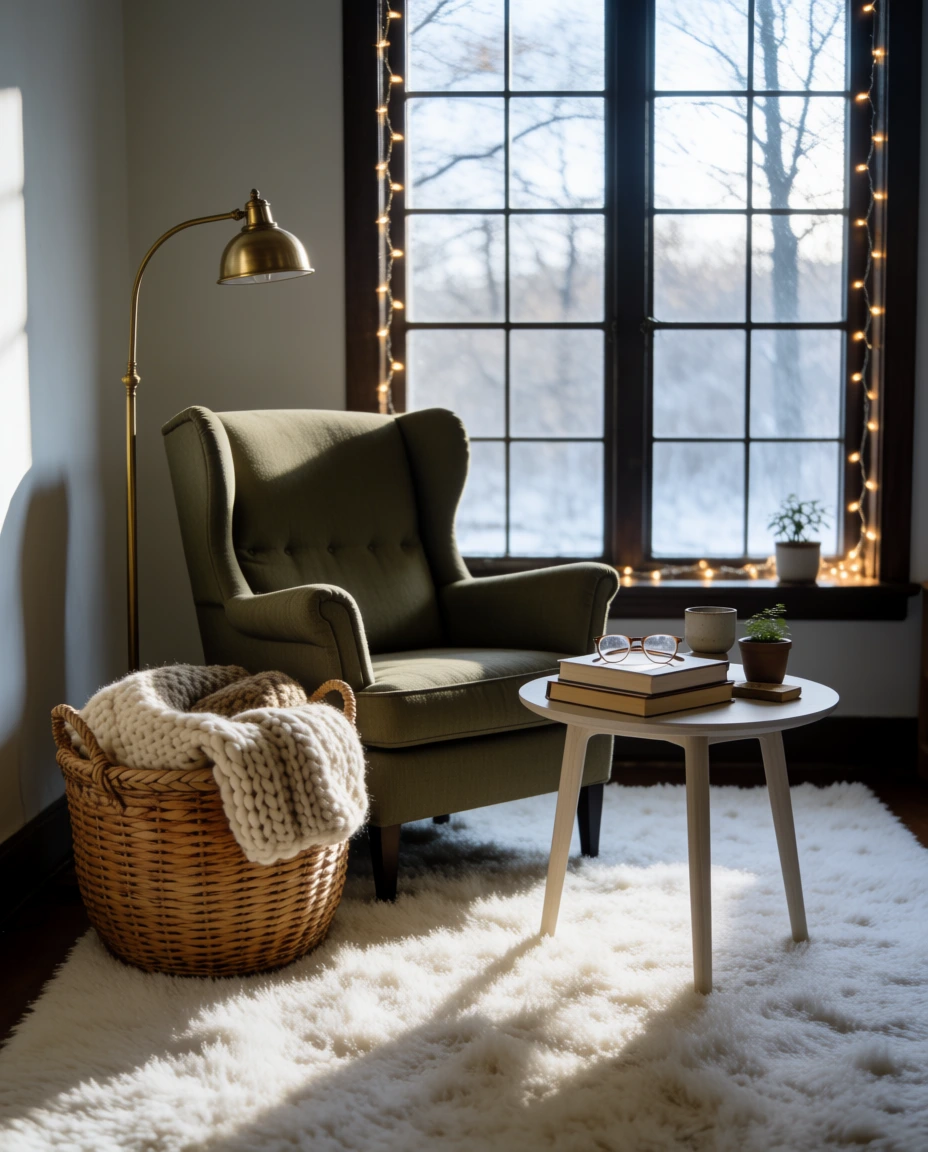
A friend in Portland built hers around a thrifted wingback she paid forty dollars for, then spent three years slowly collecting throws — a Pendleton blanket, a mohair square from an estate sale, a heavy cream knit her grandmother made. December is the only month anyone else fights her for that chair. The lesson is patience: the nooks that feel best get assembled piece by piece, not bought in a single afternoon.
13. Traditional Red and Green Reimagined

Traditional red and green survives every trend cycle, but the current handling is smarter — deeper, dustier tones instead of fire-engine brights. Think brick, oxblood, and a green that leans toward moss. Set against white trim and warm wood, the pair looks heritage rather than cartoonish, and a single room done this way carries the whole house. Keep the ratio uneven, roughly seventy percent green to thirty percent red, and the balance stays sophisticated.
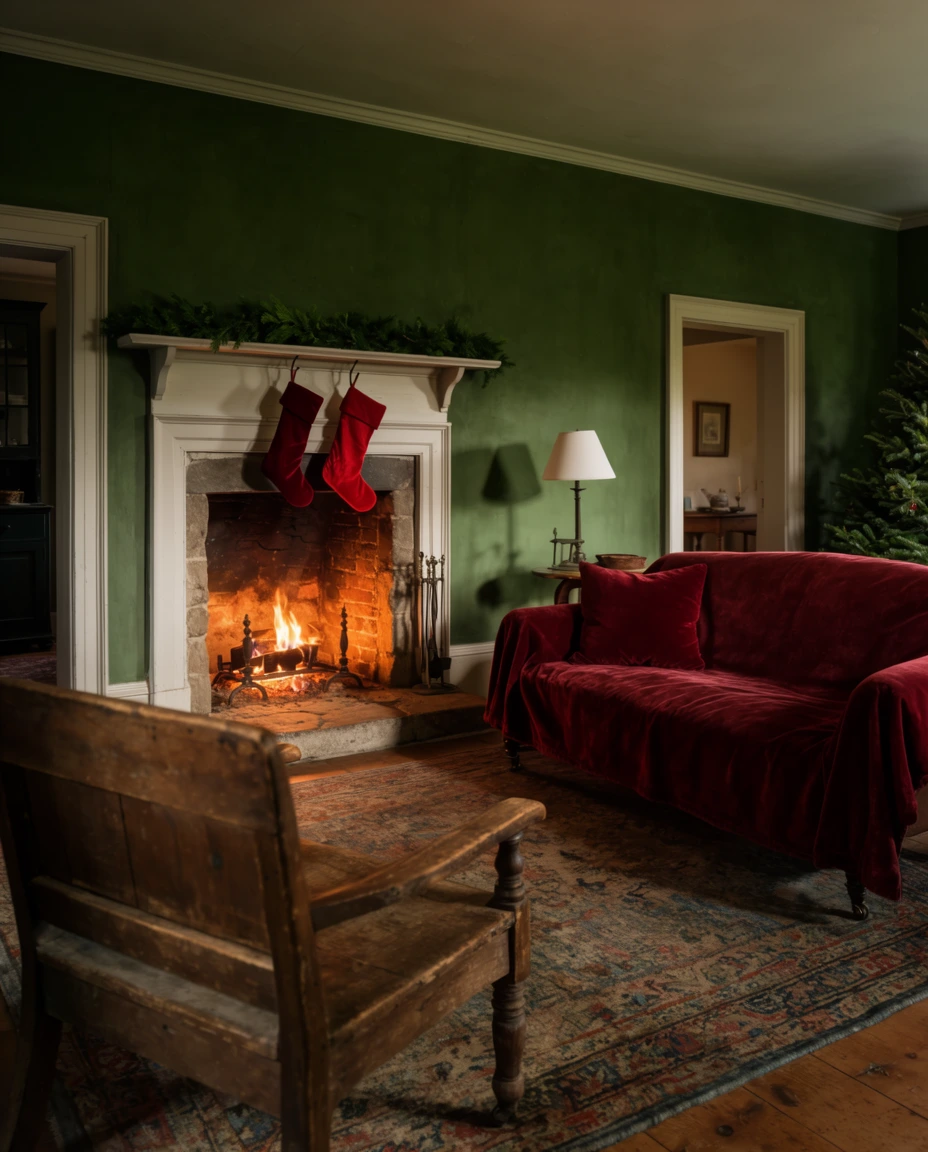
Colorists describe the shift as moving from saturated to muted — same hues, lower chroma, and the result reads antique rather than plastic. Pull the exact reds from something already in the room, a rug or a painting, and the seasonal layer looks like it belongs there year-round. Velvet does the most work of any material here, because its pile absorbs light and keeps a strong red from going flat under a lamp.
14. DIY Wreaths with Backyard Clippings
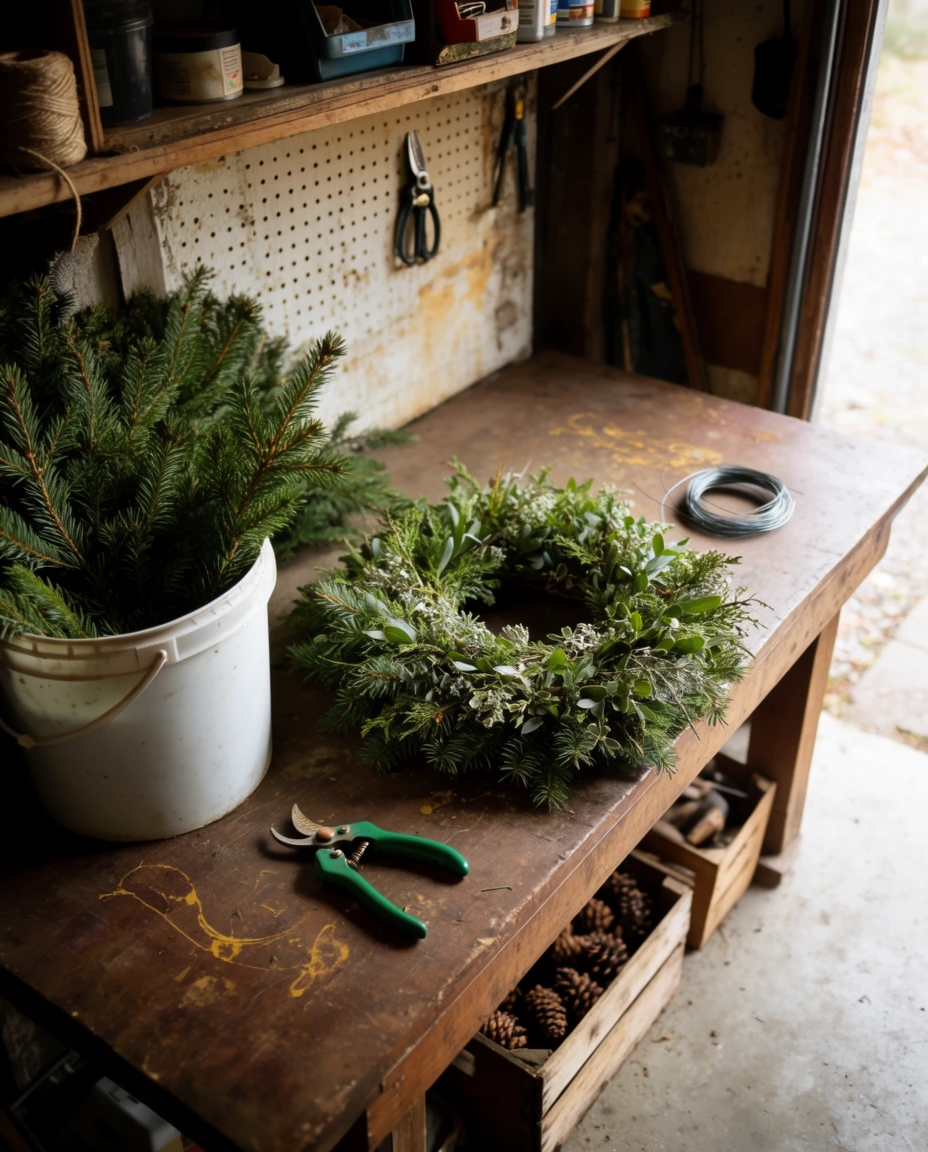
A DIY wreath built from backyard clippings beats anything shipped in a box — magnolia, boxwood, blue spruce, a few sprigs of dried hydrangea if the season was kind. Wire a base, work in one direction, and overlap each bundle by half. Homemade wreaths also handle outdoor weather better when the greenery is local, since it’s already acclimated to the humidity and cold where you live. Twenty minutes of clipping usually yields plenty.
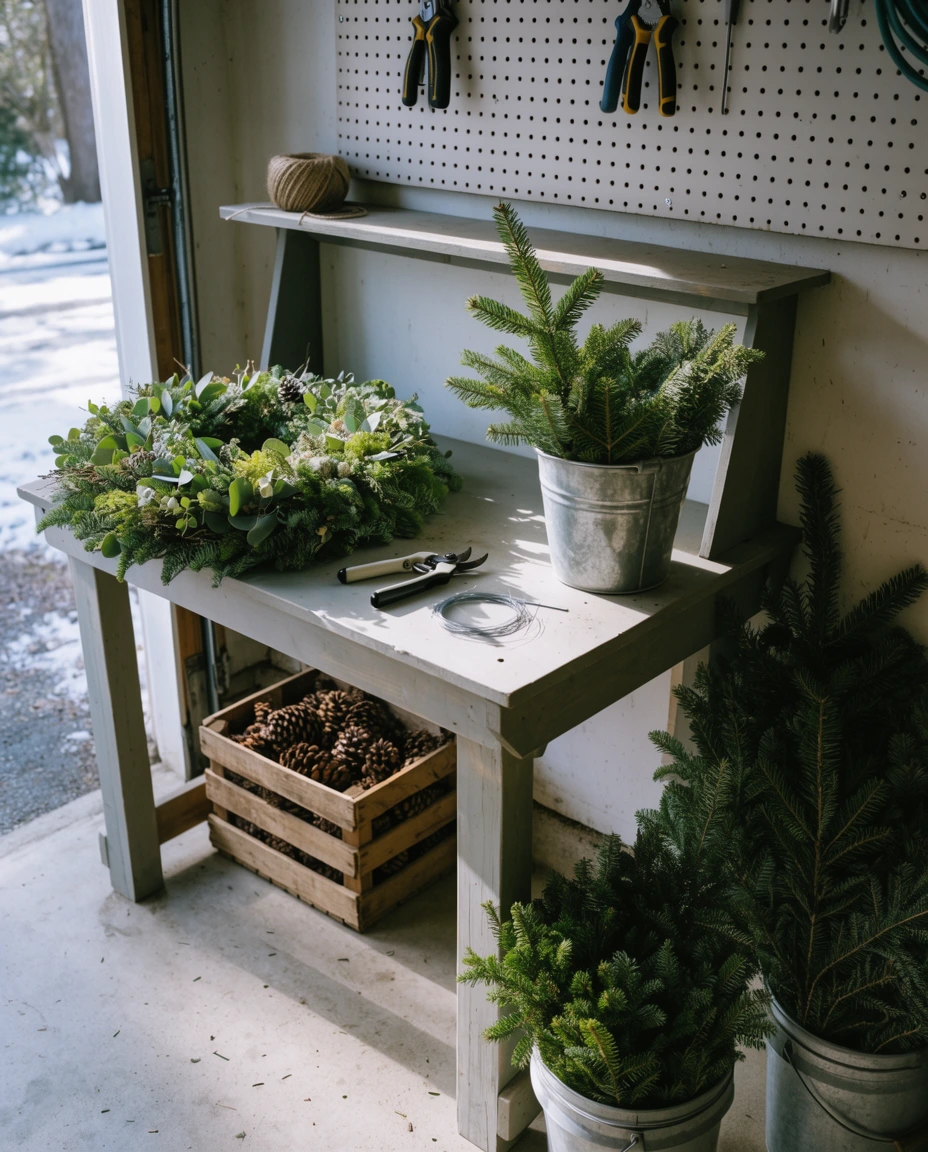
Cut in the morning while the stems are full of water, then let everything sit in a bucket for an hour before you start wiring — the greenery stays supple and won’t shatter as you bend it. A mix of two textures beats five, and a single asymmetric cluster at four o’clock looks more designed than an evenly packed ring. Mist the back once a week and a fresh wreath holds all month on a shaded door.
15. Apartment Trees in Small Corners
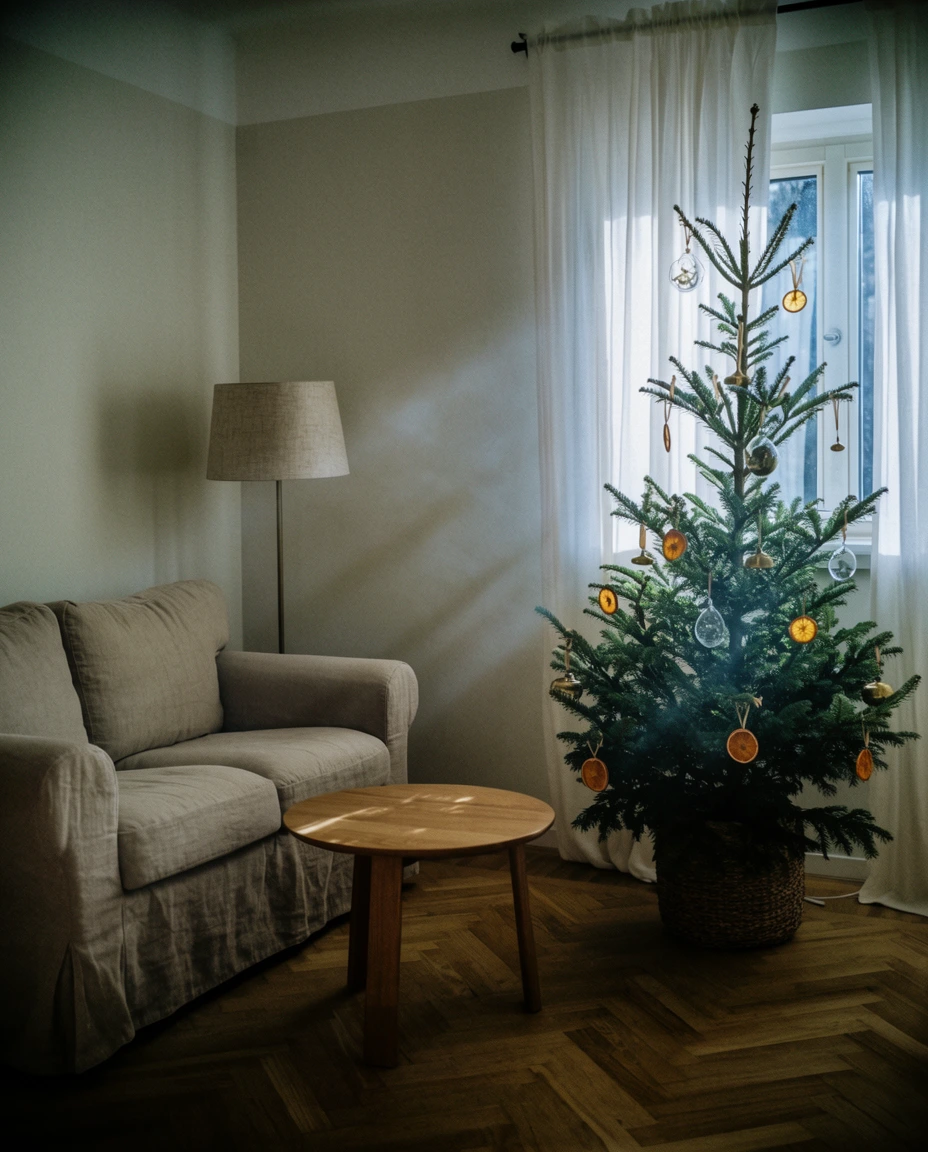
An apartment tree doesn’t have to be a compromise. A slim six-footer takes up less floor than an armchair, and a tabletop fir on a stack of books reads charming rather than apologetic in a room where every square foot counts. Keep the ornaments simple — one metal, one glass, one natural material — and skip the tree skirt in favor of a woven basket that hides the stand and swallows the cord.
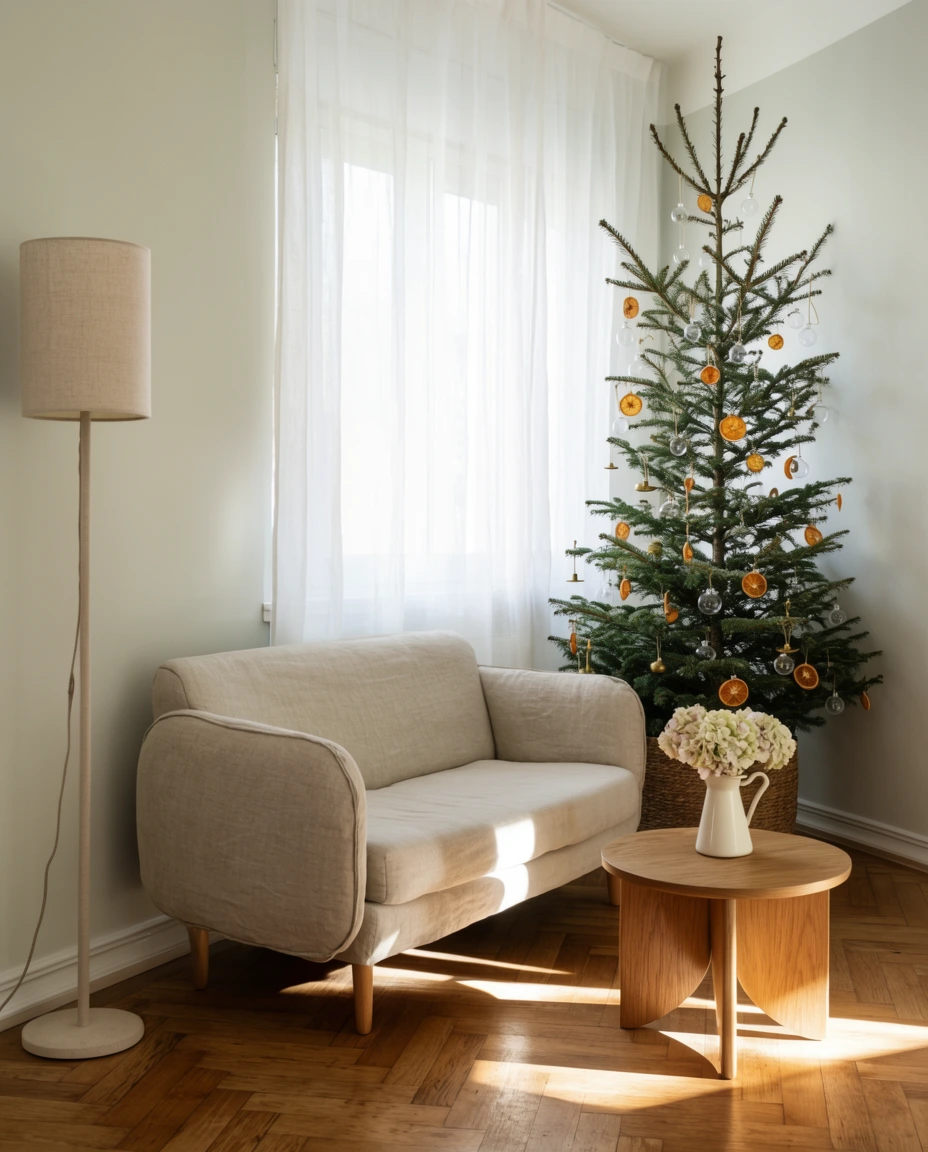
The most common error in a small space is centering the tree in front of the window, which blocks the light all month and leaves the room dim. Push it into the corner beside the window instead, where the glass reflects the lights back inward and the walkway stays clear. The other fix is vertical: a narrow tree with a taller topper draws the eye up, and a tight corner suddenly looks like the intended spot.
16. Holiday Cheer for the Home Office
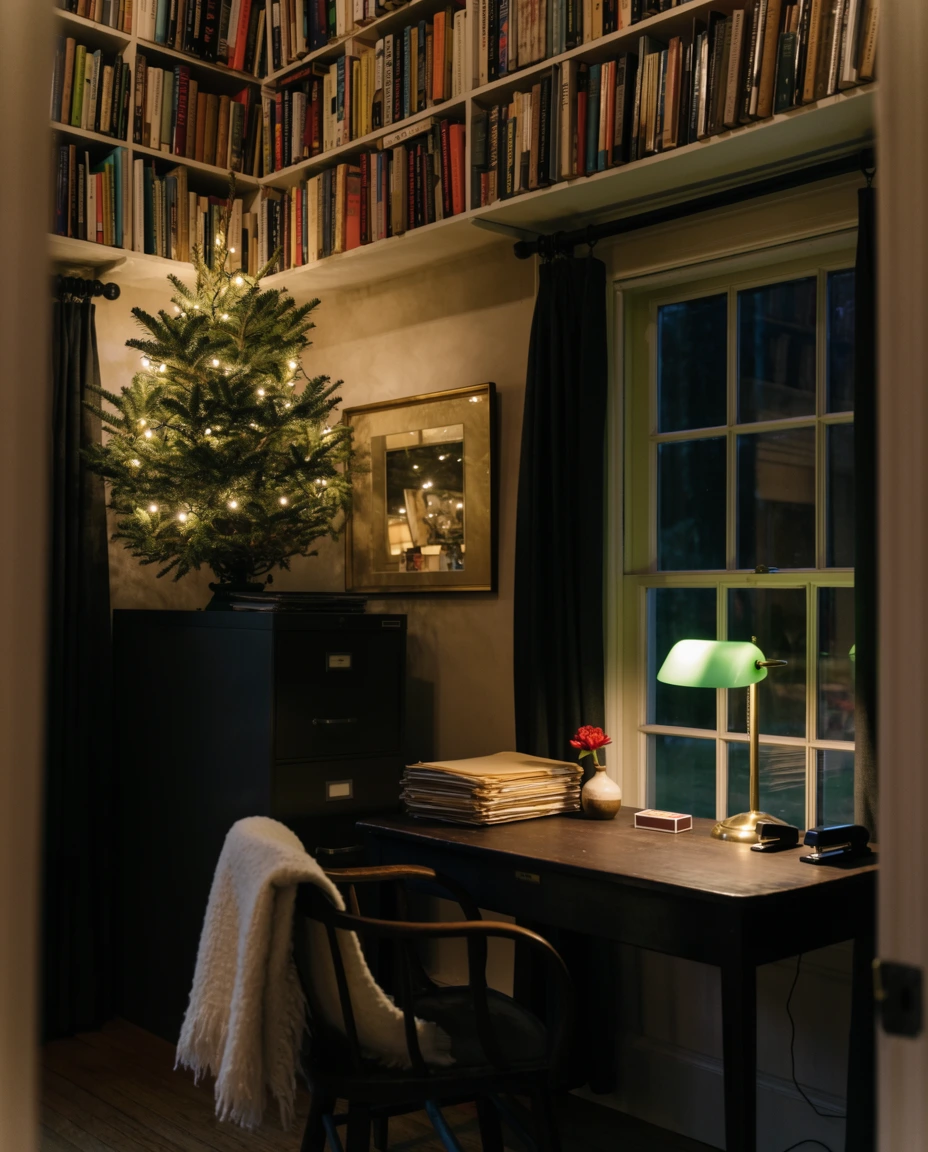
The home office usually gets skipped, which is odd given how many hours it holds in December. A small brass tree on the shelf, a garland along the top of the bookcase, and a candle you actually light between meetings do more for morale than a whole living room display. Keep the aesthetic tight so nothing distracts on video calls — two colors, one texture. The best ideas here fit on a single shelf.
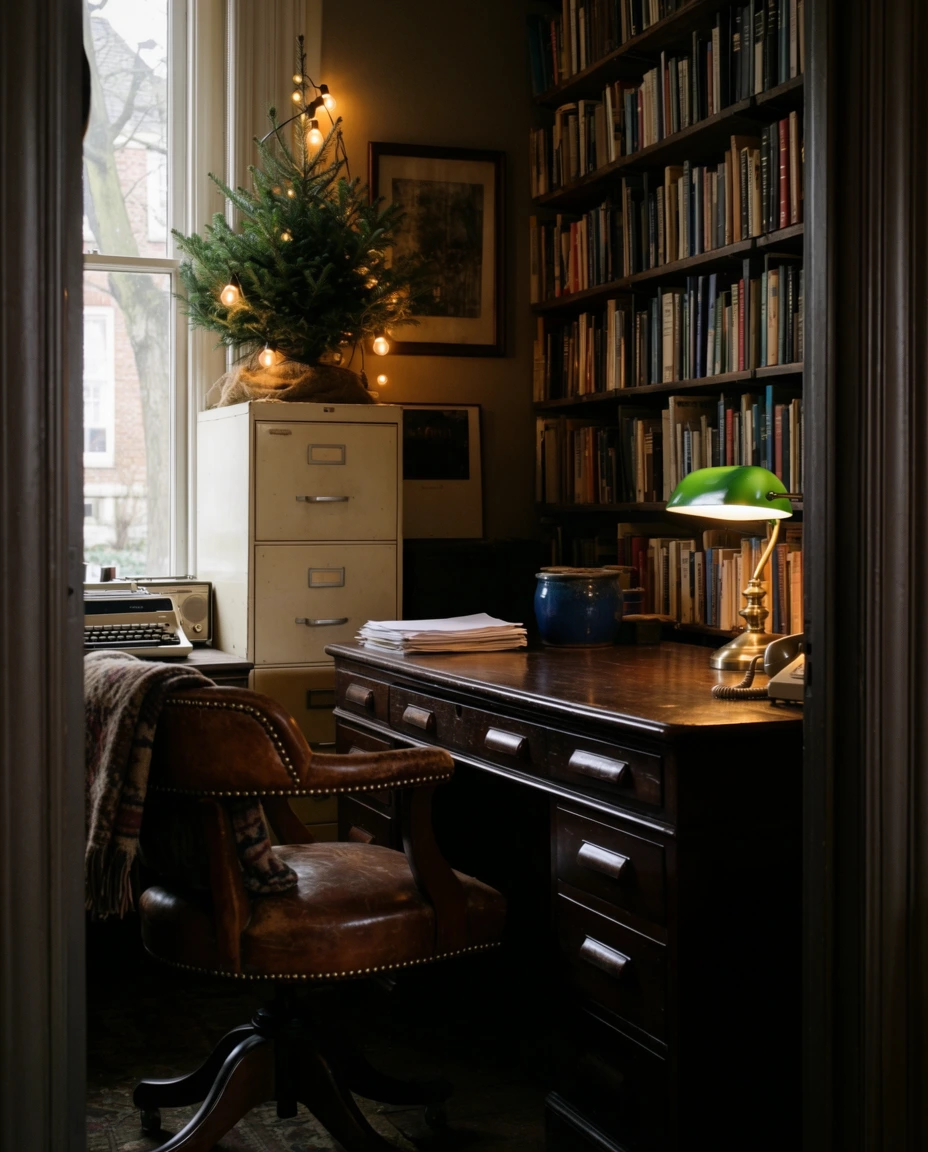
Most people decorate this room last and take it down first, which argues for pieces that pack into one small bin. A garland with a wire core reshapes each year and stores coiled; paper stars flatten. Anyone who spends the season on calls learns quickly to keep the area behind the chair calm, since a busy backdrop reads as clutter through a webcam even when the room in person looks perfectly composed.
17. Homemade Garlands for the Staircase

A staircase garland is the single most photographed thing in an American house at Christmas, and a homemade one costs a fraction of the florist version. Cedar and pine wired to a rope base, ribbon woven through, a few dried orange slices for warmth. Strips of paper cut into stars can fill the thin spots near the top. The traditional approach wraps the banister; the cleaner one drapes it in scallops.

Measure the rail and add forty percent — a garland always eats more length than the tape suggests once it drapes. Secure it with floral wire wrapped around the underside of the rail rather than the top, so hands slide along a clear surface all season. Anchor each scallop at the newel posts first, then adjust the sag between them, and the whole run hangs evenly instead of drifting lower with every step down.
18. Layered Candlelight and Soft Glow
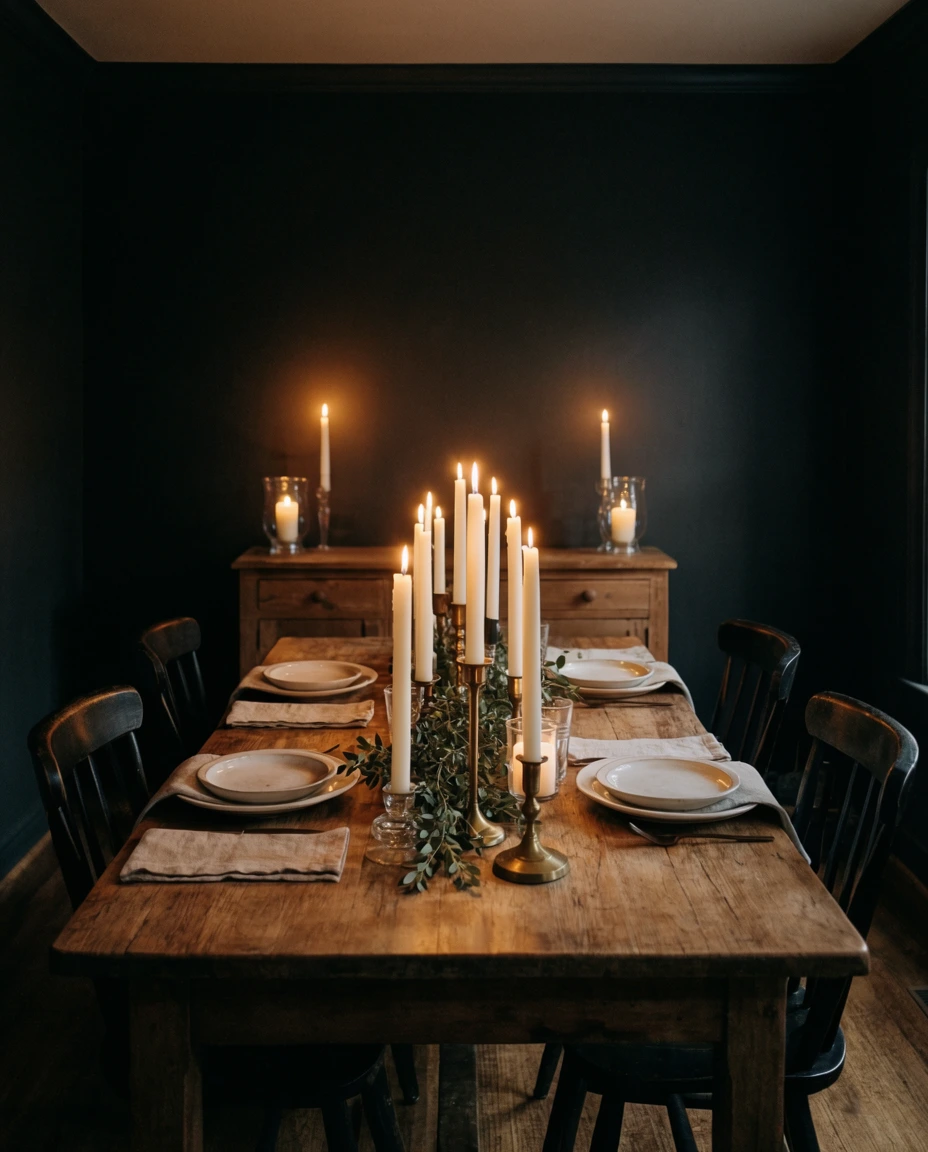
Nothing makes a house feel cozy faster than candlelight set at three different heights. Tapers on the mantel, a cluster of pillars on a tray, and a few tea lights along a windowsill give one room the depth a single overhead fixture can’t. Unscented white candles are the safe bet, since a dinner table full of competing perfumes fights whatever’s coming out of the kitchen. Mix brass and glass holders for a little shine.
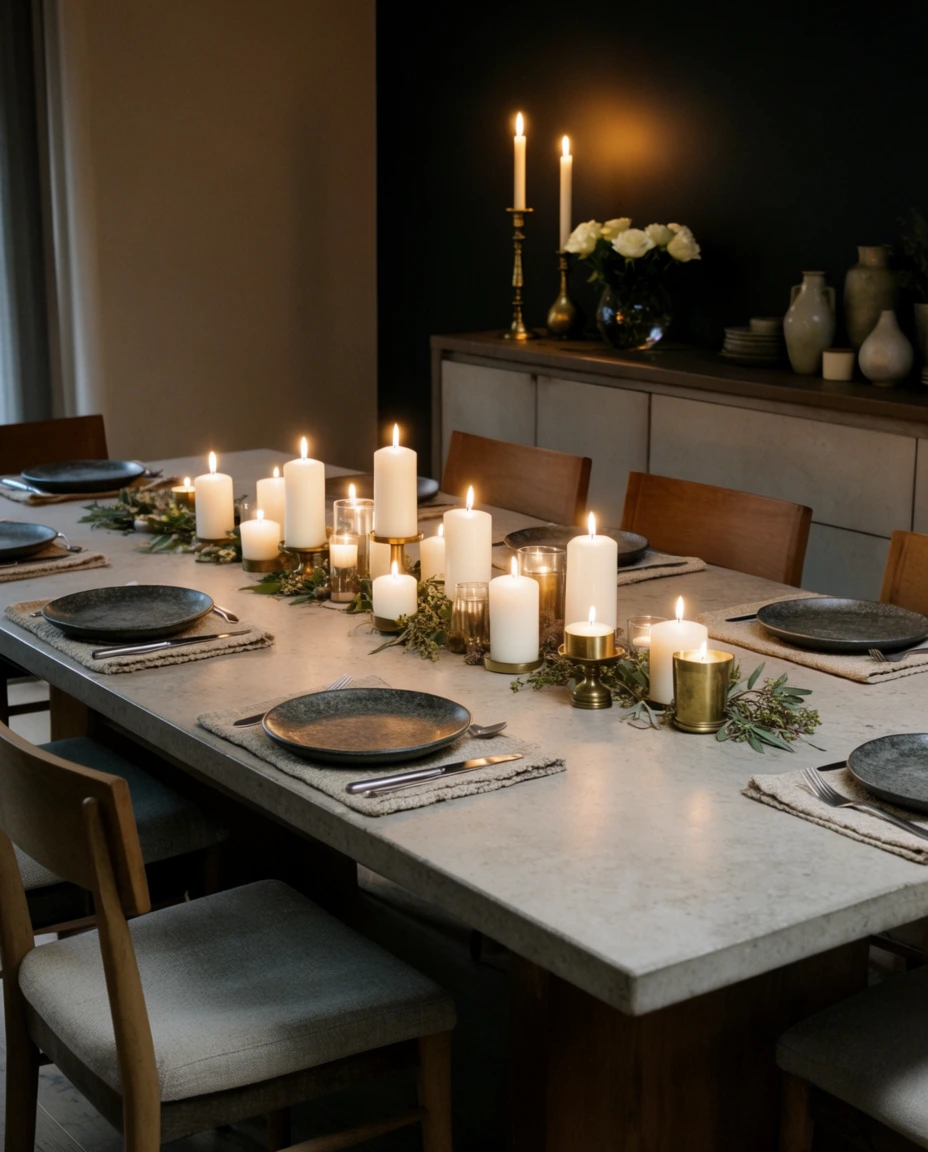
Lighting designers talk about layering in terms of pools rather than coverage — several small sources at varying heights beat one bright one every time. The practical version is putting nothing above five hundred lumens in the room after dark and letting the candles carry the mood. Dimmers on the fixtures you already have make the difference between candles that read as decoration and candles that genuinely light the space.
19. Aesthetic Neutral Tablescapes

The neutral tablescape is the most copied aesthetic of the last few seasons, and it holds up because it works with food. Linen in flax or bone, stoneware in cream, wooden serving boards straight from the kitchen, and a low runner of greenery nobody has to see around. Of all seasonal ideas for the home, this one asks the least and photographs the most — nearly everything on the table is already in your cabinets.

One host in Nashville sets hers the night before with whatever bowls are clean, then adds a handful of clipped rosemary in the morning and calls it done. Her guests assume it took hours. That gap between effort and effect is the whole appeal — a table built from everyday pieces reads generous rather than precious, and nobody hesitates to reach across it for a second helping.
20. Bells, Brass and Vintage Finds

Vintage brass — bells, candlesticks, a small sleigh someone’s aunt bought in 1974 — has become the most wanted thing at estate sales in December. The Ralph Lauren crowd has always known this, mixing aged metal with wool and leather until a room looks collected over decades. Among ideas for living room styling, a shelf of mismatched brass beside traditional greenery is the easiest way to make new decor look like it has history.
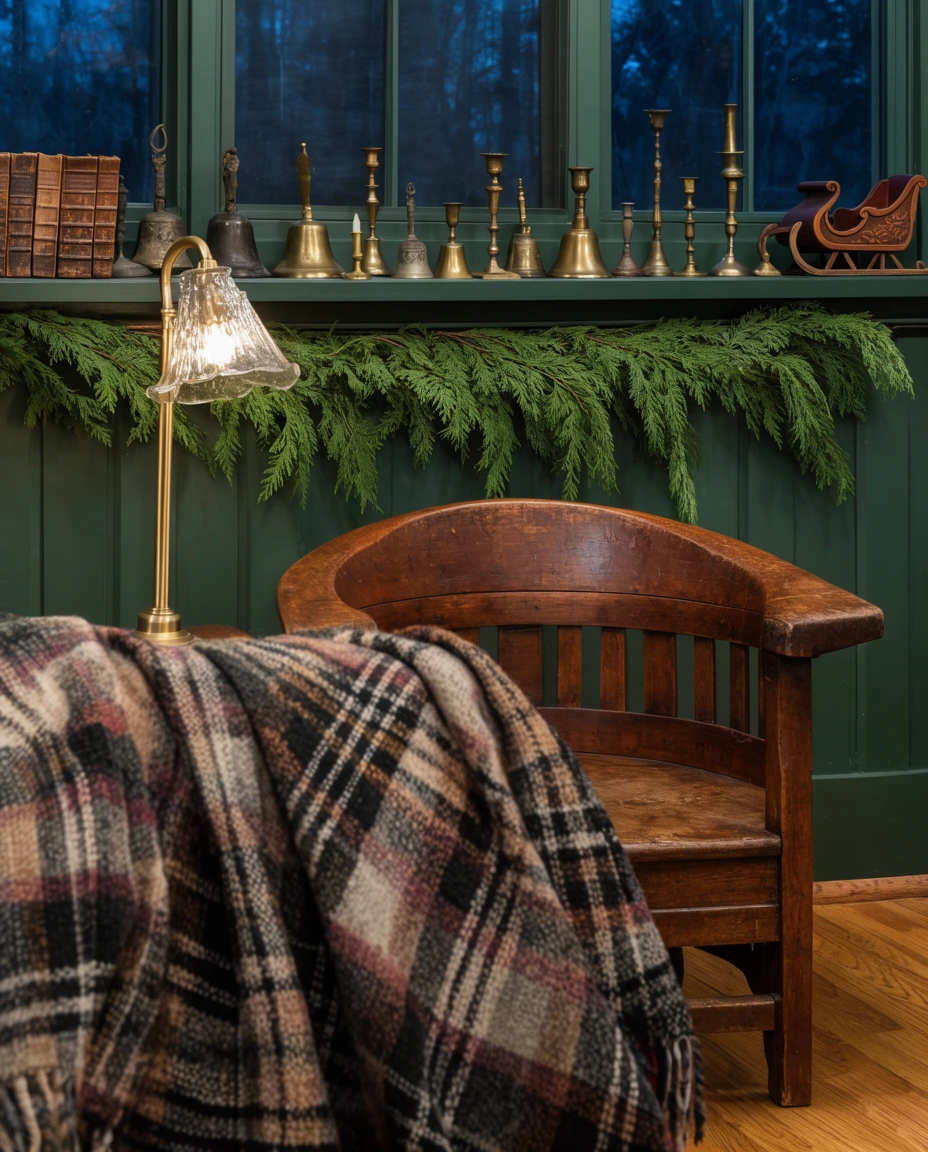
Thrift shops price brass by the piece rather than by weight, which means a heavy candlestick often costs four dollars while its glossy reproduction costs thirty. Look in the back corners right after Thanksgiving, when estate lots get unloaded fast. A bottle of ketchup and a soft cloth lift decades of tarnish in ten minutes, and leaving a faint patina in the crevices is what separates a collected shelf from a showroom one.
21. Evergreen Swags Over the Windows

A swag over a window is the simple move that changes a facade more than any other, and it works just as well indoors above a wide kitchen sink. Cedar and fir hold their needles longest, and a length of white ribbon tied at the center keeps the middle from sagging. An outdoor swag on a shaded elevation stays fresh right through the season, while the same construction hung inside looks elegant against painted trim.

Deep-set windows and any facade with wide trim take a swag best, since the greenery has something to sit against instead of floating on flat siding. Bay windows are the exception — three small swags follow the angles better than one long piece fighting the curve. Inside, the spot that works hardest is above a doorway between two rooms, where the greenery shows from both sides and nothing brushes the top of the frame.
22. A Cocoa Bar for Guests

A cocoa bar is the most useful thing you can set up in a kitchen in December, and it takes one tray. Mugs, a carafe, a jar of marshmallows, cinnamon sticks, and a plate of gingerbread cut into small squares. Push it to the end of the counter or onto a rolling cart so the stove stays clear. Guests serve themselves, the room stays cozy, and the host actually gets to sit down.

This setup came out of open-plan American kitchens, where guests gather at the island no matter how nicely the living room is arranged. In colder states it runs all winter — the tray shifts from cocoa to hot toddies in January without changing a thing. Households with kids tend to keep the marshmallows and peppermint sticks at the front edge where small hands reach them, and the fussier syrups toward the back.
23. Nordic Minimal Christmas Corners
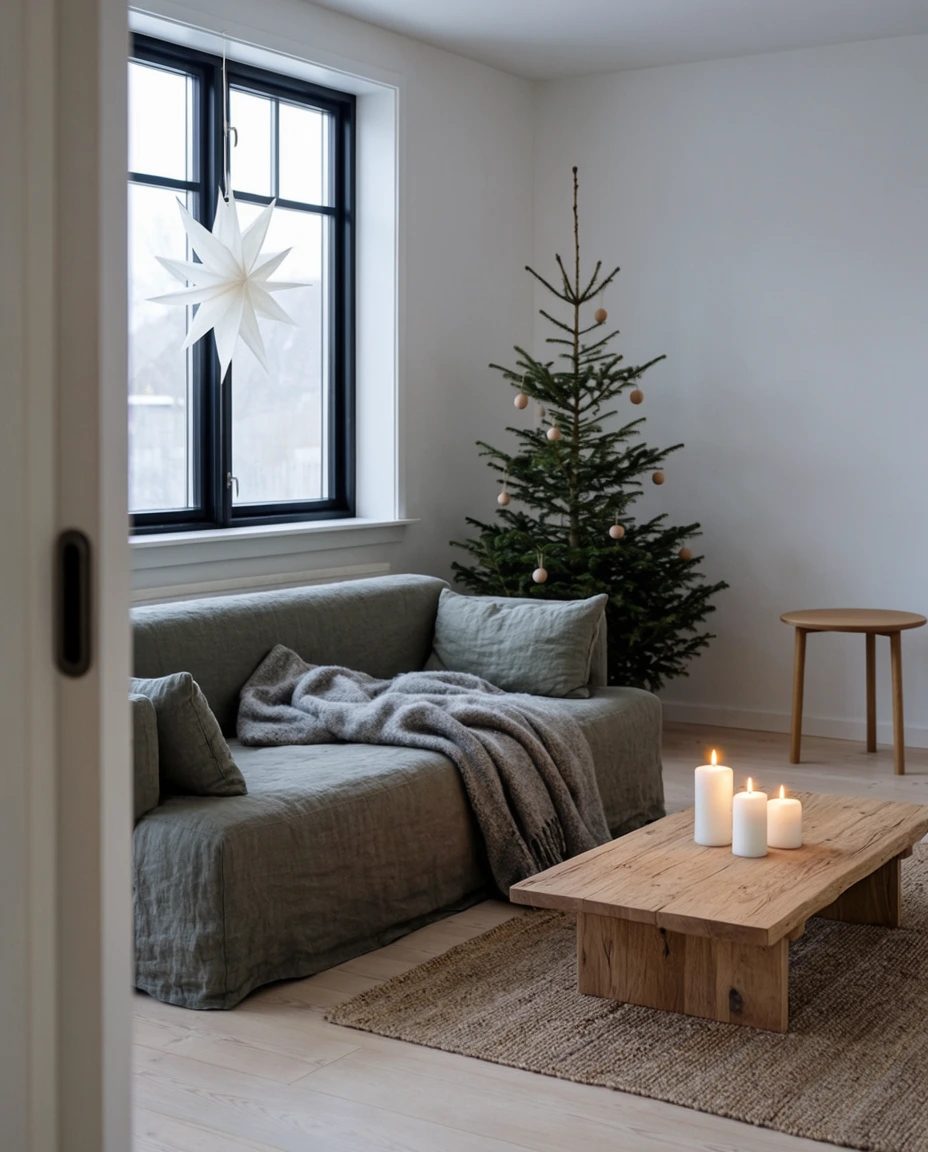
The Nordic approach strips Christmas down to wood, wool, and white — a few pale candles, a bundle of birch, a single star in the window. That restraint is why the aesthetic keeps trending: it fits a small apartment as easily as a big house, and nothing competes with the architecture. One corner done this way, with a paper star lamp and a low bench holding two pillar candles, is usually enough.

People who adopt this style tend to keep the same four or five pieces for years and add one item each season rather than restocking. That habit is what makes the corner look coherent — everything shares a wood tone or a weave. The unpacking takes fifteen minutes because there’s so little of it, which is precisely why those households are already finished on December first while everyone else is hunting for light strands.
24. Wrapped Trunks and Glowing Paths
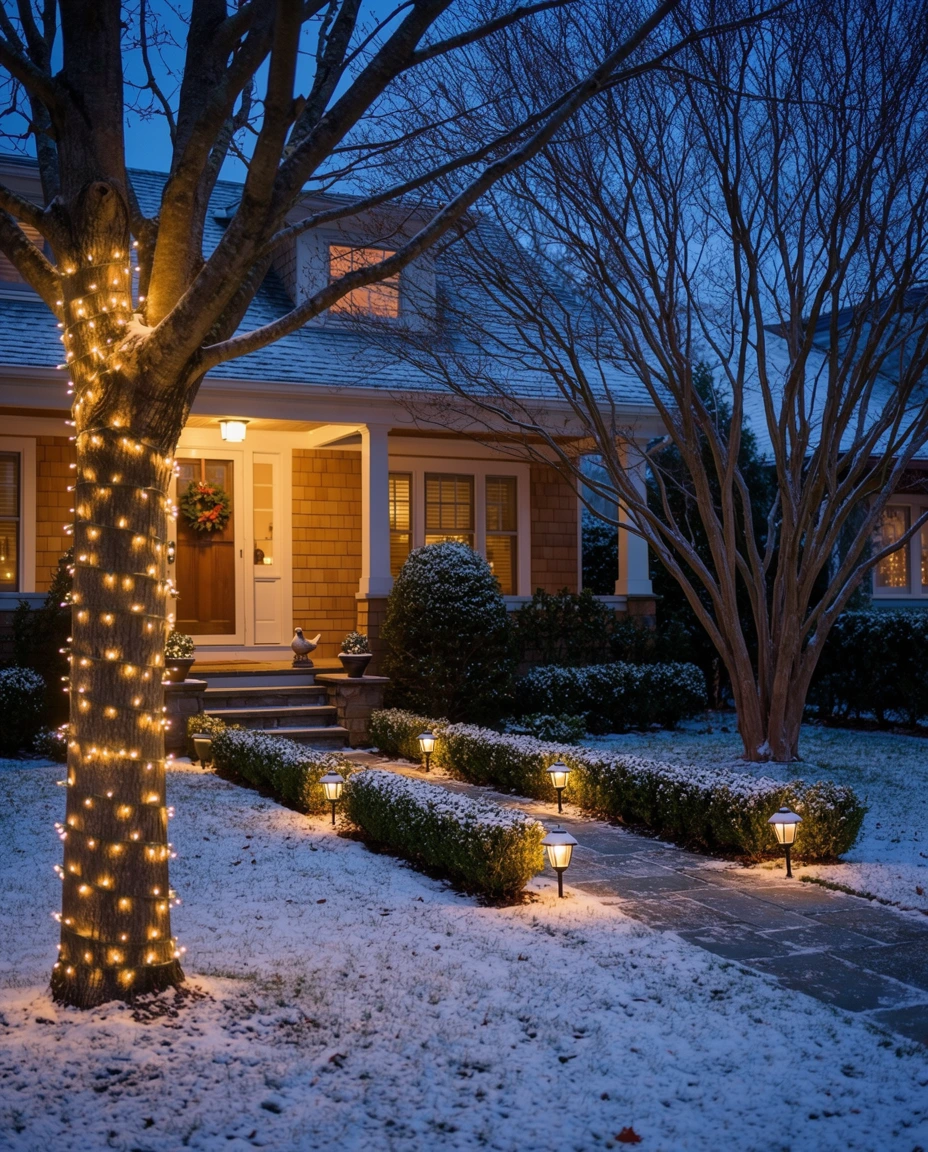
Wrapping a trunk in warm white lights is the most dramatic of all outdoor ideas, and it costs less than a lit reindeer. Start at the base, spiral upward at even spacing, and stop where the branches begin. Pair it with low lanterns marking the walk from the driveway to the front porch and the whole approach reads finished. The DIY part is patience more than skill — an evening with an extension cord and a plan.
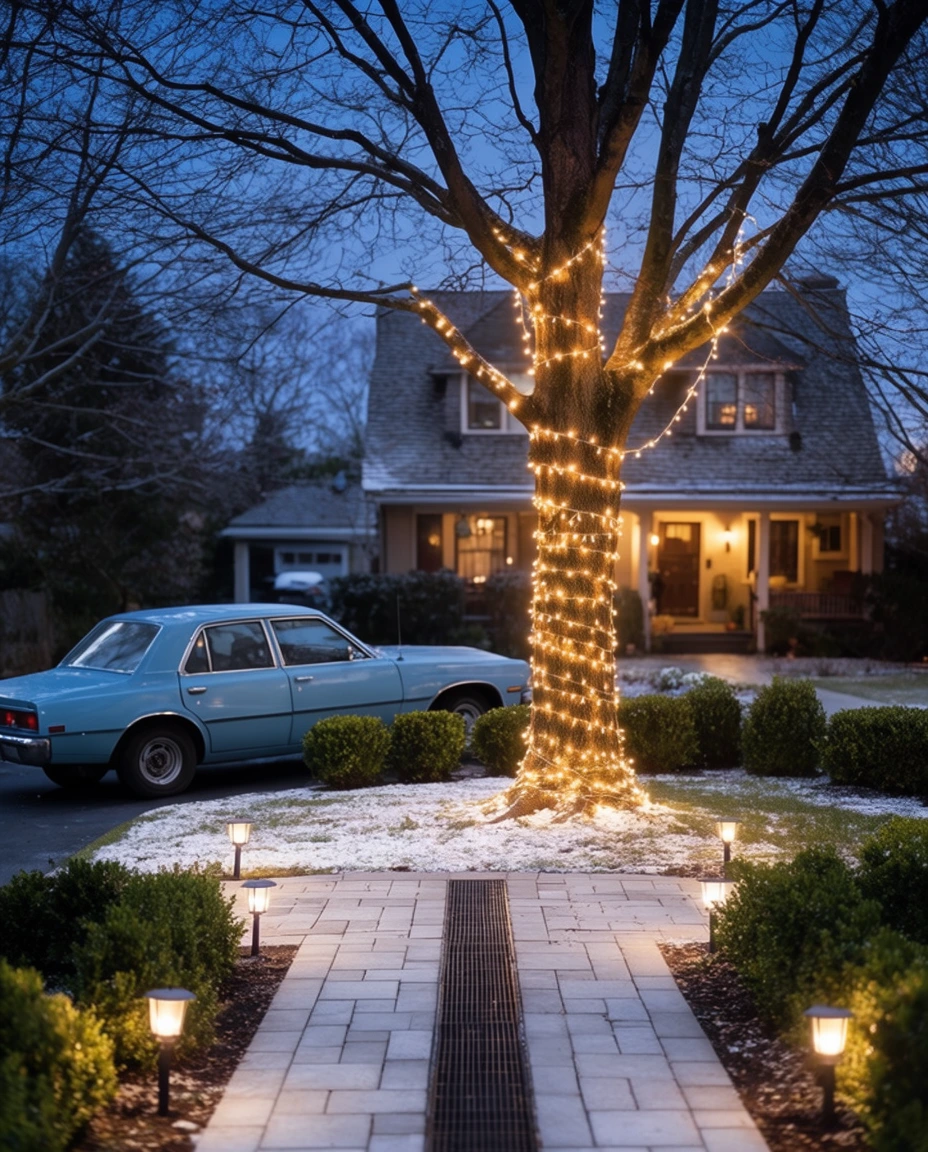
The spiral usually goes wrong at the top, where people run out of strand and leave a bare stretch that shows from the street. Measure the trunk’s circumference, multiply by the number of wraps, and add ten feet of slack before you buy. Uneven spacing is the other giveaway — hold four to six inches between passes the whole way up, and use one strand per tree so no dark gap appears where two cords meet.
Some of these will suit your house and some won’t, which is exactly how it should be — the best holiday rooms are edited, not maxed out. Tell us in the comments which idea you’re trying this year, and share the ones that have already become traditions in your own home. We read every single one.