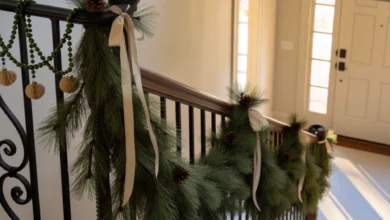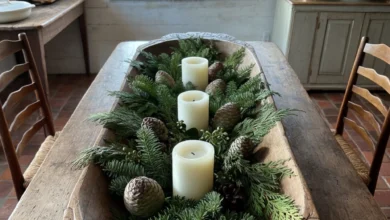

Garland has quietly turned into the most flexible decoration in the American holiday kit — cheaper than a tree, faster than lights, and endlessly adaptable to whatever wall, rail, or shelf a house happens to have. Pinterest boards fill up every October with the same question phrased a dozen ways: how do I make a plain doorway, a bare mantel, or a boring staircase feel like December without spending a weekend on it? The answer usually comes down to material, drape, and one good detail. Below are 23 directions worth copying this season, each one photographed in a real room, with the practical notes that make the difference between a garland that looks styled and one that looks stapled.
1. Fresh Cedar Over the Mantel

Cedar has a way of making a room smell like December before a single candle gets lit. A full, slightly wild swag along the mantle gives the fireplace a soft green frame that reads warm from across the room, and it stays the strongest indoor anchor point in most American living spaces. Let the ends drape well past the shelf on both sides so the shape looks grown rather than measured, then tuck a few short sprigs into the center to thicken the middle.
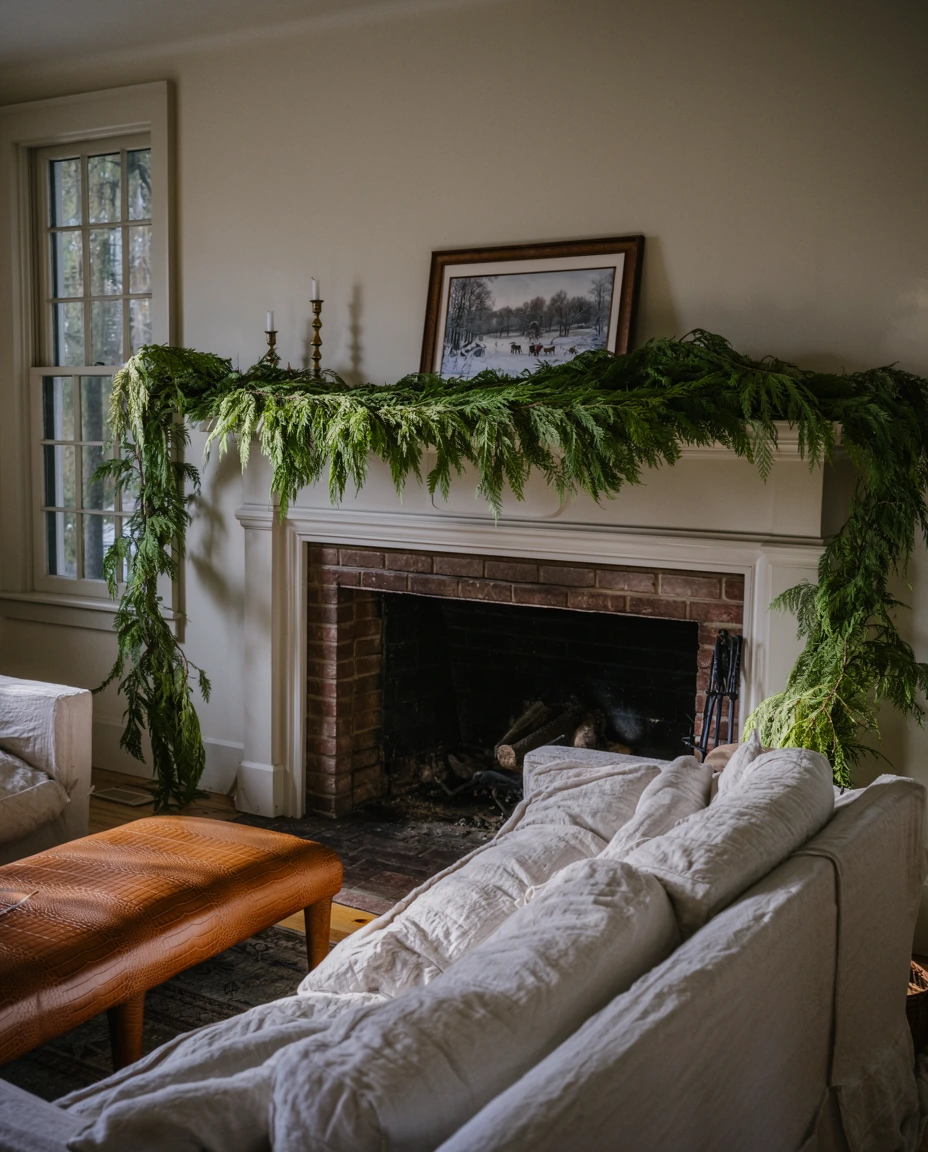
Fresh cedar starts dropping needles once the furnace runs, so soaking the cut ends overnight before hanging and misting the greenery every few days buys real time. Floral wire wrapped around the shelf brackets carries the weight far better than adhesive hooks, and it disappears completely under the foliage. Keep the heaviest section slightly off center, since a perfectly balanced swag looks stiff both in photos and in the room. Trimmed cedar usually holds color for about three weeks in heated air.
2. Bright Berry Garland for Windows

Winterberry and faux holly strung along the tops of windows puts color exactly where the eye already travels. A slim garland with clusters of red berries reads clearly from the street after dark and keeps a living room feeling layered without adding one more object to the floor. Keep the swag shallow so the sash still opens, and let the two ends fall a little unevenly — that slight asymmetry is what makes the whole thing look hand-styled instead of installed.
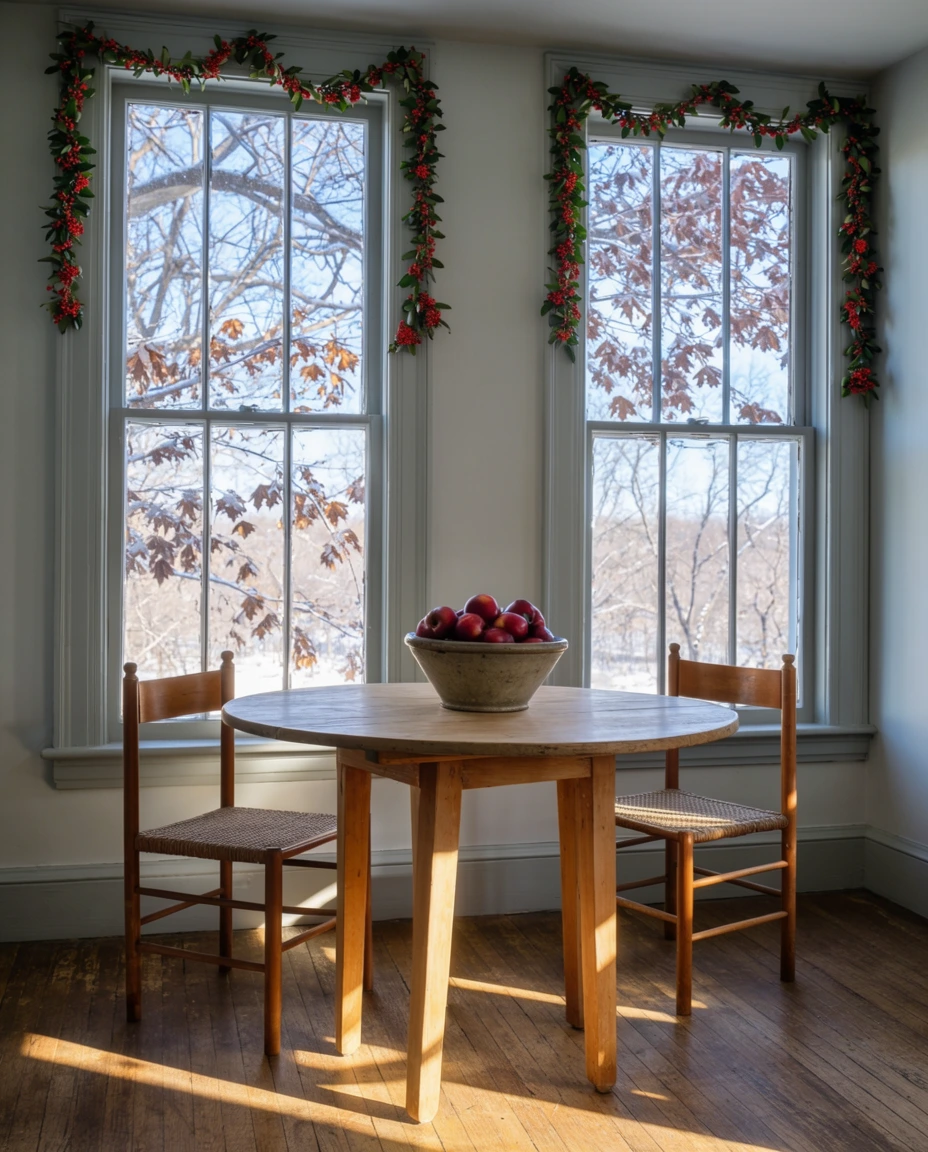
This treatment earns its keep in older homes with deep casings, where the trim gives the garland something to sit against. Bay windows in a dining room and a kitchen sink window both take it well, since the berries catch afternoon glare and keep glowing once the lamps come on. Renters can skip nails entirely and use small removable clips along the top edge of the frame, which lift off in spring without leaving a mark on painted wood.
3. Snowy Pine with Frosted Tips
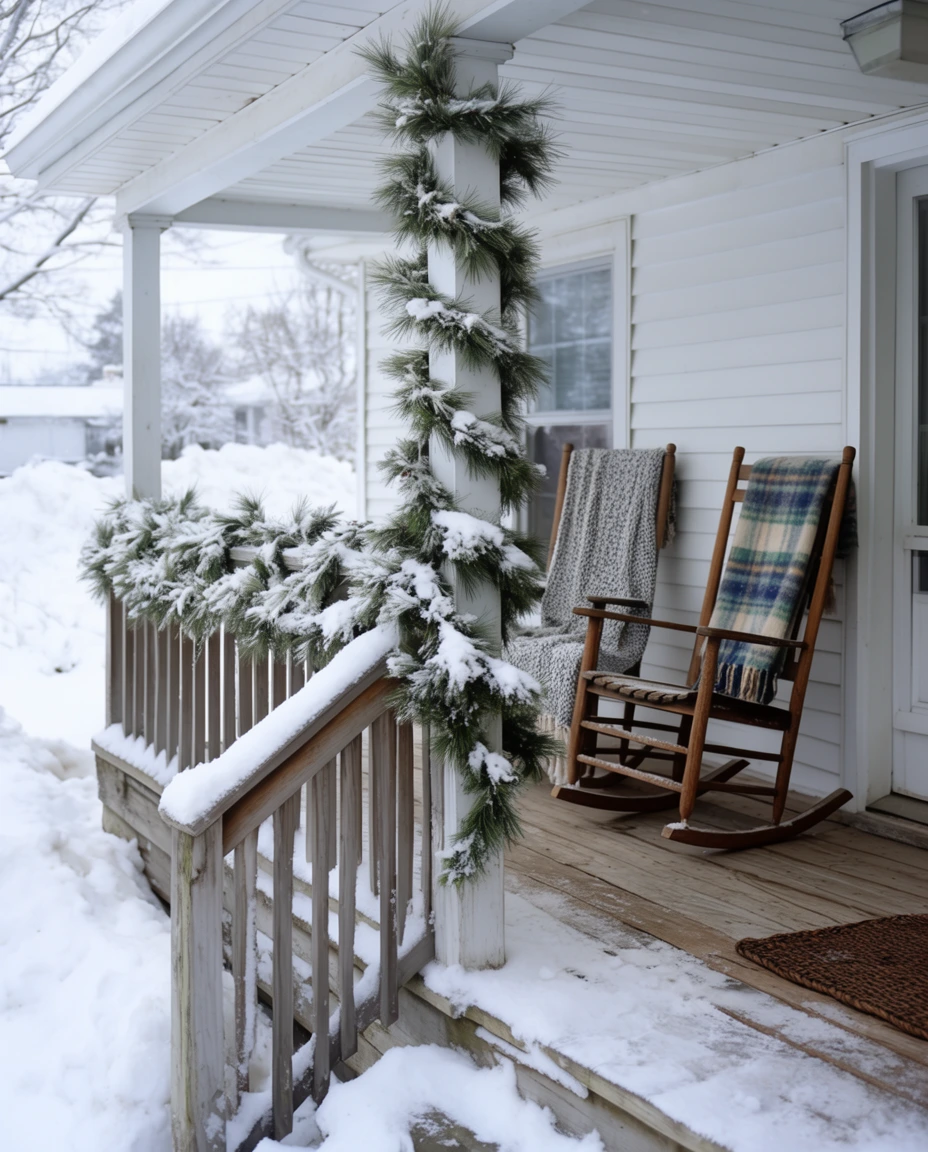
Flocked pine gives a white-tipped look that photographs beautifully in cold light, which is why it keeps appearing on outdoor railings all over the Midwest. Wrapped around a front porch post or laid along the rail cap, the frosted needles pick up streetlight and passing headlights once the sun drops. Mix two textures — a tight faux pine base with a few loose flocked branches worked in — so the garland reads full and dimensional instead of flat.
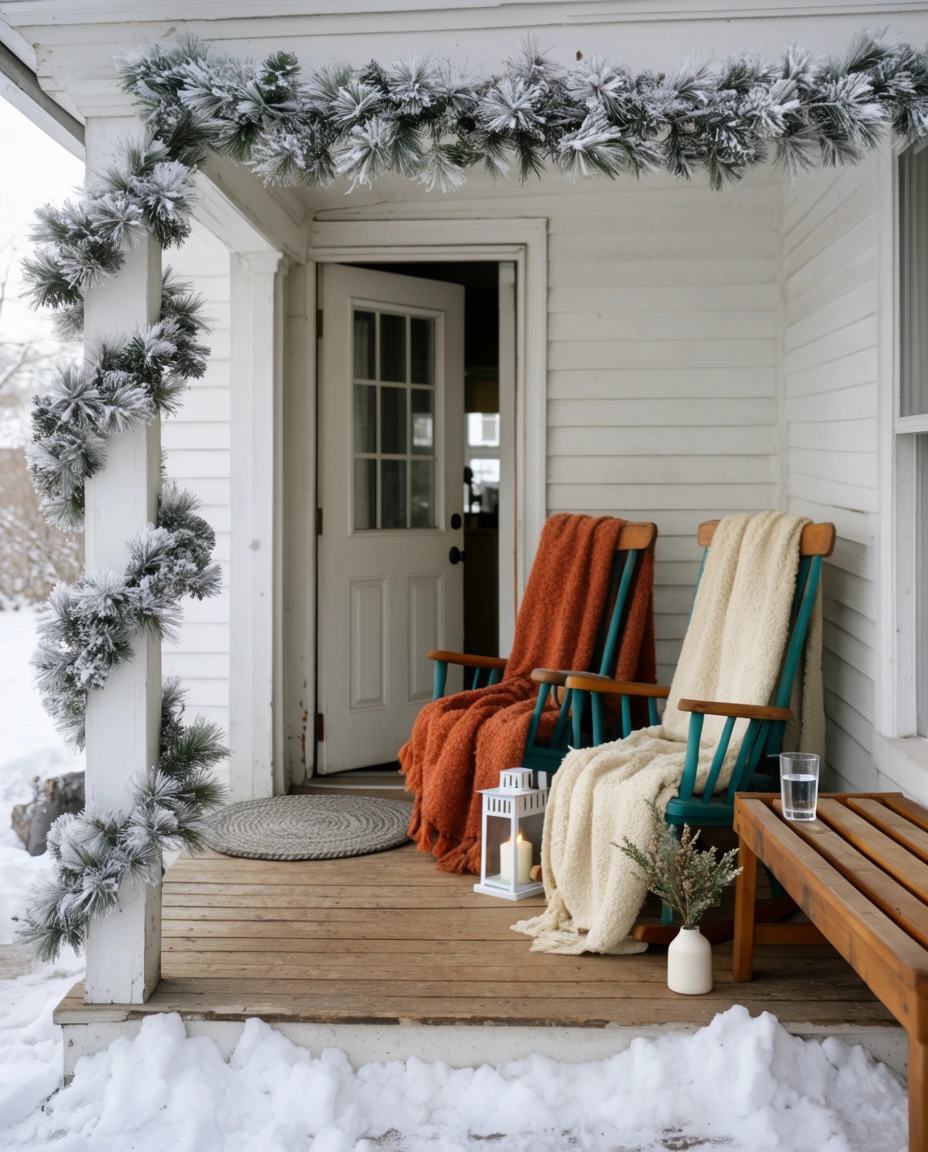
Cold-climate porches from Minnesota to upstate New York handle flocking far better than humid ones, since the coating tends to clump after a warm Southeastern rain. A deep overhang keeps the finish crisp straight through the season. There’s also a funny neighborhood effect to this look: one house on a block of similar rooflines does it, and by the next winter three more have followed without anyone ever discussing it.
4. Velvet Ribbon and Fresh Greens
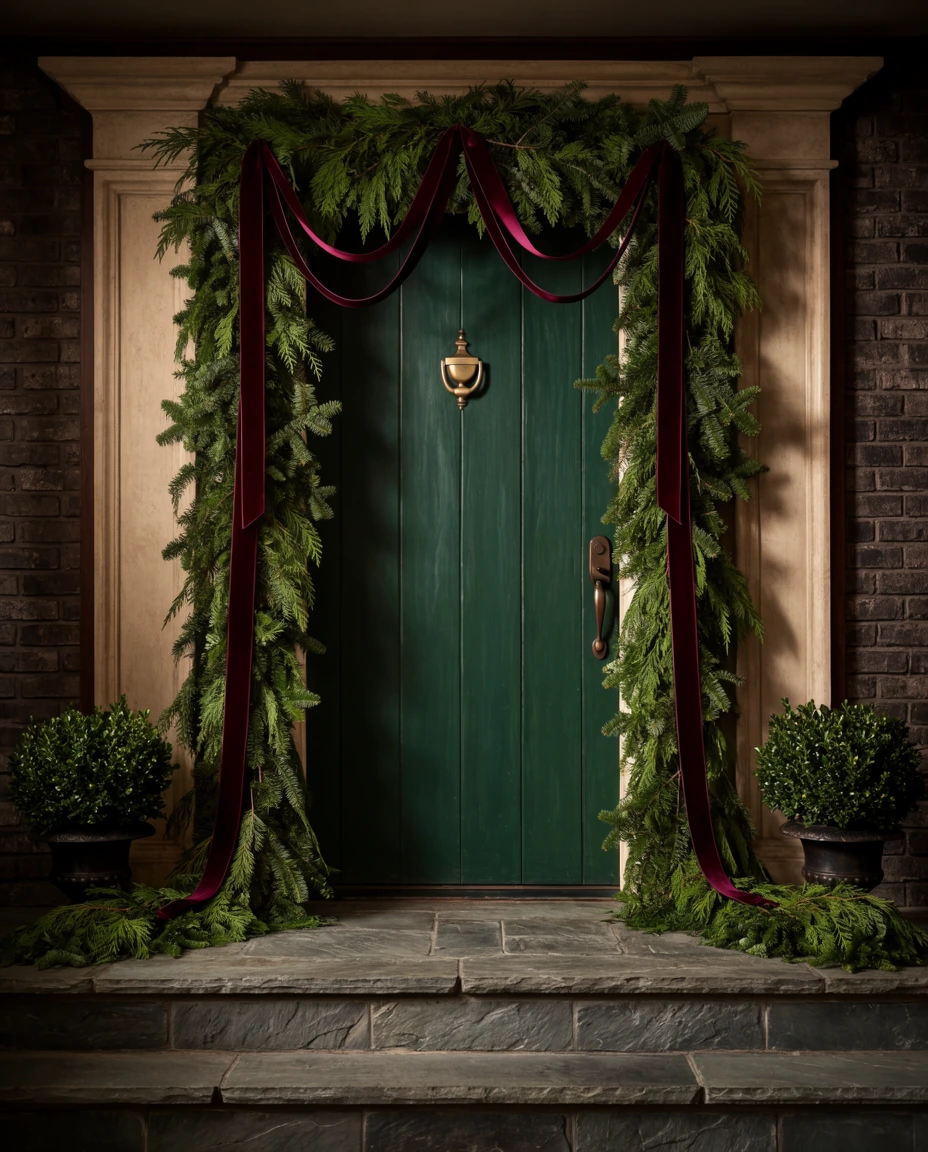
Wide velvet ribbon changes the entire read of a front door arrangement. Run fresh greens around door casings, then weave the ribbon through in long loose loops rather than tight bows, and the doorway gains real depth the moment the porch light hits it. Deep burgundy, forest, or cream all work here; the pile of the velvet does the heavy lifting, catching light along one edge and going almost black along the other.
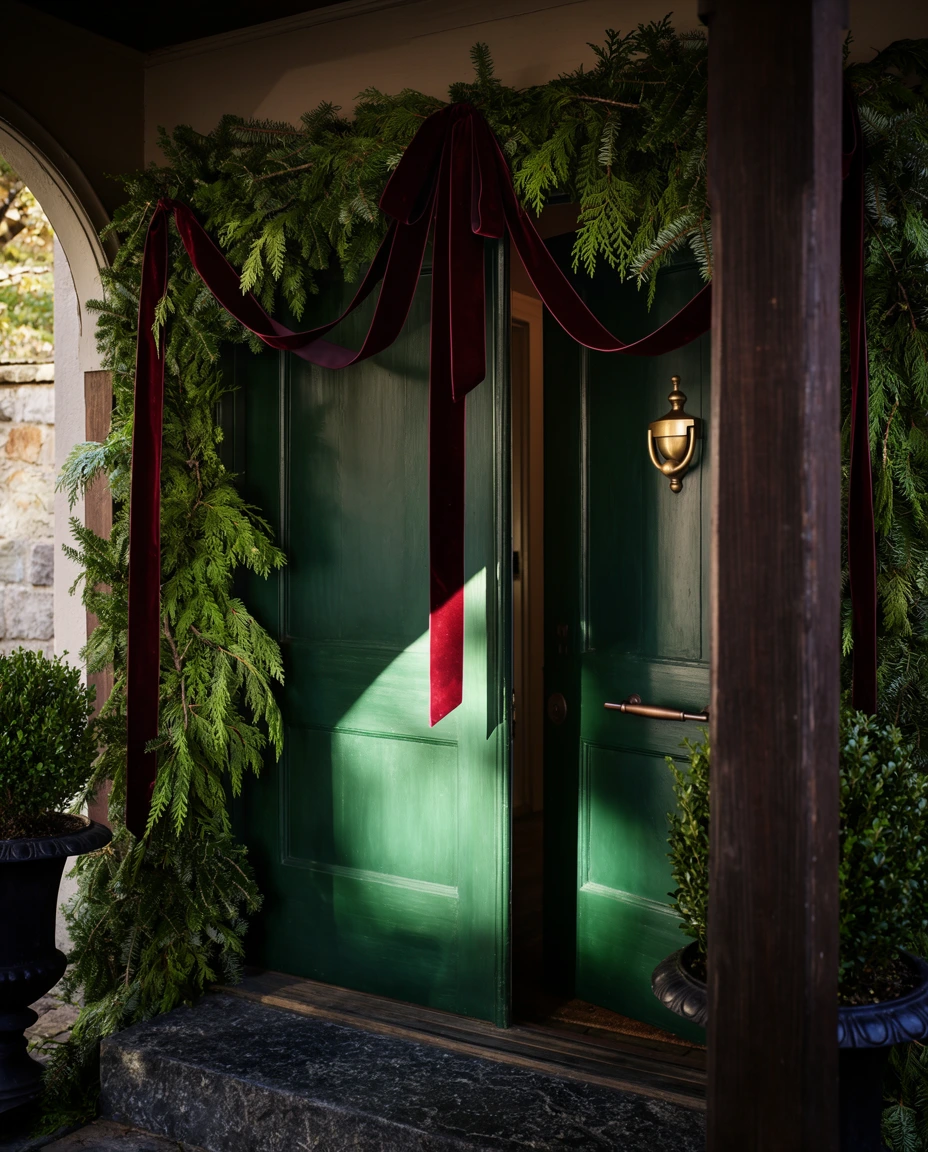
Florists who build these for holiday installs wire the ribbon in short sections instead of running one continuous length, so a gust only loosens a single piece rather than the whole run. They also cut the tails at a sharp angle and let them hang below the header, which keeps the eye traveling downward instead of stopping at the frame. Outdoor velvet holds its color best when it’s polyester rather than rayon.
5. Crochet Snowflake Chain
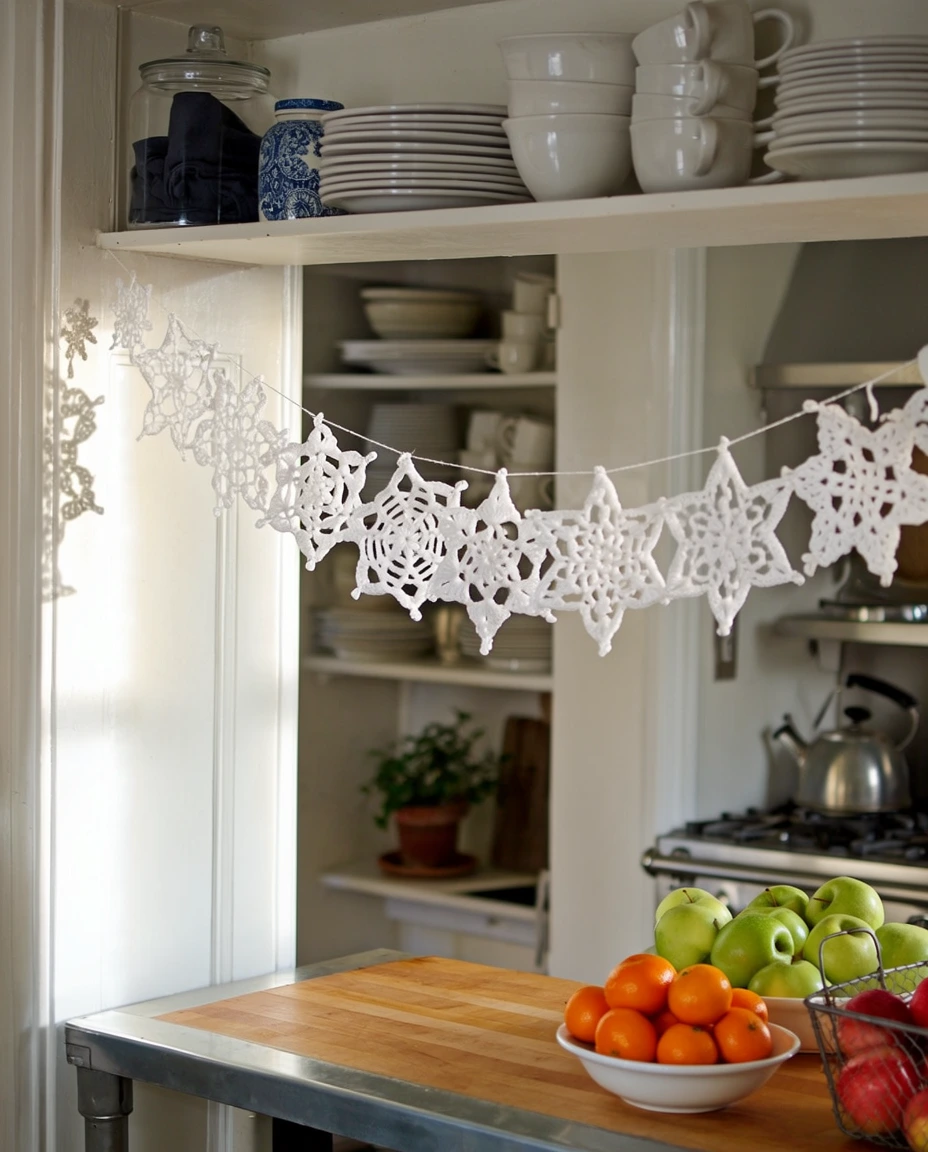
A crochet chain of stiffened snowflakes carries the quiet charm of something a grandmother made, and it suits rooms where fresh greenery would feel like too much. Each flake gets worked in cotton thread, blocked flat, then joined on a fine cord, and the handmade irregularity is entirely the point. Strung along a bookshelf edge or a window frame, the homemade lace throws small shifting shadows onto the wall behind it whenever a lamp sits close by.
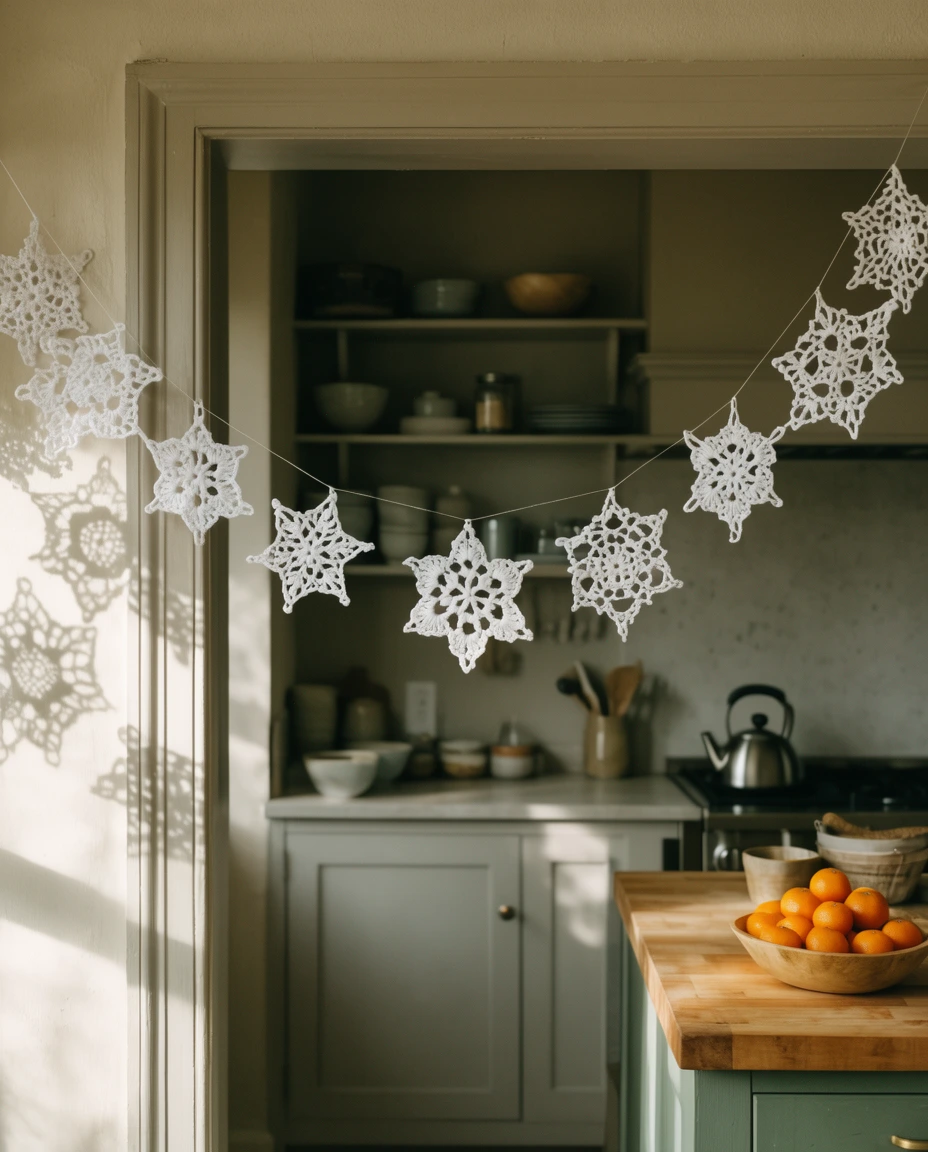
A woman in Portland inherited two dozen of these from her mother’s sewing box, mismatched in size and softened to cream with age, and now runs them across her kitchen pass-through every December. She adds exactly one new flake each year. That small ritual is what turns a modest craft project into something a family actually watches for, and the cost stays at a spool of thread and a few winter evenings.
6. Paper Star Chain in the Hallway

Folded paper stars threaded on baker’s twine are the fastest way to make a plain hallway feel intentional in December. The project is a genuine easy diy — cut, fold, glue, string — and a single afternoon produces enough length to carry the whole corridor. Use heavier stock in two or three tones so the chain holds its shape, and hang it at picture-rail height so it frames the walk rather than brushing anyone’s shoulders.

A pack of textured cardstock runs about eight dollars and yields roughly forty stars, which puts a fifteen-foot chain comfortably under fifteen dollars including the twine. Metallic sheets cost a few dollars more and read as considerably more expensive under warm bulbs. Storing the finished chain flat between two pieces of cardboard means it comes out of the box uncrushed next winter, so that one afternoon of work spreads across several seasons.
7. Vintage Brass Bells and Cedar

Small vintage brass bells wired into a cedar rope give a staircase garland a sound as well as a look. Gathered from flea markets or an old ornament box, the bells sit best in loose clusters of three, spaced far enough apart that the stairs never turn into a wall of metal. The patina on aged brass reads much warmer than new hardware and plays beautifully against dark wood handrails and white balusters.

Most households hang this once and then never touch it again, which means the bells ring every time someone runs down for coffee — a detail families either love outright or quietly solve by week two with a scrap of felt tucked inside the clapper. Homes with big dogs tend to slide the clusters higher up the rail instead. Either fix takes five minutes and keeps the garland in use rather than back in storage.
8. Dried Citrus Slice Strands
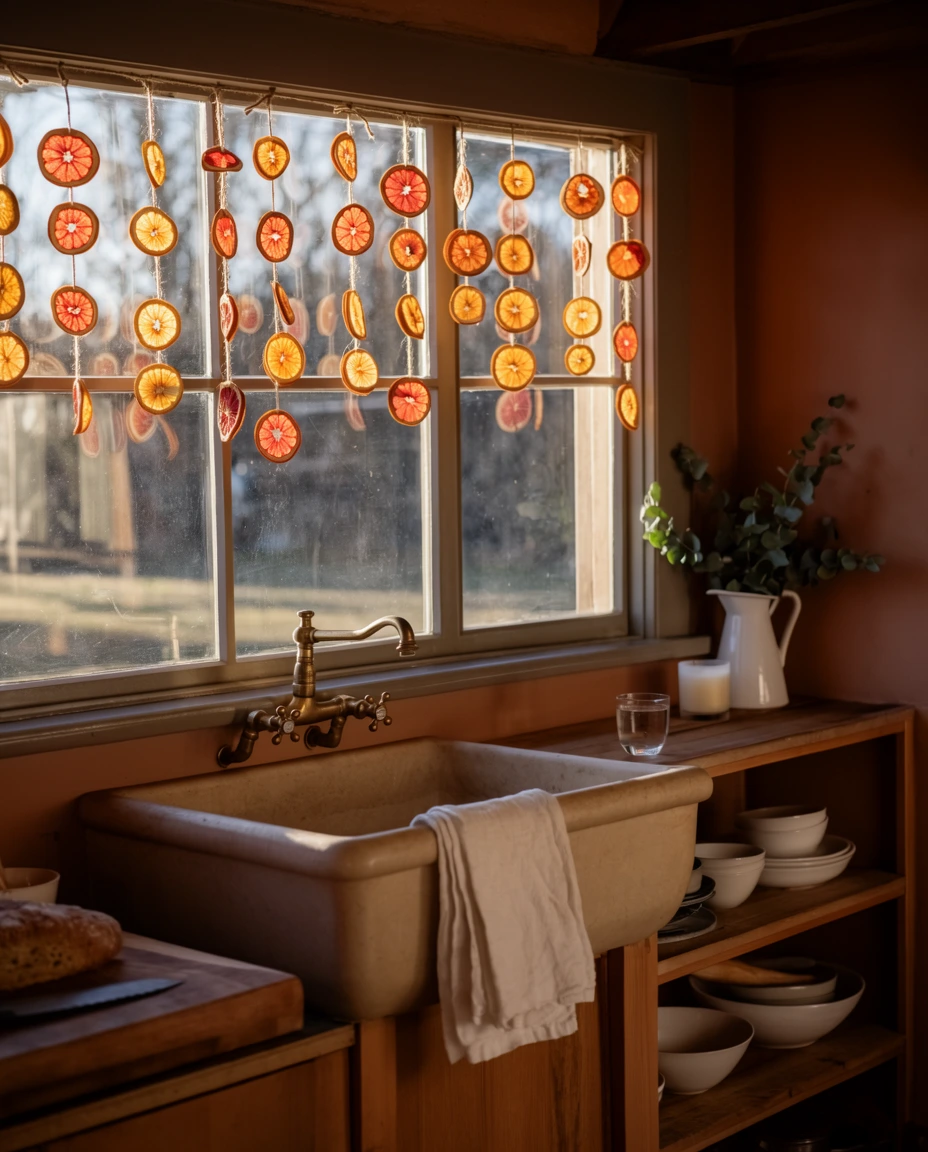
Dried orange and grapefruit rounds strung on jute make a diy garland that costs almost nothing and leaves the house smelling faintly of the oven for days. The method is simple — thin slices, low heat, patience — and the translucent fruit behaves like stained glass the second a light source sits behind it. Among the looks gaining ground for 2026, this one keeps surfacing because it reads equally at home in a modern kitchen and a farmhouse window.
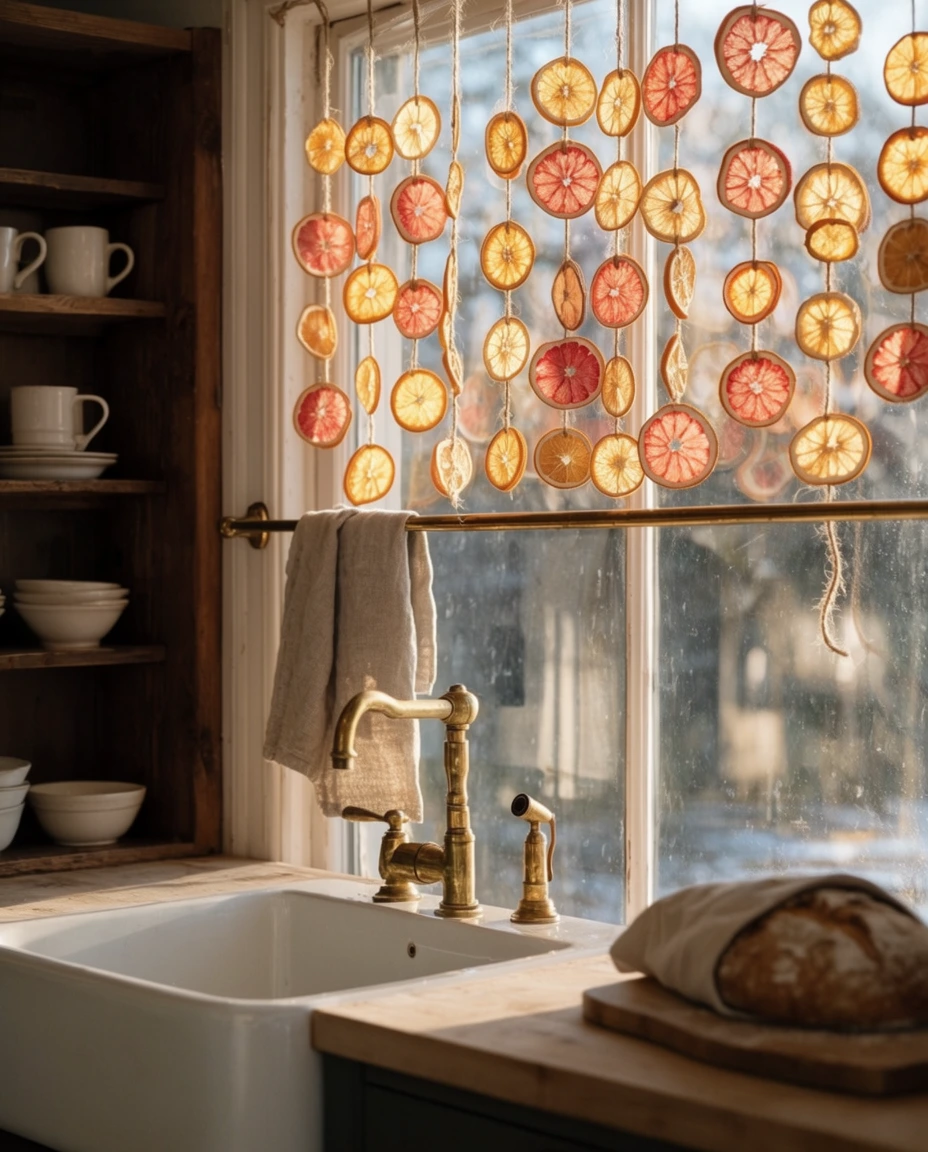
The usual misstep is slicing too thick; anything over a quarter inch stays chewy in the center and eventually molds right on the string. Cut thin, blot each round dry before it goes in, and give the tray three hours at low heat with the oven door cracked. Skipping the cooling rack causes the other common problem — warm slices stacked on a plate stick together and tear when pulled apart.
9. Felt Ball Garland for Stairs
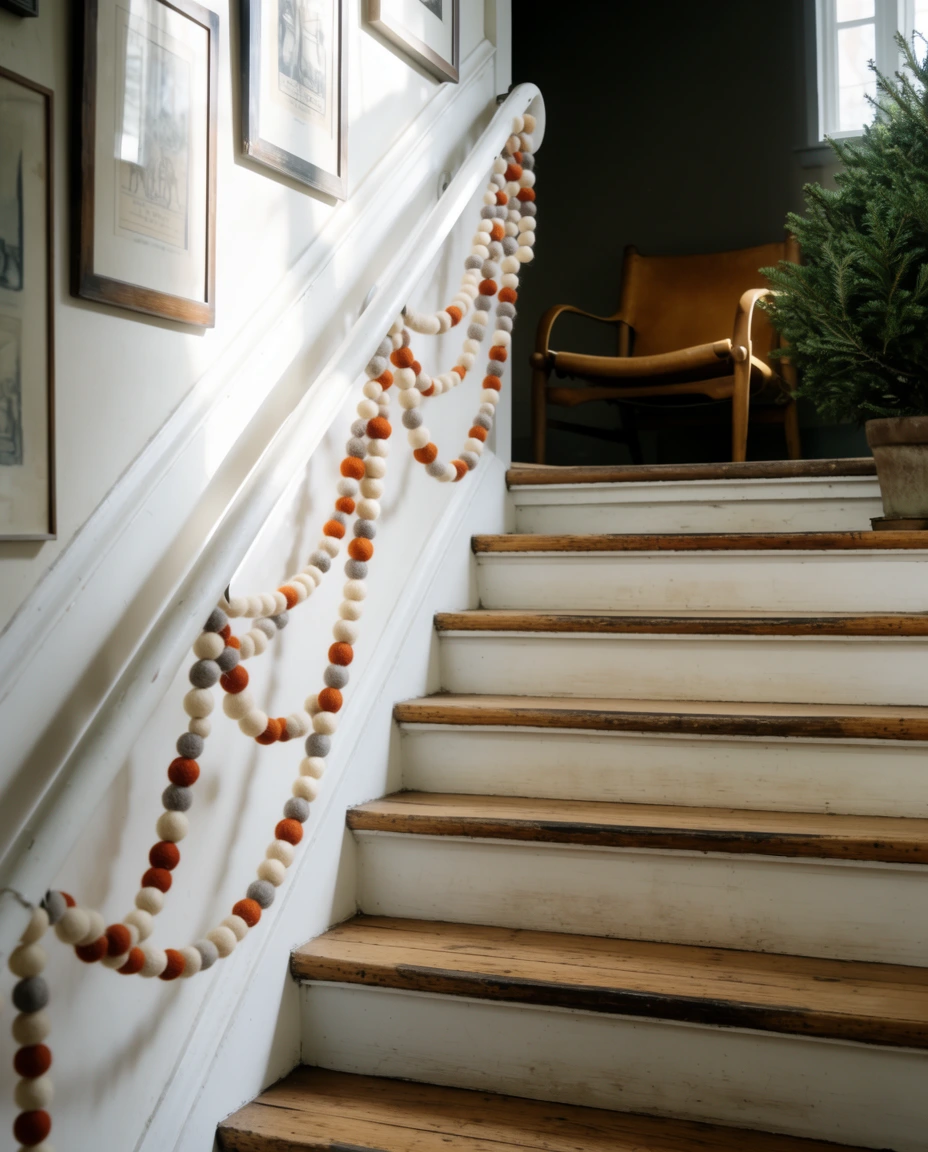
Wool felt balls threaded on cotton cord give a soft, round, faintly Scandinavian line that suits a rail beautifully. A garland for stairs has to survive hands sliding along the banister all month, and felt manages it — nothing snags, nothing sheds. The homemade version comes together with a long needle and one evening of television, while the bought version costs more but arrives ready to hang. Either way, hold to three colors so the run stays calm.

Loop the cord under the handrail rather than over it, so palms still meet bare wood on the way down. Anchoring every third loop with a small zip tie hidden underneath keeps the swags at an even depth for weeks instead of letting them creep toward the newel post. Six feet of cord per swag gives a drop of roughly eight inches, which stays well clear of tread traffic on a standard flight.
10. Blush Pink Ribbon Swag
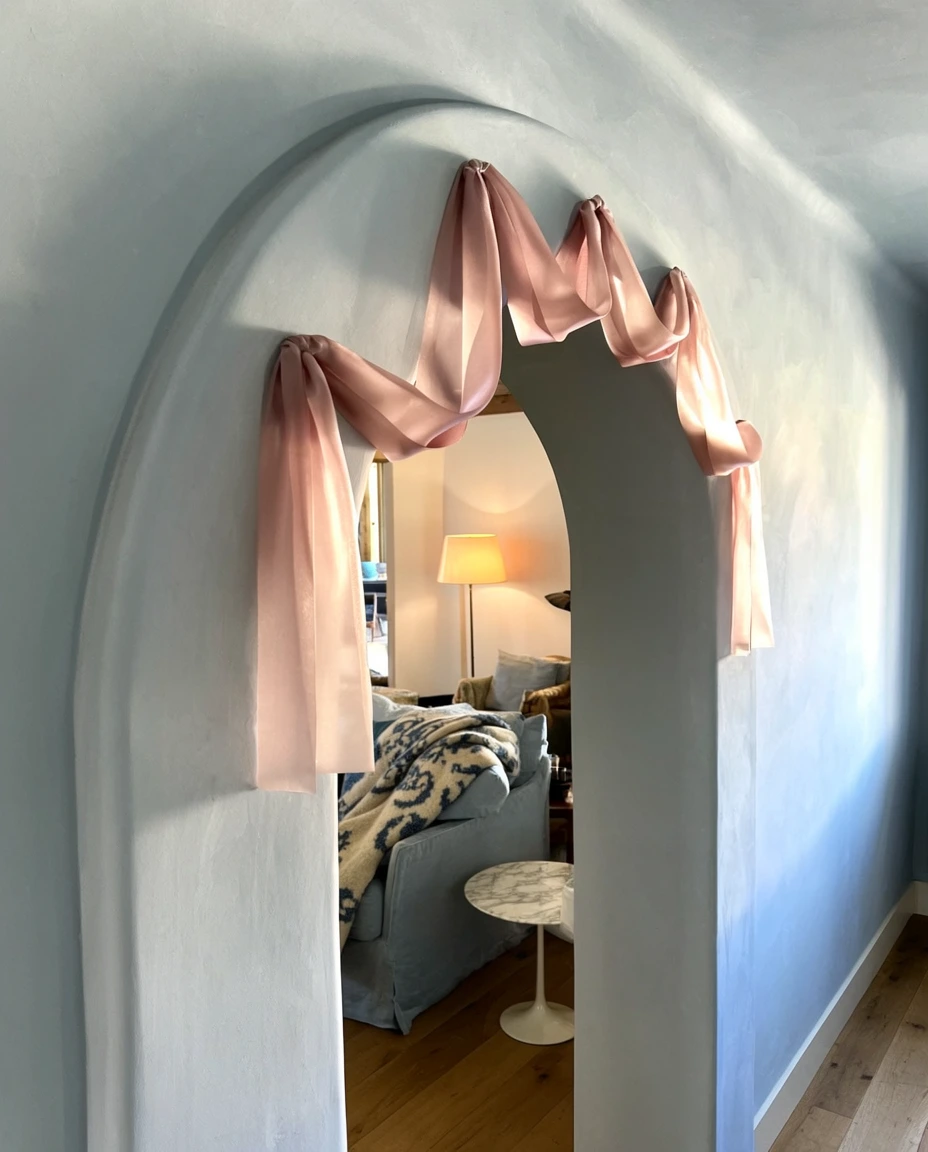
Soft pink has quietly earned a spot in December decorating, and a ribbon swag is the gentlest way into it. Silk or grosgrain in dusty rose, looped along a shelf or a living room archway, warms a neutral room without competing with the tree. It counts as an easy diy because no wiring is involved — fold, pin, and let the loops fall at slightly different depths so the line looks relaxed rather than measured out.
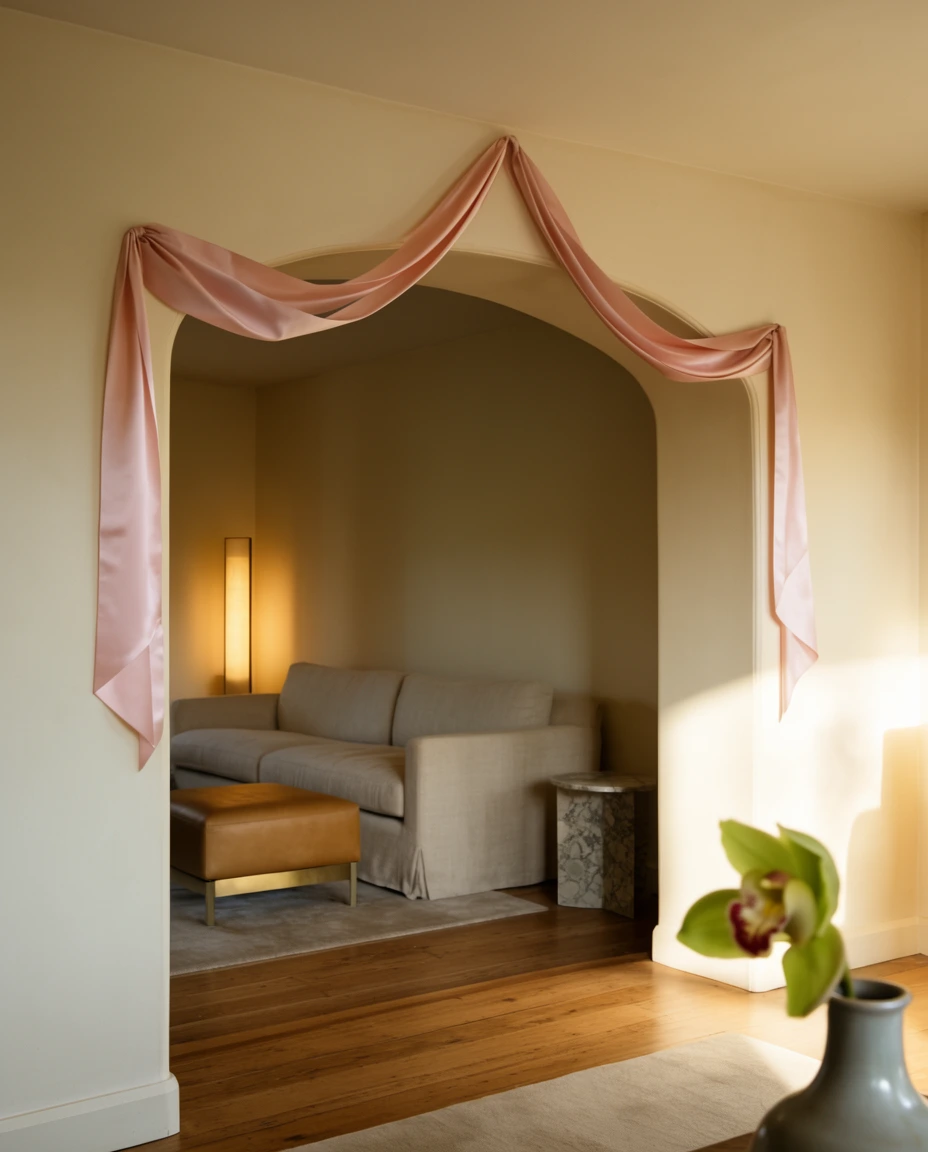
This one performs best in rooms already leaning warm, where oak floors and cream walls give the blush somewhere to land. It struggles against cool gray paint, which pushes the pink toward chalky. Apartments built around a single main room usually put it on the wall the sofa faces, since that’s the surface everyone stares at through a long evening anyway, and it makes the whole space feel dressed.
11. Eucalyptus Draped Over the Mirror
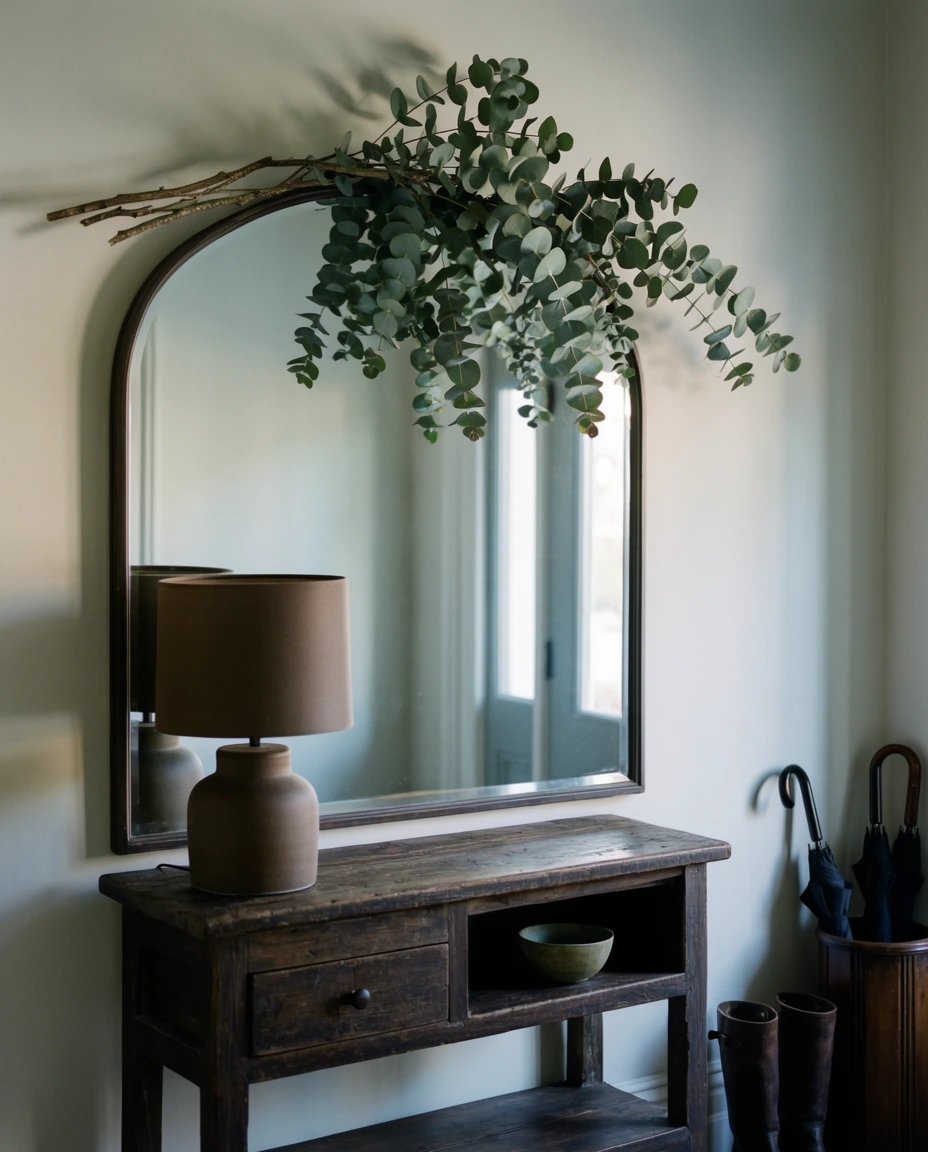
Silver dollar eucalyptus laid across the top of a mirror doubles itself instantly, which makes it one of the highest-return indoor moves of the season. The pale blue-green leaves suit an entry console or a hallway where a large frame already hangs, and the reflection fills the wall behind with no extra material at all. Let one side hang longer than the other, and coax a few stems forward so they curve out toward the room.
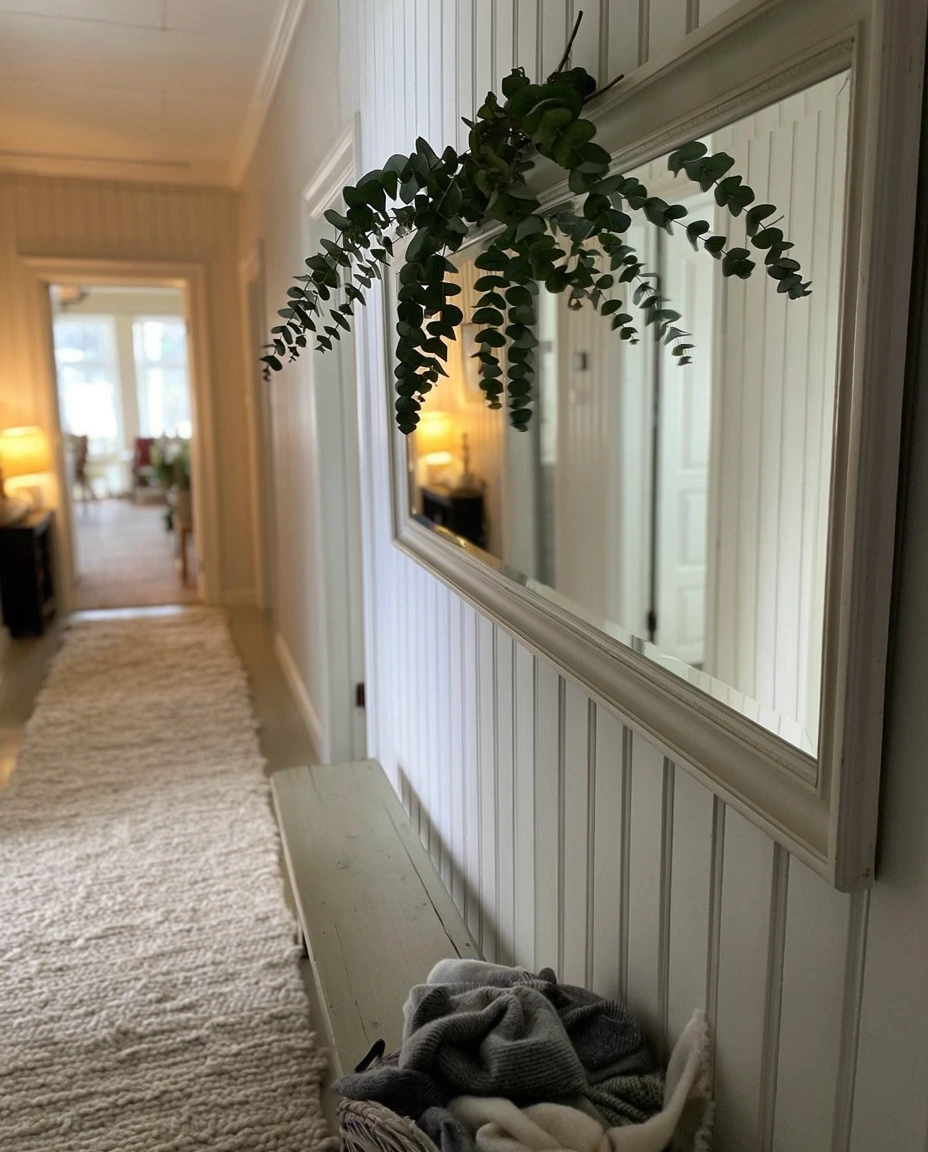
Eucalyptus dries in place beautifully and holds its shape well past New Year’s, which is why plenty of West Coast homes leave it hanging into February. Grocery stores in most American cities now stock bunches through winter for a few dollars. In dry climates it fades to a soft sage over a month; in humid Gulf states it stays greener but goes limp fast if it sits anywhere near a heating vent.
12. Simple White Lights and Pine
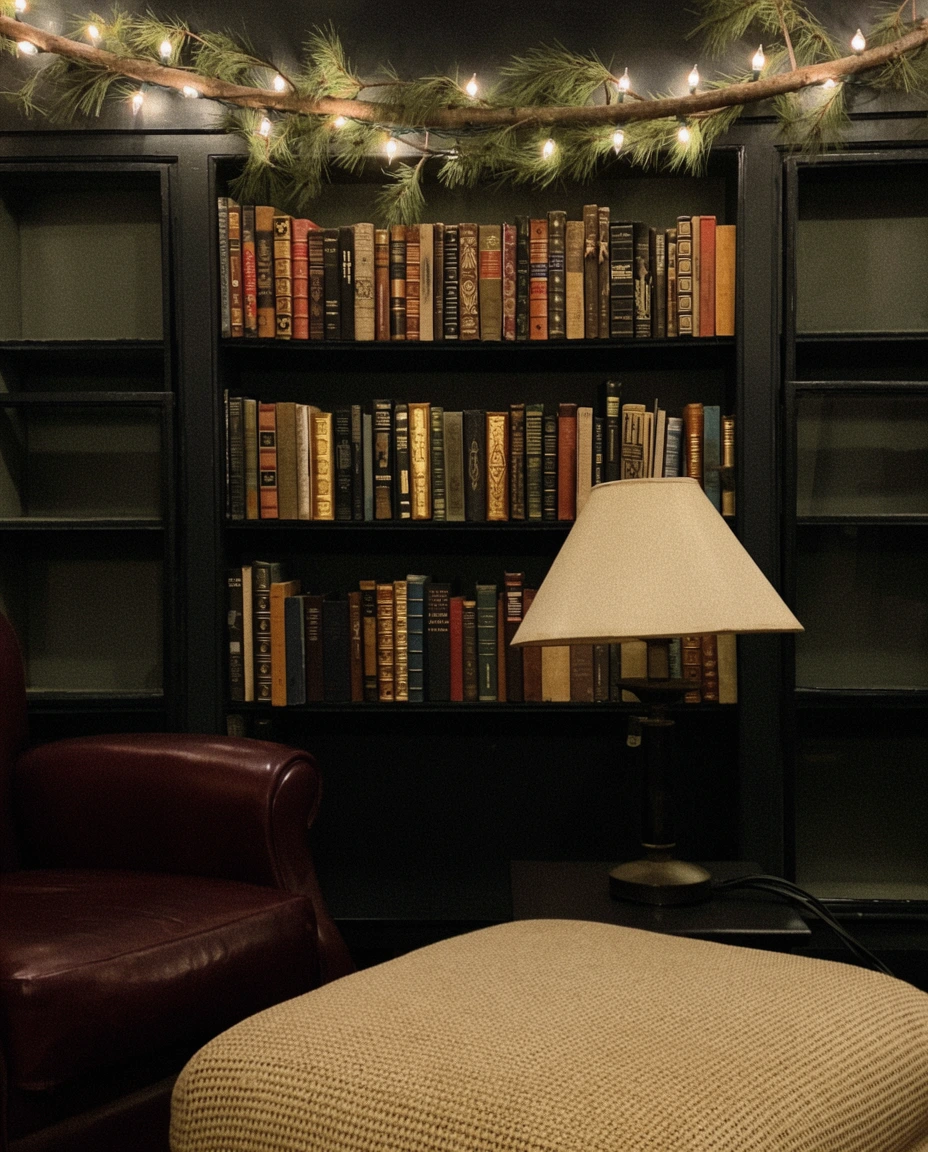
The most reliable holiday look is still a plain pine rope with white lights woven through it. Nothing about it is complicated, and the simple pairing works on a mantel, along a bookcase, or as a garland for windows in a room that already has plenty happening. Warm white bulbs at close spacing keep the glow soft, while cool white pushes the entire room toward blue and flattens the greenery into something that reads gray.

Lighting designers who build holiday installs push the strand deep into the branches rather than laying it on top, so the source vanishes and only the glow reads. On longer spans they run the wire out and back again, doubling the light without doubling the visible cord. A battery pack tucked behind the greenery solves the outlet problem on a mantel that has no plug within reach.
13. Popcorn and Cranberry Strands
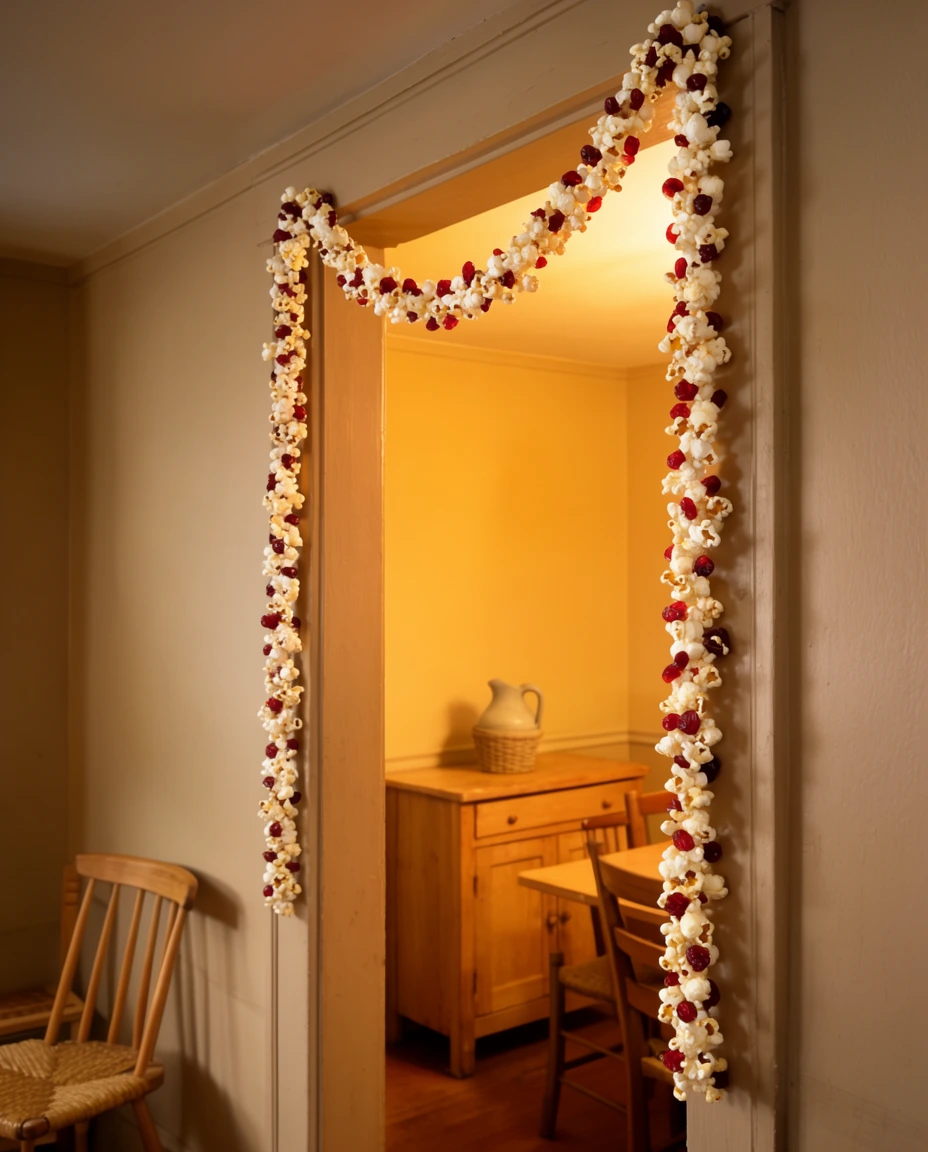
Threaded popcorn and cranberries make the most homemade garland there is, and its vintage appeal has come back around hard. The rhythm of white, white, red, white reads clearly from across a room, and the strands look best doubled along tree branches or draped in shallow loops across a doorway. Day-old popcorn threads far better than fresh, since it’s drier and firmer and splits far less on the needle.
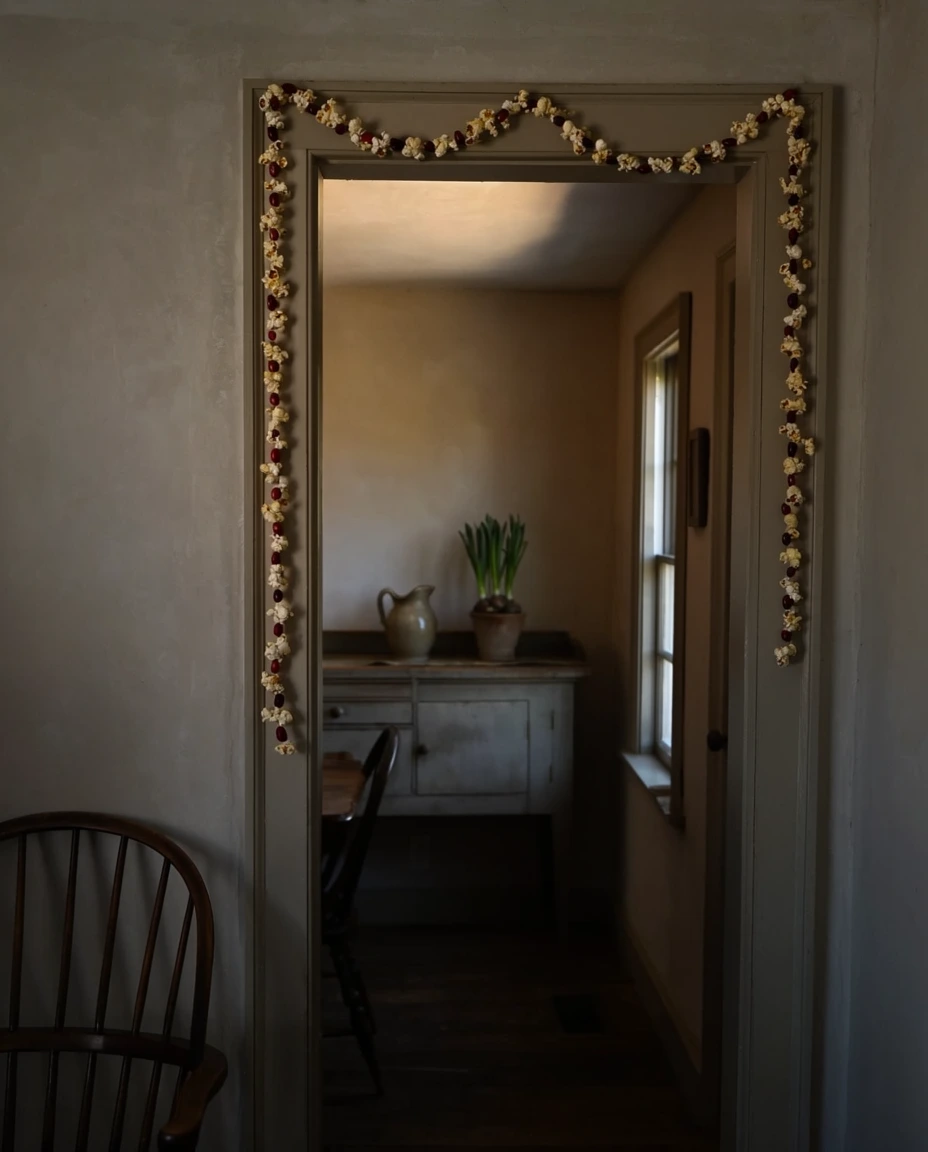
One Ohio family assigns the job to whoever loses a card game on the first Sunday of December, and the loser gets the good chair plus a bowl of extra popcorn as compensation. Their strands rarely survive past the first week of January. The tradition ends up mattering considerably more than the finished garland, which is more or less the entire point of the project.
14. Magnolia Leaves for the Fireplace
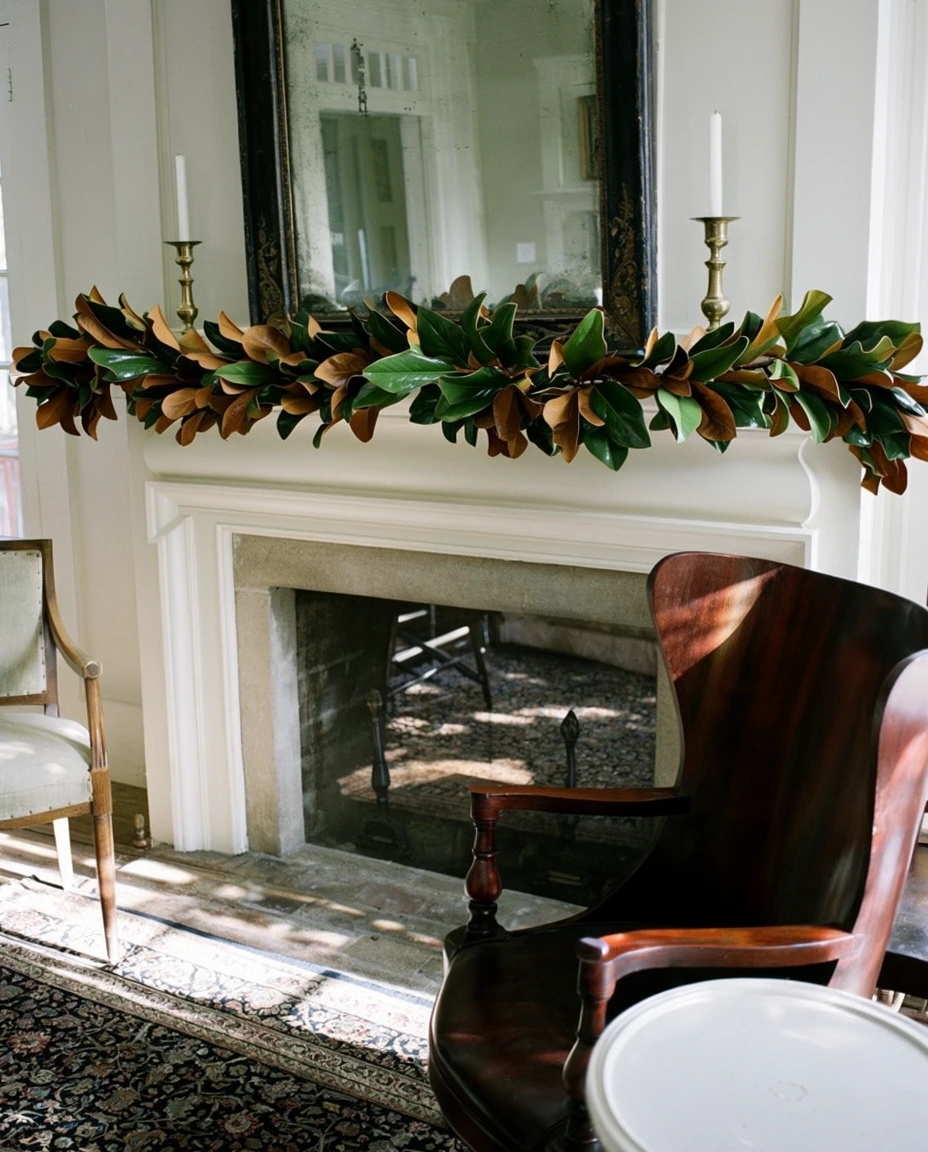
Magnolia has the weight and gloss to hold its own above a fireplace, where thinner greenery tends to disappear against the wall. A garland for mantle use should be built with the leaves facing both directions, so velvety brown undersides alternate with shiny green faces and the run picks up light unevenly. In a Southern living room this reads as inherited and classic; anywhere else it simply reads as considered.

One large magnolia branch cut from a yard fills roughly four feet of mantel, and florists sell bundles for about twenty to thirty dollars in most markets. Preserved leaves ask more upfront — often sixty or more for a finished garland — but they come back out of the box for at least five seasons, which works out cheaper per year than buying fresh stems every single December.
15. Pinecone Garland Without the Glitter

Bare pinecones on twine, left exactly as they came off the ground, suit an outdoor setting far better than anything sprayed. Along a front porch rail or across a garage window, the natural browns hold up in rain and read cleanly against white trim. It makes a satisfying diy too: collect, bake to clear out any hitchhikers, wire the base of each cone, and space them at uneven intervals for a looser, more natural line.
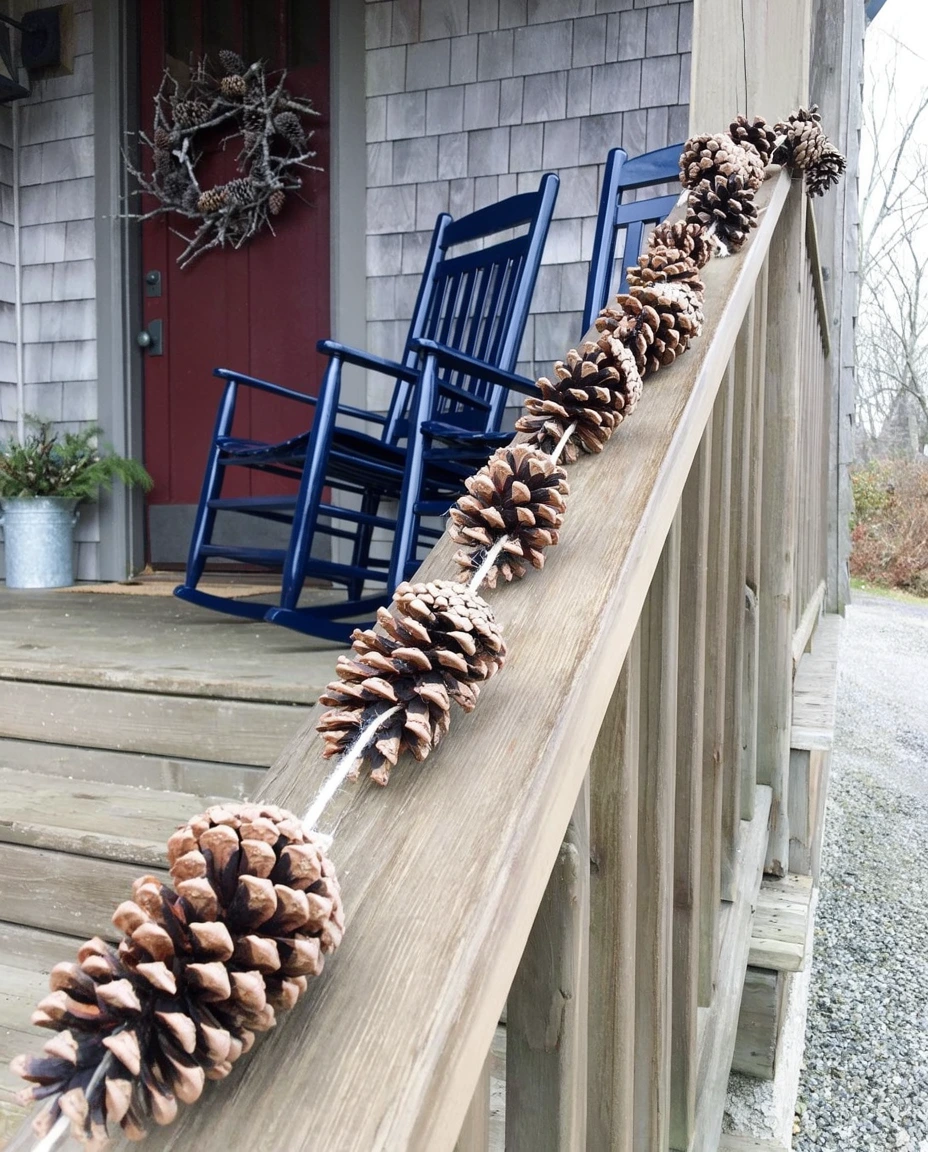
Almost everyone hangs the first version too tight, then comes back a week later and pulls the cones apart by several inches once they’ve seen it from the driveway. That second pass is the one that fixes the whole thing. Anyone with pines in the yard restocks free every fall, which is why this garland tends to grow longer each season rather than getting replaced outright.
16. Boxwood Swag for the Shower Rod
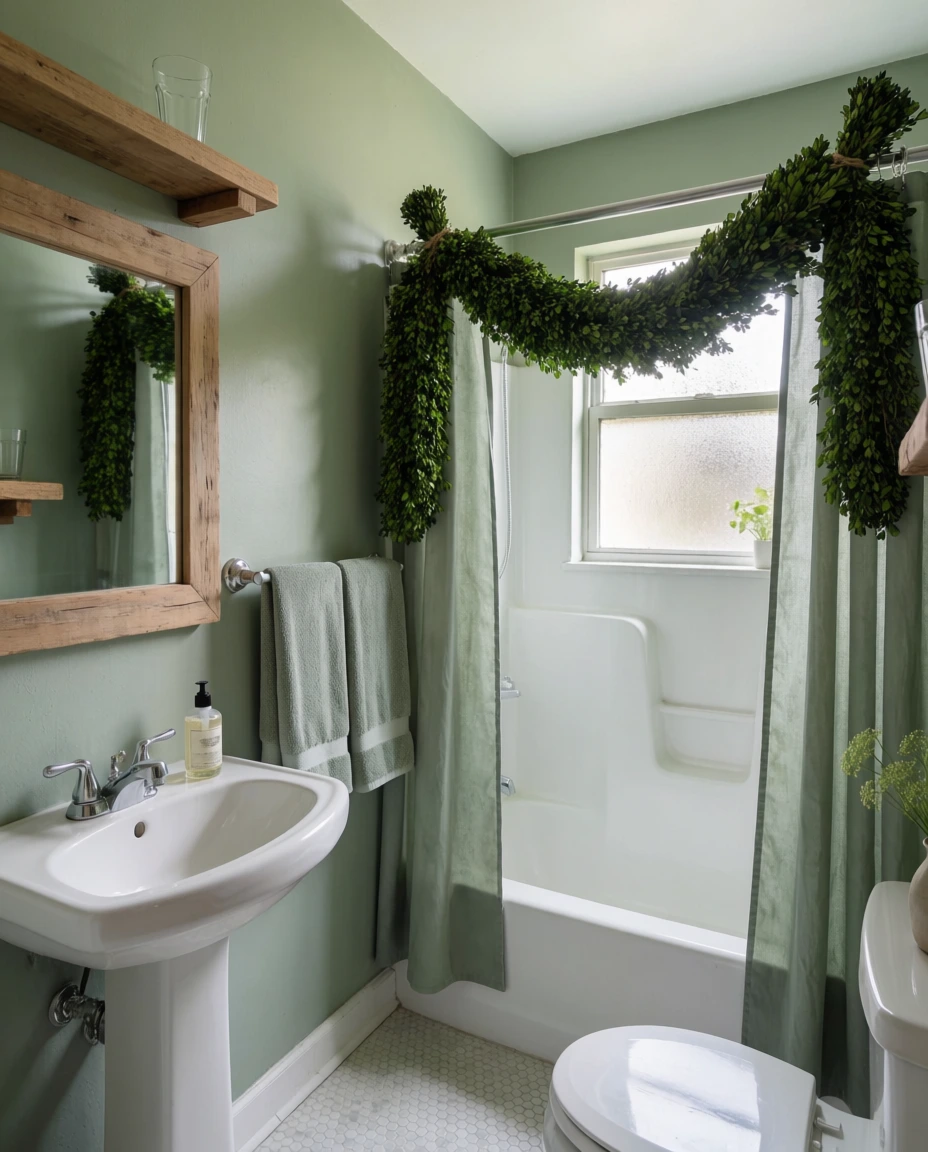
A small preserved boxwood swag tied to a shower rod folds the guest bath into the holiday, and it takes roughly four minutes. Bathrooms are the last indoor space anyone thinks to decorate, which is exactly why the gesture lands so well with visitors. File it under easy diy — two lengths of ribbon, one short garland, and a knot at each end of the rod so the swag hangs shallow and clears the curtain.
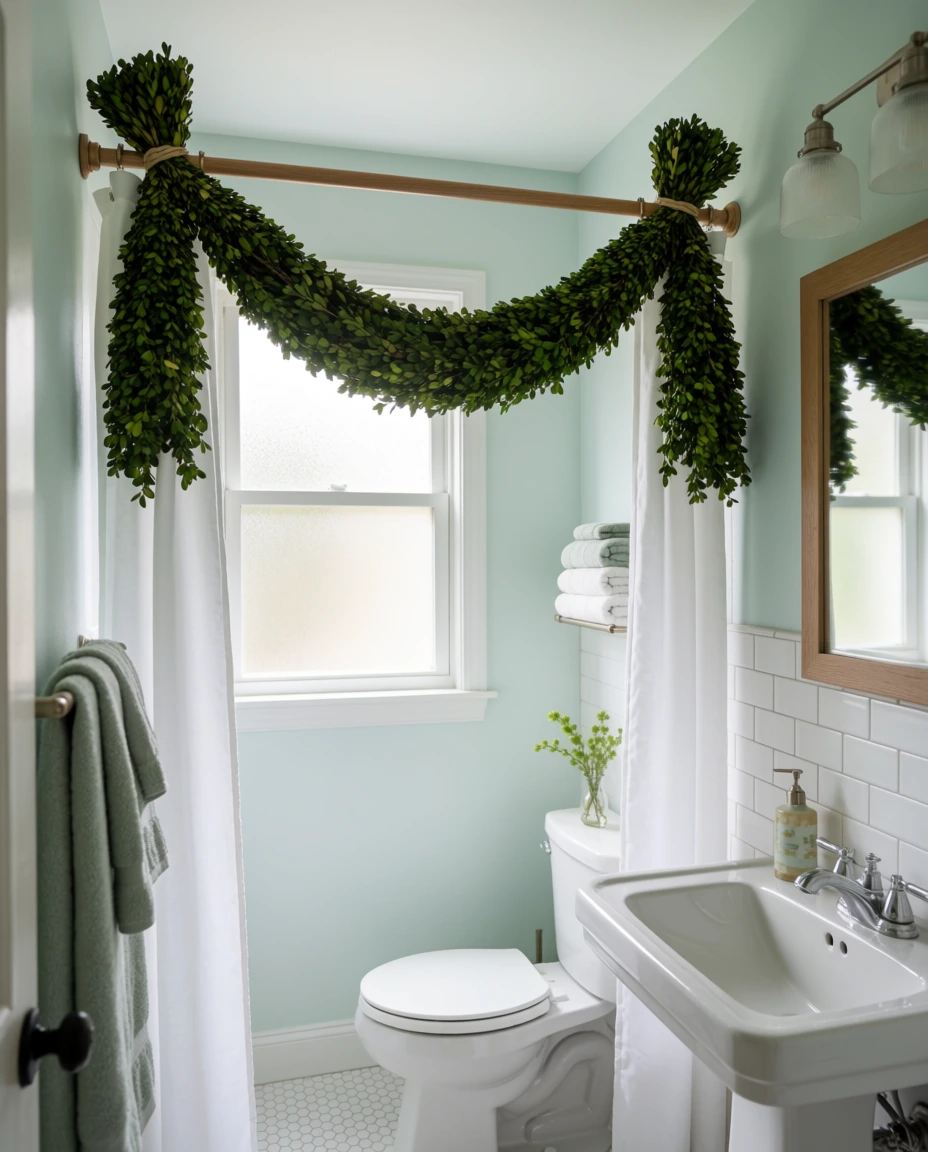
The frequent slip here is reaching for fresh greenery, which wilts quickly in shower steam and starts dropping onto the tub floor within days. Preserved boxwood or a convincing faux handles the humidity without shifting color. Hanging it too deep causes the other headache, so keeping the lowest point above eye level means nobody brushes it stepping in and the swag stays exactly where it was tied.
17. Mixed Evergreen Rope for Railings
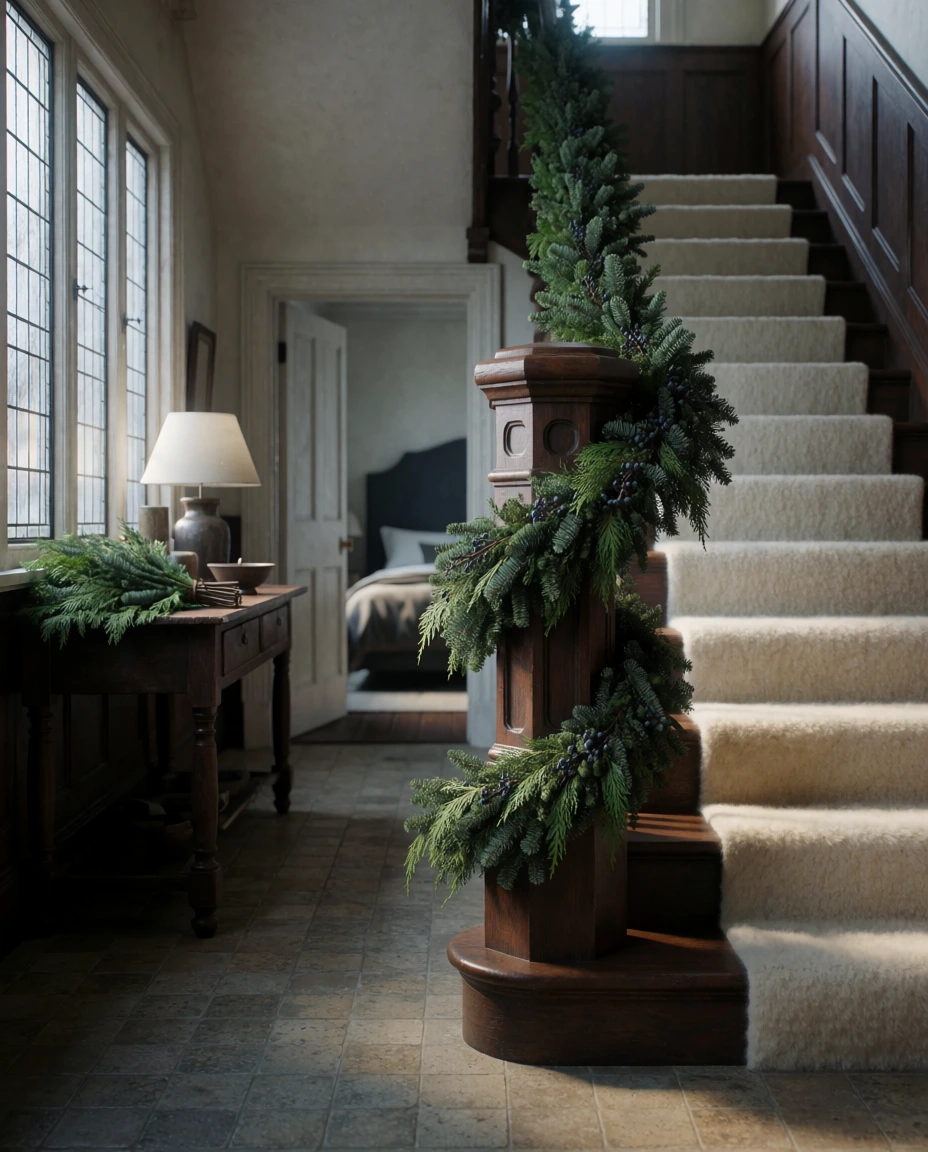
A rope built from three evergreens — cedar, fir, and a little juniper — gives a staircase far more depth than any single-species garland. Wound loosely around the newel post and carried up the rail, it makes the stairs the first thing anyone notices from the doorway. Vary the texture as you climb: flat cedar fans, short dense fir needles, and dusty blue juniper berries keep the eye moving along the entire run.
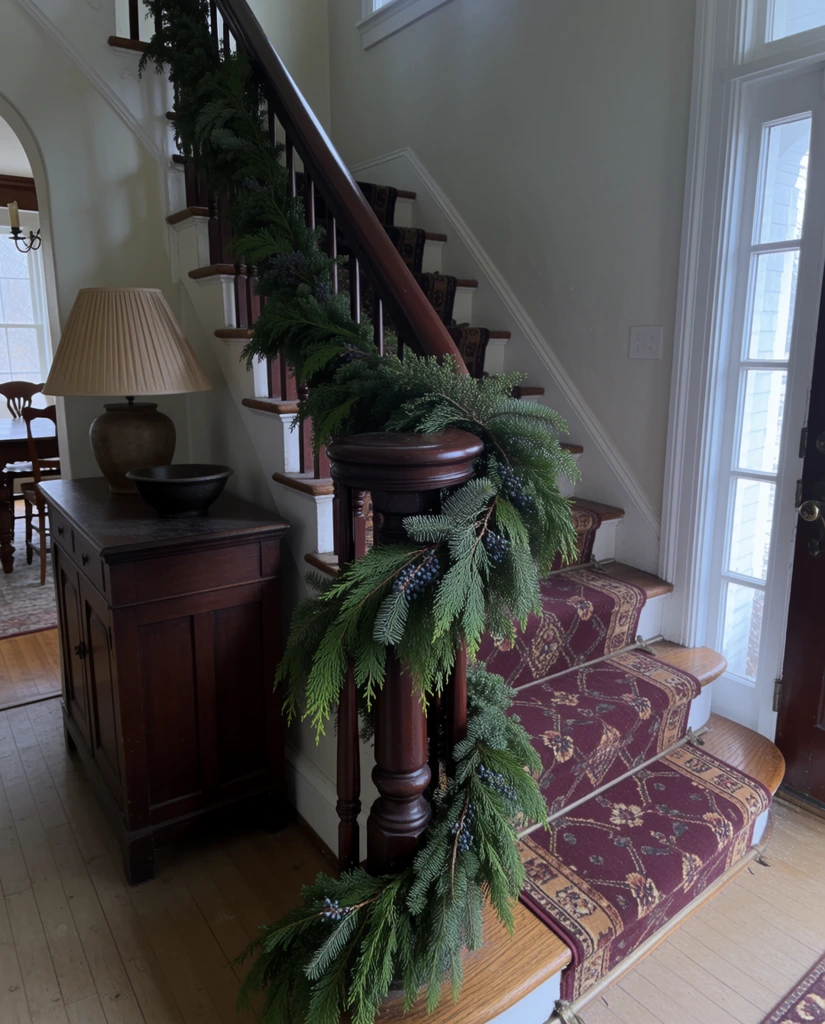
Secure the garland at the newel first and work upward, because gravity pulls everything toward the bottom as the weeks pass. Zip ties hidden on the underside of the rail hold considerably better than ribbon alone, and the ribbon then goes on top purely as decoration rather than structure. Plan on about a foot and a half of garland for every foot of rail to get a proper swag.
18. Frosted Garland with Warm Lights

Frosted greenery under warm bulbs is the combination that photographs well every single time. The white-dusted needles catch amber light and hold onto it, which is why the look performs so beautifully framing windows and the front door on a dark afternoon. Keep the light spacing tight through the center of the run and looser toward the ends, and the garland picks up a soft gradient instead of an even, flat wash.

The pairing is at its strongest on north-facing facades that never take direct sun, where the flocking stays crisp and the bulbs read clearly even at midday. Covered entries and deep-set window wells suit it just as well. A bright southern exposure tends to wash the frost out by noon, so those houses generally do better with darker, glossier greenery and slightly warmer ribbon.
19. Red Plaid Bows and Boughs
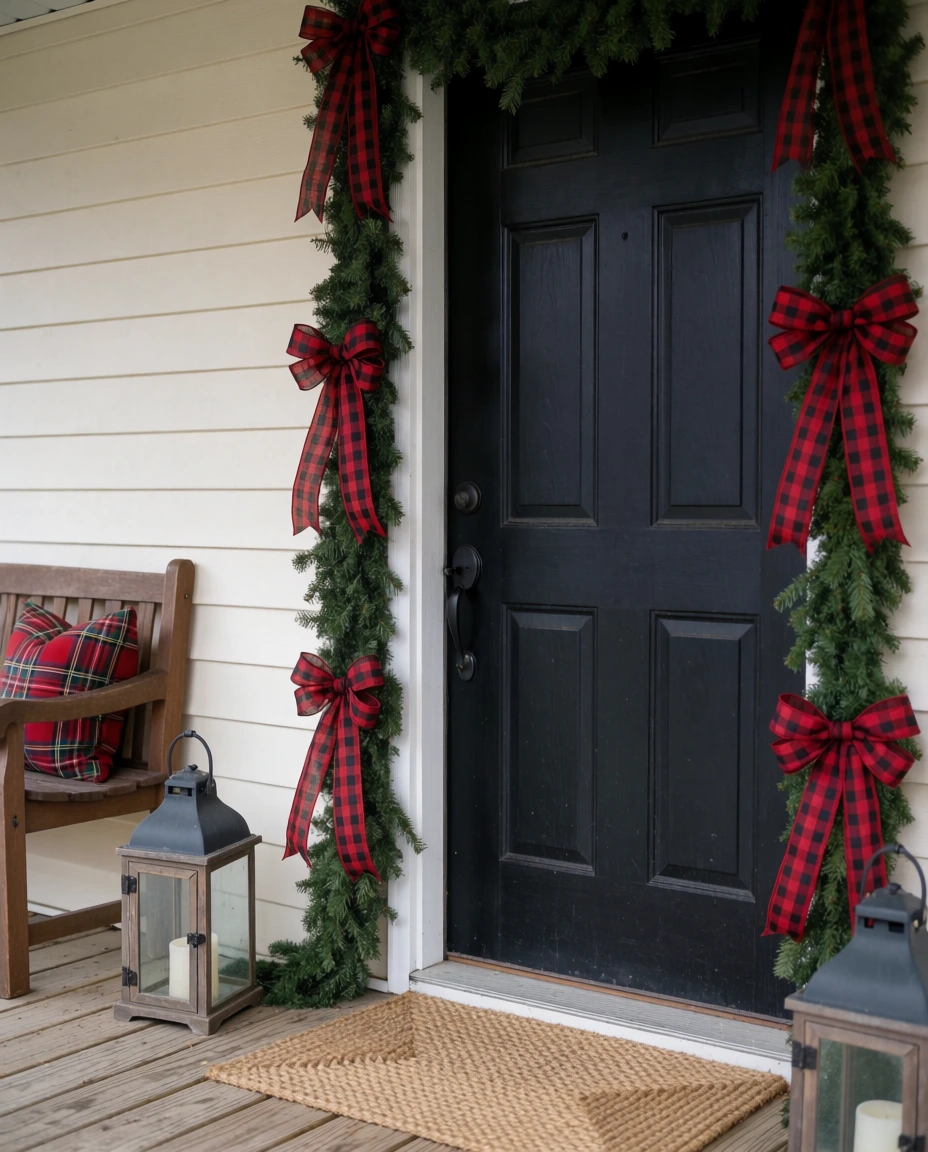
Buffalo check in red and black is shorthand for an American holiday front porch, and it does its best work in small doses. Tie four or five bows into a plain evergreen run around door frames, space them widely, and let the tails hang long and loose. Too many bows turn the garland into wrapping paper, while a few well-placed ones give the eye a rhythm and leave the greenery room to breathe.

Plaid runs deepest through New England and the mountain West, where it reads as a continuation of flannel season rather than a holiday costume, though farmhouse styling has carried it into every region over the past decade. Weather-resistant outdoor ribbon keeps its shape through snow and freeze-thaw, while indoor craft ribbon goes limp after a single wet night on an unprotected porch rail.
20. Coastal Driftwood Garland
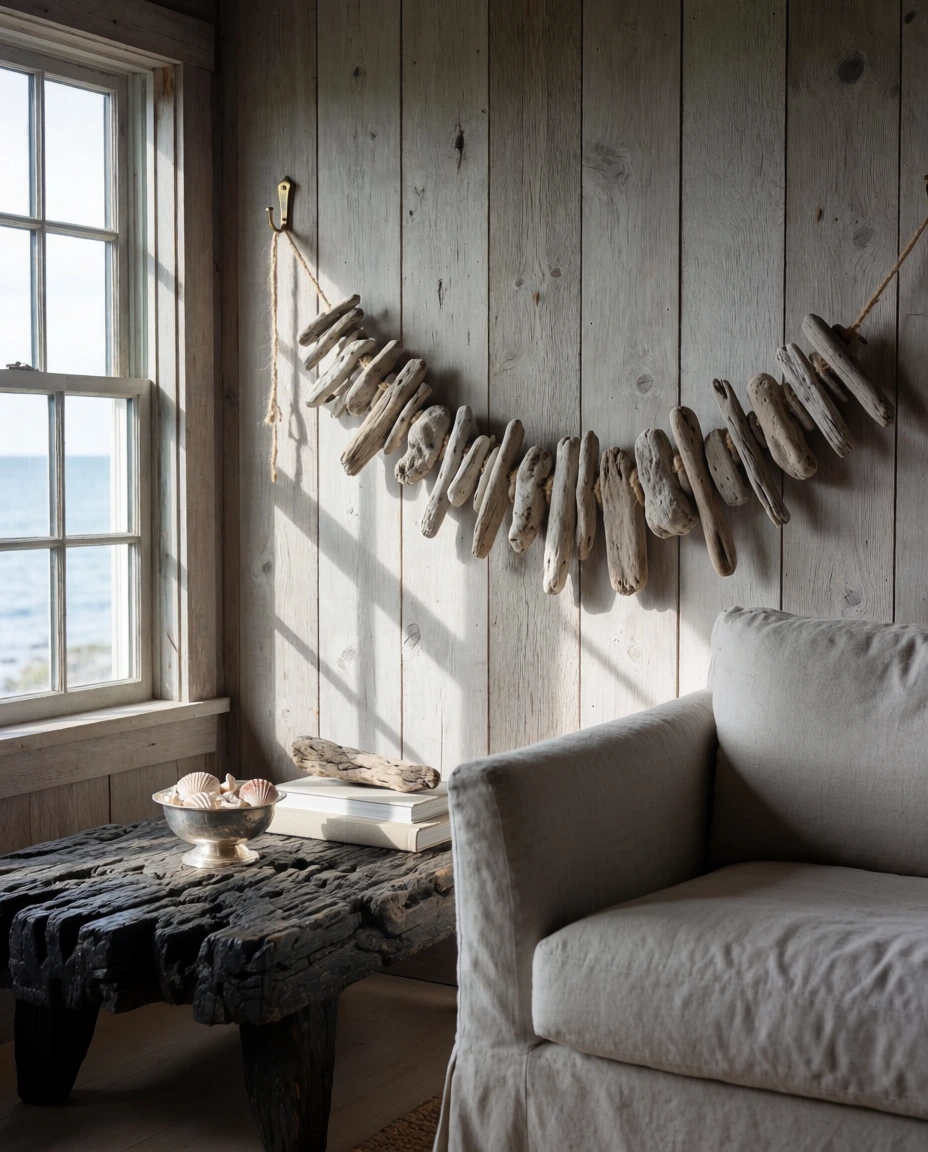
Small driftwood pieces drilled and strung on hemp cord make a handmade garland with an entirely different accent — pale, salty, and quiet. The build is simple enough for a weekend, and the finished piece carries a vintage beachcomber quality that suits shingled cottages and lake cabins in equal measure. Sort the wood by length before stringing so the line rises and falls in a natural rhythm rather than stopping abruptly at one end.

Coastal decorators usually pair driftwood with one warm metal — aged brass hooks or a handful of copper bells — so the gray tones have something to push against. They also hang these flat against a wall instead of spanning open air, since driftwood casts far better shadows when a surface sits behind it. A clear matte sealer keeps salt residue off painted plaster.
21. Twinkling Garland for the TV Stand

The tv stand is the one surface in most living room setups that gets ignored in December, even though everyone stares at it all evening. A slim garland with micro lights, run along the front edge and gathered at one corner, softens the black rectangle above it and pulls the indoor glow down to a lower, cozier level. Keep the greenery flat and shallow so it never creeps into the screen’s sightline.

A neighbor of mine ran hers along the console one year almost as an afterthought and now says it’s the piece she misses most when everything comes down in January, mostly because it makes ordinary movie nights feel like an occasion. Battery micro lights on a timer switch themselves on around five and off at midnight, so nobody ends up crawling behind the cabinet.
22. Nordic Wool Garland with Wooden Beads

Chunky natural wool, a few crochet medallions, and unfinished wooden beads make a garland with real Scandinavian restraint. Cream felt rounds break up the beads and keep the line from reading like a necklace, and the whole thing is a forgiving diy — no glue gun, no measuring, just repetition. Undyed wood and off-white wool stay quiet enough to leave hanging through the long gray weeks of January.

A bag of unfinished beads runs six to ten dollars, wool roving costs about the same, and one finished garland lands near twenty dollars in materials — roughly what a boutique version charges per foot. Buying beads in mixed sizes instead of one uniform pack gives the piece a hand-strung rhythm without adding anything to the total spend.
23. Layered Greenery Over the Staircase
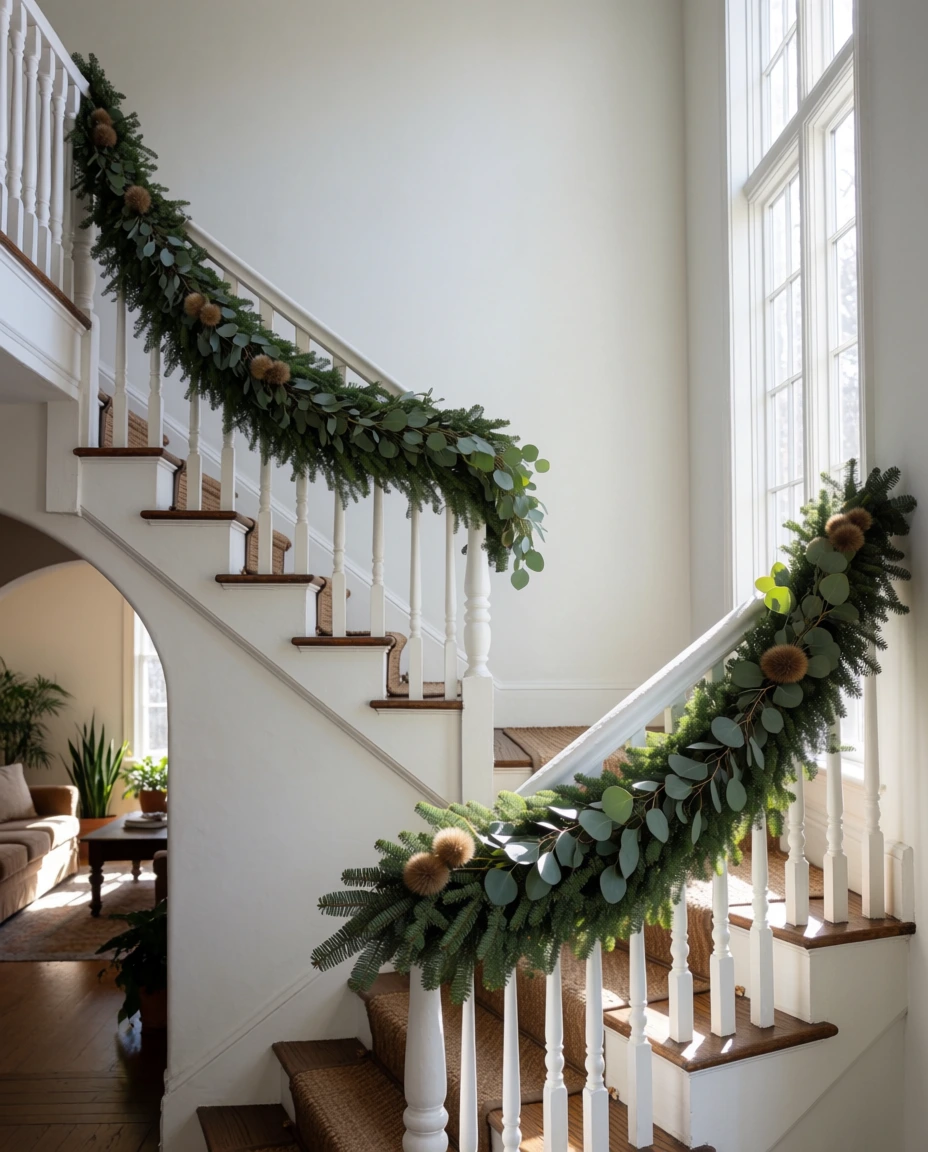
Layering is the direction a staircase is heading for 2026 — a base rope of fir, a thinner eucalyptus strand laid over it, and dried seed pods tucked in at the swag points. A garland for stairs built this way has depth from every angle, which matters on a stairway visible from three different rooms. Keep the layers tonal, all greens and soft neutrals, so the effect stays rich instead of busy.
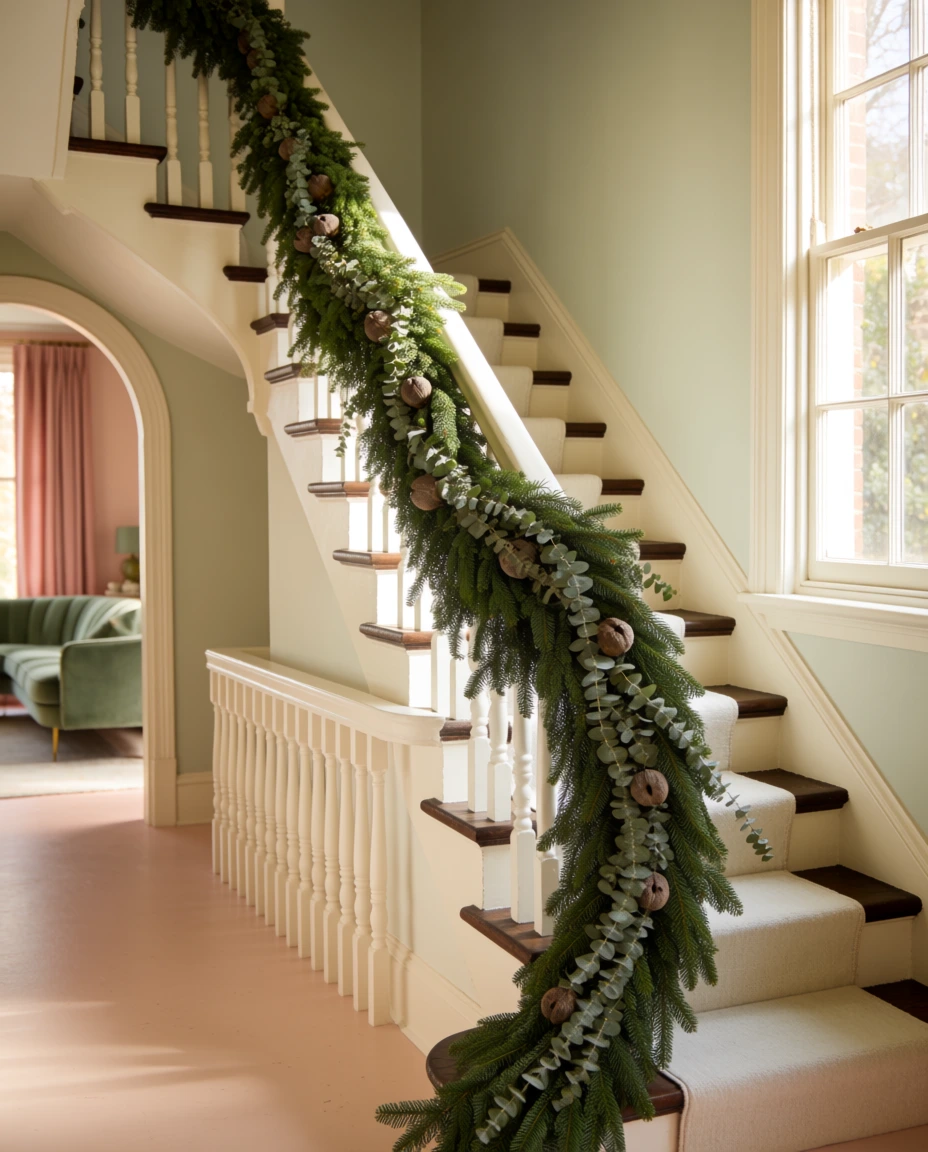
In practice, most households build this across two evenings rather than one: the base goes up first, then the details get added after everyone has seen how it looks from the bottom step. That pause is what stops the second layer from going on too heavy. People also tend to add extra material near the top of the run, since that’s where the eye lands from the upstairs landing.
Every one of these looks scales up or down depending on the house, and half the fun is watching what happens when someone swaps the ribbon color or moves the whole thing to a different wall. If you’ve built a garland you’re proud of — or found a trick that keeps fresh greens alive past week two — leave it in the comments below. I read every one, and the best ideas here usually come from readers.